×

Brazil🇧🇷 | citiesCuritibaBotanical greenhouse, eye-shaped museum, tube stations, Ukrainian cabins | things to do and best time to go

Explore BelémExplore Belo Horizonte

Backpacking in Curitiba
🌟 Highlightcity ranked #9
By Johan Kruseman 🇳🇱 | Updated October 19, 2026

The bus from the rodoviária hissed to a stop and the first thing I noticed was the smell of fresh pão de queijo drifting from a corner bakery, while tube-shaped bus stations glided past in clean order. Curitiba sits in the south of Brazil, the capital of Paraná state, on a high plateau inland from the coast. It suits travelers who like tidy, walkable parks, good museums and a calm base with real food. It does not suit anyone chasing beaches, wild nightlife or dramatic ruins. Skip the downtown shopping streets after dark; spend your time in the parks, the Oscar Niemeyer Museum and the Sunday fair. Download a transit map before you arrive, since the bus system is the way around.

Discover everything you want to know in the 📖 Brazil Travel Guide.


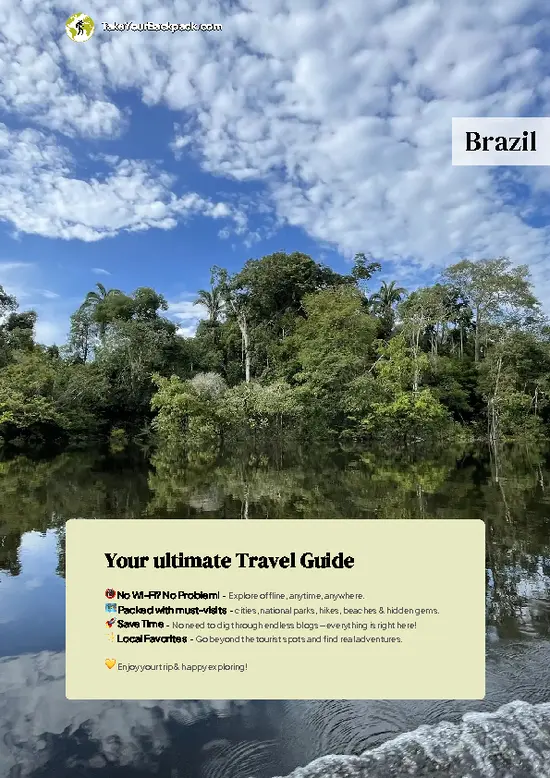
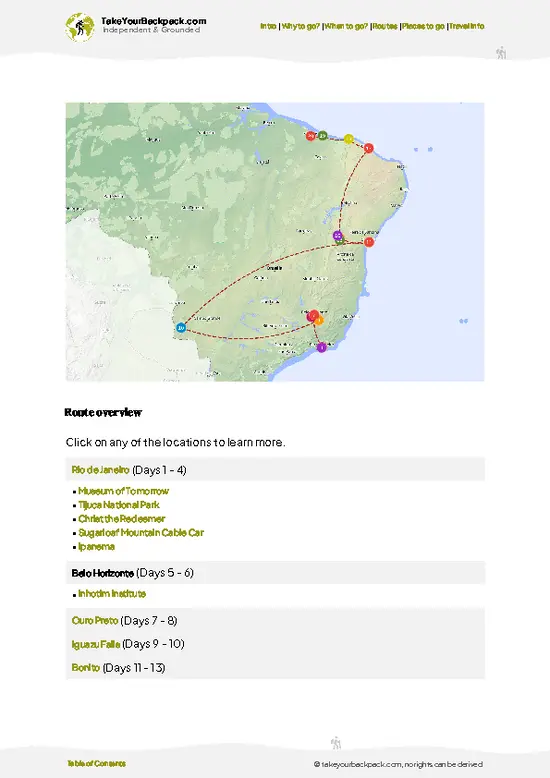
example page 0 from our offline Travel Guide for Brazil
example page 1 from our offline Travel Guide for Brazil
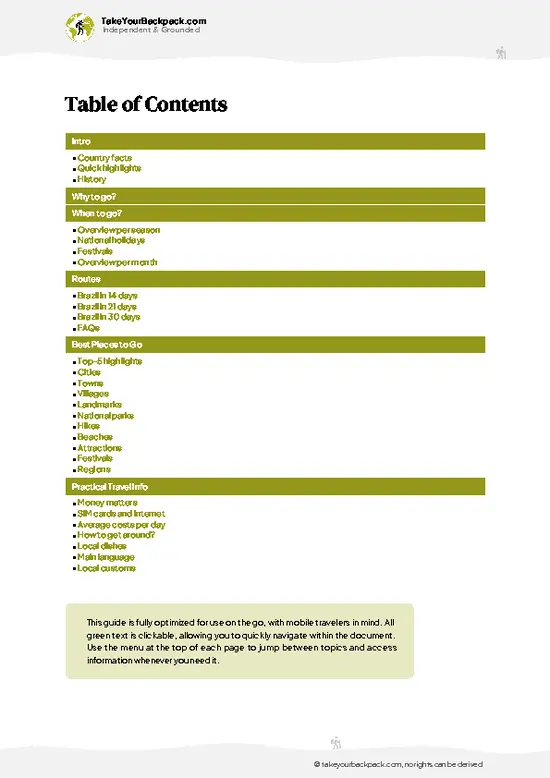
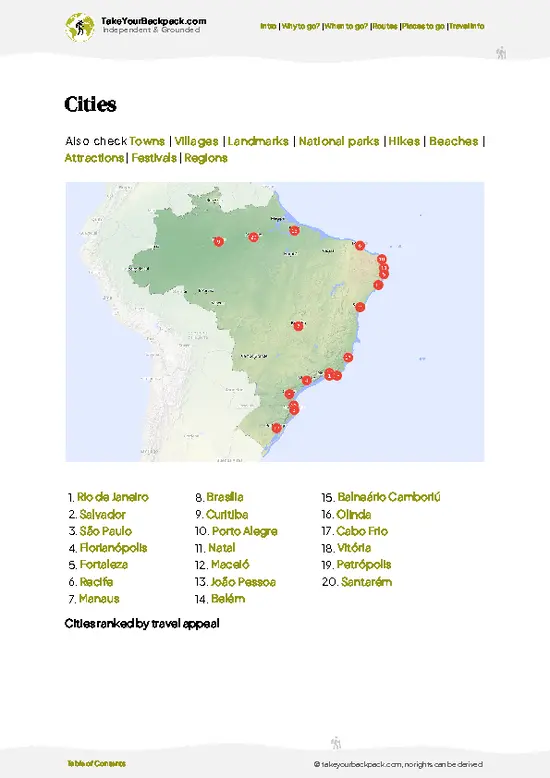
example page 2 from our offline Travel Guide for Brazil
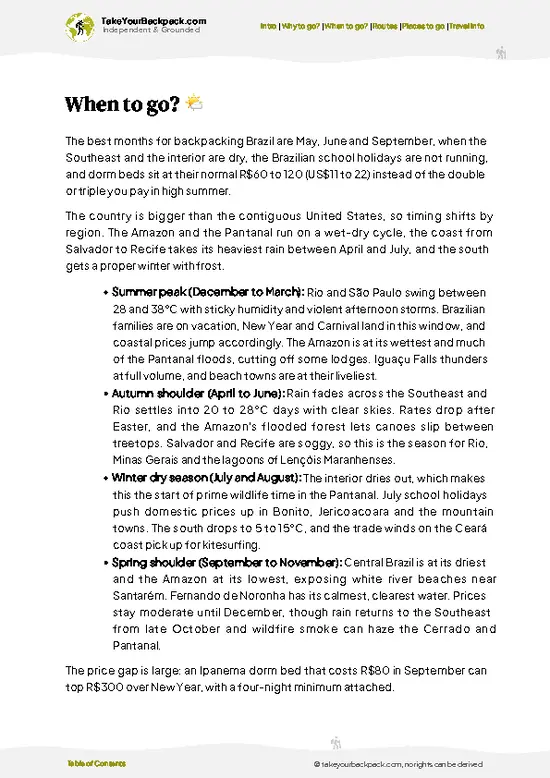
example page 3 from our offline Travel Guide for Brazil
example page 4 from our offline Travel Guide for Brazil
example page 5 from our offline Travel Guide for Brazil
example page 6 from our offline Travel Guide for Brazil
example page 7 from our offline Travel Guide for Brazil
Loading the map 🌍
CLICK TO FILTER
cities
towns
villages
landmarks
national parks
hikes
beaches
attractions
festivals
regions
SHOW COUNTRY’S BESTSHOW ALL

✨ Why go?
Ranked #9 city in Brazil
Why Curitiba should be on your travel list

Curitiba earns a place on a southern Brazil route because it is the easiest big city in the country to live in for a few days. The center is compact, the parks are free and the Rede Integrada de Transporte bus system is copied by cities worldwide, so getting around is simple even if you speak no Portuguese. Hostels cluster around Batel and the historic center, and food is a strong draw: Italian, German, Ukrainian and Polish immigrants left a legacy of pastries, sausages and pierogi-style dishes you will not find in Rio. The city also works as a gateway to the Serra do Mar and the coast, with day trips that need little planning. Nightlife is decent but modest, centered on the Largo da Ordem area and Batel bars. Two nights is enough for most people; three if you want to use it as a base.

💡 HighlightsDon't-miss highlights and experiences

  1. Jardim Botânico: the glass greenhouse is the city’s postcard image, set in formal French-style gardens. Free entry, best on a clear morning, about 1 to 2 hours.
  2. Museu Oscar Niemeyer (Museu do Olho): an eye-shaped building with solid contemporary art and architecture exhibits. Around US$3 to 5, weekday mornings are quieter, 1.5 to 2 hours.
  3. Largo da Ordem and Feira do Largo: cobbled historic square with colonial churches and a Sunday craft and food fair. Free to wander, go Sunday morning, 2 hours.
  4. Ópera de Arame: a steel-and-glass theater tucked in a quarry park with a waterfall. Entry about US$1 to 2 when open, late afternoon is best, 45 minutes.
  5. Parque Tanguá: a former quarry turned park with a tunnel, waterfall and a sweeping city view. Free, 1 hour, best in the morning.
  6. Mercado Municipal: a covered
… read more 👉
  1. Jardim Botânico: the glass greenhouse is the city’s postcard image, set in formal French-style gardens. Free entry, best on a clear morning, about 1 to 2 hours.
  2. Museu Oscar Niemeyer (Museu do Olho): an eye-shaped building with solid contemporary art and architecture exhibits. Around US$3 to 5, weekday mornings are quieter, 1.5 to 2 hours.
  3. Largo da Ordem and Feira do Largo: cobbled historic square with colonial churches and a Sunday craft and food fair. Free to wander, go Sunday morning, 2 hours.
  4. Ópera de Arame: a steel-and-glass theater tucked in a quarry park with a waterfall. Entry about US$1 to 2 when open, late afternoon is best, 45 minutes.
  5. Parque Tanguá: a former quarry turned park with a tunnel, waterfall and a sweeping city view. Free, 1 hour, best in the morning.
  6. Mercado Municipal: a covered market with sausages, cheese, coffee and big sandwiches for lunch. Entry free, meals US$6 to 12, 1 hour, go before 1 PM.
  7. Rua XV de Novembro: a pedestrian street with historic façades and street life, free, 45 minutes during the day.
  8. Memorial Ucraniano: a small park of wooden cabins and a church honoring Ukrainian settlers. Entry about US$1 to 2, 1 hour, late morning.
For day trips, the Graciosa Road to Morretes, the Serra Verde Express train, Paranaguá and Vila Velha State Park are all reachable. Start with the Jardim Botânico early, before the light flattens and tour groups arrive.
Spotted a mistake or missing something? Contact us.

Things to do in Curitiba

Ratings based on Tripadvisor reviews. When you book through this link, you support our work at no extra cost to you.

🏘️ NeighborhoodsKey areas and districts to know

Curitiba is easy to read once you know five areas, and a couple of them deserve far more of your time than the others.
  • Centro and Largo da Ordem: The historic core is walkable and worth a morning. The Sunday fair at Largo da Ordem (crafts, pastries, street snacks) is the best reason to be here, and the pedestrian Rua XV de Novembro is fine for a stroll but not for lingering.
  • São Francisco: The old quarter by the Largo da Ordem, with bars in restored houses and live music at night. Walk it after dark in groups, and it is where I would spend most evenings.
  • Batel: Upscale, with polished restaurants and the Oscar Niemeyer Museum nearby. Come for the museum and a coffee, skip the rest unless you want pricey dinners.
  • Santa Felicidade: The Italian-descended district known for big family-style restaurants.
… read more 👉
Curitiba is easy to read once you know five areas, and a couple of them deserve far more of your time than the others.
  • Centro and Largo da Ordem: The historic core is walkable and worth a morning. The Sunday fair at Largo da Ordem (crafts, pastries, street snacks) is the best reason to be here, and the pedestrian Rua XV de Novembro is fine for a stroll but not for lingering.
  • São Francisco: The old quarter by the Largo da Ordem, with bars in restored houses and live music at night. Walk it after dark in groups, and it is where I would spend most evenings.
  • Batel: Upscale, with polished restaurants and the Oscar Niemeyer Museum nearby. Come for the museum and a coffee, skip the rest unless you want pricey dinners.
  • Santa Felicidade: The Italian-descended district known for big family-style restaurants. Go once for a long lunch, not for sightseeing, as it needs a bus or ride.
  • Jardim Botânico and Parque Barigui: Green, flat and relaxed. The botanical garden’s glass greenhouse is a must for an easy half day, and Barigui suits a picnic where capybaras graze.

⌛️ 1 dayA smart one-day plan

8:30 AM, Jardim Botânico: Start here before the crowds and walk the French-style parterres, then step inside the greenhouse. It is the one stop not to skip, and it sets the tone for the city’s love of green space. Take a tube-station bus toward the center when done.
10:30 AM, Museu Oscar Niemeyer: Spend an hour inside the eye-shaped building and its long corridors of modern art. The architecture is as much the draw as the exhibits.
12:30 PM, Mercado Municipal: Order a sausage sandwich or a coffee with pastry and watch locals shop. It is cheaper and more local than the center’s restaurants.
2:30 PM, Largo da Ordem: Walk the cobbles, step into the old churches and browse the small shops. If it is Sunday, the fair fills the square.
4:30 PM, Memorial Ucraniano: Less visited by backpackers, this park … read more 👉
8:30 AM, Jardim Botânico: Start here before the crowds and walk the French-style parterres, then step inside the greenhouse. It is the one stop not to skip, and it sets the tone for the city’s love of green space. Take a tube-station bus toward the center when done.
10:30 AM, Museu Oscar Niemeyer: Spend an hour inside the eye-shaped building and its long corridors of modern art. The architecture is as much the draw as the exhibits.
12:30 PM, Mercado Municipal: Order a sausage sandwich or a coffee with pastry and watch locals shop. It is cheaper and more local than the center’s restaurants.
2:30 PM, Largo da Ordem: Walk the cobbles, step into the old churches and browse the small shops. If it is Sunday, the fair fills the square.
4:30 PM, Memorial Ucraniano: Less visited by backpackers, this park of wooden cabins and a small church explains the immigrant story. Walk slowly and look at the carved details.
6:30 PM, Batel: Finish with dinner and a craft beer in this district, where bars and restaurants stay lively without being rowdy.

🌤️ When to go?Seasonal considerations and timing

Spring and autumn give Curitiba its most comfortable days, and the city is rarely crowded.
  • Spring (Sep to Nov): 10 to 24°C (50 to 75°F), blooming parks, occasional showers.
  • Summer (Dec to Feb): 16 to 27°C (61 to 81°F), long daylight, frequent afternoon storms. Prices rise around Christmas and Carnival.
  • Autumn (Mar to May): 12 to 25°C (54 to 77°F), drier and steady, good for walking.
  • Winter (Jun to Aug): 4 to 19°C (39 to 66°F), short days, cold mornings and sometimes frost. Rooms are cheapest and attractions quiet.
Pack a light jacket and rain shell in any season, since Curitiba can show all four seasons in one day.

source: climatestotravel.comJANJanuary: fair for travelingFEBFebruary: fair for travelingMARMarch: good for travelingAPRApril: highly recommended for travelingMAYMay: highly recommended for travelingJUNJune: highly recommended for travelingJULJuly: highly recommended for travelingAUGAugust: highly recommended for travelingSEPSeptember: highly recommended for travelingOCTOctober: highly recommended for travelingNOVNovember: good for travelingDECDecember: fair for traveling
when-to-go

✈️ The backpacker research shortcutBrazil Travel Guide

An offline-friendly backpacking guide with optimized travel routes, ranked highlights, transport advice, and the best areas to stay.
example page 0 from our offline Travel Guide for Brazil
example page 1 from our offline Travel Guide for Brazil
example page 2 from our offline Travel Guide for Brazil
example page 3 from our offline Travel Guide for Brazil
example page 4 from our offline Travel Guide for Brazil
example page 5 from our offline Travel Guide for Brazil
example page 6 from our offline Travel Guide for Brazil
example page 7 from our offline Travel Guide for Brazil
The digital guide (410 pages) contains:
✅ 146 highlights, ranked by travel appeal
✅ Optimized 14, 21 & 30-day travel routes
✅ Cities, national parks, landmarks, beaches
✅ How to get around
✅ Offline-friendly for travel without Wi-Fi
👉 Click to see all 30+ guide features

📅 Plan smarter in minutes, not weeks
✅ Month by month travel advice
✅ Festivals & national holidays
✅ Budget expectations

🗺️ Go to the right places, skip the overrated ones
✅ Honest pros & cons of destinations
✅ Top hikes, parks & viewpoints
✅ Lesser-known places most travelers miss
✅ Clear “worth it vs skip it” guidance

🛏️ Travel smoothly without rookie mistakes
✅ Best areas to stay
✅ Transport systems explained simply
✅ Common scams & safety advice
✅ SIM cards, money & practical tips

🌍 Understand the country, not just visit it
✅ Culture & traditions
✅ 52 Essential phrases & customs
✅ Festivals worth planning around
✅ Traveler-friendly historical context
✅ Insights that make places more meaningful

📱 Built for real travel conditions
✅ Fully downloadable PDF
✅ Works completely offline
✅ Optimized for phone use
✅ Useful in remote areas & buses
✅ Everything in one place
Stop searching, start planning
Get instant access to your full guide. 30‑day money-back guarantee.
+ Add another guide for just

By proceeding you agree to our terms.
Sent to your inbox immediately after payment • 100% Secure Checkout
Best Backpacking Travel Advisor 2025 tourism awardBest Backpacking
Travel Advisor
2025
What others say about Take Your Backpack Guides:
⭐⭐⭐⭐⭐
Fantastic, amazing amount of information!
⭐⭐⭐⭐⭐
My goodness this is amazing, it's what I've been looking for hats off too you!
⭐⭐⭐⭐⭐
I think this is absolutely BRILLIANT
⭐⭐⭐⭐
Very complete and informative. It's still missing places, but I gotta to commend you
⭐⭐⭐⭐⭐
This is truly amazing, thank you, can't wait to explore it with my kids!
⭐⭐⭐⭐⭐
Awesome resource, thank you!
⭐⭐⭐⭐⭐
This is amazing! Can't wait to explore the ones I haven't seen
⭐⭐⭐⭐
I love this! Well done, great idea.
⭐⭐⭐⭐⭐
Thanks for taking the time to make this gem!
⭐⭐⭐⭐⭐
This might be the best website I've ever seen.
⭐⭐⭐⭐⭐
Congratulations, and thank you so much for your work; it's incredibly valuable.
⭐⭐⭐⭐
In all seriousness I think you did a great job pointing out the important spots
⭐⭐⭐⭐⭐
10/10 very good
⭐⭐⭐⭐⭐
As someone who's only just starting to visit regularly this is awesome, thank you.
⭐⭐⭐⭐
Thank you very much! I'm going to visit my dad, it's going to be very useful!
⭐⭐⭐⭐⭐
This is really cool! We'll be travelling for the first time and this definitely come in handy.
⭐⭐⭐⭐⭐
You are now our minister of culture, congratulations 👨‍💼
⭐⭐⭐⭐⭐
Just wanted to tell you that this is a pearl! Going to follow your recommendations.
⭐⭐⭐⭐⭐
This is so cool. I'll definitely be using the resource for my travels soon.
⭐⭐⭐⭐⭐
This is very impressive! Good work.
⭐⭐⭐⭐⭐
This is an amazing and informative site. Very well done!

🛏️ Where to stay?Where staying makes the most sense

Centro and São Francisco are the best areas for a budget bed, with the most hostels and cheap guesthouses in Curitiba, usually US$10 to 20 for a dorm bed. Both sit within walking distance of the main tube stations, so you can reach the botanical garden and the bus terminal without a taxi.
São Francisco is livelier, and the bars there mean some street noise on weekends. Centro is quieter on Sunday and busy by day, but it empties after dark, so pick a place close to Rua XV or the main squares and take a ride-hailing car late at night. Batel has better after-hours safety, though beds there cost more … read more 👉
Centro and São Francisco are the best areas for a budget bed, with the most hostels and cheap guesthouses in Curitiba, usually US$10 to 20 for a dorm bed. Both sit within walking distance of the main tube stations, so you can reach the botanical garden and the bus terminal without a taxi.
São Francisco is livelier, and the bars there mean some street noise on weekends. Centro is quieter on Sunday and busy by day, but it empties after dark, so pick a place close to Rua XV or the main squares and take a ride-hailing car late at night. Batel has better after-hours safety, though beds there cost more and hostels are scarce. Book ahead for weekends, trade fairs and holidays, as the city fills with business travelers on weekdays.

🚌 Getting aroundMoving around without the hassle

From the Rodoviária (long-distance bus terminal), the center is about 2 km (1.2 miles) away, and a local bus or a US$2 to 4 ride-hailing trip takes 10 to 15 minutes. Curitiba has one of Brazil’s most organized bus systems, so you rarely need a car. Traffic is heavy at rush hour, but dedicated lanes keep buses moving.
  • Walking: The center, São Francisco and Batel are flat and walkable. Do this for anything within 2 km.
  • Biarticulated and express buses: The tube-shaped boarding stations are the system’s signature. A single fare of about US$1 covers transfers between lines, and services run roughly from 5am to midnight. Worth learning, as it is the cheapest way across town.
  • Turismo Line: A hop-on, hop-off circuit to about 25 parks and sights, around US$6 to 7 for a day. It saves time for the parks,
… read more 👉
From the Rodoviária (long-distance bus terminal), the center is about 2 km (1.2 miles) away, and a local bus or a US$2 to 4 ride-hailing trip takes 10 to 15 minutes. Curitiba has one of Brazil’s most organized bus systems, so you rarely need a car. Traffic is heavy at rush hour, but dedicated lanes keep buses moving.
  • Walking: The center, São Francisco and Batel are flat and walkable. Do this for anything within 2 km.
  • Biarticulated and express buses: The tube-shaped boarding stations are the system’s signature. A single fare of about US$1 covers transfers between lines, and services run roughly from 5am to midnight. Worth learning, as it is the cheapest way across town.
  • Turismo Line: A hop-on, hop-off circuit to about 25 parks and sights, around US$6 to 7 for a day. It saves time for the parks, but you can reach most of them on regular buses for less.
  • Ride-hailing (Uber, 99): Typically US$2 to 6 for most city rides. Use it at night or for Santa Felicidade, not for daytime trips between the central stops.
Skip the taxis, since ride-hailing is cheaper and the fare is fixed in advance.

👛 Costs (as of 19 October 2026)Typical daily expenses

A backpacker in Curitiba spends roughly US$40 to 76 a day, or about US$58 using a high-season dorm.
CategoryBudget RangeLocal Reality
Dorm (high season)US$14 to 22Centro and São Francisco hostels, with breakfast usually included
Dorm (off-season)US$10 to 16Winter and weekdays are cheapest
MealsUS$12 to 20Weight-priced buffets and market snacks, with beer extra
Local transportUS$2 to 5Bus fare about US$1 per ride, ride-hailing for nights
City transport passUS$6 to 7Turismo Line day ticket, optional
Activities and entry feesUS$3 to 10Museums and the botanical garden are cheap or free
MiscellaneousUS$3 to 6Coffee, laundry, SIM data
Total Daily BudgetUS$40 to 76About US$58 with a high-season dorm
Eat the big lunch buffet and make dinner light to save around US$5 a day.
⚠️ Prices can change and everyone travels differently, so take this as a rough guide. Hope it helps you plan your adventure!

🚌 Day tripsBest day trips from Curitiba

Curitiba sits close to the Serra do Mar, so a few of southern Brazil's best day outings start from the Rodoviária (bus station) before 8 a.m. and finish by dinner.
Serra Verde Express to Morretes:
The scenic train drops through Atlantic forest, over viaducts and past waterfalls, in about 3 hours each way down to Morretes. Tickets run roughly US$25 to 60 each way depending on class, and they sell out on weekends, so book ahead. Many travelers ride down and return by bus, which takes about 1.5 hours and costs US$4 to 7. Sit on the left side going down for the best views. Fog in the cooler months (May to August) gives the ride its moody look, while summer brings heavy rain.

Antonina:
An old port town on Paranaguá Bay, about 2 hours by bus (US$5 to 8) with a change at Morretes or a direct service. … read more 👉
Curitiba sits close to the Serra do Mar, so a few of southern Brazil's best day outings start from the Rodoviária (bus station) before 8 a.m. and finish by dinner.
Serra Verde Express to Morretes:
The scenic train drops through Atlantic forest, over viaducts and past waterfalls, in about 3 hours each way down to Morretes. Tickets run roughly US$25 to 60 each way depending on class, and they sell out on weekends, so book ahead. Many travelers ride down and return by bus, which takes about 1.5 hours and costs US$4 to 7. Sit on the left side going down for the best views. Fog in the cooler months (May to August) gives the ride its moody look, while summer brings heavy rain.

Antonina:
An old port town on Paranaguá Bay, about 2 hours by bus (US$5 to 8) with a change at Morretes or a direct service. Colonial facades face the water, and the barreado, a slow-cooked beef stew eaten with manioc flour and banana, is the local dish to order. Most visitors budget US$15 to 25 in total including lunch. First-timers often leave Curitiba too late and miss the last return bus, so check the final departure when you arrive.

Parque Estadual de Vila Velha:
Sandstone towers shaped by erosion rise out of the grassland near Ponta Grossa, about 1.5 hours west by road. Buses to Ponta Grossa cost around US$7 to 10, then you need a taxi or ride-share to the park, which makes the day US$40 to 55 with the entrance fee. Dry months, April to September, give clearer skies and firmer trails. Plan for a full day, as the lagoons and the Furnas sinkholes sit apart from the main rock formations.

Pico Paraná trailhead area at Campina Grande do Sul:
Hikers wanting a peak go for the highest summit in southern Brazil, but the route is demanding and usually needs two days, so most day-trippers settle for the lower trails around Pico do Marumbi, reached by the train stops near Marumbi. Bring water and a rain layer, as the weather turns fast.

🍲 FoodLocal Cuisine & Drinks

Curitiba’s signature is barreado, a slow-cooked beef stew from the coast, eaten with manioc flour and banana, best on a trip toward Morretes. In town, look for pinhão, the pine nut boiled or roasted in winter and sold from carts. Santa Felicidade is the Italian-descended district for long rodízio lunches of pasta, polenta and roasted chicken. Chimarrão, the hot herbal mate, is sipped by locals from a gourd, especially in the cold months. Backpackers do best at the Mercado Municipal for sandwiches, cheese and fresh fruit, and at lunch buffets priced by weight, usually US$6 to 10. São Francisco bars pour local craft beer in a young, social setting, and the Sunday Largo da Ordem fair has cheap pastries and sweets.

🛡️ SafetyScams, Hazards, and Annoyances

Curitiba is one of Brazil’s calmer big cities, and most problems are petty theft. Phones taken from hands near Rua XV, the bus terminal and the tube stations are the usual complaint, so keep yours in a pocket while waiting. At night, stick to São Francisco and Batel when walking, and use ride-hailing for the stretch back through empty Centro blocks. Solo travelers, women included, generally manage well using this routine. The Rodoviária area is rough after dark, so arrive in daylight when you can. Scams are rare, and the worst annoyances are unofficial parking helpers and the occasional pushy beggar, which a polite no handles. Carry a day’s cash only.

FAQTraveler FAQ

Two to three days covers Curitiba well. One day handles Centro, the Largo da Ordem and the botanical garden, and a second suits the Niemeyer Museum and Parque Barigui. Add a third for a day trip to Morretes, about 3 hours on the scenic train or less by bus for US$8 to 12, or a long lunch in Santa Felicidade.
Yes, Curitiba is among the easier Brazilian cities for solo backpackers, with petty theft the main concern. Avoid empty Centro streets and the area around the bus terminal after dark, and use ride-hailing at night for US$2 to 6. São Francisco and Batel stay lively and comfortable in the evening.
Curitiba is known for its organized bus system with tube-shaped stations, its many parks, and the Oscar Niemeyer Museum with its eye-shaped building. It also has strong Italian, German and Polish roots, seen in Santa Felicidade and the Sunday Largo da Ordem fair. The Botanical Garden’s glass greenhouse is a free-entry highlight.
⚠️ Things can change over time, so always validate details locally before you go.

Other Brazilian cities near Curitiba

Explore more nearby:

  • Joinville—Immigrant museum, palm avenue, Bolshoi school, industrial center| 105 km away
  • Blumenau—Oktoberfest grounds, German facades, brewing history, Itajaí valley| 166 km away
  • Balneário Camboriú—High-rise skyline, gondola ride, Laranjeiras cove, seafront boardwalk| 184 km away

💡 Not sure where to go next?
Create a personalized itinerary for Brazil including Curitiba and the places that fit your trip.

Generate my itinerary

👉 Discover all cities

Or checkout all Brazil has to offer (think cities, towns, villages, national parks, hikes, beaches, festivals)
Country photo of Brazil

We 💚 feedbackIs it worth it?

Curitiba rewards the traveler who looks past the Botanical Garden postcard and rides the tube-shaped bus stations, where you prepay at the turnstile and board level with the floor. That small system explains the whole city. I would give it two full days, skip the shopping malls, and spend the saved hours at Ópera de Arame or the Sunday Feira do Largo da Ordem.

✈️ When did I visit Brazil?
Call it good timing or luck, but I was able to celebrate Carnaval in Rio de Janeiro in February 2022, after a round trip in the north and east coast.

✍️ Help improve this page!
The information on this page is based on my own backpacking experience in Brazil, supplemented with up-to-date research and feedback from other travelers. Travel details can change, so if you notice anything outdated or incomplete, feel free to let me know.


🙋‍♂️ Give feedback

👋 Meet the founderWho’s Behind Take Your Backpack?

Johan, backpacker and founder of TakeYourBackpackHi, I’m Johan (Netherlands 🇳🇱), the creator of TakeYourBackpack. Over the past 3 decades, I’ve backpacked through 90+ countries across six continents, gaining extensive experience with independent travel, long-term trips, and overland routes.

This site is built on a combination of firsthand travel experience and carefully curated insights from other backpackers. Many guides are based on places I’ve personally visited, while others bring together tips, observations, and practical advice shared by trusted travelers I’ve met along the way.

The goal is to provide realistic, experience-driven guidance — not generic itineraries — so you can explore destinations with better context, clearer expectations, and more confidence.