×

Brazil🇧🇷 | landmarksIguazu FallsDevil’s Throat, 275 falls, canyon-rim trail, three-border viewpoint | things to do and best time to go

Explore Convento da PenhaExplore Gruta da Lapa Doce

Backpacking in Iguazu Falls
🏆 Top pickunique site ranked #1
By Johan Kruseman 🇳🇱 | Updated October 19, 2026

The Brazilian side of Iguazu Falls is the place for the wide view, while the Argentine side gets you close. The falls sit in the far southwest of Brazil, in Paraná state, on the border with Argentina, about 20 minutes from the city of Foz do Iguaçu. Skip the helicopter flight if your budget is tight. It lasts about ten minutes and is pricey for what you see, and the walkway gives you the same panorama for free once you are inside the park. Expect crowds from late morning, and entry is not cheap, but the 275 falls spread across nearly three kilometers justify it. The Devil’s Throat walkway is the reason to come. I still hear the roar from the last bend of the path before I see anything, a low thud in the chest, and then the mist arrives like warm rain on the platform. Compared with the Argentine side, the Brazilian side is shorter and tidier, with fewer trails and better framing.

Discover everything you want to know in the 📖 Brazil Travel Guide.


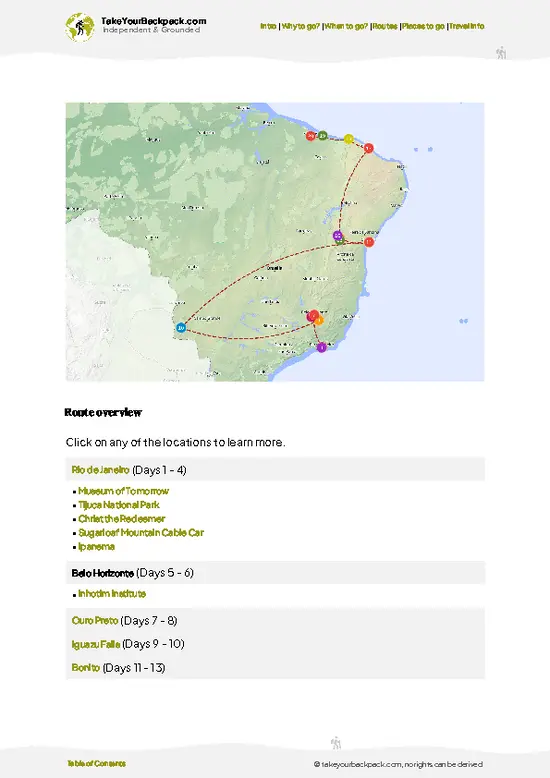
example page 0 from our offline Travel Guide for Brazil
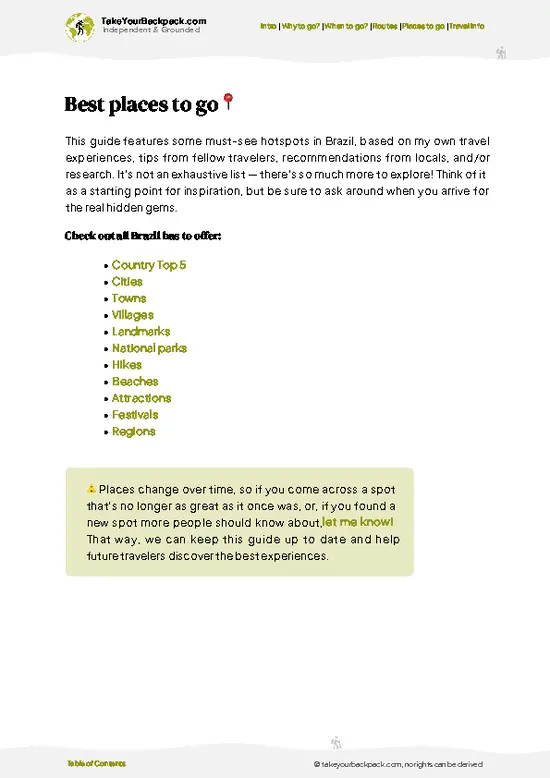
example page 1 from our offline Travel Guide for Brazil
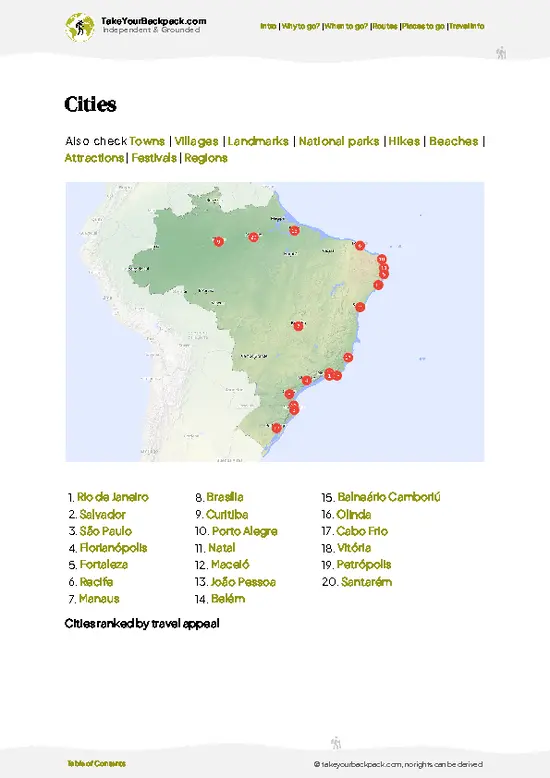
example page 2 from our offline Travel Guide for Brazil
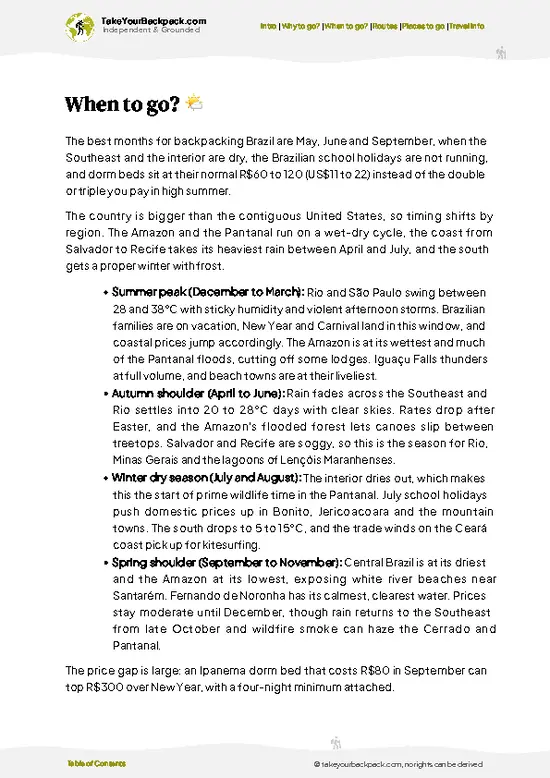
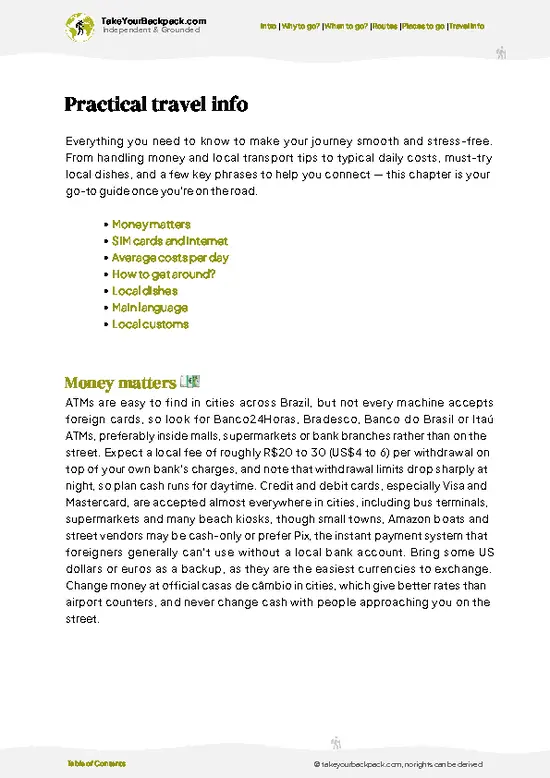
example page 3 from our offline Travel Guide for Brazil
example page 4 from our offline Travel Guide for Brazil
example page 5 from our offline Travel Guide for Brazil
example page 6 from our offline Travel Guide for Brazil
example page 7 from our offline Travel Guide for Brazil
Loading the map 🌍
CLICK TO FILTER
cities
towns
villages
landmarks
national parks
hikes
beaches
attractions
festivals
regions
SHOW COUNTRY’S BESTSHOW ALL

✨ Why go?
Ranked #1 unique site in Brazil
What sets this place apart

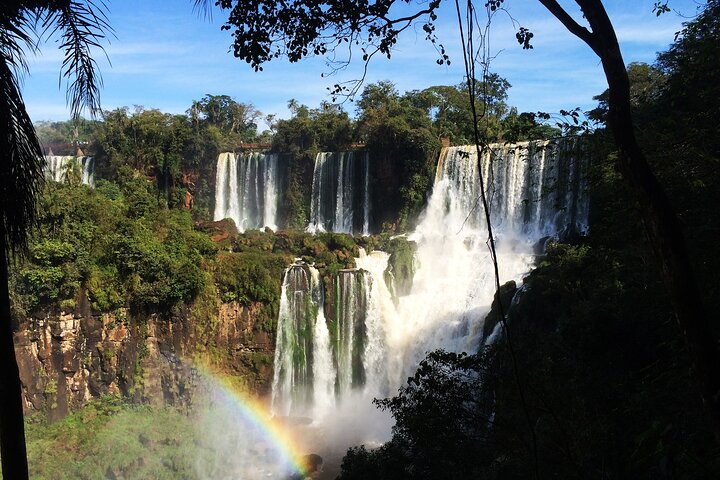
Iguazu Falls rewards the effort because nothing else in South America matches the volume of water, and the Brazilian side delivers it in half a day. The main path runs about 1.2 kilometers along the canyon, so you get the full panorama of 275 cascades without hiking all day. It ends on a walkway reaching into the Devil’s Throat, where the river drops about 80 meters into a wall of spray. Few places let you stand that close to this much water.

It also works well in a broader route. The border towns connect easily to the Argentine side, the Itaipu Dam, and the Paraguayan city of Ciudad del Este, so you can stack several countries into a few days. Many backpackers pair it with Buenos Aires, Asunción, or the Brazilian coast. Wet-season water levels are high and loud, while drier months give you … read more 👉
Iguazu Falls rewards the effort because nothing else in South America matches the volume of water, and the Brazilian side delivers it in half a day. The main path runs about 1.2 kilometers along the canyon, so you get the full panorama of 275 cascades without hiking all day. It ends on a walkway reaching into the Devil’s Throat, where the river drops about 80 meters into a wall of spray. Few places let you stand that close to this much water.

It also works well in a broader route. The border towns connect easily to the Argentine side, the Itaipu Dam, and the Paraguayan city of Ciudad del Este, so you can stack several countries into a few days. Many backpackers pair it with Buenos Aires, Asunción, or the Brazilian coast. Wet-season water levels are high and loud, while drier months give you clearer views and thinner crowds. Either way, bring a rain poncho, because the walkway gets soaked. The park is well organized, with shuttle buses and clear signage, so first-timers feel comfortable and veterans still get plenty out of the view. Go early to beat the tour buses, and the morning mist and rainbows are at their best.

💡 HighlightsEssential experiences to have while visiting Iguazu Falls

  1. Devil’s Throat Walkway (Garganta do Diabo): The walkway ends on a platform above the U-shaped drop where the Iguazu River plunges roughly 80 meters. The noise is physical and the spray soaks you, so protect your camera.
  2. Main Panoramic Trail: About 1.2 kilometers along the canyon rim, with the best wide views of the falls on the Argentine side across the water. Every turn gives a new angle, and it is the easiest way to grasp the scale.
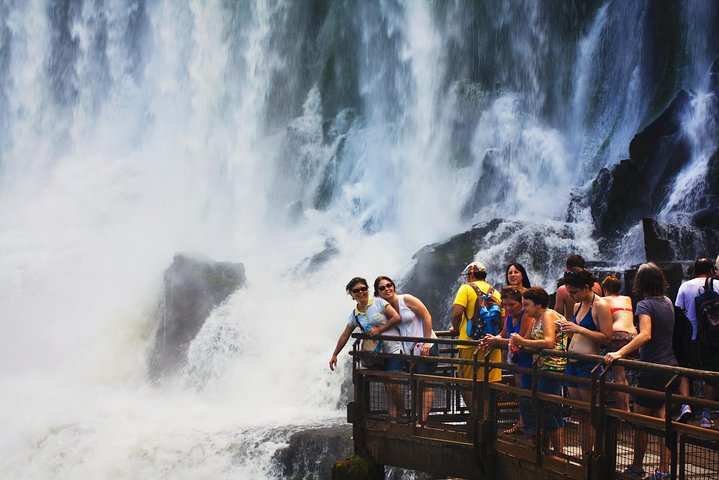
  3. Lower Walkway Viewpoints: Platforms close to the Floriano and Santos Dumont falls, where you stand beneath cascades and feel the spray. Rainbows appear often on bright mornings.
  4. Panoramic Elevator: A glass lift at the end of the trail rising to an upper walkway. It gives a final overview of the falls and an easy exit for tired legs.
  5. Parque das Aves: A bird park just
… read more 👉
  1. Devil’s Throat Walkway (Garganta do Diabo): The walkway ends on a platform above the U-shaped drop where the Iguazu River plunges roughly 80 meters. The noise is physical and the spray soaks you, so protect your camera.
  2. Main Panoramic Trail: About 1.2 kilometers along the canyon rim, with the best wide views of the falls on the Argentine side across the water. Every turn gives a new angle, and it is the easiest way to grasp the scale.
  3. Lower Walkway Viewpoints: Platforms close to the Floriano and Santos Dumont falls, where you stand beneath cascades and feel the spray. Rainbows appear often on bright mornings.
  4. Panoramic Elevator: A glass lift at the end of the trail rising to an upper walkway. It gives a final overview of the falls and an easy exit for tired legs.
  5. Parque das Aves: A bird park just outside the entrance, with large walk-through aviaries holding toucans, macaws, and scarlet ibis. It is a good rainy-hour alternative and a quieter stop than the falls.
  6. Itaipu Dam: One of the largest hydroelectric dams in the world, shared with Paraguay. Tours cover the structure and its scale, and they suit anyone curious about engineering.
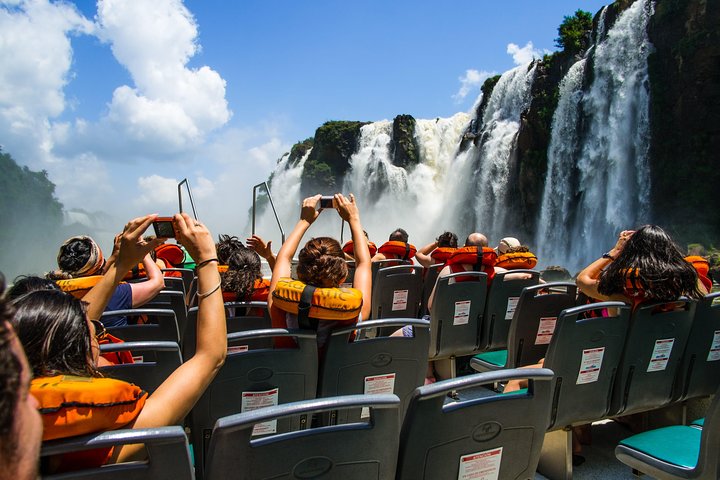
  7. Macuco Safari Boat Ride: A jungle truck ride and a boat trip that takes you right under the falls. It is wet, loud, and good fun, though the price is steep for the short ride.
  8. Marco das Três Fronteiras: A viewpoint in Foz do Iguaçu where the Iguazu and Paraná rivers meet and Brazil, Argentina, and Paraguay touch. It is especially popular at dusk, with a small evening show of music and food stalls.
Start with the Devil’s Throat walkway early in the morning, when the platform is least crowded and the light makes rainbows over the spray.
Spotted a mistake or missing something? Contact us.

Things to do around Iguazu Falls

Ratings based on Tripadvisor reviews. When you book through this link, you support our work at no extra cost to you.

🌤️ When to go?When to go for the best experience

  • Summer (December to February): Hot and humid at 24 to 35°C (75 to 95°F), with afternoon downpours and the longest days, roughly 13.5 hours of light. Water volume is usually solid, and Brazilian school holidays and January crowds push hotel prices to their yearly peak.
  • Autumn (March to May): Temperatures ease to 17 to 29°C (63 to 84°F), crowds thin, and rain still feeds heavy flows. April and May are comfortable for walking the long Brazilian-side trail.
  • Winter (June to August): Mild days of 12 to 23°C (54 to 73°F), cool mornings, and about 10.5 hours of daylight. Fewer visitors, though July school holidays bring a brief spike.
  • Spring (September to November): Warming to 17 to 29°C (63 to 84°F) with fewer tourists and good photo light. Rainfall can be heavy, so river levels vary.
Book the Macuco … read more 👉
  • Summer (December to February): Hot and humid at 24 to 35°C (75 to 95°F), with afternoon downpours and the longest days, roughly 13.5 hours of light. Water volume is usually solid, and Brazilian school holidays and January crowds push hotel prices to their yearly peak.
  • Autumn (March to May): Temperatures ease to 17 to 29°C (63 to 84°F), crowds thin, and rain still feeds heavy flows. April and May are comfortable for walking the long Brazilian-side trail.
  • Winter (June to August): Mild days of 12 to 23°C (54 to 73°F), cool mornings, and about 10.5 hours of daylight. Fewer visitors, though July school holidays bring a brief spike.
  • Spring (September to November): Warming to 17 to 29°C (63 to 84°F) with fewer tourists and good photo light. Rainfall can be heavy, so river levels vary.
Book the Macuco Safari boat ride and the park entry for a weekday, since weekends and holidays fill the buses early.


source: climatestotravel.comJANJanuary: fair for travelingFEBFebruary: fair for travelingMARMarch: good for travelingAPRApril: highly recommended for travelingMAYMay: highly recommended for travelingJUNJune: highly recommended for travelingJULJuly: highly recommended for travelingAUGAugust: highly recommended for travelingSEPSeptember: highly recommended for travelingOCTOctober: highly recommended for travelingNOVNovember: good for travelingDECDecember: fair for traveling
brazil-unique-site-iguazu-falls
© Google | Indoorfish

✈️ The backpacker research shortcutBrazil Travel Guide

An offline-friendly backpacking guide with optimized travel routes, ranked highlights, transport advice, and the best areas to stay.
example page 0 from our offline Travel Guide for Brazil
example page 1 from our offline Travel Guide for Brazil
example page 2 from our offline Travel Guide for Brazil
example page 3 from our offline Travel Guide for Brazil
example page 4 from our offline Travel Guide for Brazil
example page 5 from our offline Travel Guide for Brazil
example page 6 from our offline Travel Guide for Brazil
example page 7 from our offline Travel Guide for Brazil
The digital guide (410 pages) contains:
✅ 146 highlights, ranked by travel appeal
✅ Optimized 14, 21 & 30-day travel routes
✅ Cities, national parks, landmarks, beaches
✅ How to get around
✅ Offline-friendly for travel without Wi-Fi
👉 Click to see all 30+ guide features

📅 Plan smarter in minutes, not weeks
✅ Month by month travel advice
✅ Festivals & national holidays
✅ Budget expectations

🗺️ Go to the right places, skip the overrated ones
✅ Honest pros & cons of destinations
✅ Top hikes, parks & viewpoints
✅ Lesser-known places most travelers miss
✅ Clear “worth it vs skip it” guidance

🛏️ Travel smoothly without rookie mistakes
✅ Best areas to stay
✅ Transport systems explained simply
✅ Common scams & safety advice
✅ SIM cards, money & practical tips

🌍 Understand the country, not just visit it
✅ Culture & traditions
✅ 52 Essential phrases & customs
✅ Festivals worth planning around
✅ Traveler-friendly historical context
✅ Insights that make places more meaningful

📱 Built for real travel conditions
✅ Fully downloadable PDF
✅ Works completely offline
✅ Optimized for phone use
✅ Useful in remote areas & buses
✅ Everything in one place
Stop searching, start planning
Get instant access to your full guide. 30‑day money-back guarantee.
+ Add another guide for just

By proceeding you agree to our terms.
Sent to your inbox immediately after payment • 100% Secure Checkout
Best Backpacking Travel Advisor 2025 tourism awardBest Backpacking
Travel Advisor
2025
What others say about Take Your Backpack Guides:
⭐⭐⭐⭐⭐
Fantastic, amazing amount of information!
⭐⭐⭐⭐⭐
My goodness this is amazing, it's what I've been looking for hats off too you!
⭐⭐⭐⭐⭐
I think this is absolutely BRILLIANT
⭐⭐⭐⭐
Very complete and informative. It's still missing places, but I gotta to commend you
⭐⭐⭐⭐⭐
This is truly amazing, thank you, can't wait to explore it with my kids!
⭐⭐⭐⭐⭐
Awesome resource, thank you!
⭐⭐⭐⭐⭐
This is amazing! Can't wait to explore the ones I haven't seen
⭐⭐⭐⭐
I love this! Well done, great idea.
⭐⭐⭐⭐⭐
Thanks for taking the time to make this gem!
⭐⭐⭐⭐⭐
This might be the best website I've ever seen.
⭐⭐⭐⭐⭐
Congratulations, and thank you so much for your work; it's incredibly valuable.
⭐⭐⭐⭐
In all seriousness I think you did a great job pointing out the important spots
⭐⭐⭐⭐⭐
10/10 very good
⭐⭐⭐⭐⭐
As someone who's only just starting to visit regularly this is awesome, thank you.
⭐⭐⭐⭐
Thank you very much! I'm going to visit my dad, it's going to be very useful!
⭐⭐⭐⭐⭐
This is really cool! We'll be travelling for the first time and this definitely come in handy.
⭐⭐⭐⭐⭐
You are now our minister of culture, congratulations 👨‍💼
⭐⭐⭐⭐⭐
Just wanted to tell you that this is a pearl! Going to follow your recommendations.
⭐⭐⭐⭐⭐
This is so cool. I'll definitely be using the resource for my travels soon.
⭐⭐⭐⭐⭐
This is very impressive! Good work.
⭐⭐⭐⭐⭐
This is an amazing and informative site. Very well done!

🛏️ Where to stay?How to pick the right area

Foz do Iguaçu city is the practical base, with the best budget options clustered in the central area around Avenida Brasil and the streets near the old bus terminal. This is where most backpackers sleep, because dorm beds are plentiful, restaurants stay open late, and local buses to the falls leave from the city terminals every 20 to 30 minutes or so.

The central grid is the most social choice. You will meet other solo travelers in shared kitchens, rooftop pools and hostel bars, and organizing trips to the Argentine side or Itaipu Dam is simple through the front desks. The streets are lit and … read more 👉
Foz do Iguaçu city is the practical base, with the best budget options clustered in the central area around Avenida Brasil and the streets near the old bus terminal. This is where most backpackers sleep, because dorm beds are plentiful, restaurants stay open late, and local buses to the falls leave from the city terminals every 20 to 30 minutes or so.

The central grid is the most social choice. You will meet other solo travelers in shared kitchens, rooftop pools and hostel bars, and organizing trips to the Argentine side or Itaipu Dam is simple through the front desks. The streets are lit and busy in the evening, though standard care with phones and bags applies after dark.

The quieter residential neighborhoods toward the Avenida das Cataratas road suit travelers who prefer calmer nights and garden hostels with hammocks. You trade nightlife for easier access to the national park road and shorter rides in the morning, which helps when you want to be at the gates at opening time.

Staying across the border in Puerto Iguazú, Argentina, is another popular route for backpackers. It has a laid-back, traveler-heavy feel with cheaper beer and lively hostels, but you will cross a border each day to reach the Brazilian side, so it works best if you plan time on both sides.

👛 Costs (as of 19 October 2026)Travel costs and budget guide for Iguazu Falls

A realistic budget for one day at Iguazu Falls in Brazil is about US$48 to 123 for a backpacker, with the park ticket as the largest single item.
CategoryBudget RangeLocal Reality
Park EntryUS$18 to 30Foreign adult tickets for Iguaçu National Park cost more than the local rate, and the fee includes the park shuttle bus.
Accommodation (high season)US$15 to 30Dorm beds in Foz do Iguaçu rise in December to February and July. Off-season dorms start near US$10 to 15.
Local TransportUS$2 to 8City buses to the park cost about US$1 each way. Ride-hailing apps are handy for returns or the airport.
FoodUS$10 to 20Self-service per-kilo restaurants offer filling lunches. Hostel breakfast is often included.
ActivitiesUS$0 to 25The boat ride at the base of the falls costs more, while the walkways are covered
… read more 👉
A realistic budget for one day at Iguazu Falls in Brazil is about US$48 to 123 for a backpacker, with the park ticket as the largest single item.
CategoryBudget RangeLocal Reality
Park EntryUS$18 to 30Foreign adult tickets for Iguaçu National Park cost more than the local rate, and the fee includes the park shuttle bus.
Accommodation (high season)US$15 to 30Dorm beds in Foz do Iguaçu rise in December to February and July. Off-season dorms start near US$10 to 15.
Local TransportUS$2 to 8City buses to the park cost about US$1 each way. Ride-hailing apps are handy for returns or the airport.
FoodUS$10 to 20Self-service per-kilo restaurants offer filling lunches. Hostel breakfast is often included.
ActivitiesUS$0 to 25The boat ride at the base of the falls costs more, while the walkways are covered by the entry ticket.
ExtrasUS$3 to 10Snacks, water, and a poncho if you plan to get close to the spray.
Total Daily BudgetUS$48 to 123Per person, per day, in high season.
⚠️ Prices can change and everyone travels differently, so take this as a rough guide. Hope it helps you plan your adventure!

FAQCommon questions from travelers

Iguazu Falls is a system of about 275 waterfalls on the Iguaçu River along the Brazil and Argentina border, inside Iguaçu National Park on the Brazilian side. The best-known drop is the Devil’s Throat, a U-shaped cataract roughly 80 meters (260 feet) high. The Brazilian side gives wide panoramic views, while the Argentine side offers close-up walkways.
Iguazu Falls needs one full day for the Brazilian side, usually 3 to 4 hours on the walkway and shuttle. Most backpackers add a second day for the Argentine side, which has more trails and takes 5 to 7 hours. A third day works for the Itaipu Dam or the Parque das Aves bird park next to the entrance.
Iguazu Falls is reached through Foz do Iguaçu, which has an airport with direct flights from São Paulo and Rio de Janeiro, taking about 1.5 to 2 hours. From the city center, a local bus to the park takes 30 to 40 minutes and costs about US$1, while taxis or rideshares cost roughly US$10 to 15. Overnight buses from Curitiba take around 10 to 12 hours.
⚠️ Things can change over time, so always validate details locally before you go.

Other Brazilian landmarks near Iguazu Falls

Explore more nearby:


💡 Not sure where to go next?
Create a personalized itinerary for Brazil including Iguazu Falls and the places that fit your trip.

Generate my itinerary

👉 Discover all landmarks

Or checkout all Brazil has to offer (think cities, towns, villages, national parks, hikes, beaches, festivals)
Country photo of Brazil

We 💚 feedbackWhat to keep in mind

Iguazu Falls works best as a two-sided visit, so pair the Brazilian panorama with a day on the Argentine trails. I would do Brazil first for the overview, then cross for the close-up walkways. From there, continue to Buenos Aires, Asunción, or Florianópolis. Skip the helicopter, keep the poncho, and leave time for the bird park.

✈️ When did I visit Brazil?
Call it good timing or luck, but I was able to celebrate Carnaval in Rio de Janeiro in February 2022, after a round trip in the north and east coast.

✍️ Help improve this page!
The information on this page is based on my own backpacking experience in Brazil, supplemented with up-to-date research and feedback from other travelers. Travel details can change, so if you notice anything outdated or incomplete, feel free to let me know.


🙋‍♂️ Give feedback

👋 Meet the founderWho’s Behind Take Your Backpack?

Johan, backpacker and founder of TakeYourBackpackHi, I’m Johan (Netherlands 🇳🇱), the creator of TakeYourBackpack. Over the past 3 decades, I’ve backpacked through 90+ countries across six continents, gaining extensive experience with independent travel, long-term trips, and overland routes.

This site is built on a combination of firsthand travel experience and carefully curated insights from other backpackers. Many guides are based on places I’ve personally visited, while others bring together tips, observations, and practical advice shared by trusted travelers I’ve met along the way.

The goal is to provide realistic, experience-driven guidance — not generic itineraries — so you can explore destinations with better context, clearer expectations, and more confidence.