
×

Brazil🇧🇷 | townsMaragogiGalés pools, reef sandbar, jangada trips, fish moqueca | things to do and best time to go

Explore LençóisExplore Ouro Preto

Backpacking in Maragogi
🌟 Highlighttown ranked #8
By Johan Kruseman 🇳🇱 | Updated October 19, 2026

“Maré baixa às nove, pode ir,” the jangadeiro told me at the beach, tapping his watch, so you wade out at low tide and the sandbar pools turn clear enough to count the fish. Maragogi sits on the northern coast of Alagoas, in the northeast of Brazil. The town itself is small: one main road, a pier, a few restaurants serving fried fish and moqueca. Skip the souvenir stalls. Go for the natural pools offshore, the Galés, because the water is warm and calm and you see reef fish without a dive course. Hostels are few and evenings are quiet, though you meet other travelers on the boats. A first day works well with a morning pool trip, lunch by the shore, and a slow sunset walk.

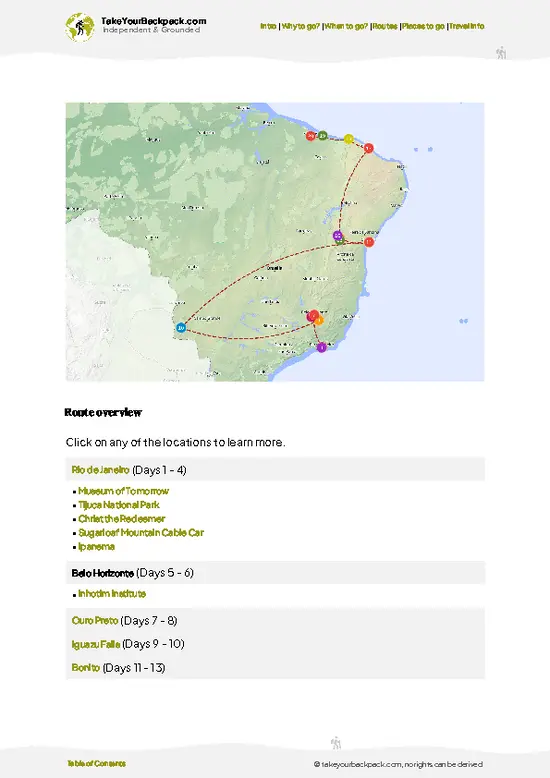
Discover everything you want to know in the 📖 Brazil Travel Guide.


example page 0 from our offline Travel Guide for Brazil
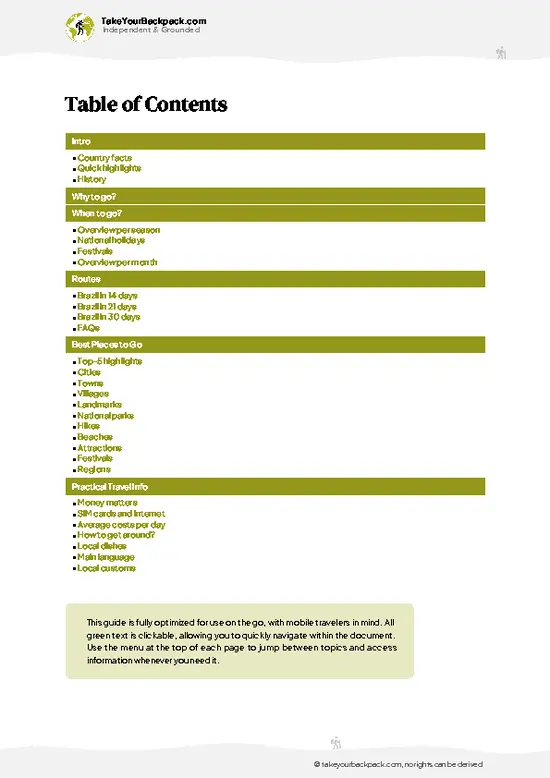
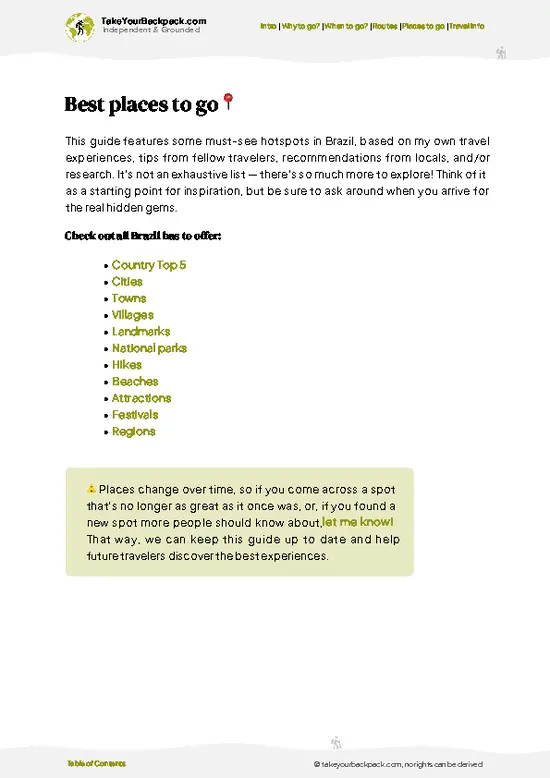
example page 1 from our offline Travel Guide for Brazil
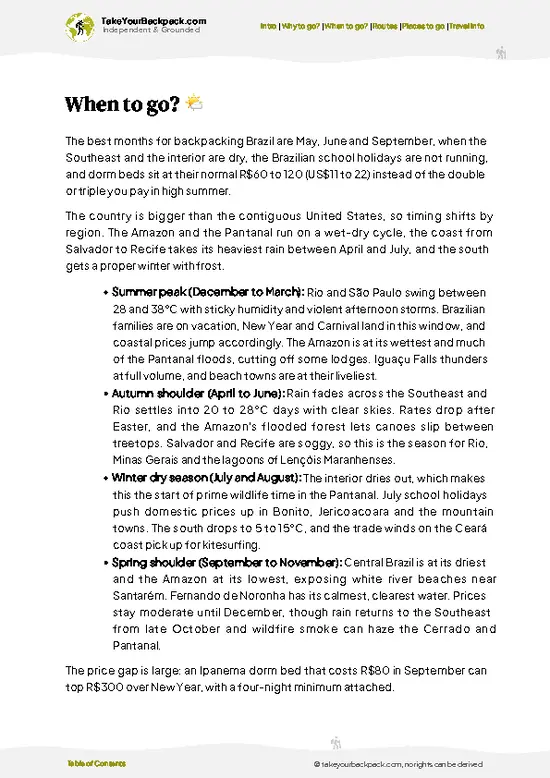
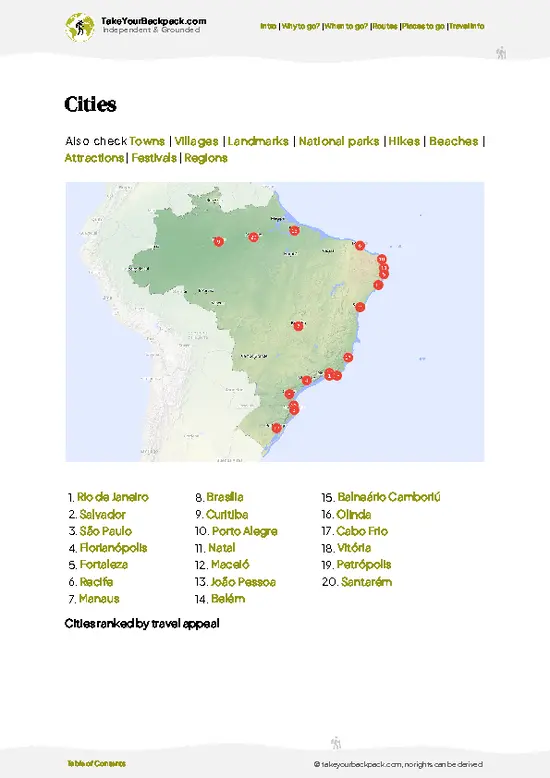
example page 2 from our offline Travel Guide for Brazil
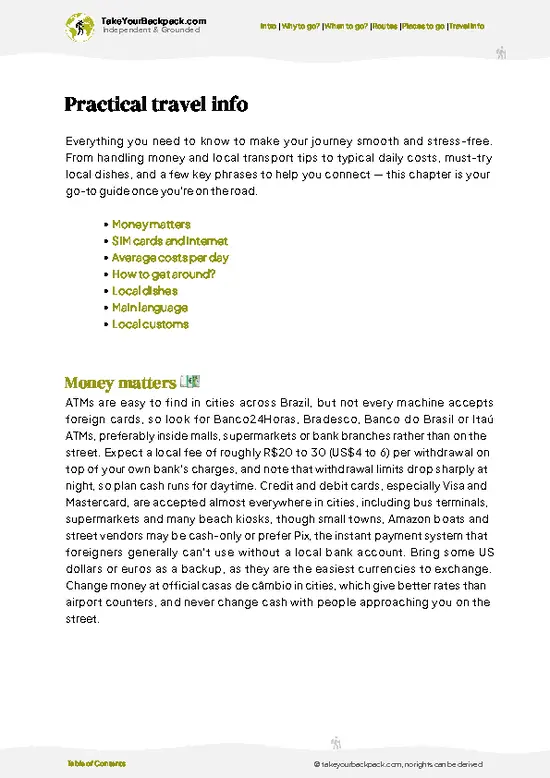
example page 3 from our offline Travel Guide for Brazil
example page 4 from our offline Travel Guide for Brazil
example page 5 from our offline Travel Guide for Brazil
example page 6 from our offline Travel Guide for Brazil
example page 7 from our offline Travel Guide for Brazil
Loading the map 🌍
CLICK TO FILTER
cities
towns
villages
landmarks
national parks
hikes
beaches
attractions
festivals
regions
SHOW COUNTRY’S BESTSHOW ALL

✨ Why go?
Ranked #8 town in Brazil
Why visitors keep coming back

Maragogi works because the reef does the heavy lifting. Boats leave from the beach to the Galés natural pools, shallow tide pools a few kilometers offshore where you float among reef fish, so you get a Caribbean-style swim without a diving certificate. Back on land, the town is small enough to cover on foot, with simple pousadas, a handful of hostels and beach shacks serving grilled fish and tapioca. Most backpackers stay two or three nights, long enough for the boat trip, a rest day and a visit to the quieter beaches nearby, such as Peroba and São Bento. It suits couples, small groups and solo travelers who like calm evenings and early starts. If you want nightlife, hostel parties or big sights, this is the wrong stop. If you want warm water, easy social contact on boats and slow days, it is a good one.

💡 HighlightsKey sights and experiences for travelers

  1. Galés de Maragogi (natural pools): The reason anyone comes. At low tide, shallow pools open on the reef about 6 to 7 km offshore, with clear water, small colorful fish and a sandbar underfoot. Catamarans and rafts leave from the beach at Barra Grande and Maragogi, and the trip runs 2 to 3 hours. Go on the earliest low-tide departure for fewer boats. Expect US$25 to 40, plus a small reef fee and optional snorkel gear rental.
  2. Praia de Maragogi: The town beach is a long, calm strip of pale sand with coconut palms and warm, shallow water. Morning is best, before the afternoon wind and the rows of chairs fill up. It is free, and an hour or two is plenty. Beachfront shacks sell grilled fish and fresh coconut water for a few dollars.
  3. Praia de Antunes: A quieter beach a few kilometers north of the center,
… read more 👉
  1. Galés de Maragogi (natural pools): The reason anyone comes. At low tide, shallow pools open on the reef about 6 to 7 km offshore, with clear water, small colorful fish and a sandbar underfoot. Catamarans and rafts leave from the beach at Barra Grande and Maragogi, and the trip runs 2 to 3 hours. Go on the earliest low-tide departure for fewer boats. Expect US$25 to 40, plus a small reef fee and optional snorkel gear rental.
  2. Praia de Maragogi: The town beach is a long, calm strip of pale sand with coconut palms and warm, shallow water. Morning is best, before the afternoon wind and the rows of chairs fill up. It is free, and an hour or two is plenty. Beachfront shacks sell grilled fish and fresh coconut water for a few dollars.
  3. Praia de Antunes: A quieter beach a few kilometers north of the center, with softer crowds and a river mouth where the water turns a deep green. Walk or take a short mototaxi ride. Late afternoon is lovely for a swim and a cold drink. Free, and 1 to 2 hours covers it.
  4. Sunset at the Rio Maragogi mouth: The river meets the sea beside mangroves and fishing boats, and local fishermen mend nets along the bank. Come around late afternoon when the sky colors up. Free, 45 minutes to an hour, and a good spot to chat with locals.
  5. Mercado de Peixe (fish market area): Fishermen bring in the day's catch, mostly in the morning, and nearby kitchens turn it into moqueca and fried fish. Arrive by 8 or 9 AM to watch the sorting. Entry is free, and a meal nearby costs roughly US$8 to 15. Allow about an hour.
Most visitors rush past the river mouth, yet it is where the town's fishing life is easiest to see, and a short boat ride among the mangroves with a local fisherman there costs only a few dollars. For day trips, head to the manatee sanctuary at Porto de Pedras, the beaches of Japaratinga and the Barra Grande sandbars.
Spotted a mistake or missing something? Contact us.

Things to do around Maragogi

Ratings based on Tripadvisor reviews. When you book through this link, you support our work at no extra cost to you.

🏘️ NeighborhoodsKey areas and districts to know

Maragogi is small enough that you can learn it in an afternoon, and the useful parts sit along one coastal strip.
  • Centro: A few blocks of bakeries, pharmacies, ATMs and cheap lunch counters a block or two back from the sea. Nothing historic to see, so don’t plan hours here. Walk it on foot, grab a plate of fish with rice and beans for a few dollars, and you have what you need.
  • Orla (beachfront): The sand strip lined with kiosks, tapioca stands and jangadas waiting for the tide. Flat, easy to walk end to end, and the best place to eat coconut-milk moqueca with your feet in the sand. Evenings bring forró and live music, but it winds down by midnight.
  • Barra Grande and Peroba: Quieter fishing beaches north and south of the center, reached by short rides. Peroba is calm with almost no development,
… read more 👉
Maragogi is small enough that you can learn it in an afternoon, and the useful parts sit along one coastal strip.
  • Centro: A few blocks of bakeries, pharmacies, ATMs and cheap lunch counters a block or two back from the sea. Nothing historic to see, so don’t plan hours here. Walk it on foot, grab a plate of fish with rice and beans for a few dollars, and you have what you need.
  • Orla (beachfront): The sand strip lined with kiosks, tapioca stands and jangadas waiting for the tide. Flat, easy to walk end to end, and the best place to eat coconut-milk moqueca with your feet in the sand. Evenings bring forró and live music, but it winds down by midnight.
  • Barra Grande and Peroba: Quieter fishing beaches north and south of the center, reached by short rides. Peroba is calm with almost no development, ideal for a long, empty swim. Barra Grande has mangrove-edged water and little else, so skip it unless you want solitude.
  • Galés pools zone: Not a neighborhood, but the reason people come. Reef pools appear offshore at low tide, and you reach them by boat. Clear, warm water full of fish is the payoff.

⌛️ 1 dayA smart one-day plan

8:30 AM, Galés natural pools: Head to the beach and join the first boat at low tide. Float in the clear shallow pools, snorkel above the reef fish and linger before the crowds arrive. You return by boat, so keep your things light.

12:00 PM, Fish stalls by the pier: Walk to the pier and eat grilled fish or shrimp at a simple stall. The food is fresh and the setting is local.

2:00 PM, Praia de Peroba: Take a short ride to this quieter beach. Swim, rest under palms and enjoy the calm water, away from the main strip.

4:30 PM, Back streets of the center: Wander the unfancy side streets behind the main avenue, where locals shop, chat and sell tapioca and coconut sweets. It is not a sight, but it shows daily life in town.

6:00 PM, Praia de Maragogi: End on the town beach for a slow walk and a … read more 👉
8:30 AM, Galés natural pools: Head to the beach and join the first boat at low tide. Float in the clear shallow pools, snorkel above the reef fish and linger before the crowds arrive. You return by boat, so keep your things light.

12:00 PM, Fish stalls by the pier: Walk to the pier and eat grilled fish or shrimp at a simple stall. The food is fresh and the setting is local.

2:00 PM, Praia de Peroba: Take a short ride to this quieter beach. Swim, rest under palms and enjoy the calm water, away from the main strip.

4:30 PM, Back streets of the center: Wander the unfancy side streets behind the main avenue, where locals shop, chat and sell tapioca and coconut sweets. It is not a sight, but it shows daily life in town.

6:00 PM, Praia de Maragogi: End on the town beach for a slow walk and a drink at a beach shack as the light fades. Dinner is easy nearby.

🌤️ When to go?Choosing the right time of year

Maragogi works year-round, but September to February gives the calmest, clearest water for the offshore reef pools.
  • Dry Season (September to February): Highs of 29 to 31°C (84 to 88°F), little rain, and about 12 hours of daylight. Visibility is best, so reef tours are at their finest. Prices and crowds peak in December to January and around Carnival.
  • Rainy Season (April to August): Highs of 27 to 29°C (81 to 84°F) with frequent downpours, especially May to July. Water gets cloudy, and some tours cancel. Beds are cheaper, and the town is nearly empty.
  • Shoulder Months (March and early September): Mixed weather but fewer visitors and moderate prices.
  • Tides: Reef pools only show at low tide, so boat times change daily.
Check the tide table before booking, and aim for a morning low tide.

source: climatestotravel.comJANJanuary: highly recommended for travelingFEBFebruary: highly recommended for travelingMARMarch: highly recommended for travelingAPRApril: good for travelingMAYMay: good for travelingJUNJune: fair for travelingJULJuly: fair for travelingAUGAugust: fair for travelingSEPSeptember: excellent for travelingOCTOctober: excellent for travelingNOVNovember: highly recommended for travelingDECDecember: highly recommended for traveling
when-to-go

✈️ The backpacker research shortcutBrazil Travel Guide

An offline-friendly backpacking guide with optimized travel routes, ranked highlights, transport advice, and the best areas to stay.
example page 0 from our offline Travel Guide for Brazil
example page 1 from our offline Travel Guide for Brazil
example page 2 from our offline Travel Guide for Brazil
example page 3 from our offline Travel Guide for Brazil
example page 4 from our offline Travel Guide for Brazil
example page 5 from our offline Travel Guide for Brazil
example page 6 from our offline Travel Guide for Brazil
example page 7 from our offline Travel Guide for Brazil
The digital guide (410 pages) contains:
✅ 146 highlights, ranked by travel appeal
✅ Optimized 14, 21 & 30-day travel routes
✅ Cities, national parks, landmarks, beaches
✅ How to get around
✅ Offline-friendly for travel without Wi-Fi
👉 Click to see all 30+ guide features

📅 Plan smarter in minutes, not weeks
✅ Month by month travel advice
✅ Festivals & national holidays
✅ Budget expectations

🗺️ Go to the right places, skip the overrated ones
✅ Honest pros & cons of destinations
✅ Top hikes, parks & viewpoints
✅ Lesser-known places most travelers miss
✅ Clear “worth it vs skip it” guidance

🛏️ Travel smoothly without rookie mistakes
✅ Best areas to stay
✅ Transport systems explained simply
✅ Common scams & safety advice
✅ SIM cards, money & practical tips

🌍 Understand the country, not just visit it
✅ Culture & traditions
✅ 52 Essential phrases & customs
✅ Festivals worth planning around
✅ Traveler-friendly historical context
✅ Insights that make places more meaningful

📱 Built for real travel conditions
✅ Fully downloadable PDF
✅ Works completely offline
✅ Optimized for phone use
✅ Useful in remote areas & buses
✅ Everything in one place
Stop searching, start planning
Get instant access to your full guide. 30‑day money-back guarantee.
+ Add another guide for just

By proceeding you agree to our terms.
Sent to your inbox immediately after payment • 100% Secure Checkout
Best Backpacking Travel Advisor 2025 tourism awardBest Backpacking
Travel Advisor
2025
What others say about Take Your Backpack Guides:
⭐⭐⭐⭐⭐
Fantastic, amazing amount of information!
⭐⭐⭐⭐⭐
My goodness this is amazing, it's what I've been looking for hats off too you!
⭐⭐⭐⭐⭐
I think this is absolutely BRILLIANT
⭐⭐⭐⭐
Very complete and informative. It's still missing places, but I gotta to commend you
⭐⭐⭐⭐⭐
This is truly amazing, thank you, can't wait to explore it with my kids!
⭐⭐⭐⭐⭐
Awesome resource, thank you!
⭐⭐⭐⭐⭐
This is amazing! Can't wait to explore the ones I haven't seen
⭐⭐⭐⭐
I love this! Well done, great idea.
⭐⭐⭐⭐⭐
Thanks for taking the time to make this gem!
⭐⭐⭐⭐⭐
This might be the best website I've ever seen.
⭐⭐⭐⭐⭐
Congratulations, and thank you so much for your work; it's incredibly valuable.
⭐⭐⭐⭐
In all seriousness I think you did a great job pointing out the important spots
⭐⭐⭐⭐⭐
10/10 very good
⭐⭐⭐⭐⭐
As someone who's only just starting to visit regularly this is awesome, thank you.
⭐⭐⭐⭐
Thank you very much! I'm going to visit my dad, it's going to be very useful!
⭐⭐⭐⭐⭐
This is really cool! We'll be travelling for the first time and this definitely come in handy.
⭐⭐⭐⭐⭐
You are now our minister of culture, congratulations 👨‍💼
⭐⭐⭐⭐⭐
Just wanted to tell you that this is a pearl! Going to follow your recommendations.
⭐⭐⭐⭐⭐
This is so cool. I'll definitely be using the resource for my travels soon.
⭐⭐⭐⭐⭐
This is very impressive! Good work.
⭐⭐⭐⭐⭐
This is an amazing and informative site. Very well done!

🛏️ Where to stay?Where staying makes the most sense

Stay in Centro or a block or two from the beachfront, since that is where the hostels, budget pousadas and cheap food cluster. Dorm beds are limited here compared with bigger Brazilian beach towns, so book ahead in December to February and during holiday weekends. Expect about US$12 to 25 for a dorm bed or simple private room away from the sand, rising in high season.

Centro is practical: bakeries, ATMs, buses and mototaxis are close, and the streets are lit and lively enough in the evening to walk back without worry. It is quiet after about 11 pm, apart from the occasional bar on the main drag. … read more 👉
Stay in Centro or a block or two from the beachfront, since that is where the hostels, budget pousadas and cheap food cluster. Dorm beds are limited here compared with bigger Brazilian beach towns, so book ahead in December to February and during holiday weekends. Expect about US$12 to 25 for a dorm bed or simple private room away from the sand, rising in high season.

Centro is practical: bakeries, ATMs, buses and mototaxis are close, and the streets are lit and lively enough in the evening to walk back without worry. It is quiet after about 11 pm, apart from the occasional bar on the main drag.

The beachfront strip gives you the sea at the door and the best breeze, but is pricier and noisier on weekends when live music plays. Quieter Peroba suits you if you want calm, though it has few shops and a longer ride to the center. Sleeping near the coast road means you can catch morning boat tours without a taxi.

🚌 Getting aroundHow to get from A to B

Your own feet get you around Maragogi best, because the town center, the beachfront and the bars along Avenida Senador Rui Palmeira all sit within about 2 kilometers of each other. Traffic is light, sidewalks are patchy, and public transport barely matters inside town. Beyond it, the coast road (AL-101 Norte) is where you need wheels or a seat in someone else's vehicle.
  • Walking: The center is flat and takes 15 to 20 minutes end to end. The beach promenade is the pleasant stretch, with coconut water stands and shade from palms. Skip walking the shoulderless AL-101 between beaches in midday heat, since it is hot, dusty and dull. Free, and you eat where the locals do.
  • Mototaxi: Motorbike taxis wait at the main square and cost about US$1 to 3 for a town ride, US$4 to 8 to nearby beaches such as
… read more 👉
Your own feet get you around Maragogi best, because the town center, the beachfront and the bars along Avenida Senador Rui Palmeira all sit within about 2 kilometers of each other. Traffic is light, sidewalks are patchy, and public transport barely matters inside town. Beyond it, the coast road (AL-101 Norte) is where you need wheels or a seat in someone else's vehicle.
  • Walking: The center is flat and takes 15 to 20 minutes end to end. The beach promenade is the pleasant stretch, with coconut water stands and shade from palms. Skip walking the shoulderless AL-101 between beaches in midday heat, since it is hot, dusty and dull. Free, and you eat where the locals do.
  • Mototaxi: Motorbike taxis wait at the main square and cost about US$1 to 3 for a town ride, US$4 to 8 to nearby beaches such as Antunes or Peroba. Agree the price before you climb on, ask for the spare helmet, and you cover the coast in minutes with the wind in your face.
  • Taxi and app rides: Regular taxis run from the square and charge roughly US$3 to 6 in town and US$10 to 20 to the farther beaches. Apps are unreliable here, so do not count on them. Taxis make sense after dark or with a backpack.
  • Local vans and buses: Minibuses and buses run along the coast road between Maragogi and neighboring towns such as São Miguel dos Milagres and Japaratinga for about US$1 to 3, roughly hourly in the daytime and thinning out by early evening. They are slow and stop often, but they are the cheapest way to reach the next beach town.
  • Bike or buggy rental: Bicycles rent for around US$8 to 15 a day, and the flat coastal roads suit them well on the cooler mornings. Buggies cost far more, about US$70 to 120 a day, and are not worth it for one person. A bike gets you to empty beaches and a late coconut under a palm.
Buses from Recife take about 2 hours 30 minutes to 3 hours 30 minutes, and Maceió is about 2 hours by road. Boats to the Galés natural pools leave from the beach and are booked through operators rather than used as transport.

👛 Costs (as of 19 October 2026)How expensive it really is

Backpacking in Maragogi costs about US$58 to 100 a day in high season, with a total of US$72 in the table below.
CategoryBudget RangeLocal Reality
Dorm accommodationUS$15 to 25Limited dorm supply, so simple private rooms often cost the same. Prices rise in December to January.
MealsUS$15 to 22Self-serve lunch plates (por quilo) cost US$5 to 8, and tapioca or bakery snacks fill gaps.
Local transportUS$3 to 8Mototaxis cost US$1 to 3 per ride, taxis a bit more.
Basic activities/entry feesUS$20 to 35The Galés reef boat tour is the main expense, with beaches free.
Miscellaneous expensesUS$5 to 10Sunscreen, water, snacks and the occasional caipirinha.
Total Daily BudgetUS$58 to 100About US$72 a day with a mid-range tour day.
Eat your main meal at a por quilo lunch spot, then keep dinner light, and you will save US$5 or more daily.
⚠️ Prices can change and everyone travels differently, so take this as a rough guide. Hope it helps you plan your adventure!

🚌 Day tripsEasy escapes and nearby places

Maragogi is a solid base for day trips because the coast has several beaches and reef spots within 1 to 2 hours, mostly by road or boat.
Galés Reef Pools: Natural pools form about 6 km offshore at low tide, with warm, clear water and colorful fish. Boat tours take about 3 to 4 hours and cost roughly US$20 to 35, with a snorkel included. Visibility is best from September to February, and first-timers often arrive too late, missing the low tide.

Japaratinga: A smaller, quieter beach town about 15 minutes south by taxi or van, costing US$2 to 6 each way. It has calm pools and relaxed kiosks, and it makes an easy half-day when the Maragogi crowd is thick.

São Miguel dos Milagres: A drive of about 40 to 60 minutes south takes you to a low-key coast of palm-lined sand and river-mouth lagoons. A … read more 👉
Maragogi is a solid base for day trips because the coast has several beaches and reef spots within 1 to 2 hours, mostly by road or boat.
Galés Reef Pools: Natural pools form about 6 km offshore at low tide, with warm, clear water and colorful fish. Boat tours take about 3 to 4 hours and cost roughly US$20 to 35, with a snorkel included. Visibility is best from September to February, and first-timers often arrive too late, missing the low tide.

Japaratinga: A smaller, quieter beach town about 15 minutes south by taxi or van, costing US$2 to 6 each way. It has calm pools and relaxed kiosks, and it makes an easy half-day when the Maragogi crowd is thick.

São Miguel dos Milagres: A drive of about 40 to 60 minutes south takes you to a low-key coast of palm-lined sand and river-mouth lagoons. A shared ride or bus costs about US$4 to 10, and the sea is calm for floating. Go on weekdays to avoid weekend traffic.
👉 Explore São Miguel dos Milagres
Porto de Pedras: A fishing village with a lagoon where manatees are rehabilitated. It is about 1 hour away, and a day costs roughly US$10 to 20 with transport. It is best in the dry months, when the road is easier.

🛡️ SafetyStaying Safe: What Travelers Should Know

Maragogi is broadly safe, and most problems are petty. Keep phones and cameras out of sight on the beach, and never leave bags unattended on the sand while swimming. At night, stick to lit streets in Centro and the beachfront, and take a mototaxi or taxi rather than walking dark stretches of the coast road. Solo travelers, including women, generally manage fine, but avoid deserted beaches after dark. The most common annoyances are vendors pushing tours and boat touts with inflated prices, so compare quotes and book through your accommodation or a registered operator. Always wear a life vest on reef tours, and watch for sun and sea urchins. Carry some cash, as ATMs sometimes run empty on weekends.

FAQFrequently asked questions about Maragogi

Maragogi is worth a proper visit, not a quick stopover, because the Galés natural pools sit about 6 kilometers offshore and are reached by boat at low tide. Tours cost roughly US$20 to 40 and include snorkeling in warm, clear water. Add the quiet beaches of Antunes and Peroba and you have a full beach itinerary.
Plan 2 to 3 days in Maragogi. One day goes to the Galés pools tour, which takes half a day and depends on the tide table, and another to nearby beaches by mototaxi or bike. A third day gives you slack for weather or a trip to Japaratinga or São Miguel dos Milagres.
A day trip from Recife is possible but tiring, since the road takes about 2 hours 30 minutes to 3 hours 30 minutes each way, and Maceió is closer at roughly 2 hours. Organized day tours from both cities exist for about US$40 to 80, but they leave little time at the pools. Staying at least one night in Maragogi lets you catch the morning low tide.
⚠️ Things can change over time, so always validate details locally before you go.

Other Brazilian towns near Maragogi

Explore more nearby:

  • São Miguel dos Milagres—Palm-fringed coast, reef pools, manatee river, Toque beach| 34 km away
  • Piranhas—São Francisco river, canyon catamaran, cangaço museum, pastel sobrados| 287 km away
  • Itacaré—Tiririca surf, Bahia jungle coast, Rua Pedro Longo, quiet coves| 716 km away

💡 Not sure where to go next?
Create a personalized itinerary for Brazil including Maragogi and the places that fit your trip.

Generate my itinerary

👉 Discover all towns

Or checkout all Brazil has to offer (think cities, towns, villages, national parks, hikes, beaches, festivals)
Country photo of Brazil

We 💚 feedbackSumming up the experience

Maragogi is best on a weekday morning at low tide, outside school holidays, when the reef pools are clear and the boats are half empty. I would book the first departure and keep the afternoon free. Bring reef-safe sunscreen, and skip the late-night plans.

✈️ When did I visit Brazil?
Call it good timing or luck, but I was able to celebrate Carnaval in Rio de Janeiro in February 2022, after a round trip in the north and east coast.

✍️ Help improve this page!
The information on this page is based on my own backpacking experience in Brazil, supplemented with up-to-date research and feedback from other travelers. Travel details can change, so if you notice anything outdated or incomplete, feel free to let me know.


🙋‍♂️ Give feedback

👋 Meet the founderWho’s Behind Take Your Backpack?

Johan, backpacker and founder of TakeYourBackpackHi, I’m Johan (Netherlands 🇳🇱), the creator of TakeYourBackpack. Over the past 3 decades, I’ve backpacked through 90+ countries across six continents, gaining extensive experience with independent travel, long-term trips, and overland routes.

This site is built on a combination of firsthand travel experience and carefully curated insights from other backpackers. Many guides are based on places I’ve personally visited, while others bring together tips, observations, and practical advice shared by trusted travelers I’ve met along the way.

The goal is to provide realistic, experience-driven guidance — not generic itineraries — so you can explore destinations with better context, clearer expectations, and more confidence.