×

Brazil🇧🇷 | national parksMonte Roraima National ParkTabletop mountain, tepui summit, border tri-point | things to do and best time to go

Explore Serra do Divisor National ParkExplore Tumucumaque Mountains National Park

Backpacking in Monte Roraima
👍 Recommendednational park ranked #17
By Johan Kruseman 🇳🇱 | Updated May 30, 2026

Your boots hit cold, iron-red rock, and the wind coming off the plateau tastes like wet stone and moss; clouds slide past at eye level, swallowing and revealing the abyss in slow motion. Monte Roraima National Park sits in Brazil’s far north, in Roraima state on the Venezuela–Guyana border, and it’s one of those places that looks like fantasy art until your legs start burning. For backpackers, it’s spectacular but not simple: multi‑day trekking, moody weather, and logistics that usually involve going via Venezuela or arranging specialized guides from Brazil, which means higher costs and fewer last‑minute options than, say, Chapada Diamantina or Serra dos Órgãos. The scenery is outrageous—sheer tepui walls, alien rock gardens, insect life that looks half-prehistoric—but wildlife viewing is limited compared with Amazon parks, and the trail can feel crowded in high season around the main camps despite the remoteness. Camping is basic, often damp, and you pay both in money (permits, guides, transport) and in comfort, but the vibe on the mountain is focused and respectful; people are there to hike hard, not to party, which I appreciate when I’m wringing rainwater out of my socks for the third time in a day.

Discover everything you want to know in the 📖 Brazil Travel Guide.


Get your Brazil guide
152 ranked highlights, routes & tips, works offline (516 pages)
Loading the map 🌍
CLICK TO FILTER
cities
towns
villages
landmarks
national parks
hikes
beaches
attractions
festivals
regions
SHOW COUNTRY’S BESTSHOW ALL

✨ Why go?
Ranked #17 national park in Brazil
Why visitors keep coming back

Backpackers flock to Monte Roraima National Park for its unique independent exploration opportunities. The park offers a range of budget camping options and nearby hostels, making it accessible for all. Trails vary from easy walks to challenging treks, catering to different skill levels. This flexibility allows for self-guided travel, which many prefer over organized tours. You can set your own pace, soak in the stunning landscapes, and avoid the crowds. Just be prepared for the weather; it can change quickly. Knowing this helps you focus your energy and budget on the experiences that truly matter.
Want to include Monte Roraima National Park in your Brazil route?
Create a personalized Brazil itinerary that includes Monte Roraima National Park and the places that fit your trip — based on your travel style, budget, and available time. Get your route in seconds.

Generate my trip

💡 HighlightsThe experiences that define the visit

  1. Summit plateau (the tabletop): The whole reason you come — a surreal, flat quartzite top strewn with giant boulders, shallow pools and strange erosional shapes that look like another planet. Weather flips fast up there and you’ll find the official triple-border point (Brazil/Venezuela/Guyana) and isolated pockets of life that exist nowhere else. (Personal favorite.)
  2. Tepui cliffs and escarpments: Towering, sheer walls drop away from the plateau and make for jaw-dropping vistas and dramatic photo angles. In the wet season those cliffs feed sudden waterfalls; in dry months they reveal banded, ancient rock faces you can stare at for hours.
  3. Strange plants — pitchers, bromeliads and orchids: The summit’s soil is lean, so plants evolved wild tricks: carnivorous Heliamphora pitchers, tight bromeliad
read more 👉
  1. Summit plateau (the tabletop): The whole reason you come — a surreal, flat quartzite top strewn with giant boulders, shallow pools and strange erosional shapes that look like another planet. Weather flips fast up there and you’ll find the official triple-border point (Brazil/Venezuela/Guyana) and isolated pockets of life that exist nowhere else. (Personal favorite.)
  2. Tepui cliffs and escarpments: Towering, sheer walls drop away from the plateau and make for jaw-dropping vistas and dramatic photo angles. In the wet season those cliffs feed sudden waterfalls; in dry months they reveal banded, ancient rock faces you can stare at for hours.
  3. Strange plants — pitchers, bromeliads and orchids: The summit’s soil is lean, so plants evolved wild tricks: carnivorous Heliamphora pitchers, tight bromeliad rosettes and tiny endemic orchids all cling to rock and collect nutrients from rain and insects. It’s a botanist’s playground and a great spot for close-up nature photos.
  4. Endemic wildlife — tiny toads and hardy critters: You’ll encounter species found only on tepuis, like the stubby rock-toads (Oreophrynella species) that hop among boulders, plus odd insects and spiders adapted to the harsh plateau environment. Wildlife here is sparse but highly specialized and fascinating.
  5. Multi-day hiking route and ecosystem transitions: The trek up is a classic mix — open savannah, patches of cloud forest, steep rocky approaches and then the barren summit. That progression of habitats in a few days is one of the park’s best features; every camp has a different feel.
  6. Seasonal waterfalls, streams and natural pools: Rain runoff carves mini-canyons and feeds clear pools you can cool off in. The waterfalls are ephemeral but intense; even small streams on the summit create weird, sculpted potholes and tiny micro-habitats.
  7. Panoramic views, sunrise above the clouds and night sky: From the plateau you can watch sunrises spill light over a sea of tepuis and lowland savannah — if the clouds cooperate. Nights are remote and dark, with a surprisingly vivid Milky Way and the hush of far-away wilderness.
Spotted a mistake or missing something? Contact us.

🌤️ When to go?When to go for the best experience


  • Weather: The dry season from December to March offers clearer trails and less mud, but expect occasional rain. The wet season (April to November) brings heavy rains, slippery paths, and frequent river crossings that can slow your pace.

  • Temperature: Daytime temps hover around 20-25°C (68-77°F), but nights can drop to 10°C (50°F) or lower, especially on the plateau. Pack layers for chilly evenings.

  • Daylight Hours: Roughly 11-12 hours year-round, giving you solid daylight for trekking but plan early starts to avoid afternoon showers.

  • Crowds: Peak season (dry months) draws more trekkers, so book guides and permits early. The wet season sees fewer visitors but tougher conditions.

  • Seasonal Activities: Dry months are best for summit hikes and camping on the plateau. Wet months limit access
read more 👉

  • Weather: The dry season from December to March offers clearer trails and less mud, but expect occasional rain. The wet season (April to November) brings heavy rains, slippery paths, and frequent river crossings that can slow your pace.

  • Temperature: Daytime temps hover around 20-25°C (68-77°F), but nights can drop to 10°C (50°F) or lower, especially on the plateau. Pack layers for chilly evenings.

  • Daylight Hours: Roughly 11-12 hours year-round, giving you solid daylight for trekking but plan early starts to avoid afternoon showers.

  • Crowds: Peak season (dry months) draws more trekkers, so book guides and permits early. The wet season sees fewer visitors but tougher conditions.

  • Seasonal Activities: Dry months are best for summit hikes and camping on the plateau. Wet months limit access and increase risks, so focus on lower trails if you go then.

  • Price Fluctuations: Expect higher costs for guides and accommodations during the dry season due to demand. Off-season rates drop but factor in potential delays and gear wear.


Pro-tip: Aim for the shoulder months of November or March—less crowded, manageable weather, and better prices without sacrificing the core experience.


source: climatestotravel.comJANJanuary: excellent for travelingFEBFebruary: excellent for travelingMARMarch: highly recommended for travelingAPRApril: fair for travelingMAYMay: fair for travelingJUNJune: fair for travelingJULJuly: fair for travelingAUGAugust: fair for travelingSEPSeptember: fair for travelingOCTOctober: fair for travelingNOVNovember: highly recommended for travelingDECDecember: excellent for traveling
when-to-go

✈️ The backpacker research shortcutBrazil Travel Guide

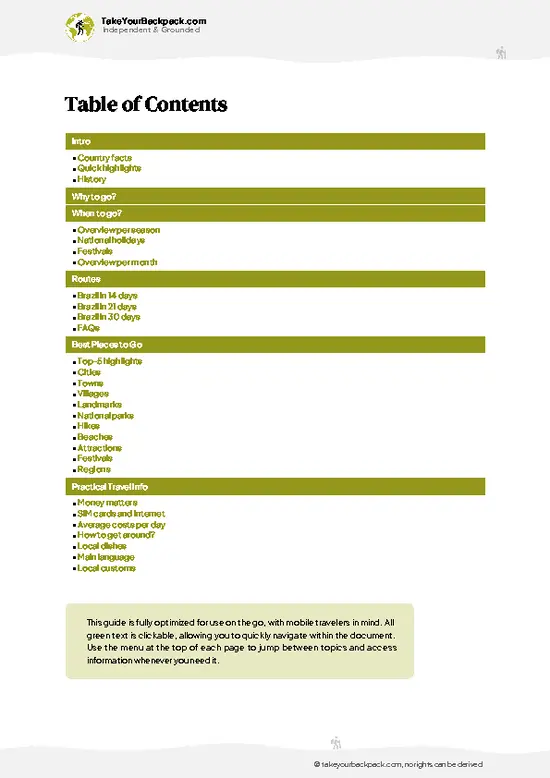
An offline-friendly backpacking guide with optimized travel routes, ranked highlights, transport advice, and the best areas to stay.
example page 0 from our offline Travel Guide for Brazil
example page 1 from our offline Travel Guide for Brazil
example page 2 from our offline Travel Guide for Brazil
example page 3 from our offline Travel Guide for Brazil
example page 4 from our offline Travel Guide for Brazil
example page 5 from our offline Travel Guide for Brazil
example page 6 from our offline Travel Guide for Brazil
example page 7 from our offline Travel Guide for Brazil
The digital guide (516 pages) contains:
152 highlights, ranked by travel appeal
Optimized 14, 21 & 30-day travel routes
Cities, national parks, landmarks, beaches
How to get around
Offline-friendly for travel without Wi-Fi
👉 Click to see all 30+ guide features

📅 Plan smarter in minutes, not weeks
Month by month travel advice
Festivals & national holidays
Budget expectations

🗺️ Go to the right places, skip the overrated ones
Honest pros & cons of destinations
Top hikes, parks & viewpoints
Lesser-known places most travelers miss
Clear “worth it vs skip it” guidance

🛏️ Travel smoothly without rookie mistakes
Best areas to stay
Transport systems explained simply
Common scams & safety advice
SIM cards, money & practical tips

🌍 Understand the country, not just visit it
Culture & traditions
52 Essential phrases & customs
Festivals worth planning around
Traveler-friendly historical context
Insights that make places more meaningful

📱 Built for real travel conditions
Fully downloadable PDF
Works completely offline
Optimized for phone use
Useful in remote areas & buses
Everything in one place
Save weeks of stressful planning
Get instant access to your full guide. 30‑day money-back guarantee.


By proceeding you agree to our terms.
Sent to your inbox immediately after payment • 100% Secure Checkout
Best Backpacking Travel Advisor 2025 tourism awardBest Backpacking
Travel Advisor
2025
What others say about Take Your Backpack Guides:
⭐⭐⭐⭐⭐
Fantastic, amazing amount of information!
⭐⭐⭐⭐⭐
My goodness this is amazing, it's what I've been looking for hats off too you!
⭐⭐⭐⭐⭐
I think this is absolutely BRILLIANT
⭐⭐⭐⭐
Very complete and informative. It's still missing places, but I gotta to commend you
⭐⭐⭐⭐⭐
This is truly amazing, thank you, can't wait to explore it with my kids!
⭐⭐⭐⭐⭐
Awesome resource, thank you!
⭐⭐⭐⭐⭐
This is amazing! Can't wait to explore the ones I haven't seen
⭐⭐⭐⭐
I love this! Well done, great idea.
⭐⭐⭐⭐⭐
Thanks for taking the time to make this gem!
⭐⭐⭐⭐⭐
This might be the best website I've ever seen.
⭐⭐⭐⭐⭐
Congratulations, and thank you so much for your work; it's incredibly valuable.
⭐⭐⭐⭐
In all seriousness I think you did a great job pointing out the important spots
⭐⭐⭐⭐⭐
10/10 very good
⭐⭐⭐⭐⭐
As someone who's only just starting to visit regularly this is awesome, thank you.
⭐⭐⭐⭐
Thank you very much! I'm going to visit my dad, it's going to be very useful!
⭐⭐⭐⭐⭐
This is really cool! We'll be travelling for the first time and this definitely come in handy.
⭐⭐⭐⭐⭐
You are now our minister of culture, congratulations 👨‍💼
⭐⭐⭐⭐⭐
Just wanted to tell you that this is a pearl! Going to follow your recommendations.
⭐⭐⭐⭐⭐
This is so cool. I'll definitely be using the resource for my travels soon.
⭐⭐⭐⭐⭐
This is very impressive! Good work.
⭐⭐⭐⭐⭐
This is an amazing and informative site. Very well done!

🛏️ Where to stay?Where staying makes the most sense

Monte Roraima National Park doesn’t have formal accommodations within its boundaries. Most backpackers stay in the nearby town of Pacaraima, Brazil, or the Venezuelan town of Santa Elena de Uairén.

In Pacaraima, consider the simple yet welcoming hostels like Pousada Roraima. They offer basic amenities and a chance to connect with fellow trekkers.

Be prepared for additional costs. Guides are mandatory for park entry, and they can vary in price. Budget for food and gear rentals too. This upfront planning preserves your energy and funds for the breathtaking views and experiences that await on the trail.

👛 Costs (as of 10 May 2026)How expensive it really is

Visiting Monte Roraima National Park in Brazil can be an incredible experience, but it’s essential to be aware of the costs involved to avoid surprises.

First, the entrance fee to the park is around $10 to $20 USD. This fee helps maintain the trails and facilities, so it’s worth it.

Next, consider the cost of guided tours. Most visitors opt for a multi-day trek, which typically ranges from $300 to $600 USD. This price usually includes meals, camping gear, and a local guide. Going without a guide is not advisable due to the challenging terrain and potential for getting lost.

Transportation to the park is another factor. A bus from Boa Vista to the town of Pacaraima costs about $20 to $30 USD. From there, you’ll need to arrange a transfer to the park entrance, which can add another $10 to … read more 👉
Visiting Monte Roraima National Park in Brazil can be an incredible experience, but it’s essential to be aware of the costs involved to avoid surprises.

First, the entrance fee to the park is around $10 to $20 USD. This fee helps maintain the trails and facilities, so it’s worth it.

Next, consider the cost of guided tours. Most visitors opt for a multi-day trek, which typically ranges from $300 to $600 USD. This price usually includes meals, camping gear, and a local guide. Going without a guide is not advisable due to the challenging terrain and potential for getting lost.

Transportation to the park is another factor. A bus from Boa Vista to the town of Pacaraima costs about $20 to $30 USD. From there, you’ll need to arrange a transfer to the park entrance, which can add another $10 to $15 USD.

Food and supplies can add up as well. If you’re not on a guided tour, budget around $10 to $15 USD per day for meals. Stocking up on snacks and water before you head into the park can save you money.

Finally, consider any additional expenses like tips for guides or extra gear rentals. These can range from $20 to $50 USD depending on your needs.

In total, expect to spend around $400 to $700 USD for a well-rounded experience. Planning ahead and budgeting for these costs will help you focus on the adventure rather than financial surprises.
⚠️ Prices can change and everyone travels differently, so take this as a rough guide. Hope it helps you plan your adventure!

🥾 TrailsTrail guide for Monte Roraima national park

Monte Roraima National Park is a dream for hikers, with its surreal landscapes and unique biodiversity. The park is famous for its tabletop mountain, or ”tepui,” which rises dramatically from the surrounding rainforest. As you trek, you’ll encounter stunning views, waterfalls, and a variety of wildlife, including unique species of frogs and insects that you won’t find anywhere else. The terrain can be rugged, with rocky paths and steep ascents, so be prepared for a workout, but the vistas are totally worth it.

One of the main trails is the Roraima Trek, which leads you to the summit of the mountain. … read more 👉
Monte Roraima National Park is a dream for hikers, with its surreal landscapes and unique biodiversity. The park is famous for its tabletop mountain, or ”tepui,” which rises dramatically from the surrounding rainforest. As you trek, you’ll encounter stunning views, waterfalls, and a variety of wildlife, including unique species of frogs and insects that you won’t find anywhere else. The terrain can be rugged, with rocky paths and steep ascents, so be prepared for a workout, but the vistas are totally worth it.

One of the main trails is the Roraima Trek, which leads you to the summit of the mountain. Here’s the lowdown:
  • Length: 6-8 km (to the summit)
  • Estimated Duration: 6-8 hours (one way)
  • Difficulty Level: Moderate to Challenging
  • Key Features: Stunning panoramic views, unique rock formations, diverse flora and fauna
  • Terrain: Rocky paths, steep inclines, and some scrambling

Getting to the park isn’t too tricky, but it does require a bit of planning. Most travelers start from the town of Boa Vista, which is accessible via bus or flight. From there, you can catch a ride to the border town of Pacaraima, where guided tours typically begin. Be aware that it can get crowded during peak season, especially with tour groups, so booking in advance is a smart move. As for entrance fees, you’ll likely pay a small fee for park entry, which goes towards conservation efforts—so you can feel good about supporting the place while you explore.
⚠️ Hiking info can sometimes be outdated or inaccurate. Before you hit the trail, check the latest conditions with locals. If you do spot anything that's off, I'd love to hear from you, so I can update it for fellow travelers.

🛡️ SafetySafety Tips and Common Scams in Monte Roraima

Monte Roraima National Park offers a straightforward hiking experience, but a few realities can catch you off guard. Weather can shift rapidly; pack layers and a reliable rain jacket. The terrain is rugged, with steep sections and occasional river crossings, so sturdy footwear is essential. Altitude can affect some, so take it slow and stay hydrated. Wildlife encounters are rare, but respect their space. Prepare for the trail by studying your route and pacing yourself; this will help you enjoy the stunning views without exhausting yourself.

Other Brazilian national parks near Monte Roraima

Explore more nearby:


💡 Not sure where to go next?
Create a personalized itinerary for Brazil including Monte Roraima and the places that fit your trip.

Generate my itinerary

👉 Discover all national parks

Or checkout all Brazil has to offer (think cities, towns, villages, national parks, hikes, beaches, festivals)
Country photo of Brazil

We 💚 feedbackKey takeaways before you go

Monte Roraima is a trekker’s dream, with its otherworldly landscapes and unique biodiversity. But be prepared: the weather can turn on a dime. A sudden downpour can soak your gear and dampen spirits, so pack wisely and stay adaptable.

✈️ When did I visit Brazil?
Call it good timing or luck, but I was able to celebrate Carnaval in Rio de Janeiro in February 2022, after a round trip in the north and east coast.

✍️ Help improve this page!
The information on this page is based on my own backpacking experience in Brazil, supplemented with up-to-date research and feedback from other travelers. Travel details can change, so if you notice anything outdated or incomplete, feel free to let me know.


🙋‍♂️ Give feedback

👋 Meet the founderWho’s Behind Take Your Backpack?

Johan, backpacker and founder of TakeYourBackpackHi, I’m Johan (Netherlands 🇳🇱), the creator of TakeYourBackpack. Over the past decade, I’ve backpacked through 80+ countries across six continents, gaining extensive experience with independent travel, long-term trips, and overland routes.

This site is built on a combination of firsthand travel experience and carefully curated insights from other backpackers. Many guides are based on places I’ve personally visited, while others bring together tips, observations, and practical advice shared by trusted travelers I’ve met along the way.

The goal is to provide realistic, experience-driven guidance — not generic itineraries — so you can explore destinations with better context, clearer expectations, and more confidence.

Get full Brazil guide •
Instant download • 152 highlights • Full Offline guide