
×

Brazil🇧🇷 | citiesSantarémriver confluence, Amazon villages, sandbar beaches | things to do and best time to go

Explore VitóriaExplore Carnival of Rio de Janeiro

Backpacking in Santarém
👀 For curious travelerscity ranked #24
By Johan Kruseman 🇳🇱 | Updated June 9, 2026

Santarém is the only city in Brazil where you can swim in two rivers at once—one side cool and coffee-brown, the other warm and blue-green—thanks to the surreal “Meeting of the Waters” where the Amazon and Tapajós rivers refuse to mix for miles. Smack in the heart of Pará, halfway between Manaus and Belém, Santarém is a river town that feels more like a crossroads than a destination, but that’s exactly its secret. Backpackers get a real Amazon experience without the Manaus crowds or the Belém sprawl. You’ll find a laid-back waterfront, the colonial Igreja Matriz, and the buzzing Mercado Modelo, where you can eat grilled fish for pocket change. It’s easy to meet other travelers on the slow boats or in hammocks at hostel courtyards, but don’t expect a party scene—this is more hammock-and-hammock than caipirinha-and-club. Santarém is safe by Amazon standards, but you’ll want street smarts after dark. It’s less polished than Alter do Chão, but more authentic. The vibe? Unhurried, sun-baked, and quietly adventurous.

Discover everything you want to know in the 📖 Brazil Travel Guide.


Get your Brazil guide
152 ranked highlights, routes & tips, works offline (515 pages)
Loading the map 🌍
CLICK TO FILTER
cities
towns
villages
landmarks
national parks
hikes
beaches
attractions
festivals
regions
SHOW COUNTRY’S BESTSHOW ALL

✨ Why go?
Ranked #24 city in Brazil
Why Santarém should be on your travel list

Santarém isn’t just a dot on the map—it’s a strategic hub for backpackers who want to maximize their time in Brazil’s Amazon region without getting bogged down in logistics. The city’s real draw lies in its role as a basecamp. It offers a solid balance of comfort and affordability, with hostels that cater to the budget-conscious but don’t skimp on social vibes or cleanliness. You’ll find enough food options to keep you fueled, from local markets to casual eateries, which means no need to overpack snacks or stress about meals.

Walking around Santarém is straightforward—walkability is a plus here, so you won’t waste precious time or money on taxis. The nightlife is low-key but lively enough to unwind after a day of exploring, offering a chance to connect with fellow travelers without the chaos … read more 👉
Santarém isn’t just a dot on the map—it’s a strategic hub for backpackers who want to maximize their time in Brazil’s Amazon region without getting bogged down in logistics. The city’s real draw lies in its role as a basecamp. It offers a solid balance of comfort and affordability, with hostels that cater to the budget-conscious but don’t skimp on social vibes or cleanliness. You’ll find enough food options to keep you fueled, from local markets to casual eateries, which means no need to overpack snacks or stress about meals.

Walking around Santarém is straightforward—walkability is a plus here, so you won’t waste precious time or money on taxis. The nightlife is low-key but lively enough to unwind after a day of exploring, offering a chance to connect with fellow travelers without the chaos of a big city. Plus, its location makes onward travel smooth, whether you’re heading deeper into the Amazon or moving on to other parts of Brazil.

If you’re the type who values a practical, well-positioned stopover that keeps your trip moving efficiently while still offering enough local flavor, Santarém fits the bill perfectly. It’s less about the city itself and more about what it unlocks for your journey.
Want to include Santarém in your Brazil route?
Create a personalized Brazil itinerary that includes Santarém and the places that fit your trip — based on your travel style, budget, and available time. Get your route in seconds.

Generate my trip

💡 HighlightsDon't-miss highlights and experiences

Mercado Municipal de Santarém
This is the city’s living, breathing heart. The market is a sensory overload: river fish still twitching, piles of Brazil nuts, and the earthy aroma of tucupi. You’re not just shopping—you’re watching Santarém’s economy and culture in motion. Go early (6-9am) for peak action and the freshest catch. Entry is free, but you’ll want a few reais for snacks or a cup of strong Amazonian coffee. Give yourself 45-90 minutes, more if you’re a people-watcher or snack enthusiast. Comfort is basic: it’s hot, crowded, and gloriously unpolished. The trade-off? You get authenticity at the cost of air-conditioning and elbow room.


Orla de Santarém (Waterfront Promenade)
The orla is where Santarém unwinds. Locals stroll, snack, and gossip along the river, with the meeting of the … read more 👉
Mercado Municipal de Santarém
This is the city’s living, breathing heart. The market is a sensory overload: river fish still twitching, piles of Brazil nuts, and the earthy aroma of tucupi. You’re not just shopping—you’re watching Santarém’s economy and culture in motion. Go early (6-9am) for peak action and the freshest catch. Entry is free, but you’ll want a few reais for snacks or a cup of strong Amazonian coffee. Give yourself 45-90 minutes, more if you’re a people-watcher or snack enthusiast. Comfort is basic: it’s hot, crowded, and gloriously unpolished. The trade-off? You get authenticity at the cost of air-conditioning and elbow room.


Orla de Santarém (Waterfront Promenade)
The orla is where Santarém unwinds. Locals stroll, snack, and gossip along the river, with the meeting of the Tapajós and Amazon Rivers as a backdrop. The view is the main event, especially at sunset when the sky turns molten. Free to visit, and best in the late afternoon or early evening when the heat eases and the city comes out to play. Give it 30-60 minutes, or linger longer with a cold drink from a riverside vendor. Comfort is high—benches, shade, and a breeze—but it’s a public space, so expect crowds and street noise.


Museu Dica Frazão
This tiny, family-run museum is a tribute to local ingenuity. Dica Frazão, a legendary artisan, created intricate clothing and art using Amazonian fibers and seeds. Her story is woven into every exhibit. It’s a quick visit—30 minutes is plenty—but the creativity on display is pure Santarém. Open weekdays, small entry fee (about R$10). The museum is air-conditioned and welcoming, but English explanations are limited. You trade a bit of language barrier for a direct line to the city’s artistic soul.


Catedral Metropolitana de Nossa Senhora da Conceição
This 18th-century cathedral is Santarém’s architectural anchor. Step inside for cool marble, flickering candles, and a sense of calm that’s rare in the Amazon’s bustle. It’s free, open daily, and takes 20-30 minutes to appreciate the details and the history. The comfort level is high—quiet, shaded, and serene. The trade-off? It’s a quick stop, but a meaningful one if you value history and a moment of reflection.


Alter do Chão Beach (Praia do Maracanã - within city limits)
Not to be confused with the famous Alter do Chão village, Praia do Maracanã is Santarém’s own urban river beach. In the dry season (August-December), sandbars emerge and locals flock here to swim, play football, and eat grilled fish at rustic stalls. Free to access, but bring cash for food and drinks. Best in the late afternoon when the sun isn’t brutal. Give it 1-2 hours. Comfort is moderate: shade is limited, and facilities are basic, but the vibe is pure Amazonian leisure. You trade some convenience for a slice of local life.


If you’re itching to venture further, the real showstoppers—Alter do Chão village, the Tapajós National Forest, and the Maicá Lake floodplain—are all easy day trips from Santarém. Alter do Chão’s white-sand river beaches are my personal favorite for a full reset.
Spotted a mistake or missing something? Contact us.

Things to do in Santarém

Ratings based on Tripadvisor reviews. When you book through this link, you support our work at no extra cost to you.

🏘️ NeighborhoodsKey areas and districts to know

Santarém’s layout is a practical puzzle of neighborhoods, each offering a distinct flavor and trade-off between convenience, cost, and comfort. Knowing where to drop your pack can save you time and money while dialing up your experience.

Centro
This is the city’s beating heart—busy, noisy, and packed with essentials. You’ll find affordable guesthouses and easy access to buses and ferries here. It’s perfect if you want to be in the thick of things, close to markets and eateries, but expect less peace and quiet. Nightlife is modest but lively enough for a casual evening. Ideal for short stays or if you want to maximize your time exploring without long commutes.

Alter do Chão
Technically a bit outside Santarém but worth mentioning because it’s the go-to for nature lovers. This village vibe … read more 👉
Santarém’s layout is a practical puzzle of neighborhoods, each offering a distinct flavor and trade-off between convenience, cost, and comfort. Knowing where to drop your pack can save you time and money while dialing up your experience.

Centro
This is the city’s beating heart—busy, noisy, and packed with essentials. You’ll find affordable guesthouses and easy access to buses and ferries here. It’s perfect if you want to be in the thick of things, close to markets and eateries, but expect less peace and quiet. Nightlife is modest but lively enough for a casual evening. Ideal for short stays or if you want to maximize your time exploring without long commutes.

Alter do Chão
Technically a bit outside Santarém but worth mentioning because it’s the go-to for nature lovers. This village vibe spot is pricier and less walkable but offers stunning river beaches and a slower pace. You’ll pay more for comfort and charm, but the trade-off is a unique experience that’s hard to replicate in the city. Best for longer stays when you want to unplug and soak in the Amazon basin’s natural beauty.

Prainha
A quieter riverside neighborhood with a mix of locals and travelers. It’s more laid-back than Centro, with fewer budget options but better access to the waterfront. Walking around here is pleasant, and it’s a good middle ground if you want calm without being isolated. Transport options are decent but not as frequent, so plan accordingly. Suitable for medium-length stays where you want a balance of comfort and local life.

Nova República
This is a residential area favored by locals, offering the lowest prices but limited tourist infrastructure. It’s not very walkable for sightseeing or nightlife, and public transport can be sparse. If you’re on a tight budget and don’t mind a daily commute to Centro, this is your spot. Best for longer stays where cost-saving outweighs convenience.

Understanding these neighborhoods lets you play the Santarém game smart—choose your base to match your priorities and turn logistics into your advantage.

⌛️ 1 dayWhat you can realistically do in a day

Santarém sits at the confluence of the Tapajós and Amazon Rivers, a place where the water’s color changes like a mood swing—from the dark Amazon to the clear blue Tapajós. This city isn’t about flashy tourist traps; it’s about the pulse of river life, the slow rhythm of the Amazon basin, and the unexpected corners where local culture thrives.

Start your morning in the historic district of Centro, where colonial-era buildings lean into the streets like old friends sharing stories. Grab a strong coffee and a tapioca pancake from a street vendor—simple, but it sets the tone. From there, wander to the Mercado Municipal. It’s not just a market; it’s a sensory overload of Amazonian fruits, fresh fish, and the chatter of locals negotiating their daily catch. This is where you get a real feel for … read more 👉
Santarém sits at the confluence of the Tapajós and Amazon Rivers, a place where the water’s color changes like a mood swing—from the dark Amazon to the clear blue Tapajós. This city isn’t about flashy tourist traps; it’s about the pulse of river life, the slow rhythm of the Amazon basin, and the unexpected corners where local culture thrives.

Start your morning in the historic district of Centro, where colonial-era buildings lean into the streets like old friends sharing stories. Grab a strong coffee and a tapioca pancake from a street vendor—simple, but it sets the tone. From there, wander to the Mercado Municipal. It’s not just a market; it’s a sensory overload of Amazonian fruits, fresh fish, and the chatter of locals negotiating their daily catch. This is where you get a real feel for the city’s heartbeat.

By afternoon, head west to the Alter do Chão neighborhood. It’s a short ride but feels like stepping into a different world. Known for its white-sand river beaches, Alter do Chão offers a rare chance to swim in the Amazon’s clear waters. Skip the busiest spots and instead find a quieter stretch near the village. Here, you can rent a kayak or just lounge with açaí in hand, watching the river’s slow dance. It’s a perfect balance of comfort and immersion—no rush, just the river’s pace.

As evening falls, make your way back to the less-visited neighborhood of Prainha. It’s often overlooked but offers a genuine local vibe with small bars and eateries where the music is live and the food is hearty. Try the local fish stew, tacacá, served in a clay bowl. The flavors are bold, the setting unpretentious, and the company—locals unwinding after a day on the river—makes it feel like you’ve found a secret handshake with the city.

Santarém’s charm isn’t in ticking off landmarks but in choosing how you spend your time between river, market, and neighborhood. It’s a city that rewards those who slow down and savor the trade-offs between comfort, time, and money. You’ll leave with more than photos—you’ll carry a sense of place that’s quietly powerful.
Turn your Santarém visit into an Brazil adventure
Build a complete Brazil route with Santarém, hidden gems, must-see destinations, and realistic travel times included.

Generate my trip

🌤️ When to go?Choosing the right time of year


  • Weather: Santarém’s climate swings between wet and dry seasons. The dry season, from July to December, offers clearer skies and less humidity, making trekking and river excursions more enjoyable. The wet season, January to June, floods the landscape, which can be magical but also limits some outdoor activities.

  • Temperature: Temperatures hover between 24°C and 32°C (75°F to 90°F) year-round. The dry season feels more comfortable with lower humidity, while the wet season’s heat can feel oppressive, especially in February and March.

  • Daylight Hours: Near the equator, daylight is steady—about 11.5 to 12.5 hours daily throughout the year. This consistency means you won’t lose daylight for exploring, regardless of when you visit.

  • Crowds: Peak tourist flow aligns with the dry season, especially
read more 👉

  • Weather: Santarém’s climate swings between wet and dry seasons. The dry season, from July to December, offers clearer skies and less humidity, making trekking and river excursions more enjoyable. The wet season, January to June, floods the landscape, which can be magical but also limits some outdoor activities.

  • Temperature: Temperatures hover between 24°C and 32°C (75°F to 90°F) year-round. The dry season feels more comfortable with lower humidity, while the wet season’s heat can feel oppressive, especially in February and March.

  • Daylight Hours: Near the equator, daylight is steady—about 11.5 to 12.5 hours daily throughout the year. This consistency means you won’t lose daylight for exploring, regardless of when you visit.

  • Crowds: Peak tourist flow aligns with the dry season, especially August to October. Expect more travelers and higher prices during these months. The wet season sees fewer visitors, offering solitude but with some activity restrictions.

  • Seasonal Activities: Dry months are prime for river tours, hiking, and wildlife spotting. The wet season transforms the Amazon basin into a vast water network, perfect for boat trips but less so for trekking.

  • Price Fluctuations: Accommodation and tours spike in the dry season due to demand. The wet season offers better deals but comes with trade-offs in accessibility and comfort.


Pro-tip: Aim for late July or early August—when the dry season kicks in but before the tourist surge—to balance comfort, cost, and crowd size like a pro.


source: climatestotravel.comJANJanuary: fair for travelingFEBFebruary: below average for travelingMARMarch: below average for travelingAPRApril: fair for travelingMAYMay: fair for travelingJUNJune: fair for travelingJULJuly: highly recommended for travelingAUGAugust: highly recommended for travelingSEPSeptember: highly recommended for travelingOCTOctober: highly recommended for travelingNOVNovember: good for travelingDECDecember: good for traveling
when-to-go

✈️ The backpacker research shortcutBrazil Travel Guide

An offline-friendly backpacking guide with optimized travel routes, ranked highlights, transport advice, and the best areas to stay.
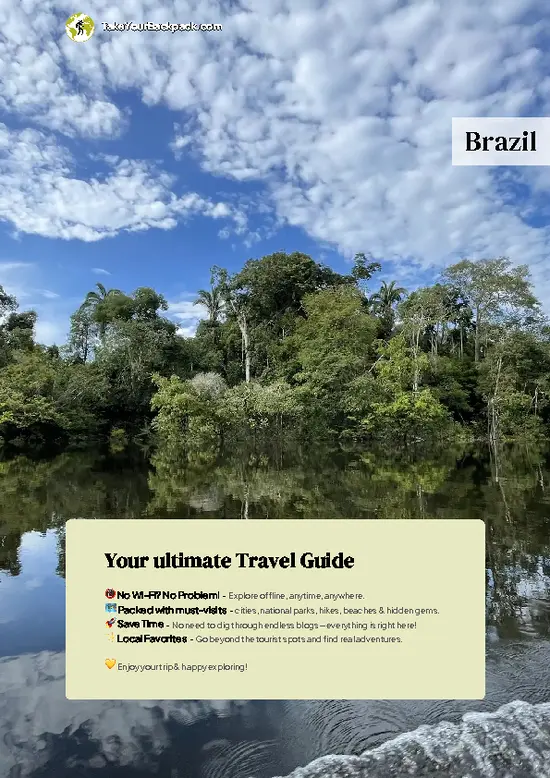
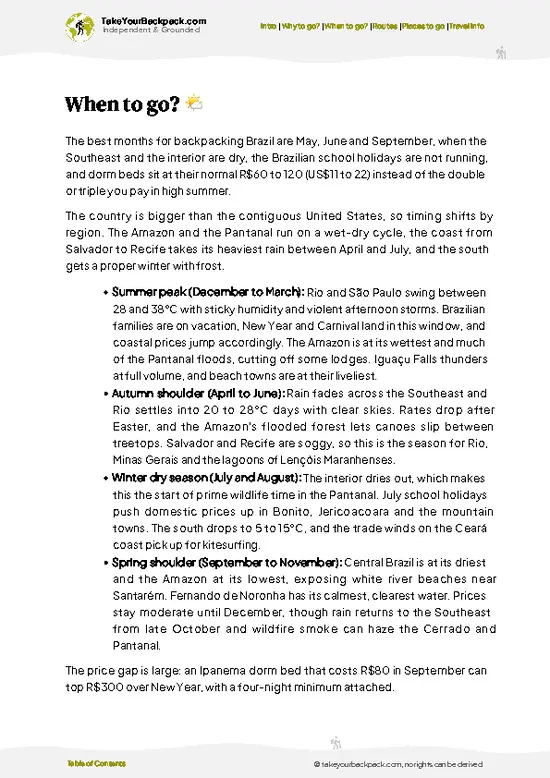
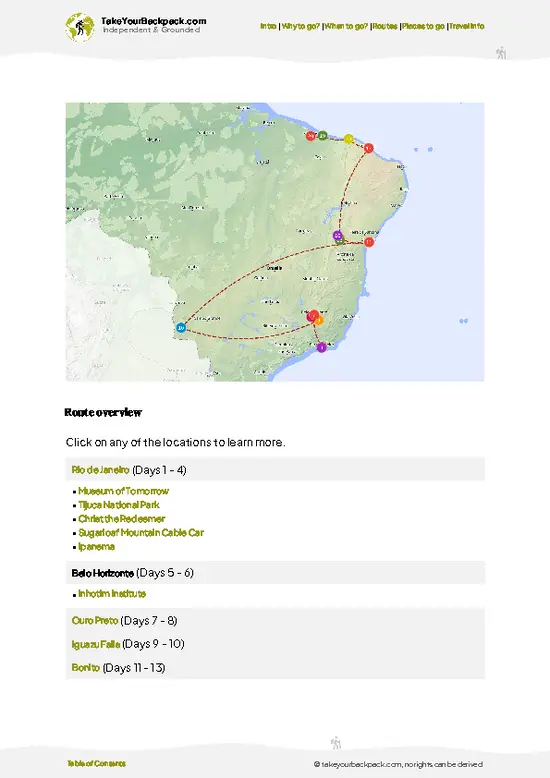
example page 0 from our offline Travel Guide for Brazil
example page 1 from our offline Travel Guide for Brazil
example page 2 from our offline Travel Guide for Brazil
example page 3 from our offline Travel Guide for Brazil
example page 4 from our offline Travel Guide for Brazil
example page 5 from our offline Travel Guide for Brazil
example page 6 from our offline Travel Guide for Brazil
example page 7 from our offline Travel Guide for Brazil
The digital guide (515 pages) contains:
152 highlights, ranked by travel appeal
Optimized 14, 21 & 30-day travel routes
Cities, national parks, landmarks, beaches
How to get around
Offline-friendly for travel without Wi-Fi
👉 Click to see all 30+ guide features

📅 Plan smarter in minutes, not weeks
Month by month travel advice
Festivals & national holidays
Budget expectations

🗺️ Go to the right places, skip the overrated ones
Honest pros & cons of destinations
Top hikes, parks & viewpoints
Lesser-known places most travelers miss
Clear “worth it vs skip it” guidance

🛏️ Travel smoothly without rookie mistakes
Best areas to stay
Transport systems explained simply
Common scams & safety advice
SIM cards, money & practical tips

🌍 Understand the country, not just visit it
Culture & traditions
52 Essential phrases & customs
Festivals worth planning around
Traveler-friendly historical context
Insights that make places more meaningful

📱 Built for real travel conditions
Fully downloadable PDF
Works completely offline
Optimized for phone use
Useful in remote areas & buses
Everything in one place
Save weeks of stressful planning
Get instant access to your full guide. 30‑day money-back guarantee.


By proceeding you agree to our terms.
Sent to your inbox immediately after payment • 100% Secure Checkout
Best Backpacking Travel Advisor 2025 tourism awardBest Backpacking
Travel Advisor
2025
What others say about Take Your Backpack Guides:
⭐⭐⭐⭐⭐
Fantastic, amazing amount of information!
⭐⭐⭐⭐⭐
My goodness this is amazing, it's what I've been looking for hats off too you!
⭐⭐⭐⭐⭐
I think this is absolutely BRILLIANT
⭐⭐⭐⭐
Very complete and informative. It's still missing places, but I gotta to commend you
⭐⭐⭐⭐⭐
This is truly amazing, thank you, can't wait to explore it with my kids!
⭐⭐⭐⭐⭐
Awesome resource, thank you!
⭐⭐⭐⭐⭐
This is amazing! Can't wait to explore the ones I haven't seen
⭐⭐⭐⭐
I love this! Well done, great idea.
⭐⭐⭐⭐⭐
Thanks for taking the time to make this gem!
⭐⭐⭐⭐⭐
This might be the best website I've ever seen.
⭐⭐⭐⭐⭐
Congratulations, and thank you so much for your work; it's incredibly valuable.
⭐⭐⭐⭐
In all seriousness I think you did a great job pointing out the important spots
⭐⭐⭐⭐⭐
10/10 very good
⭐⭐⭐⭐⭐
As someone who's only just starting to visit regularly this is awesome, thank you.
⭐⭐⭐⭐
Thank you very much! I'm going to visit my dad, it's going to be very useful!
⭐⭐⭐⭐⭐
This is really cool! We'll be travelling for the first time and this definitely come in handy.
⭐⭐⭐⭐⭐
You are now our minister of culture, congratulations 👨‍💼
⭐⭐⭐⭐⭐
Just wanted to tell you that this is a pearl! Going to follow your recommendations.
⭐⭐⭐⭐⭐
This is so cool. I'll definitely be using the resource for my travels soon.
⭐⭐⭐⭐⭐
This is very impressive! Good work.
⭐⭐⭐⭐⭐
This is an amazing and informative site. Very well done!

🛏️ Where to stay?Best areas to stay in Brazil

In Santarém, Brazil, the best neighborhood for backpackers who want safety, social buzz, and budget-friendly options is the area around the city center, particularly near the riverfront. This zone strikes a balance between accessibility and atmosphere. It’s where you’ll find the highest concentration of hostels catering to solo travelers and budget adventurers. The vibe here is relaxed but lively, with plenty of cafes, street food stalls, and local markets that invite interaction without the touristy overwhelm.

Compared to other parts of Santarém, the city center offers a clear advantage: it’s … read more 👉
In Santarém, Brazil, the best neighborhood for backpackers who want safety, social buzz, and budget-friendly options is the area around the city center, particularly near the riverfront. This zone strikes a balance between accessibility and atmosphere. It’s where you’ll find the highest concentration of hostels catering to solo travelers and budget adventurers. The vibe here is relaxed but lively, with plenty of cafes, street food stalls, and local markets that invite interaction without the touristy overwhelm.

Compared to other parts of Santarém, the city center offers a clear advantage: it’s walkable, well-lit, and frequented by both locals and travelers, which naturally ups the safety factor. You’re not isolated in a quiet suburb or stuck in a purely residential zone where social opportunities dry up. Instead, you get a pulse on the city’s daily rhythm, making it easier to connect with fellow backpackers or locals.

Other neighborhoods might offer cheaper lodging, but they often sacrifice convenience and security. The outskirts can feel disconnected, requiring taxis or buses that eat into your time and budget. Staying near the riverfront and central plaza means you’re investing a bit more in comfort and safety, but you gain a social hub that turns your trip from a solo slog into a shared experience. It’s a classic trade-off: a few extra reais for a richer, more connected stay.

🚌 Getting aroundMoving around without the hassle

Santarém moves at its own rhythm—neither frantic nor sluggish, but a steady pulse that blends the laid-back Amazonian vibe with the practical demands of a growing city. Here, time isn’t a strict taskmaster but a flexible partner. You’ll find schedules that lean more on local intuition than rigid timetables, where a bus might leave when it’s full rather than on the dot, and boats glide with the river’s mood rather than a clock’s command. This flow rewards travelers who read the signs—when the market buzzes, when the sun dips, when the locals gather—turning transit into a game of timing and savvy rather than a race against the clock.


  • Walking: The most reliable and cost-free way to navigate Santarém’s compact center. Streets are mostly flat and shaded by tropical trees, making strolls pleasant
read more 👉
Santarém moves at its own rhythm—neither frantic nor sluggish, but a steady pulse that blends the laid-back Amazonian vibe with the practical demands of a growing city. Here, time isn’t a strict taskmaster but a flexible partner. You’ll find schedules that lean more on local intuition than rigid timetables, where a bus might leave when it’s full rather than on the dot, and boats glide with the river’s mood rather than a clock’s command. This flow rewards travelers who read the signs—when the market buzzes, when the sun dips, when the locals gather—turning transit into a game of timing and savvy rather than a race against the clock.


  • Walking: The most reliable and cost-free way to navigate Santarém’s compact center. Streets are mostly flat and shaded by tropical trees, making strolls pleasant even in the heat. Walking lets you absorb the city’s textures and sounds at your own pace, but distances to outskirts or river docks can stretch beyond comfortable limits.


  • Public Buses: Operating roughly from 5:30 AM to 9:00 PM, these are the budget traveler’s backbone. Fares hover around 3-4 BRL (less than a dollar), making them unbeatable for cost. Buses follow set routes but don’t always stick to strict schedules—expect waits that depend on passenger volume. They’re slow and often crowded, but offer a genuine slice of local life and access to neighborhoods beyond walking range.


  • Shared Vans (Lotação): These minibuses fill up quickly and depart once full, usually running from early morning until late evening. Prices are slightly higher than buses, around 5-6 BRL, but vans are faster and more direct. Comfort is basic—tight seating and no air conditioning—but they’re a smart choice when time is tight and you want to avoid the unpredictability of buses.


  • Motorcycle Taxis (Moto-Táxi): Available 24/7 and perfect for short hops or reaching spots off the main routes. Fares vary by distance but expect around 10-15 BRL for typical city trips. They’re quick and nimble, slicing through traffic jams with ease, but comfort is minimal and safety standards vary. Ideal for solo travelers who prioritize speed over frills.


  • River Ferries and Boats: Essential if your itinerary includes the Tapajós River or nearby riverine communities. Departures are less frequent and often tied to daylight hours, roughly 6:00 AM to 6:00 PM. Prices depend on distance but are generally affordable, around 10-20 BRL for common routes. Boats range from basic wooden vessels to slightly more comfortable motorized ferries. They’re slower but offer a unique perspective on the region’s geography and culture.


Understanding these options means you’re not just moving through Santarém—you’re mastering its tempo. You trade off money for speed or comfort for authenticity, but with clear eyes on what you gain and what you leave behind. This is how you turn transit from a chore into a strategic advantage, making every leg of your journey part of the story.

👛 Costs (as of 29 May 2026)What things cost and how to budget

Backpacking in Santarém, Brazil, is quite affordable with a range of options depending on your style and season.
  • Dorm accommodation: In high season, expect to pay around USD10 to 15 per night, while off-season rates can drop to USD7 to 12.
  • Meals: Local eateries offer meals for about USD3 to 7, with street food and markets on the lower end and casual restaurants on the higher end.
  • Local transport: Bus rides and moto-taxis typically cost between USD0.50 and 1.50 per trip.
  • City transport pass: Santarém does not have a formal city transport pass, so budgeting around USD3 to 5 daily for transport is reasonable.
  • Basic activities/entry fees: Entry to local attractions and basic activities usually range from USD2 to 8.
  • Miscellaneous expenses: Budget USD2 to 5 for extras like bottled water, snacks, or small
read more 👉
Backpacking in Santarém, Brazil, is quite affordable with a range of options depending on your style and season.
  • Dorm accommodation: In high season, expect to pay around USD10 to 15 per night, while off-season rates can drop to USD7 to 12.
  • Meals: Local eateries offer meals for about USD3 to 7, with street food and markets on the lower end and casual restaurants on the higher end.
  • Local transport: Bus rides and moto-taxis typically cost between USD0.50 and 1.50 per trip.
  • City transport pass: Santarém does not have a formal city transport pass, so budgeting around USD3 to 5 daily for transport is reasonable.
  • Basic activities/entry fees: Entry to local attractions and basic activities usually range from USD2 to 8.
  • Miscellaneous expenses: Budget USD2 to 5 for extras like bottled water, snacks, or small souvenirs.

Total daily costs for backpackers generally fall between USD20 and 40, making Santarém a budget-friendly destination with plenty of options to stretch your money.


source: numbeo.com
⚠️ Prices can change and everyone travels differently, so take this as a rough guide. Hope it helps you plan your adventure!

🚌 Day tripsExploring the surroundings

Santarém is a strategic hub for backpackers who want to squeeze the most out of the Amazon without committing to long, expensive expeditions. It’s a smart base because you can hit several remarkable spots in a day, keeping your itinerary flexible and your budget intact.

Alter do Chão
This riverside village is the crown jewel for anyone in Santarém. A quick 30-minute boat ride or a 1-hour bus trip gets you to white-sand river beaches that rival any tropical coast. The water here is warm and calm, perfect for swimming or just lounging with açaí in hand. The best time to visit is during the dry season, from July to December, when the sandbars are fully exposed and the water levels are low. Budget travelers can expect to spend under $10 round-trip on transport, plus a few dollars for food. … read more 👉
Santarém is a strategic hub for backpackers who want to squeeze the most out of the Amazon without committing to long, expensive expeditions. It’s a smart base because you can hit several remarkable spots in a day, keeping your itinerary flexible and your budget intact.

Alter do Chão
This riverside village is the crown jewel for anyone in Santarém. A quick 30-minute boat ride or a 1-hour bus trip gets you to white-sand river beaches that rival any tropical coast. The water here is warm and calm, perfect for swimming or just lounging with açaí in hand. The best time to visit is during the dry season, from July to December, when the sandbars are fully exposed and the water levels are low. Budget travelers can expect to spend under $10 round-trip on transport, plus a few dollars for food. The common rookie mistake? Trying to cram this trip into a rainy day when the beaches lose their charm and the boat rides get choppy.
Alter do Chão

Tapajós National Forest
If you want to dive deeper into the Amazon’s biodiversity without overnight camping, this is your spot. It’s about a 2-hour boat ride from Santarém, which means you’ll spend a good chunk of your day on the water, but it’s worth it. The forest offers well-marked trails, crystal-clear rivers for swimming, and a chance to spot wildlife like monkeys and colorful birds. Entry and guide fees are minimal, often under $15 total, making it a high-value nature fix. The dry season is again your friend here; the trails get muddy and slippery in the wet months, which can slow you down and sap your energy.
Tapajós National Forest

Ponta de Pedras
Accessible by a 1.5-hour ferry ride, this small town on the opposite side of the Amazon River offers a glimpse into local life away from tourist crowds. The ferry is cheap, around $3, and the town’s markets and riverfront are perfect for wandering and sampling street food. The trade-off is time on the water, but the payoff is a slower pace and authentic encounters. Avoid weekends if you want to dodge local holiday crowds, which can turn the ferry into a waiting game.
Ponta de Pedras

Praia do Maracanã
A lesser-known beach about 45 minutes by boat from Santarém, Praia do Maracanã offers a quieter alternative to Alter do Chão. It’s a good choice if you want to escape the weekend rush and enjoy a peaceful swim or picnic. The boat ride is affordable, around $5 round-trip, and the beach is best visited in the morning to avoid afternoon winds that stir up the water. Many travelers miss this spot because they stick to the more famous beaches, but it rewards those who seek calm and space.
Praia do Maracanã
Want to know what more Brazil offers?
The Brazil Travel Guide describes 152 highlights, from cities to national parks, from beaches to hikes

Get the Travel Guide -

🍲 FoodEating & Drinking in Santarém

In Santarém, food and drink are a gateway to the Amazon’s soul, and as a backpacker, you’ll want to dive right in. The city’s signature dishes lean heavily on fresh river fish like tambaqui and pirarucu, often grilled or stewed with local herbs and spices that hit a perfect balance between earthy and bright. Don’t miss out on tacacá, a broth that’s both sour and spicy, served piping hot in a bowl that feels like a warm Amazon hug.

Backpackers usually find their rhythm in the bustling markets and street stalls, where the air is thick with the scent of grilled meats and tropical fruits. These spots are where locals gather, so you’re not just eating—you’re stepping into the daily pulse of Santarém. Casual eateries nearby offer hearty portions without fuss, perfect for refueling after a day of … read more 👉
In Santarém, food and drink are a gateway to the Amazon’s soul, and as a backpacker, you’ll want to dive right in. The city’s signature dishes lean heavily on fresh river fish like tambaqui and pirarucu, often grilled or stewed with local herbs and spices that hit a perfect balance between earthy and bright. Don’t miss out on tacacá, a broth that’s both sour and spicy, served piping hot in a bowl that feels like a warm Amazon hug.

Backpackers usually find their rhythm in the bustling markets and street stalls, where the air is thick with the scent of grilled meats and tropical fruits. These spots are where locals gather, so you’re not just eating—you’re stepping into the daily pulse of Santarém. Casual eateries nearby offer hearty portions without fuss, perfect for refueling after a day of exploring. Bars and cafés here lean toward the informal, with cold beers and fresh fruit juices flowing freely, often accompanied by lively conversation and impromptu music.

A local quirk worth noting: meals are social affairs, so don’t be surprised if you end up sharing a table or a dish with strangers. It’s part of the charm. Also, expect a slower pace—food here isn’t rushed, and neither should you be. Embrace the unhurried vibe; it’s the city’s way of inviting you to savor every bite and sip.

🛡️ SafetyStaying Safe: What Travelers Should Know

Santarém is generally a straightforward city to navigate, but like any place where tourists mix with locals, a bit of situational awareness goes a long way. The central areas around the riverfront and market are lively during the day, but after dark, some streets lose their buzz and can feel deserted. Solo travelers should avoid wandering these quieter pockets at night—not because of headline-grabbing crime, but because low visibility and fewer people increase the chance of petty theft or uncomfortable encounters.

Pickpocketing is the most common nuisance, especially in crowded markets or on buses. Keep your valuables close, ideally in front pockets or a secure money belt. Scams aren’t rampant, but vendors may overcharge tourists if you don’t negotiate firmly or know local prices. The best … read more 👉
Santarém is generally a straightforward city to navigate, but like any place where tourists mix with locals, a bit of situational awareness goes a long way. The central areas around the riverfront and market are lively during the day, but after dark, some streets lose their buzz and can feel deserted. Solo travelers should avoid wandering these quieter pockets at night—not because of headline-grabbing crime, but because low visibility and fewer people increase the chance of petty theft or uncomfortable encounters.

Pickpocketing is the most common nuisance, especially in crowded markets or on buses. Keep your valuables close, ideally in front pockets or a secure money belt. Scams aren’t rampant, but vendors may overcharge tourists if you don’t negotiate firmly or know local prices. The best defense is blending in: walk confidently, avoid flashing expensive gear, and learn a few basic Portuguese phrases. This approach turns safety into a game of subtle control rather than constant vigilance, letting you enjoy Santarém’s rhythms without unnecessary stress.

Other Brazilian cities near Santarém

Explore more nearby:

  • Manaus—Amazon gateway, opera house, river ports| 594 km away
  • Belém—riverfront markets, Amazon cuisine, colonial squares| 699 km away
  • São Luís—azulejo facades, reggae bars, historic center| 1157 km away

💡 Not sure where to go next?
Create a personalized itinerary for Brazil including Santarém and the places that fit your trip.

Generate my itinerary

👉 Discover all cities

Or checkout all Brazil has to offer (think cities, towns, villages, national parks, hikes, beaches, festivals)
Country photo of Brazil

We 💚 feedbackIs it worth it?

Santarém’s real draw is its raw connection to the Amazon—rivers that pulse with life, markets where you can taste the jungle’s bounty, and a pace that forces you to slow down and actually notice. But don’t expect polished tourist infrastructure; it’s rough around the edges, and language barriers can trip you up. If you’re after a slick city vibe, this isn’t it. But if you want to feel like you’re stepping into a living ecosystem, Santarém delivers.

✈️ When did I visit Brazil?
Call it good timing or luck, but I was able to celebrate Carnaval in Rio de Janeiro in February 2022, after a round trip in the north and east coast.

✍️ Help improve this page!
The information on this page is based on my own backpacking experience in Brazil, supplemented with up-to-date research and feedback from other travelers. Travel details can change, so if you notice anything outdated or incomplete, feel free to let me know.


🙋‍♂️ Give feedback

👋 Meet the founderWho’s Behind Take Your Backpack?

Johan, backpacker and founder of TakeYourBackpackHi, I’m Johan (Netherlands 🇳🇱), the creator of TakeYourBackpack. Over the past decade, I’ve backpacked through 80+ countries across six continents, gaining extensive experience with independent travel, long-term trips, and overland routes.

This site is built on a combination of firsthand travel experience and carefully curated insights from other backpackers. Many guides are based on places I’ve personally visited, while others bring together tips, observations, and practical advice shared by trusted travelers I’ve met along the way.

The goal is to provide realistic, experience-driven guidance — not generic itineraries — so you can explore destinations with better context, clearer expectations, and more confidence.

Get full Brazil guide •
Instant download • 152 highlights • Full Offline guide