×

Brazil🇧🇷 | national parksSerra do Cipó National ParkFarofa waterfall, quartzite plateau, Bandeirinhas canyon, highland wildflowers | things to do and best time to go

Explore Serra di CapivaraExplore Serra dos Órgãos National Park

Backpacking in Serra do Cipó
🌟 Highlightnational park ranked #12
By Johan Kruseman 🇳🇱 | Updated October 19, 2026

Serra do Cipó is a mountain range and a national park (Parque Nacional da Serra do Cipó), and most travelers wrongly picture one small town when the trails and waterfalls spread across a wide plateau. It sits in Minas Gerais, Brazil, north of Belo Horizonte. The quartzite plateau gives open, wind-combed ridges, canyons and waterfalls, with wolves and rheas rarer than the many birds. Roads are fine, but trailheads are scattered, so plan transport. Skip the busy village strip, spend your hours at Cachoeira da Farofa. I still hear the rush of Farofa’s water, hitting the pool like static on a radio. Best for hikers and campers; poor for anyone wanting nightlife or guaranteed solitude on holiday weekends.

Discover everything you want to know in the 📖 Brazil Travel Guide.


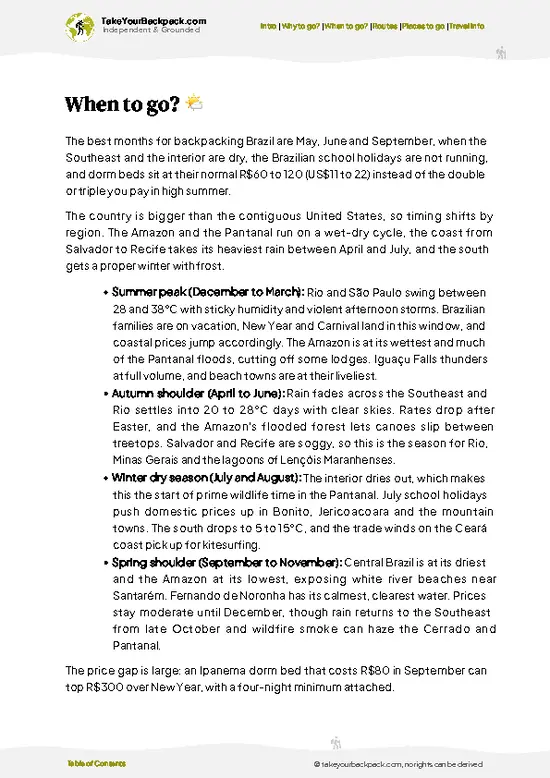
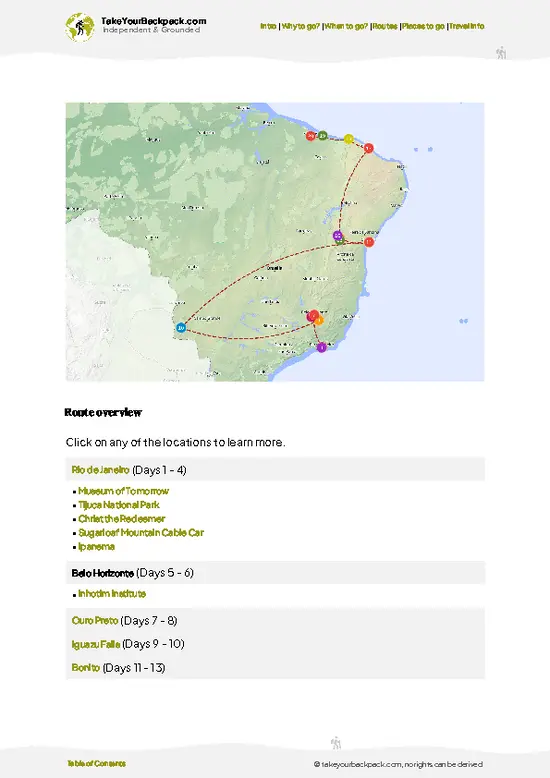
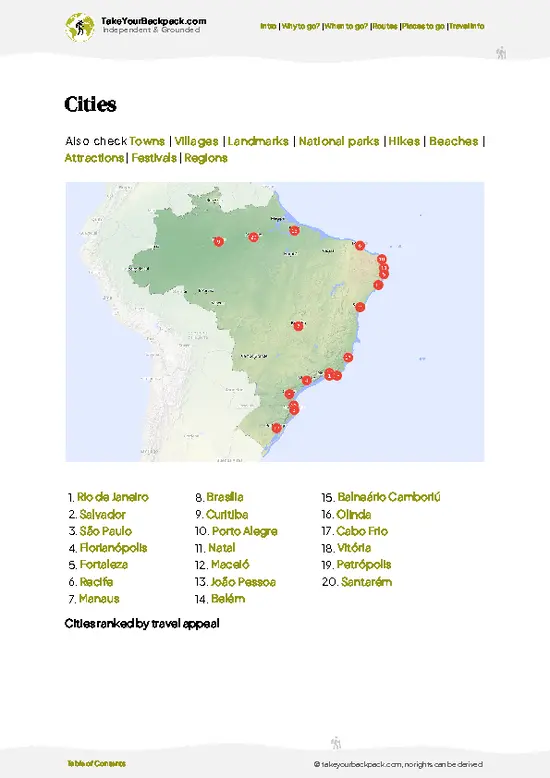
example page 0 from our offline Travel Guide for Brazil
example page 1 from our offline Travel Guide for Brazil
example page 2 from our offline Travel Guide for Brazil
example page 3 from our offline Travel Guide for Brazil
example page 4 from our offline Travel Guide for Brazil
example page 5 from our offline Travel Guide for Brazil
example page 6 from our offline Travel Guide for Brazil
example page 7 from our offline Travel Guide for Brazil
Loading the map 🌍
CLICK TO FILTER
cities
towns
villages
landmarks
national parks
hikes
beaches
attractions
festivals
regions
SHOW COUNTRY’S BESTSHOW ALL

✨ Why go?
Ranked #12 national park in Brazil
Why Serra do Cipó should be on your travel list

Serra do Cipó gives backpackers independence that few Brazilian parks match. Most good walks start from marked trailheads off the MG-010 highway, so you can string together days on your own without paying a guide for every outing. The big draw is Cachoeira da Farofa, a wide curtain of water with a swimmable pool, and the open campos rupestres, where rocky grassland holds endemic flowers such as the tall, spiky canelas-de-ema. Campsites and simple pousadas cluster near the highway, which keeps your cost low and your mornings close to the trails. Self-guided travelers manage fine on the main routes, while the Canyon Bandeirinhas traverse and remote peaks reward those who hire a local guide for navigation.

💡 HighlightsThe experiences that define the visit

  1. Cachoeira da Farofa: The park’s signature waterfall, a broad drop of about 70 meters into a pool you can wade into. Reach it by a mostly flat trail of about 8 km each way from the Areias entrance.
  2. Cânion Bandeirinhas: A deep sandstone gorge with sheer walls, reached by a trail across the plateau. The overlook is dramatic in clear light.
  3. Cachoeira do Tombador: A tall fall with a cool plunge pool, set among rocks and riverside forest.
  4. Cachoeira Grande: A big, quiet waterfall with a long approach, better for people who want fewer crowds.
  5. Campos rupestres: The rocky highland grassland, where endemic flowers, including velloziaceae, grow on thin soil. Birdwatchers look for the Hyacinth visorbearer here.
  6. Rio Cipó pools: Tea-colored swimming holes along the river, easy to reach and well suited to rest
… read more 👉
  1. Cachoeira da Farofa: The park’s signature waterfall, a broad drop of about 70 meters into a pool you can wade into. Reach it by a mostly flat trail of about 8 km each way from the Areias entrance.
  2. Cânion Bandeirinhas: A deep sandstone gorge with sheer walls, reached by a trail across the plateau. The overlook is dramatic in clear light.
  3. Cachoeira do Tombador: A tall fall with a cool plunge pool, set among rocks and riverside forest.
  4. Cachoeira Grande: A big, quiet waterfall with a long approach, better for people who want fewer crowds.
  5. Campos rupestres: The rocky highland grassland, where endemic flowers, including velloziaceae, grow on thin soil. Birdwatchers look for the Hyacinth visorbearer here.
  6. Rio Cipó pools: Tea-colored swimming holes along the river, easy to reach and well suited to rest days.
Do Cachoeira da Farofa first, because it is the easiest and shows the plateau’s scale before you commit to longer treks.
Spotted a mistake or missing something? Contact us.

Things to do near Serra do Cipó National Park

Ratings based on Tripadvisor reviews. When you book through this link, you support our work at no extra cost to you.

🌤️ When to go?Best time to explore Serra do Cipó

  • Dry Season (May to September): Clear days of 22 to 27°C (72 to 81°F), cold nights that can fall to 6 to 10°C (43 to 50°F) on the plateau, and firm trails. Daylight lasts roughly 11 hours. Waterfalls run lower, but pools stay swimmable.
  • Wet Season (November to March): Hot, 25 to 31°C (77 to 88°F), with afternoon thunderstorms, slick rock and swollen rivers. Waterfalls look their best and daylight stretches to about 13 hours.
  • Holidays and Weekends: Carnival, Easter, July school holidays and long weekends fill pousadas and lift prices by 20 to 40 percent.
  • Shoulder Months (April, October): Mild weather, thin crowds, normal rates.
Book midweek in July and you get dry trails with quiet campsites.

source: climatestotravel.comJANJanuary: below average for travelingFEBFebruary: below average for travelingMARMarch: below average for travelingAPRApril: fair for travelingMAYMay: excellent for travelingJUNJune: excellent for travelingJULJuly: highly recommended for travelingAUGAugust: excellent for travelingSEPSeptember: excellent for travelingOCTOctober: fair for travelingNOVNovember: below average for travelingDECDecember: below average for traveling
when-to-go

✈️ The backpacker research shortcutBrazil Travel Guide

An offline-friendly backpacking guide with optimized travel routes, ranked highlights, transport advice, and the best areas to stay.
example page 0 from our offline Travel Guide for Brazil
example page 1 from our offline Travel Guide for Brazil
example page 2 from our offline Travel Guide for Brazil
example page 3 from our offline Travel Guide for Brazil
example page 4 from our offline Travel Guide for Brazil
example page 5 from our offline Travel Guide for Brazil
example page 6 from our offline Travel Guide for Brazil
example page 7 from our offline Travel Guide for Brazil
The digital guide (410 pages) contains:
✅ 146 highlights, ranked by travel appeal
✅ Optimized 14, 21 & 30-day travel routes
✅ Cities, national parks, landmarks, beaches
✅ How to get around
✅ Offline-friendly for travel without Wi-Fi
👉 Click to see all 30+ guide features

📅 Plan smarter in minutes, not weeks
✅ Month by month travel advice
✅ Festivals & national holidays
✅ Budget expectations

🗺️ Go to the right places, skip the overrated ones
✅ Honest pros & cons of destinations
✅ Top hikes, parks & viewpoints
✅ Lesser-known places most travelers miss
✅ Clear “worth it vs skip it” guidance

🛏️ Travel smoothly without rookie mistakes
✅ Best areas to stay
✅ Transport systems explained simply
✅ Common scams & safety advice
✅ SIM cards, money & practical tips

🌍 Understand the country, not just visit it
✅ Culture & traditions
✅ 52 Essential phrases & customs
✅ Festivals worth planning around
✅ Traveler-friendly historical context
✅ Insights that make places more meaningful

📱 Built for real travel conditions
✅ Fully downloadable PDF
✅ Works completely offline
✅ Optimized for phone use
✅ Useful in remote areas & buses
✅ Everything in one place
Stop searching, start planning
Get instant access to your full guide. 30‑day money-back guarantee.
+ Add another guide for just

By proceeding you agree to our terms.
Sent to your inbox immediately after payment • 100% Secure Checkout
Best Backpacking Travel Advisor 2025 tourism awardBest Backpacking
Travel Advisor
2025
What others say about Take Your Backpack Guides:
⭐⭐⭐⭐⭐
Fantastic, amazing amount of information!
⭐⭐⭐⭐⭐
My goodness this is amazing, it's what I've been looking for hats off too you!
⭐⭐⭐⭐⭐
I think this is absolutely BRILLIANT
⭐⭐⭐⭐
Very complete and informative. It's still missing places, but I gotta to commend you
⭐⭐⭐⭐⭐
This is truly amazing, thank you, can't wait to explore it with my kids!
⭐⭐⭐⭐⭐
Awesome resource, thank you!
⭐⭐⭐⭐⭐
This is amazing! Can't wait to explore the ones I haven't seen
⭐⭐⭐⭐
I love this! Well done, great idea.
⭐⭐⭐⭐⭐
Thanks for taking the time to make this gem!
⭐⭐⭐⭐⭐
This might be the best website I've ever seen.
⭐⭐⭐⭐⭐
Congratulations, and thank you so much for your work; it's incredibly valuable.
⭐⭐⭐⭐
In all seriousness I think you did a great job pointing out the important spots
⭐⭐⭐⭐⭐
10/10 very good
⭐⭐⭐⭐⭐
As someone who's only just starting to visit regularly this is awesome, thank you.
⭐⭐⭐⭐
Thank you very much! I'm going to visit my dad, it's going to be very useful!
⭐⭐⭐⭐⭐
This is really cool! We'll be travelling for the first time and this definitely come in handy.
⭐⭐⭐⭐⭐
You are now our minister of culture, congratulations 👨‍💼
⭐⭐⭐⭐⭐
Just wanted to tell you that this is a pearl! Going to follow your recommendations.
⭐⭐⭐⭐⭐
This is so cool. I'll definitely be using the resource for my travels soon.
⭐⭐⭐⭐⭐
This is very impressive! Good work.
⭐⭐⭐⭐⭐
This is an amazing and informative site. Very well done!

🛏️ Where to stay?Where staying makes the most sense

The best base is Serra do Cipó village (Santana do Riacho district), with the most hostels, pousadas and trail guides, about 100 km (roughly 2 hours) north of Belo Horizonte. Inside the park there is no lodging beyond a small campground near the Alto Palácio entrance area, so most hikers sleep in the village. Expect dorm beds and basic camping at US$10 to 20, and private pousada rooms at US$35 to 70. Campsites along the MG-010 highway, many with riverside spots, are the cheapest option and put you near the Cachoeira Grande and Farofa trailheads. Further north, Conceição do Mato Dentro suits those … read more 👉
The best base is Serra do Cipó village (Santana do Riacho district), with the most hostels, pousadas and trail guides, about 100 km (roughly 2 hours) north of Belo Horizonte. Inside the park there is no lodging beyond a small campground near the Alto Palácio entrance area, so most hikers sleep in the village. Expect dorm beds and basic camping at US$10 to 20, and private pousada rooms at US$35 to 70. Campsites along the MG-010 highway, many with riverside spots, are the cheapest option and put you near the Cachoeira Grande and Farofa trailheads. Further north, Conceição do Mato Dentro suits those chasing the Tabuleiro waterfall, and Itambé do Mato Dentro offers a quieter, more rural stay. Belo Horizonte works for a single night before or after, with the widest range of hostels.

👛 Costs (as of 19 October 2026)Money, prices, and spending tips

A comfortable backpacker day in Serra do Cipó runs about US$55, with camping or dorms bringing it closer to US$35. Prices rise on holidays and long weekends, and you pay in reais.
CategoryBudget RangeLocal Reality
Park EntranceUS$0Entry to the national park is free; some private waterfall sites outside it charge separately.
Accommodation (High Season)US$12 to 45Camping and dorms at the low end, pousada doubles at the top.
Accommodation (Low Season)US$9 to 35Midweek discounts are common outside school holidays.
Food and SuppliesUS$10 to 20Prato feito lunches cost US$5 to 8; stock up on groceries in the village or Belo Horizonte.
Local TransportUS$2 to 8Intercity buses from Belo Horizonte cost US$8 to 12 one way; local hops by taxi or hitching are cheap.
Guides and ActivitiesUS$0 to 25Guides for the
… read more 👉
A comfortable backpacker day in Serra do Cipó runs about US$55, with camping or dorms bringing it closer to US$35. Prices rise on holidays and long weekends, and you pay in reais.
CategoryBudget RangeLocal Reality
Park EntranceUS$0Entry to the national park is free; some private waterfall sites outside it charge separately.
Accommodation (High Season)US$12 to 45Camping and dorms at the low end, pousada doubles at the top.
Accommodation (Low Season)US$9 to 35Midweek discounts are common outside school holidays.
Food and SuppliesUS$10 to 20Prato feito lunches cost US$5 to 8; stock up on groceries in the village or Belo Horizonte.
Local TransportUS$2 to 8Intercity buses from Belo Horizonte cost US$8 to 12 one way; local hops by taxi or hitching are cheap.
Guides and ActivitiesUS$0 to 25Guides for the main waterfalls run US$20 to 40 per group; many trails are free to hike alone.
Total Daily BudgetUS$24 to 98About US$55 for a typical day in high season.
⚠️ Prices can change and everyone travels differently, so take this as a rough guide. Hope it helps you plan your adventure!

🥾 TrailsPlan your hike in Serra do Cipó: routes, terrain, and sights

Serra do Cipó offers day hikes from easy riverside strolls to demanding plateau traverses.
  • Trilha da Cachoeira da Farofa: About 16 km return from the Areias entrance, roughly 4 hours, easy and mostly flat, with some rocky steps and a final scramble to the pool.
  • Trilha do Cânion Bandeirinhas: Long day trip of several hours, moderate to hard, open plateau with little shade and steep stretches.
  • Trilha do Tombador: Roughly half a day, moderate, through rocky forest and river crossings.
  • Wildlife: Rheas and marsh deer appear on open ground, along with many birds and the occasional maned wolf at dawn or
… read more 👉
Serra do Cipó offers day hikes from easy riverside strolls to demanding plateau traverses.
  • Trilha da Cachoeira da Farofa: About 16 km return from the Areias entrance, roughly 4 hours, easy and mostly flat, with some rocky steps and a final scramble to the pool.
  • Trilha do Cânion Bandeirinhas: Long day trip of several hours, moderate to hard, open plateau with little shade and steep stretches.
  • Trilha do Tombador: Roughly half a day, moderate, through rocky forest and river crossings.
  • Wildlife: Rheas and marsh deer appear on open ground, along with many birds and the occasional maned wolf at dawn or dusk.
  • Terrain: Slippery quartzite after rain, strong sun and wind on ridges.
Public transport is possible: buses run from Belo Horizonte to the village, but trailheads are spread out, so taxis or hitching help. Guides are advisable on remote routes because trails can be poorly marked. Holiday weekends bring crowds at the main falls, while weekdays are quieter. Entry to the national park is free.
⚠️ Hiking info can sometimes be outdated or inaccurate. Before you hit the trail, check the latest conditions with locals. If you do spot anything that's off, I'd love to hear from you, so I can update it for fellow travelers.

🛡️ SafetySafety Tips and Common Scams in Serra do Cipó

Serra do Cipó is straightforward for prepared hikers, and most problems come from weather and heat rather than people or animals. Summer storms build quickly in the afternoon, turning rocky streams into fast brown torrents, so start early and never cross a swollen river. Wet quartzite is slippery, and open plateau trails offer almost no shade, so carry 2 to 3 liters of water, sunscreen and a hat. Trail marking is patchy on longer routes such as the Travessia, so a local guide is worth hiring. Wildlife is shy. Maned wolves and snakes are rarely seen, though giving snakes space and wearing closed shoes is sensible. Leave valuables out of parked cars at trailheads.

FAQTraveler FAQ

Two to three days covers the main sights of Serra do Cipó. That is enough for the Cachoeira da Farofa, Cânion Bandeirinhas and a swim at Cachoeira Grande. Add a fourth or fifth day if you want the multi-day Travessia Serra do Cipó to Tabuleiro, or the Tabuleiro waterfall near Conceição do Mato Dentro.
Yes, Serra do Cipó can be done without a car, though it takes planning. Buses from Belo Horizonte run to the village in about 2 hours for roughly US$8 to 12. Once there, many trailheads are walkable from pousadas, while farther spots like Farofa or Alto Palácio need a taxi, a shared ride or a guide with transport.
No, entry to Serra do Cipó National Park is free. No separate permit is needed for day hikes on the main trails. Multi-day treks and camping inside the park should be registered with the park office, and some private waterfalls outside the park charge their own fee of a few dollars.
⚠️ Things can change over time, so always validate details locally before you go.

Other Brazilian national parks near Serra do Cipó

Explore more nearby:


💡 Not sure where to go next?
Create a personalized itinerary for Brazil including Serra do Cipó and the places that fit your trip.

Generate my itinerary

👉 Discover all national parks

Or checkout all Brazil has to offer (think cities, towns, villages, national parks, hikes, beaches, festivals)
Country photo of Brazil

We 💚 feedbackIs it worth it?

Serra do Cipó pairs well with a few days in historic Ouro Preto or Diamantina, giving you highlands and colonial towns on one Minas Gerais loop. I would go on weekdays and carry sun protection plus water for the plateau.

✈️ When did I visit Brazil?
Call it good timing or luck, but I was able to celebrate Carnaval in Rio de Janeiro in February 2022, after a round trip in the north and east coast.

✍️ Help improve this page!
The information on this page is based on my own backpacking experience in Brazil, supplemented with up-to-date research and feedback from other travelers. Travel details can change, so if you notice anything outdated or incomplete, feel free to let me know.


🙋‍♂️ Give feedback

👋 Meet the founderWho’s Behind Take Your Backpack?

Johan, backpacker and founder of TakeYourBackpackHi, I’m Johan (Netherlands 🇳🇱), the creator of TakeYourBackpack. Over the past 3 decades, I’ve backpacked through 90+ countries across six continents, gaining extensive experience with independent travel, long-term trips, and overland routes.

This site is built on a combination of firsthand travel experience and carefully curated insights from other backpackers. Many guides are based on places I’ve personally visited, while others bring together tips, observations, and practical advice shared by trusted travelers I’ve met along the way.

The goal is to provide realistic, experience-driven guidance — not generic itineraries — so you can explore destinations with better context, clearer expectations, and more confidence.