v2.webp)
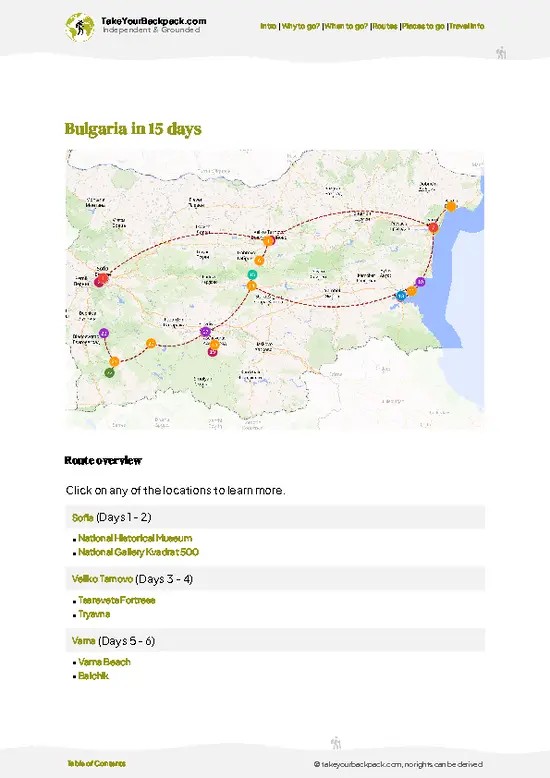
- Todor Kableshkov House-Museum — The cramped, well-preserved house where revolutionary Todor Kableshkov lived and where the “Bloody Letter” episode is interpreted. It’s atmospheric: period furniture, personal items and short, sharp exhibits that make the April Uprising feel immediate rather than textbook history.
- Konstantin Velichkov House-Museum — A neat example of a wealthy 19th-century town house turned into a writer-statesman museum. The rooms, portraits and letters give a clear sense of local cultural life during the National Revival era.
- Oslekov House (House-Museum) — One of Koprivshtitsa’s best-preserved merchant houses with rich woodwork, painted ceilings and authentic household displays. Good for seeing how prosperous families lived before industrialization changed everything.
- Todor Kableshkov House-Museum — The cramped, well-preserved house where revolutionary Todor Kableshkov lived and where the “Bloody Letter” episode is interpreted. It’s atmospheric: period furniture, personal items and short, sharp exhibits that make the April Uprising feel immediate rather than textbook history.
- Konstantin Velichkov House-Museum — A neat example of a wealthy 19th-century town house turned into a writer-statesman museum. The rooms, portraits and letters give a clear sense of local cultural life during the National Revival era.
- Oslekov House (House-Museum) — One of Koprivshtitsa’s best-preserved merchant houses with rich woodwork, painted ceilings and authentic household displays. Good for seeing how prosperous families lived before industrialization changed everything.
- Dimcho Debelyanov House-Museum — The poet’s birthplace-turned-museum: small, intimate and quietly evocative. If you like literary history, the exhibits and the setting reveal what shaped his short life and poems.
- Obretenov House — Family home of a locally important revolutionary clan, now a museum with original objects and stories about everyday people who joined the uprisings. It’s less flashy than the big houses but richer on social detail.
- Church of the Assumption (Uspenie) — The town’s main church, notable for its iconostasis and well-kept frescoes. Even when services aren’t on, the place has a calming presence and you’ll often find locals tending candles and memorial plaques.
- Historic Main Street and Architectural Ensemble — The real draw of Koprivshtitsa is walking the cobbled lanes between tightly packed 19th-century houses: painted eaves, carved wood, ironwork balconies. No single museum equals the experience of wandering and peeking into courtyards.
- Municipal Historical Museum and Exhibition Rooms — Compact but useful: local artifacts, costumes, weapons and tools collected from the area. Great place to get context before hitting the house-museums around town.
- Chitalishte “Iskra” (community cultural centre) — The town’s cultural hub where traditional music, crafts and local life still happen. Check the notice board for concerts or craft demonstrations; it’s where Koprivshtitsa’s living traditions show up outside the museum cases.
- Revolutionary Monuments & Kableshkov Square — Small plazas, memorial plaques and statues scattered through town mark key moments of the April Uprising and local resistance. Good for a self-guided history walk that ties the house-museums into a broader story.
Spotted a mistake or missing something? Contact us.

Plovdiv and Koprivshtitsa Full-Day Trip

From Sofia:The Valley of the Roses&Koprivshtitsa Small Group Tour

Full Day Private Eco Tour in Koprivshtitsa from Sofia

One Day Tour from Sofia to Koprivshtitsa and Plovdiv

5 Days Guided Motorcycle Tour Wine, Nature and Traditions

Private Day Trip to Koprivshtitsa

Koprivshtica Day Tour from Sofia

8-Day Private Tour History and Culture from Sofia

Koprivshtitsa and Starosel Tour

 Best Backpacking
.jpg) Hi, I’m Johan (Netherlands 🇳🇱), the creator of TakeYourBackpack. Over the past 3 decades, I’ve backpacked through 90+ countries across six continents, gaining extensive experience with independent travel, long-term trips, and overland routes.
Hi, I’m Johan (Netherlands 🇳🇱), the creator of TakeYourBackpack. Over the past 3 decades, I’ve backpacked through 90+ countries across six continents, gaining extensive experience with independent travel, long-term trips, and overland routes.