v2.webp)
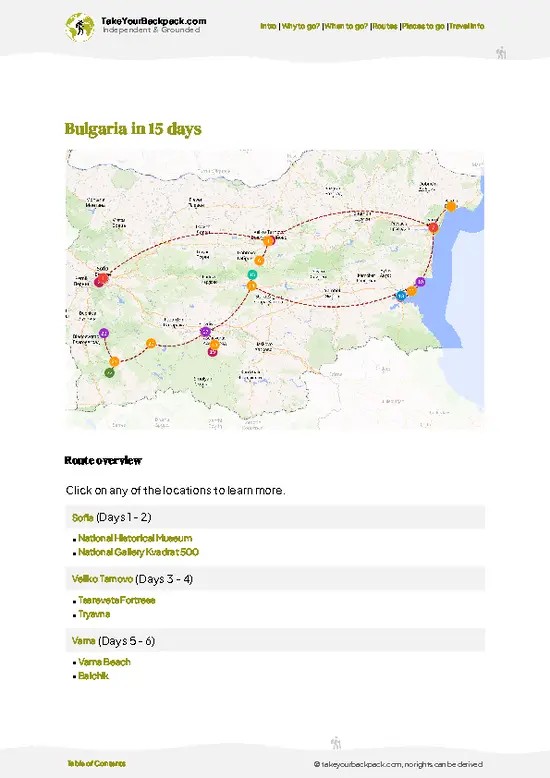
The Bulgarian Masters: The Real National Pride
Forget the generic “European art” label. Kvadrat 500’s Bulgarian collection is the main event. You’ll see the evolution of a country’s soul on canvas—fiery 19th-century revolutionaries, moody Orthodox icons, and the kind of rural scenes that make you want to eat bread with your hands. Zahari Zograf’s icons and Vladimir Dimitrov-The Master’s almost psychedelic use of color aren’t just “local flavor”—they’re a crash course in how Bulgaria sees itself. If you want to understand the country beyond the tourist brochures, this is your shortcut.
The African and Asian Galleries: The Curveball
You don’t expect to find Benin bronzes or Japanese woodblock prints in the heart of Sofia, but Kvadrat 500 delivers. These rooms are a jolt of energy—masks, textiles, … read more 👉
Forget the generic “European art” label. Kvadrat 500’s Bulgarian collection is the main event. You’ll see the evolution of a country’s soul on canvas—fiery 19th-century revolutionaries, moody Orthodox icons, and the kind of rural scenes that make you want to eat bread with your hands. Zahari Zograf’s icons and Vladimir Dimitrov-The Master’s almost psychedelic use of color aren’t just “local flavor”—they’re a crash course in how Bulgaria sees itself. If you want to understand the country beyond the tourist brochures, this is your shortcut.
The African and Asian Galleries: The Curveball
You don’t expect to find Benin bronzes or Japanese woodblock prints in the heart of Sofia, but Kvadrat 500 delivers. These rooms are a jolt of energy—masks, textiles, … read more 👉
The Bulgarian Masters: The Real National Pride
Forget the generic “European art” label. Kvadrat 500’s Bulgarian collection is the main event. You’ll see the evolution of a country’s soul on canvas—fiery 19th-century revolutionaries, moody Orthodox icons, and the kind of rural scenes that make you want to eat bread with your hands. Zahari Zograf’s icons and Vladimir Dimitrov-The Master’s almost psychedelic use of color aren’t just “local flavor”—they’re a crash course in how Bulgaria sees itself. If you want to understand the country beyond the tourist brochures, this is your shortcut.
The African and Asian Galleries: The Curveball
You don’t expect to find Benin bronzes or Japanese woodblock prints in the heart of Sofia, but Kvadrat 500 delivers. These rooms are a jolt of energy—masks, textiles, and sculpture that break up the Euro-centric monotony. It’s not just “diversity for diversity’s sake.” The curation here is thoughtful, and the contrast with the Bulgarian and European works is sharp enough to wake up even the most jet-lagged traveler. If you’re the type who gets museum fatigue, these galleries are your reset button.
The Grand Staircase: Theatrical Arrival
Most museums have a lobby. Kvadrat 500 has a statement. The marble staircase is pure drama—think old-school European grandeur, but without the snobbery. It’s the kind of entrance that makes you stand up straighter, and it sets the tone: you’re not just here to look at pretty pictures, you’re here for a full-on cultural experience. The natural light pouring in from above doesn’t hurt either.
The Temporary Exhibitions: Wild Cards Worth the Gamble
Here’s where Kvadrat 500 throws out the rulebook. The rotating shows can be anything—contemporary Bulgarian protest art, Soviet-era photography, or even experimental installations that make you question what “art” means. Sometimes you’ll walk in on something that feels like a fever dream; sometimes it’s a revelation. Either way, these exhibitions are where the museum feels most alive. If you want to brag about seeing something before it was cool, this is your hunting ground.
The Panoramic Sofia Views: The Secret Bonus
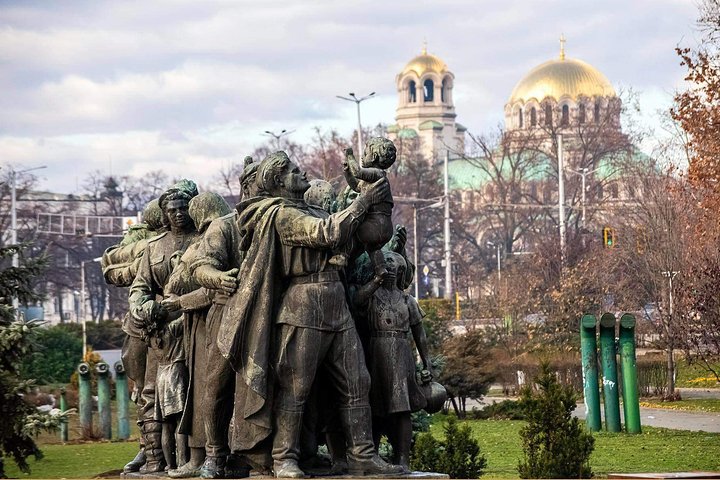
Most people miss this, but the upper floors offer glimpses of Sofia’s skyline through massive windows. It’s not a rooftop bar, but it’s a quiet, contemplative moment above the city—perfect for decompressing after the visual overload. You’ll see the golden domes of Alexander Nevsky Cathedral peeking through the trees, and suddenly the art inside feels connected to the living city outside. It’s a reminder that you’re in Bulgaria, not just “at a museum.”
The Building Itself: Soviet Grandeur with a Twist
Kvadrat 500 isn’t just a box for art. The building is a relic of Bulgaria’s complicated 20th-century history—part Socialist bombast, part neoclassical ambition. The thick walls, high ceilings, and labyrinthine layout are a physical reminder that art here survived wars, regimes, and revolutions. It’s not “pretty” in the Instagram sense, but it’s got presence. If you’re the type who likes your museums with a side of real history, you’ll feel it in your bones.
Forget the generic “European art” label. Kvadrat 500’s Bulgarian collection is the main event. You’ll see the evolution of a country’s soul on canvas—fiery 19th-century revolutionaries, moody Orthodox icons, and the kind of rural scenes that make you want to eat bread with your hands. Zahari Zograf’s icons and Vladimir Dimitrov-The Master’s almost psychedelic use of color aren’t just “local flavor”—they’re a crash course in how Bulgaria sees itself. If you want to understand the country beyond the tourist brochures, this is your shortcut.
The African and Asian Galleries: The Curveball
You don’t expect to find Benin bronzes or Japanese woodblock prints in the heart of Sofia, but Kvadrat 500 delivers. These rooms are a jolt of energy—masks, textiles, and sculpture that break up the Euro-centric monotony. It’s not just “diversity for diversity’s sake.” The curation here is thoughtful, and the contrast with the Bulgarian and European works is sharp enough to wake up even the most jet-lagged traveler. If you’re the type who gets museum fatigue, these galleries are your reset button.
The Grand Staircase: Theatrical Arrival
Most museums have a lobby. Kvadrat 500 has a statement. The marble staircase is pure drama—think old-school European grandeur, but without the snobbery. It’s the kind of entrance that makes you stand up straighter, and it sets the tone: you’re not just here to look at pretty pictures, you’re here for a full-on cultural experience. The natural light pouring in from above doesn’t hurt either.
The Temporary Exhibitions: Wild Cards Worth the Gamble
Here’s where Kvadrat 500 throws out the rulebook. The rotating shows can be anything—contemporary Bulgarian protest art, Soviet-era photography, or even experimental installations that make you question what “art” means. Sometimes you’ll walk in on something that feels like a fever dream; sometimes it’s a revelation. Either way, these exhibitions are where the museum feels most alive. If you want to brag about seeing something before it was cool, this is your hunting ground.
The Panoramic Sofia Views: The Secret Bonus
Most people miss this, but the upper floors offer glimpses of Sofia’s skyline through massive windows. It’s not a rooftop bar, but it’s a quiet, contemplative moment above the city—perfect for decompressing after the visual overload. You’ll see the golden domes of Alexander Nevsky Cathedral peeking through the trees, and suddenly the art inside feels connected to the living city outside. It’s a reminder that you’re in Bulgaria, not just “at a museum.”
The Building Itself: Soviet Grandeur with a Twist
Kvadrat 500 isn’t just a box for art. The building is a relic of Bulgaria’s complicated 20th-century history—part Socialist bombast, part neoclassical ambition. The thick walls, high ceilings, and labyrinthine layout are a physical reminder that art here survived wars, regimes, and revolutions. It’s not “pretty” in the Instagram sense, but it’s got presence. If you’re the type who likes your museums with a side of real history, you’ll feel it in your bones.
Spotted a mistake or missing something? Contact us.


 Best Backpacking
.jpg) Hi, I’m Johan (Netherlands 🇳🇱), the creator of TakeYourBackpack. Over the past 3 decades, I’ve backpacked through 90+ countries across six continents, gaining extensive experience with independent travel, long-term trips, and overland routes.
Hi, I’m Johan (Netherlands 🇳🇱), the creator of TakeYourBackpack. Over the past 3 decades, I’ve backpacked through 90+ countries across six continents, gaining extensive experience with independent travel, long-term trips, and overland routes.