×

Burkina Faso🇧🇫 | townsDiapagaTapoa capital, Gourmantché market, artisan workshops, park gateway | things to do and best time to go

Explore GaouaExplore Manga

Backpacking in Diapaga
🏆 Top picktown ranked #6
By Johan Kruseman 🇳🇱 | Updated October 22, 2026

Diapaga puts you within reach of the W National Park area, and that is the reason to come. It sits in the east of Burkina Faso, capital of the Tapoa province, a long road journey from Ouagadougou. Buses run, but schedules shift and security conditions change, so check current advice locally before you commit and travel in daylight. The town itself is small, dusty and low-key. Skip hunting for sights downtown; the market and the Gourmantché cultural life are the draw, and a few hours cover them. Guesthouses are basic and few, evenings are quiet, and other backpackers are rare, so you meet locals instead. Cash is the only way to pay, because few places take cards, so bring enough before arriving. On a first day, wander the market in the cool morning, eat grilled meat and rice at a roadside stall, then spend the afternoon arranging onward transport or park access.

Discover everything you want to know in the 📖 Burkina Faso Travel Guide.
Safety warning

The current risk level for Burkina Faso is high. Check the advice before going.


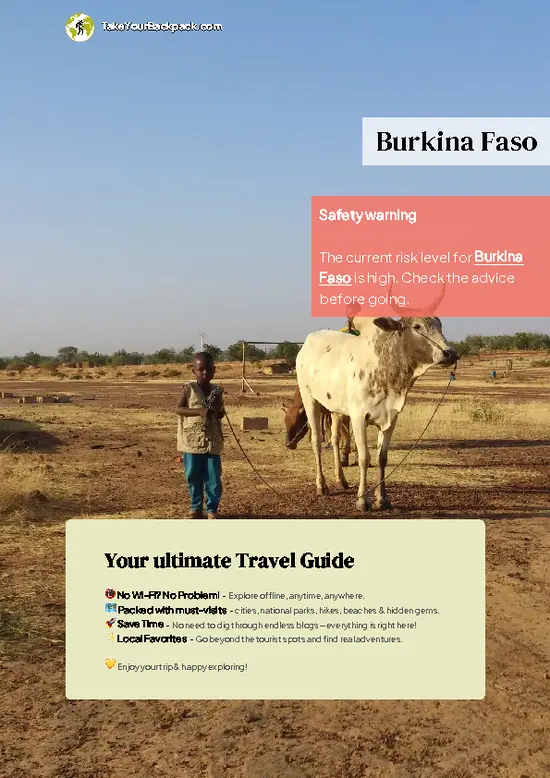
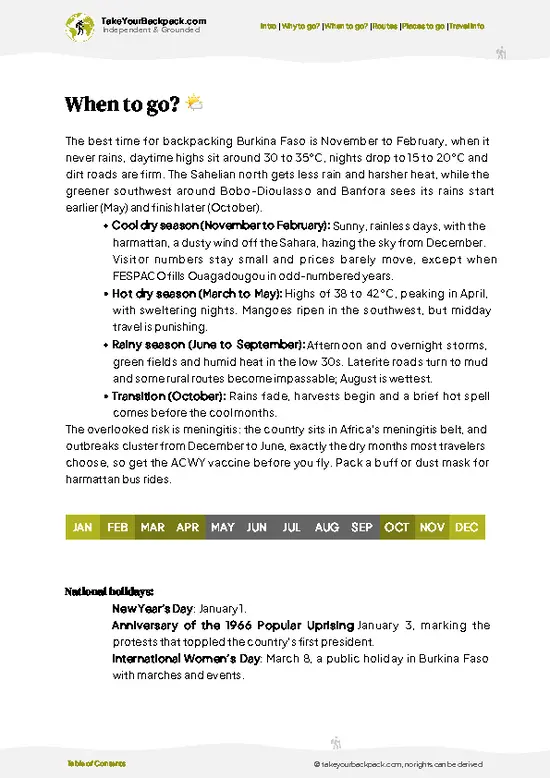
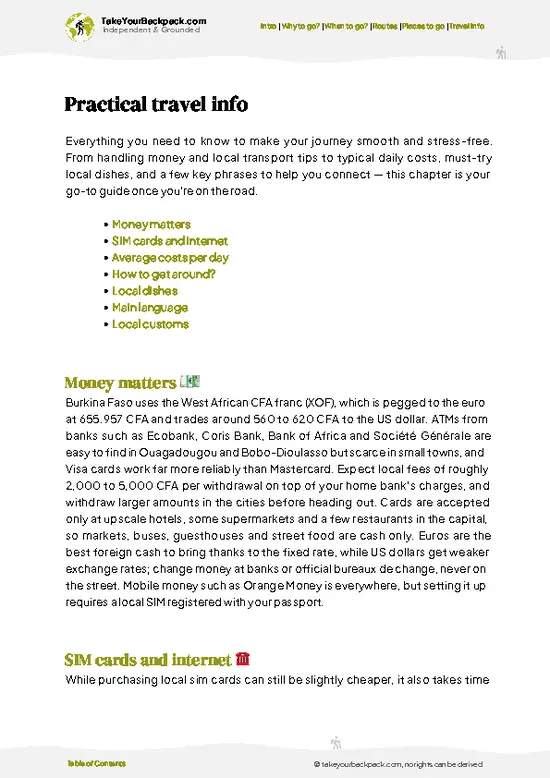
example page 0 from our offline Travel Guide for Burkina Faso
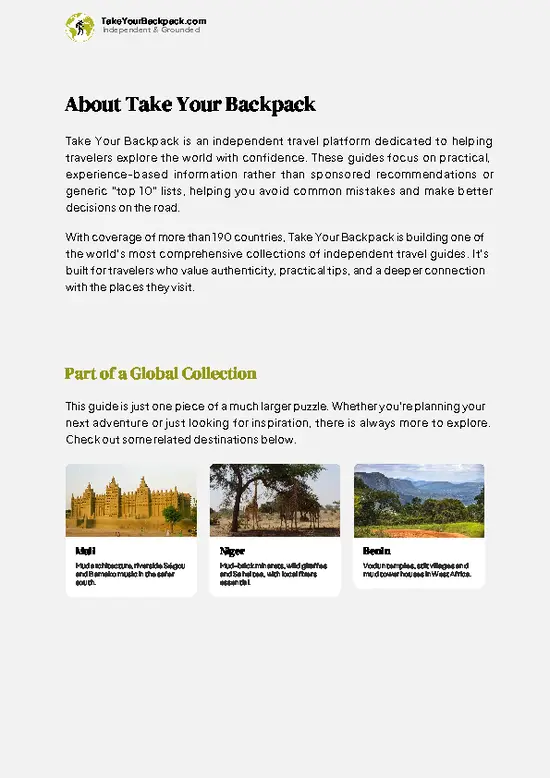
example page 1 from our offline Travel Guide for Burkina Faso
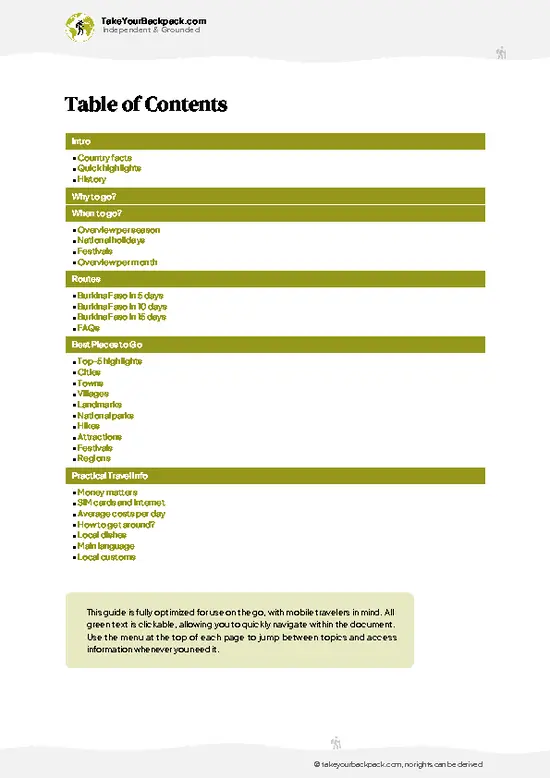
example page 2 from our offline Travel Guide for Burkina Faso
example page 3 from our offline Travel Guide for Burkina Faso
example page 4 from our offline Travel Guide for Burkina Faso
example page 5 from our offline Travel Guide for Burkina Faso
example page 6 from our offline Travel Guide for Burkina Faso
example page 7 from our offline Travel Guide for Burkina Faso
Loading the map 🌍
CLICK TO FILTER
cities
towns
villages
landmarks
national parks
hikes
attractions
festivals
regions
SHOW COUNTRY’S BESTSHOW ALL

✨ Why go?
Ranked #6 town in Burkina Faso
Reasons people choose to visit here

Diapaga is for travelers who want the quiet east and are willing to work for it. Its draw is position: it is the main town of Tapoa province, close to the Arly National Park and the wider W-Arly-Pendjari reserve complex, where elephants, hippos and several antelope species live. It works as a one or two night stop for gathering information, fuel, food and a guide, not as a place to linger. Guesthouses are simple and few, evenings are calm, and the social scene is local: tea sellers, grilled meat stalls and the weekly flow of traders. The market gives a window into Gourmantché life, with shea butter, millet and woven goods. Independent, patient, self-sufficient travelers and wildlife enthusiasts will enjoy it. Anyone wanting nightlife, hostel crowds or easy transport should pass through quickly or skip it.

💡 HighlightsTop highlights of Diapaga

  1. Diapaga Central Market: The town’s real center, where Gourmantché farmers and traders sell millet, shea butter, dried fish, spices and cloth. Go in the morning when stalls are fullest. Entry is free, and an hour is enough.
  2. Tapoa Provincial Mosque: A prominent local landmark in the Sahelian style, best seen from outside in the soft early evening. Entry is free for a respectful look, 20 to 30 minutes. Dress modestly and ask before going in or photographing.
  3. Maquis grill stalls: Evening stalls and small open-air eateries serve grilled chicken, guinea fowl and fish with local beer or tea. Come after dusk when the charcoal is lit. A meal costs about €2 to 5, and it makes a good hour or two of conversation with locals.
  4. Artisan quarter: Small workshops produce pottery, baskets, leatherwork and woven
… read more 👉
  1. Diapaga Central Market: The town’s real center, where Gourmantché farmers and traders sell millet, shea butter, dried fish, spices and cloth. Go in the morning when stalls are fullest. Entry is free, and an hour is enough.
  2. Tapoa Provincial Mosque: A prominent local landmark in the Sahelian style, best seen from outside in the soft early evening. Entry is free for a respectful look, 20 to 30 minutes. Dress modestly and ask before going in or photographing.
  3. Maquis grill stalls: Evening stalls and small open-air eateries serve grilled chicken, guinea fowl and fish with local beer or tea. Come after dusk when the charcoal is lit. A meal costs about €2 to 5, and it makes a good hour or two of conversation with locals.
  4. Artisan quarter: Small workshops produce pottery, baskets, leatherwork and woven cloth. Mornings are best, when people are working. Browsing is free and purchases run roughly €1 to 10. Allow 45 minutes.
  5. Evening walk to the town edges: Walk the sandy lanes to see compounds, grain stores and cattle coming home in the cooler hour before dark. It costs nothing and takes about an hour.
The market and the grill stalls combine well in one day, with shopping in the morning and dinner after dark. Beyond town, Arly National Park, Pendjari in Benin and the Tapoa river area make the best day trips from Diapaga.
Spotted a mistake or missing something? Contact us.

🏘️ NeighborhoodsNeighborhood guide to Diapaga

Diapaga is small enough to cover on foot or by moto in an afternoon, and the useful areas are few. Here is how they differ and what to do in each.
  • Central market and main road: The market sits along the main road and is the place to eat. Grilled meat, rice with sauce and fried dough come cheap from women at stalls, and the busiest day is when traders arrive from the surrounding villages. Go in the morning, since stalls thin out by mid-afternoon. Walking is easy here.
  • Administrative and mission quarter: Provincial offices, the Catholic mission and the hospital cluster on the quieter side, with wide dusty streets and shade trees. There is little to see, so pass through only if you need a bank, a pharmacy or the police. Skip it for sightseeing.
  • Residential districts: Mud-brick and cement compounds
… read more 👉
Diapaga is small enough to cover on foot or by moto in an afternoon, and the useful areas are few. Here is how they differ and what to do in each.
  • Central market and main road: The market sits along the main road and is the place to eat. Grilled meat, rice with sauce and fried dough come cheap from women at stalls, and the busiest day is when traders arrive from the surrounding villages. Go in the morning, since stalls thin out by mid-afternoon. Walking is easy here.
  • Administrative and mission quarter: Provincial offices, the Catholic mission and the hospital cluster on the quieter side, with wide dusty streets and shade trees. There is little to see, so pass through only if you need a bank, a pharmacy or the police. Skip it for sightseeing.
  • Residential districts: Mud-brick and cement compounds spread outward in every direction. Evenings bring small maquis (open-air bars) with warm beer and music, and they are easy to find by following the noise. Streets are unlit and sandy, so bring a headlamp and take a moto back rather than walking far.
  • Edge of town toward the bush: Cotton and millet fields start quickly, and the road toward the Arly and W park region is the real draw. Dawn walks here are pleasant, but there is nothing to buy, so do not make a special trip at midday when the heat is brutal.

⌛️ 1 dayA smart one-day plan

7:00 AM, Central Market: Start here while the air is still cool and the stalls are filling, because by midday the heat flattens everything. Walk the lanes for millet, shea butter, dried fish and cloth, and have a cup of sweet coffee or porridge from a vendor. Ten minutes on foot brings you to the next stop.
9:30 AM, Main Mosque and Old Quarter: Stroll the older residential streets of mud-brick compounds, where Gourmantché families live and work. Greet people first; it is expected and opens conversations. Ask before photographing anyone.
11:30 AM, Local Maquis: Eat grilled chicken or guinea fowl with rice or tô at a simple neighborhood spot. Order what others are eating and you will rarely go wrong. Rest through the worst heat afterward.
2:30 PM, Blacksmith and Weaving Workshops: Most tourists … read more 👉
7:00 AM, Central Market: Start here while the air is still cool and the stalls are filling, because by midday the heat flattens everything. Walk the lanes for millet, shea butter, dried fish and cloth, and have a cup of sweet coffee or porridge from a vendor. Ten minutes on foot brings you to the next stop.
9:30 AM, Main Mosque and Old Quarter: Stroll the older residential streets of mud-brick compounds, where Gourmantché families live and work. Greet people first; it is expected and opens conversations. Ask before photographing anyone.
11:30 AM, Local Maquis: Eat grilled chicken or guinea fowl with rice or tô at a simple neighborhood spot. Order what others are eating and you will rarely go wrong. Rest through the worst heat afterward.
2:30 PM, Blacksmith and Weaving Workshops: Most tourists skip these, but they are the most revealing hour of the day. Small family workshops on the town edges turn out hoes, knives and woven mats. Ask a local to point you to one, then walk over slowly, sticking to shaded paths.
4:30 PM, Provincial Offices and Transport Yard: Check the onward bus or minibus times for tomorrow while agents are still around. Confirm the departure hour in person, since schedules shift.
6:00 PM, Evening Street Stalls: Finish with skewers and a cold drink as the town cools down. Early nights suit Diapaga, so head back to your guesthouse by dark.

🌤️ When to go?When to go for the best experience

  • Cool dry months (November to February): Days reach 30 to 34°C (86 to 93°F) and nights can fall to 16 to 20°C (61 to 68°F). Harmattan dust hazes the sky. This is the easiest period for wildlife trips toward the parks, and daylight runs roughly 11 to 12 hours.
  • Hot season (March to May): Highs push 38 to 43°C (100 to 109°F). Afternoons are for lying down. Parks are good for animals gathering at water, but you will sweat through every day.
  • Rainy season (June to September): Highs sit at 30 to 35°C (86 to 95°F) with heavy storms. Dirt roads turn to mud, some tracks close, and transport slows. Fields are green and the dust settles.
  • Shoulder (October): Rains fade and roads recover.
Aim for December or January, and book any park guide a few days ahead since fewer vehicles operate in the wet months.

source: climatestotravel.comJANJanuary: excellent for travelingFEBFebruary: excellent for travelingMARMarch: excellent for travelingAPRApril: fair for travelingMAYMay: fair for travelingJUNJune: fair for travelingJULJuly: fair for travelingAUGAugust: fair for travelingSEPSeptember: fair for travelingOCTOctober: good for travelingNOVNovember: highly recommended for travelingDECDecember: excellent for traveling
when-to-go

✈️ The backpacker research shortcutBurkina Faso Travel Guide

An offline-friendly backpacking guide with optimized travel routes, ranked highlights, transport advice, and the best areas to stay.
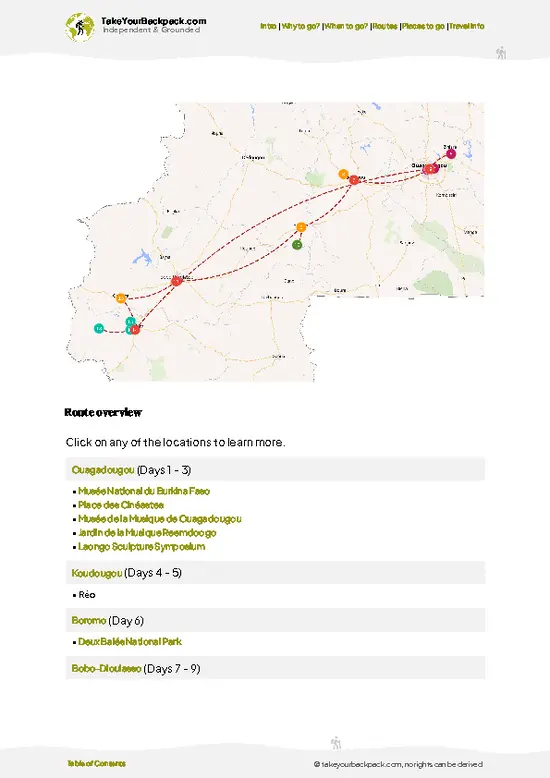
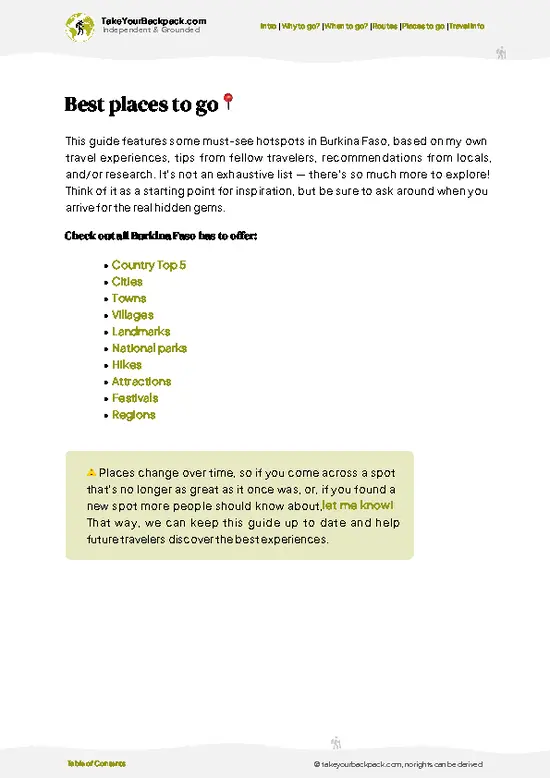
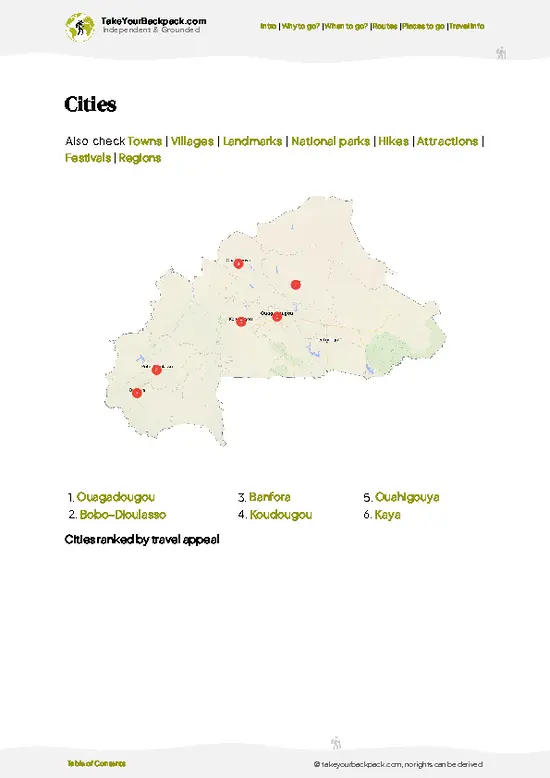
example page 0 from our offline Travel Guide for Burkina Faso
example page 1 from our offline Travel Guide for Burkina Faso
example page 2 from our offline Travel Guide for Burkina Faso
example page 3 from our offline Travel Guide for Burkina Faso
example page 4 from our offline Travel Guide for Burkina Faso
example page 5 from our offline Travel Guide for Burkina Faso
example page 6 from our offline Travel Guide for Burkina Faso
example page 7 from our offline Travel Guide for Burkina Faso
The digital guide (273 pages) contains:
✅ 63 highlights, ranked by travel appeal
✅ Optimized 5, 10 & 15-day travel routes
✅ Cities, national parks, landmarks, beaches
✅ How to get around
✅ Offline-friendly for travel without Wi-Fi
👉 Click to see all 30+ guide features

📅 Plan smarter in minutes, not weeks
✅ Month by month travel advice
✅ Festivals & national holidays
✅ Budget expectations

🗺️ Go to the right places, skip the overrated ones
✅ Honest pros & cons of destinations
✅ Top hikes, parks & viewpoints
✅ Lesser-known places most travelers miss
✅ Clear “worth it vs skip it” guidance

🛏️ Travel smoothly without rookie mistakes
✅ Best areas to stay
✅ Transport systems explained simply
✅ Common scams & safety advice
✅ SIM cards, money & practical tips

🌍 Understand the country, not just visit it
✅ Culture & traditions
✅ 52 Essential phrases & customs
✅ Festivals worth planning around
✅ Traveler-friendly historical context
✅ Insights that make places more meaningful

📱 Built for real travel conditions
✅ Fully downloadable PDF
✅ Works completely offline
✅ Optimized for phone use
✅ Useful in remote areas & buses
✅ Everything in one place
Stop searching, start planning
Get instant access to your full guide. 30‑day money-back guarantee.
+ Add another guide for just

By proceeding you agree to our terms.
Sent to your inbox immediately after payment • 100% Secure Checkout
Best Backpacking Travel Advisor 2025 tourism awardBest Backpacking
Travel Advisor
2025
What others say about Take Your Backpack Guides:
⭐⭐⭐⭐⭐
Fantastic, amazing amount of information!
⭐⭐⭐⭐⭐
My goodness this is amazing, it's what I've been looking for hats off too you!
⭐⭐⭐⭐⭐
I think this is absolutely BRILLIANT
⭐⭐⭐⭐
Very complete and informative. It's still missing places, but I gotta to commend you
⭐⭐⭐⭐⭐
This is truly amazing, thank you, can't wait to explore it with my kids!
⭐⭐⭐⭐⭐
Awesome resource, thank you!
⭐⭐⭐⭐⭐
This is amazing! Can't wait to explore the ones I haven't seen
⭐⭐⭐⭐
I love this! Well done, great idea.
⭐⭐⭐⭐⭐
Thanks for taking the time to make this gem!
⭐⭐⭐⭐⭐
This might be the best website I've ever seen.
⭐⭐⭐⭐⭐
Congratulations, and thank you so much for your work; it's incredibly valuable.
⭐⭐⭐⭐
In all seriousness I think you did a great job pointing out the important spots
⭐⭐⭐⭐⭐
10/10 very good
⭐⭐⭐⭐⭐
As someone who's only just starting to visit regularly this is awesome, thank you.
⭐⭐⭐⭐
Thank you very much! I'm going to visit my dad, it's going to be very useful!
⭐⭐⭐⭐⭐
This is really cool! We'll be travelling for the first time and this definitely come in handy.
⭐⭐⭐⭐⭐
You are now our minister of culture, congratulations 👨‍💼
⭐⭐⭐⭐⭐
Just wanted to tell you that this is a pearl! Going to follow your recommendations.
⭐⭐⭐⭐⭐
This is so cool. I'll definitely be using the resource for my travels soon.
⭐⭐⭐⭐⭐
This is very impressive! Good work.
⭐⭐⭐⭐⭐
This is an amazing and informative site. Very well done!

🛏️ Where to stay?Best areas and accommodation options

The best choice for a budget bed is the area around the central market and main road. Diapaga has a limited number of simple guesthouses, and you will find most of them within a few minutes of the bus station and market, which makes early departures easy. Expect basic rooms with a fan and shared or private bathroom, usually €8 to 18 a night, and no dorm culture, so sharing is rare. Book ahead in peak dry months since beds are few, or simply turn up before noon.

The quieter administrative quarter near the mission is the second option. Streets are calmer, nights are darker and the surroundings … read more 👉
The best choice for a budget bed is the area around the central market and main road. Diapaga has a limited number of simple guesthouses, and you will find most of them within a few minutes of the bus station and market, which makes early departures easy. Expect basic rooms with a fan and shared or private bathroom, usually €8 to 18 a night, and no dorm culture, so sharing is rare. Book ahead in peak dry months since beds are few, or simply turn up before noon.

The quieter administrative quarter near the mission is the second option. Streets are calmer, nights are darker and the surroundings feel safer after sunset, but you will walk or take a moto to reach food and transport. Light sleepers should lean here, because the market side wakes up around 5 am with traders, roosters and engines, and bars in the residential districts can play music late.

Wherever you stay, check that the fan works, that there is a mosquito net and that water is available, since power cuts are common. A room with a lockable door and a courtyard is worth more than extras.

🚌 Getting aroundGetting around like a local

Diapaga runs on motorbike taxis, and a short ride across town costs about €0.30 to 0.60, paid in cash (West African CFA francs) at the end, so carry small coins and notes. The town is flat and compact, so most of what you need is within a 20 minute walk. Traffic is light, mostly motos and bicycles, and public transport as such does not exist.
  • Walking: Fine in the morning and after the heat eases. The market, bus offices and bars are all close. Skip walking at midday, when temperatures often exceed 38°C (100°F), and skip unlit side streets after dark.
  • Moto taxi: The default option. Agree the price before you climb on, since drivers quote higher to foreigners, and expect €0.30 to 1 within town. A half-day hire to a nearby village is about €5 to 10, negotiated. Helmets are rare, so ride slowly
… read more 👉
Diapaga runs on motorbike taxis, and a short ride across town costs about €0.30 to 0.60, paid in cash (West African CFA francs) at the end, so carry small coins and notes. The town is flat and compact, so most of what you need is within a 20 minute walk. Traffic is light, mostly motos and bicycles, and public transport as such does not exist.
  • Walking: Fine in the morning and after the heat eases. The market, bus offices and bars are all close. Skip walking at midday, when temperatures often exceed 38°C (100°F), and skip unlit side streets after dark.
  • Moto taxi: The default option. Agree the price before you climb on, since drivers quote higher to foreigners, and expect €0.30 to 1 within town. A half-day hire to a nearby village is about €5 to 10, negotiated. Helmets are rare, so ride slowly and ask the driver to do the same.
  • Intercity bus and bush taxi: Buses to Fada N’Gourma take roughly 2 to 3 hours for about €4 to 7, and onward connections reach Ouagadougou in a long day. Departures are early morning and sometimes fill only when full, so arrive by 6 am and buy a ticket at the station. Bush taxis (shared cars) leave once packed, which can mean a long wait. Check the security situation on the road before booking, as routes can change.
  • Bicycle or hired moto: Informal rentals through guesthouses or locals cost about €3 to 8 a day. They suit trips to nearby villages, but the sandy tracks wear you out quickly and shade is scarce. Carry two liters of water at minimum.

👛 Costs (as of 22 October 2026)Money, prices, and spending tips

Diapaga costs about €26 a day for a backpacker who eats local, sleeps in a simple guesthouse and moves by moto. Prices are paid in cash, and card machines are scarce.
CategoryBudget RangeLocal Reality
Dorm accommodation€8 to 14No true dorms, so a basic fan room is the norm; budget more in peak dry months.
Meals€4 to 8Rice with sauce, grilled meat and fried dough from market stalls cost €1 to 2 each.
Local transport€1 to 3Moto rides inside town cost €0.30 to 1.
Basic activities/entry fees€2 to 8Markets and village walks are free, while park visits cost much more.
Miscellaneous expenses€1 to 3Water, phone credit and cold drinks.
Total Daily Budget€26Higher with a park trip.
Buy food at the market rather than at guesthouses, and carry a refillable bottle to avoid buying many sachets of water.
⚠️ Prices can change and everyone travels differently, so take this as a rough guide. Hope it helps you plan your adventure!

🚌 Day tripsBest day trips from Diapaga

Diapaga works as a base for short outings into the bush and villages, though transport is informal, so plan on hiring a moto or arranging a vehicle the day before.
Arly National Park edge:
Wildlife is the main reason people come out here, with elephants, hippos and antelope in the wider Arly and W protected complex. The park entrance zone lies a couple of hours by vehicle, and a guided visit costs roughly €30 to 70 depending on vehicle and guide fees. Go from December to April when animals concentrate at water, and confirm access and security locally first. First-timers often leave too late, so start before 6 am.
👉 Explore Arly National Park
Weekly village markets:
Surrounding villages hold markets on set days, and they show the Gourmantché farming economy better than any museum. Moto hire runs … read more 👉
Diapaga works as a base for short outings into the bush and villages, though transport is informal, so plan on hiring a moto or arranging a vehicle the day before.
Arly National Park edge:
Wildlife is the main reason people come out here, with elephants, hippos and antelope in the wider Arly and W protected complex. The park entrance zone lies a couple of hours by vehicle, and a guided visit costs roughly €30 to 70 depending on vehicle and guide fees. Go from December to April when animals concentrate at water, and confirm access and security locally first. First-timers often leave too late, so start before 6 am.
👉 Explore Arly National Park
Weekly village markets:
Surrounding villages hold markets on set days, and they show the Gourmantché farming economy better than any museum. Moto hire runs about €6 to 12 for the day, and you will eat for under €2. Ask your guesthouse which market is on, because going on the wrong day means empty ground. Bring small notes since vendors rarely have change.

Fada N’Gourma:
The regional capital is 2 to 3 hours by bus for about €4 to 7 each way, with larger markets, more food choices and cash machines. It makes a workable day only if you take the first bus out and an afternoon return, so check the last departure before you commit. Skip it in the rains, when delays eat the day.

🛡️ SafetyStaying Safe: What Travelers Should Know

Diapaga is generally calm for day-to-day wandering, but the region has seen security concerns in Burkina Faso, so check current government advice and ask locals or your guesthouse about roads before any trip outside town. Within town, petty theft is the main risk, mostly phones and bags in the busy market. Keep valuables in a front pocket and carry only the cash you need. Streets are unlit at night, so use a moto after dark rather than walking, and solo women will draw attention but usually only curiosity. Moto drivers may quote inflated prices, so agree the fare first. Photograph soldiers, police and official buildings only with permission, and carry a passport copy since checkpoints are common on roads.

FAQFrequently asked questions about Diapaga

Diapaga is worth a short visit if you want real northeast Burkina Faso and access to the Arly and W park region, but it is not a sightseeing town. The market, the evening maquis and moto rides to nearby villages fill a day easily. Expect basic guesthouses at about €8 to 18 a night. Check road security before heading out.
Diapaga needs one to two days on its own, or three if you add a guided park trip. One day covers the market, a village outing and an evening in a maquis. A park visit takes a full day and costs about €30 to 70. Plan an extra day for travel, since buses to Fada N’Gourma take 2 to 3 hours.
Diapaga is too far from most cities for a comfortable round trip, though Fada N’Gourma can be reached in 2 to 3 hours by bus for about €4 to 7 each way. That makes a rushed day outing, so overnight there only if you plan to explore. Ouagadougou is a long day by road each way. Leave at dawn and confirm the last return departure first.
⚠️ Things can change over time, so always validate details locally before you go.

Other Burkinabé towns near Diapaga

Explore more nearby:

  • Pama—Arly park access, Pendjari reserves, elephants, savanna market| 149 km away
  • Fada N’gourma—Gulmu royal court, Grand Marché, eastern crossroads, tea corners| 155 km away
  • Sebba—Yagha capital, Fulani herds, Gourmantché community, far northeast| 204 km away

💡 Not sure where to go next?
Create a personalized itinerary for Burkina Faso including Diapaga and the places that fit your trip.

Generate my itinerary

👉 Discover all towns

Or checkout all Burkina Faso has to offer (think cities, towns, villages, national parks, hikes, beaches, festivals)
Country photo of Burkina Faso

We 💚 feedbackParting advice and final tips

Diapaga trips go wrong when travelers arrive late with no cash, no park plan and no current security update. Get it right by reaching town in daylight, carrying enough small notes, and asking at your guesthouse about guides and road conditions first. Then stay two nights, not one, so the market and nearby park fit without rushing.

✍️ Help improve this page!
The information on this page is based on in-depth research, insights shared by experienced travelers, and feedback from the local travel community in Burkina Faso. While every effort is made to keep the information accurate and current, conditions can change — so if you spot anything incorrect or outdated, please get in touch.


🙋‍♂️ Give feedback

👋 Meet the founderWho’s Behind Take Your Backpack?

Johan, backpacker and founder of TakeYourBackpackHi, I’m Johan (Netherlands 🇳🇱), the creator of TakeYourBackpack. Over the past 3 decades, I’ve backpacked through 90+ countries across six continents, gaining extensive experience with independent travel, long-term trips, and overland routes.

This site is built on a combination of firsthand travel experience and carefully curated insights from other backpackers. Many guides are based on places I’ve personally visited, while others bring together tips, observations, and practical advice shared by trusted travelers I’ve met along the way.

The goal is to provide realistic, experience-driven guidance — not generic itineraries — so you can explore destinations with better context, clearer expectations, and more confidence.