×

Burkina Faso🇧🇫 | attractionsMusée de ManegaSculpted walls, Pacéré’s collection, ritual objects, reconstructed dwellings | things to do and best time to go

Explore Jardin de la Musique ReemdoogoExplore Musée Sogossira Sanon

Backpacking in Musée de Manega
🌟 Highlightattraction ranked #4
By Johan Kruseman 🇳🇱 | Updated October 22, 2026

The museum is the private creation of one man, the lawyer and poet Titinga Frédéric Pacéré, and his own cultural vision shapes every room. Musée de Manega sits in the countryside northeast of Ouagadougou in Burkina Faso, and it is a place of sculpted walls, ritual objects and slow looking rather than interactive displays. Skip it if you want a polished national museum with English panels. Go for the architecture, which is far stranger and more personal than the brochure photos suggest, and for the objects that explain how Mossi and other Burkinabè communities understand ancestors, authority and ceremony. Crowds are almost nonexistent, so you can linger and ask questions. The vibe is calm, a little eccentric, and proudly local. It is worth the effort if you already like African art or architecture, and less so if you have only one afternoon near Ouagadougou. Bring a French speaker or a translation app, since explanations are mostly in French.

Discover everything you want to know in the 📖 Burkina Faso Travel Guide.
Safety warning

The current risk level for Burkina Faso is high. Check the advice before going.


example page 0 from our offline Travel Guide for Burkina Faso
example page 1 from our offline Travel Guide for Burkina Faso
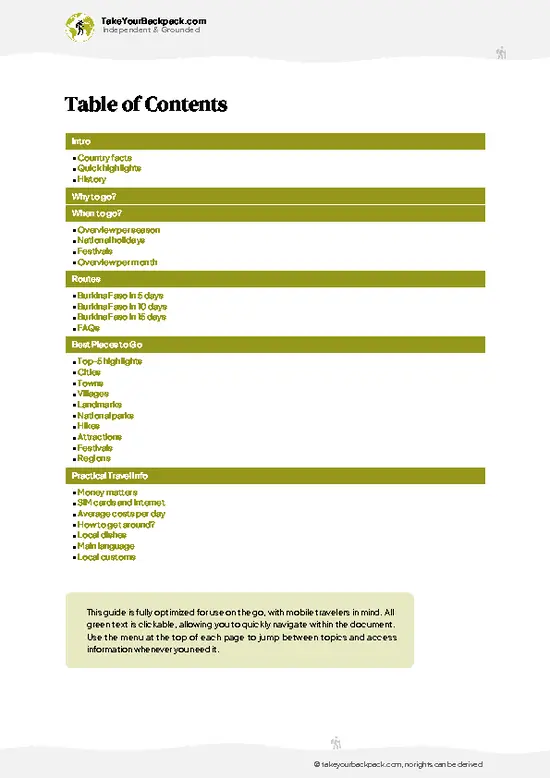
example page 2 from our offline Travel Guide for Burkina Faso
example page 3 from our offline Travel Guide for Burkina Faso
example page 4 from our offline Travel Guide for Burkina Faso
example page 5 from our offline Travel Guide for Burkina Faso
example page 6 from our offline Travel Guide for Burkina Faso
example page 7 from our offline Travel Guide for Burkina Faso
Loading the map 🌍
CLICK TO FILTER
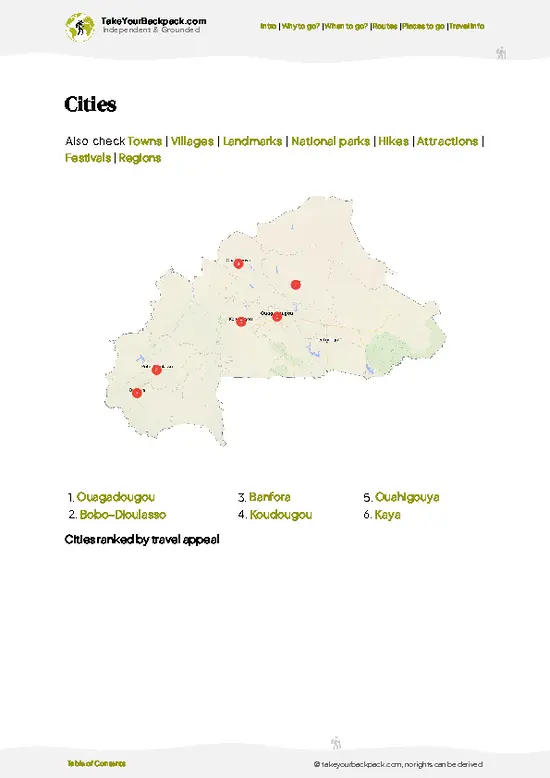
cities
towns
villages
landmarks
national parks
hikes
attractions
festivals
regions
SHOW COUNTRY’S BESTSHOW ALL

✨ Why go?
Ranked #4 attraction in Burkina Faso
What sets this place apart

Musée de Manega gives you something the capital’s big institutions cannot: the vision of a single Burkinabè thinker, built in his own home region and shaped by his own taste. That personal stamp is the main reason to come.

The second reason is the architecture itself. Buildings here are decorated and sculpted as part of the display, so the walls tell you as much as the cases do, and photographers will find plenty of texture to work with.

The third is the way the museum frames Pacéré’s own cultural legacy as a poet, lawyer and collector. You see how a Burkinabè voice chooses to present its own heritage, with no tour-group choreography. For a backpacker working through Ouagadougou and the surrounding region, it is a quiet, thoughtful stop that adds context to the masks, drums and ceremonies … read more 👉
Musée de Manega gives you something the capital’s big institutions cannot: the vision of a single Burkinabè thinker, built in his own home region and shaped by his own taste. That personal stamp is the main reason to come.

The second reason is the architecture itself. Buildings here are decorated and sculpted as part of the display, so the walls tell you as much as the cases do, and photographers will find plenty of texture to work with.

The third is the way the museum frames Pacéré’s own cultural legacy as a poet, lawyer and collector. You see how a Burkinabè voice chooses to present its own heritage, with no tour-group choreography. For a backpacker working through Ouagadougou and the surrounding region, it is a quiet, thoughtful stop that adds context to the masks, drums and ceremonies you meet elsewhere in the country. Expect a slow visit with a guide, not a checklist.

💡 HighlightsWhat this place is best known for

  1. The sculpted museum buildings: Start outside. The decorated walls and unusual forms are the museum’s signature, and they set the tone for everything inside.
  2. Traditional ritual objects: Display rooms hold items tied to ceremony and ancestry, and guides explain how they were used in village life.
  3. Masks and statuary: The carved figures give you a visual vocabulary for the masks you will meet at festivals and craft markets across Burkina Faso.
  4. Musical instruments: Drums and other instruments show how sound carries authority and memory in local cultures, with the bendré drum a recurring theme.
  5. Reconstructed traditional dwellings: Walking through them shows how space, family and status were organized in older compounds.
  6. Pacéré’s literary and cultural legacy: The founder was a poet as well as a lawyer,
… read more 👉
  1. The sculpted museum buildings: Start outside. The decorated walls and unusual forms are the museum’s signature, and they set the tone for everything inside.
  2. Traditional ritual objects: Display rooms hold items tied to ceremony and ancestry, and guides explain how they were used in village life.
  3. Masks and statuary: The carved figures give you a visual vocabulary for the masks you will meet at festivals and craft markets across Burkina Faso.
  4. Musical instruments: Drums and other instruments show how sound carries authority and memory in local cultures, with the bendré drum a recurring theme.
  5. Reconstructed traditional dwellings: Walking through them shows how space, family and status were organized in older compounds.
  6. Pacéré’s literary and cultural legacy: The founder was a poet as well as a lawyer, and the museum reflects his writing and his belief in preserving oral heritage.
  7. The surrounding grounds: The open setting lets you pause between buildings, watch daily life on the edges of the site and take photos without crowds.
Do the sculpted buildings first, because seeing the exterior before the collections makes the objects inside much easier to read.
Spotted a mistake or missing something? Contact us.

Things to do near Musée de Manega

Ratings based on Tripadvisor reviews. When you book through this link, you support our work at no extra cost to you.

🌤️ When to go?Choosing the right time of year

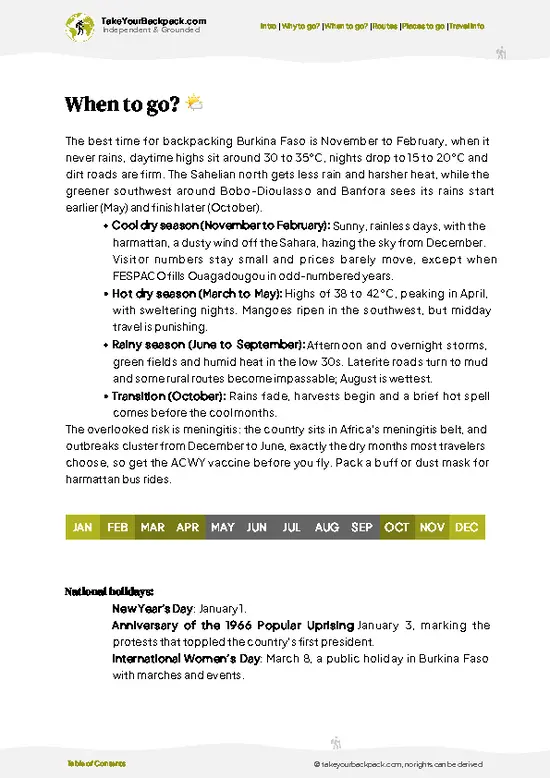
  • Cool Dry Season (November to February): Mornings start around 18 to 22°C (64 to 72°F) and afternoons reach 32 to 35°C (90 to 95°F), with harmattan haze softening the light. Rain is absent, dirt tracks are firm and the museum grounds are comfortable to walk. Days run roughly 11 to 12 hours of light.
  • Hot Season (March to May): Afternoons hit 38 to 42°C (100 to 108°F), so plan the visit for early morning. Crowds are thin, and the first storms arrive late in the period.
  • Rainy Season (June to September): Highs sit at 30 to 33°C (86 to 91°F) and downpours can turn the roads from Ouagadougou to mud. The surrounding fields turn green, but access is slower and some tracks flood.
  • Festival Periods: Local cultural events and school groups bring more visitors, and guides can be busier. Prices for rooms in
… read more 👉
  • Cool Dry Season (November to February): Mornings start around 18 to 22°C (64 to 72°F) and afternoons reach 32 to 35°C (90 to 95°F), with harmattan haze softening the light. Rain is absent, dirt tracks are firm and the museum grounds are comfortable to walk. Days run roughly 11 to 12 hours of light.
  • Hot Season (March to May): Afternoons hit 38 to 42°C (100 to 108°F), so plan the visit for early morning. Crowds are thin, and the first storms arrive late in the period.
  • Rainy Season (June to September): Highs sit at 30 to 33°C (86 to 91°F) and downpours can turn the roads from Ouagadougou to mud. The surrounding fields turn green, but access is slower and some tracks flood.
  • Festival Periods: Local cultural events and school groups bring more visitors, and guides can be busier. Prices for rooms in the capital stay fairly flat, with small rises around major holidays.
Arrive before 10 a.m. in any season, since guides are easiest to find and the heat is manageable.


source: climatestotravel.comJANJanuary: excellent for travelingFEBFebruary: highly recommended for travelingMARMarch: good for travelingAPRApril: good for travelingMAYMay: fair for travelingJUNJune: below average for travelingJULJuly: below average for travelingAUGAugust: below average for travelingSEPSeptember: below average for travelingOCTOctober: good for travelingNOVNovember: excellent for travelingDECDecember: excellent for traveling
when-to-go

✈️ The backpacker research shortcutBurkina Faso Travel Guide

An offline-friendly backpacking guide with optimized travel routes, ranked highlights, transport advice, and the best areas to stay.
example page 0 from our offline Travel Guide for Burkina Faso
example page 1 from our offline Travel Guide for Burkina Faso
example page 2 from our offline Travel Guide for Burkina Faso
example page 3 from our offline Travel Guide for Burkina Faso
example page 4 from our offline Travel Guide for Burkina Faso
example page 5 from our offline Travel Guide for Burkina Faso
example page 6 from our offline Travel Guide for Burkina Faso
example page 7 from our offline Travel Guide for Burkina Faso
The digital guide (273 pages) contains:
✅ 63 highlights, ranked by travel appeal
✅ Optimized 5, 10 & 15-day travel routes
✅ Cities, national parks, landmarks, beaches
✅ How to get around
✅ Offline-friendly for travel without Wi-Fi
👉 Click to see all 30+ guide features

📅 Plan smarter in minutes, not weeks
✅ Month by month travel advice
✅ Festivals & national holidays
✅ Budget expectations

🗺️ Go to the right places, skip the overrated ones
✅ Honest pros & cons of destinations
✅ Top hikes, parks & viewpoints
✅ Lesser-known places most travelers miss
✅ Clear “worth it vs skip it” guidance

🛏️ Travel smoothly without rookie mistakes
✅ Best areas to stay
✅ Transport systems explained simply
✅ Common scams & safety advice
✅ SIM cards, money & practical tips

🌍 Understand the country, not just visit it
✅ Culture & traditions
✅ 52 Essential phrases & customs
✅ Festivals worth planning around
✅ Traveler-friendly historical context
✅ Insights that make places more meaningful

📱 Built for real travel conditions
✅ Fully downloadable PDF
✅ Works completely offline
✅ Optimized for phone use
✅ Useful in remote areas & buses
✅ Everything in one place
Stop searching, start planning
Get instant access to your full guide. 30‑day money-back guarantee.
+ Add another guide for just

By proceeding you agree to our terms.
Sent to your inbox immediately after payment • 100% Secure Checkout
Best Backpacking Travel Advisor 2025 tourism awardBest Backpacking
Travel Advisor
2025
What others say about Take Your Backpack Guides:
⭐⭐⭐⭐⭐
Fantastic, amazing amount of information!
⭐⭐⭐⭐⭐
My goodness this is amazing, it's what I've been looking for hats off too you!
⭐⭐⭐⭐⭐
I think this is absolutely BRILLIANT
⭐⭐⭐⭐
Very complete and informative. It's still missing places, but I gotta to commend you
⭐⭐⭐⭐⭐
This is truly amazing, thank you, can't wait to explore it with my kids!
⭐⭐⭐⭐⭐
Awesome resource, thank you!
⭐⭐⭐⭐⭐
This is amazing! Can't wait to explore the ones I haven't seen
⭐⭐⭐⭐
I love this! Well done, great idea.
⭐⭐⭐⭐⭐
Thanks for taking the time to make this gem!
⭐⭐⭐⭐⭐
This might be the best website I've ever seen.
⭐⭐⭐⭐⭐
Congratulations, and thank you so much for your work; it's incredibly valuable.
⭐⭐⭐⭐
In all seriousness I think you did a great job pointing out the important spots
⭐⭐⭐⭐⭐
10/10 very good
⭐⭐⭐⭐⭐
As someone who's only just starting to visit regularly this is awesome, thank you.
⭐⭐⭐⭐
Thank you very much! I'm going to visit my dad, it's going to be very useful!
⭐⭐⭐⭐⭐
This is really cool! We'll be travelling for the first time and this definitely come in handy.
⭐⭐⭐⭐⭐
You are now our minister of culture, congratulations 👨‍💼
⭐⭐⭐⭐⭐
Just wanted to tell you that this is a pearl! Going to follow your recommendations.
⭐⭐⭐⭐⭐
This is so cool. I'll definitely be using the resource for my travels soon.
⭐⭐⭐⭐⭐
This is very impressive! Good work.
⭐⭐⭐⭐⭐
This is an amazing and informative site. Very well done!

🛏️ Where to stay?Choosing the right base

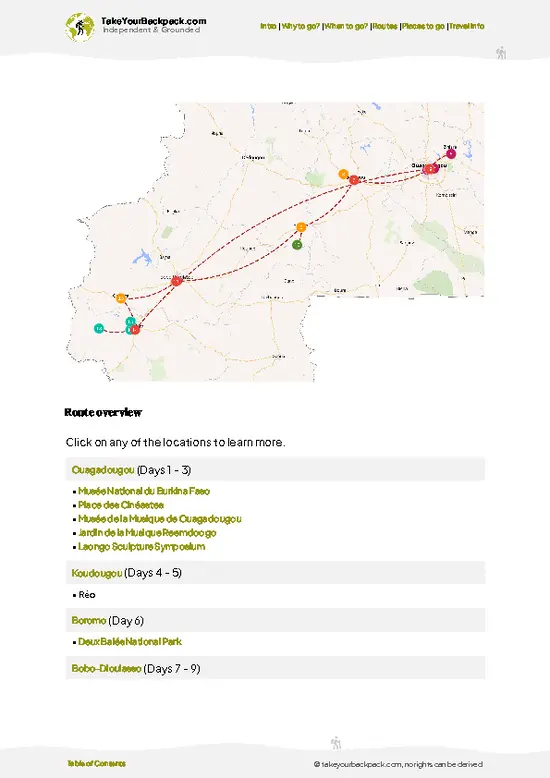
Ouagadougou is where to sleep, because Manega is a small village with almost no tourist lodging. The capital lies about 50 km to the northeast, and the museum works as a half-day trip from there.
Zone du Bois and Gounghin: These central neighborhoods have the highest concentration of budget guesthouses and dorm-style options, plus grilled-fish stalls and cheap maquis nearby. Solo travelers meet others easily here, and moto-taxis are plentiful for early departures.
Koulouba and Ouaga 2000 edges: Quieter, with a more residential feel, and good if you want sleep over socializing. Taxis cost more from … read more 👉
Ouagadougou is where to sleep, because Manega is a small village with almost no tourist lodging. The capital lies about 50 km to the northeast, and the museum works as a half-day trip from there.
Zone du Bois and Gounghin: These central neighborhoods have the highest concentration of budget guesthouses and dorm-style options, plus grilled-fish stalls and cheap maquis nearby. Solo travelers meet others easily here, and moto-taxis are plentiful for early departures.
Koulouba and Ouaga 2000 edges: Quieter, with a more residential feel, and good if you want sleep over socializing. Taxis cost more from here, so factor in transfers.
Along the Boulevard Charles de Gaulle: Handy for finding shared taxis and minibuses heading out of town, with plenty of snack vendors for breakfast. Evenings can be noisy, so bring earplugs.
A few travelers arrange a homestay or basic room through the village itself if they want a dawn start, but options are informal and you should ask a local contact first. For safety, choose places with a gated courtyard, and take a registered taxi after dark.

👛 Costs (as of 22 October 2026)What things cost and how to budget

Musée de Manega costs most backpackers about €20 to 41 per day, including a night in Ouagadougou and transport out and back.
CategoryBudget RangeLocal Reality
Entrance fee€1.50 to 3Paid in cash in West African francs at the gate; rates are lower for residents.
Guide or donation€2 to 5A local guide explains the sculptures and grounds; tips are expected.
Transport (round trip)€4 to 12Shared taxi or minibus toward the area, then a moto-taxi for the last stretch; a private taxi costs more.
Accommodation (high season)€10 to 15Dorm or basic guesthouse in Ouagadougou from November to February.
Accommodation (low season)€8 to 12Rainy months bring small discounts and easier bargaining.
Food and water€3 to 6Rice and sauce or grilled fish at local eateries; bottled water is cheap.
Total Daily Budget€20 to 41Most
… read more 👉
Musée de Manega costs most backpackers about €20 to 41 per day, including a night in Ouagadougou and transport out and back.
CategoryBudget RangeLocal Reality
Entrance fee€1.50 to 3Paid in cash in West African francs at the gate; rates are lower for residents.
Guide or donation€2 to 5A local guide explains the sculptures and grounds; tips are expected.
Transport (round trip)€4 to 12Shared taxi or minibus toward the area, then a moto-taxi for the last stretch; a private taxi costs more.
Accommodation (high season)€10 to 15Dorm or basic guesthouse in Ouagadougou from November to February.
Accommodation (low season)€8 to 12Rainy months bring small discounts and easier bargaining.
Food and water€3 to 6Rice and sauce or grilled fish at local eateries; bottled water is cheap.
Total Daily Budget€20 to 41Most travelers land near €30 with a shared ride and local meals.


source: drcatplateaucentral.wordpress.com
⚠️ Prices can change and everyone travels differently, so take this as a rough guide. Hope it helps you plan your adventure!

FAQFrequently asked questions about Musée de Manega

Half a day is enough for Musée de Manega, usually 1 to 2 hours on site. Add roughly 1 to 1.5 hours each way from Ouagadougou by road, so leave by 8 a.m. and you are back for lunch. Pair it with the capital sights if you want a full day.
Musée de Manega is worth the small fee of about €1.50 to 3 if you care for Burkinabe art and village culture. The grounds hold sculpture and traditional objects, and a guide at about €2 to 5 adds context. It is not a big museum, so expect a short but rewarding visit.
Musée de Manega is about 50 km northeast of Ouagadougou. Take a shared taxi or minibus toward the area for roughly €2 to 5, then a moto-taxi for the final stretch. A private taxi or hired driver costs around €25 to 45 for the round trip and saves time, especially in the rainy season.
⚠️ Things can change over time, so always validate details locally before you go.

Other Burkinabé attractions near Musée de Manega

Explore more nearby:


💡 Not sure where to go next?
Create a personalized itinerary for Burkina Faso including Musée de Manega and the places that fit your trip.

Generate my itinerary

👉 Discover all attractions

Or checkout all Burkina Faso has to offer (think cities, towns, villages, national parks, hikes, beaches, festivals)
Country photo of Burkina Faso

We 💚 feedbackWhat to keep in mind

Musée de Manega suits a cool, dry morning, when the site is quiet and the walls are easiest to photograph without harsh midday glare. I would arrive early, take the guided walk and leave before the afternoon heat builds. Bring water, small cash and a few French phrases, and plan to linger over the sculpted buildings.

✍️ Help improve this page!
The information on this page is based on in-depth research, insights shared by experienced travelers, and feedback from the local travel community in Burkina Faso. While every effort is made to keep the information accurate and current, conditions can change — so if you spot anything incorrect or outdated, please get in touch.


🙋‍♂️ Give feedback

👋 Meet the founderWho’s Behind Take Your Backpack?

Johan, backpacker and founder of TakeYourBackpackHi, I’m Johan (Netherlands 🇳🇱), the creator of TakeYourBackpack. Over the past 3 decades, I’ve backpacked through 90+ countries across six continents, gaining extensive experience with independent travel, long-term trips, and overland routes.

This site is built on a combination of firsthand travel experience and carefully curated insights from other backpackers. Many guides are based on places I’ve personally visited, while others bring together tips, observations, and practical advice shared by trusted travelers I’ve met along the way.

The goal is to provide realistic, experience-driven guidance — not generic itineraries — so you can explore destinations with better context, clearer expectations, and more confidence.