v2.webp)
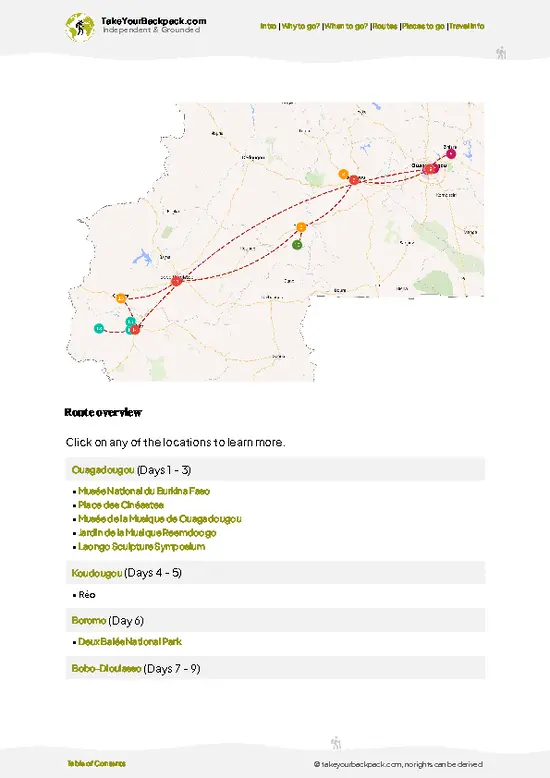
- Palace of the Naaba Kiiba (Yatenga court): The seat of the Mossi rulers of Yatenga and the town’s defining sight. Visits are possible with a respectful greeting to the court staff, and small gifts or a modest donation are customary, around €2 to 5. Allow about 1 hour. Mornings are best, when court business is more visible.
- Grand Marché of Ouahigouya: The main market sells millet, shea, spices, textiles and leather goods. It is free to enter, and 1 to 2 hours is plenty. Go early, before the midday heat, when the stalls are busiest.
- Naba Kango Tomb and historic sites: Reminders of the 19th century Yatenga rulers, tied to the dynasty’s founders. Ask locally for access and a guide, typically €2 to 5, and allow 1 hour.
- Lake Ouahigouya (Barrage area): The reservoir at the edge of town is a place for
- Palace of the Naaba Kiiba (Yatenga court): The seat of the Mossi rulers of Yatenga and the town’s defining sight. Visits are possible with a respectful greeting to the court staff, and small gifts or a modest donation are customary, around €2 to 5. Allow about 1 hour. Mornings are best, when court business is more visible.
- Grand Marché of Ouahigouya: The main market sells millet, shea, spices, textiles and leather goods. It is free to enter, and 1 to 2 hours is plenty. Go early, before the midday heat, when the stalls are busiest.
- Naba Kango Tomb and historic sites: Reminders of the 19th century Yatenga rulers, tied to the dynasty’s founders. Ask locally for access and a guide, typically €2 to 5, and allow 1 hour.
- Lake Ouahigouya (Barrage area): The reservoir at the edge of town is a place for a quiet walk, with birds, women washing clothes and irrigated plots. Free, around 1 hour. Late afternoon is the most pleasant time.
- Dye and weaving workshops: Local artisans work indigo cloth and cotton strips by hand. You can watch for free and buy pieces for about €3 to 15. Allow 1 hour, in the morning.
- Rue des cafés and evening street stalls: A simple evening scene of grilled meat, coffee and conversation near the center. A meal costs around €2 to 4, and an hour or two suits it. Go after dark when the heat drops.
Spotted a mistake or missing something? Contact us.

 Best Backpacking
.jpg) Hi, I’m Johan (Netherlands 🇳🇱), the creator of TakeYourBackpack. Over the past 3 decades, I’ve backpacked through 90+ countries across six continents, gaining extensive experience with independent travel, long-term trips, and overland routes.
Hi, I’m Johan (Netherlands 🇳🇱), the creator of TakeYourBackpack. Over the past 3 decades, I’ve backpacked through 90+ countries across six continents, gaining extensive experience with independent travel, long-term trips, and overland routes.