×

Burundi🇧🇮 | citiesCibitokeriver valleys, agricultural villages, western frontier | things to do and best time to go

Explore MakambaExplore Bubanza

Backpacking in Cibitoke
👌 Worth visitingcity ranked #9
By Johan Kruseman 🇳🇱 | Updated June 9, 2026

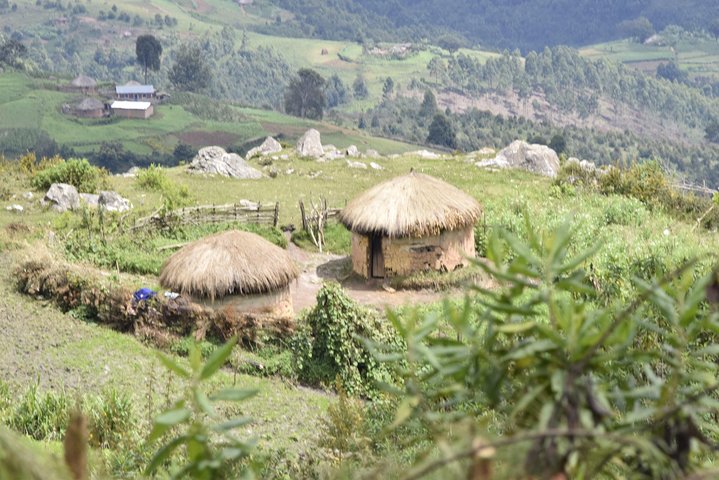
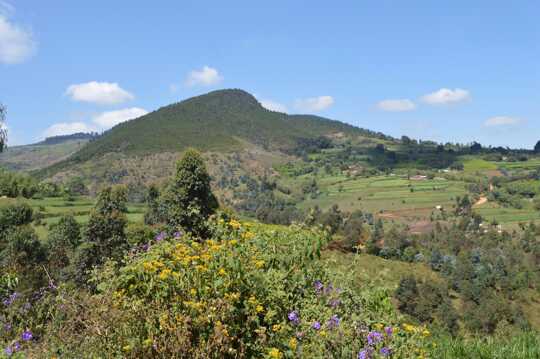
Cibitoke surprises most backpackers: it’s not the wild, remote outpost you might expect from online blurbs, but a lively agricultural hub where the scent of roasting coffee drifts through the morning air. Tucked in Burundi’s northwest, close to the Congolese border, Cibitoke is more crossroads than destination—dusty, sun-baked, and honest about it. The town itself is practical, not pretty, but it’s a strategic launchpad for exploring Burundi’s lush Rusizi River valley or the dramatic Kibira National Park hills. Don’t expect a backpacker scene—no hostels, just basic guesthouses and a handful of local eateries where you’ll be the only foreigner. Transport is straightforward: minibuses from Bujumbura rattle in and out, and the town is walkable, though you’ll need motos for anything further. Costs are low, safety is decent by rural standards, and compared to Bujumbura’s bustle or Gitega’s colonial charm, Cibitoke feels raw, functional, and refreshingly untouristed.

Discover everything you want to know in the 📖 Burundi Travel Guide.
Safety warning

The current risk level for Burundi is high. Check the advice before going.


Get your Burundi guide
60 ranked highlights, routes & tips, works offline (250 pages)
Loading the map 🌍
CLICK TO FILTER
cities
towns
landmarks
national parks
hikes
beaches
attractions
festivals
SHOW COUNTRY’S BESTSHOW ALL

✨ Why go?
Ranked #9 city in Burundi
What makes this city worth visiting

Cibitoke serves as a gateway for backpackers seeking the raw beauty of Burundi. Nestled near lush hiking trails and the serene shores of Lake Tanganyika, it’s a convenient stop for those eager to explore. The small-scale hostels and guesthouses here offer a cozy atmosphere, perfect for solo travelers or small groups looking to connect. You’ll find local food stalls serving up hearty dishes that fill the air with the scent of spices and grilled meats, making every meal an experience.

The streets are walkable, inviting you to soak in the friendly vibe of the town. Most travelers tend to stay a few days, enjoying the slower pace and the chance to mingle with locals. Whether you’re a hiker or a cultural explorer, Cibitoke provides a solid base to recharge before diving deeper into Burundi’s … read more 👉
Cibitoke serves as a gateway for backpackers seeking the raw beauty of Burundi. Nestled near lush hiking trails and the serene shores of Lake Tanganyika, it’s a convenient stop for those eager to explore. The small-scale hostels and guesthouses here offer a cozy atmosphere, perfect for solo travelers or small groups looking to connect. You’ll find local food stalls serving up hearty dishes that fill the air with the scent of spices and grilled meats, making every meal an experience.

The streets are walkable, inviting you to soak in the friendly vibe of the town. Most travelers tend to stay a few days, enjoying the slower pace and the chance to mingle with locals. Whether you’re a hiker or a cultural explorer, Cibitoke provides a solid base to recharge before diving deeper into Burundi’s natural wonders. Just don’t expect a bustling nightlife; the charm lies in its tranquility and authenticity.
Want to include Cibitoke in your Burundi route?
Create a personalized Burundi itinerary that includes Cibitoke and the places that fit your trip — based on your travel style, budget, and available time. Get your route in seconds.

Generate my trip

💡 HighlightsWhat this place is best known for

  • Marché central de Cibitoke — The bustling central market is the best place to feel the city: fresh produce, local spices, street food stalls, and everyday trade give a real sense of daily life and offer good bargains for souvenirs and fabrics.
  • Riverside at the Rusizi/Local riverbanks — The riverbanks just outside the core town are where locals wash, fish, and gather; it’s a low-key, authentic riverside scene with good light for photos and a chance to observe traditional livelihoods up close.
  • Commune administrative quarter (Governor’s offices & town square) — The administrative heart around the town square is useful to visit for civic history, local noticeboards and to watch how government and community life intersect; street vendors and nearby cafés make it a practical stop.
A few real, … read more 👉
  • Marché central de Cibitoke — The bustling central market is the best place to feel the city: fresh produce, local spices, street food stalls, and everyday trade give a real sense of daily life and offer good bargains for souvenirs and fabrics.
  • Riverside at the Rusizi/Local riverbanks — The riverbanks just outside the core town are where locals wash, fish, and gather; it’s a low-key, authentic riverside scene with good light for photos and a chance to observe traditional livelihoods up close.
  • Commune administrative quarter (Governor’s offices & town square) — The administrative heart around the town square is useful to visit for civic history, local noticeboards and to watch how government and community life intersect; street vendors and nearby cafés make it a practical stop.
A few real, visitable highlights just outside Cibitoke worth day trips include Kibira National Park (great for forest hikes and primate spotting), the Rusizi wetland areas toward the west, and scenic stops along the road to Bujumbura and Lake Tanganyika.
Spotted a mistake or missing something? Contact us.

Things to do near Cibitoke

Ratings based on Tripadvisor reviews. When you book through this link, you support our work at no extra cost to you.

🏘️ NeighborhoodsNeighborhood guide to Cibitoke

Cibitoke, a bustling town in Burundi, offers a unique blend of culture and adventure for backpackers. Here’s how to navigate its neighborhoods like a pro.

Centre Ville: This is the heart of Cibitoke. Expect a lively atmosphere with local markets and street vendors. It’s walkable, but be ready for some uneven paths. Affordable guesthouses are plentiful, making it ideal for both short and longer stays. Nightlife is modest, with a few bars where you can mingle with locals.

Gihanga: A quieter area, Gihanga is perfect for those seeking a peaceful retreat. The vibe is laid-back, and you’ll find cozy lodges at reasonable prices. It’s less walkable, so consider a bike or moto-taxi for transport. Great for longer stays, it offers a chance to immerse yourself in local life without the hustle.

Musigati: … read more 👉
Cibitoke, a bustling town in Burundi, offers a unique blend of culture and adventure for backpackers. Here’s how to navigate its neighborhoods like a pro.

Centre Ville: This is the heart of Cibitoke. Expect a lively atmosphere with local markets and street vendors. It’s walkable, but be ready for some uneven paths. Affordable guesthouses are plentiful, making it ideal for both short and longer stays. Nightlife is modest, with a few bars where you can mingle with locals.

Gihanga: A quieter area, Gihanga is perfect for those seeking a peaceful retreat. The vibe is laid-back, and you’ll find cozy lodges at reasonable prices. It’s less walkable, so consider a bike or moto-taxi for transport. Great for longer stays, it offers a chance to immerse yourself in local life without the hustle.

Musigati: This neighborhood has a more rural feel, surrounded by lush landscapes. It’s less developed, which means fewer amenities but also a more authentic experience. Transport options are limited, so plan ahead. Ideal for adventurous backpackers looking to explore nature, it’s best suited for those with a flexible schedule.

Each area has its own charm, making Cibitoke a rewarding stop on your journey.

⌛️ 1 dayHow to make the most of one day

Cibitoke, a town in Burundi, pulses with the rhythm of daily life. It’s a place where the scent of fresh cassava mingles with the earthy aroma of the surrounding hills. Here, you’ll find a blend of vibrant markets, local culture, and stunning landscapes that make every moment feel alive.

Start your morning at the bustling Cibitoke Market. The sun filters through the colorful awnings, illuminating stalls brimming with fruits, vegetables, and handmade crafts. Engage with the vendors; their smiles are as warm as the bread they sell. Grab a few mandazi (fried doughnuts) and a cup of sweet, spiced tea. This isn’t just breakfast; it’s a taste of local life.

In the afternoon, head to the nearby Kibira National Park. The trailhead is a short ride away, and the lush greenery envelops you as you hike. … read more 👉
Cibitoke, a town in Burundi, pulses with the rhythm of daily life. It’s a place where the scent of fresh cassava mingles with the earthy aroma of the surrounding hills. Here, you’ll find a blend of vibrant markets, local culture, and stunning landscapes that make every moment feel alive.

Start your morning at the bustling Cibitoke Market. The sun filters through the colorful awnings, illuminating stalls brimming with fruits, vegetables, and handmade crafts. Engage with the vendors; their smiles are as warm as the bread they sell. Grab a few mandazi (fried doughnuts) and a cup of sweet, spiced tea. This isn’t just breakfast; it’s a taste of local life.

In the afternoon, head to the nearby Kibira National Park. The trailhead is a short ride away, and the lush greenery envelops you as you hike. Listen to the rustling leaves and the distant calls of birds. This is a chance to connect with nature and escape the town’s hustle. The views from the higher trails are breathtaking, revealing the rolling hills that cradle Cibitoke.

As evening approaches, return to town and stroll through the Nyakabiga neighborhood. Here, you’ll find local eateries where you can savor a plate of brochettes (grilled meat skewers) paired with a cold Primus beer. The atmosphere is lively, filled with laughter and the sounds of music.

Cibitoke may not be on every tourist’s radar, but its heart beats strong. Embrace the rhythm, and you’ll leave with stories that linger long after you’ve returned home.
Turn your Cibitoke visit into an Burundi adventure
Build a complete Burundi route with Cibitoke, hidden gems, must-see destinations, and realistic travel times included.

Generate my trip

🌤️ When to go?When to go for the best experience


  • Weather: The dry season from June to September is your best bet. Expect clear skies and minimal rain, which means trails stay firm and the air feels crisp rather than muggy.

  • Temperature: Daytime highs hover around 22-26°C (72-79°F) during the dry months, perfect for hiking without overheating. Nights can dip to 12-15°C (54-59°F), so pack a warm layer.

  • Daylight Hours: Around 11 to 12 hours of daylight give you plenty of time to explore without rushing, with sunrises around 6:00 AM and sunsets near 6:00 PM.

  • Crowds: Cibitoke stays low-key year-round, but the dry season draws a few more travelers. You’ll still find plenty of solitude compared to Burundi’s busier spots.

  • Seasonal Activities: Dry months open up hiking, birdwatching, and river excursions. The wet season (October to May)
read more 👉

  • Weather: The dry season from June to September is your best bet. Expect clear skies and minimal rain, which means trails stay firm and the air feels crisp rather than muggy.

  • Temperature: Daytime highs hover around 22-26°C (72-79°F) during the dry months, perfect for hiking without overheating. Nights can dip to 12-15°C (54-59°F), so pack a warm layer.

  • Daylight Hours: Around 11 to 12 hours of daylight give you plenty of time to explore without rushing, with sunrises around 6:00 AM and sunsets near 6:00 PM.

  • Crowds: Cibitoke stays low-key year-round, but the dry season draws a few more travelers. You’ll still find plenty of solitude compared to Burundi’s busier spots.

  • Seasonal Activities: Dry months open up hiking, birdwatching, and river excursions. The wet season (October to May) can make trails slippery and limit outdoor options.

  • Price Fluctuations: Accommodation and transport costs rise slightly during the dry season due to demand but remain reasonable. The wet season offers cheaper rates but at the cost of comfort and access.


Pro-tip: Aim for early dry season (June-July) to catch fresh greenery post-rains without the mud—nature’s way of rewarding your timing.


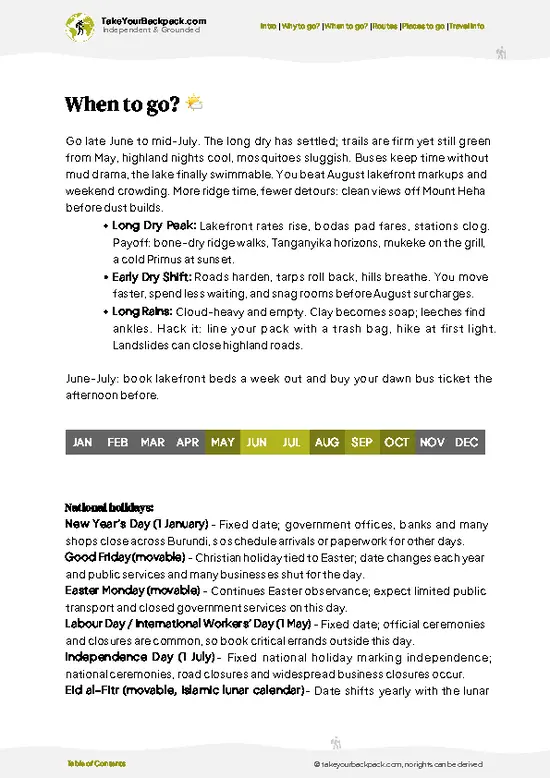
source: climatestotravel.comJANJanuary: fair for travelingFEBFebruary: fair for travelingMARMarch: fair for travelingAPRApril: fair for travelingMAYMay: fair for travelingJUNJune: excellent for travelingJULJuly: excellent for travelingAUGAugust: highly recommended for travelingSEPSeptember: highly recommended for travelingOCTOctober: fair for travelingNOVNovember: fair for travelingDECDecember: fair for traveling
when-to-go

✈️ The backpacker research shortcutBurundi Travel Guide

An offline-friendly backpacking guide with optimized travel routes, ranked highlights, transport advice, and the best areas to stay.
example page 0 from our offline Travel Guide for Burundi
example page 1 from our offline Travel Guide for Burundi
example page 2 from our offline Travel Guide for Burundi
example page 3 from our offline Travel Guide for Burundi
example page 4 from our offline Travel Guide for Burundi
example page 5 from our offline Travel Guide for Burundi
example page 6 from our offline Travel Guide for Burundi
example page 7 from our offline Travel Guide for Burundi
The digital guide (250 pages) contains:
60 highlights, ranked by travel appeal
Optimized 2, 3 & 5-day travel routes
Cities, national parks, landmarks, beaches
How to get around
Offline-friendly for travel without Wi-Fi
👉 Click to see all 30+ guide features

📅 Plan smarter in minutes, not weeks
Month by month travel advice
Festivals & national holidays
Budget expectations

🗺️ Go to the right places, skip the overrated ones
Honest pros & cons of destinations
Top hikes, parks & viewpoints
Lesser-known places most travelers miss
Clear “worth it vs skip it” guidance

🛏️ Travel smoothly without rookie mistakes
Best areas to stay
Transport systems explained simply
Common scams & safety advice
SIM cards, money & practical tips

🌍 Understand the country, not just visit it
Culture & traditions
52 Essential phrases & customs
Festivals worth planning around
Traveler-friendly historical context
Insights that make places more meaningful

📱 Built for real travel conditions
Fully downloadable PDF
Works completely offline
Optimized for phone use
Useful in remote areas & buses
Everything in one place
Save weeks of stressful planning
Get instant access to your full guide. 30‑day money-back guarantee.


By proceeding you agree to our terms.
Sent to your inbox immediately after payment • 100% Secure Checkout
Best Backpacking Travel Advisor 2025 tourism awardBest Backpacking
Travel Advisor
2025
What others say about Take Your Backpack Guides:
⭐⭐⭐⭐⭐
Fantastic, amazing amount of information!
⭐⭐⭐⭐⭐
My goodness this is amazing, it's what I've been looking for hats off too you!
⭐⭐⭐⭐⭐
I think this is absolutely BRILLIANT
⭐⭐⭐⭐
Very complete and informative. It's still missing places, but I gotta to commend you
⭐⭐⭐⭐⭐
This is truly amazing, thank you, can't wait to explore it with my kids!
⭐⭐⭐⭐⭐
Awesome resource, thank you!
⭐⭐⭐⭐⭐
This is amazing! Can't wait to explore the ones I haven't seen
⭐⭐⭐⭐
I love this! Well done, great idea.
⭐⭐⭐⭐⭐
Thanks for taking the time to make this gem!
⭐⭐⭐⭐⭐
This might be the best website I've ever seen.
⭐⭐⭐⭐⭐
Congratulations, and thank you so much for your work; it's incredibly valuable.
⭐⭐⭐⭐
In all seriousness I think you did a great job pointing out the important spots
⭐⭐⭐⭐⭐
10/10 very good
⭐⭐⭐⭐⭐
As someone who's only just starting to visit regularly this is awesome, thank you.
⭐⭐⭐⭐
Thank you very much! I'm going to visit my dad, it's going to be very useful!
⭐⭐⭐⭐⭐
This is really cool! We'll be travelling for the first time and this definitely come in handy.
⭐⭐⭐⭐⭐
You are now our minister of culture, congratulations 👨‍💼
⭐⭐⭐⭐⭐
Just wanted to tell you that this is a pearl! Going to follow your recommendations.
⭐⭐⭐⭐⭐
This is so cool. I'll definitely be using the resource for my travels soon.
⭐⭐⭐⭐⭐
This is very impressive! Good work.
⭐⭐⭐⭐⭐
This is an amazing and informative site. Very well done!

🛏️ Where to stay?Choosing the right base

In Cibitoke, the best spot for backpackers is the central district near the main market and administrative offices. This area hums with daily life—the scent of fresh produce mingles with the earthy aroma after a rain, and street vendors call out in a rhythm that feels like the town’s heartbeat. It’s where you’ll find a handful of budget guesthouses and simple hostels, places that attract solo travelers and small groups looking to connect without the fuss of luxury.

Why here? Safety is a practical priority, and this neighborhood benefits from a steady police presence and a community that keeps … read more 👉
In Cibitoke, the best spot for backpackers is the central district near the main market and administrative offices. This area hums with daily life—the scent of fresh produce mingles with the earthy aroma after a rain, and street vendors call out in a rhythm that feels like the town’s heartbeat. It’s where you’ll find a handful of budget guesthouses and simple hostels, places that attract solo travelers and small groups looking to connect without the fuss of luxury.

Why here? Safety is a practical priority, and this neighborhood benefits from a steady police presence and a community that keeps an eye out for newcomers. It’s social without being overwhelming—locals and travelers mingle over roadside cafés serving strong coffee and grilled fish. Compared to the quieter, more residential outskirts, this area offers a smoother experience for those who want to dive into Cibitoke’s daily pulse without wandering into less familiar, less secure zones after dark.

Staying here means you’re steps away from transport links and local eateries, making your comings and goings effortless. The vibe is straightforward and welcoming, a solid base for exploring Burundi’s northwestern charm.

🚌 Getting aroundHow to get from A to B

Cibitoke moves at a pace that feels like a slow breath in a humid room—unhurried but deliberate. The town’s rhythm isn’t dictated by strict timetables but by the ebb and flow of daily life, where the scent of earth and fresh cassava mingles with the chatter of market vendors. You won’t find shiny bus terminals or digital displays here; instead, transport is a dance of intuition and local knowledge. The sun’s angle matters—early morning light casts long shadows on dusty roads, signaling the start of movement, while late afternoon’s golden haze invites a slowdown. Understanding this flow means embracing a flexible mindset, where waiting becomes part of the journey, and every ride is a chance to connect with the pulse of the place.


  • Walking: The most reliable and immersive way to get around.
read more 👉
Cibitoke moves at a pace that feels like a slow breath in a humid room—unhurried but deliberate. The town’s rhythm isn’t dictated by strict timetables but by the ebb and flow of daily life, where the scent of earth and fresh cassava mingles with the chatter of market vendors. You won’t find shiny bus terminals or digital displays here; instead, transport is a dance of intuition and local knowledge. The sun’s angle matters—early morning light casts long shadows on dusty roads, signaling the start of movement, while late afternoon’s golden haze invites a slowdown. Understanding this flow means embracing a flexible mindset, where waiting becomes part of the journey, and every ride is a chance to connect with the pulse of the place.


  • Walking: The most reliable and immersive way to get around. Cibitoke’s compact center means you can cover key spots on foot within 30 to 45 minutes, absorbing the smells of roadside cooking and the texture of cracked pavement underfoot. No cost, just stamina and curiosity.


  • Bicycle Taxi (Moto): These motorbikes are the town’s unofficial taxis, weaving through narrow alleys and dirt tracks. Expect to pay around 200 to 500 Burundian Francs for short trips. They start operating at dawn and slow down by dusk, offering a quick, if bumpy, ride that cuts through the heat and dust.


  • Shared Minibus (Taxi-Brousse): For longer distances or trips to neighboring towns, these minibuses gather passengers until full, then depart. Prices vary but hover around 1,000 to 2,000 Francs depending on distance. Departures are irregular—don’t expect a schedule, but rather a communal readiness that can mean waiting under the sun or bargaining with drivers.


  • Private Car Hire: Less common and pricier, but an option if you want control over timing and routes. Negotiated rates start around 10,000 Francs per day. This is your best bet for early morning starts or late returns when other options thin out.

👛 Costs (as of 5 February 2026)Typical daily expenses

Backpacking in Cibitoke, Burundi, means embracing a raw, authentic experience where every dollar stretches but also buys you a genuine slice of local life. Here’s what you can expect to spend daily, broken down by essentials:
  • Dorm Accommodation: Budget guesthouses or simple hostels in Cibitoke typically charge between €5 to €10 per night. These places are basic—think mosquito nets, shared bathrooms, and the occasional generator hum after dark. It’s not luxury, but it’s clean enough to rest your head and recharge for the next day’s trek.
  • Meals: Street food and local eateries dominate here. A hearty meal of grilled fish, beans, and plantains will set you back around €1.50 to €3. Expect simple flavors, fresh ingredients, and a chance to eat like the locals do. Western-style meals or imported
read more 👉
Backpacking in Cibitoke, Burundi, means embracing a raw, authentic experience where every dollar stretches but also buys you a genuine slice of local life. Here’s what you can expect to spend daily, broken down by essentials:
  • Dorm Accommodation: Budget guesthouses or simple hostels in Cibitoke typically charge between €5 to €10 per night. These places are basic—think mosquito nets, shared bathrooms, and the occasional generator hum after dark. It’s not luxury, but it’s clean enough to rest your head and recharge for the next day’s trek.
  • Meals: Street food and local eateries dominate here. A hearty meal of grilled fish, beans, and plantains will set you back around €1.50 to €3. Expect simple flavors, fresh ingredients, and a chance to eat like the locals do. Western-style meals or imported goods will cost more and are rare.
  • Local Transport: Getting around Cibitoke usually means hopping on a shared taxi or moto-taxi. Fares range from €0.30 to €1 per short trip within town. It’s noisy, close, and fast—perfect for quick hops but not for comfort. Walking is often the best way to soak in the atmosphere.
  • Basic Activities/Entry Fees: Most local attractions or natural sites have minimal or no entry fees, often under €1. Guided tours, if available, might cost €5 to €10, but these are rare and usually arranged through local contacts rather than formal operators.
  • Miscellaneous Expenses: This covers bottled water, snacks, phone credit, or small tips. Budget around €1 to €2 daily. Water safety is a concern, so bottled water is a must, adding to your daily costs.

All told, a realistic daily budget for backpacking in Cibitoke falls between €10 and €18. This range reflects the balance between stretching your resources and staying comfortable enough to enjoy the raw, unfiltered pulse of this Burundian town.
⚠️ Prices can change and everyone travels differently, so take this as a rough guide. Hope it helps you plan your adventure!

🚌 Day tripsBest day trips from Cibitoke

Cibitoke, Burundi, is a backpacker’s dream base for exploring the region’s rich tapestry of culture and nature. With its welcoming atmosphere and proximity to stunning landscapes, you’ll find plenty of worthwhile day trips that offer both adventure and insight.

1. Kibira National Park
Just a short 30-minute drive from Cibitoke, Kibira National Park is a lush paradise for nature lovers. The air is thick with the scent of damp earth and wildflowers, and the sounds of chirping birds fill the canopy. Spend a day hiking through the dense forest, where you might spot rare primates swinging overhead. The park entrance fee is around $5, making it budget-friendly. Aim for the dry season, from May to September, when trails are more accessible. A common mistake? Many first-timers underestimate the … read more 👉
Cibitoke, Burundi, is a backpacker’s dream base for exploring the region’s rich tapestry of culture and nature. With its welcoming atmosphere and proximity to stunning landscapes, you’ll find plenty of worthwhile day trips that offer both adventure and insight.

1. Kibira National Park
Just a short 30-minute drive from Cibitoke, Kibira National Park is a lush paradise for nature lovers. The air is thick with the scent of damp earth and wildflowers, and the sounds of chirping birds fill the canopy. Spend a day hiking through the dense forest, where you might spot rare primates swinging overhead. The park entrance fee is around $5, making it budget-friendly. Aim for the dry season, from May to September, when trails are more accessible. A common mistake? Many first-timers underestimate the park’s size; plan for a full day to truly soak in its beauty.
👉 Explore Kibira National Park

2. Lake Tanganyika
About an hour’s drive will take you to the shores of Lake Tanganyika, where the water glistens like a sapphire under the sun. This is the perfect spot for a refreshing swim or a leisurely afternoon of fishing. Local eateries serve up fresh fish caught that morning, and you can enjoy a meal for under $10. The best time to visit is during the dry season, when the weather is perfect for lounging by the lake. Don’t forget your sunscreen; it’s easy to lose track of time in this serene setting.
👉 Explore Lake Tanganyika

3. Gitega
A 90-minute trip to Gitega reveals Burundi’s cultural heart. The National Museum here is a treasure trove of artifacts and history, providing a deeper understanding of the country. Entrance is around $3, and you can easily spend a few hours exploring. The best time to visit is during the week when it’s less crowded. Many backpackers miss out on the local markets; make sure to wander through and sample street food for an authentic taste of Burundian life.
👉 Explore Gitega

4. Teza Tea Plantation
Just under an hour from Cibitoke, the Teza Tea Plantation offers a unique glimpse into Burundi’s agricultural side. The rolling hills are covered in vibrant green tea bushes, and the air is filled with the earthy aroma of fresh leaves. A guided tour costs around $5 and includes tastings. Visiting in the morning is ideal, as you’ll catch the workers in action. A common oversight is not bringing a camera; the landscape is postcard-perfect.
Want to know what more Burundi offers?
The Burundi Travel Guide describes 60 highlights, from cities to national parks, from beaches to hikes

Get the Travel Guide -

🍲 FoodLocal Cuisine & Drinks

In Cibitoke, food is a lively negotiation between simplicity and bold flavors. The must-try is Isombe, a leafy green stew cooked with cassava leaves and peanut butter, rich and earthy, perfect for soaking up with a side of Ugali—a dense, maize-based staple that anchors every meal. Don’t miss the chance to sip on Urwagwa, a traditional banana beer that’s tart, slightly sweet, and a social glue in local gatherings.

Backpackers will find their rhythm at bustling markets and street stalls where the air is thick with the scent of grilled fish and spicy sauces. These spots are less about polished menus and more about raw, authentic exchanges—grab a plate, find a seat on a wooden bench, and watch the city’s pulse. Casual eateries offer a break from the street hustle but expect no frills, just hearty, … read more 👉
In Cibitoke, food is a lively negotiation between simplicity and bold flavors. The must-try is Isombe, a leafy green stew cooked with cassava leaves and peanut butter, rich and earthy, perfect for soaking up with a side of Ugali—a dense, maize-based staple that anchors every meal. Don’t miss the chance to sip on Urwagwa, a traditional banana beer that’s tart, slightly sweet, and a social glue in local gatherings.

Backpackers will find their rhythm at bustling markets and street stalls where the air is thick with the scent of grilled fish and spicy sauces. These spots are less about polished menus and more about raw, authentic exchanges—grab a plate, find a seat on a wooden bench, and watch the city’s pulse. Casual eateries offer a break from the street hustle but expect no frills, just hearty, honest food.

Eating here is a communal affair. Sharing dishes is common, and refusing food can be seen as impolite. When drinking Urwagwa, raising your glass with a nod or a smile is the local way to honor the moment. It’s not just about filling your stomach—it’s about tasting the culture’s warmth and resilience.

🛡️ SafetySafety Tips and Common Scams in Cibitoke

Cibitoke is generally safe, but a few practical tips can enhance your experience. Stay aware in crowded markets, where distractions can lead to pickpocketing. If you’re solo, avoid wandering too far after dark; the streets can feel different at night, and it’s best to stick to well-lit areas.

Common scams are rare, but some locals might try to overcharge for goods or services. Always negotiate prices upfront, especially in markets. Carry small bills to avoid awkward change situations.

The atmosphere is warm and welcoming, but a confident demeanor goes a long way. Walk with purpose, and don’t hesitate to greet locals; it builds rapport and can deter unwanted attention. Embrace the rhythm of the town, and you’ll find your footing quickly.

Other Burundian cities near Cibitoke

Explore more nearby:

  • Bubanza—savanna plains, provincial center, open landscapes| 35 km away
  • Kayanza—coffee region, bustling market, northern hills| 56 km away
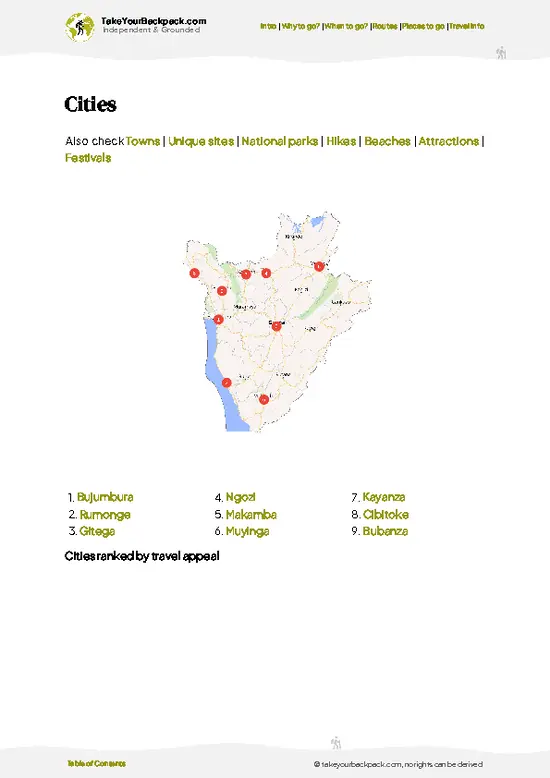
  • Bujumbura—Lake Tanganyika shore, colonial-era architecture, lively central market| 56 km away

💡 Not sure where to go next?
Create a personalized itinerary for Burundi including Cibitoke and the places that fit your trip.

Generate my itinerary

👉 Discover all cities

Or checkout all Burundi has to offer (think cities, towns, villages, national parks, hikes, beaches, festivals)
Country photo of Burundi

We 💚 feedbackWhat to keep in mind

Cibitoke has a raw, unfiltered vibe that feels like stepping into a living postcard. The air is thick with the scent of earth after rain, and the laughter of locals fills the streets. The best surprise? The warmth of the community; they’ll invite you into their world with open arms. Just a heads-up: the roads can be rough, so pack patience along with your gear. It’s all part of the adventure.

✍️ Help improve this page!
The information on this page is based on in-depth research, insights shared by experienced travelers, and feedback from the local travel community in Burundi. While every effort is made to keep the information accurate and current, conditions can change — so if you spot anything incorrect or outdated, please get in touch.


🙋‍♂️ Give feedback

👋 Meet the founderWho’s Behind Take Your Backpack?

Johan, backpacker and founder of TakeYourBackpackHi, I’m Johan (Netherlands 🇳🇱), the creator of TakeYourBackpack. Over the past decade, I’ve backpacked through 80+ countries across six continents, gaining extensive experience with independent travel, long-term trips, and overland routes.

This site is built on a combination of firsthand travel experience and carefully curated insights from other backpackers. Many guides are based on places I’ve personally visited, while others bring together tips, observations, and practical advice shared by trusted travelers I’ve met along the way.

The goal is to provide realistic, experience-driven guidance — not generic itineraries — so you can explore destinations with better context, clearer expectations, and more confidence.

Get full Burundi guide •
Instant download • 60 highlights • Full Offline guide