×

Burundi🇧🇮 | citiesNgoziTea plantations, hillside neighborhoods, regional trading hub | things to do and best time to go

Explore KayanzaExplore Rumonge

Backpacking in Ngozi
🌟 Highlightcity ranked #3
By Johan Kruseman 🇳🇱 | Updated June 9, 2026

A rooster crows somewhere behind the market, and you’re elbow-deep in a bowl of isombe, the tang of cassava leaves mixing with wood smoke and the distant thump of a boda-boda engine. Ngozi isn’t a city that tries to impress you; it’s a place that lets you watch daily life unfold, unhurried, in the cool highlands of northern Burundi, just south of the Rwandan border. For backpackers, Ngozi is a study in contrasts: the colonial-era cathedral and the faded Art Deco post office hint at a past most travelers breeze past, while the central market is pure present-tense chaos—cheap, loud, and alive. You won’t find a party hostel or a curated museum scene here, and English is rare, but the city is safe, walkable, and refreshingly free of tourist hustle. It’s less cosmopolitan than Bujumbura, but friendlier and easier on the wallet. If you want Burundi without the filter, Ngozi is where you’ll find it.

Discover everything you want to know in the 📖 Burundi Travel Guide.
Safety warning

The current risk level for Burundi is high. Check the advice before going.


Get your Burundi guide
60 ranked highlights, routes & tips, works offline (250 pages)
Loading the map 🌍
CLICK TO FILTER
cities
towns
landmarks
national parks
hikes
beaches
attractions
festivals
SHOW COUNTRY’S BESTSHOW ALL

✨ Why go?
Ranked #3 city in Burundi
What makes it a must-see city

In the heart of Burundi, Ngozi serves as a strategic stop for backpackers weaving through East Africa. It’s not just about the highlights; it’s about the value this city brings to your journey. With a range of affordable hostels, you can rest easy without breaking the bank. The food scene is a delightful mix of local flavors, perfect for fueling your adventures.

Ngozi’s walkability makes it easy to explore on foot, allowing you to soak in the local vibe without the hassle of transport. Plus, the nightlife offers a taste of Burundian culture, with lively spots to unwind after a day of exploration.

As a basecamp, it opens doors to day trips into the surrounding countryside, making it a practical choice for those wanting to experience more of Burundi’s natural beauty. If you’re looking for … read more 👉
In the heart of Burundi, Ngozi serves as a strategic stop for backpackers weaving through East Africa. It’s not just about the highlights; it’s about the value this city brings to your journey. With a range of affordable hostels, you can rest easy without breaking the bank. The food scene is a delightful mix of local flavors, perfect for fueling your adventures.

Ngozi’s walkability makes it easy to explore on foot, allowing you to soak in the local vibe without the hassle of transport. Plus, the nightlife offers a taste of Burundian culture, with lively spots to unwind after a day of exploration.

As a basecamp, it opens doors to day trips into the surrounding countryside, making it a practical choice for those wanting to experience more of Burundi’s natural beauty. If you’re looking for a place that balances comfort and adventure, Ngozi is a solid pick, but don’t linger too long unless you’re drawn to its unique charm.
Want to include Ngozi in your Burundi route?
Create a personalized Burundi itinerary that includes Ngozi and the places that fit your trip — based on your travel style, budget, and available time. Get your route in seconds.

Generate my trip

💡 HighlightsThe experiences that define the visit

  • Ngozi Central Market (Marché Central) — The beating heart of the town: piles of fresh produce, spices, second-hand clothes and crafts. Great for honest people-watching, bargaining practice and grabbing cheap street snacks while you watch daily life unfold.
  • Université du Ngozi (campus) — A compact university campus where you can feel the student energy, find inexpensive cafés run by students, catch occasional public lectures or cultural events, and see modern local life beyond the market stalls.
  • Diocesan cathedral and church compound — The Catholic cathedral is the spiritual and social hub of Ngozi. Visiting during a service or on market day gives real insight into local religious life, architecture and community networks.
  • Ngozi Municipal Stadium (Stade Municipal) — Come for a local football
read more 👉
  • Ngozi Central Market (Marché Central) — The beating heart of the town: piles of fresh produce, spices, second-hand clothes and crafts. Great for honest people-watching, bargaining practice and grabbing cheap street snacks while you watch daily life unfold.
  • Université du Ngozi (campus) — A compact university campus where you can feel the student energy, find inexpensive cafés run by students, catch occasional public lectures or cultural events, and see modern local life beyond the market stalls.
  • Diocesan cathedral and church compound — The Catholic cathedral is the spiritual and social hub of Ngozi. Visiting during a service or on market day gives real insight into local religious life, architecture and community networks.
  • Ngozi Municipal Stadium (Stade Municipal) — Come for a local football match or a community event; the stadium is where people gather, cheer loudly and show local pride. Perfect if you want an authentic, noisy local atmosphere.
  • Main bus terminal (gare routière) — Not just transit: the bus station is a lively micro-city of its own, with food vendors, porters, and minibuses going to every nearby town. Useful for soaking up travel culture and planning onward trips.
  • Local coffee cooperative / washing station — Ngozi province is coffee country. Several cooperatives and small washing stations are visitable within/just on the edge of town — you can watch cherries being processed and taste freshly roasted Burundi coffee where it’s made.
  • Artisans’ quarter and tailor workshops — Tailors, carpenters and basket weavers work in concentrated lanes. It’s hands-on: watch a craftsman at work, commission a simple piece, or pick up locally made textiles and baskets as honest souvenirs.
  • Street-food corridor and daytime snack stalls — A string of simple stalls sells grilled meats, stews, beans and seasonal fruit. Cheap, filling and a real way to eat like a local—ask for the busiest stall for the freshest bites.
  • Weekly livestock & second-hand clothing market — On market days the outskirts of town fill with traders and buyers dealing livestock and friperies (used clothes). It’s loud, colorful and an excellent window into rural-urban trade networks.
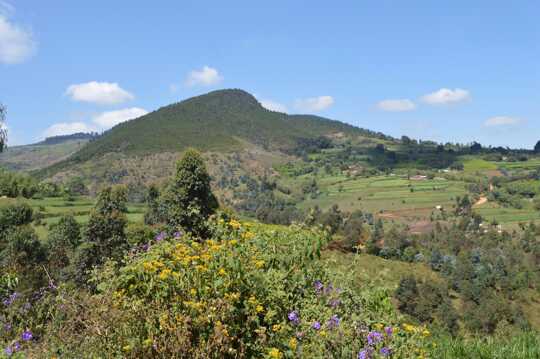
  • Town hill viewpoints and neighborhood collines — Ngozi sits among rolling hills; several small climbs inside the town give panoramic views over patchwork farmland and the rooftops. Short, easy walks that reward you with classic northern-Burundi scenery.
A few easy day trips from Ngozi include the tea estates over the border in nearby Kayanza, the specialty coffee farms scattered through the Ngozi countryside, and the many rolling collines around the province for short hikes and village visits.
Spotted a mistake or missing something? Contact us.

Things to do near Ngozi

Ratings based on Tripadvisor reviews. When you book through this link, you support our work at no extra cost to you.

🏘️ NeighborhoodsHow different areas shape the experience

Ngozi is a vibrant hub in Burundi, offering a mix of cultural experiences and practical amenities for backpackers. Here’s how the neighborhoods stack up:

Centre Ville: This is the heart of Ngozi. It’s bustling with local markets and eateries. Prices are reasonable, making it ideal for budget travelers. The area is walkable, with easy access to public transport. Nightlife is low-key, perfect for those who prefer a quiet evening after a day of exploration. Great for short stays.

Musongati: A bit quieter, Musongati offers a more laid-back vibe. It’s slightly more expensive but worth it for the serene atmosphere. Walkability is decent, though you might need to rely on taxis for longer distances. This area is perfect for longer stays, especially if you want to immerse yourself in local life.
read more 👉
Ngozi is a vibrant hub in Burundi, offering a mix of cultural experiences and practical amenities for backpackers. Here’s how the neighborhoods stack up:

Centre Ville: This is the heart of Ngozi. It’s bustling with local markets and eateries. Prices are reasonable, making it ideal for budget travelers. The area is walkable, with easy access to public transport. Nightlife is low-key, perfect for those who prefer a quiet evening after a day of exploration. Great for short stays.

Musongati: A bit quieter, Musongati offers a more laid-back vibe. It’s slightly more expensive but worth it for the serene atmosphere. Walkability is decent, though you might need to rely on taxis for longer distances. This area is perfect for longer stays, especially if you want to immerse yourself in local life.

Gikoma: Known for its lush surroundings, Gikoma is a nature lover’s paradise. Prices are moderate, and the area is less touristy. It’s a bit further from the city center, so transport is essential. Ideal for those looking to escape the hustle and bustle, making it suitable for longer stays.

Rukoma: This neighborhood has a vibrant community feel. Costs are low, and it’s very walkable. While nightlife is minimal, the local cafes offer a cozy atmosphere. Great for short visits, especially if you want to connect with locals.

⌛️ 1 day1-day itinerary for Ngozi

Ngozi, Burundi, is a city that pulses with local life, surrounded by lush hills and vibrant markets. It’s not on everyone’s radar, but that’s what makes it special. You’ll find a blend of culture, history, and the warmth of Burundian hospitality that invites exploration.

Start your day in the bustling center, where the morning market comes alive. Vendors display colorful fruits and vegetables, and the aroma of freshly fried plantains fills the air. Grab a cup of local coffee—Burundi is known for its rich brews—and chat with the friendly locals. This is a perfect moment to soak in the rhythm of daily life.

Afterward, head to the nearby **Kibira National Park**. It’s a short drive from the city center, and while it’s not a typical tourist stop, the park offers serene trails and the chance … read more 👉
Ngozi, Burundi, is a city that pulses with local life, surrounded by lush hills and vibrant markets. It’s not on everyone’s radar, but that’s what makes it special. You’ll find a blend of culture, history, and the warmth of Burundian hospitality that invites exploration.

Start your day in the bustling center, where the morning market comes alive. Vendors display colorful fruits and vegetables, and the aroma of freshly fried plantains fills the air. Grab a cup of local coffee—Burundi is known for its rich brews—and chat with the friendly locals. This is a perfect moment to soak in the rhythm of daily life.

Afterward, head to the nearby **Kibira National Park**. It’s a short drive from the city center, and while it’s not a typical tourist stop, the park offers serene trails and the chance to see unique wildlife. Spend a few hours hiking through the lush greenery, listening to the sounds of nature. The fresh air and stunning views will recharge your spirit.

As the afternoon rolls in, return to the city and explore the **Ngoma Hill** area. This neighborhood is less frequented by tourists but offers a glimpse into local life. Visit the **Ngozi Cathedral**, a striking structure with beautiful stained glass, and take a moment to appreciate its peaceful surroundings.

As evening approaches, find a local eatery to savor traditional Burundian dishes. Try **ibihaza** (pumpkin) or **brochettes** (skewers) paired with a refreshing local beer. The atmosphere is relaxed, and you’ll likely find yourself sharing stories with fellow diners.

In just one day, you’ve tasted the essence of Ngozi, balancing time, comfort, and money for an experience that feels both authentic and rewarding.
Turn your Ngozi visit into an Burundi adventure
Build a complete Burundi route with Ngozi, hidden gems, must-see destinations, and realistic travel times included.

Generate my trip

🌤️ When to go?Weather, crowds, and seasonal trade-offs


  • Topic: Weather and Temperature – Ngozi’s climate swings between a wet season (October to May) and a dry season (June to September). Dry months offer daytime highs around 22-25°C (72-77°F), perfect for trekking without the oppressive humidity. Wet months can push temps to 26-28°C (79-82°F) but bring heavy rains that can turn trails into mudslides.

  • Topic: Daylight Hours – Near the equator, Ngozi enjoys roughly 12 hours of daylight year-round. This consistency means you don’t have to juggle short days or long nights; your hiking windows stay steady, letting you plan with confidence.

  • Topic: Crowds – Ngozi isn’t a tourist hotspot, so crowds are minimal year-round. However, the dry season sees a slight uptick in local and regional visitors, especially on weekends, which can affect accommodation
read more 👉

  • Topic: Weather and Temperature – Ngozi’s climate swings between a wet season (October to May) and a dry season (June to September). Dry months offer daytime highs around 22-25°C (72-77°F), perfect for trekking without the oppressive humidity. Wet months can push temps to 26-28°C (79-82°F) but bring heavy rains that can turn trails into mudslides.

  • Topic: Daylight Hours – Near the equator, Ngozi enjoys roughly 12 hours of daylight year-round. This consistency means you don’t have to juggle short days or long nights; your hiking windows stay steady, letting you plan with confidence.

  • Topic: Crowds – Ngozi isn’t a tourist hotspot, so crowds are minimal year-round. However, the dry season sees a slight uptick in local and regional visitors, especially on weekends, which can affect accommodation availability and prices.

  • Topic: Seasonal Activities – Dry months are prime for outdoor adventures—hiking, wildlife spotting, and cultural visits. The wet season limits these options but offers lush landscapes and fewer travelers, appealing if you want solitude and vivid scenery.

  • Topic: Price Fluctuations – Expect higher prices during the dry season due to increased demand. Accommodations and guides may charge a premium, while the wet season offers better deals but at the cost of comfort and accessibility.


Pro-tip: Aim for the shoulder months of May and September to balance decent weather, fewer crowds, and moderate prices—getting the best bang for your backpacking buck.


source: climatestotravel.comJANJanuary: fair for travelingFEBFebruary: fair for travelingMARMarch: fair for travelingAPRApril: fair for travelingMAYMay: highly recommended for travelingJUNJune: excellent for travelingJULJuly: excellent for travelingAUGAugust: excellent for travelingSEPSeptember: highly recommended for travelingOCTOctober: fair for travelingNOVNovember: fair for travelingDECDecember: fair for traveling
when-to-go

✈️ The backpacker research shortcutBurundi Travel Guide

An offline-friendly backpacking guide with optimized travel routes, ranked highlights, transport advice, and the best areas to stay.
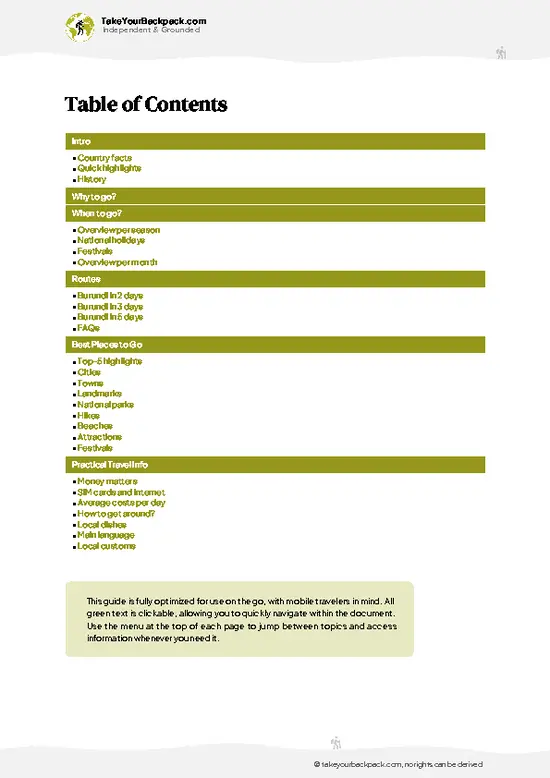
example page 0 from our offline Travel Guide for Burundi
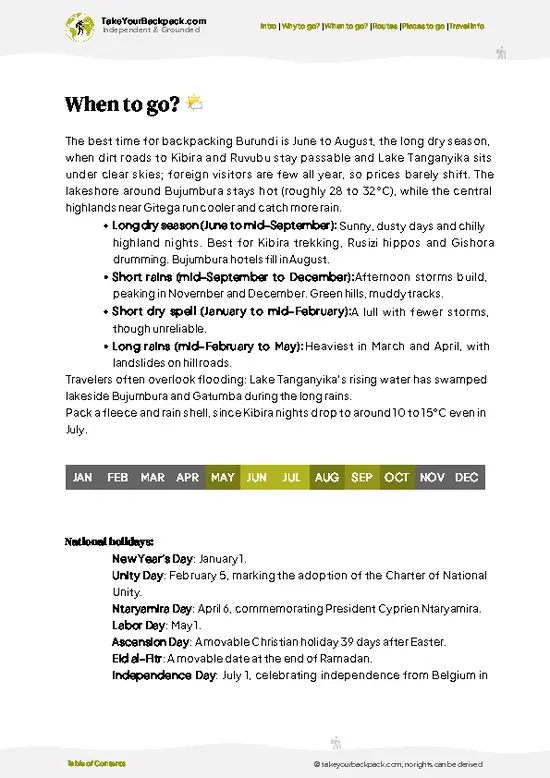
example page 1 from our offline Travel Guide for Burundi
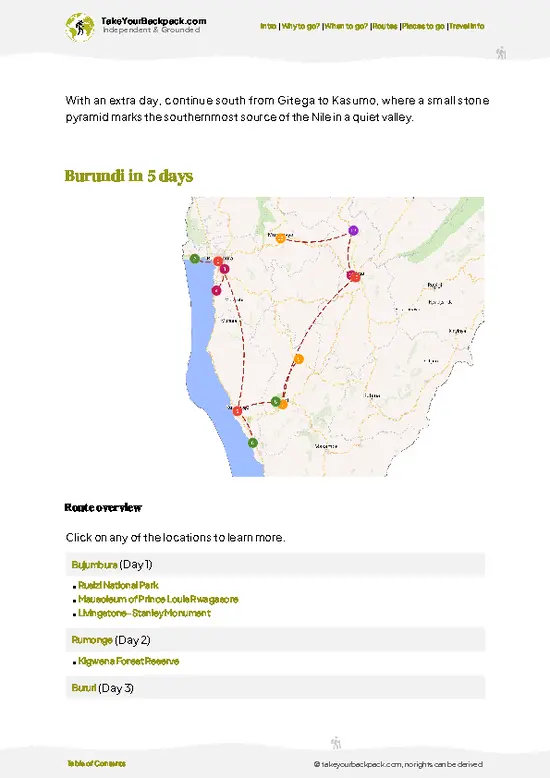
example page 2 from our offline Travel Guide for Burundi
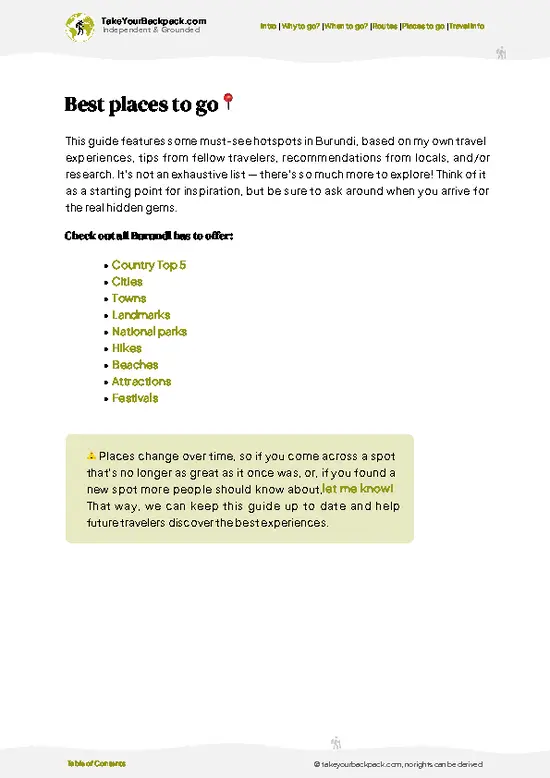
example page 3 from our offline Travel Guide for Burundi
example page 4 from our offline Travel Guide for Burundi
example page 5 from our offline Travel Guide for Burundi
example page 6 from our offline Travel Guide for Burundi
example page 7 from our offline Travel Guide for Burundi
The digital guide (250 pages) contains:
60 highlights, ranked by travel appeal
Optimized 2, 3 & 5-day travel routes
Cities, national parks, landmarks, beaches
How to get around
Offline-friendly for travel without Wi-Fi
👉 Click to see all 30+ guide features

📅 Plan smarter in minutes, not weeks
Month by month travel advice
Festivals & national holidays
Budget expectations

🗺️ Go to the right places, skip the overrated ones
Honest pros & cons of destinations
Top hikes, parks & viewpoints
Lesser-known places most travelers miss
Clear “worth it vs skip it” guidance

🛏️ Travel smoothly without rookie mistakes
Best areas to stay
Transport systems explained simply
Common scams & safety advice
SIM cards, money & practical tips

🌍 Understand the country, not just visit it
Culture & traditions
52 Essential phrases & customs
Festivals worth planning around
Traveler-friendly historical context
Insights that make places more meaningful

📱 Built for real travel conditions
Fully downloadable PDF
Works completely offline
Optimized for phone use
Useful in remote areas & buses
Everything in one place
Save weeks of stressful planning
Get instant access to your full guide. 30‑day money-back guarantee.


By proceeding you agree to our terms.
Sent to your inbox immediately after payment • 100% Secure Checkout
Best Backpacking Travel Advisor 2025 tourism awardBest Backpacking
Travel Advisor
2025
What others say about Take Your Backpack Guides:
⭐⭐⭐⭐⭐
Fantastic, amazing amount of information!
⭐⭐⭐⭐⭐
My goodness this is amazing, it's what I've been looking for hats off too you!
⭐⭐⭐⭐⭐
I think this is absolutely BRILLIANT
⭐⭐⭐⭐
Very complete and informative. It's still missing places, but I gotta to commend you
⭐⭐⭐⭐⭐
This is truly amazing, thank you, can't wait to explore it with my kids!
⭐⭐⭐⭐⭐
Awesome resource, thank you!
⭐⭐⭐⭐⭐
This is amazing! Can't wait to explore the ones I haven't seen
⭐⭐⭐⭐
I love this! Well done, great idea.
⭐⭐⭐⭐⭐
Thanks for taking the time to make this gem!
⭐⭐⭐⭐⭐
This might be the best website I've ever seen.
⭐⭐⭐⭐⭐
Congratulations, and thank you so much for your work; it's incredibly valuable.
⭐⭐⭐⭐
In all seriousness I think you did a great job pointing out the important spots
⭐⭐⭐⭐⭐
10/10 very good
⭐⭐⭐⭐⭐
As someone who's only just starting to visit regularly this is awesome, thank you.
⭐⭐⭐⭐
Thank you very much! I'm going to visit my dad, it's going to be very useful!
⭐⭐⭐⭐⭐
This is really cool! We'll be travelling for the first time and this definitely come in handy.
⭐⭐⭐⭐⭐
You are now our minister of culture, congratulations 👨‍💼
⭐⭐⭐⭐⭐
Just wanted to tell you that this is a pearl! Going to follow your recommendations.
⭐⭐⭐⭐⭐
This is so cool. I'll definitely be using the resource for my travels soon.
⭐⭐⭐⭐⭐
This is very impressive! Good work.
⭐⭐⭐⭐⭐
This is an amazing and informative site. Very well done!

🛏️ Where to stay?Best areas and accommodation options

Ngozi’s backpacker scene is compact but strategic. The best area to base yourself is the central district around the main market and university. This neighborhood strikes a rare balance: it’s safe enough to wander after dark, thanks to a steady local presence, and lively enough to meet fellow travelers and locals without feeling like a tourist trap. The streets pulse with daily commerce, street food stalls, and informal cafés where you can strike up conversations over a cheap meal or a cup of tea.

Hostel options here are modest but functional, catering to budget travelers who prioritize social … read more 👉
Ngozi’s backpacker scene is compact but strategic. The best area to base yourself is the central district around the main market and university. This neighborhood strikes a rare balance: it’s safe enough to wander after dark, thanks to a steady local presence, and lively enough to meet fellow travelers and locals without feeling like a tourist trap. The streets pulse with daily commerce, street food stalls, and informal cafés where you can strike up conversations over a cheap meal or a cup of tea.

Hostel options here are modest but functional, catering to budget travelers who prioritize social atmosphere over luxury. You’ll find communal spaces where solo backpackers naturally gravitate, creating a low-key but genuine vibe. Compared to the quieter residential zones on the outskirts, this area offers more interaction and easier access to transport links for onward travel.

Avoid the industrial zones and the more isolated suburbs—they lack the social infrastructure and can feel disconnected. The central district’s mix of safety, social energy, and affordability makes it the logical choice if you want to maximize your experience without overspending or sacrificing comfort. It’s where the city’s pulse is strongest, and where your backpacker instincts will pay off.

🚌 Getting aroundTransportation options and practical tips

Ngozi moves at a pace that’s neither strictly regimented nor wildly unpredictable—it’s a blend of both, like a jazz rhythm where the beat is felt more than counted. The city’s pulse is set by the ebb and flow of daily markets, the timing of shared taxis filling up, and the occasional honk signaling a sudden surge of movement. You won’t find a clockwork precision here, but there’s an underlying logic to the chaos. Understanding this flow means you can navigate Ngozi’s transit options with a strategic eye, balancing your time, money, and comfort like a seasoned player in a complex game.


  • Walking: The most straightforward and cost-free way to get around Ngozi’s compact center. It’s slow but reliable, letting you absorb the city’s textures and sounds. Ideal for short distances or when you want
read more 👉
Ngozi moves at a pace that’s neither strictly regimented nor wildly unpredictable—it’s a blend of both, like a jazz rhythm where the beat is felt more than counted. The city’s pulse is set by the ebb and flow of daily markets, the timing of shared taxis filling up, and the occasional honk signaling a sudden surge of movement. You won’t find a clockwork precision here, but there’s an underlying logic to the chaos. Understanding this flow means you can navigate Ngozi’s transit options with a strategic eye, balancing your time, money, and comfort like a seasoned player in a complex game.


  • Walking: The most straightforward and cost-free way to get around Ngozi’s compact center. It’s slow but reliable, letting you absorb the city’s textures and sounds. Ideal for short distances or when you want to dodge the unpredictability of vehicles. No schedule, no cost, but expect some dusty streets and uneven sidewalks.


  • Bicycle Taxi (Moto): A fast, nimble option weaving through traffic with ease. Prices are negotiable but generally low, making it a budget-friendly choice for medium distances. They operate from dawn until late evening, but comfort is minimal—exposure to dust, noise, and the occasional bumpy ride is part of the deal. Great for saving time if you’re okay with a bit of adrenaline.


  • Shared Minibus (Taxi-Brousse): The backbone of intercity and longer-distance travel. These minibuses run on a loose schedule, often departing when full rather than on the hour. Fares are cheap, but expect cramped seating and frequent stops. It’s a trade-off: you save money but sacrifice comfort and punctuality. Perfect if you want to stretch your budget and don’t mind a slower pace.


  • Private Taxi: More expensive but offers the comfort of a dedicated ride and flexible timing. Ideal for travelers prioritizing convenience and speed over cost. Negotiation is key, and prices can vary widely depending on distance and time of day. Use this when your schedule is tight or when you’re carrying heavy gear.


  • Motorbike Rental: For the confident and experienced, renting a motorbike gives you full control over your schedule and route. Costs include rental fees and fuel, which add up but still can be economical compared to taxis for longer trips. Comfort depends on your riding skills and tolerance for local road conditions. A high-risk, high-reward choice that maximizes freedom and time efficiency.

👛 Costs (as of 8 February 2026)How expensive it really is

Backpacking in Ngozi, Burundi, is a study in balancing modest costs with the realities of local infrastructure and services. Here’s the breakdown of what you’re likely to spend daily as an independent traveler:
  • Dorm Accommodation (High Season): Expect to pay around €8-€12 per night. High season sees a slight bump due to demand, but options remain basic and functional rather than luxurious.
  • Dorm Accommodation (Off-Season): Prices drop to about €5-€8. Fewer travelers mean more negotiating power, but the quality and availability of dorm beds can fluctuate.
  • Meals: Budget around €4-€7 per day if you stick to local eateries and street food. Meals are simple but filling—think staple grains, beans, and occasional meat or fish.
  • Local Transport: Small-scale transport like moto-taxis or shared minibuses
read more 👉
Backpacking in Ngozi, Burundi, is a study in balancing modest costs with the realities of local infrastructure and services. Here’s the breakdown of what you’re likely to spend daily as an independent traveler:
  • Dorm Accommodation (High Season): Expect to pay around €8-€12 per night. High season sees a slight bump due to demand, but options remain basic and functional rather than luxurious.
  • Dorm Accommodation (Off-Season): Prices drop to about €5-€8. Fewer travelers mean more negotiating power, but the quality and availability of dorm beds can fluctuate.
  • Meals: Budget around €4-€7 per day if you stick to local eateries and street food. Meals are simple but filling—think staple grains, beans, and occasional meat or fish.
  • Local Transport: Small-scale transport like moto-taxis or shared minibuses cost roughly €0.30-€0.70 per trip. Frequent use adds up but remains affordable.
  • City Transport Pass: Not commonly available or necessary in Ngozi. Most rely on individual rides or walking.
  • Basic Activities/Entry Fees: Cultural sites and local attractions usually charge minimal fees, around €1-€3. Organized tours are rare and tend to be pricier.
  • Miscellaneous Expenses: Budget €1-€3 for essentials like bottled water, snacks, or small personal items. Internet access can be patchy and sometimes requires buying data bundles.

Total daily costs hover between €15 and €25, depending on your season and how much you lean into local options versus convenience. This range gives you a clear picture of what you’re trading off: a modest budget buys you basic comfort and authentic local experiences, while pushing for more comfort or convenience will quickly raise your daily spend.
⚠️ Prices can change and everyone travels differently, so take this as a rough guide. Hope it helps you plan your adventure!

🚌 Day tripsEasy escapes and nearby places

Using Ngozi as a base for day trips opens up a world of adventure in Burundi. The region is rich in culture, nature, and authentic experiences that are well worth the effort.

Kibira National Park
Just a 45-minute drive from Ngozi, Kibira National Park is a lush paradise for nature lovers. You can hike through dense forests, spotting rare birds and maybe even a troop of playful monkeys. The trails vary in difficulty, so whether you’re a seasoned hiker or a casual walker, there’s something for you. Expect to spend around $10 for park entry and transportation. The best time to visit is during the dry season, from May to September, when the trails are more accessible. A common mistake? Underestimating the park’s size; plan for a full day to truly soak it in.
👉 Explore Kibira National Park
read more 👉
Using Ngozi as a base for day trips opens up a world of adventure in Burundi. The region is rich in culture, nature, and authentic experiences that are well worth the effort.

Kibira National Park
Just a 45-minute drive from Ngozi, Kibira National Park is a lush paradise for nature lovers. You can hike through dense forests, spotting rare birds and maybe even a troop of playful monkeys. The trails vary in difficulty, so whether you’re a seasoned hiker or a casual walker, there’s something for you. Expect to spend around $10 for park entry and transportation. The best time to visit is during the dry season, from May to September, when the trails are more accessible. A common mistake? Underestimating the park’s size; plan for a full day to truly soak it in.
👉 Explore Kibira National Park

Lake Tanganyika
A bit further afield, about two hours from Ngozi, Lake Tanganyika offers stunning views and a chance to relax by the water. You can swim, kayak, or simply enjoy the local fish dishes at a lakeside restaurant. Budget around $15 for transport and meals. The dry season is ideal for this trip, as the weather is perfect for water activities. Many first-timers miss out on the local markets nearby, where you can pick up unique crafts and snacks.
👉 Explore Lake Tanganyika

Gitega
Just an hour away, Gitega is the cultural heart of Burundi. Visit the National Museum to dive deep into the country’s history and traditions. The museum entry is about $5, and you can easily grab a local meal for another $5. The best time to visit is during the week when the museum is less crowded. A common oversight is not allowing enough time to explore the vibrant local markets that spring to life in the afternoons.
👉 Explore Gitega

Mugara Waterfalls
Only 30 minutes from Ngozi, Mugara Waterfalls is a hidden treasure. The sound of cascading water and the surrounding greenery make it a perfect spot for a picnic. Entry is free, but you might want to budget for snacks or drinks. The rainy season can make the trails slippery, so aim for the dry months. First-timers often miss the best viewing spots; don’t just settle for the first overlook.
Want to know what more Burundi offers?
The Burundi Travel Guide describes 60 highlights, from cities to national parks, from beaches to hikes

Get the Travel Guide -

🍲 FoodLocal Flavors for Backpackers

In Ngozi, the food scene is a delightful blend of local flavors and communal spirit. Start with ugali, a staple made from maize flour, often served with a rich sauce or grilled meat. Pair it with brochettes, skewered meat grilled to perfection, bursting with smoky flavor. Don’t miss samosas, crispy pockets filled with spiced potatoes or meat, perfect for snacking on the go.

Street food stalls are your best bet for an authentic experience. The markets buzz with life, where vendors serve up steaming bowls of isombe—cassava leaves cooked in peanut sauce. Grab a seat on a low bench and soak in the atmosphere. The locals often share their meals, so don’t hesitate to join in; it’s a great way to connect.

When it comes to drinks, try sorghum beer, a traditional brew that’s slightly sour and refreshing. … read more 👉
In Ngozi, the food scene is a delightful blend of local flavors and communal spirit. Start with ugali, a staple made from maize flour, often served with a rich sauce or grilled meat. Pair it with brochettes, skewered meat grilled to perfection, bursting with smoky flavor. Don’t miss samosas, crispy pockets filled with spiced potatoes or meat, perfect for snacking on the go.

Street food stalls are your best bet for an authentic experience. The markets buzz with life, where vendors serve up steaming bowls of isombe—cassava leaves cooked in peanut sauce. Grab a seat on a low bench and soak in the atmosphere. The locals often share their meals, so don’t hesitate to join in; it’s a great way to connect.

When it comes to drinks, try sorghum beer, a traditional brew that’s slightly sour and refreshing. It’s usually enjoyed in a communal setting, so be prepared to share a round. Remember, in Burundi, meals are a social affair. Always greet your hosts and show appreciation for the food; it’s part of the culture. Enjoy the flavors and the camaraderie—this is where the heart of Ngozi truly lies.

🛡️ SafetyStaying Safe: What Travelers Should Know

In Ngozi, Burundi, the atmosphere is generally safe, but a few situational awareness tips can enhance your experience. Stick to well-lit areas at night, especially if you’re solo. While violent crime is rare, petty theft can occur, particularly in crowded markets. Keep your belongings close and avoid flashy displays of wealth.

Scams are minimal, but be cautious of overly friendly locals who may ask for money or offer unsolicited help. A polite but firm “no, thank you” usually suffices. Language barriers can lead to misunderstandings, so a few phrases in Kirundi can go a long way in building rapport and defusing awkward situations.

Overall, trust your instincts. If something feels off, it probably is. Carry yourself with confidence, and you’ll navigate Ngozi like a pro.

Other Burundian cities near Ngozi

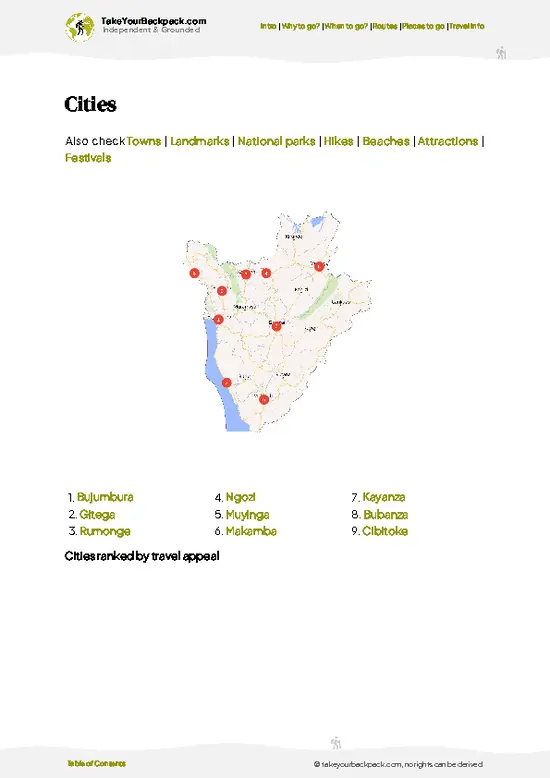
Explore more nearby:

  • Kayanza—coffee region, bustling market, northern hills| 22 km away
  • Bubanza—savanna plains, provincial center, open landscapes| 51 km away
  • Muyinga—northern plateau, regional trade, hillside views| 58 km away

💡 Not sure where to go next?
Create a personalized itinerary for Burundi including Ngozi and the places that fit your trip.

Generate my itinerary

👉 Discover all cities

Or checkout all Burundi has to offer (think cities, towns, villages, national parks, hikes, beaches, festivals)
Country photo of Burundi

We 💚 feedbackKey takeaways before you go

Ngozi is a breath of fresh air in Burundi. The vibe is laid-back, with locals who genuinely welcome you. Don’t miss the stunning views from the hills; they’ll catch you off guard. One surprise? The local food is a flavor explosion—try the grilled fish. Just a heads-up: transport can be tricky, so plan ahead. Embrace the slower pace; it’s part of the charm. You’ll leave feeling like you’ve discovered a piece of Burundi’s heart.

✍️ Help improve this page!
The information on this page is based on in-depth research, insights shared by experienced travelers, and feedback from the local travel community in Burundi. While every effort is made to keep the information accurate and current, conditions can change — so if you spot anything incorrect or outdated, please get in touch.


🙋‍♂️ Give feedback

👋 Meet the founderWho’s Behind Take Your Backpack?

Johan, backpacker and founder of TakeYourBackpackHi, I’m Johan (Netherlands 🇳🇱), the creator of TakeYourBackpack. Over the past decade, I’ve backpacked through 80+ countries across six continents, gaining extensive experience with independent travel, long-term trips, and overland routes.

This site is built on a combination of firsthand travel experience and carefully curated insights from other backpackers. Many guides are based on places I’ve personally visited, while others bring together tips, observations, and practical advice shared by trusted travelers I’ve met along the way.

The goal is to provide realistic, experience-driven guidance — not generic itineraries — so you can explore destinations with better context, clearer expectations, and more confidence.

Get full Burundi guide •
Instant download • 60 highlights • Full Offline guide