×

Cabo Verde🇨🇻 | regionsSanto Antãogreen canyons, cliffside trails, remote hamlets, terraced hills | things to do and best time to go

Explore Ilha do SalExplore São Vicente

Backpacking in Santo Antão
🌟 Highlightregion ranked #2
By Johan Kruseman 🇳🇱 | Updated May 15, 2026

Here’s the trick nobody tells you until you’re already on the ferry: Santo Antão rewards patience, but punishes the rushed. If you try to “do it all” in a day trip from Mindelo, you’ll spend more time staring at the inside of a minibus than at those wild, Jurassic-green valleys. This island sits just northwest of São Vicente, a short but dramatic ferry ride away, and it’s the real-deal adventure playground of Cabo Verde. Backpackers come for the switchback mountain roads, the cliff-hugging villages, and the kind of hiking that makes your legs burn and your camera roll weep with joy. It’s cheap once you’re here, but getting between towns is slow—think shared rides, not Uber. There’s no resort gloss, just family-run guesthouses and the occasional rum distillery. Paúl’s valley is the show-stealer, but Ribeira Grande has the local pulse. Compared to the beachy buzz of Sal or the music scene in Mindelo, Santo Antão is raw, lush, and stubbornly itself—never crowded, never fake.

Discover everything you want to know in the 📖 Cabo Verde Travel Guide.
Loading the map 🌍
CLICK TO FILTER
city
town
village
unique site
national park
hike
beach
attraction
festival
region
SHOW COUNTRY’S BESTSHOW ALL

✨ Why go?
Ranked #2 region in Cabo Verde
Why visitors keep coming back

Santo Antão is a backpacker’s paradise in Cabo Verde, and here’s why savvy travelers flock here. First off, the variety of landscapes is mind-blowing. You can hike through lush valleys, scale rugged mountains, and chill on dramatic coastlines—all without packing up your gear every few days. This island is a slow travel haven, allowing you to soak in the scenery and culture at your own pace.

Transport is a breeze. You’ve got local buses and shared taxis that make getting around easy and affordable. This flexibility means you can explore hidden villages or popular trails without the stress of rigid schedules.

Mixing nature and culture is where Santo Antão shines. You can trek through the stunning Paul Valley in the morning, then sip on local grogue (sugarcane liquor) in a nearby village by … read more 👉
Santo Antão is a backpacker’s paradise in Cabo Verde, and here’s why savvy travelers flock here. First off, the variety of landscapes is mind-blowing. You can hike through lush valleys, scale rugged mountains, and chill on dramatic coastlines—all without packing up your gear every few days. This island is a slow travel haven, allowing you to soak in the scenery and culture at your own pace.

Transport is a breeze. You’ve got local buses and shared taxis that make getting around easy and affordable. This flexibility means you can explore hidden villages or popular trails without the stress of rigid schedules.

Mixing nature and culture is where Santo Antão shines. You can trek through the stunning Paul Valley in the morning, then sip on local grogue (sugarcane liquor) in a nearby village by afternoon. It’s all about those high-value experiences that make you feel like a local rather than just another tourist.

So, if you’re looking for a place that offers rich experiences without the hassle of constant relocation, Santo Antão is your spot.
Get the complete Travel Guide for Cabo Verde
Everything organized for offline planning — routes, highlights, costs & tips

See what’s inside 👉

Get the Travel Guide -

💡 HighlightsWhat this place is best known for

  1. Fontainhas (the cliff village above Ponta do Sol) — A picture doesn’t do it justice: tiny, colorful houses clinging to a steep headland with the ocean smashing below. Walk the narrow lanes, watch fishermen haul nets at low tide and stay for the late-afternoon light that turns the whole place cinematic. It’s one of those spots where architecture, geology and real village life collide — you won’t find an exact copy of this cliff-hugging layout anywhere else.
  2. Miradouro da Corda — That hairpin viewpoint on the main island road where the entire island seems to spill out beneath you: ridges, ribbons of river valleys, and distant islands on clear days. It’s perfect for short stops between towns and gives a crash-course in Santo Antão’s dramatic topography. Locals pull over here to sell fruit and
read more 👉
  1. Fontainhas (the cliff village above Ponta do Sol) — A picture doesn’t do it justice: tiny, colorful houses clinging to a steep headland with the ocean smashing below. Walk the narrow lanes, watch fishermen haul nets at low tide and stay for the late-afternoon light that turns the whole place cinematic. It’s one of those spots where architecture, geology and real village life collide — you won’t find an exact copy of this cliff-hugging layout anywhere else.
  2. Miradouro da Corda — That hairpin viewpoint on the main island road where the entire island seems to spill out beneath you: ridges, ribbons of river valleys, and distant islands on clear days. It’s perfect for short stops between towns and gives a crash-course in Santo Antão’s dramatic topography. Locals pull over here to sell fruit and coffee — quick and genuine roadside culture.
  3. Cova (the volcanic crater) — A green, bowl-shaped volcanic crater high on the island, known for its strange microclimate and patchwork fields inside the rim. Hike the rim for different panoramas or start longer treks downhill toward Ribeira da Torre — the crater is a natural gateway that frames the island’s agricultural life in a way you won’t see elsewhere.
  4. Ribeira da Torre valley — A narrow, lush valley of stepped fields, shade trees and small farms tucked into steep canyon walls. The trails here run past terraced plots, tiny family “tascas” (simple eateries) and a few waterfalls — great for multi-hour hikes that end with a home-cooked meal and a glass of local grogue. It’s where the island’s farming culture still runs the show.
  5. Ribeira do Paul (Valley of Paúl) — Think bananas, sugarcane, mango trees and old stone paths — this valley feels tropical and unexpectedly fertile compared with the rest of the archipelago. Walk between tiny villages, sample local produce sold by hand at the roadside, and notice the unique scents and humidity that give Paul its distinctive microclimate. The combination of agriculture, creole life and wild scenery is very Santo Antão.
  6. Tope de Coroa (the island’s highest peak) — A proper mountain hike up to the island’s highest point with panoramic rewards: sea on three sides, deep cuts of green valleys below and endemic plants you won’t find on lower slopes. It’s a full-day effort for most travelers, but the solitude and the sweeping views make it a top unique experience on the island.
  7. Pico da Cruz — A compact but dramatic ridge viewpoint often used by hikers and locals for sunrise or late-afternoon light. The short climb is worth it for the layered views over valleys and the way clouds hang in the gullies — an intimate, less-crowded summit moment compared with bigger peaks.
  8. Ribeira Grande town and its market — The island’s liveliest urban hub: colorful streets, a market selling fresh produce and fish, and cafés where local musicians can turn up in the evening. It’s the place to see daily island life, pick up supplies for hikes, and overhear Creole conversation — cultural authenticity without needing to hunt for it.
  9. Janela cliffs and the north-coast walk — Hidden gem: fewer day-trippers make it here. Jagged cliffs, natural caves and a handful of small fishing hamlets give the north coast a raw, unpolished feel. Walks along the headland reward with dramatic geology and real coastal village life — bring good shoes and water.
  10. Cruzinha (the tiny northern fishing hamlet) — Hidden gem: a quiet cluster of houses, a pebbly shoreline and fishermen hauling in the day’s catch. It’s the kind of place to sit on a rock, listen to waves and talk with locals about life on the edge of the island. Completely unlike the beach resort vibe you get elsewhere; this is honest coastal Cabo Verde.
Spotted a mistake or missing something? Contact us.

Things to do around Santo Antão

Ratings based on Tripadvisor reviews. When you book through this link, you support our work at no extra cost to you.

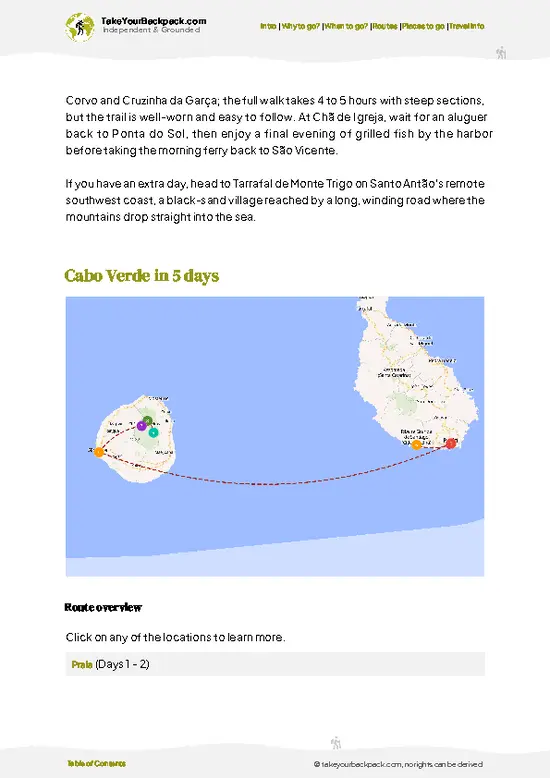
⌛️ 5 daysWhat you can realistically do in a week

Day 1: Porto Novo
The journey kicks off in Porto Novo, the main entry point to Santo Antão. You’ll want to arrive early to catch the local transport—these shared taxis, known as “alugueres,” are your lifeline. They run on a loose schedule, so the earlier you start, the better your chances of snagging a seat. The ride to your first destination, Ribeira Grande, is a scenic one, winding through lush valleys and dramatic cliffs. This is where you’ll get your first taste of the island’s rugged beauty.

Day 2: Ribeira Grande
Spend the day exploring Ribeira Grande. The town is a hub for hiking, and you’ll want to hit the trails early to avoid the midday heat. The hike to the “Cova” crater is a must; it’s a moderate trek that rewards you with stunning views. Grab lunch at a local eatery—try the … read more 👉
Day 1: Porto Novo
The journey kicks off in Porto Novo, the main entry point to Santo Antão. You’ll want to arrive early to catch the local transport—these shared taxis, known as “alugueres,” are your lifeline. They run on a loose schedule, so the earlier you start, the better your chances of snagging a seat. The ride to your first destination, Ribeira Grande, is a scenic one, winding through lush valleys and dramatic cliffs. This is where you’ll get your first taste of the island’s rugged beauty.

Day 2: Ribeira Grande
Spend the day exploring Ribeira Grande. The town is a hub for hiking, and you’ll want to hit the trails early to avoid the midday heat. The hike to the “Cova” crater is a must; it’s a moderate trek that rewards you with stunning views. Grab lunch at a local eatery—try the catch of the day. The relaxed vibe here is contagious, and you’ll feel like you’re part of the community.

Day 3: Ponta do Sol
Head to Ponta do Sol, a charming coastal village. The alugueres are less frequent here, so plan your departure wisely. This is where you can unwind on the beach or take a short hike to the nearby “Cabo de Ribeira.” The sunset views are worth the wait.

Day 4: Off-Path Reward - Paul
Take a detour to Paul, a hidden valley that feels worlds away. The transport is a bit tricky, but the lush landscapes and terraced fields are a photographer’s dream. Spend the day wandering through the village and soaking in the local culture.

Day 5: Mindelo
Finish your trip in Mindelo, the cultural heart of Cabo Verde. The ferry ride from Santo Antão is a scenic farewell. Explore the vibrant markets and enjoy live music in the evening. This day encapsulates the spirit of the islands.

The must-do day? Day 2 in Ribeira Grande. The combination of hiking, local culture, and stunning views makes it the highlight of your trip.
Build the Right Itinerary
Use the Cabo Verde Travel Guide’s 2, 3 & 5-day routes as a starting point to plan a trip that actually works on the ground.

Get the Travel Guide -

🌤️ When to go?Best time to visit Santo Antão


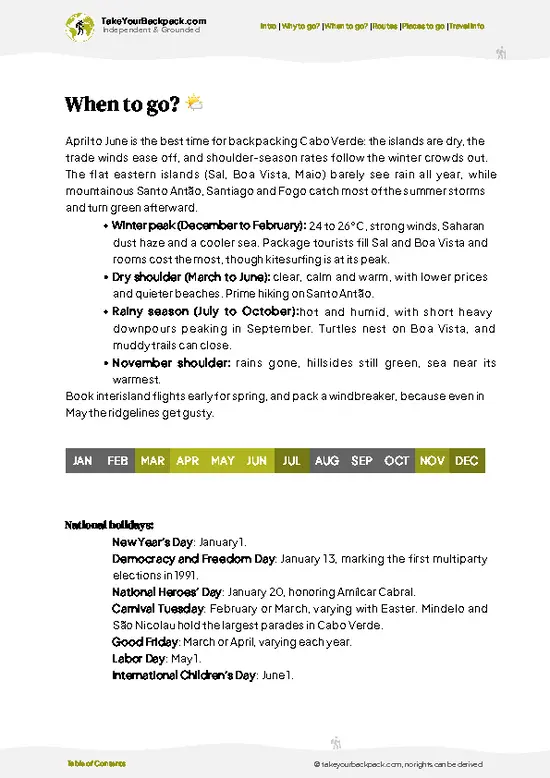
  • Weather: Santo Antão’s dry season runs from November to July, offering clear skies and minimal rain—perfect for trekking. The wet season, August to October, brings heavy showers that can turn trails into slippery messes. Avoid if you want your boots dry and your spirits high.

  • Temperature: Daytime temps hover between 22-28°C (72-82°F) during the dry months, making hikes comfortable without overheating. The wet season feels warmer and more humid, which can sap your energy fast.

  • Daylight Hours: Expect roughly 11 to 12 hours of daylight year-round, but the sun rises earlier and sets later in summer (June-August). This gives you more daylight for those epic ridge walks or late afternoon beach stops.

  • Crowds: Peak season is December through February when European travelers escape winter.
read more 👉

  • Weather: Santo Antão’s dry season runs from November to July, offering clear skies and minimal rain—perfect for trekking. The wet season, August to October, brings heavy showers that can turn trails into slippery messes. Avoid if you want your boots dry and your spirits high.

  • Temperature: Daytime temps hover between 22-28°C (72-82°F) during the dry months, making hikes comfortable without overheating. The wet season feels warmer and more humid, which can sap your energy fast.

  • Daylight Hours: Expect roughly 11 to 12 hours of daylight year-round, but the sun rises earlier and sets later in summer (June-August). This gives you more daylight for those epic ridge walks or late afternoon beach stops.

  • Crowds: Peak season is December through February when European travelers escape winter. Trails and guesthouses fill up, so book ahead or risk scrambling. Shoulder months like March and April offer a quieter vibe with nearly the same weather perks.

  • Seasonal Activities: The dry season aligns with local festivals and fresh harvests, adding cultural spice to your trek. The wet season’s lush greenery is tempting but comes with muddy trails and fewer events.

  • Price Fluctuations: Expect higher prices in the peak dry months, especially December and January. Off-peak (August-October) sees discounts but at the cost of weather reliability and fewer open services.


Pro-tip: Aim for late February to April—sweet spot for dry trails, fewer tourists, and wallet-friendly stays. You’ll feel like you’ve cracked the code.


source: climatestotravel.comJANJanuary: highly recommended for travelingFEBFebruary: excellent for travelingMARMarch: excellent for travelingAPRApril: excellent for travelingMAYMay: highly recommended for travelingJUNJune: highly recommended for travelingJULJuly: highly recommended for travelingAUGAugust: fair for travelingSEPSeptember: fair for travelingOCTOctober: fair for travelingNOVNovember: highly recommended for travelingDECDecember: highly recommended for traveling
when-to-go

✈️ The backpacker research shortcutCabo Verde Travel Guide

An offline-friendly backpacking guide with optimized travel routes, ranked highlights, transport advice, and the best areas to stay.
example page 0 from our offline Travel Guide for Cabo Verdeexample page 1 from our offline Travel Guide for Cabo Verdeexample page 2 from our offline Travel Guide for Cabo Verdeexample page 3 from our offline Travel Guide for Cabo Verdeexample page 4 from our offline Travel Guide for Cabo Verdeexample page 5 from our offline Travel Guide for Cabo Verdeexample page 6 from our offline Travel Guide for Cabo Verdeexample page 7 from our offline Travel Guide for Cabo Verde
The digital guide (257 pages) contains:
61 highlights, ranked by travel appeal
Optimized 2, 3 & 5-day travel routes
Cities, national parks, beaches, historical sites, ...
How to get around
Offline-friendly for travel without Wi-Fi
👉 Click to see all 30+ guide features

📅 Plan smarter in minutes, not weeks
Month by month travel advice
Festivals & national holidays
Budget expectations

🗺️ Go to the right places, skip the overrated ones
Honest pros & cons of destinations
Top hikes, parks & viewpoints
Lesser-known places most travelers miss
Clear “worth it vs skip it” guidance

🛏️ Travel smoothly without rookie mistakes
Best areas to stay
Transport systems explained simply
Common scams & safety advice
SIM cards, money & practical tips

🌍 Understand the country, not just visit it
Culture & traditions
52 Essential phrases & customs
Festivals worth planning around
Traveler-friendly historical context
Insights that make places more meaningful

📱 Built for real travel conditions
Fully downloadable PDF
Works completely offline
Optimized for phone use
Useful in remote areas & buses
Everything in one place
Save weeks of stressful planning
Get instant access to the full guide directly. 30-day money-back guarantee.


Sent to your inbox immediately after payment • 100% Secure Checkout
Best Backpacking Travel Advisor 2025 tourism awardBest Backpacking
Travel Advisor
2025
What others say about Take Your Backpack Guides:
⭐⭐⭐⭐⭐
Fantastic, amazing amount of information!
⭐⭐⭐⭐⭐
My goodness this is amazing, it's what I've been looking for hats off too you!
⭐⭐⭐⭐⭐
I think this is absolutely BRILLIANT
⭐⭐⭐⭐
Very complete and informative. It's still missing places, but I gotta to commend you
⭐⭐⭐⭐⭐
This is truly amazing, thank you, can't wait to explore it with my kids!
⭐⭐⭐⭐⭐
Awesome resource, thank you!
⭐⭐⭐⭐⭐
This is amazing! Can't wait to explore the ones I haven't seen
⭐⭐⭐⭐
I love this! Well done, great idea.
⭐⭐⭐⭐⭐
Thanks for taking the time to make this gem!
⭐⭐⭐⭐⭐
This might be the best website I've ever seen.
⭐⭐⭐⭐⭐
Congratulations, and thank you so much for your work; it's incredibly valuable.
⭐⭐⭐⭐
In all seriousness I think you did a great job pointing out the important spots
⭐⭐⭐⭐⭐
10/10 very good
⭐⭐⭐⭐⭐
As someone who's only just starting to visit regularly this is awesome, thank you.
⭐⭐⭐⭐
Thank you very much! I'm going to visit my dad, it's going to be very useful!
⭐⭐⭐⭐⭐
This is really cool! We'll be travelling for the first time and this definitely come in handy.
⭐⭐⭐⭐⭐
You are now our minister of culture, congratulations 👨‍💼
⭐⭐⭐⭐⭐
Just wanted to tell you that this is a pearl! Going to follow your recommendations.
⭐⭐⭐⭐⭐
This is so cool. I'll definitely be using the resource for my travels soon.
⭐⭐⭐⭐⭐
This is very impressive! Good work.
⭐⭐⭐⭐⭐
This is an amazing and informative site. Very well done!

🛏️ Where to stay?Where staying makes the most sense

Santo Antão is a backpacker’s playground, and knowing where to stay can make all the difference.

Start in Ponta do Sol. This coastal town is a hub for socializing. You’ll find a mix of locals and travelers sharing stories over fresh seafood. The vibe is relaxed, and the sunsets? They’re a daily ritual.

Next up, Ribeira Grande. This town is the cultural heart of the island. It’s safe, with a lively market scene. You can wander through narrow streets, grab a coffee, and soak in the local life. Plus, it’s a great base for hiking adventures.

Don’t overlook Paul Valley. If you’re after stunning … read more 👉
Santo Antão is a backpacker’s playground, and knowing where to stay can make all the difference.

Start in Ponta do Sol. This coastal town is a hub for socializing. You’ll find a mix of locals and travelers sharing stories over fresh seafood. The vibe is relaxed, and the sunsets? They’re a daily ritual.

Next up, Ribeira Grande. This town is the cultural heart of the island. It’s safe, with a lively market scene. You can wander through narrow streets, grab a coffee, and soak in the local life. Plus, it’s a great base for hiking adventures.

Don’t overlook Paul Valley. If you’re after stunning landscapes, this is your spot. It’s quieter, perfect for those who want to escape the hustle. The community is welcoming, and you’ll find plenty of opportunities to connect with locals.

Lastly, consider Tarrafal de Monte Trigo. It’s remote but worth the trek. The isolation brings a unique charm, and you’ll feel like you’ve discovered a secret. The beach is pristine, and the atmosphere is laid-back.

Each of these spots offers a unique slice of Santo Antão. Choose wisely, and you’ll unlock experiences that linger long after you leave.

🚌 Getting aroundGetting around like a local

Santo Antão is a realm where time dances to its own rhythm. Forget rigid schedules; here, the flow is more about intuition than precision. You might find yourself waiting for a bus that’s “on its way” or hopping into a shared taxi that’s half-full, ready to roll. The island’s rugged beauty demands a flexible mindset. You’ll be rewarded with breathtaking views and spontaneous encounters, but you’ll need to embrace the chaos. This isn’t just transportation; it’s part of the adventure.


  • Shared Taxis (Aluguer): These are your best bet for getting around. They run frequently, especially between major towns like Porto Novo and Ribeira Grande. Expect to pay around 2-5 euros per ride, depending on distance. They’re quick, often packed, and a great way to mingle with locals. Just be ready for a few
read more 👉
Santo Antão is a realm where time dances to its own rhythm. Forget rigid schedules; here, the flow is more about intuition than precision. You might find yourself waiting for a bus that’s “on its way” or hopping into a shared taxi that’s half-full, ready to roll. The island’s rugged beauty demands a flexible mindset. You’ll be rewarded with breathtaking views and spontaneous encounters, but you’ll need to embrace the chaos. This isn’t just transportation; it’s part of the adventure.


  • Shared Taxis (Aluguer): These are your best bet for getting around. They run frequently, especially between major towns like Porto Novo and Ribeira Grande. Expect to pay around 2-5 euros per ride, depending on distance. They’re quick, often packed, and a great way to mingle with locals. Just be ready for a few detours as they pick up and drop off passengers along the way.


  • Buses: The bus system is reliable but not always punctual. Buses connect the main towns, with the first ones leaving around 6 AM and the last around 5 PM. A ticket costs about 3-4 euros. They’re comfortable enough for short rides, but don’t expect luxury. Bring a book or some music; you might be in for a long haul if you hit delays.


  • Rental Cars: If you’re feeling adventurous and want to explore the island at your own pace, consider renting a car. Prices start around 30 euros per day. Just be aware that roads can be rough, and driving is an experience in itself. You’ll have the freedom to chase sunsets and hike to remote spots without waiting for a ride.


  • Hiking: For the truly adventurous, hiking is a fantastic way to traverse the island. Trails connect many towns and offer stunning views. It’s free, but you’ll need good shoes and plenty of water. Just be mindful of the terrain and your own stamina.


  • Ferries: If you’re planning to hop over to other islands, ferries are available from Porto Novo to Mindelo on São Vicente. They run several times a day, with tickets around 15 euros. It’s a scenic ride, but check the schedule ahead of time, as it can change based on weather.


Master Tactical Tip: Always ask locals for the latest on transport schedules. They know the ins and outs better than any timetable. Flexibility is your friend; embrace the unexpected, and you’ll find the real magic of Santo Antão.

🍲 FoodEating & Drinking in Santo Antão

In Santo Antão, food is a celebration of the island’s rugged landscape and rich culture. You can’t miss the catch of the day, often grilled to perfection and served with a side of cachupa, a hearty stew of corn, beans, and whatever meat is on hand. It’s the island’s soul in a bowl, and every family has its own twist.

For a true local experience, head to the markets in Ponta do Sol or Ribeira Grande. The air is thick with the scent of fresh produce and spices. Grab a pastel—a flaky pastry filled with fish or meat—while you sip on grogue, the potent local rum that packs a punch. It’s a rite of passage for any backpacker.

Dining here is casual and communal. Expect to share tables and stories with locals. Don’t be surprised if you’re invited to join a toast or two; it’s all part of the experience. … read more 👉
In Santo Antão, food is a celebration of the island’s rugged landscape and rich culture. You can’t miss the catch of the day, often grilled to perfection and served with a side of cachupa, a hearty stew of corn, beans, and whatever meat is on hand. It’s the island’s soul in a bowl, and every family has its own twist.

For a true local experience, head to the markets in Ponta do Sol or Ribeira Grande. The air is thick with the scent of fresh produce and spices. Grab a pastel—a flaky pastry filled with fish or meat—while you sip on grogue, the potent local rum that packs a punch. It’s a rite of passage for any backpacker.

Dining here is casual and communal. Expect to share tables and stories with locals. Don’t be surprised if you’re invited to join a toast or two; it’s all part of the experience.

When you sit down to eat, remember that meals are often leisurely. Savor the moment. The rhythm of life here is slow, and that’s the beauty of it. Embrace the flavors, the laughter, and the warmth of the people. This isn’t just food; it’s a taste of Santo Antão itself.

Other Cape Verdean regions near Santo Antão

Explore more nearby:

  • São Vicente—harbor city, music venues, colonial squares, dry plains| 18 km away
  • Ilha do Sal—salt flats, windsurf beaches, resort strips, lunar terrain| 232 km away
  • Santiago—mountain villages, local markets, independence history, agricultural valleys| 271 km away

👉 Discover all regions

Or checkout all Cabo Verde has to offer (think cities, towns, villages, national parks, hikes, beaches, festivals)
Country photo of Cabo Verde

We 💚 feedbackSumming up the experience

Santo Antão is a treasure trove of raw beauty and local charm. The vibe? It’s laid-back, with a rhythm that invites you to slow down. Don’t miss the hike from Cruzinha to Ponta do Sol; the views will knock your socks off. But here’s the kicker: the roads can be rough, so brace yourself for some bumpy rides. Pack snacks for the trails; you’ll want to linger longer in those breathtaking spots. Trust me, the island’s magic is in the moments you savor, not just the sights you see.

✍️ Help improve this page!
The information on this page is based on in-depth research, insights shared by experienced travelers, and feedback from the local travel community in Cabo Verde. While every effort is made to keep the information accurate and current, conditions can change — so if you spot anything incorrect or outdated, please get in touch.


🙋‍♂️ Give feedback

👋 Meet the founderWho’s Behind Take Your Backpack?

Johan, backpacker and founder of TakeYourBackpackHi, I’m Johan (Netherlands 🇳🇱), the creator of TakeYourBackpack. Over the past decade, I’ve backpacked through 80+ countries across six continents, gaining extensive experience with independent travel, long-term trips, and overland routes.

This site is built on a combination of firsthand travel experience and carefully curated insights from other backpackers. Many guides are based on places I’ve personally visited, while others bring together tips, observations, and practical advice shared by trusted travelers I’ve met along the way.

The goal is to provide realistic, experience-driven guidance — not generic itineraries — so you can explore destinations with better context, clearer expectations, and more confidence.

Get full Cabo Verde guide •
Instant download • 61 highlights • Full Offline guide