×

Cabo Verde🇨🇻 | best regionsWhere to Find the 4 Best regions in Cabo Verde

Cabo Verde (Cape Verde) is ten Atlantic islands, and each one works as its own region with its own pace. Some are flat, windy and easy, with resorts and cheap flights. Others are steep, green and slow, reached by ferry or small plane. Prices climb where tourism is thick and drop where it isn’t. For independent travel, pick by mood first, then check how you’ll get there.

By Johan Kruseman 🇳🇱 | Updated October 19, 2026
Explore the best cities in Cabo Verde

Why go?Why These region Stand Out

Cabo Verde suits region-hopping because its volcanic archipelago splits into very different landscapes: dry sandy flats in the east, rugged green peaks in the west. Islands sit between roughly 15 and 300 kilometers apart, and a Portuguese and West African history shows up in each one’s music, food and Kriolu speech.

Before you commit, know that getting between islands is the real challenge. Domestic flights are short but pricey and often sold out, ferries run on limited schedules and get canceled in rough seas, and not every island has a link to every other. Many routes pass through the capital’s island. Cabo Verde is also not a bargain on every island, because most food is imported. Book inter-island legs early and keep your plans loose.
Evaluating the Top Choices
The list of best regions in Cabo Verde is created based on landscapes, local culture, attractions, vibes, and overall appeal. If you feel a region is missing in this list, please let us know.

When to go?Optimal Periods for Travel

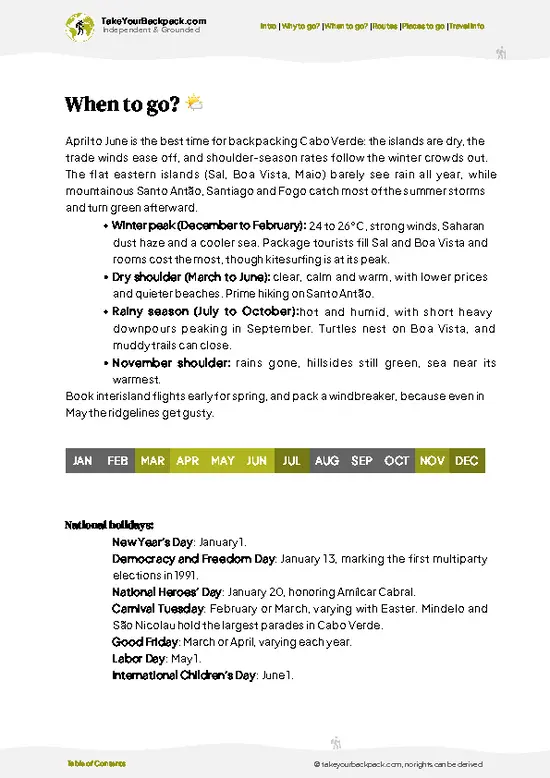
Best Months: November to June is the best window, with dry days, air around 24 to 28°C and sea around 21 to 24°C, so hiking and beaches both work. Rain is slight, mostly August to October, when it is hottest (up to 30°C or more) and humid, though the green islands look their best then.
Shoulder and Peak: December to March is busiest, so flights and rooms cost more, sometimes 20 to 40 percent above summer rates. The winter trade winds are strong on the windward islands, ideal for kitesurfing but dusty when Saharan haze rolls in. April to June and November are my pick for good weather with fewer people. Carnival in February brings crowds and higher prices, so book ahead. Ferries get rougher and more often canceled in winter swells.

region hoppingTips for Visiting Multiple Destinations

How Many Days: A trip linking several regions needs 10 to 14 days, and 7 days only works for two islands. Stay 3 to 4 nights per island so you aren’t spending every other day in transit.
Direction and Transfers: Fly into the capital hub, Praia, or the Sal hub, then work in one direction: north-west group together, or the south-west cluster together. Neighboring islands have ferry links of roughly 1 to 4 hours, while flights take 30 to 60 minutes. Longer hops often mean returning through a hub, so check this before booking.
Planning Mistakes: The classic error is cramming five islands into a week, then losing days to cancellations. Leave a buffer day before an international flight, book short flights early and treat ferries as flexible. Pick two or three islands and enjoy them.

The ListHighly Recommended regions of Cabo Verde

1 Sal

salt flats, windsurf beaches, resort strips, lunar terrain

Swim in clear Atlantic waters, wander stark salt pans, and watch the horizon shift from sand to sea along the island’s open coastline.

cabo-verde-region-sal
© Google |

2 Santo Antão

green canyons, cliffside trails, remote hamlets, terraced hills

Hike through dramatic valleys and steep ridges, passing through isolated settlements where agriculture and mountain life shape the island’s rhythm.

3 São Vicente

harbor city, music venues, colonial squares, dry plains

Absorb the energy of Mindelo’s cultural scene, then venture beyond the city to discover arid landscapes and quiet coastal stretches.

4 Santiago

mountain villages, local markets, independence history, agricultural valleys

Experience daily life in the archipelago’s largest island, where rural landscapes, city bustle, and Cape Verdean heritage intersect in constant motion.

Loading the map 🌍

Expert viewPro Tips for Exploring the Best

How Many Regions: I recommend two or three islands on a first trip, four at most with three weeks. Every extra island costs a day of transit and a flight or ferry ticket, and the second and third stops usually deliver more than the fifth ever will. One island is only enough for a week, and it saves the most money.
Choosing by Travel Style: For hiking and slow village life, choose the steep green islands. They cost less in daily spending and give the best walking, but transport is slower and rooms are fewer. For beaches, kitesurfing and easy logistics, choose the flat eastern islands. They are comfortable and well connected, yet accommodation and food cost more. For music and nightlife, pick one town island and pair it with a quiet one, because that balance gives a backpacker the most for the … read more 👉
How Many Regions: I recommend two or three islands on a first trip, four at most with three weeks. Every extra island costs a day of transit and a flight or ferry ticket, and the second and third stops usually deliver more than the fifth ever will. One island is only enough for a week, and it saves the most money.
Choosing by Travel Style: For hiking and slow village life, choose the steep green islands. They cost less in daily spending and give the best walking, but transport is slower and rooms are fewer. For beaches, kitesurfing and easy logistics, choose the flat eastern islands. They are comfortable and well connected, yet accommodation and food cost more. For music and nightlife, pick one town island and pair it with a quiet one, because that balance gives a backpacker the most for the money.
Budget: Plan on US$35 to 60 a day on the quieter islands: guesthouse rooms US$20 to 35, meals US$6 to 12, shared aluguer minibuses US$1 to 4 per ride. Resort-leaning islands run US$55 to 90. Guides for volcano or mountain hikes typically cost US$20 to 40 a day, and many trails are fine on your own. Inter-island flights commonly run US$60 to 120 each way, ferries US$20 to 40. Budget roughly US$150 to 250 per trip for transfers between three islands. Carry euros or escudos in cash, since cards fail in smaller places and ATMs sometimes run empty.
Safety and Culture: Cabo Verde is among Africa’s safer, more stable countries, but petty theft happens in larger towns and beaches, so keep valuables out of sight and avoid walking dark streets late. Sea currents are strong, and swimming off remote beaches or in swells is risky. Greet people first, since a “bom dia” opens doors, and ask before photographing locals. Dress modestly away from the beach. Tap water is not always safe, so buy bottled or filtered water. Mountain trails turn slippery in rain and mist, so go early.

✈️ The backpacker research shortcutCabo Verde Travel Guide

An offline-friendly backpacking guide with optimized travel routes, ranked highlights, transport advice, and the best areas to stay.
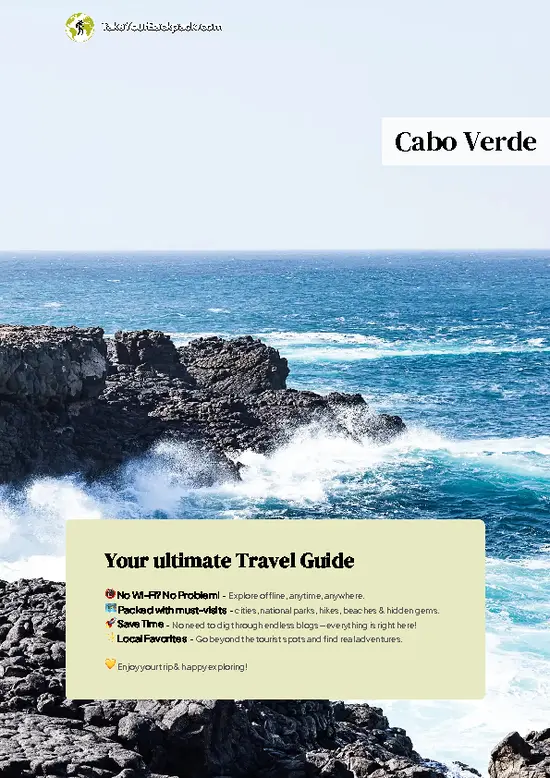
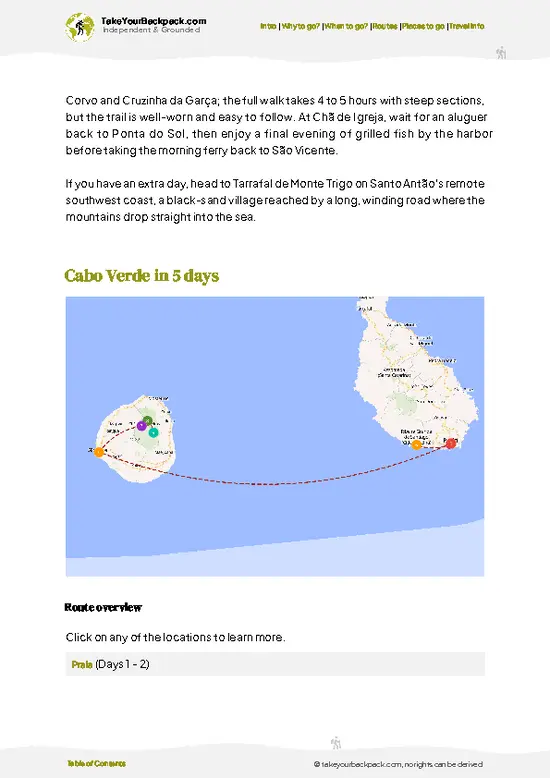
example page 0 from our offline Travel Guide for Cabo Verde
example page 1 from our offline Travel Guide for Cabo Verde
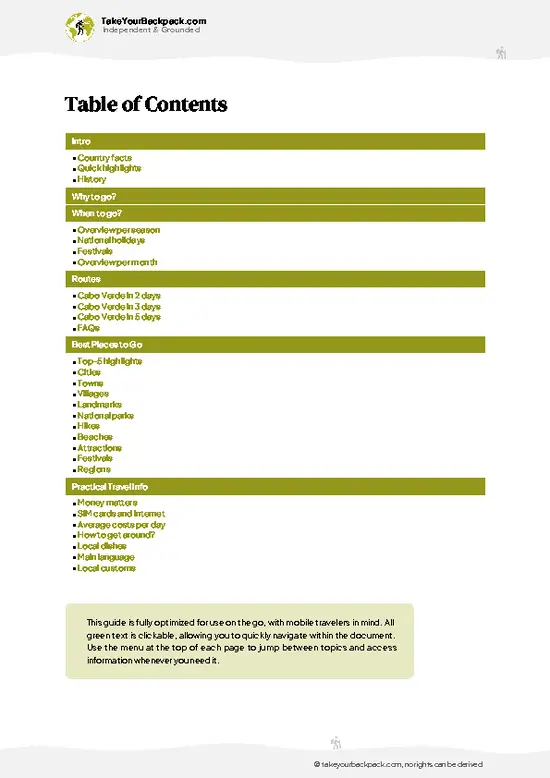
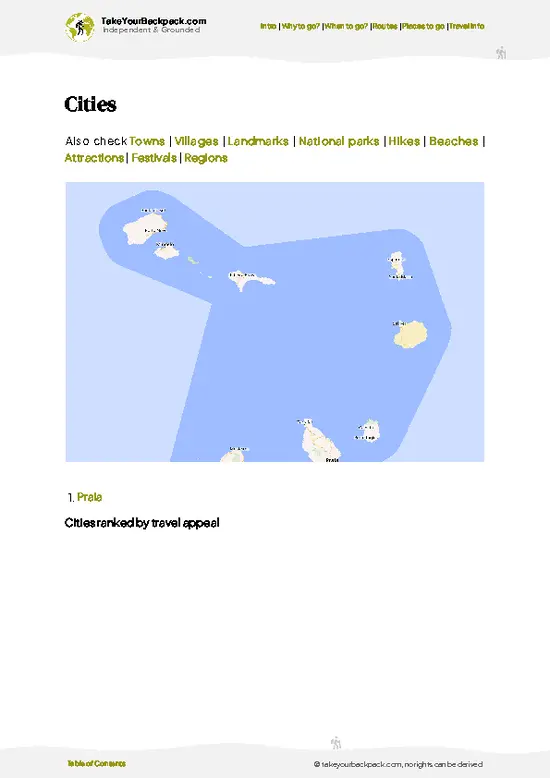
example page 2 from our offline Travel Guide for Cabo Verde
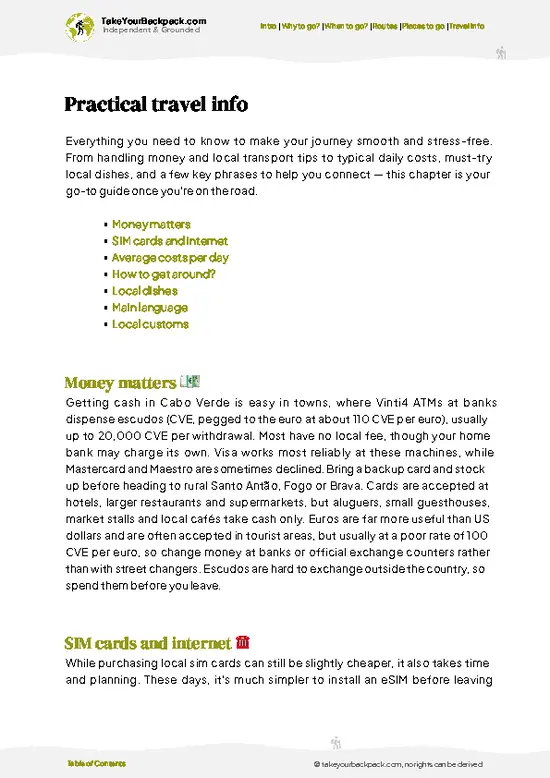
example page 3 from our offline Travel Guide for Cabo Verde
example page 4 from our offline Travel Guide for Cabo Verde
example page 5 from our offline Travel Guide for Cabo Verde
example page 6 from our offline Travel Guide for Cabo Verde
example page 7 from our offline Travel Guide for Cabo Verde
The digital guide (234 pages) contains:
✅ 57 highlights, ranked by travel appeal
✅ Optimized 2, 3 & 5-day travel routes
✅ Cities, national parks, landmarks, beaches
✅ How to get around
✅ Offline-friendly for travel without Wi-Fi
👉 Click to see all 30+ guide features

📅 Plan smarter in minutes, not weeks
✅ Month by month travel advice
✅ Festivals & national holidays
✅ Budget expectations

🗺️ Go to the right places, skip the overrated ones
✅ Honest pros & cons of destinations
✅ Top hikes, parks & viewpoints
✅ Lesser-known places most travelers miss
✅ Clear “worth it vs skip it” guidance

🛏️ Travel smoothly without rookie mistakes
✅ Best areas to stay
✅ Transport systems explained simply
✅ Common scams & safety advice
✅ SIM cards, money & practical tips

🌍 Understand the country, not just visit it
✅ Culture & traditions
✅ 52 Essential phrases & customs
✅ Festivals worth planning around
✅ Traveler-friendly historical context
✅ Insights that make places more meaningful

📱 Built for real travel conditions
✅ Fully downloadable PDF
✅ Works completely offline
✅ Optimized for phone use
✅ Useful in remote areas & buses
✅ Everything in one place
Stop searching, start planning
Get instant access to your full guide. 30‑day money-back guarantee.
+ Add another guide for just

By proceeding you agree to our terms.
Sent to your inbox immediately after payment • 100% Secure Checkout
Best Backpacking Travel Advisor 2025 tourism awardBest Backpacking
Travel Advisor
2025
What others say about Take Your Backpack Guides:
⭐⭐⭐⭐⭐
Fantastic, amazing amount of information!
⭐⭐⭐⭐⭐
My goodness this is amazing, it's what I've been looking for hats off too you!
⭐⭐⭐⭐⭐
I think this is absolutely BRILLIANT
⭐⭐⭐⭐
Very complete and informative. It's still missing places, but I gotta to commend you
⭐⭐⭐⭐⭐
This is truly amazing, thank you, can't wait to explore it with my kids!
⭐⭐⭐⭐⭐
Awesome resource, thank you!
⭐⭐⭐⭐⭐
This is amazing! Can't wait to explore the ones I haven't seen
⭐⭐⭐⭐
I love this! Well done, great idea.
⭐⭐⭐⭐⭐
Thanks for taking the time to make this gem!
⭐⭐⭐⭐⭐
This might be the best website I've ever seen.
⭐⭐⭐⭐⭐
Congratulations, and thank you so much for your work; it's incredibly valuable.
⭐⭐⭐⭐
In all seriousness I think you did a great job pointing out the important spots
⭐⭐⭐⭐⭐
10/10 very good
⭐⭐⭐⭐⭐
As someone who's only just starting to visit regularly this is awesome, thank you.
⭐⭐⭐⭐
Thank you very much! I'm going to visit my dad, it's going to be very useful!
⭐⭐⭐⭐⭐
This is really cool! We'll be travelling for the first time and this definitely come in handy.
⭐⭐⭐⭐⭐
You are now our minister of culture, congratulations 👨‍💼
⭐⭐⭐⭐⭐
Just wanted to tell you that this is a pearl! Going to follow your recommendations.
⭐⭐⭐⭐⭐
This is so cool. I'll definitely be using the resource for my travels soon.
⭐⭐⭐⭐⭐
This is very impressive! Good work.
⭐⭐⭐⭐⭐
This is an amazing and informative site. Very well done!

🛏️ Where to stay?Where to Stay: Cabo Verde Edition

Cabo Verde has a small but growing hostel scene, though most budget beds are in family-run pensões, residenciais and private rooms at roughly 2,000 to 4,500 CVE (€18 to 40) a night. In Mindelo on São Vicente, the streets around the center put you within walking distance of live-music bars and the ferry to Santo Antão, but weekend nights get loud. In Praia, the historic Plateau is cheapest and handy for markets and minibuses yet goes quiet and dim after dark, while Prainha and Quebra Canela cost more but sit by the beaches and restaurants. On Sal, Santa Maria has the most budget options on the beach and an easy nightlife strip, though prices run higher than anywhere else in the islands.

If you … read more 👉
Cabo Verde has a small but growing hostel scene, though most budget beds are in family-run pensões, residenciais and private rooms at roughly 2,000 to 4,500 CVE (€18 to 40) a night. In Mindelo on São Vicente, the streets around the center put you within walking distance of live-music bars and the ferry to Santo Antão, but weekend nights get loud. In Praia, the historic Plateau is cheapest and handy for markets and minibuses yet goes quiet and dim after dark, while Prainha and Quebra Canela cost more but sit by the beaches and restaurants. On Sal, Santa Maria has the most budget options on the beach and an easy nightlife strip, though prices run higher than anywhere else in the islands.

If you enjoy meeting fellow travelers, consider choosing hostels with high ratings for atmosphere. On the other hand, if you prefer having your own space, a hotel might be a better option.

Cabo VerdeExplore Beyond This Category

👋 Meet the founderWho’s Behind Take Your Backpack?

Johan, backpacker and founder of TakeYourBackpackHi, I’m Johan (Netherlands 🇳🇱), the creator of TakeYourBackpack. Over the past 3 decades, I’ve backpacked through 90+ countries across six continents, gaining extensive experience with independent travel, long-term trips, and overland routes.

This site is built on a combination of firsthand travel experience and carefully curated insights from other backpackers. Many guides are based on places I’ve personally visited, while others bring together tips, observations, and practical advice shared by trusted travelers I’ve met along the way.

The goal is to provide realistic, experience-driven guidance — not generic itineraries — so you can explore destinations with better context, clearer expectations, and more confidence.