v2.webp)




1. Sunrise at Angkor Wat (But Not for the Reason You Think)
Everyone and their selfie stick will tell you to see Angkor Wat at sunrise. Here’s the truth: the main pond is a scrum of elbows, tripods, and iPhones by 5:15 a.m. The real magic isn’t the Instagram shot—it’s the slow reveal of the temple’s silhouette as the jungle wakes up. The air is cool, the cicadas are still half-asleep, and monks in saffron robes drift past the crowds, unfazed. If you want the photo, fine, but the real payoff is the surreal, almost cinematic feeling of watching the world’s largest religious monument emerge from darkness while the rest of Siem Reap is still dreaming.
2. The Bas-Reliefs: A 12th-Century Graphic Novel
Skip the urge to rush through the galleries. The bas-reliefs at Angkor Wat are not just decoration—they’re … read more 👉
Everyone and their selfie stick will tell you to see Angkor Wat at sunrise. Here’s the truth: the main pond is a scrum of elbows, tripods, and iPhones by 5:15 a.m. The real magic isn’t the Instagram shot—it’s the slow reveal of the temple’s silhouette as the jungle wakes up. The air is cool, the cicadas are still half-asleep, and monks in saffron robes drift past the crowds, unfazed. If you want the photo, fine, but the real payoff is the surreal, almost cinematic feeling of watching the world’s largest religious monument emerge from darkness while the rest of Siem Reap is still dreaming.
2. The Bas-Reliefs: A 12th-Century Graphic Novel
Skip the urge to rush through the galleries. The bas-reliefs at Angkor Wat are not just decoration—they’re … read more 👉
1. Sunrise at Angkor Wat (But Not for the Reason You Think)
Everyone and their selfie stick will tell you to see Angkor Wat at sunrise. Here’s the truth: the main pond is a scrum of elbows, tripods, and iPhones by 5:15 a.m. The real magic isn’t the Instagram shot—it’s the slow reveal of the temple’s silhouette as the jungle wakes up. The air is cool, the cicadas are still half-asleep, and monks in saffron robes drift past the crowds, unfazed. If you want the photo, fine, but the real payoff is the surreal, almost cinematic feeling of watching the world’s largest religious monument emerge from darkness while the rest of Siem Reap is still dreaming.
2. The Bas-Reliefs: A 12th-Century Graphic Novel
Skip the urge to rush through the galleries. The bas-reliefs at Angkor Wat are not just decoration—they’re a 600-meter-long epic carved in stone. You’ll see gods, demons, and armies locked in battle, but also tiny, almost hidden details: a soldier picking lice, a king with a faint smile, a monkey general leading the charge. It’s history, mythology, and dark humor, all in one continuous mural. If you want to understand Khmer culture, this is your crash course—no audio guide required.
3. Climbing the Central Tower: The Heartbeat of Angkor
The steep, almost vertical stairs up the Bakan (central tower) are not for the faint of knee or fear of heights. But if you make the climb, you’ll stand where ancient kings performed rituals to connect earth and sky. The view isn’t just about distance; it’s about perspective. You see the symmetry, the moat, the endless jungle. For a moment, you’re not a tourist—you’re part of a centuries-old tradition of awe.
4. The Hidden Apsaras: Cambodia’s Eternal It Girls
Forget the postcard shots—look for the apsaras, the celestial dancers carved into nearly every wall. Each one is unique, from hairstyle to jewelry to the sly curve of a smile. Some are worn smooth by centuries of hands; others are sharp as the day they were carved. Spotting the quirks and differences becomes a scavenger hunt, and you start to realize: this place was built for both gods and humans to admire beauty.
5. The Moat and Outer Causeway: The Temple’s True Scale
Most visitors rush straight for the towers, but the sheer scale of Angkor Wat only hits you when you cross the 190-meter-wide moat and walk the sandstone causeway. The reflection of the temple in the water, the lotus blooms, the distant sound of chanting—this is where you feel the ambition and audacity of the Khmer Empire. It’s not just a temple; it’s a statement. And standing there, you’re part of it.
Everyone and their selfie stick will tell you to see Angkor Wat at sunrise. Here’s the truth: the main pond is a scrum of elbows, tripods, and iPhones by 5:15 a.m. The real magic isn’t the Instagram shot—it’s the slow reveal of the temple’s silhouette as the jungle wakes up. The air is cool, the cicadas are still half-asleep, and monks in saffron robes drift past the crowds, unfazed. If you want the photo, fine, but the real payoff is the surreal, almost cinematic feeling of watching the world’s largest religious monument emerge from darkness while the rest of Siem Reap is still dreaming.
2. The Bas-Reliefs: A 12th-Century Graphic Novel
Skip the urge to rush through the galleries. The bas-reliefs at Angkor Wat are not just decoration—they’re a 600-meter-long epic carved in stone. You’ll see gods, demons, and armies locked in battle, but also tiny, almost hidden details: a soldier picking lice, a king with a faint smile, a monkey general leading the charge. It’s history, mythology, and dark humor, all in one continuous mural. If you want to understand Khmer culture, this is your crash course—no audio guide required.
3. Climbing the Central Tower: The Heartbeat of Angkor
The steep, almost vertical stairs up the Bakan (central tower) are not for the faint of knee or fear of heights. But if you make the climb, you’ll stand where ancient kings performed rituals to connect earth and sky. The view isn’t just about distance; it’s about perspective. You see the symmetry, the moat, the endless jungle. For a moment, you’re not a tourist—you’re part of a centuries-old tradition of awe.
4. The Hidden Apsaras: Cambodia’s Eternal It Girls
Forget the postcard shots—look for the apsaras, the celestial dancers carved into nearly every wall. Each one is unique, from hairstyle to jewelry to the sly curve of a smile. Some are worn smooth by centuries of hands; others are sharp as the day they were carved. Spotting the quirks and differences becomes a scavenger hunt, and you start to realize: this place was built for both gods and humans to admire beauty.
5. The Moat and Outer Causeway: The Temple’s True Scale
Most visitors rush straight for the towers, but the sheer scale of Angkor Wat only hits you when you cross the 190-meter-wide moat and walk the sandstone causeway. The reflection of the temple in the water, the lotus blooms, the distant sound of chanting—this is where you feel the ambition and audacity of the Khmer Empire. It’s not just a temple; it’s a statement. And standing there, you’re part of it.
Spotted a mistake or missing something? Contact us.

2-Days in temples and other areas

Kulen National Park Ticket

Private Kulen Mountain and Beng Mealea Temple Tour

Two Days Angkor Wat Park-Beng Mealea and Kampong Phluk Village

Angkor Short Discovery Tour

Kampong Khleang Floating Village Local Women Led Guided Tour

Private One Day Tour to Battambang plus lunch from Siem Reap

Lake-Side Village Tour

Phnom Kulen Waterfall 1000 Linga National Park Tour


 Best Backpacking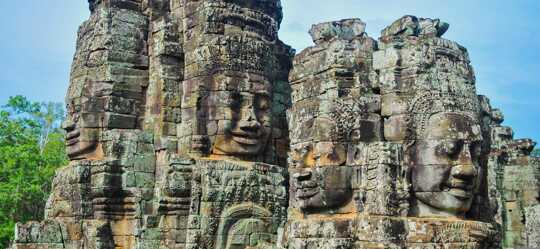
.jpg) Hi, I’m Johan (Netherlands 🇳🇱), the creator of TakeYourBackpack. Over the past 3 decades, I’ve backpacked through 90+ countries across six continents, gaining extensive experience with independent travel, long-term trips, and overland routes.
Hi, I’m Johan (Netherlands 🇳🇱), the creator of TakeYourBackpack. Over the past 3 decades, I’ve backpacked through 90+ countries across six continents, gaining extensive experience with independent travel, long-term trips, and overland routes.