×

Cambodia🇰🇭 | attractionsTa Prohm TempleTree roots, crumbling towers, jungle setting | things to do and best time to go

Explore Bayon TempleExplore Banteay Srei Temple

Backpacking in Ta Prohm Temple
🏆 Top pickattraction ranked #3
By Johan Kruseman 🇳🇱 | Updated June 1, 2026

You’ve seen the photos: roots swallowing stone, sunlight slicing through jungle haze. But here’s the twist—Ta Prohm isn’t the tranquil, lost-in-time ruin Instagram sells you. It’s a cacophony of camera shutters and guided tour megaphones by 9 a.m., and the most famous trees are roped off for preservation. Ta Prohm sits just east of Angkor Thom, inside the Angkor Archaeological Park near Siem Reap, Cambodia. For backpackers, the temple is a double-edged sword. The atmosphere is undeniably cinematic—there’s a reason Hollywood picked it for “Tomb Raider”—and the collision of ancient Khmer masonry and strangler figs is genuinely wild. But the crowds are relentless, and the entry fee (bundled with the Angkor Pass) isn’t pocket change. Still, if you time it right—think sunrise or late afternoon—you’ll catch the real magic: mossy silence, the smell of damp earth, and a sense of ancient chaos that no photo can fake. Compared to Angkor Wat’s grandeur or Bayon’s stone faces, Ta Prohm feels raw and unruly, less polished, more alive.

Discover everything you want to know in the 📖 Cambodia Travel Guide.


Get your Cambodia guide
90 ranked highlights, routes & tips, works offline (345 pages)
Loading the map 🌍
CLICK TO FILTER
cities
towns
villages
landmarks
national parks
hikes
beaches
attractions
festivals
regions
SHOW COUNTRY’S BESTSHOW ALL

✨ Why go?
Ranked #3 attraction in Cambodia
Why visitors keep coming back

Ta Prohm Temple is not just another photo op on the Angkor circuit—it’s a raw, visceral experience that demands your attention. Sure, it’s crowded, especially mid-day when tour buses unload, and yes, the entrance fee isn’t pocket change for a backpacker. But here’s the real deal: this temple wears its history like a badge of honor, with massive tree roots strangling the stone ruins in a way that feels both eerie and alive. It’s a snapshot of nature reclaiming human ambition, frozen in time. That tension between decay and resilience is what hooks you.

Beyond the Instagram shots, Ta Prohm offers a genuine connection to the Khmer Empire’s rise and fall, a tangible sense of cultural depth that goes beyond the polished temples nearby. It’s a milestone on the Cambodia route because it forces you … read more 👉
Ta Prohm Temple is not just another photo op on the Angkor circuit—it’s a raw, visceral experience that demands your attention. Sure, it’s crowded, especially mid-day when tour buses unload, and yes, the entrance fee isn’t pocket change for a backpacker. But here’s the real deal: this temple wears its history like a badge of honor, with massive tree roots strangling the stone ruins in a way that feels both eerie and alive. It’s a snapshot of nature reclaiming human ambition, frozen in time. That tension between decay and resilience is what hooks you.

Beyond the Instagram shots, Ta Prohm offers a genuine connection to the Khmer Empire’s rise and fall, a tangible sense of cultural depth that goes beyond the polished temples nearby. It’s a milestone on the Cambodia route because it forces you to slow down, to absorb the layers of history and nature intertwined. The effort to navigate the uneven paths and dodge crowds pays off with moments of quiet awe that stick with you long after you leave. This isn’t just a stop—it’s a checkpoint in understanding Cambodia’s soul.
Want to include Ta Prohm Temple in your Cambodia route?
Create a personalized Cambodia itinerary that includes Ta Prohm Temple and the places that fit your trip — based on your travel style, budget, and available time. Get your route in seconds.

Generate my trip

💡 HighlightsDon't-miss highlights and experiences

The Iconic Strangler Fig Trees
Let’s get real: you’ve seen the photos—roots like petrified tentacles, stone walls being swallowed whole. But standing here, you realize the trees aren’t just a backdrop. They’re the main act. The way the silk-cotton and strangler figs muscle their way through ancient sandstone isn’t just photogenic; it’s a living, slow-motion battle between jungle and civilization. You can trace the roots with your hand, cool and rough, and feel the weight of centuries. This is the set piece that Hollywood can’t fake, and no filter can improve.


The Hallways of Collapse and Chaos
Forget symmetry and restoration. Ta Prohm is a glorious mess. Corridors tilt, stones sprawl like toppled dominoes, and the jungle’s grip is absolute. There’s a thrill in ducking under fallen lintels … read more 👉
The Iconic Strangler Fig Trees
Let’s get real: you’ve seen the photos—roots like petrified tentacles, stone walls being swallowed whole. But standing here, you realize the trees aren’t just a backdrop. They’re the main act. The way the silk-cotton and strangler figs muscle their way through ancient sandstone isn’t just photogenic; it’s a living, slow-motion battle between jungle and civilization. You can trace the roots with your hand, cool and rough, and feel the weight of centuries. This is the set piece that Hollywood can’t fake, and no filter can improve.


The Hallways of Collapse and Chaos
Forget symmetry and restoration. Ta Prohm is a glorious mess. Corridors tilt, stones sprawl like toppled dominoes, and the jungle’s grip is absolute. There’s a thrill in ducking under fallen lintels and squeezing through half-blocked doorways. Every step is a reminder that you’re not in a museum—you’re in a ruin that’s still being reclaimed. The unpredictability is half the fun. You’ll get dusty. You’ll stub your toe. You’ll feel alive.


The Quiet Corners (Yes, They Exist)
The tour groups swarm the main roots, but wander a little and you’ll find pockets of silence. Early morning or late afternoon, you can catch a shaft of light slicing through the dust, illuminating a forgotten carving or a mossy Buddha head. These moments are fleeting and unscripted. They’re also the closest you’ll get to the “lost temple” fantasy—no crowds, just you and the sound of cicadas.


The Bas-Reliefs and Hidden Carvings
Most people blow past the details, but Ta Prohm rewards the patient. Look for the devatas (female deities) peeking from the walls, their faces worn but still serene. There’s a dinosaur-like carving that sparks endless debate—ignore the conspiracy theories and just enjoy the weirdness. The carvings here aren’t as pristine as Angkor Wat’s, but they’re more mysterious, half-swallowed by roots and time.


The Soundtrack: Jungle Overload
You don’t just see Ta Prohm—you hear it. Gibbons whoop in the canopy, cicadas buzz like a broken amp, and the wind rattles the leaves overhead. It’s a sensory overload that makes the place feel wild, even with the crowds. If you want a temple that feels alive, this is it.


Reality Check: The Crowds and the Costs
Yes, it’s packed by 9 a.m. Yes, you’ll pay a steep Angkor Pass fee. But here’s the truth: Ta Prohm is one of the few places on earth where the hype is justified. The crowds are proof that the magic is real. The trick is to accept the chaos, dodge the selfie sticks, and hunt for your own moments. The reward? You get to witness a place where nature and history are locked in an endless, beautiful struggle. That’s the real show.
Spotted a mistake or missing something? Contact us.

Things to do around Ta Prohm Temple

Ratings based on Tripadvisor reviews. When you book through this link, you support our work at no extra cost to you.

🌤️ When to go?Weather, crowds, and seasonal trade-offs


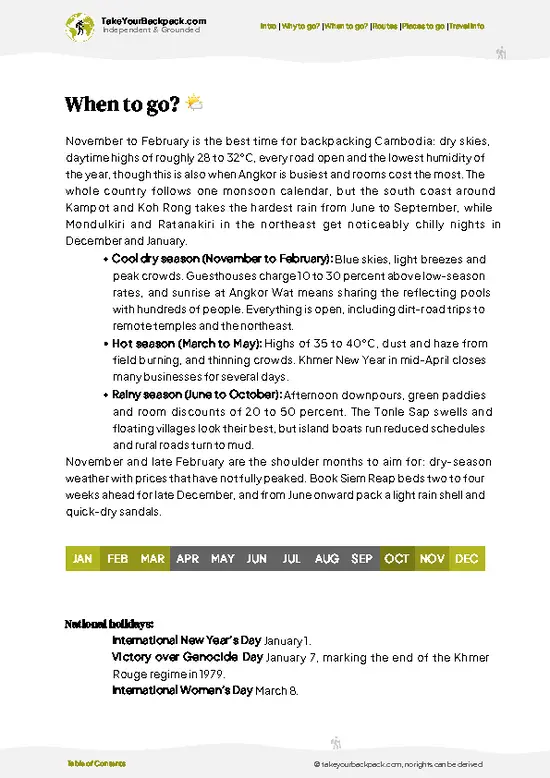
  • Weather: The best time to visit Ta Prohm is during the dry season, from November to February. Expect less rain, which means fewer muddy trails and clearer skies for photos. The wet season (May to October) turns the jungle into a swampy mess, making the temple slippery and less enjoyable.

  • Temperature: From November to February, temperatures hover around 25-30°C (77-86°F), which is far more bearable than the scorching heat of March to May, where it can spike above 35°C (95°F). Early mornings and late afternoons are cooler and more comfortable for exploring.

  • Daylight Hours: Cambodia enjoys roughly 11 to 12 hours of daylight year-round. However, visiting in the dry season means clearer mornings and evenings, perfect for catching the soft light that brings out the temple’s eerie charm.

read more 👉

  • Weather: The best time to visit Ta Prohm is during the dry season, from November to February. Expect less rain, which means fewer muddy trails and clearer skies for photos. The wet season (May to October) turns the jungle into a swampy mess, making the temple slippery and less enjoyable.

  • Temperature: From November to February, temperatures hover around 25-30°C (77-86°F), which is far more bearable than the scorching heat of March to May, where it can spike above 35°C (95°F). Early mornings and late afternoons are cooler and more comfortable for exploring.

  • Daylight Hours: Cambodia enjoys roughly 11 to 12 hours of daylight year-round. However, visiting in the dry season means clearer mornings and evenings, perfect for catching the soft light that brings out the temple’s eerie charm.

  • Crowds: Peak tourist season aligns with the dry months, especially December and January. Expect throngs of selfie sticks and tour groups. For a quieter experience, aim for November or February when crowds thin but the weather stays pleasant.

  • Seasonal Activities: The Cambodian New Year in April is a vibrant cultural event but avoid this time at Ta Prohm—it’s hot, crowded, and the temple isn’t the focus. Instead, plan your visit around the cooler, calmer months for a more immersive experience.

  • Price Fluctuations: Entrance fees remain stable year-round, but accommodation and flights spike during peak season (December-January). Booking early or visiting shoulder months like November or February can save you serious cash.


Pro-tip: Hit Ta Prohm at dawn during the shoulder months—less crowd, cooler temps, and that golden light weaving through the roots makes the jungle temple feel like a secret waiting just for you.


source: climatestotravel.comJANJanuary: highly recommended for travelingFEBFebruary: excellent for travelingMARMarch: fair for travelingAPRApril: below average for travelingMAYMay: fair for travelingJUNJune: fair for travelingJULJuly: fair for travelingAUGAugust: fair for travelingSEPSeptember: fair for travelingOCTOctober: fair for travelingNOVNovember: excellent for travelingDECDecember: highly recommended for traveling
when-to-go

✈️ The backpacker research shortcutCambodia Travel Guide

An offline-friendly backpacking guide with optimized travel routes, ranked highlights, transport advice, and the best areas to stay.
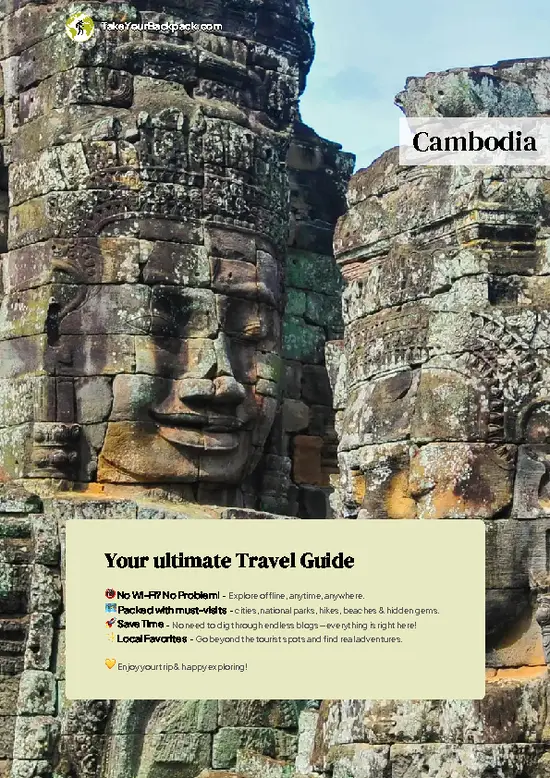
example page 0 from our offline Travel Guide for Cambodia
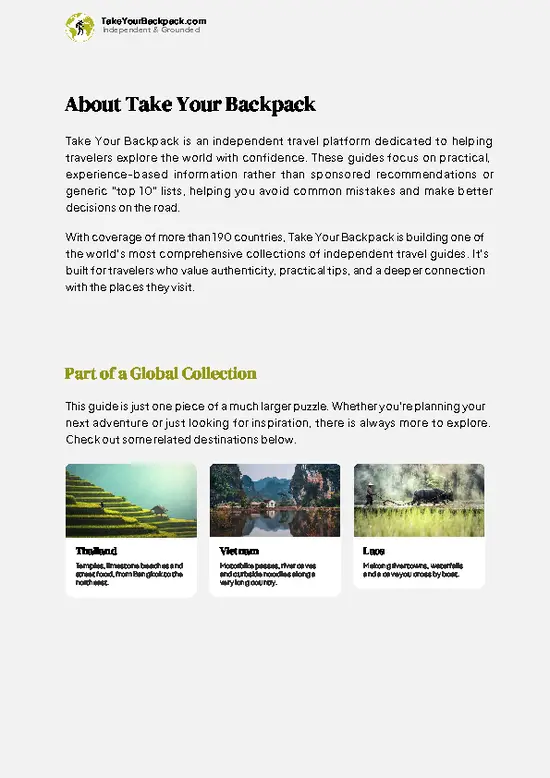
example page 1 from our offline Travel Guide for Cambodia
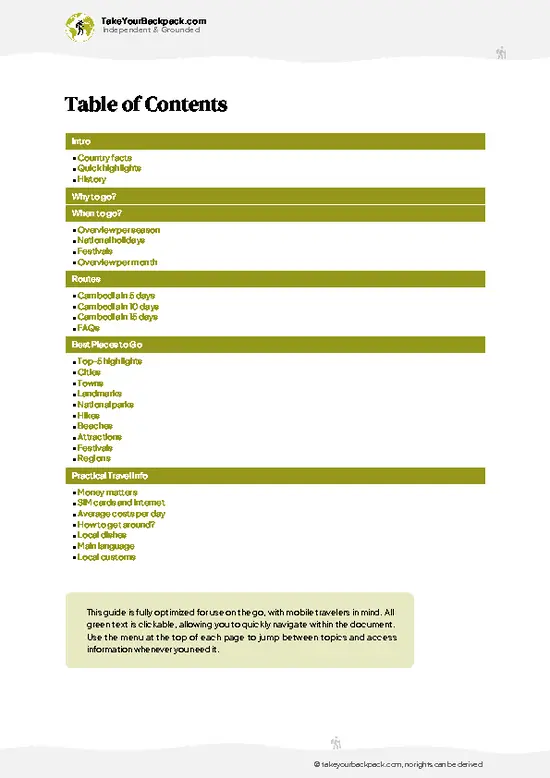
example page 2 from our offline Travel Guide for Cambodia
example page 3 from our offline Travel Guide for Cambodia
example page 4 from our offline Travel Guide for Cambodia
example page 5 from our offline Travel Guide for Cambodia
example page 6 from our offline Travel Guide for Cambodia
example page 7 from our offline Travel Guide for Cambodia
The digital guide (345 pages) contains:
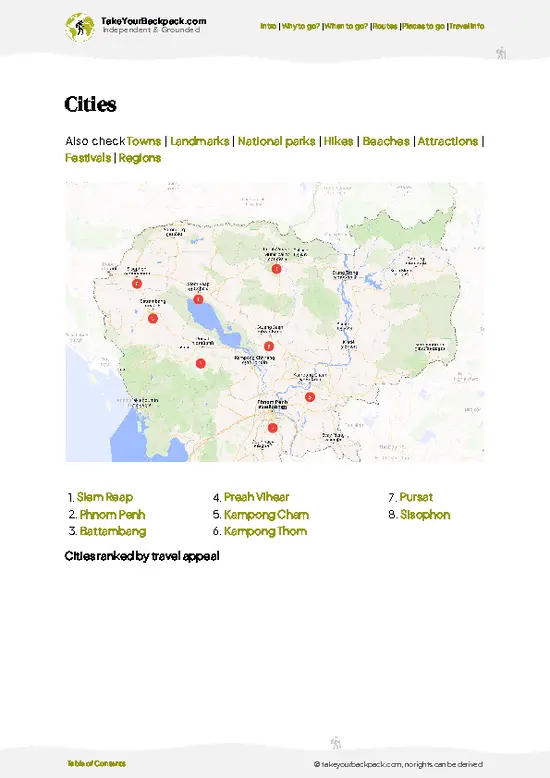
90 highlights, ranked by travel appeal
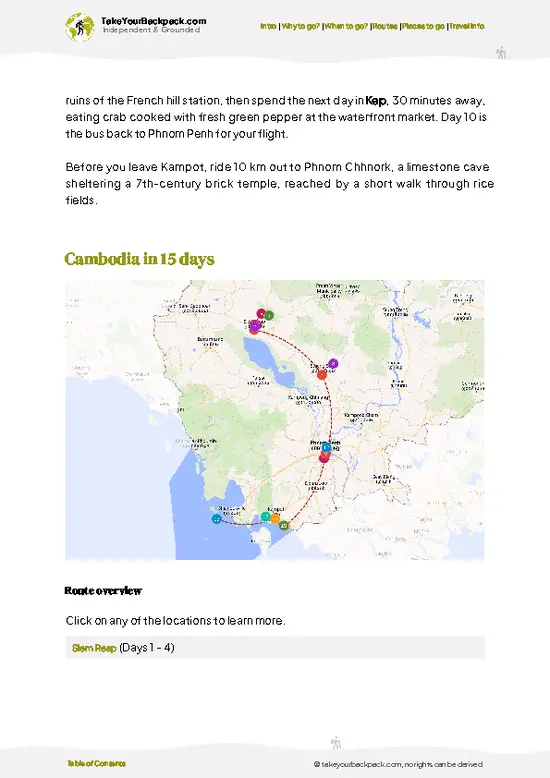
Optimized 5, 10 & 15-day travel routes
Cities, national parks, landmarks, beaches
How to get around
Offline-friendly for travel without Wi-Fi
👉 Click to see all 30+ guide features

📅 Plan smarter in minutes, not weeks
Month by month travel advice
Festivals & national holidays
Budget expectations

🗺️ Go to the right places, skip the overrated ones
Honest pros & cons of destinations
Top hikes, parks & viewpoints
Lesser-known places most travelers miss
Clear “worth it vs skip it” guidance

🛏️ Travel smoothly without rookie mistakes
Best areas to stay
Transport systems explained simply
Common scams & safety advice
SIM cards, money & practical tips

🌍 Understand the country, not just visit it
Culture & traditions
52 Essential phrases & customs
Festivals worth planning around
Traveler-friendly historical context
Insights that make places more meaningful

📱 Built for real travel conditions
Fully downloadable PDF
Works completely offline
Optimized for phone use
Useful in remote areas & buses
Everything in one place
Save weeks of stressful planning
Get instant access to your full guide. 30‑day money-back guarantee.


By proceeding you agree to our terms.
Sent to your inbox immediately after payment • 100% Secure Checkout
Best Backpacking Travel Advisor 2025 tourism awardBest Backpacking
Travel Advisor
2025
What others say about Take Your Backpack Guides:
⭐⭐⭐⭐⭐
Fantastic, amazing amount of information!
⭐⭐⭐⭐⭐
My goodness this is amazing, it's what I've been looking for hats off too you!
⭐⭐⭐⭐⭐
I think this is absolutely BRILLIANT
⭐⭐⭐⭐
Very complete and informative. It's still missing places, but I gotta to commend you
⭐⭐⭐⭐⭐
This is truly amazing, thank you, can't wait to explore it with my kids!
⭐⭐⭐⭐⭐
Awesome resource, thank you!
⭐⭐⭐⭐⭐
This is amazing! Can't wait to explore the ones I haven't seen
⭐⭐⭐⭐
I love this! Well done, great idea.
⭐⭐⭐⭐⭐
Thanks for taking the time to make this gem!
⭐⭐⭐⭐⭐
This might be the best website I've ever seen.
⭐⭐⭐⭐⭐
Congratulations, and thank you so much for your work; it's incredibly valuable.
⭐⭐⭐⭐
In all seriousness I think you did a great job pointing out the important spots
⭐⭐⭐⭐⭐
10/10 very good
⭐⭐⭐⭐⭐
As someone who's only just starting to visit regularly this is awesome, thank you.
⭐⭐⭐⭐
Thank you very much! I'm going to visit my dad, it's going to be very useful!
⭐⭐⭐⭐⭐
This is really cool! We'll be travelling for the first time and this definitely come in handy.
⭐⭐⭐⭐⭐
You are now our minister of culture, congratulations 👨‍💼
⭐⭐⭐⭐⭐
Just wanted to tell you that this is a pearl! Going to follow your recommendations.
⭐⭐⭐⭐⭐
This is so cool. I'll definitely be using the resource for my travels soon.
⭐⭐⭐⭐⭐
This is very impressive! Good work.
⭐⭐⭐⭐⭐
This is an amazing and informative site. Very well done!

🛏️ Where to stay?Best areas and accommodation options

Forget the postcard-perfect image of Ta Prohm Temple bathed in golden light with barely a soul around. The reality? It’s a magnet for tourists, especially midday when the crowds swarm in like ants on sugar. If you’re chasing that Instagram shot, you’ll have to elbow your way through selfie sticks and tour groups. But here’s the kicker: the real magic of Ta Prohm isn’t just in the photos—it’s in the atmosphere when you’re there early or late, when the jungle’s roots and ruins whisper stories without the noise.

For backpackers, the best place to crash isn’t right at the temple gates but in the … read more 👉
Forget the postcard-perfect image of Ta Prohm Temple bathed in golden light with barely a soul around. The reality? It’s a magnet for tourists, especially midday when the crowds swarm in like ants on sugar. If you’re chasing that Instagram shot, you’ll have to elbow your way through selfie sticks and tour groups. But here’s the kicker: the real magic of Ta Prohm isn’t just in the photos—it’s in the atmosphere when you’re there early or late, when the jungle’s roots and ruins whisper stories without the noise.

For backpackers, the best place to crash isn’t right at the temple gates but in the nearby village of Siem Reap, specifically the Old Market area and Pub Street vicinity. It’s a short tuk-tuk ride away, safe, and buzzing with fellow travelers. This spot nails the social vibe—hostels, guesthouses, and budget stays packed with solo adventurers swapping tips over cheap beers. You get the perfect balance: easy access to Ta Prohm and other Angkor temples, plus a lively scene to recharge after a day of exploring.

Staying too close to the temple means higher prices and fewer social options. Siem Reap’s backpacker hubs offer the real deal: community, affordability, and the chance to dive into Cambodia’s raw energy without the tourist trap feel.

👛 Costs (as of 9 March 2025)What things cost and how to budget

To visit Ta Prohm Temple, you'll need an Angkor Pass, which grants access to all temples within the Angkor Archaeological Park. As of 2024, the pass options are:

- 1-Day Pass: €34, valid for one day.
- 3-Day Pass: €55, valid for seven days from the date of purchase.
- 7-Day Pass: €68, valid for one month from the date of purchase.

These passes can be purchased at the Angkor Ticket Office in Siem Reap. ([visitcambodia.info](https://visitcambodia.info/tour/ta-prohm-temple/?utm_source=openai))

Ta Prohm Temple is open daily from 5:00 AM to 5:30 PM. ([demo.kampatour.com](https://demo.kampatour.com/ta-prohm?utm_source=openai))

For transportation, tuk-tuk rides from Siem Reap to Ta Prohm typically cost between €9 and €14 for a round trip, depending on negotiation and duration of stay. ([seniworld. … read more 👉
To visit Ta Prohm Temple, you'll need an Angkor Pass, which grants access to all temples within the Angkor Archaeological Park. As of 2024, the pass options are:

- 1-Day Pass: €34, valid for one day.
- 3-Day Pass: €55, valid for seven days from the date of purchase.
- 7-Day Pass: €68, valid for one month from the date of purchase.

These passes can be purchased at the Angkor Ticket Office in Siem Reap. ([visitcambodia.info](https://visitcambodia.info/tour/ta-prohm-temple/?utm_source=openai))

Ta Prohm Temple is open daily from 5:00 AM to 5:30 PM. ([demo.kampatour.com](https://demo.kampatour.com/ta-prohm?utm_source=openai))

For transportation, tuk-tuk rides from Siem Reap to Ta Prohm typically cost between €9 and €14 for a round trip, depending on negotiation and duration of stay. ([seniworld.com](https://seniworld.com/ta-prohm/?utm_source=openai))

Please note that these prices are subject to change, and it's advisable to check the latest information before your visit.


source: angkor.com.kh
⚠️ Prices can change and everyone travels differently, so take this as a rough guide. Hope it helps you plan your adventure!

Other Cambodian attractions near Ta Prohm Temple

Explore more nearby:


💡 Not sure where to go next?
Create a personalized itinerary for Cambodia including Ta Prohm Temple and the places that fit your trip.

Generate my itinerary

👉 Discover all attractions

Or checkout all Cambodia has to offer (think cities, towns, villages, national parks, hikes, beaches, festivals)
Country photo of Cambodia

We 💚 feedbackKey takeaways before you go

Ta Prohm isn’t some quiet jungle relic—expect crowds, especially midday, and a few selfie sticks poking through the roots. But here’s the kicker: when you push past the tourist buzz and find a quiet corner, the way those massive trees clutch the crumbling stones feels like nature’s stubborn reclaiming of history. It’s raw, a little wild, and oddly peaceful. Skip the peak hours, bring patience, and let the place surprise you beyond the Instagram shots. That’s where the real magic lives.

✍️ Help improve this page!
The information on this page is based on in-depth research, insights shared by experienced travelers, and feedback from the local travel community in Cambodia. While every effort is made to keep the information accurate and current, conditions can change — so if you spot anything incorrect or outdated, please get in touch.


🙋‍♂️ Give feedback

👋 Meet the founderWho’s Behind Take Your Backpack?

Johan, backpacker and founder of TakeYourBackpackHi, I’m Johan (Netherlands 🇳🇱), the creator of TakeYourBackpack. Over the past decade, I’ve backpacked through 80+ countries across six continents, gaining extensive experience with independent travel, long-term trips, and overland routes.

This site is built on a combination of firsthand travel experience and carefully curated insights from other backpackers. Many guides are based on places I’ve personally visited, while others bring together tips, observations, and practical advice shared by trusted travelers I’ve met along the way.

The goal is to provide realistic, experience-driven guidance — not generic itineraries — so you can explore destinations with better context, clearer expectations, and more confidence.

Get full Cambodia guide •
Instant download • 90 highlights • Full Offline guide