×

Cambodia🇰🇭 | townsKepcrab market, faded villas, coastal promenade | things to do and best time to go

Explore Silk IslandExplore Sihanoukville

Backpacking in Kep
🏆 Top picktown ranked #2
By Johan Kruseman 🇳🇱 | Updated June 11, 2026

Ten years ago Kep felt like a half-forgotten seaside ghost: crumbling French villas swallowed by vines, a sleepy crab market, salt on the air and not much else. Today it’s still quiet by Cambodian standards, but there are more boutique guesthouses, a few design-y cafés, and just enough backpacker infrastructure that you don’t feel marooned. Kep sits on Cambodia’s south coast, east of Kampot and close to the Vietnamese border, and it works best as a soft landing between louder stops or as a base for nature days rather than a destination city. You come for Kep National Park’s loop trail, the pepper farms in the hills, and plates of fresh crab eaten with your fingers as the sun drops behind the Gulf of Thailand. It’s calmer and more spread out than Kampot, so you’ll want a scooter or tuk-tuk; nights are low-key, hostels are social but not wild, and costs and safety both feel manageable if you use normal street sense.

Discover everything you want to know in the 📖 Cambodia Travel Guide.


Get your Cambodia guide
90 ranked highlights, routes & tips, works offline (345 pages)
Loading the map 🌍
CLICK TO FILTER
cities
towns
villages
landmarks
national parks
hikes
beaches
attractions
festivals
regions
SHOW COUNTRY’S BESTSHOW ALL

✨ Why go?
Ranked #2 town in Cambodia
What makes it a must-see town

Kep, Cambodia, is a backpacker’s haven that serves as a strategic pit stop on the route to nearby adventures. Its walkable streets invite you to explore without the hassle of transport, making it easy to pop into local eateries for fresh seafood or a quick coffee. The small-scale hostels and guesthouses foster a friendly, communal vibe, perfect for solo travelers or small groups looking to connect.

Many backpackers linger here for a few days, soaking in the laid-back atmosphere while planning hikes in the surrounding hills or beach days at the nearby islands. The local food scene is a highlight; savoring a crab dish at a seaside shack is a must.

While Kep isn’t a nightlife hotspot, its charm lies in the tranquility and the chance to unwind after more bustling destinations. This town attracts … read more 👉
Kep, Cambodia, is a backpacker’s haven that serves as a strategic pit stop on the route to nearby adventures. Its walkable streets invite you to explore without the hassle of transport, making it easy to pop into local eateries for fresh seafood or a quick coffee. The small-scale hostels and guesthouses foster a friendly, communal vibe, perfect for solo travelers or small groups looking to connect.

Many backpackers linger here for a few days, soaking in the laid-back atmosphere while planning hikes in the surrounding hills or beach days at the nearby islands. The local food scene is a highlight; savoring a crab dish at a seaside shack is a must.

While Kep isn’t a nightlife hotspot, its charm lies in the tranquility and the chance to unwind after more bustling destinations. This town attracts slow travelers and those seeking a break from the fast pace of life, making it ideal for anyone wanting to recharge before heading to the more tourist-heavy areas. If you’re after a blend of relaxation and exploration, Kep is a worthwhile stop on your journey.
Want to include Kep in your Cambodia route?
Create a personalized Cambodia itinerary that includes Kep and the places that fit your trip — based on your travel style, budget, and available time. Get your route in seconds.

Generate my trip

💡 HighlightsPlaces and moments you shouldn't skip

  • Kep National Park — A small, walkable park of shady trails that open onto hilltop viewpoints, wild bananas and monkeys; it’s the best place in town to stretch your legs, watch sunsets over the islands and see how the French-era villas sit framed by jungle.
  • Abandoned French colonial villas — Scattered up the coastal hills and reachable on foot or by a short tuk-tuk ride, these crumbling mansions give a real sense of Kep’s faded 20th-century glamour and make for eerie, photogenic exploration (please stick to public paths and respect private property).
  • Phsar Kdam (Kep Crab Market) — The working seafood market where fishers, middlemen and cooks meet; it’s the place to watch live crabs and squid being traded and to sample super-fresh seafood cooked on the spot.
  • Kep Pier / Waterfront — The
read more 👉
  • Kep National Park — A small, walkable park of shady trails that open onto hilltop viewpoints, wild bananas and monkeys; it’s the best place in town to stretch your legs, watch sunsets over the islands and see how the French-era villas sit framed by jungle.
  • Abandoned French colonial villas — Scattered up the coastal hills and reachable on foot or by a short tuk-tuk ride, these crumbling mansions give a real sense of Kep’s faded 20th-century glamour and make for eerie, photogenic exploration (please stick to public paths and respect private property).
  • Phsar Kdam (Kep Crab Market) — The working seafood market where fishers, middlemen and cooks meet; it’s the place to watch live crabs and squid being traded and to sample super-fresh seafood cooked on the spot.
  • Kep Pier / Waterfront — The simple wooden pier and adjoining promenade are the social spine of town—great for sunrise/sunset, watching local life, and boarding boats to nearby islands like Rabbit Island.
  • Kep Public Beach — A small sand strip that’s more about local color than tropical postcard perfection; families, street food vendors and casual paddling make it a pleasant, low-key place to hang out for an hour or two.
  • Crab-shack strip (seafood restaurants on the waterfront) — The row of open-air shacks where you pick a crab and they cook it simply with Kampot pepper or Kampot-style sauce—unpretentious, delicious, and a core Kep experience.
  • Kep Butterfly Farm — A compact, hands-on spot that showcases local species and small conservation efforts; good for an easy, educational stop and nice if you’re traveling with kids or want quiet nature close to town.
  • Kep Central Market (town market) — The everyday market away from the seafood scene where you’ll find produce, street snacks, household goods and real Cambodian daily life—perfect for people-watching and cheap eats.
  • Coastal walking trails and small viewpoints — Short paths and lookout points dotted around town (outside the main park) that reward minimal effort with low crowds and salty sea views—ideal for a relaxed hour of wandering.
  • Local pagodas and neighborhood wats — Small Buddhist temples around town offer calm, cultural glimpses into local rituals and architecture; they’re open to visitors (dress modestly) and are useful for understanding everyday spiritual life in Kep.
A few real, visitable highlights just outside Kep that make easy day trips: Koh Tonsay (Rabbit Island) for sandy beaches, Kampot town and its riverside eateries, the pepper plantations around Kampot/Kep, and Bokor Hill Station/Bokor National Park for cooler high-altitude ruins and views.
Spotted a mistake or missing something? Contact us.

Things to do around Kep

Ratings based on Tripadvisor reviews. When you book through this link, you support our work at no extra cost to you.

🏘️ NeighborhoodsUnderstanding the local layout

Kep, a coastal town in Cambodia, offers a blend of tranquility and adventure, perfect for backpackers seeking a unique experience. Here’s how to navigate its neighborhoods:

Kep Beach: This area is the heart of relaxation. The vibe is laid-back, with soft ocean breezes and the scent of grilled seafood wafting from nearby stalls. Accommodations range from budget bungalows to mid-range hotels. It’s walkable, with easy access to the beach and local eateries. Ideal for short stays, you can soak up the sun by day and enjoy quiet evenings. Nightlife is minimal, but the sunset views are worth it.

Kep National Park: For those craving nature, this area is a must. The park trails offer a chance to hike through lush greenery, with the sounds of birds and rustling leaves as your backdrop. It’s a bit … read more 👉
Kep, a coastal town in Cambodia, offers a blend of tranquility and adventure, perfect for backpackers seeking a unique experience. Here’s how to navigate its neighborhoods:

Kep Beach: This area is the heart of relaxation. The vibe is laid-back, with soft ocean breezes and the scent of grilled seafood wafting from nearby stalls. Accommodations range from budget bungalows to mid-range hotels. It’s walkable, with easy access to the beach and local eateries. Ideal for short stays, you can soak up the sun by day and enjoy quiet evenings. Nightlife is minimal, but the sunset views are worth it.

Kep National Park: For those craving nature, this area is a must. The park trails offer a chance to hike through lush greenery, with the sounds of birds and rustling leaves as your backdrop. It’s a bit more remote, so transport options are limited, but the serenity is unmatched. Perfect for longer stays, you can immerse yourself in the local flora and fauna. Bring sturdy shoes and plenty of water.

Phsar Kandal: The market area buzzes with energy. Here, you’ll find local produce, crafts, and street food. The atmosphere is vibrant, with the chatter of vendors and the aroma of spices filling the air. It’s walkable and offers budget-friendly accommodations. Great for both short and longer stays, you can dive into local culture. Nightlife is lively, with nearby bars offering a taste of local brews.

Rabbit Island (Koh Tonsay): A short boat ride away, this island is a slice of paradise. The vibe is rustic and peaceful, with hammocks swaying under palm trees. Accommodations are basic but affordable. Ideal for a quick getaway, you can spend your days swimming and your nights stargazing. Transport is straightforward, but plan ahead for boat schedules.

⌛️ 1 day1-day itinerary for Kep

Kep, Cambodia, is a coastal town that whispers of its colonial past while embracing the vibrant life of the present. Known for its crab market and serene beaches, it’s a place where the scent of saltwater mingles with the aroma of fresh seafood. The laid-back vibe invites you to explore, making it perfect for a day of discovery.

Start your morning at the local market, where the air is thick with the smell of spices and fresh produce. Grab a bowl of kuy teav, a fragrant noodle soup, from one of the vendors. The warmth of the broth and the crunch of fresh herbs will kickstart your day. After breakfast, take a stroll along the waterfront promenade. The early light dances on the water, and you might catch fishermen hauling in their catch, a reminder of the town’s deep connection to the sea.

read more 👉
Kep, Cambodia, is a coastal town that whispers of its colonial past while embracing the vibrant life of the present. Known for its crab market and serene beaches, it’s a place where the scent of saltwater mingles with the aroma of fresh seafood. The laid-back vibe invites you to explore, making it perfect for a day of discovery.

Start your morning at the local market, where the air is thick with the smell of spices and fresh produce. Grab a bowl of kuy teav, a fragrant noodle soup, from one of the vendors. The warmth of the broth and the crunch of fresh herbs will kickstart your day. After breakfast, take a stroll along the waterfront promenade. The early light dances on the water, and you might catch fishermen hauling in their catch, a reminder of the town’s deep connection to the sea.

In the afternoon, head to the Kep National Park. The trails here are less traveled, offering a chance to escape the usual tourist path. As you hike, the sounds of chirping birds and rustling leaves surround you, creating a peaceful backdrop. The views from the top are rewarding, revealing the lush landscape and the shimmering coastline below. Bring water and a snack; the effort is worth it.

As the sun begins to set, make your way to the crab market. Here, you can indulge in a feast of freshly caught crab, cooked to perfection. The lively atmosphere is infectious, with locals and travelers alike enjoying the flavors of the sea. After dinner, take a leisurely walk along the beach, where the soft sand underfoot and the sound of waves create a perfect ending to your day.

Kep may be small, but its charm lies in the details. Embrace the rhythm of the town, and you’ll find that every moment is a treasure waiting to be uncovered.
Turn your Kep visit into an Cambodia adventure
Build a complete Cambodia route with Kep, hidden gems, must-see destinations, and realistic travel times included.

Generate my trip

🌤️ When to go?When to go for the best experience


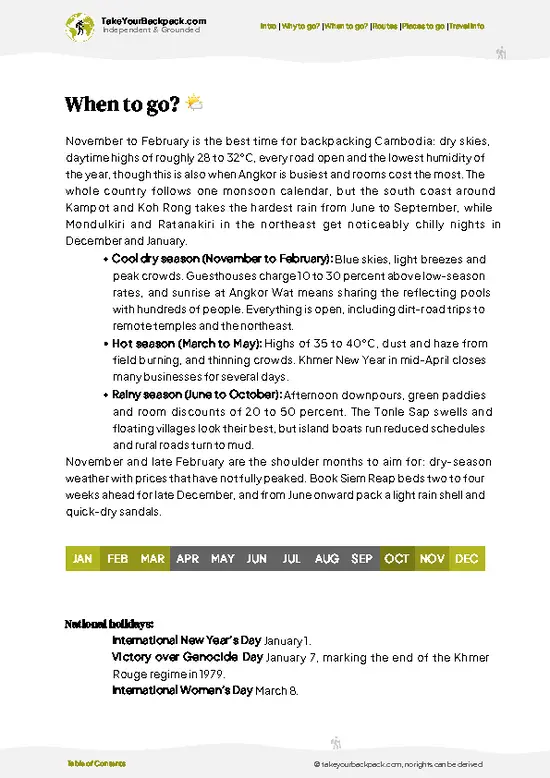
  • Topic: Weather – Kep’s dry season from November to April offers clear skies and minimal rain, making it ideal for beach days and exploring the pepper plantations. The wet season, May to October, brings heavy afternoon showers that can turn dirt roads into mud traps, slowing your pace and dampening plans.

  • Topic: Temperature – Expect highs around 30-33°C (86-91°F) during the dry season, with cooler evenings dipping to 22-24°C (72-75°F). The wet season is hotter and more humid, often pushing 34°C (93°F), which can sap your energy on hikes or market strolls.

  • Topic: Daylight Hours – Daylight stays steady year-round, roughly 11 to 12 hours, with sunrise around 6 AM and sunset near 6 PM. This consistency lets you plan early starts for fishing trips or late afternoons at the crab market without
read more 👉

  • Topic: Weather – Kep’s dry season from November to April offers clear skies and minimal rain, making it ideal for beach days and exploring the pepper plantations. The wet season, May to October, brings heavy afternoon showers that can turn dirt roads into mud traps, slowing your pace and dampening plans.

  • Topic: Temperature – Expect highs around 30-33°C (86-91°F) during the dry season, with cooler evenings dipping to 22-24°C (72-75°F). The wet season is hotter and more humid, often pushing 34°C (93°F), which can sap your energy on hikes or market strolls.

  • Topic: Daylight Hours – Daylight stays steady year-round, roughly 11 to 12 hours, with sunrise around 6 AM and sunset near 6 PM. This consistency lets you plan early starts for fishing trips or late afternoons at the crab market without worrying about losing light.

  • Topic: Crowds – Peak season (December to February) draws more tourists, especially around holidays, filling guesthouses and restaurants. Visiting just before or after this window means quieter beaches and better room rates without sacrificing weather quality.

  • Topic: Seasonal Activities – Crab season peaks in the dry months, making November to March the best time to savor fresh seafood straight from the Gulf of Thailand. The wet season’s lush greenery is great for photographers but less reliable for outdoor adventures.

  • Topic: Price Fluctuations – Accommodation and tours spike in the dry season’s high months, especially December and January. Booking early or choosing shoulder months like November or March can save you a solid chunk of cash while still enjoying good weather.


Pro-tip: Aim for late November to early March to balance sun, seafood, and solitude—this window rewards you with the full Kep experience without the crowds or the mud.


source: climatestotravel.comJANJanuary: excellent for travelingFEBFebruary: excellent for travelingMARMarch: highly recommended for travelingAPRApril: good for travelingMAYMay: fair for travelingJUNJune: fair for travelingJULJuly: fair for travelingAUGAugust: fair for travelingSEPSeptember: fair for travelingOCTOctober: good for travelingNOVNovember: highly recommended for travelingDECDecember: excellent for traveling
when-to-go

✈️ The backpacker research shortcutCambodia Travel Guide

An offline-friendly backpacking guide with optimized travel routes, ranked highlights, transport advice, and the best areas to stay.
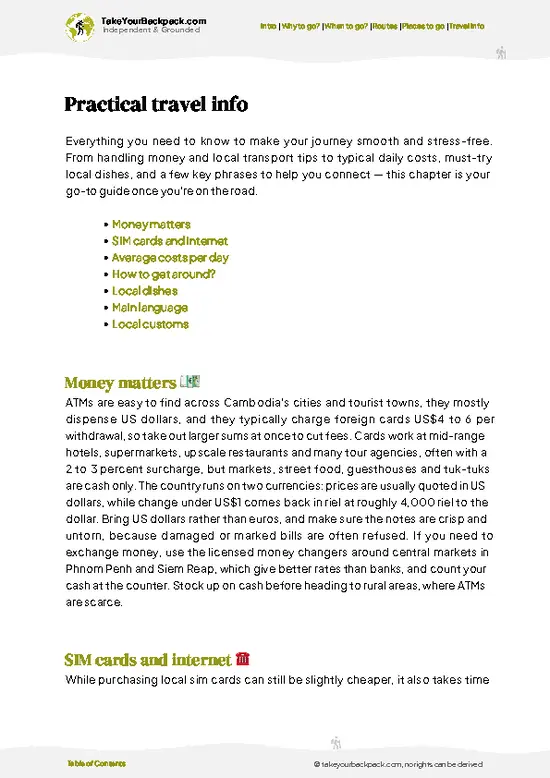
example page 0 from our offline Travel Guide for Cambodia
example page 1 from our offline Travel Guide for Cambodia
example page 2 from our offline Travel Guide for Cambodia
example page 3 from our offline Travel Guide for Cambodia
example page 4 from our offline Travel Guide for Cambodia
example page 5 from our offline Travel Guide for Cambodia
example page 6 from our offline Travel Guide for Cambodia
example page 7 from our offline Travel Guide for Cambodia
The digital guide (345 pages) contains:
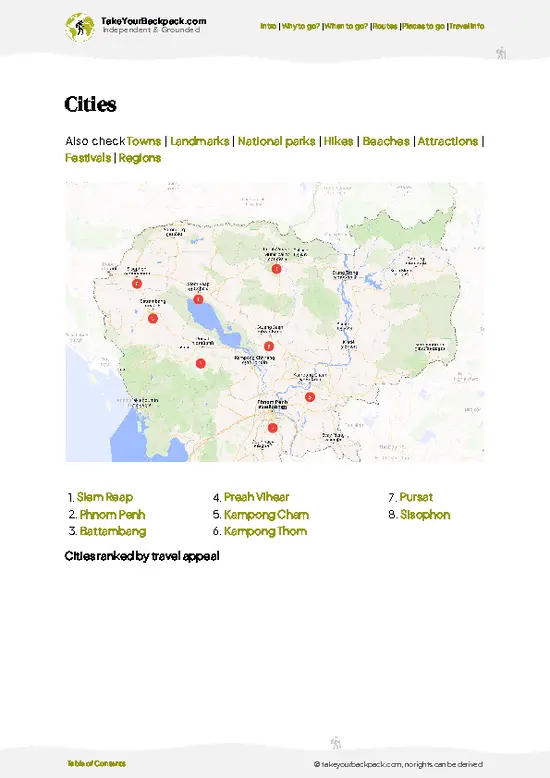
90 highlights, ranked by travel appeal
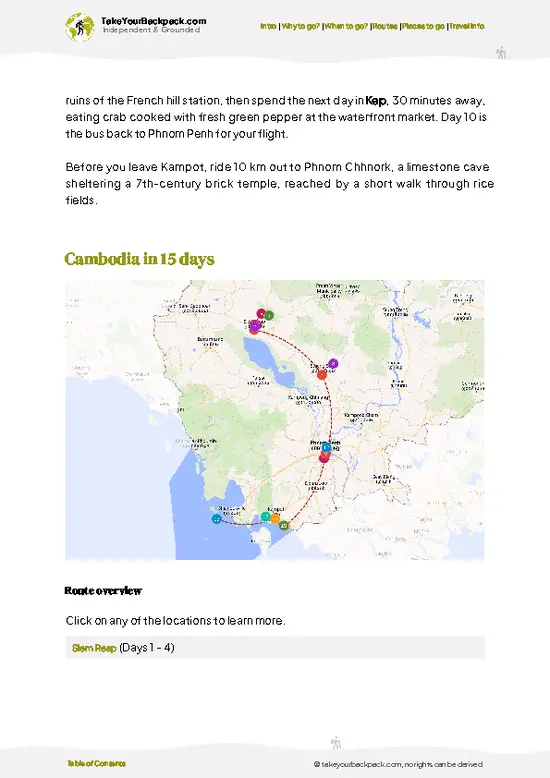
Optimized 5, 10 & 15-day travel routes
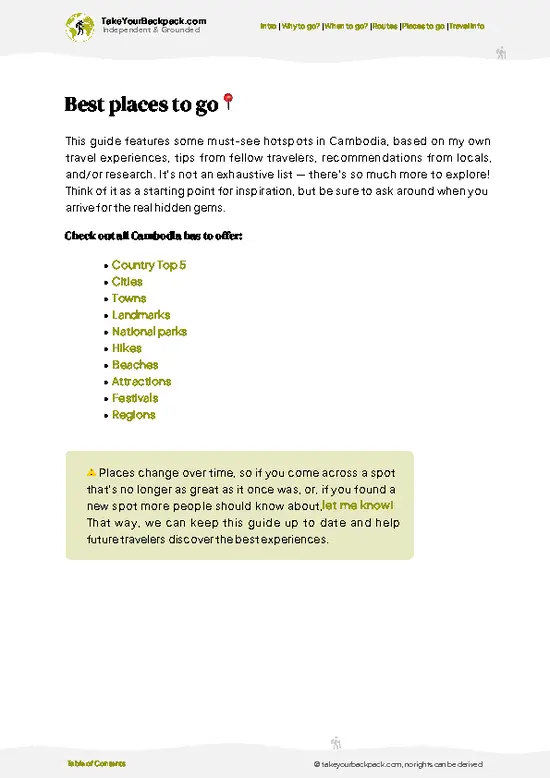
Cities, national parks, landmarks, beaches
How to get around
Offline-friendly for travel without Wi-Fi
👉 Click to see all 30+ guide features

📅 Plan smarter in minutes, not weeks
Month by month travel advice
Festivals & national holidays
Budget expectations

🗺️ Go to the right places, skip the overrated ones
Honest pros & cons of destinations
Top hikes, parks & viewpoints
Lesser-known places most travelers miss
Clear “worth it vs skip it” guidance

🛏️ Travel smoothly without rookie mistakes
Best areas to stay
Transport systems explained simply
Common scams & safety advice
SIM cards, money & practical tips

🌍 Understand the country, not just visit it
Culture & traditions
52 Essential phrases & customs
Festivals worth planning around
Traveler-friendly historical context
Insights that make places more meaningful

📱 Built for real travel conditions
Fully downloadable PDF
Works completely offline
Optimized for phone use
Useful in remote areas & buses
Everything in one place
Save weeks of stressful planning
Get instant access to your full guide. 30‑day money-back guarantee.


By proceeding you agree to our terms.
Sent to your inbox immediately after payment • 100% Secure Checkout
Best Backpacking Travel Advisor 2025 tourism awardBest Backpacking
Travel Advisor
2025
What others say about Take Your Backpack Guides:
⭐⭐⭐⭐⭐
Fantastic, amazing amount of information!
⭐⭐⭐⭐⭐
My goodness this is amazing, it's what I've been looking for hats off too you!
⭐⭐⭐⭐⭐
I think this is absolutely BRILLIANT
⭐⭐⭐⭐
Very complete and informative. It's still missing places, but I gotta to commend you
⭐⭐⭐⭐⭐
This is truly amazing, thank you, can't wait to explore it with my kids!
⭐⭐⭐⭐⭐
Awesome resource, thank you!
⭐⭐⭐⭐⭐
This is amazing! Can't wait to explore the ones I haven't seen
⭐⭐⭐⭐
I love this! Well done, great idea.
⭐⭐⭐⭐⭐
Thanks for taking the time to make this gem!
⭐⭐⭐⭐⭐
This might be the best website I've ever seen.
⭐⭐⭐⭐⭐
Congratulations, and thank you so much for your work; it's incredibly valuable.
⭐⭐⭐⭐
In all seriousness I think you did a great job pointing out the important spots
⭐⭐⭐⭐⭐
10/10 very good
⭐⭐⭐⭐⭐
As someone who's only just starting to visit regularly this is awesome, thank you.
⭐⭐⭐⭐
Thank you very much! I'm going to visit my dad, it's going to be very useful!
⭐⭐⭐⭐⭐
This is really cool! We'll be travelling for the first time and this definitely come in handy.
⭐⭐⭐⭐⭐
You are now our minister of culture, congratulations 👨‍💼
⭐⭐⭐⭐⭐
Just wanted to tell you that this is a pearl! Going to follow your recommendations.
⭐⭐⭐⭐⭐
This is so cool. I'll definitely be using the resource for my travels soon.
⭐⭐⭐⭐⭐
This is very impressive! Good work.
⭐⭐⭐⭐⭐
This is an amazing and informative site. Very well done!

🛏️ Where to stay?Where staying makes the most sense

Kep’s backpacker sweet spot is the area around the Crab Market and the nearby beachfront. This stretch hums with life without overwhelming you. It’s where you’ll find the best mix of budget guesthouses and hostels, making it easy to plug into the social scene. The air here carries the salty tang of the sea, mingled with the smoky aroma of charcoal grills from the market stalls. It’s a sensory invitation to slow down and savor the moment.

Staying close to the Crab Market means you’re steps away from fresh seafood vendors and casual eateries where locals and travelers swap stories over plates of … read more 👉
Kep’s backpacker sweet spot is the area around the Crab Market and the nearby beachfront. This stretch hums with life without overwhelming you. It’s where you’ll find the best mix of budget guesthouses and hostels, making it easy to plug into the social scene. The air here carries the salty tang of the sea, mingled with the smoky aroma of charcoal grills from the market stalls. It’s a sensory invitation to slow down and savor the moment.

Staying close to the Crab Market means you’re steps away from fresh seafood vendors and casual eateries where locals and travelers swap stories over plates of pepper crab or grilled squid. The vibe is laid-back but lively enough to meet fellow backpackers without the pressure of a party town. It’s safe, with a steady flow of foot traffic well into the evening, so you won’t feel isolated.

Venture a little inland from the coast, and the scene shifts. Neighborhoods here are quieter, more residential, with fewer hostels and less nightlife. That’s great if you want solitude but less ideal if you’re hunting for connections or convenience. The beachfront area, by contrast, balances accessibility with atmosphere, making it the logical base for anyone wanting to experience Kep’s charm without the hassle of long commutes or sketchy streets.

🚌 Getting aroundTransportation options and practical tips

Kep moves at its own pace, a slow pulse that matches the salty breeze off the Gulf of Thailand. It’s not a place where you’ll find strict timetables or the rush of urban transit hubs. Instead, the rhythm here is more about reading the light—early mornings glow soft and golden, afternoons simmer under a heavy sun, and evenings cool with the scent of grilled seafood drifting from the market. You’ll find that getting around Kep is less about sticking to a clock and more about syncing with the town’s easygoing flow. This means embracing a bit of improvisation, but also knowing the best ways to glide through without wasting time or money.


  • Walking: Kep’s compact size makes walking the top choice for budget travelers. The town’s flat streets and coastal paths mean you can cover most sights in
read more 👉
Kep moves at its own pace, a slow pulse that matches the salty breeze off the Gulf of Thailand. It’s not a place where you’ll find strict timetables or the rush of urban transit hubs. Instead, the rhythm here is more about reading the light—early mornings glow soft and golden, afternoons simmer under a heavy sun, and evenings cool with the scent of grilled seafood drifting from the market. You’ll find that getting around Kep is less about sticking to a clock and more about syncing with the town’s easygoing flow. This means embracing a bit of improvisation, but also knowing the best ways to glide through without wasting time or money.


  • Walking: Kep’s compact size makes walking the top choice for budget travelers. The town’s flat streets and coastal paths mean you can cover most sights in under 30 minutes on foot. Early morning or late afternoon walks are best to avoid the midday heat and catch the soft, warm light that brings the town’s colors alive.


  • Shared Tuk-Tuks: These are the heartbeat of local transit. You’ll find them waiting near the market or the pier, ready to take you to nearby beaches or the pepper plantations. Prices hover around $1–$2 per ride, but don’t expect fixed schedules—drivers leave when full. This means a bit of waiting, but also a chance to chat with locals and soak in the atmosphere.


  • Motorbike Rentals: For those comfortable on two wheels, renting a motorbike is the fastest way to explore beyond the town center. Daily rates start around $6, and you can reach spots like Rabbit Island or the Kep National Park in under 20 minutes. The trade-off is the midday sun and occasional dusty roads, so plan rides for early or late in the day.


  • Local Buses (Songthaews): These pick-up trucks with benches are less frequent but useful for longer trips, like heading to Kampot or the border. They usually run from early morning until late afternoon, costing about $3–$4. They’re slower and less comfortable but offer a genuine slice of local life and a chance to watch the countryside roll by.


  • Boat Transfers: If you’re aiming for Rabbit Island, the boat is the only direct route. Boats leave from Kep’s pier throughout the day, roughly every hour from 8 a.m. to 5 p.m. The ride takes about 15 minutes and costs around $2. The sea breeze and shifting light on the water make this a refreshing break from the heat and dust of the roads.

👛 Costs (as of 21 March 2025)How expensive it really is

Backpacking in Kep, Cambodia, offers a laid-back coastal vibe with costs that stay comfortably low, but knowing where your money goes unlocks a smoother, more enjoyable stay.
  • Dorm Accommodation: Expect to pay around $5 to $10 per night for a bed in a basic guesthouse dorm. These places are simple but clean, often with a fan and shared bathroom. If you want air conditioning, prices can jump to $10-$15, but dorms with AC are less common here.
  • Meals: Street food and local eateries dominate the scene. A filling meal of fresh seafood or Khmer staples like fish amok or fried noodles will cost between $2 and $5. Western-style cafes or restaurants catering to tourists might push that to $6-$8 for a meal, but the local joints deliver more flavor for less.
  • Local Transport: Kep is small enough to
read more 👉
Backpacking in Kep, Cambodia, offers a laid-back coastal vibe with costs that stay comfortably low, but knowing where your money goes unlocks a smoother, more enjoyable stay.
  • Dorm Accommodation: Expect to pay around $5 to $10 per night for a bed in a basic guesthouse dorm. These places are simple but clean, often with a fan and shared bathroom. If you want air conditioning, prices can jump to $10-$15, but dorms with AC are less common here.
  • Meals: Street food and local eateries dominate the scene. A filling meal of fresh seafood or Khmer staples like fish amok or fried noodles will cost between $2 and $5. Western-style cafes or restaurants catering to tourists might push that to $6-$8 for a meal, but the local joints deliver more flavor for less.
  • Local Transport: Kep is small enough to explore mostly on foot or by bicycle, which you can rent for about $2 to $3 per day. Tuk-tuks are available for short trips around town or to the nearby crab market, typically costing $2 to $5 depending on distance and negotiation skills.
  • Basic Activities/Entry Fees: Most natural attractions like Kep National Park or the beaches have minimal or no entrance fees, usually under $1. Visiting the pepper plantations or the nearby Rabbit Island ferry ride can cost around $3 to $5. Guided tours or cooking classes will be pricier, starting at $15 and up.
  • Miscellaneous Expenses: Bottled water runs about $0.50 to $1, and a local SIM card with data costs around $5 to $10 for a decent package. Small extras like snacks, coffee, or laundry services add a few dollars here and there but rarely break the bank.

All told, you can comfortably backpack in Kep on about $12 to $25 per day. This range covers the essentials without skimping on comfort or experiences, letting you soak in the salty air and quiet charm without the stress of overspending.


source: tourismcambodia.org
⚠️ Prices can change and everyone travels differently, so take this as a rough guide. Hope it helps you plan your adventure!

🚌 Day tripsExploring the surroundings

Kep, Cambodia, is a backpacker’s dream base, offering easy access to stunning landscapes and authentic experiences. The charm of this coastal town lies not just in its serene beaches but in the adventures that await just beyond its borders.

Rabbit Island (Koh Tonsay)
A short boat ride from Kep’s pier, Rabbit Island is a slice of paradise. The journey takes about 20 minutes and costs around $5 round trip. Once you land, the scent of grilled seafood wafts through the air, mingling with the salty breeze. Spend your day lounging on the soft sand or snorkeling in the clear waters. The island is quiet, making it perfect for a lazy afternoon. Just remember to bring cash for food and drinks, as there are no ATMs. Avoid the mistake of leaving too late; the last boat back can fill up quickly.

read more 👉
Kep, Cambodia, is a backpacker’s dream base, offering easy access to stunning landscapes and authentic experiences. The charm of this coastal town lies not just in its serene beaches but in the adventures that await just beyond its borders.

Rabbit Island (Koh Tonsay)
A short boat ride from Kep’s pier, Rabbit Island is a slice of paradise. The journey takes about 20 minutes and costs around $5 round trip. Once you land, the scent of grilled seafood wafts through the air, mingling with the salty breeze. Spend your day lounging on the soft sand or snorkeling in the clear waters. The island is quiet, making it perfect for a lazy afternoon. Just remember to bring cash for food and drinks, as there are no ATMs. Avoid the mistake of leaving too late; the last boat back can fill up quickly.


Phnom Voar
This ancient temple site, about 30 minutes from Kep, offers a glimpse into Cambodia’s rich history. A tuk-tuk ride will set you back around $10. The climb to the temple is steep but rewarding, with panoramic views of the surrounding countryside. The air is thick with the scent of wildflowers, and the sound of birds fills the atmosphere. Spend a couple of hours exploring the ruins and soaking in the tranquility. Many first-timers underestimate the heat; bring plenty of water and start early in the morning to beat the midday sun.


Crab Market
Just a short walk from the center of Kep, the Crab Market is a must-visit for seafood lovers. The market buzzes with energy, and the aroma of fresh crab and spices fills the air. You can enjoy a plate of crab with Kampot pepper for about $5. Arrive around sunset to watch the sky turn shades of orange and pink while you feast. A common mistake is to overlook the local stalls; they often serve the freshest catches at better prices than the restaurants.


Kep National Park
For those who crave a bit of adventure, the trails of Kep National Park are calling. The park is just a short tuk-tuk ride away, costing around $3. The trails wind through lush greenery, and the sounds of rustling leaves and distant wildlife create a serene backdrop. Plan for a few hours of hiking, and don’t miss the viewpoint at the top for a breathtaking view of the coastline. Many backpackers skip this gem, thinking it’s just a park, but the experience is a refreshing escape into nature.
👉 Explore Kep National Park
Want to know what more Cambodia offers?
The Cambodia Travel Guide describes 90 highlights, from cities to national parks, from beaches to hikes

Get the Travel Guide -

🛡️ SafetyTraveler Safety Guide

Kep, Cambodia, is generally safe, but a few practical tips can enhance your experience. The waterfront area is lovely, but keep an eye on your belongings, especially during busy times. Petty theft can happen, so use a crossbody bag or a money belt.

If you’re traveling solo, especially at night, stick to well-lit areas and avoid wandering too far from the main streets. The night market is vibrant and bustling, but it’s best to leave before it gets too late.

Scams are rare, but be cautious with transportation. Always agree on a fare before hopping into a tuk-tuk. Some drivers might try to charge more, especially if they sense you’re new.

Annoyances can include persistent sellers at the market. A polite but firm “no, thank you” usually does the trick. Embrace the local rhythm, and you’ll … read more 👉
Kep, Cambodia, is generally safe, but a few practical tips can enhance your experience. The waterfront area is lovely, but keep an eye on your belongings, especially during busy times. Petty theft can happen, so use a crossbody bag or a money belt.

If you’re traveling solo, especially at night, stick to well-lit areas and avoid wandering too far from the main streets. The night market is vibrant and bustling, but it’s best to leave before it gets too late.

Scams are rare, but be cautious with transportation. Always agree on a fare before hopping into a tuk-tuk. Some drivers might try to charge more, especially if they sense you’re new.

Annoyances can include persistent sellers at the market. A polite but firm “no, thank you” usually does the trick. Embrace the local rhythm, and you’ll find that most interactions are friendly and genuine. Enjoy the laid-back vibe, and let the beauty of Kep unfold naturally.

Other Cambodian towns near Kep

Explore more nearby:

  • Kampot—French-era architecture, riverside market, pepper plantations| 18 km away
  • Sihanoukville—beachfront resorts, ferry piers, casino strip| 89 km away
  • Chbar Mon—local markets, highway junction, agricultural hub| 105 km away

💡 Not sure where to go next?
Create a personalized itinerary for Cambodia including Kep and the places that fit your trip.

Generate my itinerary

👉 Discover all towns

Or checkout all Cambodia has to offer (think cities, towns, villages, national parks, hikes, beaches, festivals)
Country photo of Cambodia

We 💚 feedbackFinal thoughts on visiting Kep

Kep is a place where time slows down, and the salty breeze carries whispers of the sea. Don’t miss the crab market at dusk; the aroma of grilled seafood mingles with laughter and chatter. It’s a sensory feast. Just be ready for the occasional tourist crowd—early mornings are your best bet for peace. Embrace the simplicity here; it’s the perfect antidote to the chaos of life. You’ll leave with a heart full of memories and a craving for more crab.

✍️ Help improve this page!
The information on this page is based on in-depth research, insights shared by experienced travelers, and feedback from the local travel community in Cambodia. While every effort is made to keep the information accurate and current, conditions can change — so if you spot anything incorrect or outdated, please get in touch.


🙋‍♂️ Give feedback

👋 Meet the founderWho’s Behind Take Your Backpack?

Johan, backpacker and founder of TakeYourBackpackHi, I’m Johan (Netherlands 🇳🇱), the creator of TakeYourBackpack. Over the past decade, I’ve backpacked through 80+ countries across six continents, gaining extensive experience with independent travel, long-term trips, and overland routes.

This site is built on a combination of firsthand travel experience and carefully curated insights from other backpackers. Many guides are based on places I’ve personally visited, while others bring together tips, observations, and practical advice shared by trusted travelers I’ve met along the way.

The goal is to provide realistic, experience-driven guidance — not generic itineraries — so you can explore destinations with better context, clearer expectations, and more confidence.

Get full Cambodia guide •
Instant download • 90 highlights • Full Offline guide