×

Cambodia🇰🇭 | best townsBest 10 towns in Cambodia

In Cambodia, towns pulse with unique rhythms shaped by their history, culture, and geography. From the bustling streets of Phnom Penh to the serene charm of Kampot, each destination offers distinct flavors that cater to different backpacking styles. The seasonal shifts influence everything from prices to local festivals, impacting your experience.

Choosing the right town can transform your journey; it affects the vibe, safety, and ease of travel. For instance, Siem Reap draws crowds for its proximity to Angkor Wat, but the costs can soar during peak times. In contrast, lesser-known towns like Battambang provide a more authentic cultural immersion without the tourist traps. Understanding these nuances is key to crafting a memorable adventure in Cambodia.

By Johan Kruseman 🇳🇱 | Updated June 12, 2026
Explore the best villages in Cambodia

Why go?Why These town Stand Out

Cambodia’s towns pulse with a unique rhythm, shaped by a rich tapestry of history, culture, and community. Unlike many countries, Cambodia offers an unfiltered glimpse into daily life, where the pace is slower, and the warmth of local interactions is palpable. The culinary scene is a vibrant mix of flavors, from street-side noodle stalls to family-run eateries, each dish telling a story of tradition and resilience.

Traveling through these towns reveals the stark contrasts between urban and rural life. While cities like Phnom Penh buzz with energy, smaller towns provide a more intimate experience, allowing for deeper connections with locals. However, this comes with trade-offs. The more remote the town, the longer the travel time, which can eat into your exploration hours. Yet, this journey … read more 👉
Cambodia’s towns pulse with a unique rhythm, shaped by a rich tapestry of history, culture, and community. Unlike many countries, Cambodia offers an unfiltered glimpse into daily life, where the pace is slower, and the warmth of local interactions is palpable. The culinary scene is a vibrant mix of flavors, from street-side noodle stalls to family-run eateries, each dish telling a story of tradition and resilience.

Traveling through these towns reveals the stark contrasts between urban and rural life. While cities like Phnom Penh buzz with energy, smaller towns provide a more intimate experience, allowing for deeper connections with locals. However, this comes with trade-offs. The more remote the town, the longer the travel time, which can eat into your exploration hours. Yet, this journey often leads to richer experiences, as you witness the landscape shift from bustling markets to serene rice paddies.

Geographically, Cambodia’s towns are often clustered, making it tempting to hop from one to another. But consider the depth of exploration over sheer numbers. Each town has its own character, influenced by climatic conditions and infrastructural development. Some areas may lack modern amenities, which can be a challenge but also a chance to engage more authentically with the local way of life. Understanding these nuances is key to crafting a rewarding itinerary that balances accessibility with immersive experiences.
Evaluating the Top Choices
The list of best towns in Cambodia is created based on charm, local culture, atmosphere, hidden gems, and visitor appeal. If you feel a town is missing in this list, please let us know.

When to go?Seasonal Guide to Visiting

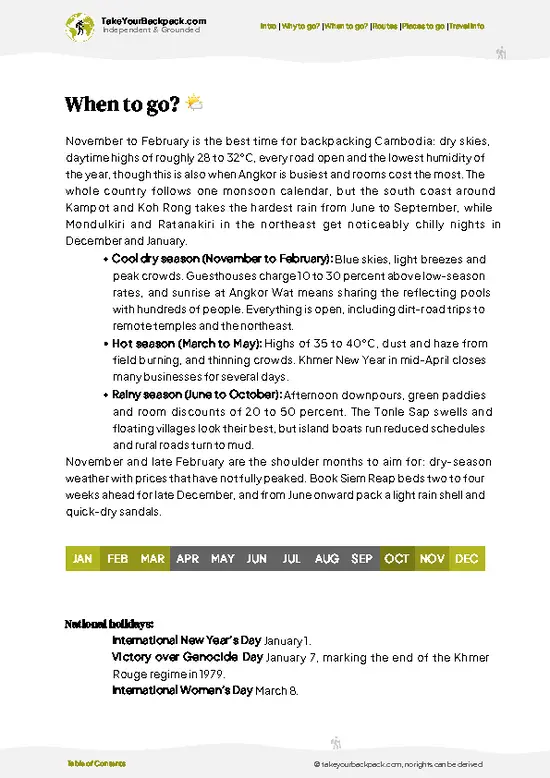
Seasonality shapes the experience of exploring Cambodia’s towns. The country has a tropical climate, divided into wet and dry seasons. The dry season, from November to April, brings cooler temperatures and lower humidity. This is when towns buzz with activity, as both locals and travelers take to the streets. Festivals and cultural events flourish, showcasing the vibrant pulse of local life.

Optimal months for visiting align with this dry season. Expect lively markets, street food stalls, and community gatherings. The atmosphere is electric, but the crowds can be overwhelming. Prices for accommodations and activities often peak during this time, reflecting the influx of visitors.

Shoulder seasons—late April to June and September to October—offer a different charm. The heat rises, and humidity … read more 👉
Seasonality shapes the experience of exploring Cambodia’s towns. The country has a tropical climate, divided into wet and dry seasons. The dry season, from November to April, brings cooler temperatures and lower humidity. This is when towns buzz with activity, as both locals and travelers take to the streets. Festivals and cultural events flourish, showcasing the vibrant pulse of local life.

Optimal months for visiting align with this dry season. Expect lively markets, street food stalls, and community gatherings. The atmosphere is electric, but the crowds can be overwhelming. Prices for accommodations and activities often peak during this time, reflecting the influx of visitors.

Shoulder seasons—late April to June and September to October—offer a different charm. The heat rises, and humidity creeps in, but the towns breathe a quieter air. Fewer tourists mean more authentic interactions with locals. Prices drop, making it easier to find budget-friendly options. However, be prepared for occasional rain, especially in the latter months, which can disrupt plans but also refresh the landscape.

Peak periods around major holidays can lead to packed streets and inflated costs. Understanding these patterns helps in navigating the balance between experiencing local culture and managing comfort levels.

town hoppingPlanning Your Route Efficiently

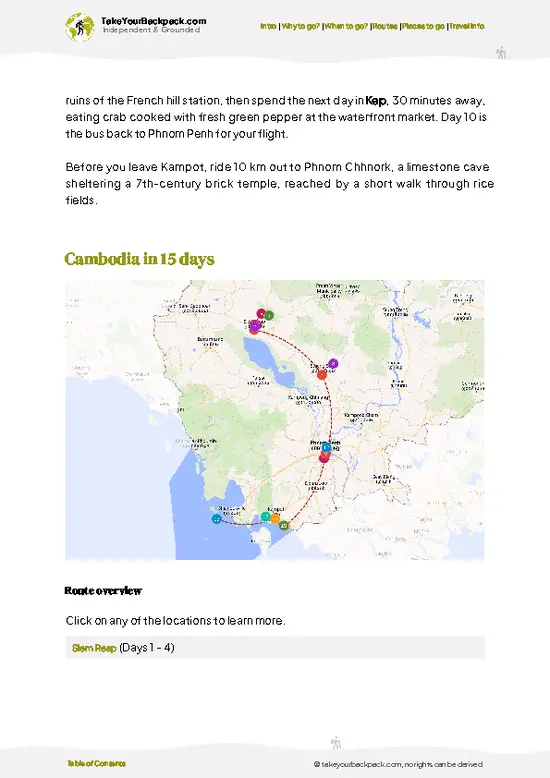
Traveling through Cambodia requires a smart approach to maximize the experience without succumbing to travel fatigue. Start by clustering towns regionally. Begin in the bustling capital, Phnom Penh, where history and modernity collide. From there, head to Siem Reap, the gateway to Angkor Wat. This route sets a natural flow, allowing for a deep dive into Cambodia’s rich heritage.

Typical time spent in each town should be around two to three days. This pacing allows for exploration without feeling rushed. Siem Reap deserves a solid chunk of time for sunrise at Angkor Wat and wandering through local markets. In contrast, Phnom Penh’s highlights can be tackled in a day or two, leaving room for leisurely meals along the riverside.

Avoid common pitfalls like trying to cram too many towns into … read more 👉
Traveling through Cambodia requires a smart approach to maximize the experience without succumbing to travel fatigue. Start by clustering towns regionally. Begin in the bustling capital, Phnom Penh, where history and modernity collide. From there, head to Siem Reap, the gateway to Angkor Wat. This route sets a natural flow, allowing for a deep dive into Cambodia’s rich heritage.

Typical time spent in each town should be around two to three days. This pacing allows for exploration without feeling rushed. Siem Reap deserves a solid chunk of time for sunrise at Angkor Wat and wandering through local markets. In contrast, Phnom Penh’s highlights can be tackled in a day or two, leaving room for leisurely meals along the riverside.

Avoid common pitfalls like trying to cram too many towns into a short period. Each stop offers unique experiences that deserve attention. The trade-off between speed and depth is crucial; rushing through will dilute the magic.

Flexibility is key. Allow for spontaneous detours to local villages or hidden eateries. This not only enriches the journey but also balances budget and comfort. Embrace the rhythm of travel, and let the journey unfold naturally.

The ListHighly Recommended towns of Cambodia

1 Kampot

French-era architecture, riverside market, pepper plantations

Wander through colonial streets, sample distinctive local pepper, and watch daily life unfold along the slow-moving riverbanks.

2 Kep

crab market, faded villas, coastal promenade

Sample fresh seafood by the shore, explore abandoned French estates, and walk along breezy seafront paths with views of offshore islands.

3 Sihanoukville

beachfront resorts, ferry piers, casino strip

Catch boats to nearby islands, notice rapid construction along the coast, and find nightlife centered around the main casino district.

4 Banlung

volcanic lake, gemstone markets, red earth

Swim in a crater lake, browse for local stones, and use the town as a base for forest hikes and minority village visits.

5 Kratie

Irrawaddy dolphins, river sunsets, colonial shophouses

Watch rare dolphins from the riverbank, enjoy slow evenings as the sun sets over the Mekong, and stroll past weathered shophouses.

6 Sen Monorom

rolling highlands, elephant projects, Bunong culture

Experience cool mornings, trek through misty forests, and meet indigenous communities who maintain distinct traditions in the eastern hills.

cambodia-city-sen-monorom
© Google |

7 Stung Treng

Mekong confluence, river islands, border crossing

Pause at a strategic river junction, arrange boat trips to sandbars, or prepare for onward travel into Laos or remote Cambodian provinces.

8 Mondulkiri

rolling highlands, elephant sanctuaries, Bunong villages

Hike through cool pine forests, visit indigenous communities, and encounter elephants in a region known for its remote, elevated terrain.

9 Chhlong

colonial mansions, riverside quay, sleepy main street

Stroll past weathered French buildings, watch boats drift by, and experience a quiet riverside town with little modern development.

cambodia-city-chhlong
© Google |

10 Oudong

hilltop stupas, royal tombs, panoramic views

Climb ancient steps to former royal grounds, explore scattered shrines, and take in wide vistas over rice fields and distant mountains.

11 Samlot

jungle hills, remote villages, red dirt roads

Venture into a rugged landscape where forested slopes, scattered farms, and basic infrastructure shape a quiet, off-grid experience.

12 Pailin

gem mines, forested hills, border crossings

Travel through hilly landscapes dotted with gem markets, pass quiet border posts, and experience a region shaped by its mining past.

cambodia-city-pailin
© Google |

13 Samraong

northern gateway, border proximity, rural outpost

Use this practical town as a staging point for border crossings, NGO work, or trips into sparsely populated northern provinces.

14 Chbar Mon

local markets, highway junction, agricultural hub

Pass through a busy crossroads town where produce markets and roadside stalls reflect the region’s farming economy and daily trade.

15 Silk Island

traditional weaving, stilt houses, Mekong ferry

Cross the river to observe silk production, cycle past rural homes, and see daily routines shaped by the island’s agricultural rhythms.

Think you know Cambodia?

Prove you’re a true local — uncover 5 lesser-known towns in Cambodia that locals tend to keep to themselves.
Loading the map 🌍

Expert viewInsights from Locals and Experts

Exploring Cambodia’s Towns

Cambodia’s towns are a patchwork of culture, history, and local life, each offering a unique slice of the country’s soul. Aim to visit at least four to six towns to truly grasp the diversity. This isn’t just about ticking boxes; it’s about immersing yourself in the rhythm of each place.

Regional Clusters

Start in the northwest, where the pulse of local life beats strong. Here, you’ll find towns that serve as gateways to ancient temples and lush landscapes. The central region offers a different vibe, with towns that are more urbanized yet steeped in tradition. The coastal towns bring a refreshing breeze, with their laid-back atmosphere and seafood markets. Each cluster has its own character, so plan your route to flow naturally from one to the next.

Time and read more 👉
Exploring Cambodia’s Towns

Cambodia’s towns are a patchwork of culture, history, and local life, each offering a unique slice of the country’s soul. Aim to visit at least four to six towns to truly grasp the diversity. This isn’t just about ticking boxes; it’s about immersing yourself in the rhythm of each place.

Regional Clusters

Start in the northwest, where the pulse of local life beats strong. Here, you’ll find towns that serve as gateways to ancient temples and lush landscapes. The central region offers a different vibe, with towns that are more urbanized yet steeped in tradition. The coastal towns bring a refreshing breeze, with their laid-back atmosphere and seafood markets. Each cluster has its own character, so plan your route to flow naturally from one to the next.

Time and Budget

Expect to spend anywhere from a week to two weeks exploring these towns. This gives you enough time to soak in the local culture without feeling rushed. Budget-wise, think in terms of a moderate range. Costs can vary widely based on your choices—street food is a steal, while dining in a sit-down restaurant can stretch your wallet. Factor in transportation; buses are affordable but can be slow, while private taxis or motorbikes offer more flexibility at a higher cost.

Local Charm and Infrastructure

Infrastructure can be a mixed bag. Some towns have well-maintained roads, while others may challenge your patience. Embrace the journey; the bumpy rides often lead to the most memorable encounters. Local markets are vibrant and bustling, where you can engage with residents and sample authentic dishes. Don’t shy away from street food; it’s often fresher and tastier than what you’ll find in restaurants. Just be mindful of hygiene—look for stalls with a steady stream of locals.

Travel Rhythm

Adopt a flexible travel rhythm. Spend a few days in each town, allowing yourself to wander without a strict agenda. This is where the real magic happens—when you stumble upon a local festival or find a quiet café where you can chat with the owner about their life. Each town has its own pace, and adjusting to that can enhance your experience.

Safety and Cultural Considerations

Safety is generally good, but always stay aware of your surroundings. Petty crime can occur, especially in busier areas. Respect local customs; dress modestly when visiting temples and be mindful of local etiquette. Engaging with locals can enrich your experience, but approach conversations with genuine curiosity and respect.

Trade-offs and Constraints

One significant trade-off is time versus depth of experience. You might be tempted to rush through towns to see more, but this often leads to missing the essence of each place. Prioritize quality over quantity; a deeper connection in fewer towns will be more rewarding than a superficial glance at many.

In summary, Cambodia’s towns are not just destinations; they are experiences waiting to unfold. Embrace the journey, engage with the locals, and let the rhythm of each town guide you. The real magic lies in the moments you create along the way.

✈️ The backpacker research shortcutCambodia Travel Guide

An offline-friendly backpacking guide with optimized travel routes, ranked highlights, transport advice, and the best areas to stay.
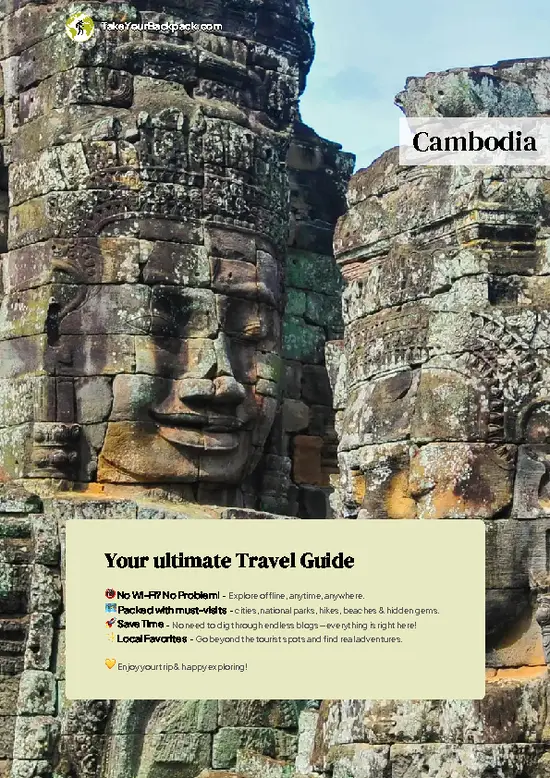
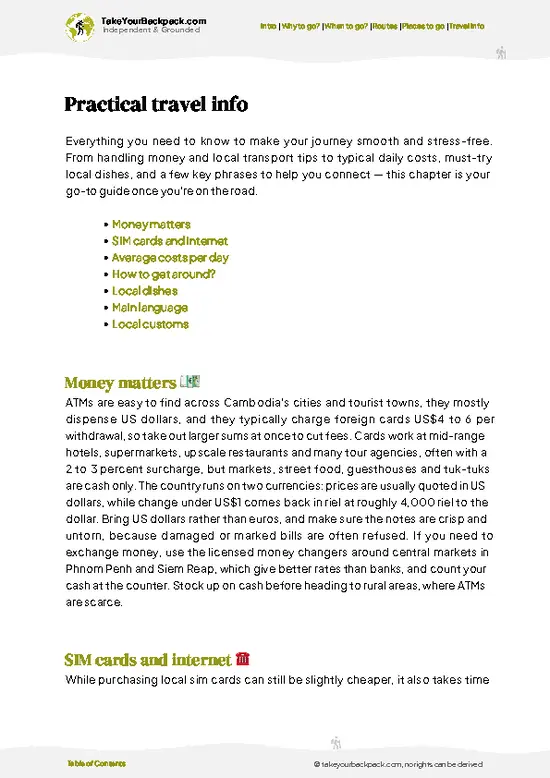
example page 0 from our offline Travel Guide for Cambodia
example page 1 from our offline Travel Guide for Cambodia
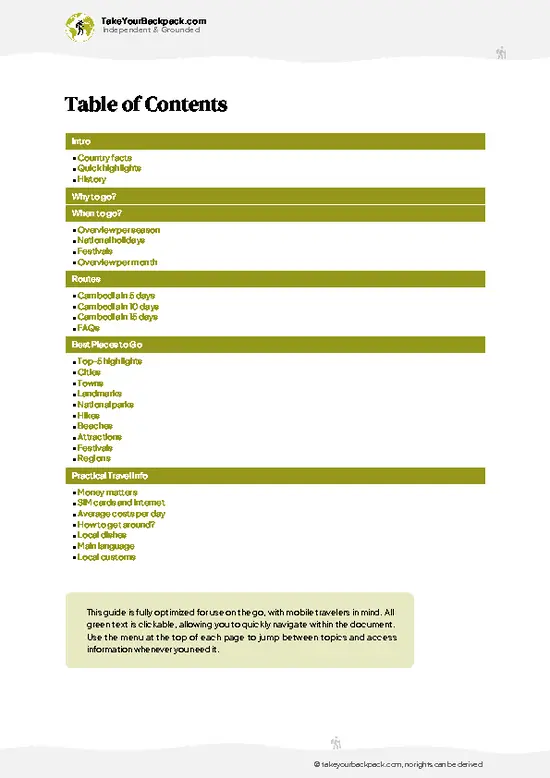
example page 2 from our offline Travel Guide for Cambodia
example page 3 from our offline Travel Guide for Cambodia
example page 4 from our offline Travel Guide for Cambodia
example page 5 from our offline Travel Guide for Cambodia
example page 6 from our offline Travel Guide for Cambodia
example page 7 from our offline Travel Guide for Cambodia
The digital guide (345 pages) contains:
90 highlights, ranked by travel appeal
Optimized 5, 10 & 15-day travel routes
Cities, national parks, landmarks, beaches
How to get around
Offline-friendly for travel without Wi-Fi
👉 Click to see all 30+ guide features

📅 Plan smarter in minutes, not weeks
Month by month travel advice
Festivals & national holidays
Budget expectations

🗺️ Go to the right places, skip the overrated ones
Honest pros & cons of destinations
Top hikes, parks & viewpoints
Lesser-known places most travelers miss
Clear “worth it vs skip it” guidance

🛏️ Travel smoothly without rookie mistakes
Best areas to stay
Transport systems explained simply
Common scams & safety advice
SIM cards, money & practical tips

🌍 Understand the country, not just visit it
Culture & traditions
52 Essential phrases & customs
Festivals worth planning around
Traveler-friendly historical context
Insights that make places more meaningful

📱 Built for real travel conditions
Fully downloadable PDF
Works completely offline
Optimized for phone use
Useful in remote areas & buses
Everything in one place
Save weeks of stressful planning
Get instant access to your full guide. 30‑day money-back guarantee.


By proceeding you agree to our terms.
Sent to your inbox immediately after payment • 100% Secure Checkout
Best Backpacking Travel Advisor 2025 tourism awardBest Backpacking
Travel Advisor
2025
What others say about Take Your Backpack Guides:
⭐⭐⭐⭐⭐
Fantastic, amazing amount of information!
⭐⭐⭐⭐⭐
My goodness this is amazing, it's what I've been looking for hats off too you!
⭐⭐⭐⭐⭐
I think this is absolutely BRILLIANT
⭐⭐⭐⭐
Very complete and informative. It's still missing places, but I gotta to commend you
⭐⭐⭐⭐⭐
This is truly amazing, thank you, can't wait to explore it with my kids!
⭐⭐⭐⭐⭐
Awesome resource, thank you!
⭐⭐⭐⭐⭐
This is amazing! Can't wait to explore the ones I haven't seen
⭐⭐⭐⭐
I love this! Well done, great idea.
⭐⭐⭐⭐⭐
Thanks for taking the time to make this gem!
⭐⭐⭐⭐⭐
This might be the best website I've ever seen.
⭐⭐⭐⭐⭐
Congratulations, and thank you so much for your work; it's incredibly valuable.
⭐⭐⭐⭐
In all seriousness I think you did a great job pointing out the important spots
⭐⭐⭐⭐⭐
10/10 very good
⭐⭐⭐⭐⭐
As someone who's only just starting to visit regularly this is awesome, thank you.
⭐⭐⭐⭐
Thank you very much! I'm going to visit my dad, it's going to be very useful!
⭐⭐⭐⭐⭐
This is really cool! We'll be travelling for the first time and this definitely come in handy.
⭐⭐⭐⭐⭐
You are now our minister of culture, congratulations 👨‍💼
⭐⭐⭐⭐⭐
Just wanted to tell you that this is a pearl! Going to follow your recommendations.
⭐⭐⭐⭐⭐
This is so cool. I'll definitely be using the resource for my travels soon.
⭐⭐⭐⭐⭐
This is very impressive! Good work.
⭐⭐⭐⭐⭐
This is an amazing and informative site. Very well done!

🛏️ Where to stay?Accommodation Highlights

Yes — hostels and budget guesthouses are widespread across Cambodia, concentrated in traveler hubs: Siem Reap (Old Market/Wat Bo), Phnom Penh (Riverside, BKK1), Sihanoukville (Serendipity Beach strip and ferry area), island options on Koh Rong, and quieter small-town clusters in Kampot and Kep.

Siem Reap is ideal for Angkor access and lively nightlife but rooms fill fast; Phnom Penh Riverside and BKK1 offer safer, more comfortable budget stays near cafes and attractions; Sihanoukville gives cheap party accommodation but can be noisy with patchy infrastructure and more scams, while Koh Rong has calmer beaches with limited facilities and higher transport costs; Kampot and Kep are quiet, safer … read more 👉
Yes — hostels and budget guesthouses are widespread across Cambodia, concentrated in traveler hubs: Siem Reap (Old Market/Wat Bo), Phnom Penh (Riverside, BKK1), Sihanoukville (Serendipity Beach strip and ferry area), island options on Koh Rong, and quieter small-town clusters in Kampot and Kep.

Siem Reap is ideal for Angkor access and lively nightlife but rooms fill fast; Phnom Penh Riverside and BKK1 offer safer, more comfortable budget stays near cafes and attractions; Sihanoukville gives cheap party accommodation but can be noisy with patchy infrastructure and more scams, while Koh Rong has calmer beaches with limited facilities and higher transport costs; Kampot and Kep are quiet, safer and great for day trips but have fewer hostel choices — expect basic facilities, fan dorms are common and AC or hot water may cost extra, so book ahead in high season.

If you enjoy meeting fellow travelers, consider choosing hostels with high ratings for atmosphere. On the other hand, if you prefer having your own space, a hotel might be a better option.

CambodiaSee More of Cambodia

👋 Meet the founderWho’s Behind Take Your Backpack?

Johan, backpacker and founder of TakeYourBackpackHi, I’m Johan (Netherlands 🇳🇱), the creator of TakeYourBackpack. Over the past decade, I’ve backpacked through 80+ countries across six continents, gaining extensive experience with independent travel, long-term trips, and overland routes.

This site is built on a combination of firsthand travel experience and carefully curated insights from other backpackers. Many guides are based on places I’ve personally visited, while others bring together tips, observations, and practical advice shared by trusted travelers I’ve met along the way.

The goal is to provide realistic, experience-driven guidance — not generic itineraries — so you can explore destinations with better context, clearer expectations, and more confidence.

Get full Cambodia guide •
Instant download • 90 highlights • Full Offline guide