
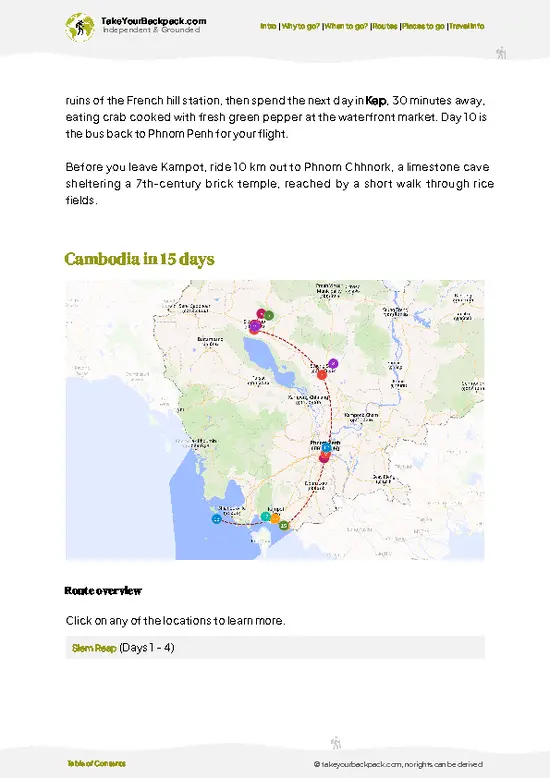
1. Behind-the-Scenes with Rescued Elephants
Forget the sanitized “elephant selfie” you’ve seen online. Phnom Tamao’s elephants are survivors—landmine victims, ex-circus workers, and orphans. You’ll see them up close, but not in a circus ring or chained for photos. Instead, watch them lumber through forest enclosures, mud-bathe, and interact with keepers who know each animal’s quirks. The real thrill is seeing these giants act like elephants, not props.
2. Sun Bear Forest
Sun bears are the world’s smallest bear, and they’re usually ghost-level elusive in the wild. Here, you can watch them climb, wrestle, and nap in hammocks built by volunteers. The center’s sun bear habitat is a masterclass in enrichment—logs to tear apart, honey to sniff out, and zero circus tricks. It’s a rare chance to … read more 👉
1. Behind-the-Scenes with Rescued Elephants
Forget the sanitized “elephant selfie” you’ve seen online. Phnom Tamao’s elephants are survivors—landmine victims, ex-circus workers, and orphans. You’ll see them up close, but not in a circus ring or chained for photos. Instead, watch them lumber through forest enclosures, mud-bathe, and interact with keepers who know each animal’s quirks. The real thrill is seeing these giants act like elephants, not props.
2. Sun Bear Forest
Sun bears are the world’s smallest bear, and they’re usually ghost-level elusive in the wild. Here, you can watch them climb, wrestle, and nap in hammocks built by volunteers. The center’s sun bear habitat is a masterclass in enrichment—logs to tear apart, honey to sniff out, and zero circus tricks. It’s a rare chance to see a species most people don’t even know exists, living with dignity.
3. Gibbon Song at Dawn
If you arrive early, the gibbons’ morning calls are the soundtrack you didn’t know you needed. Their whooping duets echo through the trees—no filter, no crowd noise, just wild music. These aren’t bored zoo animals; they’re rescued from the pet trade and given space to swing, leap, and sing. It’s a raw, unscripted moment that Instagram can’t fake.
4. The “No-Touch” Rule—and Why It Matters
You’ll see signs everywhere: don’t feed, don’t touch, don’t tease. It’s not about being strict; it’s about respect. Phnom Tamao is a working rescue, not a petting zoo. The animals aren’t here for your entertainment—they’re here to heal. That honesty is rare in Southeast Asia, where too many “sanctuaries” are just photo ops in disguise. Here, the real magic is witnessing animals recover their wildness, not posing for your feed.
5. Real Conservation in Action
You’ll spot pangolins, slow lorises, and rare birds—species you’d never see in a typical zoo, many rescued from traffickers. The center’s scale is staggering: hundreds of animals, dozens of species, all with stories that don’t fit on a souvenir T-shirt. If you want to see what real, gritty conservation looks like—messy, hopeful, and absolutely necessary—this is it.
Spotted a mistake or missing something? Contact us.

 Best Backpacking
 Hi, I’m Johan (Netherlands 🇳🇱), the creator of TakeYourBackpack. Over the past 3 decades, I’ve backpacked through 90+ countries across six continents, gaining extensive experience with independent travel, long-term trips, and overland routes.