×

Cameroon🇨🇲 | townsAbong-Mbangrainforest edge, logging trucks, transit point | things to do and best time to go

Explore AkonolingaExplore Melong

Backpacking in Abong-Mbang
🌟 Highlighttown ranked #11
By Johan Kruseman 🇳🇱 | Updated May 31, 2026

Most travelers only realize after leaving: Abong-Mbang is where the rainforest air finally slows you down, and the bus schedules force you to match its pace. Tucked in Cameroon’s East Region, this town is a crossroads—literally and figuratively—between the wild east and the rest of the country. For backpackers, Abong-Mbang isn’t about museums or nightlife; it’s a launchpad for river trips and forest treks, or a necessary breather on the long haul to Yokadouma or Bertoua. The market’s a sensory jolt—smoked fish, red dust, laughter—but the evenings are quiet, with few hostels and even fewer travelers. Costs are low, but so is infrastructure; you’ll need patience and a sense of humor. Compared to Bertoua, Abong-Mbang feels more like a frontier outpost than a city—less polished, more real, and all the better for it if you’re chasing the feeling of being far from everywhere.

Discover everything you want to know in the 📖 Cameroon Travel Guide.


Get your Cameroon guide
95 ranked highlights, routes & tips, works offline (383 pages)
Loading the map 🌍
CLICK TO FILTER
cities
towns
landmarks
national parks
hikes
beaches
attractions
festivals
regions
SHOW COUNTRY’S BESTSHOW ALL

✨ Why go?
Ranked #11 town in Cameroon
What makes this town worth visiting

Abong-Mbang serves as a gateway for backpackers seeking authentic experiences in Cameroon. Its walkable streets make it easy to explore local markets, where the air is rich with the scent of grilled plantains and spices. This town is a convenient base for nearby hikes in lush forests, perfect for those who crave nature. Small-scale guesthouses offer a cozy atmosphere, ideal for solo travelers or small groups looking to connect. While many pass through quickly, some linger to soak in the friendly social vibe. If you’re a slow traveler or a hiker, Abong-Mbang might just be your perfect pit stop.
Want to include Abong-Mbang in your Cameroon route?
Create a personalized Cameroon itinerary that includes Abong-Mbang and the places that fit your trip — based on your travel style, budget, and available time. Get your route in seconds.

Generate my trip

💡 HighlightsPlaces and moments you shouldn't skip

  • Marché Central d’Abong-Mbang (Central Market) — The town’s heartbeat: fresh produce, bush vegetables, spices, and stalls selling carved wood and fabrics. Great for people-watching, bargaining, and grabbing cheap, honest meals from street vendors.
  • Haut-Nyong Prefecture / Colonial administrative quarter — A cluster of old administrative buildings and government offices that show the town’s role as a regional hub. Worth a slow walk to see colonial-era architecture, official life and the daily comings-and-goings that shape local politics.
  • Main mission compounds and parish churches — Longstanding Catholic and Protestant mission compounds (with churches, schools and clinics) are more than buildings: they’re local anchors for education, health and community events. Visiting gives real insight
read more 👉
  • Marché Central d’Abong-Mbang (Central Market) — The town’s heartbeat: fresh produce, bush vegetables, spices, and stalls selling carved wood and fabrics. Great for people-watching, bargaining, and grabbing cheap, honest meals from street vendors.
  • Haut-Nyong Prefecture / Colonial administrative quarter — A cluster of old administrative buildings and government offices that show the town’s role as a regional hub. Worth a slow walk to see colonial-era architecture, official life and the daily comings-and-goings that shape local politics.
  • Main mission compounds and parish churches — Longstanding Catholic and Protestant mission compounds (with churches, schools and clinics) are more than buildings: they’re local anchors for education, health and community events. Visiting gives real insight into how missions influenced town life.
  • Timber yards and sawmills along the main road — The timber trade drives the local economy; a stroll past the sawmills and timber depots is an education in woodwork, logistics and local livelihoods. Bring dust protection if you linger—this is industrial, honest work.
  • Artisan woodcarver workshops — Small workshops and street carvers produce masks, bowls and figures in locally sourced woods. You can watch pieces being carved and often buy directly from the maker — authentic souvenirs and a chance to support local craftspersons.
  • Maison des Jeunes et de la Culture (local cultural center) — Where music, dance and community events happen. Check the bulletin board or ask around — catching a local performance (even an informal football anthem rehearsal) is a good way to connect with residents.
  • Stade Municipal (local football ground) — Football is a local pastime; a weekend match is lively, social and cheap entertainment. Bring patience for spontaneous delays and join the fans for a raw, unfiltered slice of town life.
  • Riverside stretches and nearby bridges — Small riverbanks and bridges in town make pleasant, shady walks at dawn or dusk. Fishermen, laundry spots and riverside traders make these edges of town quietly interesting and photogenic.
  • Central mosque and Islamic quarter — The mosque and its surrounding neighborhood offer another layer of Abong-Mbang’s cultural mix. Visiting respectfully (outside prayer times if you’re unsure) gives perspective on religious life and daily rituals here.
  • Weekly livestock and trading market — On market days the outskirts of town turn into a bustling exchange for cattle, poultry and goods from surrounding villages. It’s loud, social and an excellent way to observe regional trade networks up close.
A few notable day-trip options reachable from Abong-Mbang: the Dja Faunal Reserve (UNESCO biosphere), nearby Baka village cultural/forest walks organized from town, and the historic riverside town of Somalomo.
Spotted a mistake or missing something? Contact us.

🏘️ NeighborhoodsUnderstanding the local layout

Abong-Mbang offers a unique blend of culture and nature, making it a captivating stop for backpackers.

Central Market Area: This bustling hub is perfect for those who thrive on energy. You’ll find local vendors selling everything from fresh produce to handmade crafts. It’s walkable and affordable, ideal for short stays. The nightlife here is low-key, with small bars where you can sip palm wine and chat with locals.

Ngoulemakong District: A quieter neighborhood, perfect for longer stays. It’s less touristy, giving you a genuine feel for daily life. The streets are safe for walking, and you can easily access transport to nearby attractions.

Rural Outskirts: If you’re after adventure, head here. The scenery is stunning, and you can hike to nearby waterfalls. It’s less developed, so be prepared … read more 👉
Abong-Mbang offers a unique blend of culture and nature, making it a captivating stop for backpackers.

Central Market Area: This bustling hub is perfect for those who thrive on energy. You’ll find local vendors selling everything from fresh produce to handmade crafts. It’s walkable and affordable, ideal for short stays. The nightlife here is low-key, with small bars where you can sip palm wine and chat with locals.

Ngoulemakong District: A quieter neighborhood, perfect for longer stays. It’s less touristy, giving you a genuine feel for daily life. The streets are safe for walking, and you can easily access transport to nearby attractions.

Rural Outskirts: If you’re after adventure, head here. The scenery is stunning, and you can hike to nearby waterfalls. It’s less developed, so be prepared for basic amenities, but the tranquility is worth it.

⌛️ 1 dayHow to make the most of one day

’Abong-Mbang, Cameroon, is a vibrant tapestry of culture and nature, where the scent of fresh plantains mingles with the earthy aroma of the surrounding rainforest. Start your morning at the bustling local market, where vendors sell everything from colorful fabrics to ripe fruits. Engage with the friendly locals; their warmth is contagious.

Afterward, take a short walk to the nearby Ngoko River. The gentle sound of flowing water invites you to pause and soak in the lush scenery. Bring a small picnic; the riverside is perfect for enjoying a meal while watching fishermen at work.

In the afternoon, explore the lesser-known neighborhood of Mbang, where you can visit the traditional craftspeople. Their skill in weaving and carving tells stories of the region’s heritage.

As the sun sets, head … read more 👉
’Abong-Mbang, Cameroon, is a vibrant tapestry of culture and nature, where the scent of fresh plantains mingles with the earthy aroma of the surrounding rainforest. Start your morning at the bustling local market, where vendors sell everything from colorful fabrics to ripe fruits. Engage with the friendly locals; their warmth is contagious.

Afterward, take a short walk to the nearby Ngoko River. The gentle sound of flowing water invites you to pause and soak in the lush scenery. Bring a small picnic; the riverside is perfect for enjoying a meal while watching fishermen at work.

In the afternoon, explore the lesser-known neighborhood of Mbang, where you can visit the traditional craftspeople. Their skill in weaving and carving tells stories of the region’s heritage.

As the sun sets, head to a local eatery for dinner. Savor dishes like fufu and eru, surrounded by the laughter of families. The day wraps up with a sense of connection to both the land and its people, leaving you enriched and inspired.
Turn your Abong-Mbang visit into an Cameroon adventure
Build a complete Cameroon route with Abong-Mbang, hidden gems, must-see destinations, and realistic travel times included.

Generate my trip

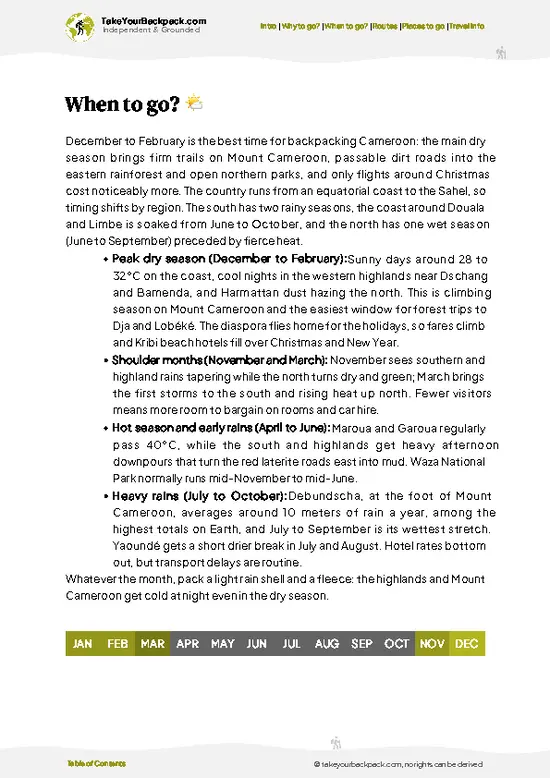
🌤️ When to go?Best time to visit Abong-Mbang


  • Weather: Abong-Mbang’s climate swings between a wet season from March to November and a dry spell from December to February. The wet months bring heavy, persistent rains that can turn trails into mud baths, making trekking a slog rather than a joy.

  • Temperature: Expect highs around 28-32°C (82-90°F) year-round, with nights cooling to 20-22°C (68-72°F). The dry season feels more comfortable for hiking, with less humidity clinging to your skin.

  • Daylight Hours: Near the equator, daylight stays steady—about 12 hours daily. This consistency means you can plan hikes without worrying about early sunsets cutting your adventure short.

  • Crowds: Tourism is low-key here, but the dry season draws a handful more visitors, especially in December and January, so expect slightly busier guesthouses and
read more 👉

  • Weather: Abong-Mbang’s climate swings between a wet season from March to November and a dry spell from December to February. The wet months bring heavy, persistent rains that can turn trails into mud baths, making trekking a slog rather than a joy.

  • Temperature: Expect highs around 28-32°C (82-90°F) year-round, with nights cooling to 20-22°C (68-72°F). The dry season feels more comfortable for hiking, with less humidity clinging to your skin.

  • Daylight Hours: Near the equator, daylight stays steady—about 12 hours daily. This consistency means you can plan hikes without worrying about early sunsets cutting your adventure short.

  • Crowds: Tourism is low-key here, but the dry season draws a handful more visitors, especially in December and January, so expect slightly busier guesthouses and local spots.

  • Seasonal Activities: The dry months open up opportunities for wildlife spotting and forest walks, as animals are easier to track near water sources. The wet season, while challenging, bursts with lush greenery and vibrant birdlife if you’re up for the adventure.

  • Price Fluctuations: Accommodation and transport costs dip during the rainy season due to fewer travelers, but the trade-off is dealing with slippery paths and unpredictable weather.


Pro-tip: Aim for the shoulder months of December and February—dry enough for smooth trekking, fewer crowds than peak holiday times, and the forest still holds a fresh, green pulse.


source: climatestotravel.comJANJanuary: excellent for travelingFEBFebruary: highly recommended for travelingMARMarch: fair for travelingAPRApril: fair for travelingMAYMay: fair for travelingJUNJune: fair for travelingJULJuly: fair for travelingAUGAugust: fair for travelingSEPSeptember: fair for travelingOCTOctober: fair for travelingNOVNovember: fair for travelingDECDecember: highly recommended for traveling
when-to-go

✈️ The backpacker research shortcutCameroon Travel Guide

An offline-friendly backpacking guide with optimized travel routes, ranked highlights, transport advice, and the best areas to stay.
example page 0 from our offline Travel Guide for Cameroonexample page 1 from our offline Travel Guide for Cameroonexample page 2 from our offline Travel Guide for Cameroonexample page 3 from our offline Travel Guide for Cameroonexample page 4 from our offline Travel Guide for Cameroonexample page 5 from our offline Travel Guide for Cameroonexample page 6 from our offline Travel Guide for Cameroonexample page 7 from our offline Travel Guide for Cameroon
The digital guide (383 pages) contains:
95 highlights, ranked by travel appeal
Optimized 7, 14 & 21-day travel routes
Cities, national parks, landmarks, beaches
How to get around
Offline-friendly for travel without Wi-Fi
👉 Click to see all 30+ guide features

📅 Plan smarter in minutes, not weeks
Month by month travel advice
Festivals & national holidays
Budget expectations

🗺️ Go to the right places, skip the overrated ones
Honest pros & cons of destinations
Top hikes, parks & viewpoints
Lesser-known places most travelers miss
Clear “worth it vs skip it” guidance

🛏️ Travel smoothly without rookie mistakes
Best areas to stay
Transport systems explained simply
Common scams & safety advice
SIM cards, money & practical tips

🌍 Understand the country, not just visit it
Culture & traditions
52 Essential phrases & customs
Festivals worth planning around
Traveler-friendly historical context
Insights that make places more meaningful

📱 Built for real travel conditions
Fully downloadable PDF
Works completely offline
Optimized for phone use
Useful in remote areas & buses
Everything in one place
Save weeks of stressful planning
Get instant access to your full guide. 30‑day money-back guarantee.


By proceeding you agree to our terms.
Sent to your inbox immediately after payment • 100% Secure Checkout
Best Backpacking Travel Advisor 2025 tourism awardBest Backpacking
Travel Advisor
2025
What others say about Take Your Backpack Guides:
⭐⭐⭐⭐⭐
Fantastic, amazing amount of information!
⭐⭐⭐⭐⭐
My goodness this is amazing, it's what I've been looking for hats off too you!
⭐⭐⭐⭐⭐
I think this is absolutely BRILLIANT
⭐⭐⭐⭐
Very complete and informative. It's still missing places, but I gotta to commend you
⭐⭐⭐⭐⭐
This is truly amazing, thank you, can't wait to explore it with my kids!
⭐⭐⭐⭐⭐
Awesome resource, thank you!
⭐⭐⭐⭐⭐
This is amazing! Can't wait to explore the ones I haven't seen
⭐⭐⭐⭐
I love this! Well done, great idea.
⭐⭐⭐⭐⭐
Thanks for taking the time to make this gem!
⭐⭐⭐⭐⭐
This might be the best website I've ever seen.
⭐⭐⭐⭐⭐
Congratulations, and thank you so much for your work; it's incredibly valuable.
⭐⭐⭐⭐
In all seriousness I think you did a great job pointing out the important spots
⭐⭐⭐⭐⭐
10/10 very good
⭐⭐⭐⭐⭐
As someone who's only just starting to visit regularly this is awesome, thank you.
⭐⭐⭐⭐
Thank you very much! I'm going to visit my dad, it's going to be very useful!
⭐⭐⭐⭐⭐
This is really cool! We'll be travelling for the first time and this definitely come in handy.
⭐⭐⭐⭐⭐
You are now our minister of culture, congratulations 👨‍💼
⭐⭐⭐⭐⭐
Just wanted to tell you that this is a pearl! Going to follow your recommendations.
⭐⭐⭐⭐⭐
This is so cool. I'll definitely be using the resource for my travels soon.
⭐⭐⭐⭐⭐
This is very impressive! Good work.
⭐⭐⭐⭐⭐
This is an amazing and informative site. Very well done!

🛏️ Where to stay?Best areas to stay in Cameroon

In Abong-Mbang, the best spot for backpackers is the central district near the market and main road. This area hums with life from dawn, when vendors set up stalls spilling fresh produce and spices into the air, to dusk, when locals gather around street food stands. It’s where you’ll find the pulse of the town—safe enough to wander after dark, thanks to steady foot traffic and a watchful community vibe.

Compared to the quieter, more residential outskirts, staying here means you’re plugged into the social rhythm. Solo travelers can strike up conversations easily, whether at a local café or while … read more 👉
In Abong-Mbang, the best spot for backpackers is the central district near the market and main road. This area hums with life from dawn, when vendors set up stalls spilling fresh produce and spices into the air, to dusk, when locals gather around street food stands. It’s where you’ll find the pulse of the town—safe enough to wander after dark, thanks to steady foot traffic and a watchful community vibe.

Compared to the quieter, more residential outskirts, staying here means you’re plugged into the social rhythm. Solo travelers can strike up conversations easily, whether at a local café or while browsing the market’s colorful chaos. Hostels and budget guesthouses cluster around this hub, offering simple, clean rooms that prioritize connection over luxury. The scent of wood smoke and earth blends with the chatter, making it a place where the rough edges of travel feel like part of the story, not a hurdle. This is where you get Abong-Mbang’s character, not just a place to crash.

🚌 Getting aroundMoving around without the hassle

Abong-Mbang moves at its own rhythm—less a clock-driven town and more a place where the sun’s position and the chatter of locals set the pace. The air carries the earthy scent of damp soil and fresh cassava, mingling with the occasional hum of a motorbike or the clatter of market stalls. Here, time feels elastic; schedules are loose, and the best way to get around is to blend into the flow rather than fight it. You’ll find that patience pays off, and the reward is a genuine connection to the town’s pulse, where every journey is as much about the people you meet as the place you’re headed.


  • Walking: The heart of Abong-Mbang is compact enough to explore on foot. Streets are uneven but navigable, and walking lets you soak in the vibrant market smells and street-side conversations. No cost,
read more 👉
Abong-Mbang moves at its own rhythm—less a clock-driven town and more a place where the sun’s position and the chatter of locals set the pace. The air carries the earthy scent of damp soil and fresh cassava, mingling with the occasional hum of a motorbike or the clatter of market stalls. Here, time feels elastic; schedules are loose, and the best way to get around is to blend into the flow rather than fight it. You’ll find that patience pays off, and the reward is a genuine connection to the town’s pulse, where every journey is as much about the people you meet as the place you’re headed.


  • Walking: The heart of Abong-Mbang is compact enough to explore on foot. Streets are uneven but navigable, and walking lets you soak in the vibrant market smells and street-side conversations. No cost, and you control the pace—perfect for budget travelers who want to feel the town’s texture up close.


  • Shared Taxis (Taxi-Brousse): These minibuses or vans run between Abong-Mbang and nearby towns like Bertoua or Doumé. They don’t have strict schedules—departures happen when full, so expect some waiting. Fares are low, around 500-1000 CFA, but comfort varies; seats can be cramped, and the ride bounces over rough roads. Still, it’s the most authentic way to travel regionally on a budget.


  • Motorbike Taxis (Benskin): For quick hops within town or to nearby villages, motorbike taxis are your go-to. They’re fast and nimble, weaving through narrow paths that cars can’t reach. Prices are negotiable but generally affordable (200-500 CFA). Helmets aren’t always standard, so hold tight and be ready for a bit of dust and wind.


  • Private Car Hire: If you’re traveling with a group or want more control over timing, renting a car with a driver is an option. It’s pricier but offers comfort and flexibility, especially for reaching remote spots. Expect to negotiate rates upfront; a half-day might cost around 15,000-20,000 CFA.

👛 Costs (as of 30 March 2025)Travel costs and budget guide for Abong-Mbang

Backpacking in Abong-Mbang, Cameroon, means stepping into a place where the pace slows and the local rhythms shape your daily costs. Here’s what you can expect to spend, broken down by essentials.
  • Dorm Accommodation: Options are limited and basic, often in guesthouses rather than formal hostels. Expect to pay around €5 to €10 per night for a shared room. The rooms are simple, with mosquito nets and a fan, but clean enough to rest after a day in the humid air.
  • Meals: Street food and small local eateries dominate. A filling meal of grilled fish or chicken with plantains or rice will cost about €1.50 to €3. Fresh fruit and snacks are even cheaper. If you opt for a more tourist-oriented spot, prices can double, but the local joints offer authentic flavors and unbeatable value.
  • Local Transport:
read more 👉
Backpacking in Abong-Mbang, Cameroon, means stepping into a place where the pace slows and the local rhythms shape your daily costs. Here’s what you can expect to spend, broken down by essentials.
  • Dorm Accommodation: Options are limited and basic, often in guesthouses rather than formal hostels. Expect to pay around €5 to €10 per night for a shared room. The rooms are simple, with mosquito nets and a fan, but clean enough to rest after a day in the humid air.
  • Meals: Street food and small local eateries dominate. A filling meal of grilled fish or chicken with plantains or rice will cost about €1.50 to €3. Fresh fruit and snacks are even cheaper. If you opt for a more tourist-oriented spot, prices can double, but the local joints offer authentic flavors and unbeatable value.
  • Local Transport: Getting around is mostly by shared taxis or motorbike taxis. A short ride within town typically costs €0.30 to €0.60. For longer trips to nearby villages, budget around €1 to €2. The roads can be rough, so rides are bumpy but part of the experience.
  • Basic Activities/Entry Fees: There aren’t many formal tourist sites with entry fees here. Visiting local markets or walking through the surrounding forest areas is free. If you hire a local guide for nature walks or cultural visits, expect to pay around €5 to €10 for a half-day.
  • Miscellaneous Expenses: Bottled water, snacks, and occasional phone credit top up will add about €1 to €2 daily. Keep cash handy, as card payments are rare and ATMs scarce.

All told, a realistic daily budget for backpacking in Abong-Mbang falls between €10 and €20. This range covers basic comfort without cutting corners, letting you soak in the atmosphere without the stress of overspending.
⚠️ Prices can change and everyone travels differently, so take this as a rough guide. Hope it helps you plan your adventure!

🚌 Day tripsWhere to go beyond the main area

Abong-Mbang is a backpacker’s dream base, offering access to lush landscapes and vibrant local culture. Here are some day trips that pack a punch.

Ngoko Waterfalls
A short 30-minute ride from Abong-Mbang, these waterfalls are a refreshing escape. The sound of cascading water fills the air, and the mist cools your skin. Bring a picnic; the surrounding forest is perfect for a lazy afternoon. Expect to spend around 1,000 CFA for transport and a few hundred more for snacks. The rainy season (April to October) makes the falls more dramatic, but be cautious of slippery paths. First-timers often underestimate the time needed to explore—plan for at least half a day.


Lake Mbalam
About an hour’s drive, Lake Mbalam is a serene spot for kayaking or simply soaking in the scenery. The water reflects … read more 👉
Abong-Mbang is a backpacker’s dream base, offering access to lush landscapes and vibrant local culture. Here are some day trips that pack a punch.

Ngoko Waterfalls
A short 30-minute ride from Abong-Mbang, these waterfalls are a refreshing escape. The sound of cascading water fills the air, and the mist cools your skin. Bring a picnic; the surrounding forest is perfect for a lazy afternoon. Expect to spend around 1,000 CFA for transport and a few hundred more for snacks. The rainy season (April to October) makes the falls more dramatic, but be cautious of slippery paths. First-timers often underestimate the time needed to explore—plan for at least half a day.


Lake Mbalam
About an hour’s drive, Lake Mbalam is a serene spot for kayaking or simply soaking in the scenery. The water reflects the sky, creating a mirror-like effect that’s mesmerizing. Budget around 2,500 CFA for transport and a small fee for kayak rental. The best time to visit is during the dry season (November to March) when the weather is more predictable. A common mistake is not bringing enough water; it can get hot out there.


Local Markets in Abong-Mbang
Staying local can be just as rewarding. The bustling markets are alive with colors and scents—think ripe mangoes and spices. Spend a morning wandering, tasting street food, and chatting with vendors. No transport costs here, just a few thousand CFA for snacks and souvenirs. Early mornings are best for the freshest produce and fewer crowds. Many miss the chance to engage with locals; don’t be shy—ask questions!
Want to know what more Cameroon offers?
The Cameroon Travel Guide describes 95 highlights, from cities to national parks, from beaches to hikes

Get the Travel Guide -

🛡️ SafetyStaying Safe: What Travelers Should Know

Abong-Mbang is generally safe, but staying aware enhances your experience. Stick to well-lit areas at night; the streets can feel quiet, and a little caution goes a long way. Solo travelers should blend in—avoid flashy gear and keep your phone tucked away.

Watch for common scams, like overly friendly locals offering unsolicited help; a polite but firm “no thanks” usually suffices. Street vendors can be persistent, so practice your negotiation skills. Embrace the local vibe, but stay grounded. Your awareness will unlock a smoother journey.

Other Cameroonian towns near Abong-Mbang

Explore more nearby:

  • Akonolinga—Nyong River, red earth roads, agricultural hub| 105 km away
  • Nanga Eboko—Sanaga River, colonial relics, transport stop| 118 km away
  • Nkoteng—Sanaga crossing, logging depots, river ferries| 143 km away

💡 Not sure where to go next?
Create a personalized itinerary for Cameroon including Abong-Mbang and the places that fit your trip.

Generate my itinerary

👉 Discover all towns

Or checkout all Cameroon has to offer (think cities, towns, villages, national parks, hikes, beaches, festivals)
Country photo of Cameroon

We 💚 feedbackParting advice and final tips

Abong-Mbang has a raw, earthy vibe that pulls you in. The best surprise? The local market’s aroma—spices, fresh produce, and laughter blend into a sensory feast. Just a heads-up: the roads can be rough, so pack patience along with your gear. It’s worth it.

✍️ Help improve this page!
The information on this page is based on in-depth research, insights shared by experienced travelers, and feedback from the local travel community in Cameroon. While every effort is made to keep the information accurate and current, conditions can change — so if you spot anything incorrect or outdated, please get in touch.


🙋‍♂️ Give feedback

👋 Meet the founderWho’s Behind Take Your Backpack?

Johan, backpacker and founder of TakeYourBackpackHi, I’m Johan (Netherlands 🇳🇱), the creator of TakeYourBackpack. Over the past decade, I’ve backpacked through 80+ countries across six continents, gaining extensive experience with independent travel, long-term trips, and overland routes.

This site is built on a combination of firsthand travel experience and carefully curated insights from other backpackers. Many guides are based on places I’ve personally visited, while others bring together tips, observations, and practical advice shared by trusted travelers I’ve met along the way.

The goal is to provide realistic, experience-driven guidance — not generic itineraries — so you can explore destinations with better context, clearer expectations, and more confidence.

Get full Cameroon guide •
Instant download • 95 highlights • Full Offline guide