×

Cameroon🇨🇲 | best townsThe Must-See 10 towns in Cameroon

Cameroon is a tapestry of towns, each with its own rhythm and character, shaping the backpacking experience in profound ways. From the bustling markets of Douala to the serene lakeside charm of Bamenda, the choice of town influences everything—from vibe and safety to cultural immersion.

In the coastal regions, towns pulse with the scent of fresh seafood and the sound of waves, while the northern areas offer a more rugged, traditional atmosphere, where tribal cultures thrive. Seasonal nuances also play a role; the rainy season can transform trails into muddy challenges, affecting accessibility and travel ease.

Choosing the right town is crucial for independent travelers. It determines your budget, the warmth of local interactions, and the ease of navigating through public transport or on foot. Each town tells a story, and understanding these differences can elevate your journey from mere sightseeing to genuine connection.

By Johan Kruseman 🇳🇱 | Updated June 8, 2026
Explore the best villages in Cameroon

Why go?Key Factors That Shape the Experience

In Cameroon, towns pulse with a unique rhythm shaped by diverse cultures and landscapes. Each town tells a story, woven from the threads of history, geography, and local traditions. The cultural tapestry here is rich, influenced by over 250 ethnic groups, each contributing distinct languages, customs, and culinary delights. This diversity creates a vibrant atmosphere, where markets brim with local produce and street vendors serve dishes that reflect the region’s flavors.

The pace of life varies significantly across towns. In the bustling urban centers, the energy is palpable, with people moving swiftly through the streets, while rural areas offer a slower, more contemplative experience. This contrast allows travelers to choose between the excitement of city life and the tranquility of the … read more 👉
In Cameroon, towns pulse with a unique rhythm shaped by diverse cultures and landscapes. Each town tells a story, woven from the threads of history, geography, and local traditions. The cultural tapestry here is rich, influenced by over 250 ethnic groups, each contributing distinct languages, customs, and culinary delights. This diversity creates a vibrant atmosphere, where markets brim with local produce and street vendors serve dishes that reflect the region’s flavors.

The pace of life varies significantly across towns. In the bustling urban centers, the energy is palpable, with people moving swiftly through the streets, while rural areas offer a slower, more contemplative experience. This contrast allows travelers to choose between the excitement of city life and the tranquility of the countryside, but it also requires careful itinerary planning. Clustering towns can enhance exploration, allowing for deeper engagement with local cultures, yet it may demand longer travel times on often unpaved roads.

Geographically, Cameroon boasts everything from coastal plains to mountainous regions, each influencing local lifestyles and accessibility. The climate can also be a factor; the rainy season can make certain areas less accessible, impacting travel plans. Understanding these elements is crucial for maximizing experiences.

While Cameroon is well-suited for those seeking authentic encounters, it may not cater to travelers looking for seamless infrastructure. The trade-off between depth of exploration and ease of travel is significant. Immersive experiences often come with challenges, but the rewards—like the warmth of a local meal or the beauty of a sunset over the hills—make the effort worthwhile. Embracing these nuances is essential for appreciating what Cameroon’s towns truly offer.
How the List Was Created
The list of best towns in Cameroon is created based on charm, local culture, atmosphere, hidden gems, and visitor appeal. If you feel a town is missing in this list, please let us know.

When to go?When to Plan Your Trip

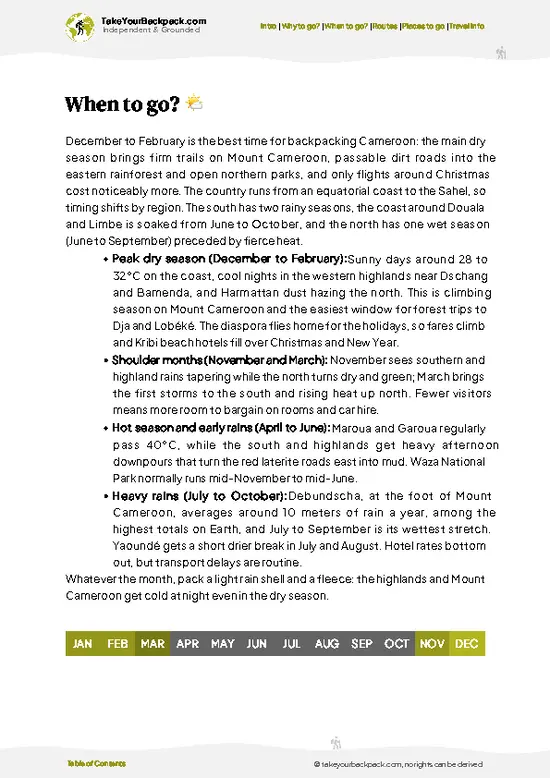
Seasonality plays a crucial role in the experience of towns across Cameroon. The country has a tropical climate, characterized by distinct wet and dry seasons. The dry season, typically from November to February, brings cooler temperatures and lower humidity. This period is ideal for exploring towns, as the streets are lively with local markets and festivals. The air is crisp, and the vibrant colors of traditional attire stand out against the backdrop of clear skies.

Rainy season stretches from March to October, with the heaviest rains usually falling between June and August. While this season can transform the landscape into a lush paradise, it also brings challenges. Streets may become muddy, and some local events could be postponed. However, the rain also cools the air, making it a refreshing … read more 👉
Seasonality plays a crucial role in the experience of towns across Cameroon. The country has a tropical climate, characterized by distinct wet and dry seasons. The dry season, typically from November to February, brings cooler temperatures and lower humidity. This period is ideal for exploring towns, as the streets are lively with local markets and festivals. The air is crisp, and the vibrant colors of traditional attire stand out against the backdrop of clear skies.

Rainy season stretches from March to October, with the heaviest rains usually falling between June and August. While this season can transform the landscape into a lush paradise, it also brings challenges. Streets may become muddy, and some local events could be postponed. However, the rain also cools the air, making it a refreshing time to visit for those who don’t mind getting a little wet. The trade-off here is fewer tourists, leading to a more intimate experience with local life.

Shoulder seasons—the transitions between wet and dry—offer a unique blend of both worlds. Visiting during these times can mean lower costs and fewer crowds, but travelers should be prepared for unpredictable weather. The atmosphere in towns can shift dramatically; the scent of wet earth mingles with the aroma of street food, creating a sensory experience that’s hard to replicate.

Peak periods often coincide with major cultural festivals, drawing larger crowds. While these events provide a rich tapestry of local culture, they can also lead to higher prices and limited accommodations. Understanding these seasonal dynamics is essential for planning a trip that aligns with personal preferences and travel goals.

town hoppingHow to Combine towns Into One Trip

Regional Clustering
Cameroon’s towns pulse with distinct rhythms, making regional clustering essential. Start in the bustling center of Yaoundé, where the aroma of street food mingles with the chatter of locals. From there, head west to Bafoussam, a gateway to the lush grasslands and vibrant markets. This route allows for a gradual immersion into the country’s diverse cultures, each town revealing its own character.

Direction of Travel
Traveling from Yaoundé to the northwest, then looping south toward Douala creates a natural flow. This path minimizes backtracking and maximizes exposure to Cameroon’s rich tapestry. Douala, with its coastal energy, offers a stark contrast to the highlands, making it a perfect endpoint for a journey that celebrates both land and sea.

Time Management
Allocate … read more 👉
Regional Clustering
Cameroon’s towns pulse with distinct rhythms, making regional clustering essential. Start in the bustling center of Yaoundé, where the aroma of street food mingles with the chatter of locals. From there, head west to Bafoussam, a gateway to the lush grasslands and vibrant markets. This route allows for a gradual immersion into the country’s diverse cultures, each town revealing its own character.

Direction of Travel
Traveling from Yaoundé to the northwest, then looping south toward Douala creates a natural flow. This path minimizes backtracking and maximizes exposure to Cameroon’s rich tapestry. Douala, with its coastal energy, offers a stark contrast to the highlands, making it a perfect endpoint for a journey that celebrates both land and sea.

Time Management
Allocate at least two days per town to soak in the local vibe. This pacing allows for exploration without the rush. In Bafoussam, spend time in the markets; in Douala, enjoy the waterfront. Each stop should feel like a reward, not a chore.

Common Planning Mistakes
Travelers often underestimate travel times between towns. The roads can be challenging, and public transport may not adhere to strict schedules. Prioritize flexibility; allow for spontaneous detours that can lead to unexpected delights.

Trade-offs and Constraints
Balancing speed with depth is crucial. Rushing through towns may save time but sacrifices the authentic experiences that make travel worthwhile. Consider comfort versus budget; local guesthouses offer charm but may lack modern amenities. Embrace the grit of the journey, knowing that the effort will yield rich rewards—whether it’s a breathtaking view or a cold beer shared with new friends.

The ListMust-Visit towns in Cameroon

1 Mokolo

mountain escarpment, weekly market, Mafa culture

Experience a highland center where local traditions and a bustling market draw people from surrounding villages.

cameroon-city-mokolo
© Google |

2 Mundemba

Korup National Park, rainforest gateway, eco-lodges

Begin rainforest treks from a town that serves as the main access point to one of Central Africa’s oldest protected areas.

3 Kumbo

Nso palace, highland views, religious centers

Climb to a cool plateau town known for its royal heritage, spiritual sites, and panoramic vistas over the surrounding hills.

4 Mora

Mandara Mountains, market town, crossroads to Nigeria

Navigate a borderland town where mountain scenery and cross-border trade shape the daily flow of people and goods.

5 Melong

Manengouba slopes, volcanic soil, roadside farms

Ascend fertile hillsides to a town where agriculture thrives and the landscape is shaped by ancient volcanic activity.

cameroon-city-melong
© Google |

6 Bafang

Bamiléké plateau, coffee farms, hilly roads

Travel winding roads to a plateau town where coffee cultivation and cultural heritage are woven into the landscape.

7 Foumban

Bamoun Sultanate, palace complex, artisan workshops, Islamic heritage

Step into a city where royal traditions, intricate crafts, and Islamic architecture create a distinct cultural atmosphere.

8 Sangmelima

Dja Reserve, forest roads, cocoa farms

Travel south to a town where conservation areas and cocoa plantations shape both the economy and the surrounding environment.

9 Dschang

Western Highlands, university town, cool climate, panoramic viewpoints

Enjoy a temperate city in the highlands, known for its academic life, scenic vistas, and a climate that invites outdoor exploration.

10 Tiko

plantation landscapes, port access, humid lowlands

Experience the intersection of agriculture and trade in a town where plantations meet the coast and daily life follows the rhythms of the port.

11 Kousseri

Logone River, border crossing, Chadian influence, arid landscapes

Cross into a city shaped by its proximity to Chad, with riverfront activity and a dry, open terrain at the northern edge.

12 Abong-Mbang

rainforest edge, logging trucks, transit point

Pass through a town at the forest’s edge, where timber transport and the movement of goods define the main thoroughfares.

13 Yokadouma

logging center, Baka communities, forest frontier

Venture to a remote town where forest industries and indigenous cultures coexist on the edge of Cameroon’s eastern wilderness.

14 Mbalmayo

timber industry, forested hills, river crossing

Cross a major river into a town where wood processing and forested surroundings influence both work and leisure.

15 Akonolinga

Nyong River, red earth roads, agricultural hub

Journey along winding roads to a riverside town where farming and river transport shape the local experience.

16 Meiganga

railway junction, Sahelian plains, cattle markets

Cross open grasslands and pause in a transport hub where herders, traders, and travelers converge on the edge of the Sahel.

cameroon-city-meiganga
© Google |

17 Mamfe

Manyu River, rainforest gateway, river transport, border proximity

Arrive in a riverside town where dense rainforest meets the border, and riverboats remain a vital link to surrounding communities.

18 Loum

banana farms, market crossroads, volcanic foothills

Navigate a town surrounded by fertile fields and busy markets, where volcanic soil shapes both the scenery and the local economy.

19 Bafia

Mbam River, central crossroads, agricultural markets

Pass through a central city where rivers and rural trade routes intersect, supporting a steady flow of local produce and goods.

20 Nanga Eboko

Sanaga River, colonial relics, transport stop

Pause in a riverside town where old architecture and the flow of travelers reflect its role as a regional crossroads.

21 Banyo

mountain passes, cattle herding, mud-brick homes

Traverse winding roads to a town where traditional architecture and pastoral life define the pace and character of the area.

22 Tibati

Lake Mbakaou, fishing camps, remote outpost

Reach a lakeside settlement where fishing and remoteness shape daily routines and the landscape stretches toward the horizon.

23 Muyuka

plantain fields, roadside settlements, trade route

Move through a town where commerce and agriculture intersect along a busy corridor connecting the coast to the interior.

24 Nkoteng

Sanaga crossing, logging depots, river ferries

Cross the wide river at a town where timber and river transport are central to daily life and regional movement.

25 Ngoumou

forest belt, peri-urban sprawl, commuter town

Stay in a growing town on the edge of the forest, where new development meets traditional village life.

26 Poli

Mandara foothills, seasonal rivers, rural outpost

Reach a remote settlement where rugged hills and seasonal streams set the pace for farming and travel.

27 Mbouda

hilly terrain, roadside stalls, Bamileke culture

Travel through undulating landscapes and discover a town where local traditions and commerce blend along the main highway.

28 Fundong

Kom chiefdom, terraced hills, rural markets

Explore a highland town where local governance, agriculture, and weekly markets anchor community life.

29 Wum

crater lakes, grassfields, Fulani settlements

Hike through highland scenery dotted with lakes and experience a blend of farming communities and pastoral traditions.

Think you know Cameroon?

Prove you’re a true local — uncover 19 lesser-known towns in Cameroon that locals tend to keep to themselves.
Loading the map 🌍

Expert viewWhat You Should Know

Regional Clusters
Cameroon is a patchwork of cultures and landscapes, each town offering a unique slice of life. I’d recommend focusing on three key regions: the Littoral, the Northwest, and the Adamawa. Each area has its own rhythm, shaped by geography and local customs. In the Littoral, you’ll find bustling coastal towns where the salty air mingles with the aroma of grilled fish. The Northwest, with its rolling hills and cooler climate, is a haven for those seeking a more laid-back vibe, while the Adamawa region showcases the rich traditions of the Fulani people.

Plan to visit at least five towns across these regions to truly grasp the diversity. This allows you to experience the coastal energy, the highland tranquility, and the cultural depth of the interior. However, be prepared for … read more 👉
Regional Clusters
Cameroon is a patchwork of cultures and landscapes, each town offering a unique slice of life. I’d recommend focusing on three key regions: the Littoral, the Northwest, and the Adamawa. Each area has its own rhythm, shaped by geography and local customs. In the Littoral, you’ll find bustling coastal towns where the salty air mingles with the aroma of grilled fish. The Northwest, with its rolling hills and cooler climate, is a haven for those seeking a more laid-back vibe, while the Adamawa region showcases the rich traditions of the Fulani people.

Plan to visit at least five towns across these regions to truly grasp the diversity. This allows you to experience the coastal energy, the highland tranquility, and the cultural depth of the interior. However, be prepared for travel constraints; roads can be rough, and public transport is often an adventure in itself. Expect to spend a good chunk of your time navigating these routes, which can be both a hassle and a chance to soak in the local scenery.

Travel Rhythm
The pace of life varies significantly from one region to another. In coastal towns, the days are lively, filled with market chatter and the sounds of waves crashing. Here, you can easily spend a few hours wandering through vibrant markets, sampling street food, and chatting with locals. In contrast, the Northwest offers a slower tempo. Mornings are often quiet, with the mist hanging over the hills, inviting you to take a leisurely hike or sip tea while watching the world wake up.

When planning your itinerary, consider the travel rhythm of each area. Allocate more time in places where you feel the local charm pulling you in. For instance, if you find yourself enchanted by a town’s market or a local festival, don’t rush off. The trade-off here is time versus experience; the more you linger, the deeper your understanding of the culture.

Local Charm
Each town has its own character, shaped by its people and traditions. In the Littoral, the towns are alive with music and dance, especially during festivals. The vibrant colors of traditional attire and the sounds of drums create an atmosphere that’s hard to resist. In the Northwest, you’ll encounter the warm hospitality of the locals, who are often eager to share their stories and traditions. The Fulani herders, with their distinctive attire and cattle, add a unique flavor to the landscape.

However, be mindful of cultural norms. In some areas, it’s important to ask permission before taking photos, especially of people. This respect fosters goodwill and often leads to richer interactions. The trade-off here is between capturing memories and honoring local customs; choose wisely.

Logistical Considerations
Infrastructure varies widely across Cameroon. Major towns have decent accommodations and amenities, but as you venture into rural areas, options can dwindle. Expect to find basic guesthouses or homestays, which can be a rewarding experience but may lack modern conveniences. Budget accordingly; while you can find affordable options, the quality may vary significantly.

Public transport is a mixed bag. Buses and shared taxis are common, but schedules can be erratic. If you’re on a tight timeline, consider hiring a private driver for more flexibility. This can be a splurge, but it often pays off in saved time and reduced stress. The trade-off here is comfort versus cost; weigh your priorities carefully.

Safety & Cultural Considerations
Safety is generally manageable, but it’s wise to stay informed about local conditions. Some regions may have travel advisories, so check in with locals or your accommodation for the latest updates. Be cautious in crowded areas, especially markets, where pickpocketing can occur.

Culturally, be aware that Cameroon is home to numerous ethnic groups, each with its own customs. Learning a few phrases in local languages can go a long way in building rapport. The trade-off here is between the effort of learning and the rewards of connection; a simple greeting can open doors to richer experiences.

In summary, embrace the journey through Cameroon’s towns with an open heart and a flexible itinerary. The grit of the streets and the warmth of the people will reward your efforts, making every challenge worthwhile.

✈️ The backpacker research shortcutCameroon Travel Guide

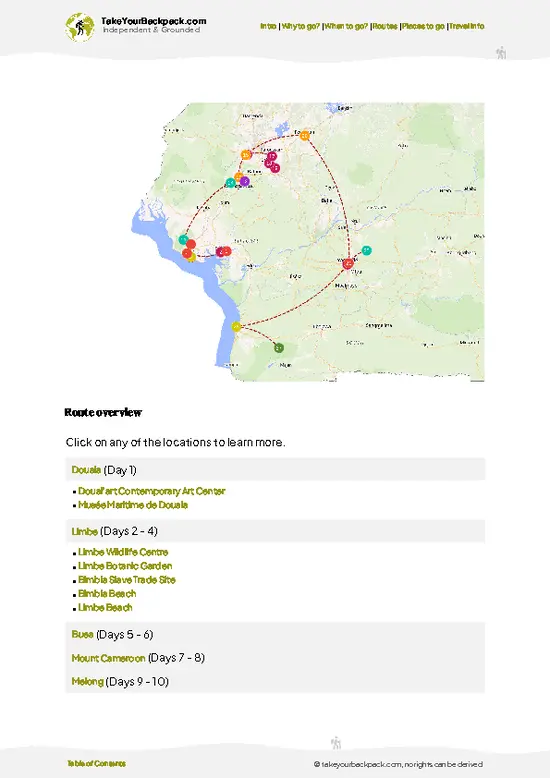
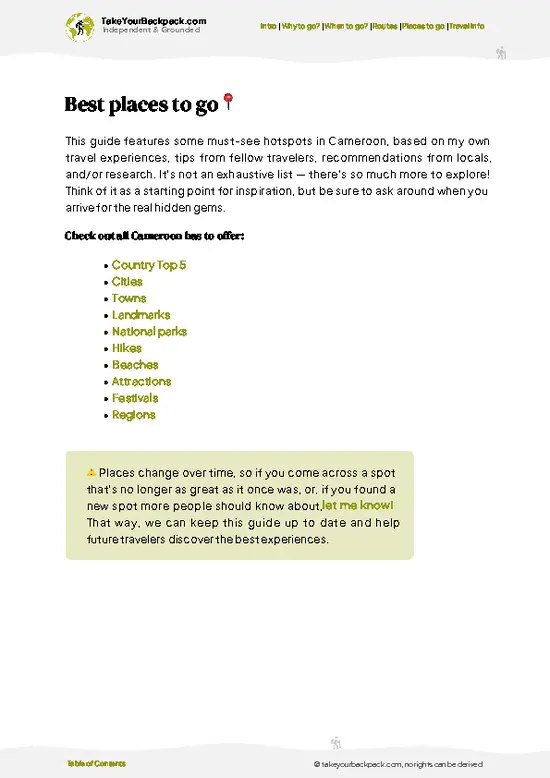
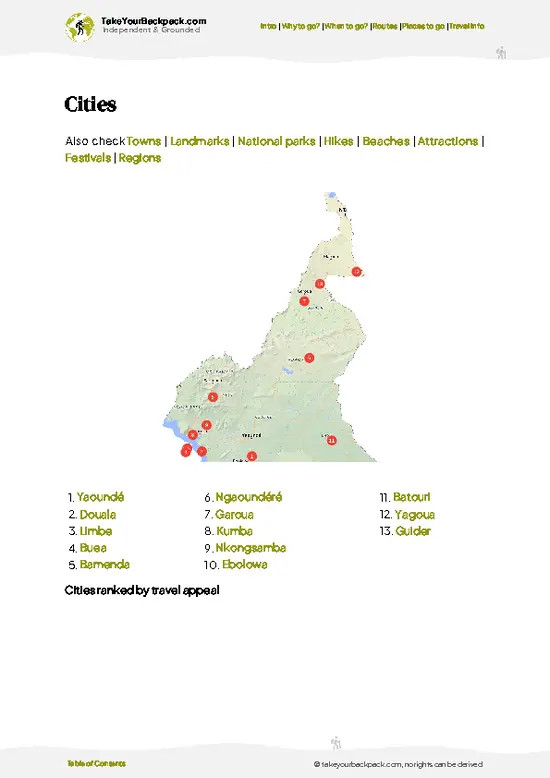
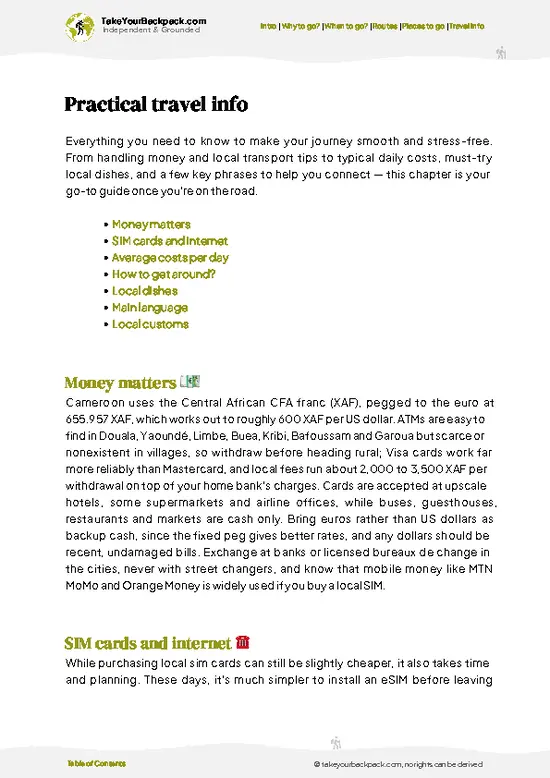
An offline-friendly backpacking guide with optimized travel routes, ranked highlights, transport advice, and the best areas to stay.
example page 0 from our offline Travel Guide for Cameroonexample page 1 from our offline Travel Guide for Cameroonexample page 2 from our offline Travel Guide for Cameroonexample page 3 from our offline Travel Guide for Cameroonexample page 4 from our offline Travel Guide for Cameroonexample page 5 from our offline Travel Guide for Cameroonexample page 6 from our offline Travel Guide for Cameroonexample page 7 from our offline Travel Guide for Cameroon
The digital guide (383 pages) contains:
95 highlights, ranked by travel appeal
Optimized 7, 14 & 21-day travel routes
Cities, national parks, landmarks, beaches
How to get around
Offline-friendly for travel without Wi-Fi
👉 Click to see all 30+ guide features

📅 Plan smarter in minutes, not weeks
Month by month travel advice
Festivals & national holidays
Budget expectations

🗺️ Go to the right places, skip the overrated ones
Honest pros & cons of destinations
Top hikes, parks & viewpoints
Lesser-known places most travelers miss
Clear “worth it vs skip it” guidance

🛏️ Travel smoothly without rookie mistakes
Best areas to stay
Transport systems explained simply
Common scams & safety advice
SIM cards, money & practical tips

🌍 Understand the country, not just visit it
Culture & traditions
52 Essential phrases & customs
Festivals worth planning around
Traveler-friendly historical context
Insights that make places more meaningful

📱 Built for real travel conditions
Fully downloadable PDF
Works completely offline
Optimized for phone use
Useful in remote areas & buses
Everything in one place
Save weeks of stressful planning
Get instant access to your full guide. 30‑day money-back guarantee.


By proceeding you agree to our terms.
Sent to your inbox immediately after payment • 100% Secure Checkout
Best Backpacking Travel Advisor 2025 tourism awardBest Backpacking
Travel Advisor
2025
What others say about Take Your Backpack Guides:
⭐⭐⭐⭐⭐
Fantastic, amazing amount of information!
⭐⭐⭐⭐⭐
My goodness this is amazing, it's what I've been looking for hats off too you!
⭐⭐⭐⭐⭐
I think this is absolutely BRILLIANT
⭐⭐⭐⭐
Very complete and informative. It's still missing places, but I gotta to commend you
⭐⭐⭐⭐⭐
This is truly amazing, thank you, can't wait to explore it with my kids!
⭐⭐⭐⭐⭐
Awesome resource, thank you!
⭐⭐⭐⭐⭐
This is amazing! Can't wait to explore the ones I haven't seen
⭐⭐⭐⭐
I love this! Well done, great idea.
⭐⭐⭐⭐⭐
Thanks for taking the time to make this gem!
⭐⭐⭐⭐⭐
This might be the best website I've ever seen.
⭐⭐⭐⭐⭐
Congratulations, and thank you so much for your work; it's incredibly valuable.
⭐⭐⭐⭐
In all seriousness I think you did a great job pointing out the important spots
⭐⭐⭐⭐⭐
10/10 very good
⭐⭐⭐⭐⭐
As someone who's only just starting to visit regularly this is awesome, thank you.
⭐⭐⭐⭐
Thank you very much! I'm going to visit my dad, it's going to be very useful!
⭐⭐⭐⭐⭐
This is really cool! We'll be travelling for the first time and this definitely come in handy.
⭐⭐⭐⭐⭐
You are now our minister of culture, congratulations 👨‍💼
⭐⭐⭐⭐⭐
Just wanted to tell you that this is a pearl! Going to follow your recommendations.
⭐⭐⭐⭐⭐
This is so cool. I'll definitely be using the resource for my travels soon.
⭐⭐⭐⭐⭐
This is very impressive! Good work.
⭐⭐⭐⭐⭐
This is an amazing and informative site. Very well done!

🛏️ Where to stay?Top Places to Consider Staying

Yes — hostels, budget guesthouses and low‑cost hotels are available in Cameroon’s main cities and tourist hubs for backpackers, but they concentrate in Douala, Yaoundé and a few regional towns so expect far fewer options in rural or highland areas and plan accordingly.
In Douala, Akwa offers the widest choice and nightlife with good transport links but only moderate nighttime security; Deïdo is cheapest and closest to markets and bus hubs yet busy and basic with lower safety after dark; Bonapriso gives quieter, safer stays at higher prices.
In Yaoundé, Bastos has safer, quieter expat‑style lodgings that cost more; Mokolo is the cheapest and most central near markets and buses but noisy and … read more 👉
Yes — hostels, budget guesthouses and low‑cost hotels are available in Cameroon’s main cities and tourist hubs for backpackers, but they concentrate in Douala, Yaoundé and a few regional towns so expect far fewer options in rural or highland areas and plan accordingly.
In Douala, Akwa offers the widest choice and nightlife with good transport links but only moderate nighttime security; Deïdo is cheapest and closest to markets and bus hubs yet busy and basic with lower safety after dark; Bonapriso gives quieter, safer stays at higher prices.
In Yaoundé, Bastos has safer, quieter expat‑style lodgings that cost more; Mokolo is the cheapest and most central near markets and buses but noisy and spartan; university areas (Ngoa‑Eké/Melen) host wallet‑friendly guesthouses and lively street food while being noisy and occasionally inconsistent on services.

If you enjoy meeting fellow travelers, consider choosing hostels with high ratings for atmosphere. On the other hand, if you prefer having your own space, a hotel might be a better option.

CameroonMore Places Across Cameroon

👋 Meet the founderWho’s Behind Take Your Backpack?

Johan, backpacker and founder of TakeYourBackpackHi, I’m Johan (Netherlands 🇳🇱), the creator of TakeYourBackpack. Over the past decade, I’ve backpacked through 80+ countries across six continents, gaining extensive experience with independent travel, long-term trips, and overland routes.

This site is built on a combination of firsthand travel experience and carefully curated insights from other backpackers. Many guides are based on places I’ve personally visited, while others bring together tips, observations, and practical advice shared by trusted travelers I’ve met along the way.

The goal is to provide realistic, experience-driven guidance — not generic itineraries — so you can explore destinations with better context, clearer expectations, and more confidence.

Get full Cameroon guide •
Instant download • 95 highlights • Full Offline guide