×

Cameroon🇨🇲 | townsAkonolingaSlow brown Nyong, dugout launches, Beti side streets | things to do and best time to go

Explore BafiaExplore Abong-Mbang

Backpacking in Akonolinga
👍 Recommendedtown ranked #14
By Johan Kruseman 🇳🇱 | Updated October 22, 2026

Akonolinga is a river town, not a gateway to the rainforest reserves many travelers assume sit on its doorstep. It lies in the Nyong-et-Mfoumou area of central Cameroon, on the road east of Yaoundé, with the Nyong River sliding brown and slow past its edges. Expect red dust, motorbike taxis whining through the afternoon heat, grilled fish smoke and a busy market. Sights are modest, so give the market and riverbank a morning and skip the rest. Hostels do not exist, so evenings are quiet and you will rarely meet other backpackers. Unlike livelier Mbalmayo, which draws visitors to its riverside, Akonolinga stays resolutely local.

Discover everything you want to know in the 📖 Cameroon Travel Guide.


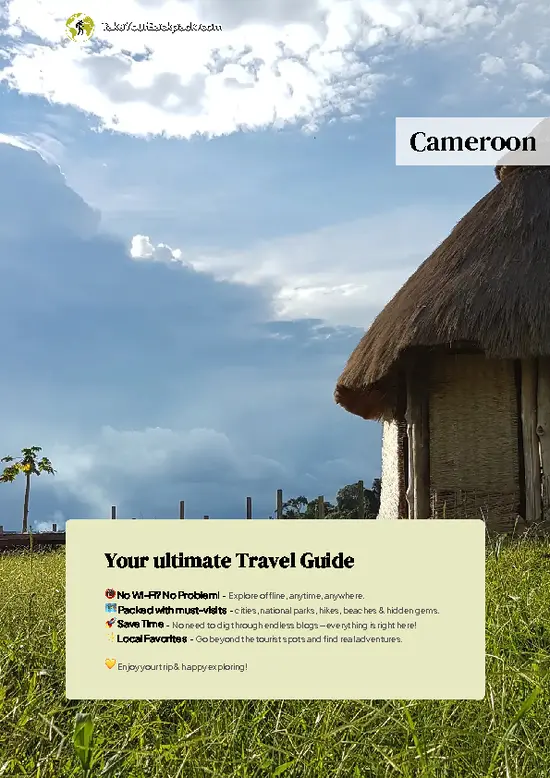
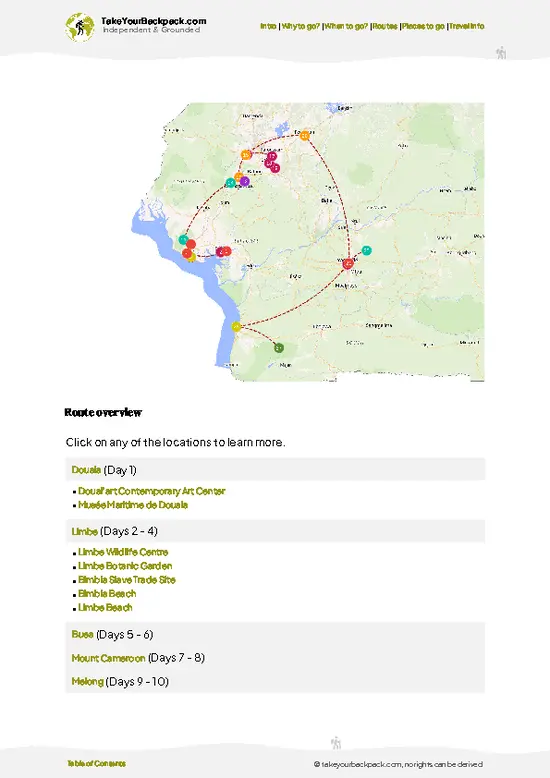
example page 0 from our offline Travel Guide for Cameroon
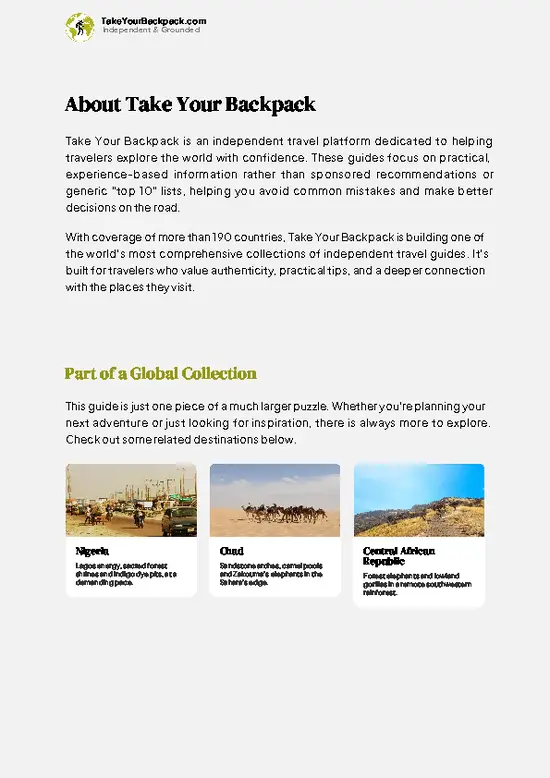
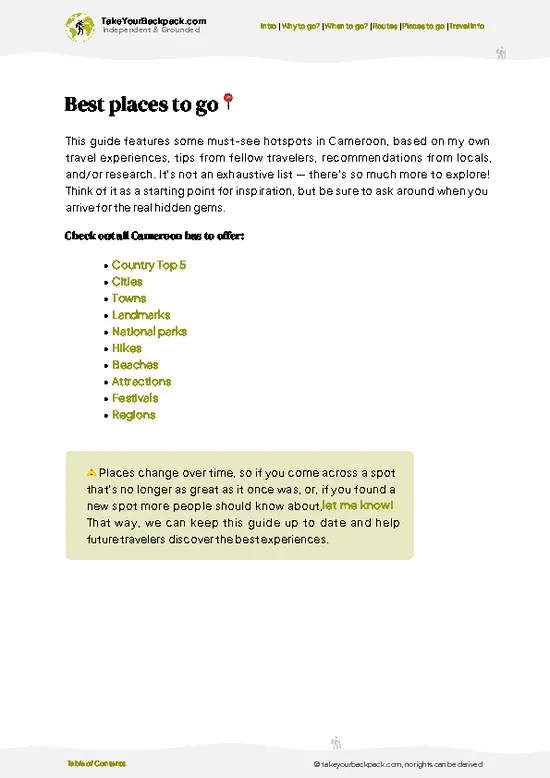
example page 1 from our offline Travel Guide for Cameroon
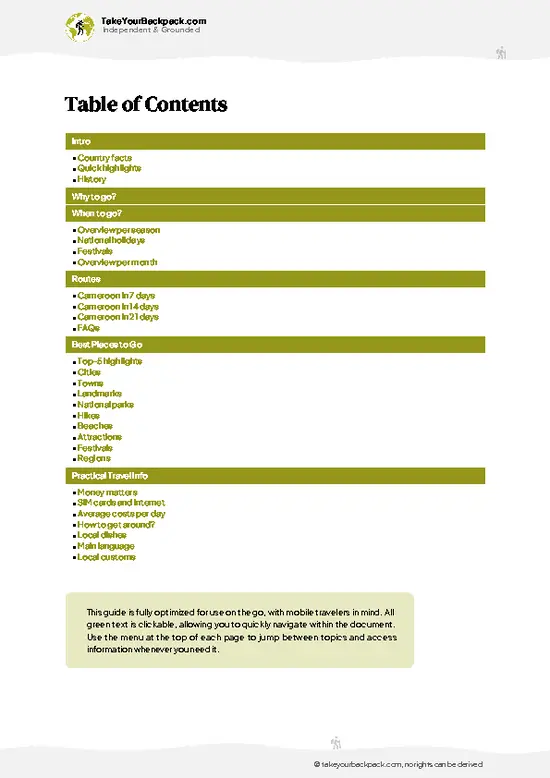
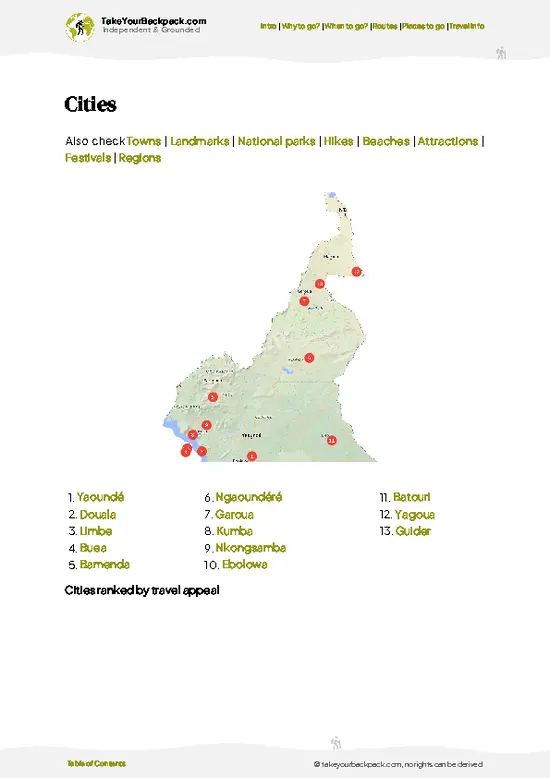
example page 2 from our offline Travel Guide for Cameroon
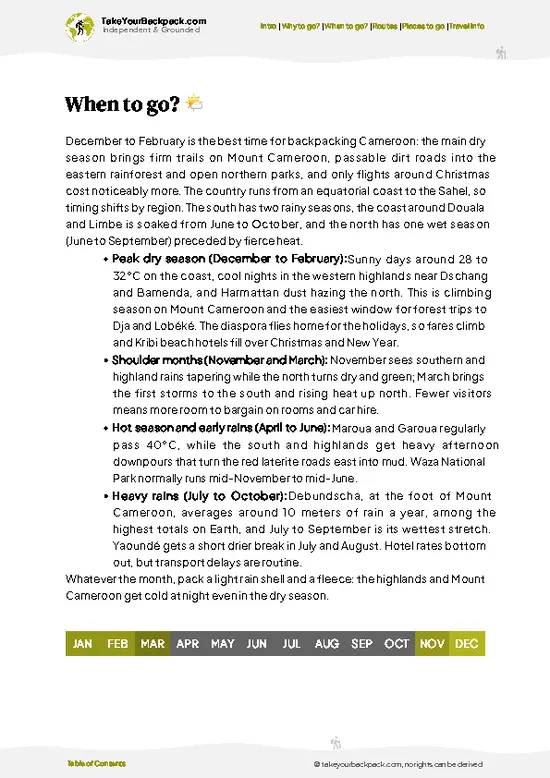
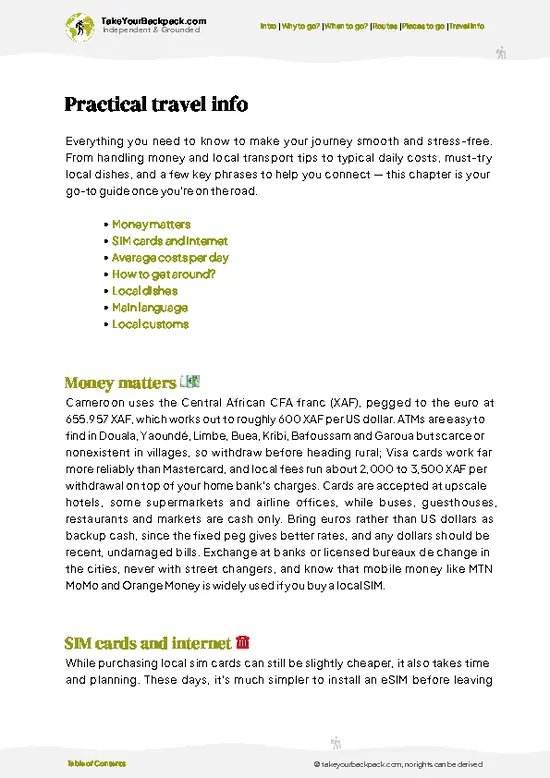
example page 3 from our offline Travel Guide for Cameroon
example page 4 from our offline Travel Guide for Cameroon
example page 5 from our offline Travel Guide for Cameroon
example page 6 from our offline Travel Guide for Cameroon
example page 7 from our offline Travel Guide for Cameroon
Loading the map 🌍
CLICK TO FILTER
cities
towns
landmarks
national parks
hikes
beaches
attractions
festivals
regions
SHOW COUNTRY’S BESTSHOW ALL

✨ Why go?
Ranked #14 town in Cameroon
The unique appeal for travelers

Akonolinga suits the traveler who wants a working Cameroonian town without a single souvenir stall. You come for the Nyong River bank, where fishermen paddle dugout canoes at dawn, and for the central market, where cassava, plantains, bushmeat and palm oil change hands in loud, friendly bargaining. Most people stay one night, two at most, as a pause on the long road through the central region. It is best for slow, solo or self-reliant travelers happy with simple guesthouses and plates of grilled fish and bobolo at roadside stands. Nightlife is a few open-air bars with loud music. Come curious and patient, and people will talk to you.

💡 HighlightsWhat this place is best known for

  1. Nyong River bank: The town’s natural focus, with fishermen launching dugouts and women washing laundry on the shore. Go at early morning or late afternoon for softer light and cooler air. Free, 1 to 2 hours.
  2. Akonolinga central market: Mounds of cassava, plantains, smoked fish, peppers and palm oil under tin roofs. Mornings are liveliest, and the main trading rush fades by early afternoon. Entry is free, and snacks cost about €0.5 to 2. Allow 1 to 1.5 hours.
  3. Grilled fish stalls along the main road: Fish cooked over charcoal and served with bobolo or plantain, eaten at plastic tables as trucks rumble past. Come in the evening, when the smoke is thickest. A plate is roughly €2 to 4, and it takes about an hour.
  4. Catholic mission and church area: The mission quarter is a calm corner of tall trees and
… read more 👉
  1. Nyong River bank: The town’s natural focus, with fishermen launching dugouts and women washing laundry on the shore. Go at early morning or late afternoon for softer light and cooler air. Free, 1 to 2 hours.
  2. Akonolinga central market: Mounds of cassava, plantains, smoked fish, peppers and palm oil under tin roofs. Mornings are liveliest, and the main trading rush fades by early afternoon. Entry is free, and snacks cost about €0.5 to 2. Allow 1 to 1.5 hours.
  3. Grilled fish stalls along the main road: Fish cooked over charcoal and served with bobolo or plantain, eaten at plastic tables as trucks rumble past. Come in the evening, when the smoke is thickest. A plate is roughly €2 to 4, and it takes about an hour.
  4. Catholic mission and church area: The mission quarter is a calm corner of tall trees and brick buildings, and Sunday morning services fill it with choral singing. Visit respectfully, and ask before taking photos. Free, 30 to 45 minutes.
  5. Walk through the Beti neighborhoods: Side streets reveal cocoa drying on tarps, small workshops and kids playing football on red earth. Walk in the morning before the heat builds. Free, 1 to 2 hours.
Around Akonolinga, the Nyong valley villages and the riverside at Mbalmayo make easy outings, and Yaoundé’s museums and markets sit further west. The riverbank and the market combine well in a single morning.
Spotted a mistake or missing something? Contact us.

Things to do near Akonolinga

Ratings based on Tripadvisor reviews. When you book through this link, you support our work at no extra cost to you.

🏘️ NeighborhoodsUnderstanding the local layout

Akonolinga is small enough to cover on foot in an afternoon, and three areas are worth your time.
  • Central Market and the main road: This is where to spend most of your hours. Stalls open early, smelling of smoked fish, palm oil and ripe plantains, while moto horns cut through the morning haze. Look for grilled fish with bobolo (cassava sticks) and cold drinks at plastic tables. Walkable and loud.
  • Nyong riverbank: Slower and greener. Women wash clothes, pirogues sit tied up in the mud, and the air turns damp and heavy by midday. Go late afternoon when the heat eases. Footing is slippery after rain.
  • Administrative quarter: Wide red-dirt streets, government buildings and a few shaded bars. It is quiet and has little to see, so pass through rather than linger.
  • Outer residential edges: Cocoa and banana
… read more 👉
Akonolinga is small enough to cover on foot in an afternoon, and three areas are worth your time.
  • Central Market and the main road: This is where to spend most of your hours. Stalls open early, smelling of smoked fish, palm oil and ripe plantains, while moto horns cut through the morning haze. Look for grilled fish with bobolo (cassava sticks) and cold drinks at plastic tables. Walkable and loud.
  • Nyong riverbank: Slower and greener. Women wash clothes, pirogues sit tied up in the mud, and the air turns damp and heavy by midday. Go late afternoon when the heat eases. Footing is slippery after rain.
  • Administrative quarter: Wide red-dirt streets, government buildings and a few shaded bars. It is quiet and has little to see, so pass through rather than linger.
  • Outer residential edges: Cocoa and banana plots start here, and the walk is pleasant but dusty. Skip it at night, when streetlights are scarce and the only sound is generators.

⌛️ 1 dayHow to make the most of one day

This is a slow river-and-market day, best done on foot with a motorbike taxi as backup.
7:00 AM, Nyong riverbank: Walk down while mist still hangs and fishermen push off in dugouts. Watch the catch come in, then buy a hot coffee and bread from a roadside stand.
9:00 AM, Central market: Walk back up to the market at its busiest. Browse the cassava, peppers, smoked fish and cocoa sellers, and taste fresh plantain fritters. Greet vendors first, and ask before taking photos.
11:30 AM, Catholic mission quarter: A short walk leads to tree shade and a quiet pause. The brick buildings and church grounds make a good spot to rest through the hottest hours.
1:00 PM, Roadside lunch: Order grilled fish with bobolo at a plastic-table stand and sit as trucks pass.
3:30 PM, Beti back streets: Wander the residential … read more 👉
This is a slow river-and-market day, best done on foot with a motorbike taxi as backup.
7:00 AM, Nyong riverbank: Walk down while mist still hangs and fishermen push off in dugouts. Watch the catch come in, then buy a hot coffee and bread from a roadside stand.
9:00 AM, Central market: Walk back up to the market at its busiest. Browse the cassava, peppers, smoked fish and cocoa sellers, and taste fresh plantain fritters. Greet vendors first, and ask before taking photos.
11:30 AM, Catholic mission quarter: A short walk leads to tree shade and a quiet pause. The brick buildings and church grounds make a good spot to rest through the hottest hours.
1:00 PM, Roadside lunch: Order grilled fish with bobolo at a plastic-table stand and sit as trucks pass.
3:30 PM, Beti back streets: Wander the residential lanes where cocoa dries on tarps and small workshops hum. This part is rarely visited, and people are curious and friendly.
6:00 PM, Riverbank again: Return as fires are lit and the evening cools.

🌤️ When to go?Seasonal considerations and timing

  • Long dry season (December to February): Days run about 29 to 32°C (84 to 90°F), roads are firmest and dust hangs over the red tracks. Daylight lasts about 12 hours all year.
  • Short dry spell (July to August): Cloudier and cooler, around 25 to 28°C (77 to 82°F), with fewer downpours.
  • Rainy seasons (March to June, September to November): Humid, 22 to 29°C (72 to 84°F), with heavy afternoon storms that turn laneways to mud and slow transport. October is typically the wettest.
  • Crowds and prices: Few tourists come at any time, and prices barely move, apart from higher transport fares around Christmas and Easter.
Arrive in the morning, since storms usually build after midday.

source: climatestotravel.comJANJanuary: excellent for travelingFEBFebruary: excellent for travelingMARMarch: highly recommended for travelingAPRApril: fair for travelingMAYMay: fair for travelingJUNJune: fair for travelingJULJuly: fair for travelingAUGAugust: fair for travelingSEPSeptember: fair for travelingOCTOctober: fair for travelingNOVNovember: fair for travelingDECDecember: excellent for traveling
when-to-go

✈️ The backpacker research shortcutCameroon Travel Guide

An offline-friendly backpacking guide with optimized travel routes, ranked highlights, transport advice, and the best areas to stay.
example page 0 from our offline Travel Guide for Cameroon
example page 1 from our offline Travel Guide for Cameroon
example page 2 from our offline Travel Guide for Cameroon
example page 3 from our offline Travel Guide for Cameroon
example page 4 from our offline Travel Guide for Cameroon
example page 5 from our offline Travel Guide for Cameroon
example page 6 from our offline Travel Guide for Cameroon
example page 7 from our offline Travel Guide for Cameroon
The digital guide (351 pages) contains:
✅ 84 highlights, ranked by travel appeal
✅ Optimized 7, 14 & 21-day travel routes
✅ Cities, national parks, landmarks, beaches
✅ How to get around
✅ Offline-friendly for travel without Wi-Fi
👉 Click to see all 30+ guide features

📅 Plan smarter in minutes, not weeks
✅ Month by month travel advice
✅ Festivals & national holidays
✅ Budget expectations

🗺️ Go to the right places, skip the overrated ones
✅ Honest pros & cons of destinations
✅ Top hikes, parks & viewpoints
✅ Lesser-known places most travelers miss
✅ Clear “worth it vs skip it” guidance

🛏️ Travel smoothly without rookie mistakes
✅ Best areas to stay
✅ Transport systems explained simply
✅ Common scams & safety advice
✅ SIM cards, money & practical tips

🌍 Understand the country, not just visit it
✅ Culture & traditions
✅ 52 Essential phrases & customs
✅ Festivals worth planning around
✅ Traveler-friendly historical context
✅ Insights that make places more meaningful

📱 Built for real travel conditions
✅ Fully downloadable PDF
✅ Works completely offline
✅ Optimized for phone use
✅ Useful in remote areas & buses
✅ Everything in one place
Stop searching, start planning
Get instant access to your full guide. 30‑day money-back guarantee.
+ Add another guide for just

By proceeding you agree to our terms.
Sent to your inbox immediately after payment • 100% Secure Checkout
Best Backpacking Travel Advisor 2025 tourism awardBest Backpacking
Travel Advisor
2025
What others say about Take Your Backpack Guides:
⭐⭐⭐⭐⭐
Fantastic, amazing amount of information!
⭐⭐⭐⭐⭐
My goodness this is amazing, it's what I've been looking for hats off too you!
⭐⭐⭐⭐⭐
I think this is absolutely BRILLIANT
⭐⭐⭐⭐
Very complete and informative. It's still missing places, but I gotta to commend you
⭐⭐⭐⭐⭐
This is truly amazing, thank you, can't wait to explore it with my kids!
⭐⭐⭐⭐⭐
Awesome resource, thank you!
⭐⭐⭐⭐⭐
This is amazing! Can't wait to explore the ones I haven't seen
⭐⭐⭐⭐
I love this! Well done, great idea.
⭐⭐⭐⭐⭐
Thanks for taking the time to make this gem!
⭐⭐⭐⭐⭐
This might be the best website I've ever seen.
⭐⭐⭐⭐⭐
Congratulations, and thank you so much for your work; it's incredibly valuable.
⭐⭐⭐⭐
In all seriousness I think you did a great job pointing out the important spots
⭐⭐⭐⭐⭐
10/10 very good
⭐⭐⭐⭐⭐
As someone who's only just starting to visit regularly this is awesome, thank you.
⭐⭐⭐⭐
Thank you very much! I'm going to visit my dad, it's going to be very useful!
⭐⭐⭐⭐⭐
This is really cool! We'll be travelling for the first time and this definitely come in handy.
⭐⭐⭐⭐⭐
You are now our minister of culture, congratulations 👨‍💼
⭐⭐⭐⭐⭐
Just wanted to tell you that this is a pearl! Going to follow your recommendations.
⭐⭐⭐⭐⭐
This is so cool. I'll definitely be using the resource for my travels soon.
⭐⭐⭐⭐⭐
This is very impressive! Good work.
⭐⭐⭐⭐⭐
This is an amazing and informative site. Very well done!

🛏️ Where to stay?Where staying makes the most sense

The center near the main road and market is the best area for a budget bed. Akonolinga has only a handful of simple guesthouses, with private rooms rather than dorms, usually €8 to 18 a night with a fan and a bucket or basic shower. Staying central keeps you within walking distance of food, ATMs and the bus stop, and moto-taxis pass constantly. Noise is the price: engines start before dawn and bars play music into the evening. The quieter edge toward the administrative quarter offers calmer sleep, though it means a moto ride at night and weaker lighting. Book nothing ahead, just arrive by early … read more 👉
The center near the main road and market is the best area for a budget bed. Akonolinga has only a handful of simple guesthouses, with private rooms rather than dorms, usually €8 to 18 a night with a fan and a bucket or basic shower. Staying central keeps you within walking distance of food, ATMs and the bus stop, and moto-taxis pass constantly. Noise is the price: engines start before dawn and bars play music into the evening. The quieter edge toward the administrative quarter offers calmer sleep, though it means a moto ride at night and weaker lighting. Book nothing ahead, just arrive by early afternoon and check that water and power are running. Bring earplugs and a mosquito net if the room lacks one.

🚌 Getting aroundTransportation options and practical tips

Paying a full-car fare because you boarded a shared taxi at the wrong moment is the quickest way to lose money in Akonolinga, so ask the price before you sit and wait for the car to fill. The town itself is compact, dusty and loud with motorbike engines, and on foot you can cross it in about 20 minutes. Roads in from Yaoundé are paved, though potholes and rain slow things down.
  • Walking: Free, and best for the market and riverbank. Sun is fierce by midday and the red mud after rain sticks to everything.
  • Moto-taxis: The everyday choice, about €0.20 to 0.50 per hop within town. Agree the fare first, and ask for a helmet, which is often missing. They run from early morning until roughly 9 pm.
  • Shared taxis: Battered sedans on set routes around town and to nearby villages, about €0.20 to 0.40 a seat.
… read more 👉
Paying a full-car fare because you boarded a shared taxi at the wrong moment is the quickest way to lose money in Akonolinga, so ask the price before you sit and wait for the car to fill. The town itself is compact, dusty and loud with motorbike engines, and on foot you can cross it in about 20 minutes. Roads in from Yaoundé are paved, though potholes and rain slow things down.
  • Walking: Free, and best for the market and riverbank. Sun is fierce by midday and the red mud after rain sticks to everything.
  • Moto-taxis: The everyday choice, about €0.20 to 0.50 per hop within town. Agree the fare first, and ask for a helmet, which is often missing. They run from early morning until roughly 9 pm.
  • Shared taxis: Battered sedans on set routes around town and to nearby villages, about €0.20 to 0.40 a seat. They leave when full, with four passengers squeezed in the back.
  • Intercity minibuses and buses: To Yaoundé, roughly 100 km west, expect €3 to 5 and 2 to 3 hours depending on stops and traffic. Departures start around 6 am from the main road and thin out by late afternoon. Buses fill early, so go in the morning.

👛 Costs (as of 22 October 2026)How expensive it really is

Akonolinga costs about €27 a day for a backpacker, since it is a rural town where almost everything is cheap except accommodation choice.
CategoryBudget RangeLocal Reality
Dorm accommodation€8 to 15No dorms exist, so a basic private room with a fan is the standard. Prices rise around holidays.
Meals€5 to 9Grilled fish, bobolo, plantains and stews at street stalls cost €1.50 to 3 each.
Local transport€1 to 3Moto-taxi hops cost €0.20 to 0.50.
Basic activities/entry fees€2 to 8Few sights charge entry. A river pirogue outing is the main spend.
Miscellaneous€2 to 4Water, mobile data and snacks. Pay in cash, since card use is rare.
Total Daily Budget€27Comfortable on this, with room for a bus trip now and then.
Eat where the locals do at the market stalls and you will halve your food bill compared with a guesthouse restaurant.
⚠️ Prices can change and everyone travels differently, so take this as a rough guide. Hope it helps you plan your adventure!

🚌 Day tripsShort trips worth adding

Akonolinga works as a base for rural, river and forest outings, and Yaoundé is close enough for a longer excursion.
Nyong River Pirogue Outing:
Local paddlers will take you along the Nyong through palm and raffia stands for about €5 to 10, negotiated on the bank. Go in the dry months when the water is low and clear, and set the price before boarding. Allow two to three hours.

Yaoundé:
The capital sits about 2 to 3 hours west by minibus, €3 to 5 each way. It is worth it for the Mokolo market, the National Museum and proper restaurants. Leave before 7 am so you can be back before the last departures thin out.
👉 Explore Yaoundé
Ayos:
This neighboring town is a short shared-taxi hop east, around €1 to 2. The draw is a quieter market and cocoa country on the way. Many first-timers arrive late and … read more 👉
Akonolinga works as a base for rural, river and forest outings, and Yaoundé is close enough for a longer excursion.
Nyong River Pirogue Outing:
Local paddlers will take you along the Nyong through palm and raffia stands for about €5 to 10, negotiated on the bank. Go in the dry months when the water is low and clear, and set the price before boarding. Allow two to three hours.

Yaoundé:
The capital sits about 2 to 3 hours west by minibus, €3 to 5 each way. It is worth it for the Mokolo market, the National Museum and proper restaurants. Leave before 7 am so you can be back before the last departures thin out.
👉 Explore Yaoundé
Ayos:
This neighboring town is a short shared-taxi hop east, around €1 to 2. The draw is a quieter market and cocoa country on the way. Many first-timers arrive late and miss the return cars, so be back by mid-afternoon.

🛡️ SafetyTraveler Safety Guide

Akonolinga is broadly safe, and most problems are minor. Petty theft can happen in the crowded market, so carry only the cash you need and keep your phone in a front pocket. Police checkpoints on the roads are routine; keep your passport or a clear copy and stay polite and unhurried. Moto drivers may quote foreigner prices, so settle the fare before you climb on. After dark, streets are poorly lit, so use a moto rather than walking, especially if you are alone. Solo travelers, including women, usually report curiosity and friendliness rather than hostility. Drink only bottled or filtered water.

FAQFrequently asked questions about Akonolinga

Akonolinga is worth a short visit if you want an unpolished Cameroonian river town with no tourist gloss, but it is not a headline destination. The main draws are the Nyong riverbank, a lively central market and the cocoa-farm countryside. It sits roughly 100 km from Yaoundé, so it also works as a night on the way east or south.
Akonolinga needs one to two days. One day covers the market, riverbank and a pirogue outing, and a second lets you add a neighboring town like Ayos. Guesthouse rooms run about €8 to 18 a night, so staying longer is cheap.
Yes, Akonolinga can be done as a day trip from Yaoundé, about 2 to 3 hours each way by minibus for €3 to 5. Leave before 7 am to get four or five hours on the ground and catch a return bus before late afternoon. An overnight stay is more relaxed, since the last cars thin out and storms can slow the road.
⚠️ Things can change over time, so always validate details locally before you go.

Other Cameroonian towns near Akonolinga

Explore more nearby:

  • Nkoteng—Truck-stop crossroads, charcoal grills, makossa bars| 82 km away
  • Mbalmayo—Pirogue ferry, timber-reserve trees, Yaoundé rail line| 88 km away
  • Sangmélima—Ntem forest belt, mission cathedral, palm-wine quarter| 98 km away

💡 Not sure where to go next?
Create a personalized itinerary for Cameroon including Akonolinga and the places that fit your trip.

Generate my itinerary

👉 Discover all towns

Or checkout all Cameroon has to offer (think cities, towns, villages, national parks, hikes, beaches, festivals)
Country photo of Cameroon

We 💚 feedbackKey takeaways before you go

Akonolinga rewards those who notice the riverbank at dusk, when cooking fires, canoes and kids’ football games all share the same stretch of mud. Most people drive straight through. I would stay one night, bring small bills for the market, and eat the grilled fish.

✍️ Help improve this page!
The information on this page is based on in-depth research, insights shared by experienced travelers, and feedback from the local travel community in Cameroon. While every effort is made to keep the information accurate and current, conditions can change — so if you spot anything incorrect or outdated, please get in touch.


🙋‍♂️ Give feedback

👋 Meet the founderWho’s Behind Take Your Backpack?

Johan, backpacker and founder of TakeYourBackpackHi, I’m Johan (Netherlands 🇳🇱), the creator of TakeYourBackpack. Over the past 3 decades, I’ve backpacked through 90+ countries across six continents, gaining extensive experience with independent travel, long-term trips, and overland routes.

This site is built on a combination of firsthand travel experience and carefully curated insights from other backpackers. Many guides are based on places I’ve personally visited, while others bring together tips, observations, and practical advice shared by trusted travelers I’ve met along the way.

The goal is to provide realistic, experience-driven guidance — not generic itineraries — so you can explore destinations with better context, clearer expectations, and more confidence.