×

Cameroon🇨🇲 | festivalsLimbe Festival of Arts and CultureAtlantic coastline, art exhibitions, culinary showcases, Limbe Botanic Garden | things to do and best time to go

Explore Bafut Cultural FestivalExplore Ebolowa Cultural Festival

Backpacking in Limbe of Arts and Culture
🏆 Top pickfestival ranked #3
By Johan Kruseman 🇳🇱 | Updated May 13, 2026

Here’s what most travelers realize too late: the Limbe Festival of Arts and Culture is the rare event where you can actually join the action—drumming, dancing, and even learning a few moves from locals—without feeling like you’re crashing someone else’s party. Limbe itself sits on Cameroon’s southwest coast, where rainforest meets the Atlantic and Mount Cameroon looms in the background. The festival is a kinetic, week-long surge of Afrobeat, makossa, and highlife, with a crowd that’s equal parts local families, regional artists, and a handful of wide-eyed backpackers who’ve figured out that this is where the country’s creative pulse beats loudest. The vibe is open, energetic, and a little chaotic—think street food smoke, impromptu parades, and artists painting in real time. If you want a sanitized, air-conditioned festival, skip it. But if you crave raw, communal energy and a chance to actually participate, Limbe delivers.

Discover everything you want to know in the 📖 Cameroon Travel Guide.


Get your Cameroon guide
95 ranked highlights, routes & tips, works offline (383 pages)
Loading the map 🌍
CLICK TO FILTER
cities
towns
landmarks
national parks
hikes
beaches
attractions
festivals
regions
SHOW COUNTRY’S BESTSHOW ALL

✨ Why go?
Ranked #3 festival in Cameroon
What makes this festival worth celebrating

Backpackers flock to the Limbe Festival of Arts and Culture in Cameroon for a reason: it’s a social energy powerhouse. Imagine a vibrant temporary community where locals and travelers unite, sharing stories, laughter, and dance. This festival isn’t just an event; it’s a cultural immersion that pulls you into the heart of Cameroonian life.

The affordability is a game-changer, too. Compared to similar festivals worldwide, you’ll find that your budget stretches further here, allowing you to indulge in local cuisine and crafts without breaking the bank.

Planning your route around this festival means you’re not just hitting a destination; you’re weaving it into a larger adventure. It’s a perfect pit stop on your journey, offering a chance to recharge your spirit and connect with the locals. … read more 👉
Backpackers flock to the Limbe Festival of Arts and Culture in Cameroon for a reason: it’s a social energy powerhouse. Imagine a vibrant temporary community where locals and travelers unite, sharing stories, laughter, and dance. This festival isn’t just an event; it’s a cultural immersion that pulls you into the heart of Cameroonian life.

The affordability is a game-changer, too. Compared to similar festivals worldwide, you’ll find that your budget stretches further here, allowing you to indulge in local cuisine and crafts without breaking the bank.

Planning your route around this festival means you’re not just hitting a destination; you’re weaving it into a larger adventure. It’s a perfect pit stop on your journey, offering a chance to recharge your spirit and connect with the locals.

Don’t overlook the hidden costs of missing out—like the chance to experience authentic traditions and vibrant performances. This festival is a must for anyone looking to elevate their travel experience while keeping their energy and budget intact.
Want to include Limbe Festival of Arts and Culture in your Cameroon route?
Create a personalized Cameroon itinerary that includes Limbe Festival of Arts and Culture and the places that fit your trip — based on your travel style, budget, and available time. Get your route in seconds.

Generate my trip

💡 HighlightsEssential experiences to have while celebrating the Limbe of Arts and Culture

  1. Traditional Bakweri dances and masquerades — Thunderous drums, masked dancers and storytelling woven into movement make this a front-row lesson in local history and belief. It’s raw, communal and not a polished “stage show” — you feel the culture breathing around you.
  2. Beachfront concerts and sunset jam sessions — Limbe’s black-sand shoreline becomes a music venue at dusk, where highlife, makossa, acoustic sets and impromptu jams meet the ocean breeze. The seaside setting turns ordinary gigs into relaxed, unforgettable nights.
  3. Street carnival and colorful parades — Costumes, choreographed troupes and spontaneous dance-offs wind through town, pulling everyone into the action. It’s loud, messy and joyful, a perfect snapshot of the festival’s communal energy.
  4. Art markets, pop-up galleries
read more 👉
  1. Traditional Bakweri dances and masquerades — Thunderous drums, masked dancers and storytelling woven into movement make this a front-row lesson in local history and belief. It’s raw, communal and not a polished “stage show” — you feel the culture breathing around you.
  2. Beachfront concerts and sunset jam sessions — Limbe’s black-sand shoreline becomes a music venue at dusk, where highlife, makossa, acoustic sets and impromptu jams meet the ocean breeze. The seaside setting turns ordinary gigs into relaxed, unforgettable nights.
  3. Street carnival and colorful parades — Costumes, choreographed troupes and spontaneous dance-offs wind through town, pulling everyone into the action. It’s loud, messy and joyful, a perfect snapshot of the festival’s communal energy.
  4. Art markets, pop-up galleries and craft stalls — Local painters, sculptors and makers show work right beside the road; you can haggle for a souvenir and watch an artist at work. The direct access to creators and the coastal-inspired pieces give the festival a distinct visual flavor.
  5. Eco-cultural experiences and visits to the Botanical Garden & Wildlife Centre — Festival programming often pairs art with conservation: guided garden walks, primate centre visits and beach clean-ups link culture to place. That blend of nature and creativity is what makes Limbe’s festival feel rooted rather than just festive.
Spotted a mistake or missing something? Contact us.

Things to do near Limbe Festival of Arts and Culture

Ratings based on Tripadvisor reviews. When you book through this link, you support our work at no extra cost to you.

🌤️ When to go?When is the celebration of Limbe Festival of Arts and Culture?


  • Topic: Weather – The festival thrives in the dry season, roughly November to March. Rain can turn streets into mud traps and dampen outdoor performances, so avoid the heavy rains of April to October when humidity spikes and showers are frequent.

  • Topic: Temperature – Expect daytime highs around 28-32°C (82-90°F) during the dry season, which feels warm but manageable if you pace yourself. Nights cool down to about 20-22°C (68-72°F), perfect for evening events without sweating through your gear.

  • Topic: Daylight Hours – Cameroon’s proximity to the equator means consistent daylight year-round, about 12 hours daily. This steady rhythm lets you plan full days of exploration without worrying about early sunsets cutting your adventure short.

  • Topic: Crowds – The festival draws local and regional
read more 👉

  • Topic: Weather – The festival thrives in the dry season, roughly November to March. Rain can turn streets into mud traps and dampen outdoor performances, so avoid the heavy rains of April to October when humidity spikes and showers are frequent.

  • Topic: Temperature – Expect daytime highs around 28-32°C (82-90°F) during the dry season, which feels warm but manageable if you pace yourself. Nights cool down to about 20-22°C (68-72°F), perfect for evening events without sweating through your gear.

  • Topic: Daylight Hours – Cameroon’s proximity to the equator means consistent daylight year-round, about 12 hours daily. This steady rhythm lets you plan full days of exploration without worrying about early sunsets cutting your adventure short.

  • Topic: Crowds – The festival draws local and regional crowds mainly during peak dry months. Arriving early in the season or midweek can help you dodge the thickest crowds, giving you space to soak in performances and markets without elbowing through throngs.

  • Topic: Seasonal Activities – The dry season aligns with other cultural events and outdoor activities like hiking nearby Mount Cameroon. This synergy means you can layer your itinerary with diverse experiences, maximizing your time and energy.

  • Topic: Price Fluctuations – Accommodation and transport costs spike during the festival’s peak dry months. Booking early or targeting shoulder months (November or March) can save you cash without sacrificing the festival’s core vibe.


Pro-tip: Lock in your trip for the early dry season—less rain, fewer crowds, and better prices—so you arrive fresh and ready to dive into the festival’s pulse without weather or wallet surprises.


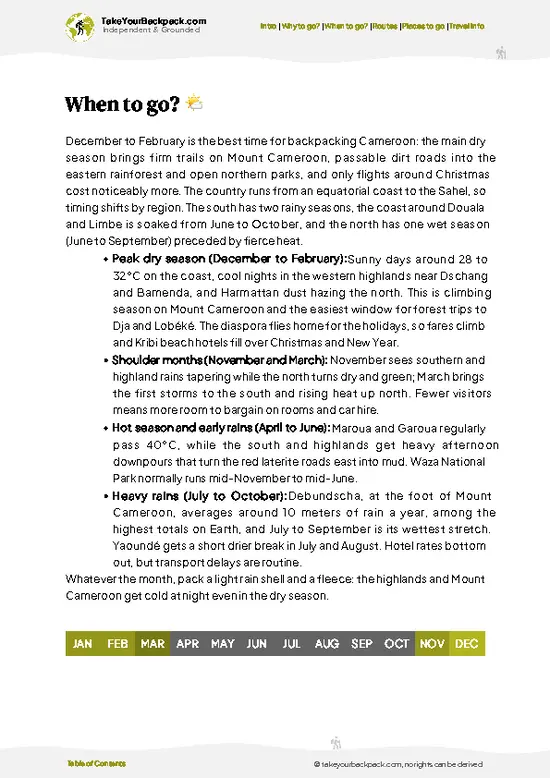
source: climatestotravel.comJANJanuary: excellent for travelingFEBFebruary: not recommended for travelingMARMarch: not recommended for travelingAPRApril: not recommended for travelingMAYMay: not recommended for travelingJUNJune: not recommended for travelingJULJuly: not recommended for travelingAUGAugust: not recommended for travelingSEPSeptember: not recommended for travelingOCTOctober: not recommended for travelingNOVNovember: not recommended for travelingDECDecember: not recommended for traveling

✈️ The backpacker research shortcutCameroon Travel Guide

An offline-friendly backpacking guide with optimized travel routes, ranked highlights, transport advice, and the best areas to stay.
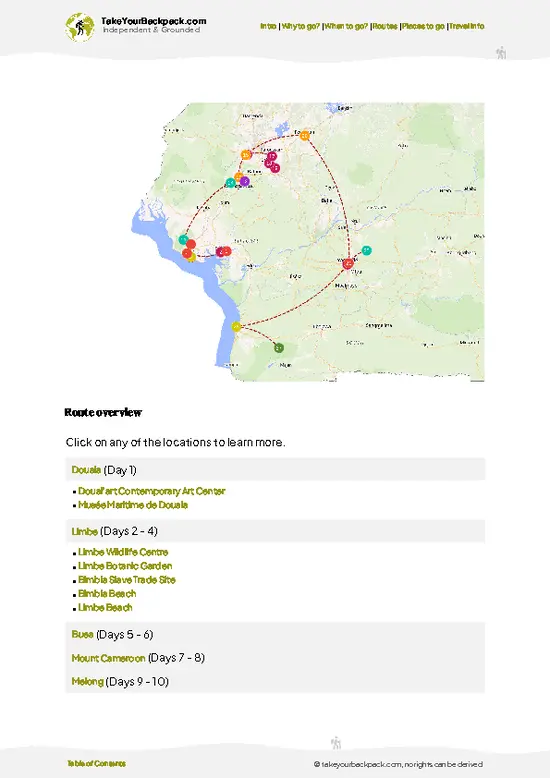
example page 0 from our offline Travel Guide for Cameroon
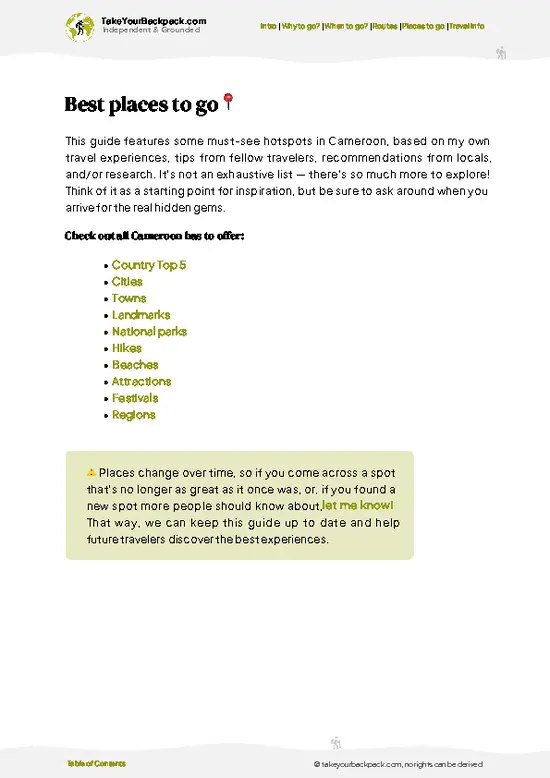
example page 1 from our offline Travel Guide for Cameroon
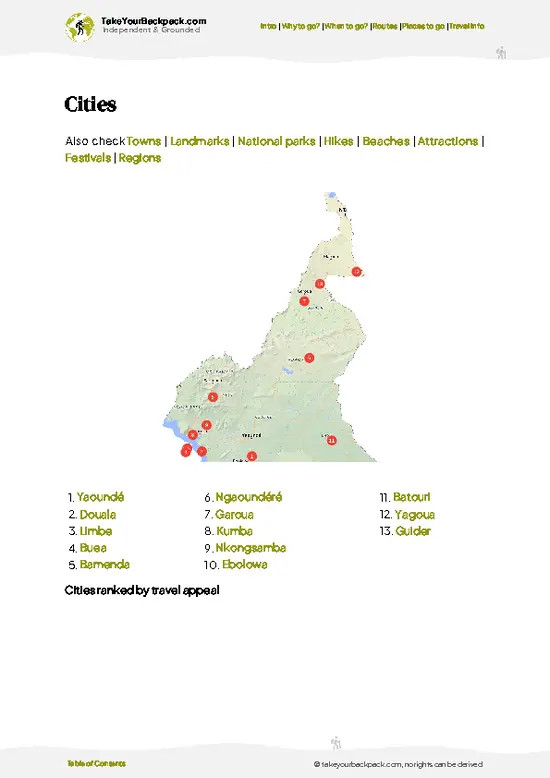
example page 2 from our offline Travel Guide for Cameroon
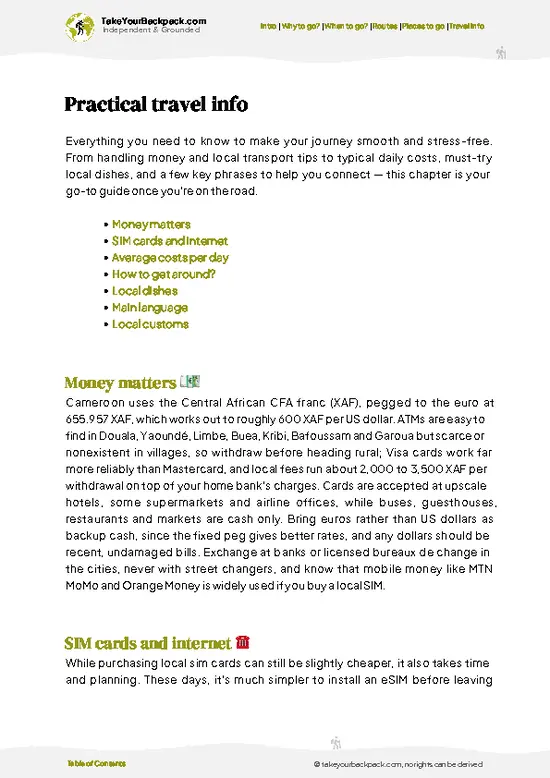
example page 3 from our offline Travel Guide for Cameroon
example page 4 from our offline Travel Guide for Cameroon
example page 5 from our offline Travel Guide for Cameroon
example page 6 from our offline Travel Guide for Cameroon
example page 7 from our offline Travel Guide for Cameroon
The digital guide (383 pages) contains:
95 highlights, ranked by travel appeal
Optimized 7, 14 & 21-day travel routes
Cities, national parks, landmarks, beaches
How to get around
Offline-friendly for travel without Wi-Fi
👉 Click to see all 30+ guide features

📅 Plan smarter in minutes, not weeks
Month by month travel advice
Festivals & national holidays
Budget expectations

🗺️ Go to the right places, skip the overrated ones
Honest pros & cons of destinations
Top hikes, parks & viewpoints
Lesser-known places most travelers miss
Clear “worth it vs skip it” guidance

🛏️ Travel smoothly without rookie mistakes
Best areas to stay
Transport systems explained simply
Common scams & safety advice
SIM cards, money & practical tips

🌍 Understand the country, not just visit it
Culture & traditions
52 Essential phrases & customs
Festivals worth planning around
Traveler-friendly historical context
Insights that make places more meaningful

📱 Built for real travel conditions
Fully downloadable PDF
Works completely offline
Optimized for phone use
Useful in remote areas & buses
Everything in one place
Save weeks of stressful planning
Get instant access to your full guide. 30‑day money-back guarantee.


By proceeding you agree to our terms.
Sent to your inbox immediately after payment • 100% Secure Checkout
Best Backpacking Travel Advisor 2025 tourism awardBest Backpacking
Travel Advisor
2025
What others say about Take Your Backpack Guides:
⭐⭐⭐⭐⭐
Fantastic, amazing amount of information!
⭐⭐⭐⭐⭐
My goodness this is amazing, it's what I've been looking for hats off too you!
⭐⭐⭐⭐⭐
I think this is absolutely BRILLIANT
⭐⭐⭐⭐
Very complete and informative. It's still missing places, but I gotta to commend you
⭐⭐⭐⭐⭐
This is truly amazing, thank you, can't wait to explore it with my kids!
⭐⭐⭐⭐⭐
Awesome resource, thank you!
⭐⭐⭐⭐⭐
This is amazing! Can't wait to explore the ones I haven't seen
⭐⭐⭐⭐
I love this! Well done, great idea.
⭐⭐⭐⭐⭐
Thanks for taking the time to make this gem!
⭐⭐⭐⭐⭐
This might be the best website I've ever seen.
⭐⭐⭐⭐⭐
Congratulations, and thank you so much for your work; it's incredibly valuable.
⭐⭐⭐⭐
In all seriousness I think you did a great job pointing out the important spots
⭐⭐⭐⭐⭐
10/10 very good
⭐⭐⭐⭐⭐
As someone who's only just starting to visit regularly this is awesome, thank you.
⭐⭐⭐⭐
Thank you very much! I'm going to visit my dad, it's going to be very useful!
⭐⭐⭐⭐⭐
This is really cool! We'll be travelling for the first time and this definitely come in handy.
⭐⭐⭐⭐⭐
You are now our minister of culture, congratulations 👨‍💼
⭐⭐⭐⭐⭐
Just wanted to tell you that this is a pearl! Going to follow your recommendations.
⭐⭐⭐⭐⭐
This is so cool. I'll definitely be using the resource for my travels soon.
⭐⭐⭐⭐⭐
This is very impressive! Good work.
⭐⭐⭐⭐⭐
This is an amazing and informative site. Very well done!

🛏️ Where to stay?Best areas to stay in Cameroon

When you’re gearing up for the Limbe Festival of Arts and Culture, the right base can make all the difference. Head to the vibrant neighborhoods around Limbe’s beachfront. This area buzzes with energy and offers a mix of budget-friendly accommodations. You’ll find fellow travelers eager to share stories and tips, creating a social atmosphere that’s hard to beat.

Look for spots near the Limbe Botanical Gardens. It’s not just a beautiful backdrop; it’s a hub for backpackers. The gardens attract a diverse crowd, making it easy to connect with others. Plus, you’re just a short walk from festival … read more 👉
When you’re gearing up for the Limbe Festival of Arts and Culture, the right base can make all the difference. Head to the vibrant neighborhoods around Limbe’s beachfront. This area buzzes with energy and offers a mix of budget-friendly accommodations. You’ll find fellow travelers eager to share stories and tips, creating a social atmosphere that’s hard to beat.

Look for spots near the Limbe Botanical Gardens. It’s not just a beautiful backdrop; it’s a hub for backpackers. The gardens attract a diverse crowd, making it easy to connect with others. Plus, you’re just a short walk from festival activities.

Another solid option is the area around Limbe’s local markets. Here, you’ll soak in the culture while enjoying affordable street food. The lively market scene is a feast for the senses and a great way to meet locals and fellow travelers alike.

Stay away from overly touristy spots that can drain your budget and energy. Instead, embrace the local vibe. You’ll save cash for festival experiences that truly matter, like art displays and live performances. This is where the real adventure begins.

👛 Costs (as of 7 March 2025)Money, prices, and spending tips

The Limbe Festival of Arts and Culture in Cameroon is a vibrant celebration that can be both exhilarating and budget-friendly if you plan wisely. Here’s how to navigate the costs like a pro:
  • Festival Tickets: Expect to pay around €5 to €15 ($6 to $18) for entry. Prices can vary based on the day and events you want to attend. Grab your tickets early to avoid last-minute price hikes.
  • Accommodation: Options range from budget hostels at about €10 to €25 ($12 to $30) per night to mid-range hotels costing €30 to €60 ($35 to $70). Booking in advance can save you some cash, especially during peak festival days.
  • Local Transport: Public transport is your friend here. Buses and shared taxis will set you back around €1 to €3 ($1.20 to $3.60) for short trips. If you’re feeling adventurous, consider renting
read more 👉
The Limbe Festival of Arts and Culture in Cameroon is a vibrant celebration that can be both exhilarating and budget-friendly if you plan wisely. Here’s how to navigate the costs like a pro:
  • Festival Tickets: Expect to pay around €5 to €15 ($6 to $18) for entry. Prices can vary based on the day and events you want to attend. Grab your tickets early to avoid last-minute price hikes.
  • Accommodation: Options range from budget hostels at about €10 to €25 ($12 to $30) per night to mid-range hotels costing €30 to €60 ($35 to $70). Booking in advance can save you some cash, especially during peak festival days.
  • Local Transport: Public transport is your friend here. Buses and shared taxis will set you back around €1 to €3 ($1.20 to $3.60) for short trips. If you’re feeling adventurous, consider renting a bike for about €5 ($6) a day to explore at your own pace.
  • Food & Drinks: Street food is a must-try and incredibly affordable. You can feast on local dishes for as little as €2 to €5 ($2.40 to $6). Dining in restaurants will cost you around €10 to €20 ($12 to $24) for a meal. Don’t forget to sample the local beverages, which are usually under €2 ($2.40).
  • Miscellaneous Expenses: Budget an extra €10 to €20 ($12 to $24) for souvenirs, tips, or unexpected costs. This cushion will keep your experience smooth and stress-free.

Keep these costs in mind, and you’ll preserve your energy and budget for the moments that truly matter at the festival.
⚠️ Prices can change and everyone travels differently, so take this as a rough guide. Hope it helps you plan your adventure!

🍲 FoodWhat to Eat & Drink

At the Limbe Festival of Arts and Culture, food and drink are as vibrant as the performances. You’ll find local specialties like ndole, a rich stew made from bitter leaves, peanuts, and often shrimp or meat. Don’t miss the plantains, fried to golden perfection, or the grilled fish fresh from the coast. Street stalls buzz with energy, serving up suya, spicy skewers that pack a punch.

For drinks, try the palm wine—it’s a local favorite, sweet and slightly fermented, perfect for cooling off in the tropical heat. If you’re feeling adventurous, grab a bottle of Maltina, a non-alcoholic malt beverage that pairs surprisingly well with the spicy dishes.

When diving into the festival food scene, remember the etiquette: sharing is common, so don’t be surprised if someone offers you a taste from their … read more 👉
At the Limbe Festival of Arts and Culture, food and drink are as vibrant as the performances. You’ll find local specialties like ndole, a rich stew made from bitter leaves, peanuts, and often shrimp or meat. Don’t miss the plantains, fried to golden perfection, or the grilled fish fresh from the coast. Street stalls buzz with energy, serving up suya, spicy skewers that pack a punch.

For drinks, try the palm wine—it’s a local favorite, sweet and slightly fermented, perfect for cooling off in the tropical heat. If you’re feeling adventurous, grab a bottle of Maltina, a non-alcoholic malt beverage that pairs surprisingly well with the spicy dishes.

When diving into the festival food scene, remember the etiquette: sharing is common, so don’t be surprised if someone offers you a taste from their plate. Lines can get long, especially for the most popular stalls, so be patient and enjoy the atmosphere. Cash is king here; many vendors don’t accept cards, so stock up on local currency. Serving sizes can vary, so be ready to sample a bit of everything—this festival is all about the experience!

Other Cameroonian festivals near Limbe of Arts and Culture

Explore more nearby:

  • Buea Mountain Race—footrace, colonial-era town, rainforest trails, Mount Cameroon base| 16 km away
  • Mount Cameroon Race of Hope—mountain ascent, volcanic terrain, endurance race, Buea starting point| 22 km away
  • Ngondo Festival—Wouri River rituals, Sawa chiefs, water spirits, Douala waterfront| 57 km away

💡 Not sure where to go next?
Create a personalized itinerary for Cameroon including Limbe of Arts and Culture and the places that fit your trip.

Generate my itinerary

👉 Discover all festivals

Or checkout all Cameroon has to offer (think cities, towns, villages, national parks, hikes, beaches, festivals)
Country photo of Cameroon

We 💚 feedbackFinal thoughts on celebrating the Limbe of Arts and Culture

The Limbe Festival of Arts and Culture is a whirlwind of energy and creativity. You’ll feel the pulse of local music and dance in your bones. The best surprise? The spontaneous street performances that pop up everywhere—don’t miss them! Just a heads-up: accommodations can fill up fast, so book early to avoid scrambling last minute. Embrace the chaos and let the vibrant spirit of Limbe fuel your adventure. Trust me, it’s worth every moment.

✍️ Help improve this page!
The information on this page is based on in-depth research, insights shared by experienced travelers, and feedback from the local travel community in Cameroon. While every effort is made to keep the information accurate and current, conditions can change — so if you spot anything incorrect or outdated, please get in touch.


🙋‍♂️ Give feedback

👋 Meet the founderWho’s Behind Take Your Backpack?

Johan, backpacker and founder of TakeYourBackpackHi, I’m Johan (Netherlands 🇳🇱), the creator of TakeYourBackpack. Over the past decade, I’ve backpacked through 80+ countries across six continents, gaining extensive experience with independent travel, long-term trips, and overland routes.

This site is built on a combination of firsthand travel experience and carefully curated insights from other backpackers. Many guides are based on places I’ve personally visited, while others bring together tips, observations, and practical advice shared by trusted travelers I’ve met along the way.

The goal is to provide realistic, experience-driven guidance — not generic itineraries — so you can explore destinations with better context, clearer expectations, and more confidence.

Get full Cameroon guide •
Instant download • 95 highlights • Full Offline guide