×

Cameroon🇨🇲 | landmarksMount Manengoubatwin crater lakes, montane grasslands, panoramic ridges | things to do and best time to go

Explore Ekom-Nkam WaterfallsExplore Limbe Botanic Garden

Backpacking in Mount Manengouba
👌 Worth visitingunique site ranked #3
By Johan Kruseman 🇳🇱 | Updated May 29, 2026

Most travelers expect Mount Manengouba to be a solitary, mist-wrapped volcano, but here’s the curveball: you’re more likely to share the trail with Fulani cattle herders than with other backpackers or selfie-chasing tourists. Mount Manengouba sits in Cameroon’s Southwest Region, straddling the border with the Littoral, and it’s a world apart from the country’s more hyped attractions. The double-crater summit—one lake blue, the other green—looks like something out of a fantasy novel, but don’t expect easy access or polished infrastructure. The hike is raw, muddy, and unpredictable, with weather that can turn on you in minutes. There’s no ticket booth, no Instagram crowds, and no overpriced snack stands—just you, the wind, and the occasional cow. It’s not cheap to reach, thanks to rough roads and the need for a local guide, but the payoff is real: wild landscapes, genuine encounters, and a sense of discovery that’s nearly extinct elsewhere.

Discover everything you want to know in the 📖 Cameroon Travel Guide.


Get your Cameroon guide
95 ranked highlights, routes & tips, works offline (383 pages)
Loading the map 🌍
CLICK TO FILTER
cities
towns
landmarks
national parks
hikes
beaches
attractions
festivals
regions
SHOW COUNTRY’S BESTSHOW ALL

✨ Why go?
Ranked #3 unique site in Cameroon
What makes this unique site worth visiting

Mount Manengouba isn’t just another mountain; it’s a backpacker’s playground that delivers on both effort and reward. Sure, you’ll encounter crowds—especially during peak season—but don’t let that deter you. The hike itself is a blend of challenge and beauty, with lush landscapes and vibrant local culture along the way.

What sets Manengouba apart is its unique twin peaks and the stunning crater lakes that sit at their summits. This isn’t just a photo op; it’s a chance to connect with the local Bakossi people, who offer insights into their traditions and way of life.

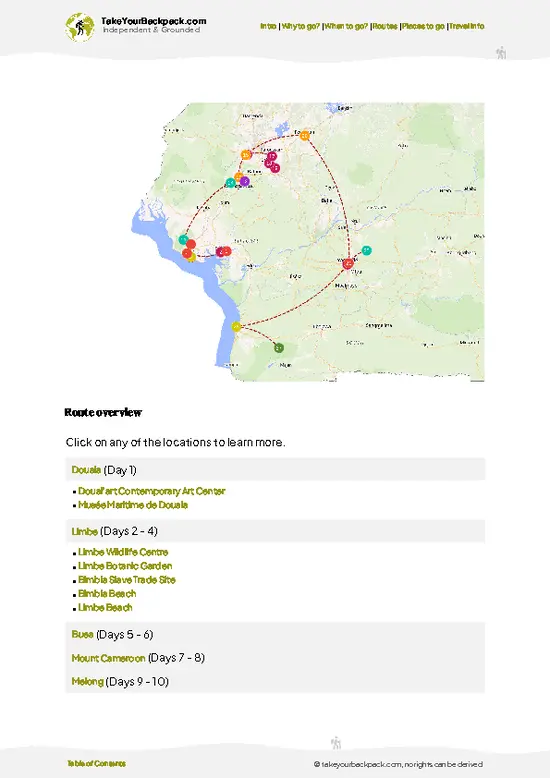
Accessing the mountain is relatively affordable, with minimal fees for guides and park entry. Plus, it fits seamlessly into a broader route through Cameroon, making it a natural stop between Limbe and Buea.

So, if you’re … read more 👉
Mount Manengouba isn’t just another mountain; it’s a backpacker’s playground that delivers on both effort and reward. Sure, you’ll encounter crowds—especially during peak season—but don’t let that deter you. The hike itself is a blend of challenge and beauty, with lush landscapes and vibrant local culture along the way.

What sets Manengouba apart is its unique twin peaks and the stunning crater lakes that sit at their summits. This isn’t just a photo op; it’s a chance to connect with the local Bakossi people, who offer insights into their traditions and way of life.

Accessing the mountain is relatively affordable, with minimal fees for guides and park entry. Plus, it fits seamlessly into a broader route through Cameroon, making it a natural stop between Limbe and Buea.

So, if you’re looking for a place that’s more than just an Instagram backdrop, Mount Manengouba offers authentic experiences that resonate long after the hike is over. It’s a journey worth taking, not just for the views, but for the connections you’ll make along the way.
Want to include Mount Manengouba in your Cameroon route?
Create a personalized Cameroon itinerary that includes Mount Manengouba and the places that fit your trip — based on your travel style, budget, and available time. Get your route in seconds.

Generate my trip

💡 HighlightsKey sights and experiences for travelers

  • Twin crater lakes (Muanenguba Lakes) — Two perfectly round crater lakes sitting in a bowl-like caldera; eerie, mirror-smooth water one moment and wrapped in mist the next. They’re the mountain’s iconic image and worth the hike just to watch the fog roll through the rims.
  • Old-growth cloud forest — Thick moss-draped trees, dripping lichens and a green silence you don’t get in lowland forests. The cloud forest here hosts ferns, tree ferns and epiphytes that feel primeval and ridiculously photogenic.
  • Endemic and rare wildlife — Manengouba is a biodiversity hotspot with species you won’t easily find elsewhere: specialist frogs, strange amphibians and range-restricted plants. It’s a magnet for naturalists and anyone who likes spotting odd critters.
  • Crater rim hikes and viewpoints — Trails that
read more 👉
  • Twin crater lakes (Muanenguba Lakes) — Two perfectly round crater lakes sitting in a bowl-like caldera; eerie, mirror-smooth water one moment and wrapped in mist the next. They’re the mountain’s iconic image and worth the hike just to watch the fog roll through the rims.
  • Old-growth cloud forest — Thick moss-draped trees, dripping lichens and a green silence you don’t get in lowland forests. The cloud forest here hosts ferns, tree ferns and epiphytes that feel primeval and ridiculously photogenic.
  • Endemic and rare wildlife — Manengouba is a biodiversity hotspot with species you won’t easily find elsewhere: specialist frogs, strange amphibians and range-restricted plants. It’s a magnet for naturalists and anyone who likes spotting odd critters.
  • Crater rim hikes and viewpoints — Trails that climb to sweeping viewpoints over the lakes and surrounding plateaus. Short scrambles reward you with wide panoramas at sunrise or late afternoon light—perfect for stretching sore legs and cameras alike.
  • Birdwatching — A great spot for montane and forest birds, from secretive understory species to colorful canopy birds. Bring binoculars and a patience reserve; the payoff is regular sightings of birds specialist to mountain habitats.
  • Local culture and legends — The lakes and slopes are wrapped in local stories and traditional importance. Visiting nearby villages, you’ll hear myths, learn about uses of mountain plants, and get a genuine feel for how communities relate to the land.
  • Waterfalls, photo ops and camping — Hidden waterfalls and misty clearings dot the approach routes, making for great picnic or campsite spots. If you’re into overnighting under stars (and you like cold nights), the high camps are memorable.
Spotted a mistake or missing something? Contact us.

🌤️ When to go?Weather, crowds, and seasonal trade-offs


  • Weather: The dry season from November to February is your best bet. Expect crisp mornings and afternoons that hover around 20-25°C (68-77°F). The wet season, March to October, brings heavy rains that turn trails into mud pits and can wash out paths entirely.

  • Temperature: Nights can dip to 10°C (50°F) or lower, even in the dry season, so pack layers. Days warm up nicely but don’t expect tropical heat—this is a mountain, after all.

  • Daylight Hours: Roughly 11 to 12 hours year-round, with sunrise around 6:30 AM and sunset near 6:30 PM. Plan your hikes early to avoid afternoon clouds and maximize daylight.

  • Crowds: Don’t expect crowds like Kilimanjaro or Mount Cameroon. The dry season sees a modest trickle of hikers, mostly locals and a few intrepid backpackers. The wet season? You’ll likely
read more 👉

  • Weather: The dry season from November to February is your best bet. Expect crisp mornings and afternoons that hover around 20-25°C (68-77°F). The wet season, March to October, brings heavy rains that turn trails into mud pits and can wash out paths entirely.

  • Temperature: Nights can dip to 10°C (50°F) or lower, even in the dry season, so pack layers. Days warm up nicely but don’t expect tropical heat—this is a mountain, after all.

  • Daylight Hours: Roughly 11 to 12 hours year-round, with sunrise around 6:30 AM and sunset near 6:30 PM. Plan your hikes early to avoid afternoon clouds and maximize daylight.

  • Crowds: Don’t expect crowds like Kilimanjaro or Mount Cameroon. The dry season sees a modest trickle of hikers, mostly locals and a few intrepid backpackers. The wet season? You’ll likely have the trails to yourself, but at a cost of slippery conditions.

  • Seasonal Activities: Dry months are perfect for trekking and birdwatching. The wet season is prime for botanists chasing rare orchids and amphibians, but it’s a slog for casual hikers.

  • Price Fluctuations: Local guides and accommodations don’t jack up prices seasonally. However, transport can be more expensive and less reliable during the rainy months due to road conditions.


Pro-tip: Aim for late November or early December—dry trails, manageable crowds, and a chance to catch the mountain’s unique flora waking up after the rains.


source: climatestotravel.comJANJanuary: excellent for travelingFEBFebruary: excellent for travelingMARMarch: fair for travelingAPRApril: fair for travelingMAYMay: fair for travelingJUNJune: fair for travelingJULJuly: fair for travelingAUGAugust: fair for travelingSEPSeptember: fair for travelingOCTOctober: fair for travelingNOVNovember: highly recommended for travelingDECDecember: highly recommended for traveling
when-to-go

✈️ The backpacker research shortcutCameroon Travel Guide

An offline-friendly backpacking guide with optimized travel routes, ranked highlights, transport advice, and the best areas to stay.
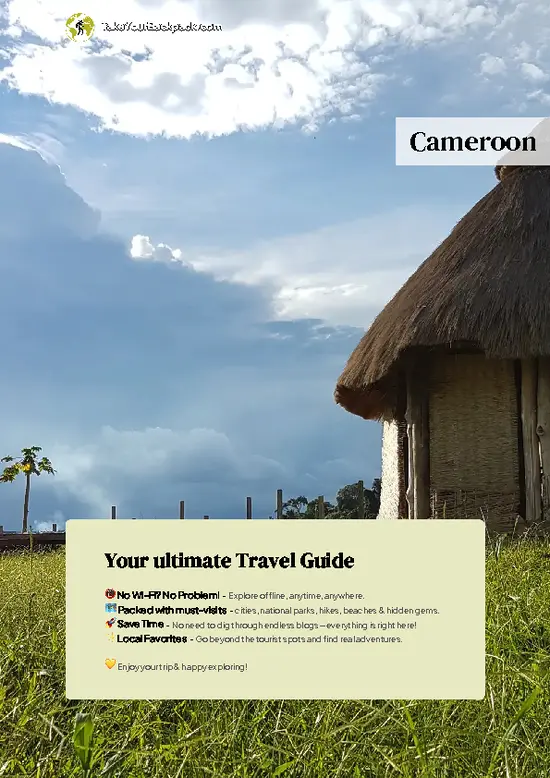
example page 0 from our offline Travel Guide for Cameroon
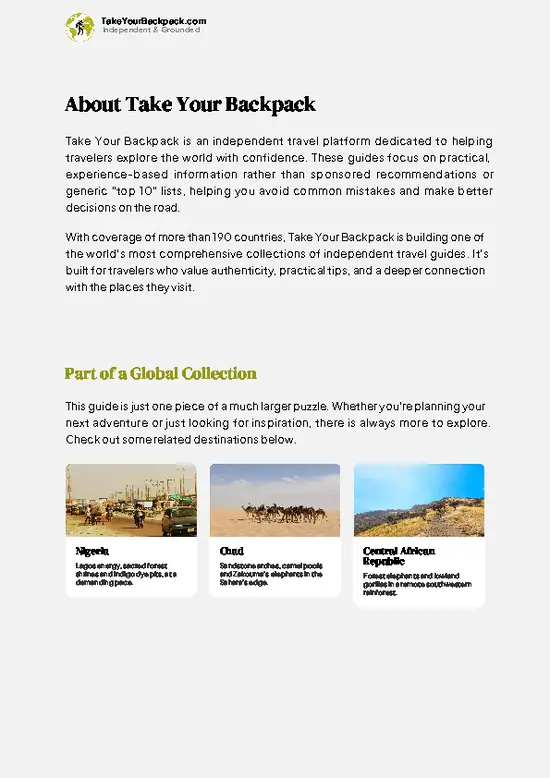
example page 1 from our offline Travel Guide for Cameroon
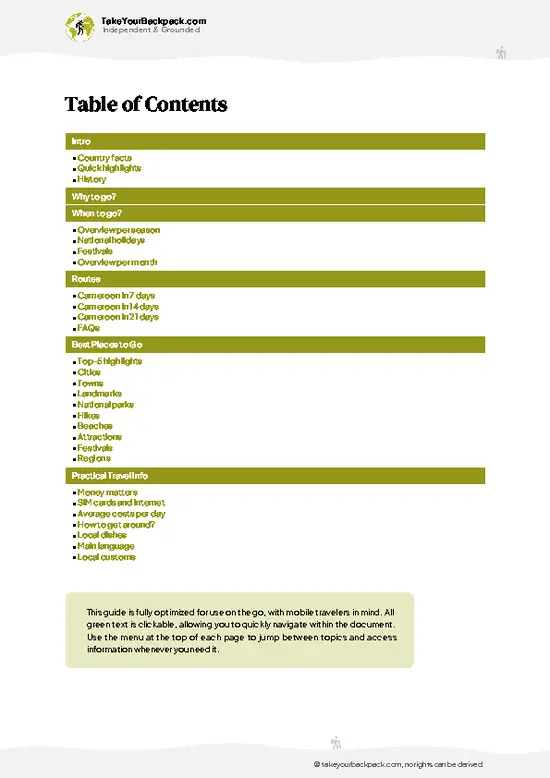
example page 2 from our offline Travel Guide for Cameroon
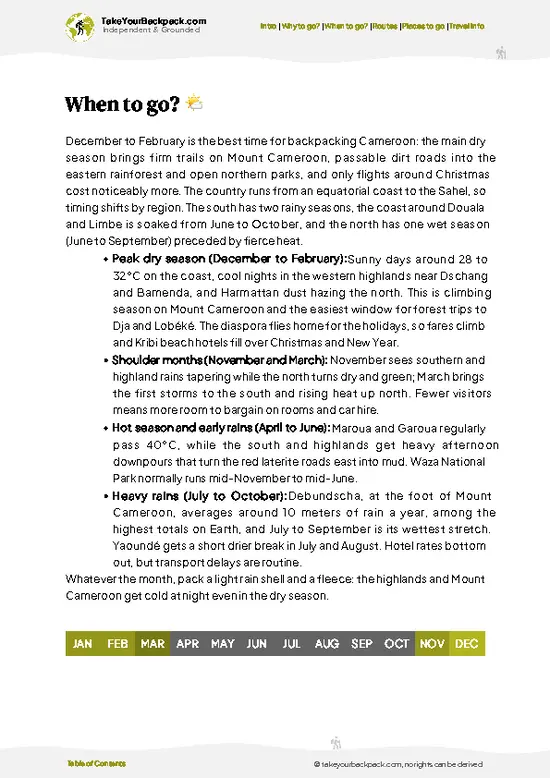
example page 3 from our offline Travel Guide for Cameroon
example page 4 from our offline Travel Guide for Cameroon
example page 5 from our offline Travel Guide for Cameroon
example page 6 from our offline Travel Guide for Cameroon
example page 7 from our offline Travel Guide for Cameroon
The digital guide (383 pages) contains:
95 highlights, ranked by travel appeal
Optimized 7, 14 & 21-day travel routes
Cities, national parks, landmarks, beaches
How to get around
Offline-friendly for travel without Wi-Fi
👉 Click to see all 30+ guide features

📅 Plan smarter in minutes, not weeks
Month by month travel advice
Festivals & national holidays
Budget expectations

🗺️ Go to the right places, skip the overrated ones
Honest pros & cons of destinations
Top hikes, parks & viewpoints
Lesser-known places most travelers miss
Clear “worth it vs skip it” guidance

🛏️ Travel smoothly without rookie mistakes
Best areas to stay
Transport systems explained simply
Common scams & safety advice
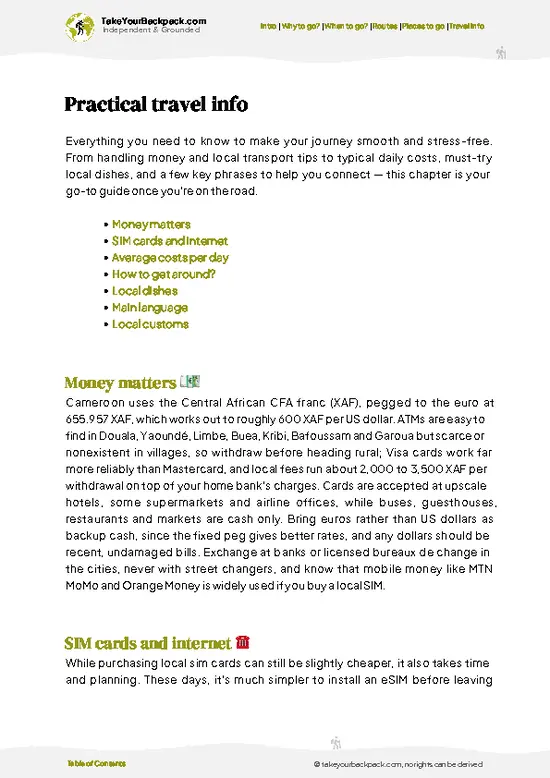
SIM cards, money & practical tips

🌍 Understand the country, not just visit it
Culture & traditions
52 Essential phrases & customs
Festivals worth planning around
Traveler-friendly historical context
Insights that make places more meaningful

📱 Built for real travel conditions
Fully downloadable PDF
Works completely offline
Optimized for phone use
Useful in remote areas & buses
Everything in one place
Save weeks of stressful planning
Get instant access to your full guide. 30‑day money-back guarantee.


By proceeding you agree to our terms.
Sent to your inbox immediately after payment • 100% Secure Checkout
Best Backpacking Travel Advisor 2025 tourism awardBest Backpacking
Travel Advisor
2025
What others say about Take Your Backpack Guides:
⭐⭐⭐⭐⭐
Fantastic, amazing amount of information!
⭐⭐⭐⭐⭐
My goodness this is amazing, it's what I've been looking for hats off too you!
⭐⭐⭐⭐⭐
I think this is absolutely BRILLIANT
⭐⭐⭐⭐
Very complete and informative. It's still missing places, but I gotta to commend you
⭐⭐⭐⭐⭐
This is truly amazing, thank you, can't wait to explore it with my kids!
⭐⭐⭐⭐⭐
Awesome resource, thank you!
⭐⭐⭐⭐⭐
This is amazing! Can't wait to explore the ones I haven't seen
⭐⭐⭐⭐
I love this! Well done, great idea.
⭐⭐⭐⭐⭐
Thanks for taking the time to make this gem!
⭐⭐⭐⭐⭐
This might be the best website I've ever seen.
⭐⭐⭐⭐⭐
Congratulations, and thank you so much for your work; it's incredibly valuable.
⭐⭐⭐⭐
In all seriousness I think you did a great job pointing out the important spots
⭐⭐⭐⭐⭐
10/10 very good
⭐⭐⭐⭐⭐
As someone who's only just starting to visit regularly this is awesome, thank you.
⭐⭐⭐⭐
Thank you very much! I'm going to visit my dad, it's going to be very useful!
⭐⭐⭐⭐⭐
This is really cool! We'll be travelling for the first time and this definitely come in handy.
⭐⭐⭐⭐⭐
You are now our minister of culture, congratulations 👨‍💼
⭐⭐⭐⭐⭐
Just wanted to tell you that this is a pearl! Going to follow your recommendations.
⭐⭐⭐⭐⭐
This is so cool. I'll definitely be using the resource for my travels soon.
⭐⭐⭐⭐⭐
This is very impressive! Good work.
⭐⭐⭐⭐⭐
This is an amazing and informative site. Very well done!

🛏️ Where to stay?Choosing the right base

Mount Manengouba is a stunning backdrop, but let’s cut through the Instagram haze. The reality? Crowds can be thick, and costs can sneak up on you. But don’t let that deter you. There are spots nearby that offer a genuine experience without breaking the bank.

Consider the town of Limbe. It’s a lively hub for backpackers, with a mix of local culture and a vibrant atmosphere. You’ll find plenty of budget-friendly accommodations here. The social scene is buzzing, making it easy to connect with fellow travelers. Plus, the coastal vibe adds a refreshing twist after a day of hiking.

Another option … read more 👉
Mount Manengouba is a stunning backdrop, but let’s cut through the Instagram haze. The reality? Crowds can be thick, and costs can sneak up on you. But don’t let that deter you. There are spots nearby that offer a genuine experience without breaking the bank.

Consider the town of Limbe. It’s a lively hub for backpackers, with a mix of local culture and a vibrant atmosphere. You’ll find plenty of budget-friendly accommodations here. The social scene is buzzing, making it easy to connect with fellow travelers. Plus, the coastal vibe adds a refreshing twist after a day of hiking.

Another option is Buea, the gateway to Mount Manengouba. It’s quieter than Limbe but has its own charm. You’ll find guesthouses that cater to backpackers, often run by locals who can share insider tips. The community is welcoming, and you’ll feel safe wandering the streets.

Both areas have markets where you can grab local eats without spending much. Embrace the authentic Cameroonian flavors and engage with the locals. That’s where the real magic happens. Forget the polished tourist traps; these neighborhoods offer the heart of the journey.

👛 Costs (as of 25 March 2025)How expensive it really is

Visiting Mount Manengouba in Cameroon can be a rewarding experience, but it’s essential to know what you’re getting into financially.
  • Transportation: Expect to spend around €10 to €30 ($11 to $33) for a bus or shared taxi from Douala to the nearest town, Buea. If you’re renting a car, costs can skyrocket to €50 to €100 ($55 to $110) per day, depending on the vehicle and rental service.
  • Accommodation: Options range from basic guesthouses at about €10 to €25 ($11 to $28) per night to mid-range hotels that can cost €30 to €70 ($33 to $77). If you’re looking for something more upscale, be prepared to pay upwards of €80 ($88) per night.
  • Guided Tours: Hiring a local guide is highly recommended for safety and insight. Prices typically range from €15 to €50 ($17 to $55) for a day, depending on the guide’s
read more 👉
Visiting Mount Manengouba in Cameroon can be a rewarding experience, but it’s essential to know what you’re getting into financially.
  • Transportation: Expect to spend around €10 to €30 ($11 to $33) for a bus or shared taxi from Douala to the nearest town, Buea. If you’re renting a car, costs can skyrocket to €50 to €100 ($55 to $110) per day, depending on the vehicle and rental service.
  • Accommodation: Options range from basic guesthouses at about €10 to €25 ($11 to $28) per night to mid-range hotels that can cost €30 to €70 ($33 to $77). If you’re looking for something more upscale, be prepared to pay upwards of €80 ($88) per night.
  • Guided Tours: Hiring a local guide is highly recommended for safety and insight. Prices typically range from €15 to €50 ($17 to $55) for a day, depending on the guide’s experience and the length of the trek.
  • Food: Meals can be quite affordable. Street food or local eateries will cost you about €2 to €5 ($2 to $6) per meal. If you prefer dining in restaurants, budget around €10 to €20 ($11 to $22) for a decent meal.
  • Park Fees: Access to Mount Manengouba may require a small fee, usually around €5 to €10 ($6 to $11). This helps support conservation efforts and local communities.

Understanding these costs will help you plan effectively. Mount Manengouba offers a genuine connection to nature, but be ready for the realities of travel in Cameroon.
⚠️ Prices can change and everyone travels differently, so take this as a rough guide. Hope it helps you plan your adventure!

Other Cameroonian landmarks near Mount Manengouba

Explore more nearby:

  • Ekom-Nkam Waterfalls—twin cascades, rainforest cliffs, misty plunge pool| 22 km away
  • Bafut Palace—royal courtyards, traditional architecture, sacred relics, Fon’s residence| 122 km away

💡 Not sure where to go next?
Create a personalized itinerary for Cameroon including Mount Manengouba and the places that fit your trip.

Generate my itinerary

👉 Discover all landmarks

Or checkout all Cameroon has to offer (think cities, towns, villages, national parks, hikes, beaches, festivals)
Country photo of Cameroon

We 💚 feedbackParting advice and final tips

Mount Manengouba isn’t for the faint-hearted. Expect crowds at the base, but don’t let that deter you. The real magic happens on the trail—where the chatter fades, and the lush greenery envelops you. The surprise? Those hidden lakes at the summit. They’re a refreshing reward after the climb. Just a heads-up: the weather can turn on a dime, so pack for rain. Embrace the challenge; this place has a way of reshaping your perspective. Trust me, it’s worth every step.

✍️ Help improve this page!
The information on this page is based on in-depth research, insights shared by experienced travelers, and feedback from the local travel community in Cameroon. While every effort is made to keep the information accurate and current, conditions can change — so if you spot anything incorrect or outdated, please get in touch.


🙋‍♂️ Give feedback

👋 Meet the founderWho’s Behind Take Your Backpack?

Johan, backpacker and founder of TakeYourBackpackHi, I’m Johan (Netherlands 🇳🇱), the creator of TakeYourBackpack. Over the past decade, I’ve backpacked through 80+ countries across six continents, gaining extensive experience with independent travel, long-term trips, and overland routes.

This site is built on a combination of firsthand travel experience and carefully curated insights from other backpackers. Many guides are based on places I’ve personally visited, while others bring together tips, observations, and practical advice shared by trusted travelers I’ve met along the way.

The goal is to provide realistic, experience-driven guidance — not generic itineraries — so you can explore destinations with better context, clearer expectations, and more confidence.

Get full Cameroon guide •
Instant download • 95 highlights • Full Offline guide