×

Cameroon🇨🇲 | landmarksBafut PalaceThatched royal compound, carved posts, Fon’s museum, market lanes | things to do and best time to go

Explore MokoloExplore Ekom-Nkam Waterfalls

Backpacking in Bafut Palace
🌟 Highlightunique site ranked #2
By Johan Kruseman 🇳🇱 | Updated October 22, 2026

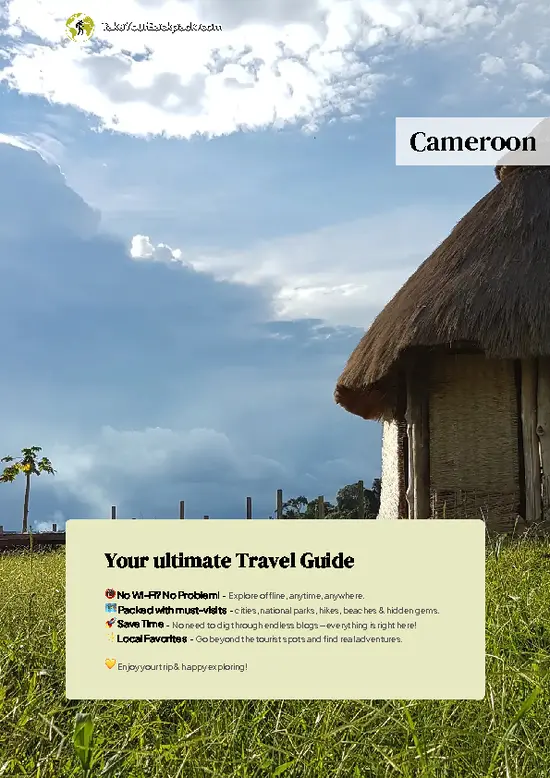
Bafut Palace is a working royal compound, not a ruined relic, and the Fon still lives in the Bafut chiefdom it governs. It sits in Cameroon’s Northwest Region, a short drive north of Bamenda, up in the grassland hills. The first thing you meet is the red earth and the wooden gate, then the thatched roofs, the carved posts and the smoke of cooking fires drifting over the courtyard. A guide walks you through the quarter-circle of huts, the old guardhouse and the museum, and the stories alone justify the entry fee. Rain turns the paths to slick mud and the mist can hide the hills. Crowds are rare, which means quiet, and photography inside the museum is restricted. Public transport gets you there, though schedules are loose. Arrive in the morning, take the guided tour, then wander the market lanes outside with a plate of grilled fish or roasted plantain.

Discover everything you want to know in the 📖 Cameroon Travel Guide.


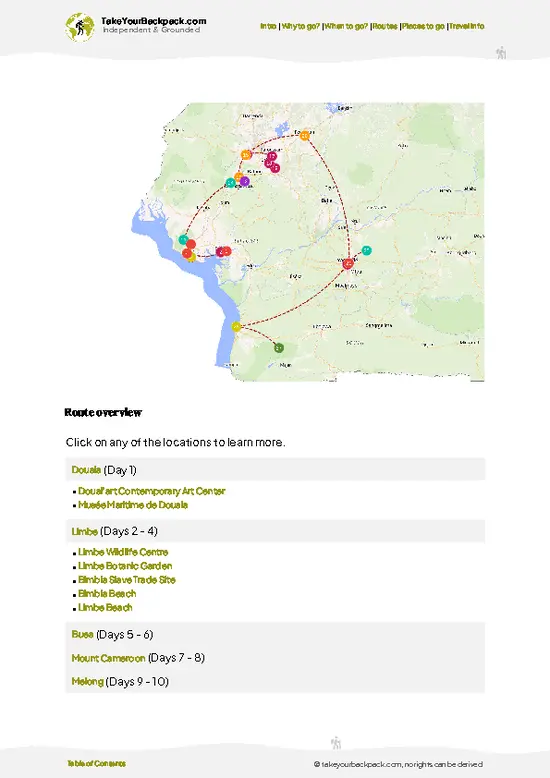
example page 0 from our offline Travel Guide for Cameroon
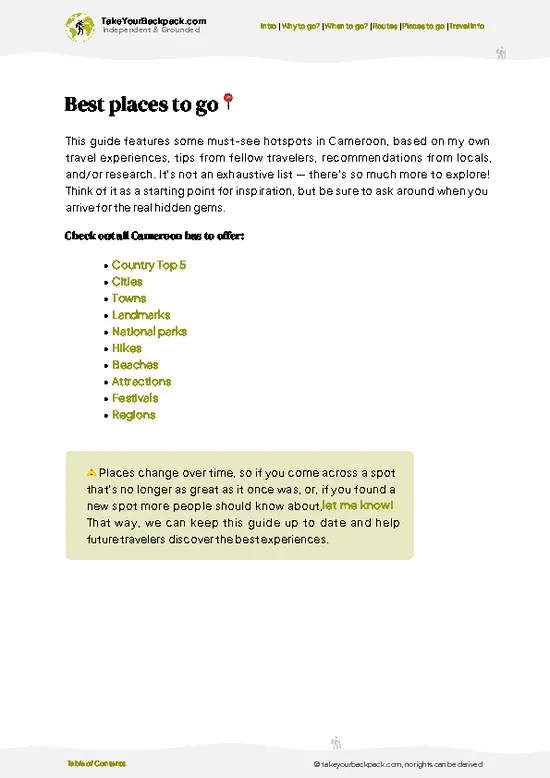
example page 1 from our offline Travel Guide for Cameroon
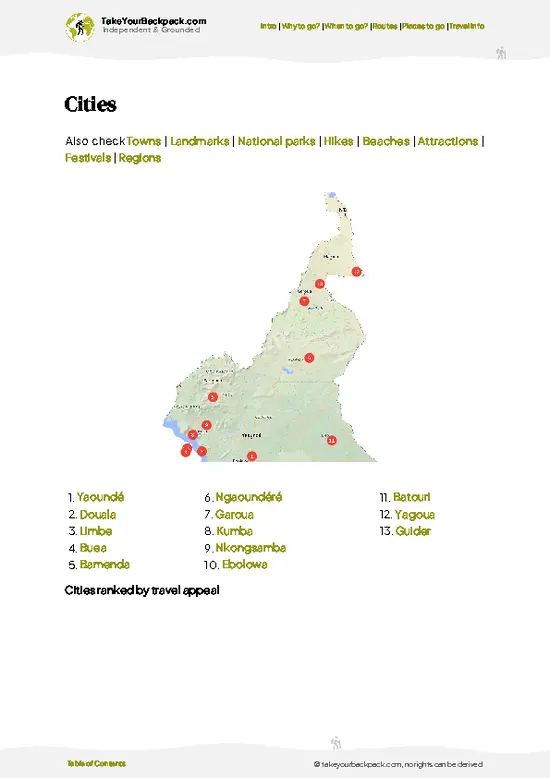
example page 2 from our offline Travel Guide for Cameroon
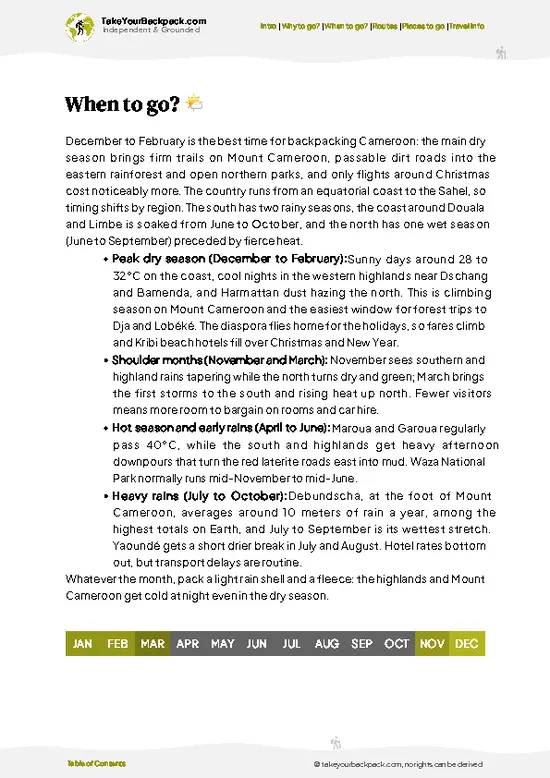
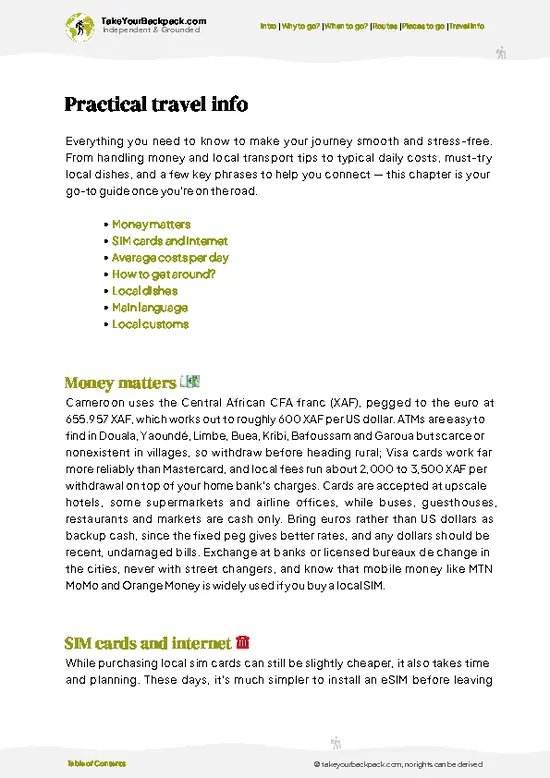
example page 3 from our offline Travel Guide for Cameroon
example page 4 from our offline Travel Guide for Cameroon
example page 5 from our offline Travel Guide for Cameroon
example page 6 from our offline Travel Guide for Cameroon
example page 7 from our offline Travel Guide for Cameroon
Loading the map 🌍
CLICK TO FILTER
cities
towns
landmarks
national parks
hikes
beaches
attractions
festivals
regions
SHOW COUNTRY’S BESTSHOW ALL

✨ Why go?
Ranked #2 unique site in Cameroon
The unique appeal for travelers

Bafut Palace is one of the few places in Cameroon where you can walk through a living royal court and hear its history from people who belong to it. Most palaces in West and Central Africa are shut or rebuilt as museums. Here the Achum, the royal shrine and burial ground, still holds meaning, and the architecture of steep thatched roofs and carved doorposts shows how a grassfields kingdom organized power.

The effort to reach it is small. Bamenda is the regional hub, and the road north climbs through green farmland that is worth seeing on its own. The visit fits easily into a loop of the Northwest Region, where you can pair it with crater lakes, highland villages and weaving or pottery workshops. Entry is modest, and the guides know the stories behind each house. You leave with a clear sense … read more 👉
Bafut Palace is one of the few places in Cameroon where you can walk through a living royal court and hear its history from people who belong to it. Most palaces in West and Central Africa are shut or rebuilt as museums. Here the Achum, the royal shrine and burial ground, still holds meaning, and the architecture of steep thatched roofs and carved doorposts shows how a grassfields kingdom organized power.

The effort to reach it is small. Bamenda is the regional hub, and the road north climbs through green farmland that is worth seeing on its own. The visit fits easily into a loop of the Northwest Region, where you can pair it with crater lakes, highland villages and weaving or pottery workshops. Entry is modest, and the guides know the stories behind each house. You leave with a clear sense of how chiefdoms here work, which makes the rest of the grassfields region make more sense.

💡 HighlightsPlaces and moments you shouldn't skip

  1. The Palace Compound: The cluster of thatched royal buildings, with carved posts and wide courtyards, is what most travelers come to see. It shows how a grassfields kingdom laid out its court.
  2. The Museum: Housed in the old palace buildings, it holds royal regalia, carved stools, masks, ceremonial dress and artifacts linked to the Fon’s court. Guides explain the meaning of the pieces.
  3. The Achum: The royal shrine and burial ground of the Fons is a sacred place, and access is restricted. Guides point out its location and explain its role in Bafut belief.
  4. The Old Guardhouse: This is a traditional thatched structure beside the entrance, once used to watch over the palace. Its design shows how the court managed security.
  5. The Carved Doors and Posts: Wooden doorposts and pillars carry figures and symbols
… read more 👉
  1. The Palace Compound: The cluster of thatched royal buildings, with carved posts and wide courtyards, is what most travelers come to see. It shows how a grassfields kingdom laid out its court.
  2. The Museum: Housed in the old palace buildings, it holds royal regalia, carved stools, masks, ceremonial dress and artifacts linked to the Fon’s court. Guides explain the meaning of the pieces.
  3. The Achum: The royal shrine and burial ground of the Fons is a sacred place, and access is restricted. Guides point out its location and explain its role in Bafut belief.
  4. The Old Guardhouse: This is a traditional thatched structure beside the entrance, once used to watch over the palace. Its design shows how the court managed security.
  5. The Carved Doors and Posts: Wooden doorposts and pillars carry figures and symbols that mark rank and royal stories. Look closely at the details when the light is soft.
  6. The Traditional Quarter: The area around the palace is home to Bafut families, small shops and cooking fires, with views over the hills. A walk gives you a feel for daily life in the chiefdom.
  7. The Bafut Market Lanes: Local vendors sell produce, roasted corn, palm oil and crafts. It is the place to taste the area’s food and pick up a modest souvenir.
For a first visit, the Palace Compound with a guide is the best choice, because the stories make the architecture come alive.
Spotted a mistake or missing something? Contact us.

🌤️ When to go?When to go for the best experience

November to February gives the easiest visit to Bafut Palace, with dry roads and clear mornings in the Northwest highlands.
  • Dry Season (November to February): Days reach 25 to 28°C (77 to 82°F), nights drop to 14 to 17°C (57 to 63°F). Harmattan haze can flatten views. Crowds are small but peak around the Abin Festival, held in December in some years, when prices for rooms in Bamenda rise.
  • Transition (March to April): Heat and humidity build, 26 to 30°C (79 to 86°F), with the first storms arriving in the afternoons. Fewer visitors and easy bargaining.
  • Rainy Season (May to October): Expect 20 to 25°C (68 to 77°F), cloud for days and muddy tracks on the Bamenda to Bafut road. The hills turn bright green and rooms are cheapest, but photos and walks suffer.
  • Daylight: Close to the equator, days run
… read more 👉
November to February gives the easiest visit to Bafut Palace, with dry roads and clear mornings in the Northwest highlands.
  • Dry Season (November to February): Days reach 25 to 28°C (77 to 82°F), nights drop to 14 to 17°C (57 to 63°F). Harmattan haze can flatten views. Crowds are small but peak around the Abin Festival, held in December in some years, when prices for rooms in Bamenda rise.
  • Transition (March to April): Heat and humidity build, 26 to 30°C (79 to 86°F), with the first storms arriving in the afternoons. Fewer visitors and easy bargaining.
  • Rainy Season (May to October): Expect 20 to 25°C (68 to 77°F), cloud for days and muddy tracks on the Bamenda to Bafut road. The hills turn bright green and rooms are cheapest, but photos and walks suffer.
  • Daylight: Close to the equator, days run about 12 hours all year, so plan visits for the morning.
Arrive before noon, since afternoon downpours are common from June to September.


source: climatestotravel.comJANJanuary: excellent for travelingFEBFebruary: excellent for travelingMARMarch: highly recommended for travelingAPRApril: fair for travelingMAYMay: fair for travelingJUNJune: fair for travelingJULJuly: fair for travelingAUGAugust: fair for travelingSEPSeptember: fair for travelingOCTOctober: fair for travelingNOVNovember: highly recommended for travelingDECDecember: excellent for traveling
when-to-go

✈️ The backpacker research shortcutCameroon Travel Guide

An offline-friendly backpacking guide with optimized travel routes, ranked highlights, transport advice, and the best areas to stay.
example page 0 from our offline Travel Guide for Cameroon
example page 1 from our offline Travel Guide for Cameroon
example page 2 from our offline Travel Guide for Cameroon
example page 3 from our offline Travel Guide for Cameroon
example page 4 from our offline Travel Guide for Cameroon
example page 5 from our offline Travel Guide for Cameroon
example page 6 from our offline Travel Guide for Cameroon
example page 7 from our offline Travel Guide for Cameroon
The digital guide (351 pages) contains:
✅ 84 highlights, ranked by travel appeal
✅ Optimized 7, 14 & 21-day travel routes
✅ Cities, national parks, landmarks, beaches
✅ How to get around
✅ Offline-friendly for travel without Wi-Fi
👉 Click to see all 30+ guide features

📅 Plan smarter in minutes, not weeks
✅ Month by month travel advice
✅ Festivals & national holidays
✅ Budget expectations

🗺️ Go to the right places, skip the overrated ones
✅ Honest pros & cons of destinations
✅ Top hikes, parks & viewpoints
✅ Lesser-known places most travelers miss
✅ Clear “worth it vs skip it” guidance

🛏️ Travel smoothly without rookie mistakes
✅ Best areas to stay
✅ Transport systems explained simply
✅ Common scams & safety advice
✅ SIM cards, money & practical tips

🌍 Understand the country, not just visit it
✅ Culture & traditions
✅ 52 Essential phrases & customs
✅ Festivals worth planning around
✅ Traveler-friendly historical context
✅ Insights that make places more meaningful

📱 Built for real travel conditions
✅ Fully downloadable PDF
✅ Works completely offline
✅ Optimized for phone use
✅ Useful in remote areas & buses
✅ Everything in one place
Stop searching, start planning
Get instant access to your full guide. 30‑day money-back guarantee.
+ Add another guide for just

By proceeding you agree to our terms.
Sent to your inbox immediately after payment • 100% Secure Checkout
Best Backpacking Travel Advisor 2025 tourism awardBest Backpacking
Travel Advisor
2025
What others say about Take Your Backpack Guides:
⭐⭐⭐⭐⭐
Fantastic, amazing amount of information!
⭐⭐⭐⭐⭐
My goodness this is amazing, it's what I've been looking for hats off too you!
⭐⭐⭐⭐⭐
I think this is absolutely BRILLIANT
⭐⭐⭐⭐
Very complete and informative. It's still missing places, but I gotta to commend you
⭐⭐⭐⭐⭐
This is truly amazing, thank you, can't wait to explore it with my kids!
⭐⭐⭐⭐⭐
Awesome resource, thank you!
⭐⭐⭐⭐⭐
This is amazing! Can't wait to explore the ones I haven't seen
⭐⭐⭐⭐
I love this! Well done, great idea.
⭐⭐⭐⭐⭐
Thanks for taking the time to make this gem!
⭐⭐⭐⭐⭐
This might be the best website I've ever seen.
⭐⭐⭐⭐⭐
Congratulations, and thank you so much for your work; it's incredibly valuable.
⭐⭐⭐⭐
In all seriousness I think you did a great job pointing out the important spots
⭐⭐⭐⭐⭐
10/10 very good
⭐⭐⭐⭐⭐
As someone who's only just starting to visit regularly this is awesome, thank you.
⭐⭐⭐⭐
Thank you very much! I'm going to visit my dad, it's going to be very useful!
⭐⭐⭐⭐⭐
This is really cool! We'll be travelling for the first time and this definitely come in handy.
⭐⭐⭐⭐⭐
You are now our minister of culture, congratulations 👨‍💼
⭐⭐⭐⭐⭐
Just wanted to tell you that this is a pearl! Going to follow your recommendations.
⭐⭐⭐⭐⭐
This is so cool. I'll definitely be using the resource for my travels soon.
⭐⭐⭐⭐⭐
This is very impressive! Good work.
⭐⭐⭐⭐⭐
This is an amazing and informative site. Very well done!

🛏️ Where to stay?Best areas and accommodation options

Bamenda is the place to sleep, about 20 to 25 km from Bafut Palace, and it is where nearly every budget traveler ends up.
The Up Station area on the hill has the calmest streets, a handful of guesthouses and better views over the valley. It suits solo travelers who want quiet evenings and easier access to restaurants. Commercial Avenue and the Mile 3 Nkwen zone are livelier, with grilled fish stalls, bars and shared taxis passing constantly. Both are safe enough by day, though you should take a taxi after dark rather than walk.
Bamenda has few places where backpackers cluster, so socializing happens … read more 👉
Bamenda is the place to sleep, about 20 to 25 km from Bafut Palace, and it is where nearly every budget traveler ends up.
The Up Station area on the hill has the calmest streets, a handful of guesthouses and better views over the valley. It suits solo travelers who want quiet evenings and easier access to restaurants. Commercial Avenue and the Mile 3 Nkwen zone are livelier, with grilled fish stalls, bars and shared taxis passing constantly. Both are safe enough by day, though you should take a taxi after dark rather than walk.
Bamenda has few places where backpackers cluster, so socializing happens in cafes and at tables with other overlanders, NGO workers and volunteers. Shared taxis and minibuses to Bafut leave from the Ntarikon and Mile 3 motor parks, so staying near either shortens your morning.
Bafut town itself has a few simple guesthouses, which suit travelers who want to be at the palace gate early or catch village life in the evening. They are quiet and basic, with little nightlife. Check the security situation in the Northwest Region with your guesthouse host before moving between towns, and ask about the best travel hours.

👛 Costs (as of 22 October 2026)How expensive it really is

Bafut Palace costs about €27 to 41 a day for a backpacker, based out of Bamenda with a guided visit included.
CategoryBudget RangeLocal Reality
Entrance and guide€3 to 8A guided tour of the museum and the old compound is the usual way to visit. Camera fees may be added, and travelers pay in cash.
Accommodation (low season)€8 to 14Basic guesthouse rooms in Bamenda, May to October.
Accommodation (high season)€10 to 18Rooms fill up around December festivals and prices climb.
Local transport€2 to 5Shared taxi or minibus from Bamenda to Bafut and back, plus a motorbike taxi for the last stretch if needed.
Food€4 to 8Street meals of rice, beans or grilled fish cost €1 to 3; sit-down restaurants in Bamenda cost more.
Water and extras€1 to 2Bottled water, small tips for the guide and a souvenir or two.
Total
… read more 👉
Bafut Palace costs about €27 to 41 a day for a backpacker, based out of Bamenda with a guided visit included.
CategoryBudget RangeLocal Reality
Entrance and guide€3 to 8A guided tour of the museum and the old compound is the usual way to visit. Camera fees may be added, and travelers pay in cash.
Accommodation (low season)€8 to 14Basic guesthouse rooms in Bamenda, May to October.
Accommodation (high season)€10 to 18Rooms fill up around December festivals and prices climb.
Local transport€2 to 5Shared taxi or minibus from Bamenda to Bafut and back, plus a motorbike taxi for the last stretch if needed.
Food€4 to 8Street meals of rice, beans or grilled fish cost €1 to 3; sit-down restaurants in Bamenda cost more.
Water and extras€1 to 2Bottled water, small tips for the guide and a souvenir or two.
Total Daily Budget€27 to 41Private driver hire for the day adds about €20 to 35.
⚠️ Prices can change and everyone travels differently, so take this as a rough guide. Hope it helps you plan your adventure!

FAQTraveler FAQ

Bafut Palace is the traditional seat of the Fon of Bafut, a chiefdom in Cameroon’s Northwest Region. The compound holds a museum with royal carvings, beadwork and ceremonial objects, along with old residential buildings and the sacred grounds. It lies about 20 to 25 km north of Bamenda and is among the most visited heritage sites in the region.
Plan two to three hours for Bafut Palace, which covers a guided tour of the museum, courtyards and the surrounding compound. Add 45 minutes to an hour each way from Bamenda by road. Most travelers do it as a half-day outing, leaving Bamenda in the morning and returning by early afternoon.
From Bamenda, take a shared taxi or minibus from the Ntarikon or Mile 3 motor park toward Bafut, which takes about 45 to 60 minutes and costs roughly €1 to 2. A private taxi or hired car costs around €20 to 35 for the day and lets you wait at the palace. Bamenda itself is reached by bus or road from Douala or Yaoundé, a trip of 6 to 9 hours depending on road conditions.
⚠️ Things can change over time, so always validate details locally before you go.

Other Cameroonian landmarks near Bafut Palace

Explore more nearby:

  • Ekom-Nkam Waterfalls—50-meter drop, base spray, Nkam River, Tarzan film site| 115 km away
  • Mount Manengouba—Twin crater lakes, tussock caldera, herder camps, 2,400-meter rim| 122 km away

💡 Not sure where to go next?
Create a personalized itinerary for Cameroon including Bafut Palace and the places that fit your trip.

Generate my itinerary

👉 Discover all landmarks

Or checkout all Cameroon has to offer (think cities, towns, villages, national parks, hikes, beaches, festivals)
Country photo of Cameroon

We 💚 feedbackWhat to keep in mind

Bafut Palace suits curious travelers who like listening more than ticking sights off a list, and anyone fascinated by African kingship or woodcraft. I would hire the guide, ask questions and leave time for the market outside. Bring small bills and a rain jacket, because the grassfields weather changes fast.

✍️ Help improve this page!
The information on this page is based on in-depth research, insights shared by experienced travelers, and feedback from the local travel community in Cameroon. While every effort is made to keep the information accurate and current, conditions can change — so if you spot anything incorrect or outdated, please get in touch.


🙋‍♂️ Give feedback

👋 Meet the founderWho’s Behind Take Your Backpack?

Johan, backpacker and founder of TakeYourBackpackHi, I’m Johan (Netherlands 🇳🇱), the creator of TakeYourBackpack. Over the past 3 decades, I’ve backpacked through 90+ countries across six continents, gaining extensive experience with independent travel, long-term trips, and overland routes.

This site is built on a combination of firsthand travel experience and carefully curated insights from other backpackers. Many guides are based on places I’ve personally visited, while others bring together tips, observations, and practical advice shared by trusted travelers I’ve met along the way.

The goal is to provide realistic, experience-driven guidance — not generic itineraries — so you can explore destinations with better context, clearer expectations, and more confidence.