×

Cameroon🇨🇲 | best landmarksThe Must-See 3 landmarks in Cameroon

Cameroon is a land of striking contrasts, where unique sites reveal the country’s rich tapestry of culture, history, and nature. From the volcanic peaks of the Mount Cameroon region to the vibrant markets of Douala, each location offers a distinct experience that caters to various travel styles and budgets.

In the north, the Waza National Park showcases wildlife in a rugged landscape, while the south boasts lush rainforests and the Bafut Palace, steeped in tradition. Seasonal variations also play a crucial role; the dry season opens up remote trails, making them more accessible for backpackers seeking adventure.

Choosing the right site can significantly impact your journey—affecting the vibe, safety, and cultural immersion. Whether you’re trekking through the Dja Faunal Reserve or exploring the coastal beauty of Kribi, understanding these nuances ensures a richer, more rewarding experience in Cameroon.

By Johan Kruseman 🇳🇱 | Updated June 7, 2026
Explore the best national parks in Cameroon

Why go?Key Factors That Shape the Experience

Cameroon stands out for its cultural diversity and natural richness, making its unique sites significant on multiple levels. The country is often referred to as ”Africa in miniature” due to its varied geography, which ranges from coastal plains to mountainous regions and savannahs. This diversity is mirrored in its ethnic groups, with over 250 distinct cultures, each contributing unique traditions, languages, and crafts. Travelers can immerse themselves in a tapestry of experiences that are hard to find elsewhere.

However, accessing these unique sites often involves trade-offs. Many locations are remote, requiring significant travel time and sometimes challenging conditions. The roads can be rough, and public transport is not always reliable. This means that while the journey may be arduous, … read more 👉
Cameroon stands out for its cultural diversity and natural richness, making its unique sites significant on multiple levels. The country is often referred to as ”Africa in miniature” due to its varied geography, which ranges from coastal plains to mountainous regions and savannahs. This diversity is mirrored in its ethnic groups, with over 250 distinct cultures, each contributing unique traditions, languages, and crafts. Travelers can immerse themselves in a tapestry of experiences that are hard to find elsewhere.

However, accessing these unique sites often involves trade-offs. Many locations are remote, requiring significant travel time and sometimes challenging conditions. The roads can be rough, and public transport is not always reliable. This means that while the journey may be arduous, the payoff is often a deeper understanding of the local culture and environment. The rich history of Cameroon, influenced by various kingdoms and colonial powers, adds layers to the experience. Visitors can explore ancient sites that tell stories of resilience and adaptation.

The climate also plays a role in the timing of visits. The rainy season can limit accessibility to certain areas, while the dry season offers clearer paths but can lead to overcrowding at popular sites. Understanding these seasonal nuances is crucial for maximizing the experience.

In terms of preservation, Cameroon faces challenges. Many unique sites are under threat from urbanization and environmental degradation. This makes responsible travel essential. Engaging with local communities not only enriches the experience but also supports efforts to protect these cultural and natural treasures. The unique sites of Cameroon are not just destinations; they are living narratives that require thoughtful exploration and respect.
Our Approach to Ranking
The list of best unique sites in Cameroon is created based on history or culture, wow factor, atmosphere, quirks, and memorability. If you feel a unique site is missing in this list, please let us know.

When to go?When to Plan Your Trip

Seasonality plays a crucial role in experiencing the unique sites of Cameroon. The country has a tropical climate, characterized by distinct wet and dry seasons. The dry season, typically from November to February, offers clearer skies and more comfortable temperatures, making it ideal for exploring outdoor sites. This period sees less rainfall, allowing for better visibility and access to remote areas. However, it also attracts larger crowds, especially during holidays, which can lead to higher costs for accommodations and services.

Optimal months for visiting are generally December through February. During these months, the humidity is lower, and wildlife is more active, enhancing the experience of natural sites. The dry season also coincides with various cultural festivals, providing a … read more 👉
Seasonality plays a crucial role in experiencing the unique sites of Cameroon. The country has a tropical climate, characterized by distinct wet and dry seasons. The dry season, typically from November to February, offers clearer skies and more comfortable temperatures, making it ideal for exploring outdoor sites. This period sees less rainfall, allowing for better visibility and access to remote areas. However, it also attracts larger crowds, especially during holidays, which can lead to higher costs for accommodations and services.

Optimal months for visiting are generally December through February. During these months, the humidity is lower, and wildlife is more active, enhancing the experience of natural sites. The dry season also coincides with various cultural festivals, providing a rich backdrop of local traditions and celebrations.

Shoulder seasons, particularly March to May and September to October, present a mixed bag. These months can offer lower prices and fewer tourists, but they also bring unpredictable weather. Rainfall increases, which may limit access to certain areas and affect visibility. Travelers should weigh the benefits of solitude against the potential for muddy trails and disrupted plans.

Peak periods often align with major cultural events or holidays, which can significantly influence travel dynamics. While these times may offer vibrant experiences, they also come with the challenges of overcrowding and inflated prices.

Seasonal constraints are essential to consider. The wet season, from June to October, can lead to road closures and limited access to remote sites. Travelers should plan accordingly, ensuring flexibility in itineraries to accommodate changing conditions. Understanding these patterns will enhance the overall experience of Cameroon’s unique offerings.

unique site hoppingHow to Combine landmarks Into One Trip

Efficient Routing
Cameroon’s unique sites are best experienced through regional clustering. Start in the bustling capital, Yaoundé, where cultural landmarks like the National Museum and the vibrant arts scene set the tone. From there, head northwest to the volcanic landscapes of the Northwest Region. This area is home to Mount Cameroon and the stunning landscapes of Limbe. The drive is scenic but can be slow due to road conditions; plan for at least a full day to soak in the views and explore.

Timing and Pacing
Each stop deserves attention. Allocate a minimum of two to three hours for cultural sites and a full day for natural wonders. This pacing allows for exploration without feeling rushed. For instance, after Limbe, a trek up Mount Cameroon can take half a day, rewarding with breathtaking … read more 👉
Efficient Routing
Cameroon’s unique sites are best experienced through regional clustering. Start in the bustling capital, Yaoundé, where cultural landmarks like the National Museum and the vibrant arts scene set the tone. From there, head northwest to the volcanic landscapes of the Northwest Region. This area is home to Mount Cameroon and the stunning landscapes of Limbe. The drive is scenic but can be slow due to road conditions; plan for at least a full day to soak in the views and explore.

Timing and Pacing
Each stop deserves attention. Allocate a minimum of two to three hours for cultural sites and a full day for natural wonders. This pacing allows for exploration without feeling rushed. For instance, after Limbe, a trek up Mount Cameroon can take half a day, rewarding with breathtaking vistas.

Common Pitfalls
Travelers often underestimate travel times between regions. Roads can be unpredictable, and weather can change plans. Avoid cramming too many sites into a short timeframe; this leads to fatigue and missed experiences. Instead, prioritize depth over speed.

Trade-offs and Constraints
Consider the balance between budget and comfort. While public transport is cheaper, it can be time-consuming. Hiring a local guide or driver may increase costs but enhances the experience with local insights. Flexibility is key; be prepared to adjust plans based on weather or local events.

Strategic Planning
Plan for rest days in between major treks or drives. This allows for reflection and enjoyment of the local culture. Embrace the journey as much as the destination; the roads of Cameroon are filled with stories waiting to be discovered.

The ListMust-Visit landmarks in Cameroon

1 Ekom-Nkam Waterfalls

twin cascades, rainforest cliffs, misty plunge pool

Stand at the edge of dense forest and watch water thunder down volcanic rock, surrounded by the calls of hidden wildlife.

2 Bafut Palace

royal courtyards, traditional architecture, sacred relics, Fon’s residence

Step into a living seat of power where rituals, layered histories, and the daily life of the Bafut people unfold before visitors.

3 Mount Manengouba

twin crater lakes, montane grasslands, panoramic ridges

Hike through shifting cloud forests and open slopes to discover contrasting lakes and sweeping views across Cameroon’s highlands.

Loading the map 🌍

Expert viewWhat You Should Know

Unique Sites in Cameroon

Cameroon is a patchwork of landscapes and cultures, each site offering a distinct flavor of the country’s rich tapestry. You can realistically explore about five to seven unique sites in a trip, depending on your pace and interests. The key is to prioritize based on what resonates with you—whether it’s the wildlife, the mountains, or the cultural experiences.

Access constraints can be significant. Many sites are remote, requiring a solid understanding of local transport options. Roads can be rough, and public transport is often unpredictable. If you’re planning to visit the northern regions, be prepared for long stretches of travel. The reward? The breathtaking views of the Sahel and the chance to engage with the Fulani culture.

Wildlife and Nature

Cameroon … read more 👉
Unique Sites in Cameroon

Cameroon is a patchwork of landscapes and cultures, each site offering a distinct flavor of the country’s rich tapestry. You can realistically explore about five to seven unique sites in a trip, depending on your pace and interests. The key is to prioritize based on what resonates with you—whether it’s the wildlife, the mountains, or the cultural experiences.

Access constraints can be significant. Many sites are remote, requiring a solid understanding of local transport options. Roads can be rough, and public transport is often unpredictable. If you’re planning to visit the northern regions, be prepared for long stretches of travel. The reward? The breathtaking views of the Sahel and the chance to engage with the Fulani culture.

Wildlife and Nature

Cameroon is home to diverse ecosystems, from the dense rainforests of the south to the arid landscapes of the north. The wildlife experience can be a highlight, especially in places like Waza National Park. Expect to spend a full day or two here, navigating the park’s rugged terrain in search of elephants and lions. The thrill of spotting these majestic creatures makes the effort worthwhile.

However, be aware of the timing. The dry season, from November to February, is best for wildlife viewing, but it can also mean larger crowds. If you prefer solitude, consider visiting during the shoulder months, though you might miss some of the wildlife action.

Cultural Experiences

Cultural sites are equally compelling. The vibrant traditions of the Bakassi people or the art of the Bamileke can be deeply enriching. Engaging with local communities often requires a bit of effort—language barriers and cultural nuances can be challenging. However, the warmth of the people and the authenticity of their stories make the effort worthwhile.

Plan for at least half a day to immerse yourself in these experiences. A local guide can enhance your understanding and help navigate cultural sensitivities. Remember, respect is paramount. Dress modestly and be mindful of local customs.

Infrastructure and Travel Constraints

Infrastructure varies widely across the country. Major highways can be decent, but rural roads may be unpaved and poorly maintained. This can significantly affect travel times. Expect to spend more time on the road than you might anticipate.

Budget-wise, you’ll find a range of options, but be prepared for some splurges on transport and accommodation in remote areas. Local guesthouses can be charming and affordable, but they may lack the amenities you’re used to.

Safety Considerations

Safety is a crucial factor in planning your trip. While many areas are safe for travelers, some regions, particularly in the north, may have security concerns. Stay informed about local conditions and avoid areas with travel advisories.

Always trust your instincts. If a situation feels off, it’s better to err on the side of caution. Engaging with locals can provide valuable insights into safe areas and cultural practices.

Combining Sites

Combining sites can be a rewarding strategy. For instance, you might explore a wildlife park and then head to a cultural village nearby. However, be realistic about travel times. Some sites are hours apart, and the journey can be taxing.

Consider the logistics of your route. If you’re in the south, it’s easier to visit multiple sites in a concentrated area. In contrast, if you venture north, plan for longer travel times between destinations.

Final Thoughts

Ultimately, the beauty of Cameroon lies in its contrasts. The grit of the streets in urban areas juxtaposes the serene landscapes of the countryside. Each site offers a unique story, but the journey between them is just as important.

Embrace the challenges. The burn of the trails, the sweat on your brow, and the laughter shared with locals all contribute to a richer experience. The first sip of a cold beer after a long day on the trails or the stunning sunset over a national park will make every effort feel justified.

So gear up, stay flexible, and let Cameroon’s unique sites unfold before you. The adventure is as much about the journey as it is about the destination.

✈️ The backpacker research shortcutCameroon Travel Guide

An offline-friendly backpacking guide with optimized travel routes, ranked highlights, transport advice, and the best areas to stay.
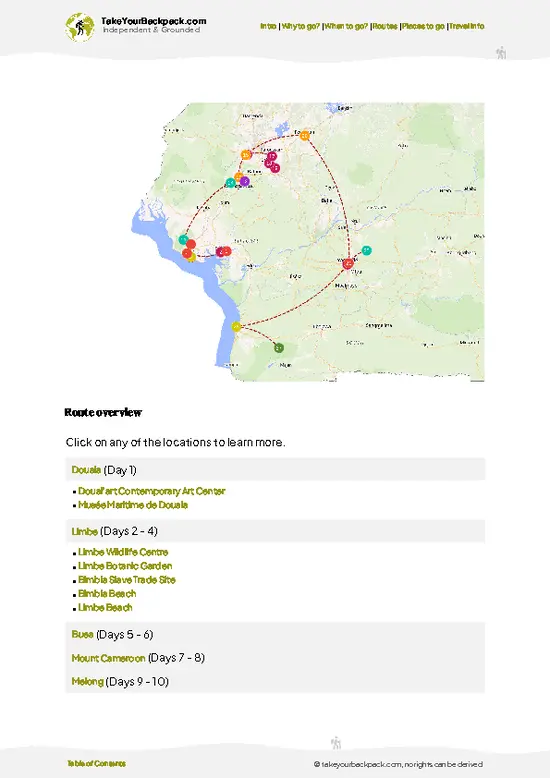
example page 0 from our offline Travel Guide for Cameroon
example page 1 from our offline Travel Guide for Cameroon
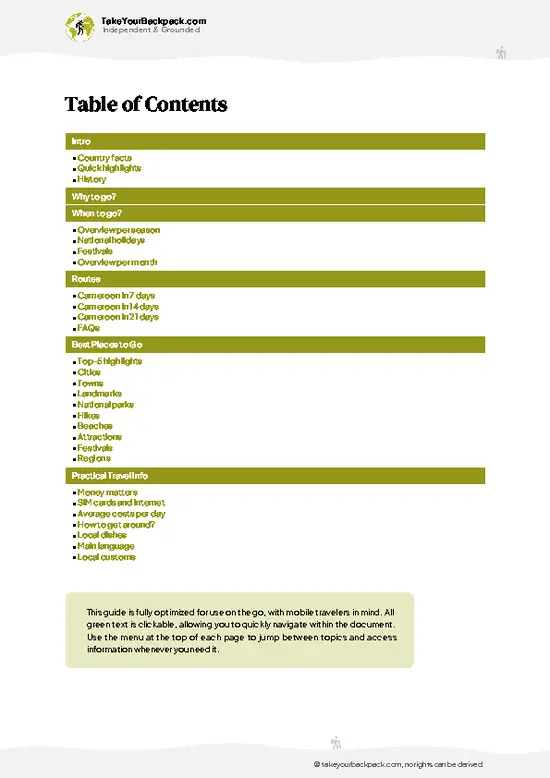
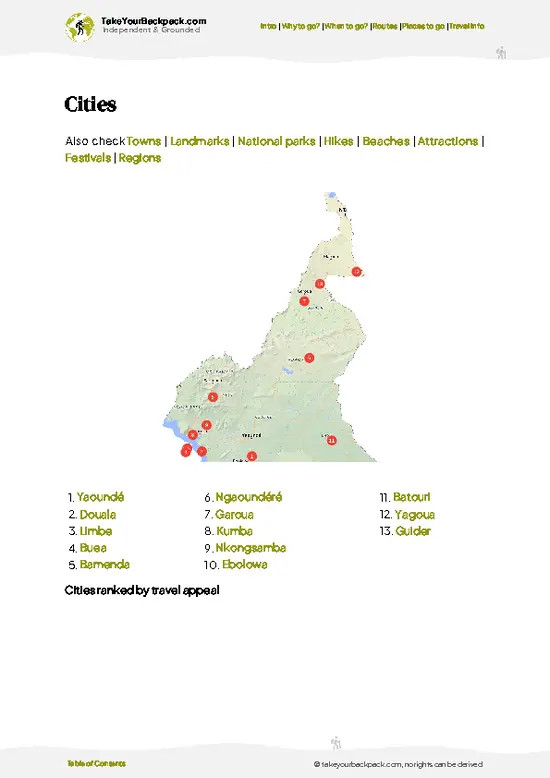
example page 2 from our offline Travel Guide for Cameroon
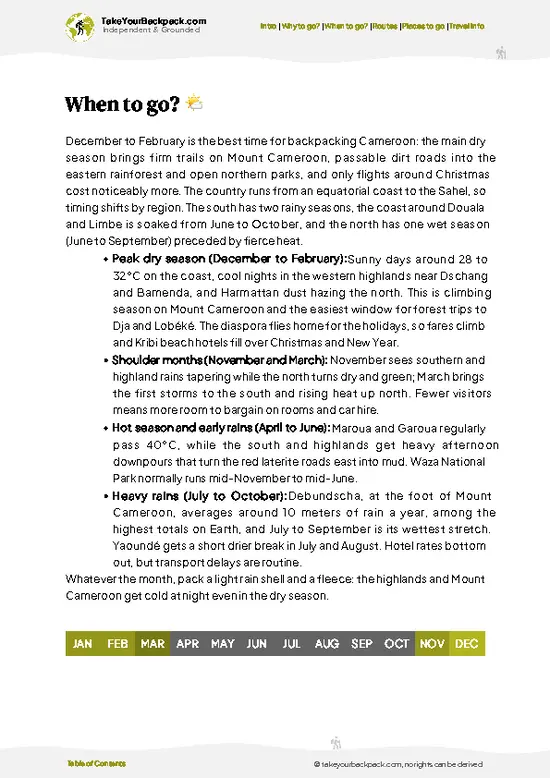
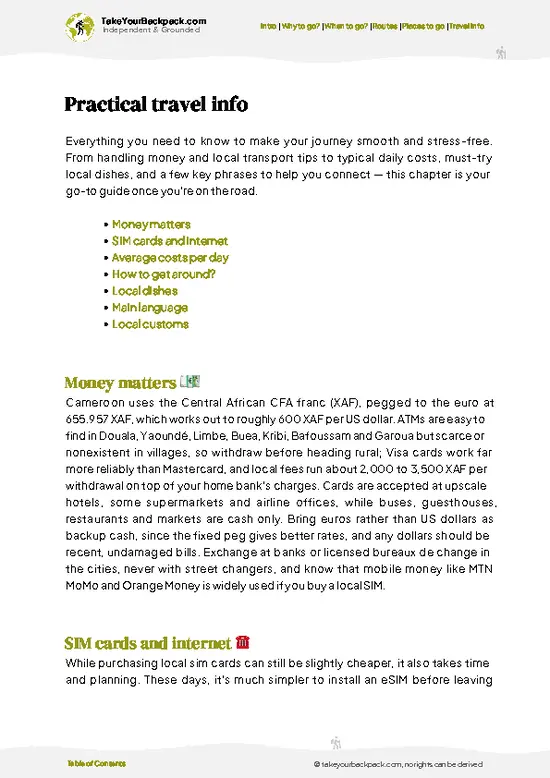
example page 3 from our offline Travel Guide for Cameroon
example page 4 from our offline Travel Guide for Cameroon
example page 5 from our offline Travel Guide for Cameroon
example page 6 from our offline Travel Guide for Cameroon
example page 7 from our offline Travel Guide for Cameroon
The digital guide (383 pages) contains:
95 highlights, ranked by travel appeal
Optimized 7, 14 & 21-day travel routes
Cities, national parks, landmarks, beaches
How to get around
Offline-friendly for travel without Wi-Fi
👉 Click to see all 30+ guide features

📅 Plan smarter in minutes, not weeks
Month by month travel advice
Festivals & national holidays
Budget expectations

🗺️ Go to the right places, skip the overrated ones
Honest pros & cons of destinations
Top hikes, parks & viewpoints
Lesser-known places most travelers miss
Clear “worth it vs skip it” guidance

🛏️ Travel smoothly without rookie mistakes
Best areas to stay
Transport systems explained simply
Common scams & safety advice
SIM cards, money & practical tips

🌍 Understand the country, not just visit it
Culture & traditions
52 Essential phrases & customs
Festivals worth planning around
Traveler-friendly historical context
Insights that make places more meaningful

📱 Built for real travel conditions
Fully downloadable PDF
Works completely offline
Optimized for phone use
Useful in remote areas & buses
Everything in one place
Save weeks of stressful planning
Get instant access to your full guide. 30‑day money-back guarantee.


By proceeding you agree to our terms.
Sent to your inbox immediately after payment • 100% Secure Checkout
Best Backpacking Travel Advisor 2025 tourism awardBest Backpacking
Travel Advisor
2025
What others say about Take Your Backpack Guides:
⭐⭐⭐⭐⭐
Fantastic, amazing amount of information!
⭐⭐⭐⭐⭐
My goodness this is amazing, it's what I've been looking for hats off too you!
⭐⭐⭐⭐⭐
I think this is absolutely BRILLIANT
⭐⭐⭐⭐
Very complete and informative. It's still missing places, but I gotta to commend you
⭐⭐⭐⭐⭐
This is truly amazing, thank you, can't wait to explore it with my kids!
⭐⭐⭐⭐⭐
Awesome resource, thank you!
⭐⭐⭐⭐⭐
This is amazing! Can't wait to explore the ones I haven't seen
⭐⭐⭐⭐
I love this! Well done, great idea.
⭐⭐⭐⭐⭐
Thanks for taking the time to make this gem!
⭐⭐⭐⭐⭐
This might be the best website I've ever seen.
⭐⭐⭐⭐⭐
Congratulations, and thank you so much for your work; it's incredibly valuable.
⭐⭐⭐⭐
In all seriousness I think you did a great job pointing out the important spots
⭐⭐⭐⭐⭐
10/10 very good
⭐⭐⭐⭐⭐
As someone who's only just starting to visit regularly this is awesome, thank you.
⭐⭐⭐⭐
Thank you very much! I'm going to visit my dad, it's going to be very useful!
⭐⭐⭐⭐⭐
This is really cool! We'll be travelling for the first time and this definitely come in handy.
⭐⭐⭐⭐⭐
You are now our minister of culture, congratulations 👨‍💼
⭐⭐⭐⭐⭐
Just wanted to tell you that this is a pearl! Going to follow your recommendations.
⭐⭐⭐⭐⭐
This is so cool. I'll definitely be using the resource for my travels soon.
⭐⭐⭐⭐⭐
This is very impressive! Good work.
⭐⭐⭐⭐⭐
This is an amazing and informative site. Very well done!

🛏️ Where to stay?Where to Stay: Cameroon Edition

Yes — hostels, budget guesthouses and low‑cost hotels are available in Cameroon’s main cities and tourist hubs for backpackers, but they concentrate in Douala, Yaoundé and a few regional towns so expect far fewer options in rural or highland areas and plan accordingly.
In Douala, Akwa offers the widest choice and nightlife with good transport links but only moderate nighttime security; Deïdo is cheapest and closest to markets and bus hubs yet busy and basic with lower safety after dark; Bonapriso gives quieter, safer stays at higher prices.
In Yaoundé, Bastos has safer, quieter expat‑style lodgings that cost more; Mokolo is the cheapest and most central near markets and buses but noisy and … read more 👉
Yes — hostels, budget guesthouses and low‑cost hotels are available in Cameroon’s main cities and tourist hubs for backpackers, but they concentrate in Douala, Yaoundé and a few regional towns so expect far fewer options in rural or highland areas and plan accordingly.
In Douala, Akwa offers the widest choice and nightlife with good transport links but only moderate nighttime security; Deïdo is cheapest and closest to markets and bus hubs yet busy and basic with lower safety after dark; Bonapriso gives quieter, safer stays at higher prices.
In Yaoundé, Bastos has safer, quieter expat‑style lodgings that cost more; Mokolo is the cheapest and most central near markets and buses but noisy and spartan; university areas (Ngoa‑Eké/Melen) host wallet‑friendly guesthouses and lively street food while being noisy and occasionally inconsistent on services.

If you enjoy meeting fellow travelers, consider choosing hostels with high ratings for atmosphere. On the other hand, if you prefer having your own space, a hotel might be a better option.

CameroonExplore Beyond This Category

👋 Meet the founderWho’s Behind Take Your Backpack?

Johan, backpacker and founder of TakeYourBackpackHi, I’m Johan (Netherlands 🇳🇱), the creator of TakeYourBackpack. Over the past decade, I’ve backpacked through 80+ countries across six continents, gaining extensive experience with independent travel, long-term trips, and overland routes.

This site is built on a combination of firsthand travel experience and carefully curated insights from other backpackers. Many guides are based on places I’ve personally visited, while others bring together tips, observations, and practical advice shared by trusted travelers I’ve met along the way.

The goal is to provide realistic, experience-driven guidance — not generic itineraries — so you can explore destinations with better context, clearer expectations, and more confidence.

Get full Cameroon guide •
Instant download • 95 highlights • Full Offline guide