×

Canada🇨🇦 | townsBanffSulphur Mountain gondola, hot springs, Bow Falls, hostel bunks | things to do and best time to go

Explore YukonExplore Charlottetown

Backpacking in Banff
🏆 Top picktown ranked #1
By Johan Kruseman 🇳🇱 | Updated October 23, 2026

Banff suits hikers, scramblers and slow travelers who want a trailhead within walking distance of a hostel bunk. It is less rewarding if you want cheap beds, empty streets or a place that feels undiscovered, because summer afternoons on Banff Avenue are shoulder to shoulder. The town sits in the Rocky Mountains of Alberta, Canada, west of Calgary and easy to reach by road. Streets are tidy and flat, lined with outfitters and bakeries, and every cross street ends in a wall of gray limestone, so you get a mountain view while buying a coffee. Evenings are social: hostel common rooms and pubs make meeting other backpackers simple. I pick up bread and cheese at the grocery on Banff Avenue and eat on the Bow River bridge, where the water runs jade green and you watch the light slide down Cascade Mountain for free. Unlike Canmore, which feels like a working mountain town, Banff is entirely built around the park.

Discover everything you want to know in the 📖 Canada Travel Guide.


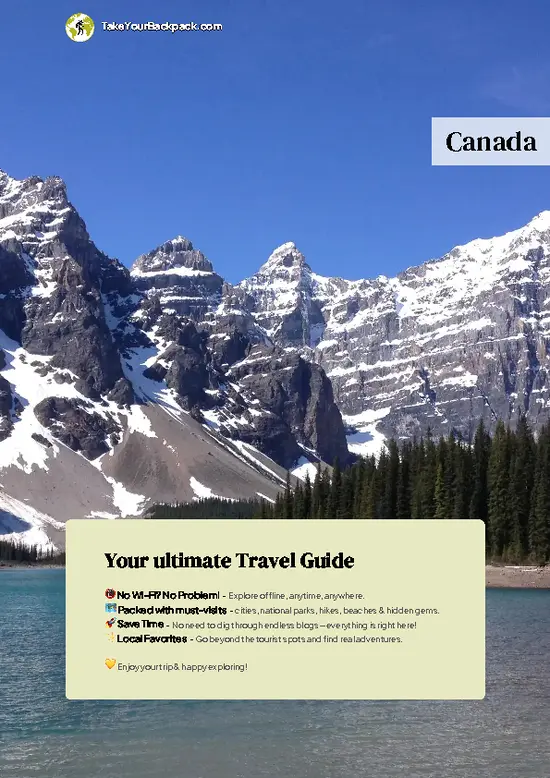
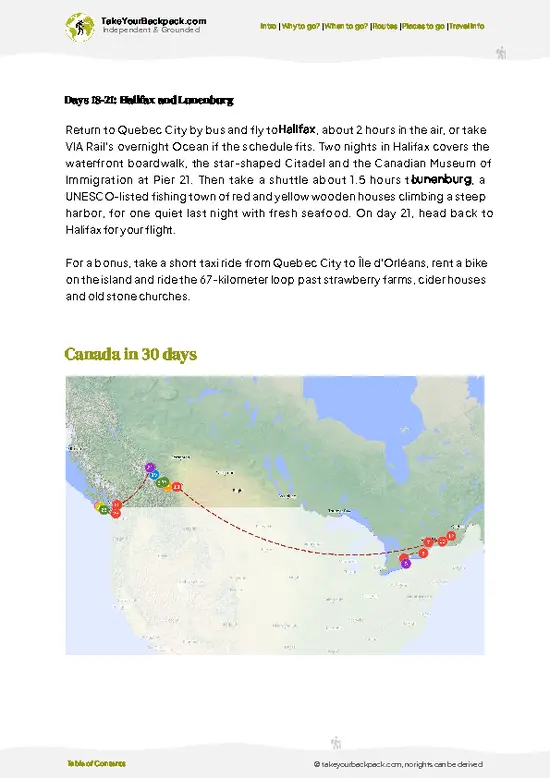
example page 0 from our offline Travel Guide for Canada
example page 1 from our offline Travel Guide for Canada
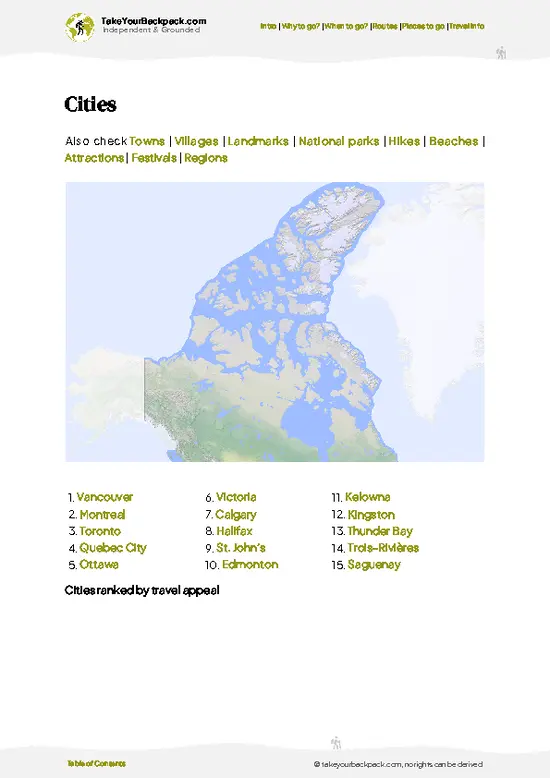
example page 2 from our offline Travel Guide for Canada
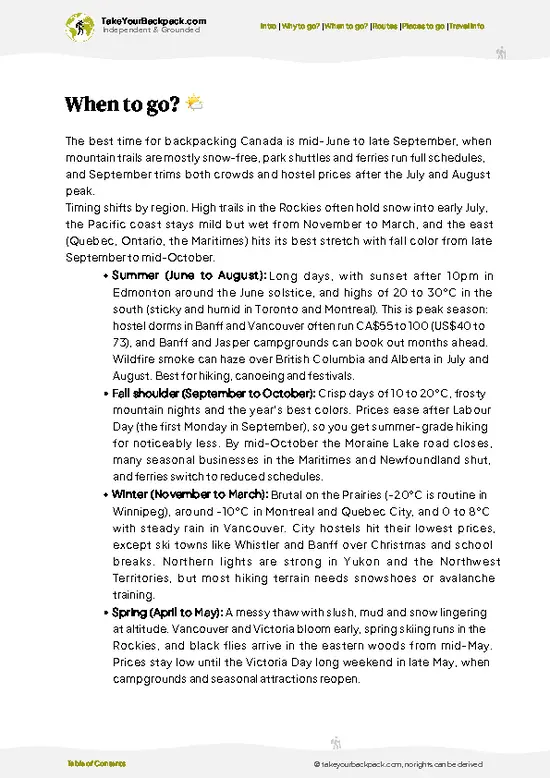
example page 3 from our offline Travel Guide for Canada
example page 4 from our offline Travel Guide for Canada
example page 5 from our offline Travel Guide for Canada
example page 6 from our offline Travel Guide for Canada
example page 7 from our offline Travel Guide for Canada
Loading the map 🌍
CLICK TO FILTER
cities
towns
villages
landmarks
national parks
hikes
beaches
attractions
festivals
regions
SHOW COUNTRY’S BESTSHOW ALL

✨ Why go?
Ranked #1 town in Canada
Reasons people choose to visit here

Banff earns a place on a Rockies route because the trails start where the buses stop. You can sleep in a small hostel dorm in town, catch a morning shuttle to a lake, and be back for dinner without renting a car. Most backpackers give it two to four days, long enough to hike one big day and fill the rest with short walks, a soak and a cheap pub night. The Banff Upper Hot Springs are a good example: you float in mineral water with pines and rock faces around you, then walk back down the hill to your bed. Food runs from bakeries and poutine counters to a few proper sit-down restaurants, so you are never stuck with trail mix. The social side is real, since shared dorms and the cheap Roam transit buses put solo travelers next to each other constantly. Hikers, photographers and solo travelers get … read more 👉
Banff earns a place on a Rockies route because the trails start where the buses stop. You can sleep in a small hostel dorm in town, catch a morning shuttle to a lake, and be back for dinner without renting a car. Most backpackers give it two to four days, long enough to hike one big day and fill the rest with short walks, a soak and a cheap pub night. The Banff Upper Hot Springs are a good example: you float in mineral water with pines and rock faces around you, then walk back down the hill to your bed. Food runs from bakeries and poutine counters to a few proper sit-down restaurants, so you are never stuck with trail mix. The social side is real, since shared dorms and the cheap Roam transit buses put solo travelers next to each other constantly. Hikers, photographers and solo travelers get the most from it. If you dislike crowds, stay midweek and start walking before nine.

💡 HighlightsKey sights and experiences for travelers

  1. Banff Gondola: The cable car climbs Sulphur Mountain to a boardwalk along the ridge with views over the town, the Bow Valley and six mountain ranges. Go first thing in the morning or after dinner in summer, when lines are shorter and the air is clear. Tickets run about US$55 to 70 depending on season, and you should allow 2 to 3 hours including the walk to the old weather station.
  2. Cave and Basin National Historic Site: This is where railway workers found the hot springs that led to Canada's first national park. You walk through a tunnel into a cave that smells faintly of sulfur and look down on a warm turquoise pool. The exhibits are good and the marsh boardwalk outside is quiet. Entry is about US$8 to 9, and you need 1.5 to 2 hours. Visit midday when light reaches the pool.
  3. Banff Upper Hot
… read more 👉
  1. Banff Gondola: The cable car climbs Sulphur Mountain to a boardwalk along the ridge with views over the town, the Bow Valley and six mountain ranges. Go first thing in the morning or after dinner in summer, when lines are shorter and the air is clear. Tickets run about US$55 to 70 depending on season, and you should allow 2 to 3 hours including the walk to the old weather station.
  2. Cave and Basin National Historic Site: This is where railway workers found the hot springs that led to Canada's first national park. You walk through a tunnel into a cave that smells faintly of sulfur and look down on a warm turquoise pool. The exhibits are good and the marsh boardwalk outside is quiet. Entry is about US$8 to 9, and you need 1.5 to 2 hours. Visit midday when light reaches the pool.
  3. Banff Upper Hot Springs: A large outdoor pool of mineral water, around 37 to 40°C, set against forested slopes. Late evening in cooler months is best, when steam rises into cold air. Entry is roughly US$12 to 15, with towel and swimsuit rental extra, and a soak takes about 1 to 2 hours.
  4. Bow Falls: A short, wide drop on the Bow River below the Fairmont Banff Springs hotel, reached on a flat riverside path from town. Spring and early summer meltwater make it loudest and most dramatic. It is free and takes 45 minutes to an hour including the walk.
  5. Banff Park Museum National Historic Site: A 1903 log building holding old taxidermy specimens, wood paneling and the smell of aged timber. It shows how early park managers catalogued the wildlife. It makes a good rainy-afternoon stop. Entry is about US$8 to 9, and 45 minutes is enough.
Beyond Banff, Lake Minnewanka, Johnston Canyon, the Vermilion Lakes and Lake Louise all work as day trips by road or shuttle. For a first visit to Banff, start with the Banff Gondola on a clear morning, then finish the day in the Upper Hot Springs.
Spotted a mistake or missing something? Contact us.

Things to do around Banff

Ratings based on Tripadvisor reviews. When you book through this link, you support our work at no extra cost to you.

🏘️ NeighborhoodsNeighborhood guide to Banff

Banff is small enough to cover on foot in a day, and each corner has its own texture, from the tourist-packed main strip to quiet riverside trails.
  • Banff Avenue and Downtown: The main drag runs straight toward Cascade Mountain, which fills the end of the street like a gray wall. Expect crowds, the smell of fudge and waffle cones, and pubs with live music late into the night. Walk it at dusk with the peaks going pink behind the souvenir shops.
  • Bow River and Central Park: A five-minute stroll from the avenue, the river runs a cold, milky turquoise under the pedestrian bridge. Gravel paths and picnic benches stay quiet in the morning, with elk sometimes grazing on the lawns. You get a free, calm view of Mount Rundle.
  • Tunnel Mountain and Tunnel Mountain Road: A steep uphill walk of 20 to 30 minutes
… read more 👉
Banff is small enough to cover on foot in a day, and each corner has its own texture, from the tourist-packed main strip to quiet riverside trails.
  • Banff Avenue and Downtown: The main drag runs straight toward Cascade Mountain, which fills the end of the street like a gray wall. Expect crowds, the smell of fudge and waffle cones, and pubs with live music late into the night. Walk it at dusk with the peaks going pink behind the souvenir shops.
  • Bow River and Central Park: A five-minute stroll from the avenue, the river runs a cold, milky turquoise under the pedestrian bridge. Gravel paths and picnic benches stay quiet in the morning, with elk sometimes grazing on the lawns. You get a free, calm view of Mount Rundle.
  • Tunnel Mountain and Tunnel Mountain Road: A steep uphill walk of 20 to 30 minutes leads to forest smelling of pine and wet earth, with hoodoo viewpoints and the Banff Springs Hotel across the valley. It is quiet after dark and unlit in places, so bring a headlamp. The reward is the short summit hike over town.
  • Sulphur Mountain and Upper Hot Springs: South of the river, the road climbs to a pool where the water steams and smells of sulfur, even in snow. Hike the switchbacks up to the gondola summit (about 5.5 km one way) for a ridge boardwalk and wind-blasted views. Weekend lines are long.
  • Banff Springs and Spray River: Across the Bow, the castle-like hotel anchors a flatter area of riverside trails, golf fairways and the roaring Bow Falls. Walkable but a little far, it is pricey and refined compared with downtown. The payoff is a peaceful riverbank loop.

⌛️ 1 daySeeing the highlights in 24 hours

8:00 AM, Banff Gondola: Ride up Sulphur Mountain before the tour buses arrive. Walk the ridge boardwalk to the old weather station and look back at the town, the river bend and the long valley. It gives you the layout of Banff in one view. Take the gondola or hike the switchbacks down, then walk toward the river.
10:30 AM, Banff Upper Hot Springs: Soak briefly if you want a warm start, or skip and keep walking. The road down passes quiet residential streets and the Fairmont Banff Springs hotel.
11:30 AM, Bow Falls: Follow the riverside path to the falls, where the water is noisy and cold. Sit on the rocks for a while before heading back along the Bow River.
1:00 PM, Banff Avenue lunch: Cross the Bow River bridge and pick a bakery or sandwich counter on the main street. Eat outside and watch elk … read more 👉
8:00 AM, Banff Gondola: Ride up Sulphur Mountain before the tour buses arrive. Walk the ridge boardwalk to the old weather station and look back at the town, the river bend and the long valley. It gives you the layout of Banff in one view. Take the gondola or hike the switchbacks down, then walk toward the river.
10:30 AM, Banff Upper Hot Springs: Soak briefly if you want a warm start, or skip and keep walking. The road down passes quiet residential streets and the Fairmont Banff Springs hotel.
11:30 AM, Bow Falls: Follow the riverside path to the falls, where the water is noisy and cold. Sit on the rocks for a while before heading back along the Bow River.
1:00 PM, Banff Avenue lunch: Cross the Bow River bridge and pick a bakery or sandwich counter on the main street. Eat outside and watch elk or hikers wander past.
2:30 PM, Cave and Basin: Walk the path west of town to the birthplace of the national park. Step through the tunnel into the cave, then do the short marsh boardwalk where warm springs keep the water open in winter.
4:30 PM, Fenland Trail: This flat loop through spruce forest and marsh near the edge of town is usually missed by day visitors. It is quiet, shaded and good for birdsong, with views of Mount Norquay between the trees.
6:30 PM, Vermilion Lakes: Take a bus or walk to the lakeside pullouts and watch the light fade over Mount Rundle. Finish with a pub dinner on Banff Avenue and a chat with other travelers.

🌤️ When to go?Weather, crowds, and seasonal trade-offs

  • Summer (June to August): Highs reach 20 to 24°C (68 to 75°F), nights drop to 4 to 8°C (39 to 46°F), and daylight lasts past 9 pm. Trails are open and lakes are brilliant, but crowds and prices peak, and campsites book out months ahead.
  • Fall (September to October): Days run 8 to 16°C (46 to 61°F) with golden larches in late September. Crowds thin, prices ease, and early snow is possible by October.
  • Winter (December to March): Highs sit around -5°C (23°F) and lows can hit -20°C (-4°F) or colder. Days are short, but ski hills and frozen lakes open, and rooms spike around Christmas and holiday weekends.
  • Spring (April to May): Muddy and unpredictable, with 5 to 14°C (41 to 57°F). Higher trails are snowbound, but rates are the lowest of the year and wildlife is easier to spot.
Book summer beds as early … read more 👉
  • Summer (June to August): Highs reach 20 to 24°C (68 to 75°F), nights drop to 4 to 8°C (39 to 46°F), and daylight lasts past 9 pm. Trails are open and lakes are brilliant, but crowds and prices peak, and campsites book out months ahead.
  • Fall (September to October): Days run 8 to 16°C (46 to 61°F) with golden larches in late September. Crowds thin, prices ease, and early snow is possible by October.
  • Winter (December to March): Highs sit around -5°C (23°F) and lows can hit -20°C (-4°F) or colder. Days are short, but ski hills and frozen lakes open, and rooms spike around Christmas and holiday weekends.
  • Spring (April to May): Muddy and unpredictable, with 5 to 14°C (41 to 57°F). Higher trails are snowbound, but rates are the lowest of the year and wildlife is easier to spot.
Book summer beds as early as you can, or visit in mid-September for the best balance of weather and price.


source: climatestotravel.comJANJanuary: fair for travelingFEBFebruary: fair for travelingMARMarch: good for travelingAPRApril: good for travelingMAYMay: highly recommended for travelingJUNJune: excellent for travelingJULJuly: excellent for travelingAUGAugust: excellent for travelingSEPSeptember: highly recommended for travelingOCTOctober: good for travelingNOVNovember: fair for travelingDECDecember: fair for traveling

✈️ The backpacker research shortcutCanada Travel Guide

An offline-friendly backpacking guide with optimized travel routes, ranked highlights, transport advice, and the best areas to stay.
example page 0 from our offline Travel Guide for Canada
example page 1 from our offline Travel Guide for Canada
example page 2 from our offline Travel Guide for Canada
example page 3 from our offline Travel Guide for Canada
example page 4 from our offline Travel Guide for Canada
example page 5 from our offline Travel Guide for Canada
example page 6 from our offline Travel Guide for Canada
example page 7 from our offline Travel Guide for Canada
The digital guide (385 pages) contains:
✅ 125 highlights, ranked by travel appeal
✅ Optimized 14, 21 & 30-day travel routes
✅ Cities, national parks, landmarks, beaches
✅ How to get around
✅ Offline-friendly for travel without Wi-Fi
👉 Click to see all 30+ guide features

📅 Plan smarter in minutes, not weeks
✅ Month by month travel advice
✅ Festivals & national holidays
✅ Budget expectations

🗺️ Go to the right places, skip the overrated ones
✅ Honest pros & cons of destinations
✅ Top hikes, parks & viewpoints
✅ Lesser-known places most travelers miss
✅ Clear “worth it vs skip it” guidance

🛏️ Travel smoothly without rookie mistakes
✅ Best areas to stay
✅ Transport systems explained simply
✅ Common scams & safety advice
✅ SIM cards, money & practical tips

🌍 Understand the country, not just visit it
✅ Culture & traditions
✅ Local customs
✅ Festivals worth planning around
✅ Traveler-friendly historical context
✅ Insights that make places more meaningful

📱 Built for real travel conditions
✅ Fully downloadable PDF
✅ Works completely offline
✅ Optimized for phone use
✅ Useful in remote areas & buses
✅ Everything in one place
Stop searching, start planning
Get instant access to your full guide. 30‑day money-back guarantee.
+ Add another guide for just

By proceeding you agree to our terms.
Sent to your inbox immediately after payment • 100% Secure Checkout
Best Backpacking Travel Advisor 2025 tourism awardBest Backpacking
Travel Advisor
2025
What others say about Take Your Backpack Guides:
⭐⭐⭐⭐⭐
Fantastic, amazing amount of information!
⭐⭐⭐⭐⭐
My goodness this is amazing, it's what I've been looking for hats off too you!
⭐⭐⭐⭐⭐
I think this is absolutely BRILLIANT
⭐⭐⭐⭐
Very complete and informative. It's still missing places, but I gotta to commend you
⭐⭐⭐⭐⭐
This is truly amazing, thank you, can't wait to explore it with my kids!
⭐⭐⭐⭐⭐
Awesome resource, thank you!
⭐⭐⭐⭐⭐
This is amazing! Can't wait to explore the ones I haven't seen
⭐⭐⭐⭐
I love this! Well done, great idea.
⭐⭐⭐⭐⭐
Thanks for taking the time to make this gem!
⭐⭐⭐⭐⭐
This might be the best website I've ever seen.
⭐⭐⭐⭐⭐
Congratulations, and thank you so much for your work; it's incredibly valuable.
⭐⭐⭐⭐
In all seriousness I think you did a great job pointing out the important spots
⭐⭐⭐⭐⭐
10/10 very good
⭐⭐⭐⭐⭐
As someone who's only just starting to visit regularly this is awesome, thank you.
⭐⭐⭐⭐
Thank you very much! I'm going to visit my dad, it's going to be very useful!
⭐⭐⭐⭐⭐
This is really cool! We'll be travelling for the first time and this definitely come in handy.
⭐⭐⭐⭐⭐
You are now our minister of culture, congratulations 👨‍💼
⭐⭐⭐⭐⭐
Just wanted to tell you that this is a pearl! Going to follow your recommendations.
⭐⭐⭐⭐⭐
This is so cool. I'll definitely be using the resource for my travels soon.
⭐⭐⭐⭐⭐
This is very impressive! Good work.
⭐⭐⭐⭐⭐
This is an amazing and informative site. Very well done!

🛏️ Where to stay?How to pick the right area

The best place for a budget bed in Banff is central downtown, within a few blocks of Banff Avenue, where most hostels and cheaper rooms are clustered. Dorm beds run about US$40 to 80 a night in summer, and they sell out early, so reserve weeks ahead. The area is well lit and busy, and walking back at night feels easy, though the bars on the main street keep noise going until around 2 am. Choose a room away from the avenue if you need sleep.

Bus links are strongest here too, since the depot and the Roam stops are all a short walk away, so you can reach the hot springs and Lake Louise without a … read more 👉
The best place for a budget bed in Banff is central downtown, within a few blocks of Banff Avenue, where most hostels and cheaper rooms are clustered. Dorm beds run about US$40 to 80 a night in summer, and they sell out early, so reserve weeks ahead. The area is well lit and busy, and walking back at night feels easy, though the bars on the main street keep noise going until around 2 am. Choose a room away from the avenue if you need sleep.

Bus links are strongest here too, since the depot and the Roam stops are all a short walk away, so you can reach the hot springs and Lake Louise without a car. Food and groceries are also on your doorstep, which helps if you cook.

The quieter second choice is the Tunnel Mountain area, where a campground and some budget lodging sit up the hill about 2 km from downtown. You will wake to birdsong and forest air instead of late-night chatter, and the bus runs to the center in 10 to 15 minutes. Campsites cost roughly US$25 to 35 a night, but they fill quickly in summer and nights get cold. Outside peak season, prices drop and walk-in beds are easier to find.

🚌 Getting aroundHow to get from A to B

Banff is compact, and from the bus depot on Gopher Street it is a flat five-minute walk to Banff Avenue, with the mountains looming at the end of the street. Most backpackers walk and use the local Roam buses for anything farther. Traffic crawls on summer weekends, so a bus often beats a car.
  • Walking: Free, and the right choice for downtown, the Bow River paths and the walk up to Bow Falls. Expect crisp air, river noise and the occasional elk standing in your way. In winter, icy sidewalks make good boots worth carrying.
  • Roam Transit local buses: Routes 1 and 2 cover the town and the hot springs, and the fare is about US$2 to 3 per ride, with day passes around US$5 to 7. Buses run from about 6 am until late evening, with fewer on winter nights. Inside you get heated seats and sightlines up to
… read more 👉
Banff is compact, and from the bus depot on Gopher Street it is a flat five-minute walk to Banff Avenue, with the mountains looming at the end of the street. Most backpackers walk and use the local Roam buses for anything farther. Traffic crawls on summer weekends, so a bus often beats a car.
  • Walking: Free, and the right choice for downtown, the Bow River paths and the walk up to Bow Falls. Expect crisp air, river noise and the occasional elk standing in your way. In winter, icy sidewalks make good boots worth carrying.
  • Roam Transit local buses: Routes 1 and 2 cover the town and the hot springs, and the fare is about US$2 to 3 per ride, with day passes around US$5 to 7. Buses run from about 6 am until late evening, with fewer on winter nights. Inside you get heated seats and sightlines up to Sulphur Mountain.
  • Roam to Lake Louise and Moraine Lake areas: Route 8X and the regional services run about US$10 to 15 return for the longer trips, and the ride takes roughly 45 minutes to the lake. Seats fill on summer mornings, so go early, and you skip the parking scramble and the views come free on the highway.
  • Bike rental: Rentals cost about US$10 to 15 per hour or US$40 to 70 per day, and they suit the Bow Valley Parkway and the Legacy Trail toward Canmore. You feel the cold wind and smell the pine, though hills tire the legs quickly.
  • Rideshare and taxis: Taxis are available but cost more, with a short ride about US$10 to 15. Handy for late arrivals after buses stop, and the cab rides back to your bed after a night out.

👛 Costs (as of 23 October 2026)How expensive it really is

Banff costs about US$110 to 190 a day for a backpacker in high season, and prices are among the highest in Canada. The table below uses high-season dorm rates, and shoulder months usually run cheaper.
CategoryBudget RangeLocal Reality
Dorm accommodationUS$50 to 80Summer beds near Banff Avenue sell out weeks ahead, and winter rates can be slightly lower outside holidays.
MealsUS$35 to 55Grocery cooking and a sandwich lunch keep costs down, while a pub dinner runs US$20 to 30 before tip.
Local transportUS$5 to 15Walking is free, local Roam buses are US$2 to 3 a ride, and longer trips to Lake Louise cost more.
Basic activities/entry feesUS$10 to 25A Parks Canada day pass is about US$8 to 11 per adult, and hot springs entry is around US$10 to 15.
Miscellaneous expensesUS$10 to 15Laundry, bear spray
… read more 👉
Banff costs about US$110 to 190 a day for a backpacker in high season, and prices are among the highest in Canada. The table below uses high-season dorm rates, and shoulder months usually run cheaper.
CategoryBudget RangeLocal Reality
Dorm accommodationUS$50 to 80Summer beds near Banff Avenue sell out weeks ahead, and winter rates can be slightly lower outside holidays.
MealsUS$35 to 55Grocery cooking and a sandwich lunch keep costs down, while a pub dinner runs US$20 to 30 before tip.
Local transportUS$5 to 15Walking is free, local Roam buses are US$2 to 3 a ride, and longer trips to Lake Louise cost more.
Basic activities/entry feesUS$10 to 25A Parks Canada day pass is about US$8 to 11 per adult, and hot springs entry is around US$10 to 15.
Miscellaneous expensesUS$10 to 15Laundry, bear spray rental, coffee and the occasional pub drink add up quickly.
Total Daily BudgetUS$110 to 190Per person, per day, in high season.
Buy groceries at the supermarket in town and pack your own trail lunches to save US$15 or more a day.
⚠️ Prices can change and everyone travels differently, so take this as a rough guide. Hope it helps you plan your adventure!

🚌 Day tripsEasy escapes and nearby places

Banff is one of the easiest bases in the Rockies for day trips, with buses, tours and rental bikes all leaving from town.
Lake Louise and Moraine Lake: Turquoise water ringed by glaciers makes this the headline trip, and the lake is about 45 minutes away. Roam buses and the park shuttle cost roughly US$10 to 25 return, but seats must be reserved in peak season. Go in June to September, and arrive before 8 am, because first-timers who show up at noon face full lots and long lines.

Johnston Canyon: A catwalk bolted to limestone walls leads you past waterfalls in 30 minutes by bus or car. The lower falls are 1.2 km in, with the upper falls 2.7 km. Budget about US$5 to 10 for the bus, and go early or in winter, when the ice-covered falls are a draw. Sturdy shoes are a must on the wet steel.

Canmore: … read more 👉
Banff is one of the easiest bases in the Rockies for day trips, with buses, tours and rental bikes all leaving from town.
Lake Louise and Moraine Lake: Turquoise water ringed by glaciers makes this the headline trip, and the lake is about 45 minutes away. Roam buses and the park shuttle cost roughly US$10 to 25 return, but seats must be reserved in peak season. Go in June to September, and arrive before 8 am, because first-timers who show up at noon face full lots and long lines.

Johnston Canyon: A catwalk bolted to limestone walls leads you past waterfalls in 30 minutes by bus or car. The lower falls are 1.2 km in, with the upper falls 2.7 km. Budget about US$5 to 10 for the bus, and go early or in winter, when the ice-covered falls are a draw. Sturdy shoes are a must on the wet steel.

Canmore: A mellow mountain town 25 minutes away, with cheaper food and a lively craft beer scene. The Legacy Trail bike path runs most of the way, and the bus costs about US$7 to 10 return. Visit year round, since it works well on cloudy days when the peaks hide.
👉 Explore Canmore
Lake Minnewanka and Two Jack Lake: Just 15 minutes by car or a short seasonal bus ride, this deep blue lake has pebble shores and cold winds. Walk the shoreline or rent a kayak for about US$60 and up. Summer is best, though the trail is quieter in September, and many first-timers miss the sunset glow over Two Jack.

🛡️ SafetyScams, Hazards, and Annoyances

Banff is very safe, and the biggest risks come from wildlife and weather rather than crime. Elk, bears and sheep share the valley with you, so stay at least 30 meters from elk and 100 meters from bears, and never feed or approach any animal. On trails, carry bear spray (about US$50 to buy or rent), make noise on blind corners and hike in groups when you can. Weather turns fast, so pack layers even in July, and check road and avalanche conditions in winter.

In town, petty theft happens at trailheads and parking lots, where thieves target visible bags in parked cars, so leave nothing on the seats. Solo travelers will find downtown well lit and busy at night, though the dark walk up Tunnel Mountain Road is better with a headlamp or a ride. On the bar strip, watch your drink and keep an eye on … read more 👉
Banff is very safe, and the biggest risks come from wildlife and weather rather than crime. Elk, bears and sheep share the valley with you, so stay at least 30 meters from elk and 100 meters from bears, and never feed or approach any animal. On trails, carry bear spray (about US$50 to buy or rent), make noise on blind corners and hike in groups when you can. Weather turns fast, so pack layers even in July, and check road and avalanche conditions in winter.

In town, petty theft happens at trailheads and parking lots, where thieves target visible bags in parked cars, so leave nothing on the seats. Solo travelers will find downtown well lit and busy at night, though the dark walk up Tunnel Mountain Road is better with a headlamp or a ride. On the bar strip, watch your drink and keep an eye on your phone in crowded pubs. Scams are rare. The most common annoyance is the crowds and the parking tickets that follow ignoring signs.

FAQCommon questions from travelers

Banff is well worth a visit and far more than a stopover, thanks to Sulphur Mountain, the Bow River paths and the hot springs, plus Lake Louise 45 minutes away. The setting is among the most dramatic in North America, and you can hike, soak and ski from the same base. Dorm beds cost about US$50 to 80 in summer, so book early.
Most travelers need three to four days in Banff to cover the town, Tunnel Mountain, Sulphur Mountain and a day at Lake Louise. Add a fifth day for Johnston Canyon or a longer hike such as Cascade Amphitheatre, and a week if you want to ski or explore Yoho and Kootenay. Winter visitors may want an extra day for lift-served slopes.
Banff works as a long day trip from Calgary, which is roughly 1.5 hours away by road and about 130 km east. The Banff Airport Shuttle and Roam or Brewster buses run daily for around US$60 to 90 return, with 3 to 4 hours on the ground if you want a hike or a soak. A full day lets you see the town and one lake, though staying overnight gives you the sunrise and quieter trails.
⚠️ Things can change over time, so always validate details locally before you go.

Other Canadian towns near Banff

Explore more nearby:

  • Canmore—Grassi Lakes, Nordic Centre trails, Ha Ling summit, Quarry Lake| 18 km away
  • Revelstoke—Meadows in the Sky, railway museum, old-growth cedars, Columbia dam| 184 km away
  • Fernie—Three Sisters legend, Lizard Range, Elk River path, brick downtown| 190 km away

💡 Not sure where to go next?
Create a personalized itinerary for Canada including Banff and the places that fit your trip.

Generate my itinerary

👉 Discover all towns

Or checkout all Canada has to offer (think cities, towns, villages, national parks, hikes, beaches, festivals)
Country photo of Canada

We 💚 feedbackWhat to keep in mind

Banff works best as the first or last stop on a Rockies loop, paired with Lake Louise for turquoise water and Jasper for quieter trails. I would give it three nights, spend one on a big hike, and move on before the town starts to feel familiar. Bring layers and a refillable bottle.

✈️ When did I visit Canada?
As part of my 1.5 year travel around the world trip, I visited Canada in 2016.

✍️ Help improve this page!
The information on this page is based on my own backpacking experience in Canada, supplemented with up-to-date research and feedback from other travelers. Travel details can change, so if you notice anything outdated or incomplete, feel free to let me know.


🙋‍♂️ Give feedback

👋 Meet the founderWho’s Behind Take Your Backpack?

Johan, backpacker and founder of TakeYourBackpackHi, I’m Johan (Netherlands 🇳🇱), the creator of TakeYourBackpack. Over the past 3 decades, I’ve backpacked through 90+ countries across six continents, gaining extensive experience with independent travel, long-term trips, and overland routes.

This site is built on a combination of firsthand travel experience and carefully curated insights from other backpackers. Many guides are based on places I’ve personally visited, while others bring together tips, observations, and practical advice shared by trusted travelers I’ve met along the way.

The goal is to provide realistic, experience-driven guidance — not generic itineraries — so you can explore destinations with better context, clearer expectations, and more confidence.