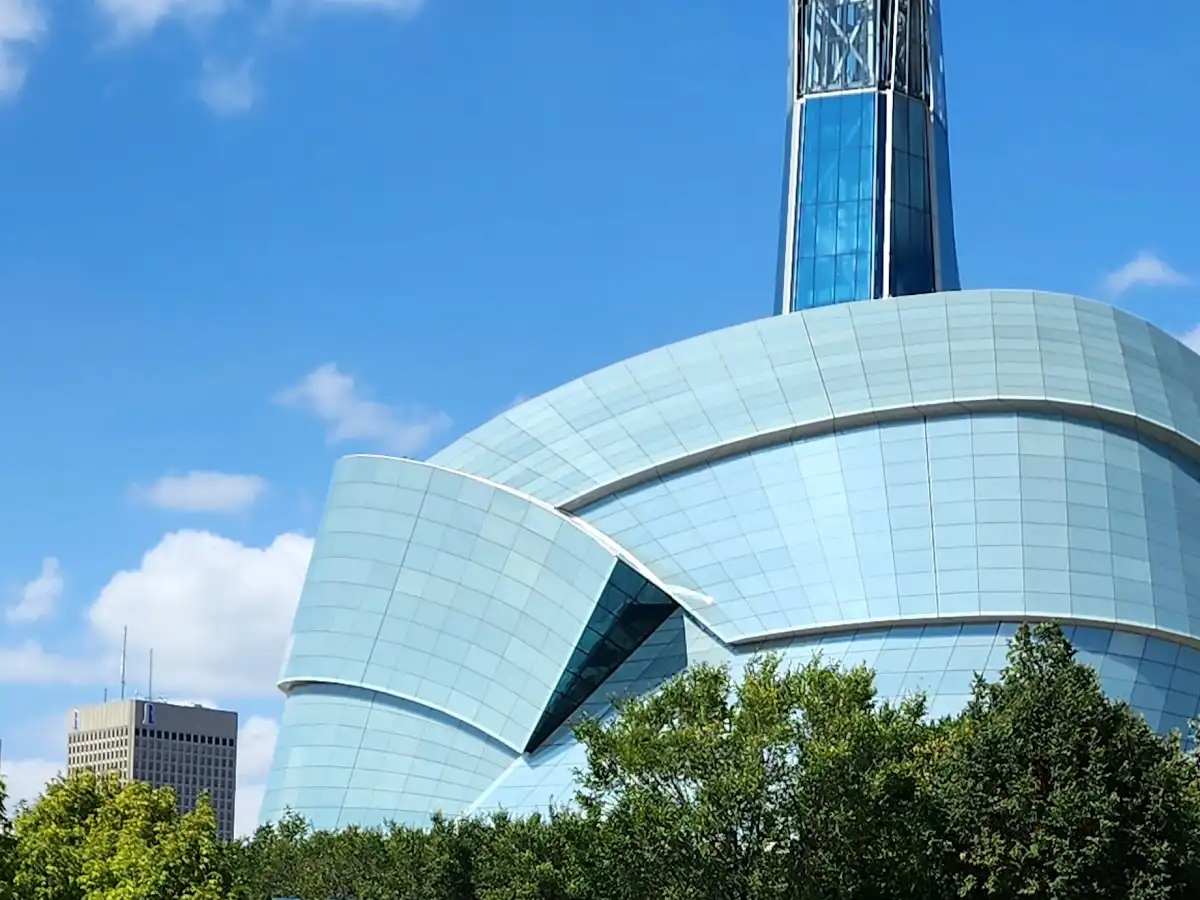

The Tower of Hope
Let’s cut through the brochure-speak: the Tower of Hope is not just a photo op. Yes, you’ll see people queuing for the skyline shot, but the real payoff is the feeling you get as you climb. The ramp spirals upward, sunlight shifting with every step, and you’re literally rising above the heavy stories below. Winnipeg’s flat horizon stretches out, and for a moment, you feel the weight and the possibility of change. It’s not about the view—it’s about the perspective. If you only have time for one thing, make it this. (Personal favorite.)
The Indigenous Perspectives Gallery
Forget the sanitized, textbook version of Canadian history. This gallery is raw, honest, and, at times, uncomfortable. You’ll find stories told by Indigenous voices, not filtered through a colonial lens. … read more 👉
Let’s cut through the brochure-speak: the Tower of Hope is not just a photo op. Yes, you’ll see people queuing for the skyline shot, but the real payoff is the feeling you get as you climb. The ramp spirals upward, sunlight shifting with every step, and you’re literally rising above the heavy stories below. Winnipeg’s flat horizon stretches out, and for a moment, you feel the weight and the possibility of change. It’s not about the view—it’s about the perspective. If you only have time for one thing, make it this. (Personal favorite.)
The Indigenous Perspectives Gallery
Forget the sanitized, textbook version of Canadian history. This gallery is raw, honest, and, at times, uncomfortable. You’ll find stories told by Indigenous voices, not filtered through a colonial lens. … read more 👉
The Tower of Hope
Let’s cut through the brochure-speak: the Tower of Hope is not just a photo op. Yes, you’ll see people queuing for the skyline shot, but the real payoff is the feeling you get as you climb. The ramp spirals upward, sunlight shifting with every step, and you’re literally rising above the heavy stories below. Winnipeg’s flat horizon stretches out, and for a moment, you feel the weight and the possibility of change. It’s not about the view—it’s about the perspective. If you only have time for one thing, make it this. (Personal favorite.)
The Indigenous Perspectives Gallery
Forget the sanitized, textbook version of Canadian history. This gallery is raw, honest, and, at times, uncomfortable. You’ll find stories told by Indigenous voices, not filtered through a colonial lens. The art, artifacts, and digital storytelling here don’t just inform—they challenge. If you’re looking for the real, unvarnished Canada, this is where you start. Expect to leave with more questions than answers, and that’s the point.
The Journey to Justice Exhibit
This isn’t your standard “heroes and villains” museum fare. The Journey to Justice exhibit drags Canada’s skeletons into the light—Japanese internment, the Komagata Maru, Viola Desmond’s fight. It’s blunt, sometimes infuriating, and absolutely necessary. The interactive displays let you dig into the legal and social battles that shaped the country. You’ll walk away with a sharper sense of how rights are won, lost, and fought for—often by people you’ve never heard of.
The Israel Asper Memorial Garden
Most people rush past the outdoor spaces, but this garden is a reset button for your brain. It’s not manicured for Instagram; it’s designed for reflection. The water, stone, and native prairie grasses create a quiet space to process everything you’ve just seen inside. If the museum feels overwhelming—and it will—this is where you catch your breath and remember why the fight for rights matters.
The Interactive Human Rights Table
This is not a dusty display case. The digital table lets you dive into global human rights stories, compare struggles across continents, and even add your own voice. It’s tactile, fast-moving, and surprisingly addictive. You’ll see kids and adults alike getting sucked in, debating, and sometimes arguing. It’s the museum’s way of saying: this isn’t just history, it’s happening now.
The Architecture Itself
You can’t ignore the building. It’s a fortress of glass and stone, intentionally disorienting, with ramps that twist and light that changes as you move. The design is meant to unsettle, to make you feel the journey from darkness to light. It’s not comfortable, and that’s the point. Every step is a reminder that human rights are a work in progress—never finished, always evolving.
Let’s cut through the brochure-speak: the Tower of Hope is not just a photo op. Yes, you’ll see people queuing for the skyline shot, but the real payoff is the feeling you get as you climb. The ramp spirals upward, sunlight shifting with every step, and you’re literally rising above the heavy stories below. Winnipeg’s flat horizon stretches out, and for a moment, you feel the weight and the possibility of change. It’s not about the view—it’s about the perspective. If you only have time for one thing, make it this. (Personal favorite.)
The Indigenous Perspectives Gallery
Forget the sanitized, textbook version of Canadian history. This gallery is raw, honest, and, at times, uncomfortable. You’ll find stories told by Indigenous voices, not filtered through a colonial lens. The art, artifacts, and digital storytelling here don’t just inform—they challenge. If you’re looking for the real, unvarnished Canada, this is where you start. Expect to leave with more questions than answers, and that’s the point.
The Journey to Justice Exhibit
This isn’t your standard “heroes and villains” museum fare. The Journey to Justice exhibit drags Canada’s skeletons into the light—Japanese internment, the Komagata Maru, Viola Desmond’s fight. It’s blunt, sometimes infuriating, and absolutely necessary. The interactive displays let you dig into the legal and social battles that shaped the country. You’ll walk away with a sharper sense of how rights are won, lost, and fought for—often by people you’ve never heard of.
The Israel Asper Memorial Garden
Most people rush past the outdoor spaces, but this garden is a reset button for your brain. It’s not manicured for Instagram; it’s designed for reflection. The water, stone, and native prairie grasses create a quiet space to process everything you’ve just seen inside. If the museum feels overwhelming—and it will—this is where you catch your breath and remember why the fight for rights matters.
The Interactive Human Rights Table
This is not a dusty display case. The digital table lets you dive into global human rights stories, compare struggles across continents, and even add your own voice. It’s tactile, fast-moving, and surprisingly addictive. You’ll see kids and adults alike getting sucked in, debating, and sometimes arguing. It’s the museum’s way of saying: this isn’t just history, it’s happening now.
The Architecture Itself
You can’t ignore the building. It’s a fortress of glass and stone, intentionally disorienting, with ramps that twist and light that changes as you move. The design is meant to unsettle, to make you feel the journey from darkness to light. It’s not comfortable, and that’s the point. Every step is a reminder that human rights are a work in progress—never finished, always evolving.
Spotted a mistake or missing something? Contact us.
v2.webp)


Best Backpacking
Hi, I’m Johan (Netherlands 🇳🇱), the creator of TakeYourBackpack. Over the past decade, I’ve backpacked through 80+ countries across six continents, gaining extensive experience with independent travel, long-term trips, and overland routes.