
×

Canada🇨🇦 | citiesHalifaxStar fort, harbor boardwalk, Titanic history, oyster pubs | things to do and best time to go

Explore Wasaga BeachExplore Montreal

Backpacking in Halifax
👍 Recommendedcity ranked #8
By Johan Kruseman 🇳🇱 | Updated October 22, 2026

Halifax is compact enough that most of what matters sits within a 20-minute walk of the waterfront, so you can skip rental wheels entirely. The city sits on Canada’s Atlantic coast, in Nova Scotia, on a hilly peninsula facing a deep harbor. Expect gulls, diesel from ferries, and wet wood on the boardwalk. I once left my hostel without checking the bus pass rules and paid cash fare in exact change I did not have, which taught me to load a transit card or just walk, because drivers here do not make change. It suits food-minded travelers, history fans and anyone using it as a launch into Nova Scotia. Nightlife-chasers wanting big-city scale will find it small, and winter fog and drizzle test patience. A first day could run from the boardwalk to the hilltop fort, then oysters and a pint on Argyle Street.

Discover everything you want to know in the 📖 Canada Travel Guide.


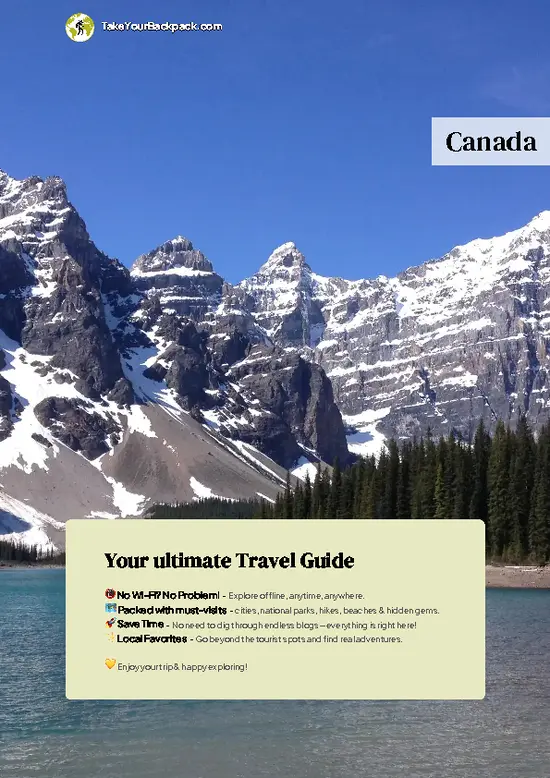
example page 0 from our offline Travel Guide for Canada
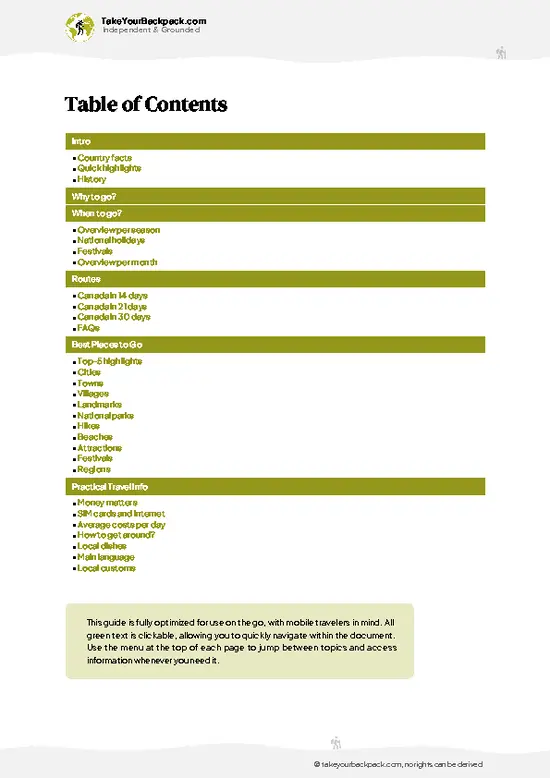
example page 1 from our offline Travel Guide for Canada
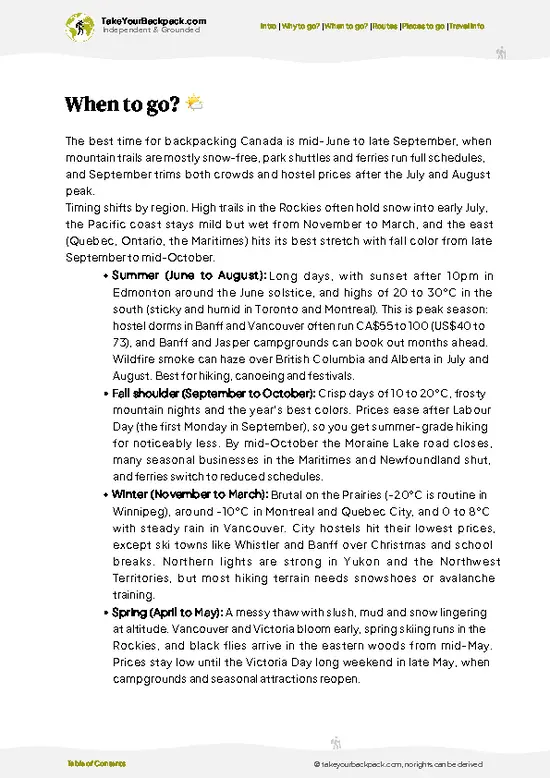
example page 2 from our offline Travel Guide for Canada
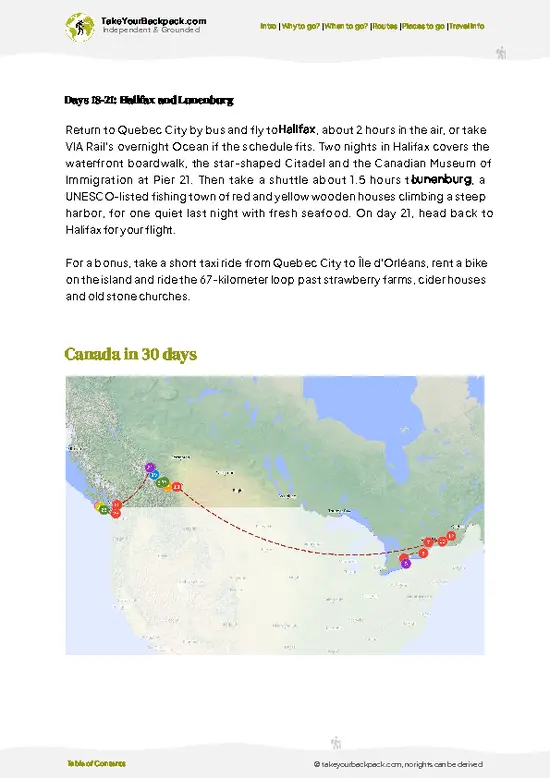
example page 3 from our offline Travel Guide for Canada
example page 4 from our offline Travel Guide for Canada
example page 5 from our offline Travel Guide for Canada
example page 6 from our offline Travel Guide for Canada
example page 7 from our offline Travel Guide for Canada
Loading the map 🌍
CLICK TO FILTER
cities
towns
villages
landmarks
national parks
hikes
beaches
attractions
festivals
regions
SHOW COUNTRY’S BESTSHOW ALL

✨ Why go?
Ranked #8 city in Canada
What makes this city worth visiting

Halifax works for backpackers because it packs a lot into a walkable core, with the Halifax Waterfront Boardwalk tying the harbor, pubs and museums together, so you rarely need transport between sights. It also anchors a Nova Scotia loop. Most travelers fly or bus in, settle into a hostel for a few nights, and use the city for rest, laundry, and stocking up before heading to the coast or Cape Breton. Food is a real draw: seafood chowder, lobster rolls, and a craft beer scene that has grown well beyond the usual chains. The student population, thanks to several universities, keeps Argyle Street and the surrounding blocks lively most nights of the week, and easy to join solo. Two or three days is the right amount for most routes. Longer, and you will be repeating yourself unless you are using it as a base.

💡 HighlightsKey sights and experiences for travelers

  1. Halifax Citadel National Historic Site: the star-shaped hilltop fort, with costumed soldiers, a kilted guard and big harbor views. Go in the morning for fewer tour groups. About US$9 to 13 in season, 1.5 to 2 hours.
  2. Halifax Waterfront Boardwalk: roughly 4 kilometers of wooden planks past ships, buskers and food stalls. Evenings are best, with lights on the water. Free, 1 to 2 hours.
  3. Maritime Museum of the Atlantic: Titanic artifacts, including a recovered deck chair, and the story of the 1917 Halifax Explosion. Open daily in summer. About US$6 to 9, 1.5 hours.
  4. Pier 21 Canadian Museum of Immigration: the former immigration shed where about a million newcomers arrived. Personal stories and artifacts. Around US$12 to 15, 1.5 to 2 hours.
  5. Halifax Public Gardens: Victorian gardens with fountains, a
… read more 👉
  1. Halifax Citadel National Historic Site: the star-shaped hilltop fort, with costumed soldiers, a kilted guard and big harbor views. Go in the morning for fewer tour groups. About US$9 to 13 in season, 1.5 to 2 hours.
  2. Halifax Waterfront Boardwalk: roughly 4 kilometers of wooden planks past ships, buskers and food stalls. Evenings are best, with lights on the water. Free, 1 to 2 hours.
  3. Maritime Museum of the Atlantic: Titanic artifacts, including a recovered deck chair, and the story of the 1917 Halifax Explosion. Open daily in summer. About US$6 to 9, 1.5 hours.
  4. Pier 21 Canadian Museum of Immigration: the former immigration shed where about a million newcomers arrived. Personal stories and artifacts. Around US$12 to 15, 1.5 to 2 hours.
  5. Halifax Public Gardens: Victorian gardens with fountains, a bandstand and ponds, best from June to September. Free, 45 minutes.
  6. Fairview Lawn Cemetery: the graves of Titanic victims, quiet and sobering. Free, 30 to 45 minutes, easier in daylight.
  7. Alexander Keith’s Brewery tour: a costumed tour with period songs and tastings. Around US$25 to 30, 1 hour. Book ahead for evenings.
  8. Halifax Seaport Farmers’ Market: one of the oldest continuously running markets in North America, with baked goods and local crafts. Best Saturday morning. Browsing is free, 1 hour.
For day trips from Halifax, Peggys Cove lighthouse, the old town of Lunenburg and the Annapolis Valley wineries are all reachable. The Citadel and the Public Gardens pair neatly in one day, since the gardens are a short, flat walk downhill from the fort.
Spotted a mistake or missing something? Contact us.

Things to do around Halifax

Ratings based on Tripadvisor reviews. When you book through this link, you support our work at no extra cost to you.

🏘️ NeighborhoodsUnderstanding the local layout

Halifax packs its best areas into a peninsula you can cross on foot in under an hour, which is why a car is a burden here and boots are the smarter tool. Each pocket changes within a few blocks.
  • Downtown and the Waterfront: Gulls, creaking boardwalk planks and the smell of fried haddock and salt. The boardwalk runs about 4 km (2.5 miles) along the harbor. Walk it early, before cruise-ship crowds thicken, and eat away from the pier, where prices climb.
  • Citadel Hill: A grassy star-shaped fort above the grid, with wind, cannon smoke on some days and wide harbor views. It is steep, so go uphill once and coast down.
  • Spring Garden Road: Students, buskers, bookshops and coffee. Cheap lunches cluster near the university side. Flat and easy on foot.
  • North End (Gottingen and Agricola Streets): Brick storefronts,
… read more 👉
Halifax packs its best areas into a peninsula you can cross on foot in under an hour, which is why a car is a burden here and boots are the smarter tool. Each pocket changes within a few blocks.
  • Downtown and the Waterfront: Gulls, creaking boardwalk planks and the smell of fried haddock and salt. The boardwalk runs about 4 km (2.5 miles) along the harbor. Walk it early, before cruise-ship crowds thicken, and eat away from the pier, where prices climb.
  • Citadel Hill: A grassy star-shaped fort above the grid, with wind, cannon smoke on some days and wide harbor views. It is steep, so go uphill once and coast down.
  • Spring Garden Road: Students, buskers, bookshops and coffee. Cheap lunches cluster near the university side. Flat and easy on foot.
  • North End (Gottingen and Agricola Streets): Brick storefronts, roasters, vinyl shops, craft breweries and loud small venues. Evenings are lively and a bit gritty. It is a 20 to 30 minute walk from downtown, so a bus saves tired legs.
  • South End and Point Pleasant Park: Quiet tree-lined streets, old stone houses, and forest trails smelling of spruce and sea fog. Best for a slow morning walk.
  • Dartmouth: Across the harbor by ferry, with lakes, a calmer pace and cheaper pubs. The ferry ride itself is the point.

⌛️ 1 day1-day itinerary for Halifax

8:30 AM, Halifax Citadel: Start at the hilltop fort before the crowds, when the guard drills and the harbor views are clearest. Give it about two hours, then walk downhill toward the water.
11:00 AM, Halifax Public Gardens: A short stroll brings you to ponds, flower beds and the bandstand. Sit for a few minutes, since the shade and quiet are a good reset.
12:30 PM, Argyle Street: Walk toward downtown for a chowder or fish and chips at a pub. Locals pack the patios here at lunchtime.
2:00 PM, Maritime Museum of the Atlantic: Follow the waterfront to the museum for the Titanic and Halifax Explosion displays. It is compact and easy to finish in 90 minutes.
4:00 PM, Fairview Lawn Cemetery: Less visited by tourists, this quiet cemetery holds Titanic graves. Take a short taxi or bus ride, then spend … read more 👉
8:30 AM, Halifax Citadel: Start at the hilltop fort before the crowds, when the guard drills and the harbor views are clearest. Give it about two hours, then walk downhill toward the water.
11:00 AM, Halifax Public Gardens: A short stroll brings you to ponds, flower beds and the bandstand. Sit for a few minutes, since the shade and quiet are a good reset.
12:30 PM, Argyle Street: Walk toward downtown for a chowder or fish and chips at a pub. Locals pack the patios here at lunchtime.
2:00 PM, Maritime Museum of the Atlantic: Follow the waterfront to the museum for the Titanic and Halifax Explosion displays. It is compact and easy to finish in 90 minutes.
4:00 PM, Fairview Lawn Cemetery: Less visited by tourists, this quiet cemetery holds Titanic graves. Take a short taxi or bus ride, then spend half an hour reading the markers.
6:30 PM, Waterfront Boardwalk: Return for a slow sunset-hour stroll along the planks, with ferry horns and buskers. Finish with a craft beer or fresh seafood at a harborside spot.

🌤️ When to go?When to go for the best experience

July to September is the warmest and busiest stretch in Halifax, with highs around 20 to 25°C (68 to 77°F) and long evenings.
  • Summer (Jul to Aug): Patios, festivals and harbor boat trips. Cruise ships and hostel beds peak, and prices run highest.
  • Fall (Sep to Oct): Highs of 12 to 20°C (54 to 68°F), thinner crowds, colored leaves and cruise traffic into October. Hurricane remnants can bring rain.
  • Winter (Dec to Mar): Highs near -5 to 2°C (23 to 36°F), early darkness, wet snow and wind. Lodging is cheapest, though some attractions shorten hours.
  • Spring (Apr to Jun): Cool, foggy and 5 to 17°C (41 to 63°F). Quiet and good value, with May and June warming up.
Book September ahead if you want a harbor view, since it is cheaper than August with nearly the same weather.

source: climatestotravel.comJANJanuary: fair for travelingFEBFebruary: fair for travelingMARMarch: good for travelingAPRApril: good for travelingMAYMay: highly recommended for travelingJUNJune: excellent for travelingJULJuly: highly recommended for travelingAUGAugust: highly recommended for travelingSEPSeptember: highly recommended for travelingOCTOctober: highly recommended for travelingNOVNovember: fair for travelingDECDecember: fair for traveling
canada-city-halifax
© Google | Bill Conklin

✈️ The backpacker research shortcutCanada Travel Guide

An offline-friendly backpacking guide with optimized travel routes, ranked highlights, transport advice, and the best areas to stay.
example page 0 from our offline Travel Guide for Canada
example page 1 from our offline Travel Guide for Canada
example page 2 from our offline Travel Guide for Canada
example page 3 from our offline Travel Guide for Canada
example page 4 from our offline Travel Guide for Canada
example page 5 from our offline Travel Guide for Canada
example page 6 from our offline Travel Guide for Canada
example page 7 from our offline Travel Guide for Canada
The digital guide (385 pages) contains:
✅ 125 highlights, ranked by travel appeal
✅ Optimized 14, 21 & 30-day travel routes
✅ Cities, national parks, landmarks, beaches
✅ How to get around
✅ Offline-friendly for travel without Wi-Fi
👉 Click to see all 30+ guide features

📅 Plan smarter in minutes, not weeks
✅ Month by month travel advice
✅ Festivals & national holidays
✅ Budget expectations

🗺️ Go to the right places, skip the overrated ones
✅ Honest pros & cons of destinations
✅ Top hikes, parks & viewpoints
✅ Lesser-known places most travelers miss
✅ Clear “worth it vs skip it” guidance

🛏️ Travel smoothly without rookie mistakes
✅ Best areas to stay
✅ Transport systems explained simply
✅ Common scams & safety advice
✅ SIM cards, money & practical tips

🌍 Understand the country, not just visit it
✅ Culture & traditions
✅ Local customs
✅ Festivals worth planning around
✅ Traveler-friendly historical context
✅ Insights that make places more meaningful

📱 Built for real travel conditions
✅ Fully downloadable PDF
✅ Works completely offline
✅ Optimized for phone use
✅ Useful in remote areas & buses
✅ Everything in one place
Stop searching, start planning
Get instant access to your full guide. 30‑day money-back guarantee.
+ Add another guide for just

By proceeding you agree to our terms.
Sent to your inbox immediately after payment • 100% Secure Checkout
Best Backpacking Travel Advisor 2025 tourism awardBest Backpacking
Travel Advisor
2025
What others say about Take Your Backpack Guides:
⭐⭐⭐⭐⭐
Fantastic, amazing amount of information!
⭐⭐⭐⭐⭐
My goodness this is amazing, it's what I've been looking for hats off too you!
⭐⭐⭐⭐⭐
I think this is absolutely BRILLIANT
⭐⭐⭐⭐
Very complete and informative. It's still missing places, but I gotta to commend you
⭐⭐⭐⭐⭐
This is truly amazing, thank you, can't wait to explore it with my kids!
⭐⭐⭐⭐⭐
Awesome resource, thank you!
⭐⭐⭐⭐⭐
This is amazing! Can't wait to explore the ones I haven't seen
⭐⭐⭐⭐
I love this! Well done, great idea.
⭐⭐⭐⭐⭐
Thanks for taking the time to make this gem!
⭐⭐⭐⭐⭐
This might be the best website I've ever seen.
⭐⭐⭐⭐⭐
Congratulations, and thank you so much for your work; it's incredibly valuable.
⭐⭐⭐⭐
In all seriousness I think you did a great job pointing out the important spots
⭐⭐⭐⭐⭐
10/10 very good
⭐⭐⭐⭐⭐
As someone who's only just starting to visit regularly this is awesome, thank you.
⭐⭐⭐⭐
Thank you very much! I'm going to visit my dad, it's going to be very useful!
⭐⭐⭐⭐⭐
This is really cool! We'll be travelling for the first time and this definitely come in handy.
⭐⭐⭐⭐⭐
You are now our minister of culture, congratulations 👨‍💼
⭐⭐⭐⭐⭐
Just wanted to tell you that this is a pearl! Going to follow your recommendations.
⭐⭐⭐⭐⭐
This is so cool. I'll definitely be using the resource for my travels soon.
⭐⭐⭐⭐⭐
This is very impressive! Good work.
⭐⭐⭐⭐⭐
This is an amazing and informative site. Very well done!

🛏️ Where to stay?Best areas and accommodation options

The downtown core and the adjacent area near Spring Garden Road are the best places for a budget bed in Halifax. Hostel dorms and budget rooms are concentrated here, and you can walk to the waterfront, bus terminals and the Dartmouth ferry without paying for transit. Evenings are busy near the bars on Argyle and Grafton Streets, so ask for a room away from the street if you sleep lightly. The streets are well lit and populated until late, which makes walking back after dark easy.
The North End is the second option. It has cheaper guesthouses and shared rentals, plus the best cafes and breweries, … read more 👉
The downtown core and the adjacent area near Spring Garden Road are the best places for a budget bed in Halifax. Hostel dorms and budget rooms are concentrated here, and you can walk to the waterfront, bus terminals and the Dartmouth ferry without paying for transit. Evenings are busy near the bars on Argyle and Grafton Streets, so ask for a room away from the street if you sleep lightly. The streets are well lit and populated until late, which makes walking back after dark easy.
The North End is the second option. It has cheaper guesthouses and shared rentals, plus the best cafes and breweries, and it suits you if you want a local feel. Buses run to downtown, though the walk is 20 to 30 minutes. Rooms book out in July and August and during university move-in weeks, so reserve early. Budget beds are scarce outside these zones, and the airport is far from everything.

🚌 Getting aroundTransportation options and practical tips

A Halifax Transit bus or ferry ride costs about US$2.25 (cash exact fare, or tap with a card or the transit app), and a transfer is good for 90 minutes. Drivers give no change, so carry coins. Most backpackers walk the compact peninsula and use buses for the longer hops.
  • Walking: Free, and the fastest option downtown. The hills are steep around Citadel Hill, with wind coming off the water, so wear shoes with grip in winter ice.
  • Buses: Routes cover the peninsula and suburbs, running roughly 6 am to midnight, less often on Sundays. They can be slow in rush hour, so check live times in the app instead of trusting the paper timetable.
  • Harbour ferry: Halifax to Dartmouth costs about US$2.25 and takes roughly 12 minutes. Gulls, diesel smell and a cool breeze come with it, and it is the cheapest harbor
… read more 👉
A Halifax Transit bus or ferry ride costs about US$2.25 (cash exact fare, or tap with a card or the transit app), and a transfer is good for 90 minutes. Drivers give no change, so carry coins. Most backpackers walk the compact peninsula and use buses for the longer hops.
  • Walking: Free, and the fastest option downtown. The hills are steep around Citadel Hill, with wind coming off the water, so wear shoes with grip in winter ice.
  • Buses: Routes cover the peninsula and suburbs, running roughly 6 am to midnight, less often on Sundays. They can be slow in rush hour, so check live times in the app instead of trusting the paper timetable.
  • Harbour ferry: Halifax to Dartmouth costs about US$2.25 and takes roughly 12 minutes. Gulls, diesel smell and a cool breeze come with it, and it is the cheapest harbor cruise in town. Service runs about every 15 to 30 minutes.
  • Airport bus: Halifax Transit route 320 runs between the airport and downtown for about US$3 to 4, much cheaper than a taxi at about US$65 to 75. It takes 45 minutes to an hour.
  • Bike or scooter share and taxis: Short rides cost US$8 to 15 by taxi or rideshare. Late at night, split one with other hostel guests rather than waiting for a bus.

👛 Costs (as of 22 October 2026)Typical daily expenses

Halifax costs a backpacker about US$100 a day in high season on a lean budget, with most of it going to a bed.
CategoryBudget RangeLocal Reality
Dorm (high season)US$40 to 55Jul to Sep, book early
Dorm (off-season)US$28 to 40Cheaper Nov to Apr
MealsUS$25 to 35Market breakfast, donair or chowder lunch, self-catered dinner
Local transportUS$2 to 5Bus and ferry at US$2.25 per ride
City transport passUS$5 to 6Day pass, worthwhile only on heavy transit days
Activities/entry feesUS$8 to 15Citadel Hill, museums, with many free walks
MiscellaneousUS$5 to 10Laundry, a craft beer, snacks
Total Daily BudgetUS$95 to 100High season, one dorm bed counted
Buy groceries and cook at the hostel, since restaurant meals and tax add up quickly. Prices are paid in Canadian dollars.
⚠️ Prices can change and everyone travels differently, so take this as a rough guide. Hope it helps you plan your adventure!

🚌 Day tripsEasy escapes and nearby places

Halifax works very well as a base for day trips, especially if you have a car or join a shuttle, since public transit stops at the metro edge.
Peggys Cove:
The famous red-and-white lighthouse sits on bare granite that waves pound hard. It lies about 45 minutes by car, and a guided shuttle costs around US$40 to 60. Go early, before tour buses arrive at midday, and stay off the dark wet rocks, which have caught many first-timers out. Summer and fall are best.

Lunenburg:
This colorful UNESCO-listed waterfront town is about 1.25 hours away by car. Wander its painted wooden houses and fishing wharves and eat scallops or chowder for around US$15 to 25. Budget a full day, including the drive, and reserve car rental or a tour ahead.
👉 Explore Lunenburg
Annapolis Valley and Grand-Pré:
Orchards, wineries … read more 👉
Halifax works very well as a base for day trips, especially if you have a car or join a shuttle, since public transit stops at the metro edge.
Peggys Cove:
The famous red-and-white lighthouse sits on bare granite that waves pound hard. It lies about 45 minutes by car, and a guided shuttle costs around US$40 to 60. Go early, before tour buses arrive at midday, and stay off the dark wet rocks, which have caught many first-timers out. Summer and fall are best.

Lunenburg:
This colorful UNESCO-listed waterfront town is about 1.25 hours away by car. Wander its painted wooden houses and fishing wharves and eat scallops or chowder for around US$15 to 25. Budget a full day, including the drive, and reserve car rental or a tour ahead.
👉 Explore Lunenburg
Annapolis Valley and Grand-Pré:
Orchards, wineries and a historic Acadian landscape about 1 to 1.25 hours away. Visit between June and October. Entry to Grand-Pré is a few dollars, while winery tastings run US$8 to 15. Do not plan too many stops, since distances add up.

Fisherman’s Cove and Lawrencetown Beach:
A short drive of 20 to 30 minutes leads to a fishing village and surf beaches. Buses reach Eastern Passage with a transfer, so cost can stay near US$5 to 10 if you use transit. The Atlantic water is cold even in August.

🍲 FoodEating & Drinking in Halifax

Seafood leads in Halifax, and the local move is a lobster roll or a bowl of seafood chowder thick with haddock, scallops and cream, usually US$14 to 25. Try Digby scallops and fish and chips made with fresh haddock. The city also has its own oddity, the Halifax donair, a spiced beef wrapped in pita with a sweet garlic sauce, sold late at night for around US$8 to 12 and best eaten messy after the pubs.
For drinks, Nova Scotia’s craft beer scene is strong, especially in the North End, and Alexander Keith’s is the local lager. Nearby valley wines, especially crisp whites, are worth a glass.
Backpackers eat cheaply at the Halifax Seaport Farmers’ Market, with pastries, sausages and coffee, and at casual spots along Spring Garden Road. The waterfront is pleasant but pricier, so take takeaway fish and sit on the boardwalk.

🛡️ SafetyTraveler Safety Guide

Halifax is calm and easy for backpackers, with the main trouble coming from petty theft and late-night rowdiness rather than anything violent. Downtown near the bars on Argyle and Grafton Streets gets loud after midnight on weekends, and that is when fights occasionally spill into the street, so simply walk away and take a different block. Solo travelers, including women, generally walk back at night without drama, but stick to lit streets and use a taxi or rideshare late. Keep bags with you in cafés and on the waterfront, and lock bikes and hostel lockers. Panhandling exists downtown and is usually a polite request, so a calm no is enough. Winter sidewalks and harbor fog cause more injuries than people do, so wear proper footwear.

FAQCommon questions from travelers

Two to three days is enough for Halifax itself, with a third or fourth day for Peggys Cove (about 45 minutes away) and Lunenburg (about 1.25 hours). A day covers the waterfront, Citadel Hill and the market, and another covers the North End and Point Pleasant Park. Add time if you plan to rent a car.
Yes, Halifax is safe for solo backpackers. Violent crime against visitors is rare, and the main issues are petty theft and noisy weekend nights near Argyle and Grafton Streets. Stick to lit streets after dark, use a taxi if tired, and keep valuables in a locker. A bus or ferry ride costs about US$2.25.
Halifax is known for its working harbor and 4 km boardwalk, the star-shaped Citadel Hill fort, and fresh seafood such as lobster rolls and chowder. It also has the late-night donair, a lively craft beer scene in the North End, and a student-heavy music culture. Peggys Cove and Lunenburg are the popular nearby trips.
⚠️ Things can change over time, so always validate details locally before you go.

Other Canadian cities near Halifax

Explore more nearby:

  • Quebec City—Walled old town, clifftop terrace, funicular lanes, Saint-Roch breweries| 639 km away
  • Saguenay—Fjord kayaking, pulp-mill museum, Ha! Ha! Bay, river waterfall park| 710 km away
  • Trois-Rivières—Stone old quarter, convent museum, paper-mill story, riverside cargo ships| 723 km away

💡 Not sure where to go next?
Create a personalized itinerary for Canada including Halifax and the places that fit your trip.

Generate my itinerary

👉 Discover all cities

Or checkout all Canada has to offer (think cities, towns, villages, national parks, hikes, beaches, festivals)
Country photo of Canada

We 💚 feedbackIs it worth it?

Halifax rewards two full days and a third if the weather is bad, since museums and pubs absorb rain nicely. Stay longer only if you plan day trips. I would book a hostel near the waterfront, skip the car for the city, and save the rental for Peggys Cove and beyond.

✈️ When did I visit Canada?
As part of my 1.5 year travel around the world trip, I visited Canada in 2016.

✍️ Help improve this page!
The information on this page is based on my own backpacking experience in Canada, supplemented with up-to-date research and feedback from other travelers. Travel details can change, so if you notice anything outdated or incomplete, feel free to let me know.


🙋‍♂️ Give feedback

👋 Meet the founderWho’s Behind Take Your Backpack?

Johan, backpacker and founder of TakeYourBackpackHi, I’m Johan (Netherlands 🇳🇱), the creator of TakeYourBackpack. Over the past 3 decades, I’ve backpacked through 90+ countries across six continents, gaining extensive experience with independent travel, long-term trips, and overland routes.

This site is built on a combination of firsthand travel experience and carefully curated insights from other backpackers. Many guides are based on places I’ve personally visited, while others bring together tips, observations, and practical advice shared by trusted travelers I’ve met along the way.

The goal is to provide realistic, experience-driven guidance — not generic itineraries — so you can explore destinations with better context, clearer expectations, and more confidence.