×

Cayman Islands🇰🇾 | best regionsExplore the 3 Best regions in Cayman Islands

Regions in the Cayman Islands split by island, not by road. Grand Cayman has the flights, buses and hostels-by-default pricing. Cayman Brac and Little Cayman are quieter, pricier per bed and slower to reach. For independent travel, the real choice is convenience versus calm, so match your budget and patience to the island.

By Johan Kruseman 🇳🇱 | Updated October 20, 2026
Explore the best towns in Cayman Islands

Why go?Why These region Stand Out

The Cayman Islands are three low limestone islands on a steep underwater wall, so the sea is the real geography. That drives everything: coral reefs within minutes of shore, calm water on the leeward side, and a protected-marine-park system that keeps the water clear. Expect a British Overseas Territory with the Cayman Islands dollar (CI$1 is fixed at about US$1.20), tidy infrastructure and prices that run well above the Caribbean average. Groceries and lodging are expensive because nearly everything is imported. The upside is safety, reliable power, drinkable tap water and easy English everywhere. Know before you book that this is a water-and-reef destination rather than a big-hiking or ruins country. Public buses exist only on the main island, and that shapes how far a small budget stretches.
Behind the Scenes of Selection
The list of best regions in Cayman Islands is created based on landscapes, local culture, attractions, vibes, and overall appeal. If you feel a region is missing in this list, please let us know.

When to go?Timing Your Visit for the Best Experience

Best months and seasons: The best window is December to April, when it is dry, around 77 to 86°F (25 to 30°C) and sea visibility is excellent. Rain is light in these months, usually 1 to 3 inches a month. Shoulder and low season: May and early June and November are the sweet spot for value: fewer crowds, lodging often 20 to 40 percent below winter rates, and warm water near 82°F (28°C). June to October is hot and humid, often 88 to 93°F (31 to 34°C), with 5 to 8 inches of rain in the wettest months. Hurricane risk peaks from August to October, so buy flexible tickets and insurance. Christmas to New Year is the priciest stretch, so book flights and beds early. Little Cayman and Cayman Brac have some small operators that close in September and October.

region hoppingHow to Combine regions Into One Trip

How many days to plan: A trip linking several islands needs 7 to 10 days. Order and pacing: Fly into Owen Roberts International in George Town and start on Grand Cayman, then hop to the Sister Islands and return for your departure. Interisland flights from Grand Cayman to Cayman Brac or Little Cayman take about 40 to 50 minutes with Cayman Airways or Cayman Airways Express, and ferries do not run. Give Grand Cayman 3 to 5 days and each Sister Island 2 to 3 days. Flights are limited, so book them before you lock in lodging. Common mistakes: planning tight same-day connections, assuming Cayman Brac and Little Cayman connect directly every day, and squeezing in all three islands in under five days. Instead, keep a buffer day before your international flight, since weather can ground small planes.

The ListThe Best regions of Cayman Islands

1 Cayman Brac

Limestone bluff, caves, wall diving, red-footed boobies

Climb the 140-foot bluff to the lighthouse, crawl into cave mouths, then drop onto north shore walls and a sunken Russian frigate.

2 Little Cayman

Bloody Bay Wall, bike loops, iguanas, booby colony

Pedal the island road to pink-tinged Point of Sand, snorkel straight off the shore and watch rock iguanas sunning on the tarmac.

cayman-islands-region-little-cayman
© Google | J Valentine

3 East End

Ironshore blowholes, windswept coast, shipwreck memorial, reef walls

Drive the paved coast road past spouting blowholes, a small lighthouse and empty beaches, ending where surf breaks hard over the Ten Sail reef.

cayman-islands-region-east-end
© Google |
Loading the map 🌍

Expert viewPro Tips for Exploring the Best

How many to visit: I advise two islands on a first trip, three only with 8 or more days. Each interisland flight costs time and money, and the Sister Islands reward slowing down, not box-ticking.Prioritizing by style: Divers and snorkelers should weigh marine access first, and a base with a rental car or shared transport suits budget travelers. Families and first-timers do best on the island with the most services. If you want quiet, solitude and low light pollution, pick a Sister Island and accept limited food, bars and nightlife. Hikers and culture seekers will find less than elsewhere in the Caribbean, so adjust expectations.Budget: Expect US$100 to 180 a day for a frugal independent traveler, which is costly by backpacker norms. Dorms or budget guesthouses run about US$60 to 120 a night … read more 👉
How many to visit: I advise two islands on a first trip, three only with 8 or more days. Each interisland flight costs time and money, and the Sister Islands reward slowing down, not box-ticking.Prioritizing by style: Divers and snorkelers should weigh marine access first, and a base with a rental car or shared transport suits budget travelers. Families and first-timers do best on the island with the most services. If you want quiet, solitude and low light pollution, pick a Sister Island and accept limited food, bars and nightlife. Hikers and culture seekers will find less than elsewhere in the Caribbean, so adjust expectations.Budget: Expect US$100 to 180 a day for a frugal independent traveler, which is costly by backpacker norms. Dorms or budget guesthouses run about US$60 to 120 a night where available, and groceries save a lot. Public buses on Grand Cayman are about CI$2 to 3 a ride. Interisland return flights typically run US$200 to 350. Snorkel gear rental is about US$10 to 20 a day, a two-tank dive is about US$100 to 140, and marine park or attraction entries commonly run US$10 to 30. A car rental is often US$45 to 80 a day.Safety and culture: Crime is low, but do not leave valuables in cars or on beaches. Swim with a buddy and heed flag warnings, because currents on exposed shores can be strong. Never touch or take coral, shells or conch, and avoid standing on reef, as the marine parks enforce fines. Dress modestly away from beaches, since swimwear in shops and restaurants is frowned upon. Be polite and say good morning before asking anything, which is simple local etiquette. Sun is the most common problem, so use reef-safe sunscreen and carry water. Tap water is safe, saving plastic and money.

✈️ The backpacker research shortcutCayman Islands Travel Guide

An offline-friendly backpacking guide with optimized travel routes, ranked highlights, transport advice, and the best areas to stay.
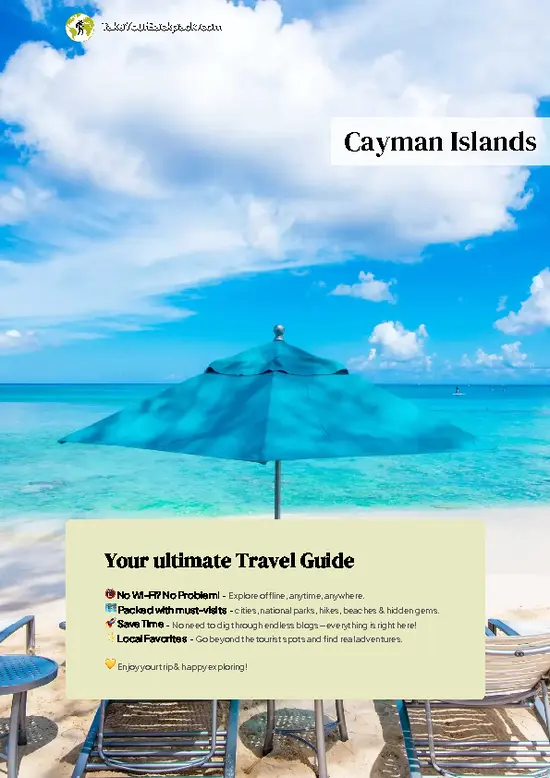
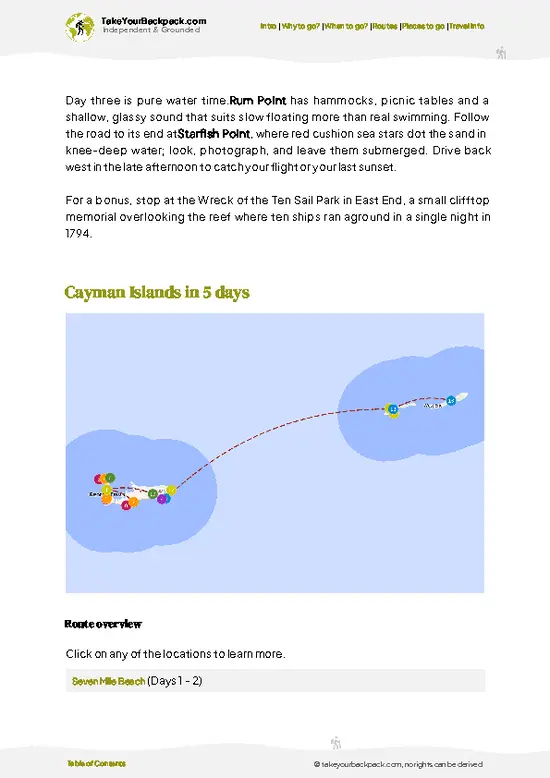
example page 0 from our offline Travel Guide for Cayman Islands
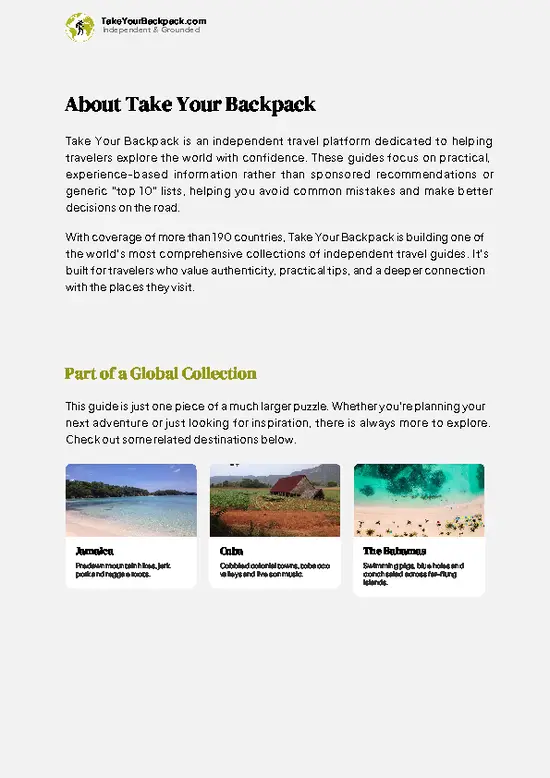
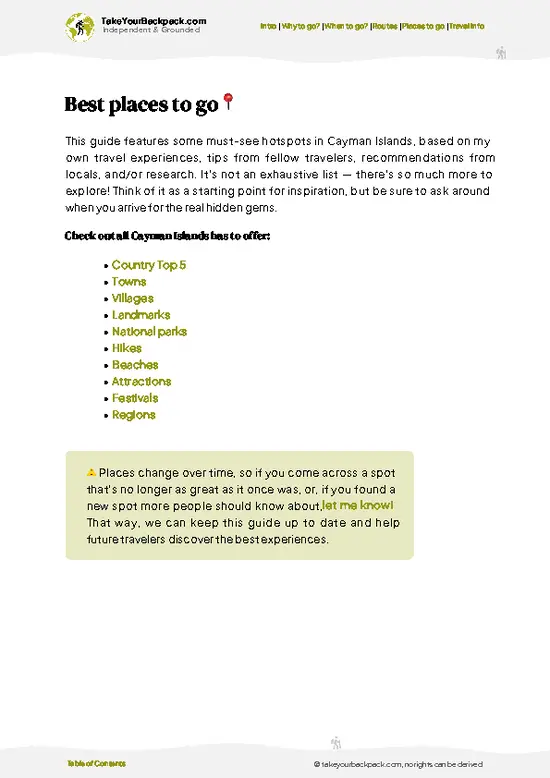
example page 1 from our offline Travel Guide for Cayman Islands
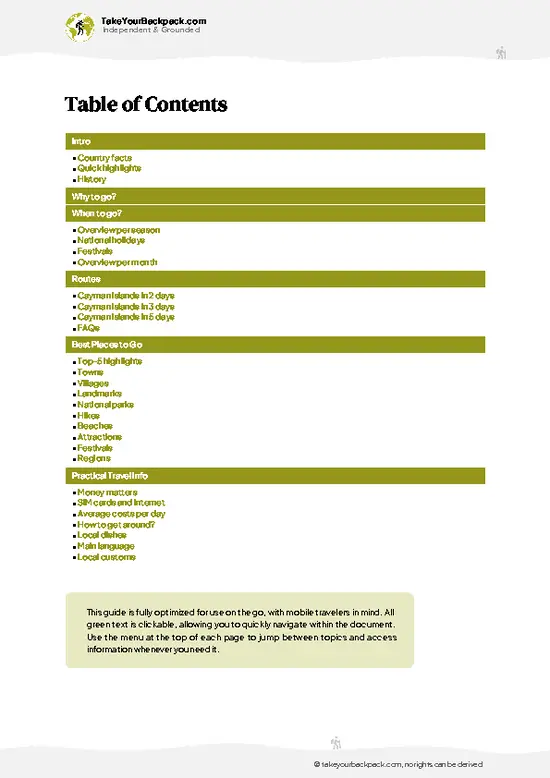
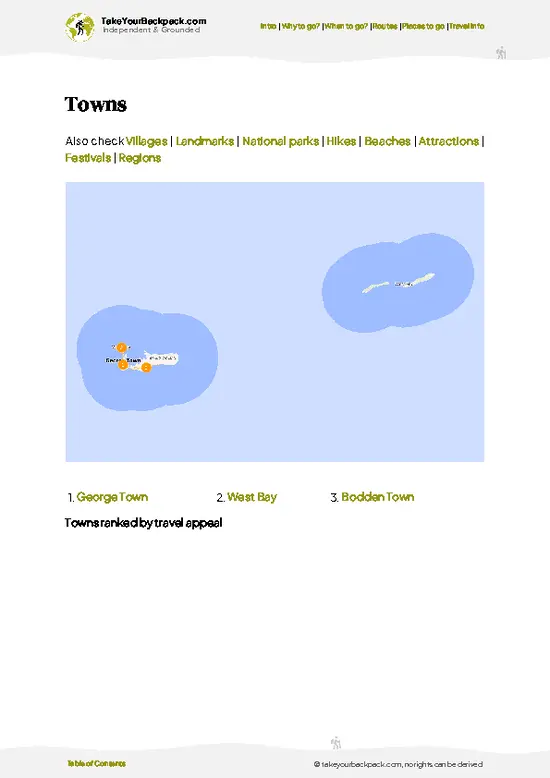
example page 2 from our offline Travel Guide for Cayman Islands
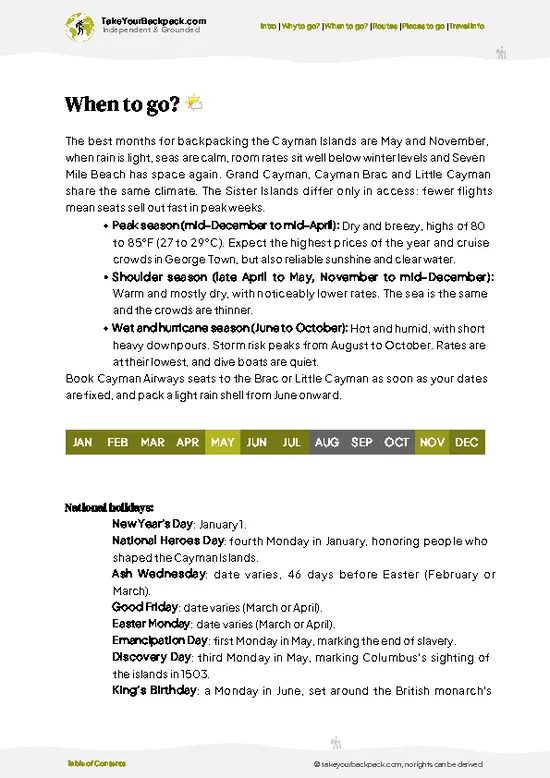
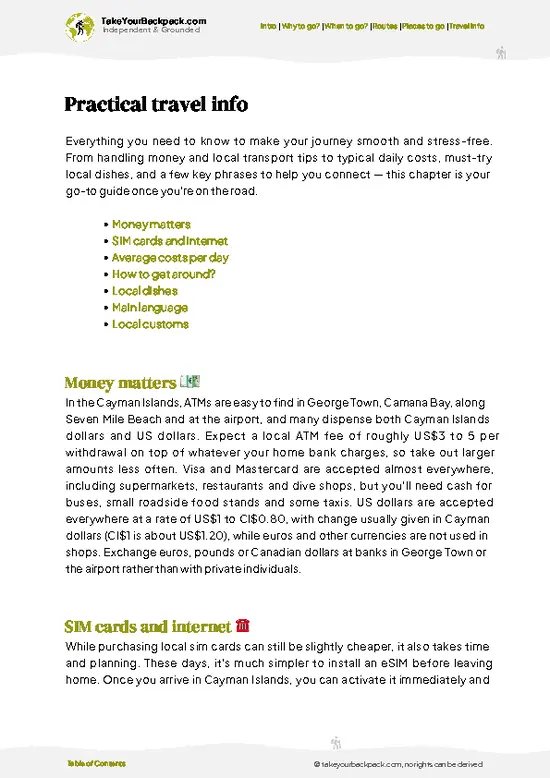
example page 3 from our offline Travel Guide for Cayman Islands
example page 4 from our offline Travel Guide for Cayman Islands
example page 5 from our offline Travel Guide for Cayman Islands
example page 6 from our offline Travel Guide for Cayman Islands
example page 7 from our offline Travel Guide for Cayman Islands
The digital guide (140 pages) contains:
✅ 33 highlights, ranked by travel appeal
✅ Optimized 2, 3 & 5-day travel routes
✅ Cities, national parks, landmarks, beaches
✅ How to get around
✅ Offline-friendly for travel without Wi-Fi
👉 Click to see all 30+ guide features

📅 Plan smarter in minutes, not weeks
✅ Month by month travel advice
✅ Festivals & national holidays
✅ Budget expectations

🗺️ Go to the right places, skip the overrated ones
✅ Honest pros & cons of destinations
✅ Top hikes, parks & viewpoints
✅ Lesser-known places most travelers miss
✅ Clear “worth it vs skip it” guidance

🛏️ Travel smoothly without rookie mistakes
✅ Best areas to stay
✅ Transport systems explained simply
✅ Common scams & safety advice
✅ SIM cards, money & practical tips

🌍 Understand the country, not just visit it
✅ Culture & traditions
✅ Local customs
✅ Festivals worth planning around
✅ Traveler-friendly historical context
✅ Insights that make places more meaningful

📱 Built for real travel conditions
✅ Fully downloadable PDF
✅ Works completely offline
✅ Optimized for phone use
✅ Useful in remote areas & buses
✅ Everything in one place
Stop searching, start planning
Get instant access to your full guide. 30‑day money-back guarantee.
+ Add another guide for just

By proceeding you agree to our terms.
Sent to your inbox immediately after payment • 100% Secure Checkout
Best Backpacking Travel Advisor 2025 tourism awardBest Backpacking
Travel Advisor
2025
What others say about Take Your Backpack Guides:
⭐⭐⭐⭐⭐
Fantastic, amazing amount of information!
⭐⭐⭐⭐⭐
My goodness this is amazing, it's what I've been looking for hats off too you!
⭐⭐⭐⭐⭐
I think this is absolutely BRILLIANT
⭐⭐⭐⭐
Very complete and informative. It's still missing places, but I gotta to commend you
⭐⭐⭐⭐⭐
This is truly amazing, thank you, can't wait to explore it with my kids!
⭐⭐⭐⭐⭐
Awesome resource, thank you!
⭐⭐⭐⭐⭐
This is amazing! Can't wait to explore the ones I haven't seen
⭐⭐⭐⭐
I love this! Well done, great idea.
⭐⭐⭐⭐⭐
Thanks for taking the time to make this gem!
⭐⭐⭐⭐⭐
This might be the best website I've ever seen.
⭐⭐⭐⭐⭐
Congratulations, and thank you so much for your work; it's incredibly valuable.
⭐⭐⭐⭐
In all seriousness I think you did a great job pointing out the important spots
⭐⭐⭐⭐⭐
10/10 very good
⭐⭐⭐⭐⭐
As someone who's only just starting to visit regularly this is awesome, thank you.
⭐⭐⭐⭐
Thank you very much! I'm going to visit my dad, it's going to be very useful!
⭐⭐⭐⭐⭐
This is really cool! We'll be travelling for the first time and this definitely come in handy.
⭐⭐⭐⭐⭐
You are now our minister of culture, congratulations 👨‍💼
⭐⭐⭐⭐⭐
Just wanted to tell you that this is a pearl! Going to follow your recommendations.
⭐⭐⭐⭐⭐
This is so cool. I'll definitely be using the resource for my travels soon.
⭐⭐⭐⭐⭐
This is very impressive! Good work.
⭐⭐⭐⭐⭐
This is an amazing and informative site. Very well done!

🛏️ Where to stay?Top Places to Consider Staying

The Cayman Islands have no real hostel scene (rare dorm beds come and go), so budget travelers here end up in guesthouses, small family-run inns and private rooms or studio apartments, which usually start around CI$100 to 165 (US$120 to 200) a night. George Town and the strip of Seven Mile Beach just north of it have the widest choice, with buses, supermarkets, bars and the cruise port all close, though beachfront rooms cost the most and the main road gets busy. West Bay is quieter and a little cheaper, while Bodden Town and East End are the calmest and best value for long stays, but there is almost no nightlife and you will want a car.

If you enjoy meeting fellow travelers, consider choosing … read more 👉
The Cayman Islands have no real hostel scene (rare dorm beds come and go), so budget travelers here end up in guesthouses, small family-run inns and private rooms or studio apartments, which usually start around CI$100 to 165 (US$120 to 200) a night. George Town and the strip of Seven Mile Beach just north of it have the widest choice, with buses, supermarkets, bars and the cruise port all close, though beachfront rooms cost the most and the main road gets busy. West Bay is quieter and a little cheaper, while Bodden Town and East End are the calmest and best value for long stays, but there is almost no nightlife and you will want a car.

If you enjoy meeting fellow travelers, consider choosing hostels with high ratings for atmosphere. On the other hand, if you prefer having your own space, a hotel might be a better option.

Cayman IslandsMore Places Across Cayman Islands

👋 Meet the founderWho’s Behind Take Your Backpack?

Johan, backpacker and founder of TakeYourBackpackHi, I’m Johan (Netherlands 🇳🇱), the creator of TakeYourBackpack. Over the past 3 decades, I’ve backpacked through 90+ countries across six continents, gaining extensive experience with independent travel, long-term trips, and overland routes.

This site is built on a combination of firsthand travel experience and carefully curated insights from other backpackers. Many guides are based on places I’ve personally visited, while others bring together tips, observations, and practical advice shared by trusted travelers I’ve met along the way.

The goal is to provide realistic, experience-driven guidance — not generic itineraries — so you can explore destinations with better context, clearer expectations, and more confidence.