

×

Cayman Islands🇰🇾 | national parksLittle Cayman National Parksalt ponds, iguana sanctuary, secluded beaches, birdwatching | things to do and best time to go

Explore East End Marine ParkExplore Queen Elizabeth II Botanic Park

Backpacking in Little Cayman
👍 Recommendednational park ranked #3
By Johan Kruseman 🇳🇱 | Updated September 4, 2026

Most online blurbs sell Little Cayman National Park as a classic “hiking park,” but the surprise is that it’s really more about shoreline, scrub, and birdlife than big, dramatic trails. The park sits on the tiny island of Little Cayman, east of Grand Cayman and just west of Cayman Brac, and it feels a world away from cruise-ship chaos. For backpackers, the pros are quiet paths, raw coastal scenery, and serious bird watching, especially around the booby colonies, plus usually low or no entrance fees. The cons: limited marked hiking, brutal sun exposure, almost no true budget camping, and logistics that depend on pricey inter-island flights or boats. Compared with Grand Cayman’s more developed protected areas and Cayman Brac’s cliff walks, Little Cayman National Park is simpler, emptier, and more contemplative than adventurous—great if you want solitude, less great if you crave big-mile trekking.

Discover everything you want to know in the 📖 Cayman Islands Travel Guide.
Loading the map 🌍
CLICK TO FILTER
towns
villages
landmarks
national parks
hikes
beaches
attractions
festivals
regions
SHOW COUNTRY’S BESTSHOW ALL

✨ Why go?
Ranked #3 national park in Cayman Islands
What makes it a must-see national park

Backpackers flock to Little Cayman National Park for its blend of independent exploration and affordable options. The park’s budget camping and nearby hostels make it easy to stretch your dollars while soaking in the natural beauty. You can pitch a tent under the stars or find a cozy bunk, all without breaking the bank.

The trail variety here is a major draw. Whether you’re up for a leisurely stroll or a more challenging hike, the paths cater to different skill levels. This flexibility allows you to tailor your experience, making it perfect for self-guided travelers. You won’t feel pressured to join a tour; instead, you can set your own pace and discover hidden spots along the way.

Be mindful of the weather; it can shift quickly, so pack accordingly. Also, some trails may require a bit of … read more 👉
Backpackers flock to Little Cayman National Park for its blend of independent exploration and affordable options. The park’s budget camping and nearby hostels make it easy to stretch your dollars while soaking in the natural beauty. You can pitch a tent under the stars or find a cozy bunk, all without breaking the bank.

The trail variety here is a major draw. Whether you’re up for a leisurely stroll or a more challenging hike, the paths cater to different skill levels. This flexibility allows you to tailor your experience, making it perfect for self-guided travelers. You won’t feel pressured to join a tour; instead, you can set your own pace and discover hidden spots along the way.

Be mindful of the weather; it can shift quickly, so pack accordingly. Also, some trails may require a bit of navigation savvy, so a good map or GPS is essential. These small preparations will save you time and energy, letting you focus on the moments that truly matter in this serene paradise.
Want to include Little Cayman National Park in your Cayman Islands route?
Create a personalized Cayman Islands itinerary that includes Little Cayman National Park and the places that fit your trip — based on your travel style, budget, and available time. Get your route in seconds.

Generate my trip

💡 HighlightsThe experiences that define the visit

  • Booby Pond (red-footed booby colony) — A huge, tree-top nesting site where red-footed boobies gather by the hundreds; the squawking, white birds packed into the trees make for an unforgettable wildlife show and one of the island’s signature sights.
  • Boardwalk and wetland viewing platforms — Short, easy walks and simple platforms put you right above mangroves and shallow ponds so you can watch waders, crabs and juvenile fish without disturbing them — great for photography and calm nature time.
  • Mangrove lagoons and mudflats — These tangled nurseries are alive with activity: fiddler crabs, small fish, and shorebirds feeding in the shallows. They’re ecologically vital and surprisingly scenic, especially in the soft morning light.
  • Sea turtle nesting beaches — Little Cayman’s quiet sands are
read more 👉
  • Booby Pond (red-footed booby colony) — A huge, tree-top nesting site where red-footed boobies gather by the hundreds; the squawking, white birds packed into the trees make for an unforgettable wildlife show and one of the island’s signature sights.
  • Boardwalk and wetland viewing platforms — Short, easy walks and simple platforms put you right above mangroves and shallow ponds so you can watch waders, crabs and juvenile fish without disturbing them — great for photography and calm nature time.
  • Mangrove lagoons and mudflats — These tangled nurseries are alive with activity: fiddler crabs, small fish, and shorebirds feeding in the shallows. They’re ecologically vital and surprisingly scenic, especially in the soft morning light.
  • Sea turtle nesting beaches — Little Cayman’s quiet sands are used by nesting turtles (hawksbill and green) at certain times of year; if you’re lucky you’ll see tracks or hatchlings, but always observe from a distance or go with a local guide so you don’t disturb them.
  • Nearby coral reefs and Bloody Bay Wall — Just offshore, the drop-off and reef systems are world-class: sheer walls, colorful corals and big reef fish. Even if you don’t dive, snorkeling the shallows near the park gives a close look at reef life.
  • Seagrass flats and easy snorkeling — Shallow, calm spots are perfect for relaxed snorkeling—look for juvenile fish, rays and grazing turtles among the grass. It’s low-stress, kid-friendly marine wildlife watching.
  • Quiet beaches and remote island vibe — The park’s undeveloped stretches of sand and coastal scrub offer solitude, long walks and dramatic sunsets. If you want to unplug and listen to birds instead of traffic, this is the place.
Spotted a mistake or missing something? Contact us.

🌤️ When to go?Seasonal considerations and timing


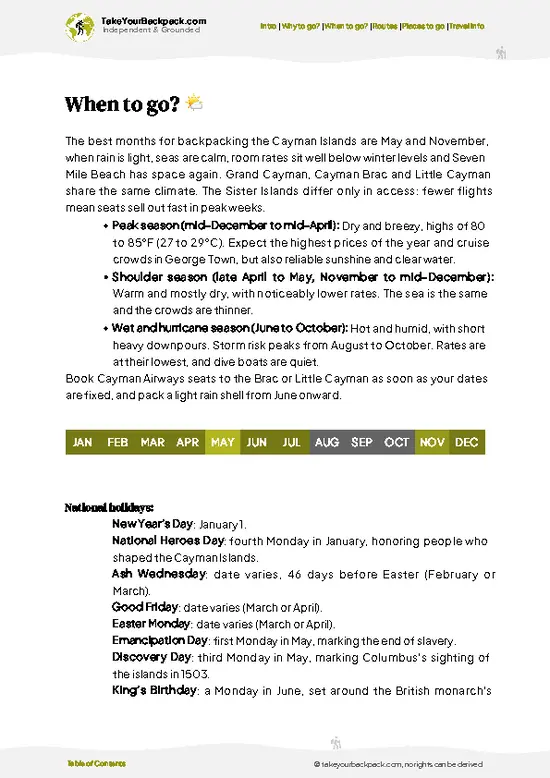
  • Topic: Weather and Temperature – The best window is from November to May. Expect dry, warm days averaging 27–30°C (80–86°F). Avoid June to October when humidity spikes and tropical storms are a real risk, which can turn your hike into a soggy slog.

  • Topic: Daylight Hours – Around 11 to 12 hours of daylight year-round, but the dry season offers clearer skies, making early mornings and late afternoons perfect for exploring without the oppressive midday heat.

  • Topic: Crowds – Little Cayman is off the beaten path, so crowds are minimal year-round. However, the dry season sees a slight uptick in visitors, mostly divers and birdwatchers, so expect a bit more company but nothing overwhelming.

  • Topic: Seasonal Activities – Dry season aligns with peak diving and birdwatching opportunities. The
read more 👉

  • Topic: Weather and Temperature – The best window is from November to May. Expect dry, warm days averaging 27–30°C (80–86°F). Avoid June to October when humidity spikes and tropical storms are a real risk, which can turn your hike into a soggy slog.

  • Topic: Daylight Hours – Around 11 to 12 hours of daylight year-round, but the dry season offers clearer skies, making early mornings and late afternoons perfect for exploring without the oppressive midday heat.

  • Topic: Crowds – Little Cayman is off the beaten path, so crowds are minimal year-round. However, the dry season sees a slight uptick in visitors, mostly divers and birdwatchers, so expect a bit more company but nothing overwhelming.

  • Topic: Seasonal Activities – Dry season aligns with peak diving and birdwatching opportunities. The calm seas and clear visibility make underwater exploration and spotting rare birds more rewarding.

  • Topic: Price Fluctuations – Accommodation and flights tend to be pricier from December through April. Booking early can save you a chunk, but traveling shoulder season (November or May) balances cost and conditions well.


Pro-tip: Aim for late November or early May to dodge the worst weather, avoid peak prices, and still enjoy excellent conditions for hiking and wildlife spotting.


source: climatestotravel.comJANJanuary: excellent for travelingFEBFebruary: excellent for travelingMARMarch: excellent for travelingAPRApril: excellent for travelingMAYMay: highly recommended for travelingJUNJune: fair for travelingJULJuly: fair for travelingAUGAugust: fair for travelingSEPSeptember: fair for travelingOCTOctober: fair for travelingNOVNovember: highly recommended for travelingDECDecember: excellent for traveling
cayman-islands-national-park-little-cayman-national-park
© Google |

✈️ The backpacker research shortcutCayman Islands Travel Guide

An offline-friendly backpacking guide with optimized travel routes, ranked highlights, transport advice, and the best areas to stay.
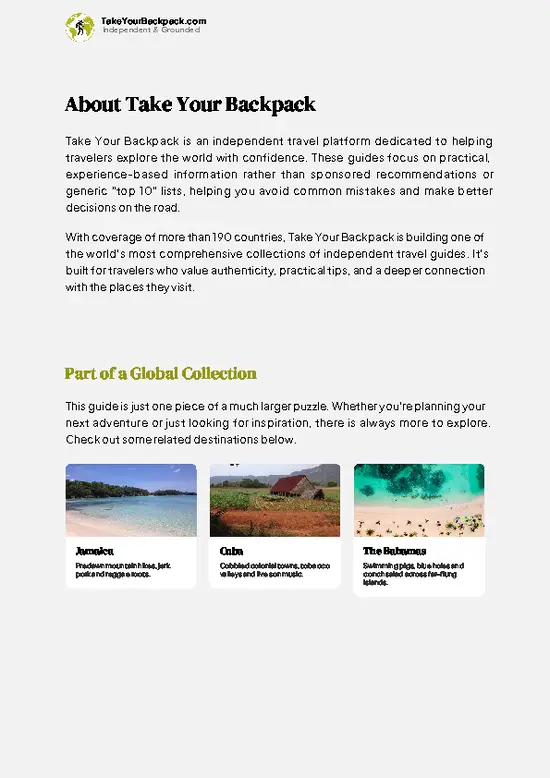
example page 0 from our offline Travel Guide for Cayman Islands
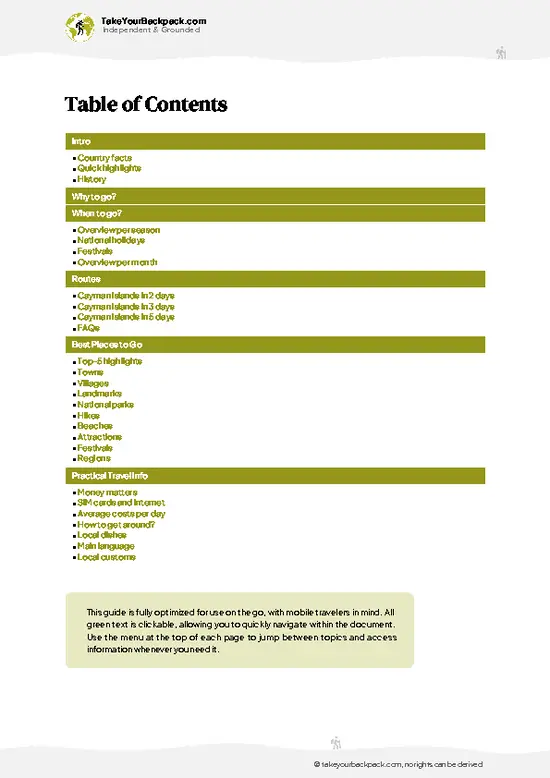
example page 1 from our offline Travel Guide for Cayman Islands
example page 2 from our offline Travel Guide for Cayman Islands
example page 3 from our offline Travel Guide for Cayman Islands
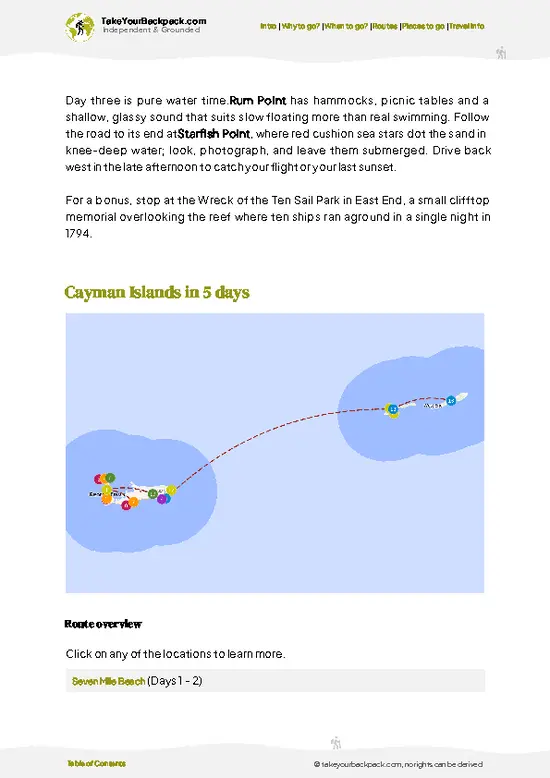
example page 4 from our offline Travel Guide for Cayman Islands
example page 5 from our offline Travel Guide for Cayman Islands
example page 6 from our offline Travel Guide for Cayman Islands
example page 7 from our offline Travel Guide for Cayman Islands
The digital guide (152 pages) contains:
36 highlights, ranked by travel appeal
Optimized 2, 3 & 5-day travel routes
Cities, national parks, landmarks, beaches
How to get around
Offline-friendly for travel without Wi-Fi
👉 Click to see all 30+ guide features

📅 Plan smarter in minutes, not weeks
Month by month travel advice
Festivals & national holidays
Budget expectations

🗺️ Go to the right places, skip the overrated ones
Honest pros & cons of destinations
Top hikes, parks & viewpoints
Lesser-known places most travelers miss
Clear “worth it vs skip it” guidance

🛏️ Travel smoothly without rookie mistakes
Best areas to stay
Transport systems explained simply
Common scams & safety advice
SIM cards, money & practical tips

🌍 Understand the country, not just visit it
Culture & traditions
Local customs
Festivals worth planning around
Traveler-friendly historical context
Insights that make places more meaningful

📱 Built for real travel conditions
Fully downloadable PDF
Works completely offline
Optimized for phone use
Useful in remote areas & buses
Everything in one place
Save weeks of stressful planning
Get instant access to your full guide. 30‑day money-back guarantee.
+ Add another guide for just US$7.80

By proceeding you agree to our terms.
Sent to your inbox immediately after payment • 100% Secure Checkout
Best Backpacking Travel Advisor 2025 tourism awardBest Backpacking
Travel Advisor
2025
What others say about Take Your Backpack Guides:
⭐⭐⭐⭐⭐
Fantastic, amazing amount of information!
⭐⭐⭐⭐⭐
My goodness this is amazing, it's what I've been looking for hats off too you!
⭐⭐⭐⭐⭐
I think this is absolutely BRILLIANT
⭐⭐⭐⭐
Very complete and informative. It's still missing places, but I gotta to commend you
⭐⭐⭐⭐⭐
This is truly amazing, thank you, can't wait to explore it with my kids!
⭐⭐⭐⭐⭐
Awesome resource, thank you!
⭐⭐⭐⭐⭐
This is amazing! Can't wait to explore the ones I haven't seen
⭐⭐⭐⭐
I love this! Well done, great idea.
⭐⭐⭐⭐⭐
Thanks for taking the time to make this gem!
⭐⭐⭐⭐⭐
This might be the best website I've ever seen.
⭐⭐⭐⭐⭐
Congratulations, and thank you so much for your work; it's incredibly valuable.
⭐⭐⭐⭐
In all seriousness I think you did a great job pointing out the important spots
⭐⭐⭐⭐⭐
10/10 very good
⭐⭐⭐⭐⭐
As someone who's only just starting to visit regularly this is awesome, thank you.
⭐⭐⭐⭐
Thank you very much! I'm going to visit my dad, it's going to be very useful!
⭐⭐⭐⭐⭐
This is really cool! We'll be travelling for the first time and this definitely come in handy.
⭐⭐⭐⭐⭐
You are now our minister of culture, congratulations 👨‍💼
⭐⭐⭐⭐⭐
Just wanted to tell you that this is a pearl! Going to follow your recommendations.
⭐⭐⭐⭐⭐
This is so cool. I'll definitely be using the resource for my travels soon.
⭐⭐⭐⭐⭐
This is very impressive! Good work.
⭐⭐⭐⭐⭐
This is an amazing and informative site. Very well done!

🛏️ Where to stay?Best areas and accommodation options

Little Cayman National Park is a slice of paradise, but options for staying close by are limited. There aren’t accommodations directly within the park itself, so you’ll need to look at nearby options.

The island’s main settlement, Blossom Village, offers a few solid choices. The Little Cayman Beach Resort is a popular pick among backpackers. It’s not overly luxurious, but it has a laid-back vibe and easy access to the beach. Plus, it’s a great spot to meet fellow travelers.

If you’re looking for something more budget-friendly, consider the Southern Cross Club. It’s a bit rustic but offers a … read more 👉
Little Cayman National Park is a slice of paradise, but options for staying close by are limited. There aren’t accommodations directly within the park itself, so you’ll need to look at nearby options.

The island’s main settlement, Blossom Village, offers a few solid choices. The Little Cayman Beach Resort is a popular pick among backpackers. It’s not overly luxurious, but it has a laid-back vibe and easy access to the beach. Plus, it’s a great spot to meet fellow travelers.

If you’re looking for something more budget-friendly, consider the Southern Cross Club. It’s a bit rustic but offers a genuine island experience. You’ll find cozy cabins and a friendly atmosphere, perfect for unwinding after a day of exploring.

Keep in mind that Little Cayman is small, and transportation options are limited. Renting a bike or scooter is a smart move to get around and explore the park’s trails.

Plan ahead for meals, as dining options can be sparse. Stock up on snacks and essentials at the local grocery store to avoid any surprises. This way, you can focus your energy on enjoying the stunning natural beauty without worrying about hidden costs.

👛 Costs (as of 4 September 2026)What things cost and how to budget

Visiting Little Cayman National Park is a straightforward affair, but there are costs to consider that can sneak up on you.

Entry to the park itself is free. That’s a win. However, if you plan to dive or snorkel, which is a must for experiencing the vibrant marine life, expect to pay around $60 to $150 USD for guided tours. Equipment rental can add another $20 to $50 USD, depending on what you need.

Transportation is another factor. If you’re staying on Little Cayman, local taxis can cost about $10 to $20 USD for short trips. If you’re coming from Grand Cayman, a round-trip ferry ticket will set you back around $80 to $100 USD.

Food options are limited but decent. Budget around $15 to $30 USD per meal at local eateries. If you’re looking to save, consider self-catering; grocery prices … read more 👉
Visiting Little Cayman National Park is a straightforward affair, but there are costs to consider that can sneak up on you.

Entry to the park itself is free. That’s a win. However, if you plan to dive or snorkel, which is a must for experiencing the vibrant marine life, expect to pay around $60 to $150 USD for guided tours. Equipment rental can add another $20 to $50 USD, depending on what you need.

Transportation is another factor. If you’re staying on Little Cayman, local taxis can cost about $10 to $20 USD for short trips. If you’re coming from Grand Cayman, a round-trip ferry ticket will set you back around $80 to $100 USD.

Food options are limited but decent. Budget around $15 to $30 USD per meal at local eateries. If you’re looking to save, consider self-catering; grocery prices can be higher than on the mainland, so plan accordingly.

Finally, keep in mind that while the park itself is free, the experiences that make it memorable can add up. Prioritize what you want to do to keep your budget in check.


source: visitcaymanislands.com
⚠️ Prices can change and everyone travels differently, so take this as a rough guide. Hope it helps you plan your adventure!

🥾 TrailsExploring Little Cayman: trails, terrain, and views

Little Cayman National Park is a hidden gem for those looking to escape the usual tourist spots in the Cayman Islands. The hiking opportunities are more about soaking in the stunning scenery than tackling rugged terrain. The island is relatively flat, making it accessible for most hikers, whether you’re a newbie or a seasoned pro. You’ll find yourself wandering through lush vegetation, with occasional glimpses of the turquoise waters that surround the island. Wildlife is abundant, with local birds and maybe even a few iguanas popping up along the way.

There’s a designated trail worth checking … read more 👉
Little Cayman National Park is a hidden gem for those looking to escape the usual tourist spots in the Cayman Islands. The hiking opportunities are more about soaking in the stunning scenery than tackling rugged terrain. The island is relatively flat, making it accessible for most hikers, whether you’re a newbie or a seasoned pro. You’ll find yourself wandering through lush vegetation, with occasional glimpses of the turquoise waters that surround the island. Wildlife is abundant, with local birds and maybe even a few iguanas popping up along the way.

There’s a designated trail worth checking out:
  • Trail Name: Oven Rock Trail
  • Length: 1.5 miles
  • Estimated Duration: 1 hour
  • Difficulty Level: Easy
  • Key Features: Scenic views, birdwatching opportunities, unique limestone formations
  • Terrain: Flat, well-marked paths with some sandy spots

Reaching Little Cayman National Park can be a bit of an adventure in itself. The main way to get there is by a short flight from Grand Cayman, or you could take a ferry, which adds a bit of charm to the journey. Public transport isn’t really an option on the island, so renting a bike or a scooter is your best bet for getting around. As for crowds, you’re looking at a pretty chill experience; it’s not overrun with tourists, so you can enjoy the peace and quiet. There’s no entrance fee for the park, which is a nice bonus for budget travelers. Just pack some water and snacks, and you’re all set for a lovely day of exploring.
⚠️ Hiking info can sometimes be outdated or inaccurate. Before you hit the trail, check the latest conditions with locals. If you do spot anything that's off, I'd love to hear from you, so I can update it for fellow travelers.

🛡️ SafetyScams, Hazards, and Annoyances

Little Cayman National Park offers a straightforward hiking experience, but a few practical considerations can enhance your adventure. The weather can shift quickly, so pack a light rain jacket and stay hydrated. The trails are generally flat, but some areas may have uneven footing, especially after rain. Watch your step and take your time; rushing can lead to slips.

Wildlife encounters are rare but can happen. If you spot a snake or iguana, admire from a distance. They’re more scared of you than you are of them.

Timing is key. Early mornings are cooler and less humid, making for a more pleasant trek. Don’t forget to apply sunscreen and wear a hat; the sun can be intense even on cloudy days.

Overall, the park is well-maintained, so with a little preparation, you can focus on enjoying the natural beauty without unnecessary stress.

FAQFrequently asked questions about Little Cayman

1 to 2 days is sufficient to explore Little Cayman National Park thoroughly, including snorkeling and hiking activities. The island is small, about 10 miles long, so you can cover major spots within this timeframe. Staying overnight allows for a relaxed pace and better wildlife observation.
No, you cannot easily visit Little Cayman National Park without a car or some form of motorized transport. The island has limited public transportation, and distances between points of interest can be several miles. Renting a car or arranging boat transfers is recommended for convenient access.
Yes, there is an entrance fee for Little Cayman National Park, typically around $10 to $15 USD per person. Permits may be required for certain activities like diving or organized tours. Fees help support conservation efforts and park maintenance.
⚠️ Things can change over time, so always validate details locally before you go.

Other Caymanian national parks near Little Cayman

Explore more nearby:


💡 Not sure where to go next?
Create a personalized itinerary for Cayman Islands including Little Cayman and the places that fit your trip.

Generate my itinerary

👉 Discover all national parks

Or checkout all Cayman Islands has to offer (think cities, towns, villages, national parks, hikes, beaches, festivals)
Country photo of Cayman Islands

We 💚 feedbackFinal thoughts on exploring Little Cayman

Little Cayman National Park has a laid-back vibe that feels worlds away from the hustle. You’ll find pristine beaches and vibrant marine life, but don’t underestimate the sun—pack that sunscreen. The best surprise? The snorkeling right off the shore; it’s like swimming in an aquarium. Just be mindful of the limited amenities; plan ahead for food and water. Embrace the simplicity here, and you’ll leave with a deeper appreciation for nature, not just another postcard memory.

✍️ Help improve this page!
The information on this page is based on in-depth research, insights shared by experienced travelers, and feedback from the local travel community in Cayman Islands. While every effort is made to keep the information accurate and current, conditions can change — so if you spot anything incorrect or outdated, please get in touch.


🙋‍♂️ Give feedback

👋 Meet the founderWho’s Behind Take Your Backpack?

Johan, backpacker and founder of TakeYourBackpackHi, I’m Johan (Netherlands 🇳🇱), the creator of TakeYourBackpack. Over the past decade, I’ve backpacked through 80+ countries across six continents, gaining extensive experience with independent travel, long-term trips, and overland routes.

This site is built on a combination of firsthand travel experience and carefully curated insights from other backpackers. Many guides are based on places I’ve personally visited, while others bring together tips, observations, and practical advice shared by trusted travelers I’ve met along the way.

The goal is to provide realistic, experience-driven guidance — not generic itineraries — so you can explore destinations with better context, clearer expectations, and more confidence.

Get full country guide •
Instant download • 36 highlights • Full Offline guide