



×

Cayman Islands🇰🇾 | national parksQueen Elizabeth II Botanic Parknative orchids, blue iguanas, woodland gardens, floral displays | things to do and best time to go

Explore Little Cayman National ParkExplore Barker’s National Park

Backpacking in Queen Elizabeth II Botanic Park
🏆 Top picknational park ranked #1
By Johan Kruseman 🇳🇱 | Updated May 12, 2026

Your first real decision with Queen Elizabeth II Botanic Park is whether it’s worth carving out half a day and a solid entrance fee for a place that’s more slow-walk garden than wild jungle. That choice matters, because on Grand Cayman—this park sits inland in the East End district—you’re constantly trading time and cash between beaches, dives, and inland detours. For backpackers, the park is calm, curated, and surprisingly educational: color-coded gardens, a small lake, and a decent chance of spotting the blue iguana conservation project up close. Trails are short and manicured, so don’t come expecting real hiking; it’s more flip-flop wandering than boot-testing. No camping, no on-site budget beds, and you’ll need transport, which adds cost. Compared with the island’s coastal reserves and marine parks, this is tamer, quieter, and less dramatic—but also less crowded, more reflective, and better for a low-key, sunburn-free reset.

Discover everything you want to know in the 📖 Cayman Islands Travel Guide.
Loading the map 🌍
CLICK TO FILTER
towns
villages
landmarks
national parks
hikes
beaches
attractions
festivals
regions
SHOW COUNTRY’S BESTSHOW ALL

✨ Why go?
Ranked #1 national park in Cayman Islands
Why visitors keep coming back

Queen Elizabeth II Botanic Park in the Cayman Islands is a top choice for backpackers seeking a blend of independent exploration and natural beauty. The park offers a variety of trails that cater to different skill levels, making it easy to find your own pace. You can wander through lush gardens, spot native wildlife, and enjoy the tranquility without the pressure of a guided tour.

For those on a budget, there are camping options and hostels nearby that keep costs low while providing a base for your adventures. This flexibility allows you to spend more on experiences that matter, like local food or snorkeling trips.

The park is particularly suited for self-guided travelers. Maps are readily available, and the well-marked paths make navigation straightforward. You can take your time, pause … read more 👉
Queen Elizabeth II Botanic Park in the Cayman Islands is a top choice for backpackers seeking a blend of independent exploration and natural beauty. The park offers a variety of trails that cater to different skill levels, making it easy to find your own pace. You can wander through lush gardens, spot native wildlife, and enjoy the tranquility without the pressure of a guided tour.

For those on a budget, there are camping options and hostels nearby that keep costs low while providing a base for your adventures. This flexibility allows you to spend more on experiences that matter, like local food or snorkeling trips.

The park is particularly suited for self-guided travelers. Maps are readily available, and the well-marked paths make navigation straightforward. You can take your time, pause for photos, or simply soak in the surroundings without feeling rushed.

Be mindful of the entry fees and potential costs for parking, which can sneak up on you if you’re not prepared. Planning ahead ensures you preserve your energy and budget for the moments that truly count.
Want to include Queen Elizabeth II Botanic Park in your Cayman Islands route?
Create a personalized Cayman Islands itinerary that includes Queen Elizabeth II Botanic Park and the places that fit your trip — based on your travel style, budget, and available time. Get your route in seconds.

Generate my trip

💡 HighlightsEssential experiences to have while exploring Queen Elizabeth II Botanic Park

  • Floral Display Garden — bright, well-tended beds and themed plantings (orchids, bromeliads, succulents) make this the park’s showcase for tropical color and easy photography without a long hike.
  • Blue Iguana Conservation Habitat — home to the Blue Iguana Recovery Program, where you can often see the big, turquoise-tinged iguanas up close and learn about a rare and seriously successful local conservation effort.
  • Woodland Trail (native dry forest) — a shaded, easy trail through Cayman’s native dry forest with endemic palms and understory plants; good for a peaceful walk and to feel the island’s natural backbone away from manicured beds.
  • The Lake and Wetlands — a calm central lake with reed edges and lots of dragonflies and waterbirds; nice for reflections, quiet birdwatching, and a break
read more 👉
  • Floral Display Garden — bright, well-tended beds and themed plantings (orchids, bromeliads, succulents) make this the park’s showcase for tropical color and easy photography without a long hike.
  • Blue Iguana Conservation Habitat — home to the Blue Iguana Recovery Program, where you can often see the big, turquoise-tinged iguanas up close and learn about a rare and seriously successful local conservation effort.
  • Woodland Trail (native dry forest) — a shaded, easy trail through Cayman’s native dry forest with endemic palms and understory plants; good for a peaceful walk and to feel the island’s natural backbone away from manicured beds.
  • The Lake and Wetlands — a calm central lake with reed edges and lots of dragonflies and waterbirds; nice for reflections, quiet birdwatching, and a break on a hot day.
  • Cayman Heritage Garden — displays of traditional Caymanian crops, herbs and medicinal plants that tell local food and cultural history while smelling great on a breezy morning.
  • Birdwatching for endemic species — keep an eye out for the Grand Cayman parrot and other native/migrant birds; the mix of gardens, woods and water makes the park one of the island’s best bird-watching spots.
  • Visitor Centre and interpretive trails — small exhibits and clear signage make self-guided walks informative; ask about guided talks or the nursery if you want a deeper, behind-the-scenes look.
Spotted a mistake or missing something? Contact us.

Things to do around Queen Elizabeth II Botanic Park

Ratings based on Tripadvisor reviews. When you book through this link, you support our work at no extra cost to you.

🌤️ When to go?Choosing the right time of year


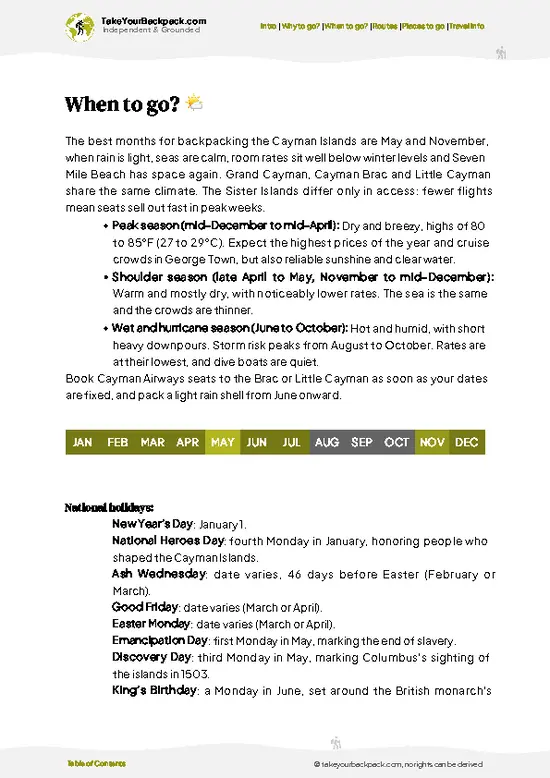
  • Topic: Weather – The Cayman Islands have a tropical climate, so expect warmth year-round. However, the wet season runs from May to October, bringing heavy rains and humidity that can sap your energy on hikes. The dry season, November to April, offers more comfortable conditions with less rain, making it the safer bet for backpackers.

  • Topic: Temperature – Temperatures hover between 24°C and 31°C (75°F to 88°F) most of the year. The dry season tends to be slightly cooler and less sticky, which helps when you’re walking through the park’s trails and gardens.

  • Topic: Daylight Hours – Daylight remains fairly consistent, roughly 11 to 12 hours daily. This means you’ll have enough time to explore without rushing, but don’t expect long summer evenings like in northern latitudes.

  • Topic: Crowds
read more 👉

  • Topic: Weather – The Cayman Islands have a tropical climate, so expect warmth year-round. However, the wet season runs from May to October, bringing heavy rains and humidity that can sap your energy on hikes. The dry season, November to April, offers more comfortable conditions with less rain, making it the safer bet for backpackers.

  • Topic: Temperature – Temperatures hover between 24°C and 31°C (75°F to 88°F) most of the year. The dry season tends to be slightly cooler and less sticky, which helps when you’re walking through the park’s trails and gardens.

  • Topic: Daylight Hours – Daylight remains fairly consistent, roughly 11 to 12 hours daily. This means you’ll have enough time to explore without rushing, but don’t expect long summer evenings like in northern latitudes.

  • Topic: Crowds – The dry season coincides with peak tourist months, especially December through March. Expect more visitors and higher prices then. If you want fewer people, aim for shoulder months like November or April, but be ready for occasional showers.

  • Topic: Seasonal Activities – The park’s guided tours and educational programs run year-round but are more frequent during the dry season. Wildlife spotting is better when it’s drier, as animals are more active and visible.

  • Topic: Price Fluctuations – Accommodation and flights spike during the dry season and holidays. Booking early can save you, but traveling just outside peak months often nets better deals without sacrificing much on weather.


Pro-tip: Visit in late November or early April to dodge heavy rains and crowds while still enjoying pleasant weather and active wildlife—perfect for a relaxed, budget-friendly backpacking trip.


source: climatestotravel.comJANJanuary: highly recommended for travelingFEBFebruary: highly recommended for travelingMARMarch: highly recommended for travelingAPRApril: highly recommended for travelingMAYMay: fair for travelingJUNJune: fair for travelingJULJuly: fair for travelingAUGAugust: fair for travelingSEPSeptember: fair for travelingOCTOctober: fair for travelingNOVNovember: highly recommended for travelingDECDecember: highly recommended for traveling
cayman-islands-national-park-queen-elizabeth-ii-botanic-park
© Google |

✈️ The backpacker research shortcutCayman Islands Travel Guide

An offline-friendly backpacking guide with optimized travel routes, ranked highlights, transport advice, and the best areas to stay.
example page 0 from our offline Travel Guide for Cayman Islands
example page 1 from our offline Travel Guide for Cayman Islands
example page 2 from our offline Travel Guide for Cayman Islands
example page 3 from our offline Travel Guide for Cayman Islands
example page 4 from our offline Travel Guide for Cayman Islands
example page 5 from our offline Travel Guide for Cayman Islands
example page 6 from our offline Travel Guide for Cayman Islands
example page 7 from our offline Travel Guide for Cayman Islands
The digital guide (164 pages) contains:
39 highlights, ranked by travel appeal
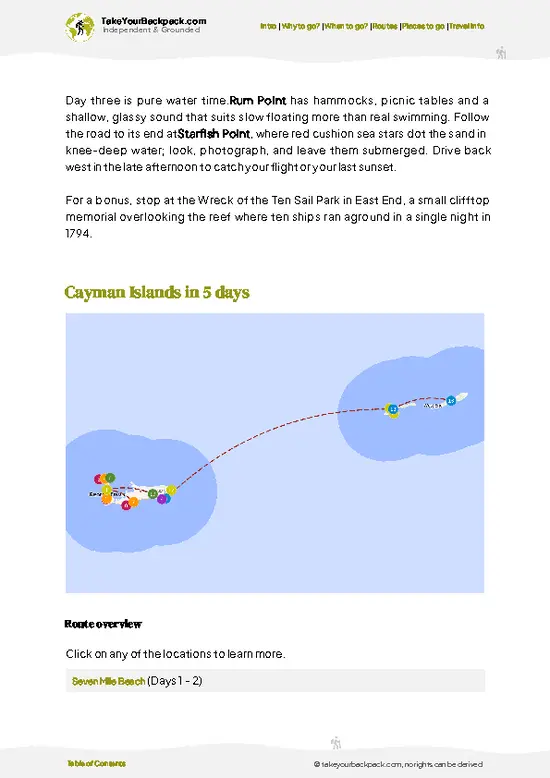
Optimized 2, 3 & 5-day travel routes
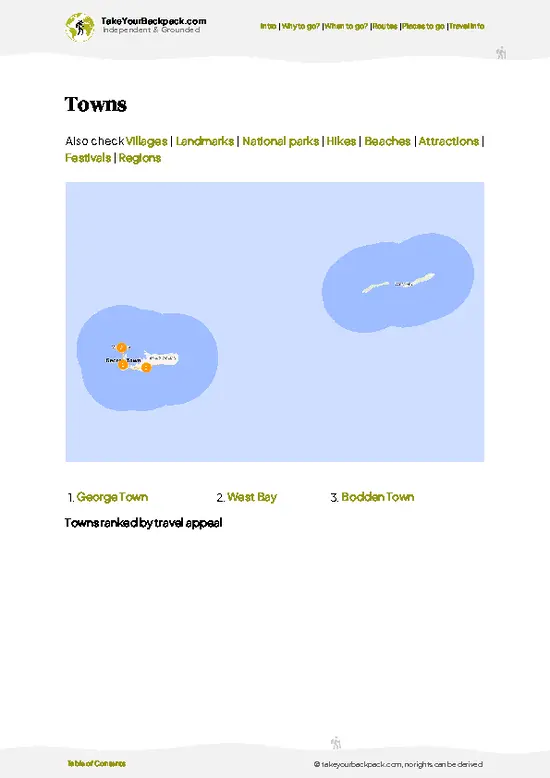
Cities, national parks, landmarks, beaches
How to get around
Offline-friendly for travel without Wi-Fi
👉 Click to see all 30+ guide features

📅 Plan smarter in minutes, not weeks
Month by month travel advice
Festivals & national holidays
Budget expectations

🗺️ Go to the right places, skip the overrated ones
Honest pros & cons of destinations
Top hikes, parks & viewpoints
Lesser-known places most travelers miss
Clear “worth it vs skip it” guidance

🛏️ Travel smoothly without rookie mistakes
Best areas to stay
Transport systems explained simply
Common scams & safety advice
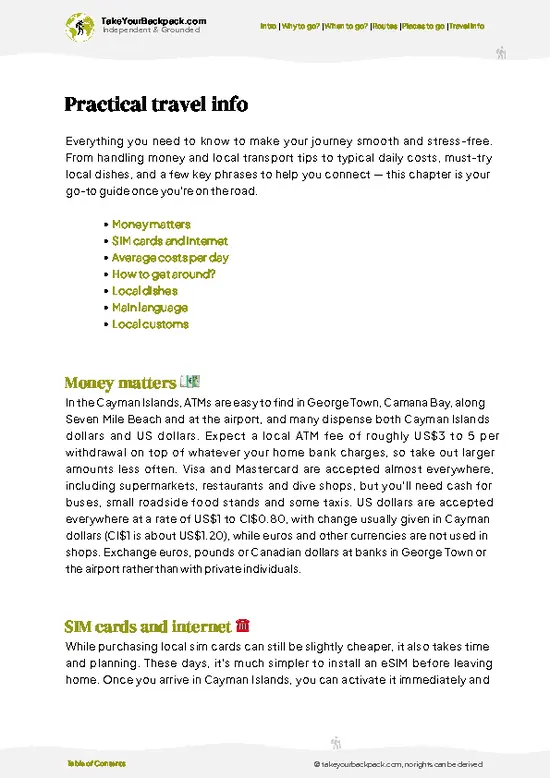
SIM cards, money & practical tips

🌍 Understand the country, not just visit it
Culture & traditions
Local customs
Festivals worth planning around
Traveler-friendly historical context
Insights that make places more meaningful

📱 Built for real travel conditions
Fully downloadable PDF
Works completely offline
Optimized for phone use
Useful in remote areas & buses
Everything in one place
Save weeks of stressful planning
Get instant access to your full guide. 30‑day money-back guarantee.


By proceeding you agree to our terms.
Sent to your inbox immediately after payment • 100% Secure Checkout
Best Backpacking Travel Advisor 2025 tourism awardBest Backpacking
Travel Advisor
2025
What others say about Take Your Backpack Guides:
⭐⭐⭐⭐⭐
Fantastic, amazing amount of information!
⭐⭐⭐⭐⭐
My goodness this is amazing, it's what I've been looking for hats off too you!
⭐⭐⭐⭐⭐
I think this is absolutely BRILLIANT
⭐⭐⭐⭐
Very complete and informative. It's still missing places, but I gotta to commend you
⭐⭐⭐⭐⭐
This is truly amazing, thank you, can't wait to explore it with my kids!
⭐⭐⭐⭐⭐
Awesome resource, thank you!
⭐⭐⭐⭐⭐
This is amazing! Can't wait to explore the ones I haven't seen
⭐⭐⭐⭐
I love this! Well done, great idea.
⭐⭐⭐⭐⭐
Thanks for taking the time to make this gem!
⭐⭐⭐⭐⭐
This might be the best website I've ever seen.
⭐⭐⭐⭐⭐
Congratulations, and thank you so much for your work; it's incredibly valuable.
⭐⭐⭐⭐
In all seriousness I think you did a great job pointing out the important spots
⭐⭐⭐⭐⭐
10/10 very good
⭐⭐⭐⭐⭐
As someone who's only just starting to visit regularly this is awesome, thank you.
⭐⭐⭐⭐
Thank you very much! I'm going to visit my dad, it's going to be very useful!
⭐⭐⭐⭐⭐
This is really cool! We'll be travelling for the first time and this definitely come in handy.
⭐⭐⭐⭐⭐
You are now our minister of culture, congratulations 👨‍💼
⭐⭐⭐⭐⭐
Just wanted to tell you that this is a pearl! Going to follow your recommendations.
⭐⭐⭐⭐⭐
This is so cool. I'll definitely be using the resource for my travels soon.
⭐⭐⭐⭐⭐
This is very impressive! Good work.
⭐⭐⭐⭐⭐
This is an amazing and informative site. Very well done!

🛏️ Where to stay?Best areas to stay in Cayman Islands

Queen Elizabeth II Botanic Park doesn’t offer accommodations within its boundaries. However, you’re not left without options. The closest town is North Side, which has a few budget-friendly guesthouses and small hotels. Look for places like the Cayman Islands Guesthouse or The White Sands. Both provide a cozy atmosphere and are just a short drive from the park.

If you’re willing to venture a bit further, head to George Town. It’s about a 30-minute drive and offers a wider range of accommodations, from hostels to mid-range hotels. The Comfort Suites is a solid choice, especially if you want easy … read more 👉
Queen Elizabeth II Botanic Park doesn’t offer accommodations within its boundaries. However, you’re not left without options. The closest town is North Side, which has a few budget-friendly guesthouses and small hotels. Look for places like the Cayman Islands Guesthouse or The White Sands. Both provide a cozy atmosphere and are just a short drive from the park.

If you’re willing to venture a bit further, head to George Town. It’s about a 30-minute drive and offers a wider range of accommodations, from hostels to mid-range hotels. The Comfort Suites is a solid choice, especially if you want easy access to local dining and shopping after a day in the park.

Keep in mind that transportation is key. Renting a car is often the best way to navigate the island and reach the park. Public transport is limited, and taxis can add up quickly.

Lastly, be aware of potential entry fees for the park. It’s worth it, but having cash on hand can save you from any surprises. Prioritize your budget for experiences that matter, like guided tours or special events within the park.

👛 Costs (as of 18 December 2024)How expensive it really is

Visiting the Queen Elizabeth II Botanic Park in the Cayman Islands is a worthwhile experience, but it’s essential to be aware of the costs involved to avoid surprises.

Entry fees typically range from $10 to $15 USD for adults. Children under a certain age often get in for free or at a reduced rate, usually around $5 USD. If you’re planning to take a guided tour, expect to pay an additional $20 to $30 USD per person.

Parking is generally free, but if you’re considering transportation options, taxis can add up quickly. A round trip from George Town might cost you around $40 to $60 USD, depending on your negotiation skills and the time of day.

Keep in mind that while the park itself is relatively affordable, you might want to budget for refreshments. Snacks and drinks can be pricier than … read more 👉
Visiting the Queen Elizabeth II Botanic Park in the Cayman Islands is a worthwhile experience, but it’s essential to be aware of the costs involved to avoid surprises.

Entry fees typically range from $10 to $15 USD for adults. Children under a certain age often get in for free or at a reduced rate, usually around $5 USD. If you’re planning to take a guided tour, expect to pay an additional $20 to $30 USD per person.

Parking is generally free, but if you’re considering transportation options, taxis can add up quickly. A round trip from George Town might cost you around $40 to $60 USD, depending on your negotiation skills and the time of day.

Keep in mind that while the park itself is relatively affordable, you might want to budget for refreshments. Snacks and drinks can be pricier than expected, so having some cash on hand for that is wise.

Plan ahead to make the most of your visit without overspending.


source: visitcaymanislands.com
⚠️ Prices can change and everyone travels differently, so take this as a rough guide. Hope it helps you plan your adventure!

🥾 TrailsBest hikes in Queen Elizabeth II Botanic Park national park

The hiking opportunities in Queen Elizabeth II Botanic Park are pretty chill, making it a great spot for budget travelers looking to soak in some natural beauty without breaking a sweat. The park features a few designated trails that showcase the lush flora and fauna of the Cayman Islands. You’ll wander through tropical gardens, mangroves, and even some dry forest areas. Keep your eyes peeled for the Blue Iguanas—they’re kind of a big deal around here!

One of the main trails is the Heritage Trail. Here are the details:
  • Length: 0.75 miles
  • Estimated Duration: 30 minutes
  • Difficulty Level: Easy
  • Key Features:
read more 👉
The hiking opportunities in Queen Elizabeth II Botanic Park are pretty chill, making it a great spot for budget travelers looking to soak in some natural beauty without breaking a sweat. The park features a few designated trails that showcase the lush flora and fauna of the Cayman Islands. You’ll wander through tropical gardens, mangroves, and even some dry forest areas. Keep your eyes peeled for the Blue Iguanas—they’re kind of a big deal around here!

One of the main trails is the Heritage Trail. Here are the details:
  • Length: 0.75 miles
  • Estimated Duration: 30 minutes
  • Difficulty Level: Easy
  • Key Features: Scenic views of native plants, Blue Iguanas, and a chance to see local bird species
  • Terrain: Mostly flat with some packed dirt paths

Another option is the Nature Trail:
  • Length: 1.5 miles
  • Estimated Duration: 1 hour
  • Difficulty Level: Moderate
  • Key Features: More diverse wildlife, including butterflies and various birds, plus a nice mix of shaded and open areas
  • Terrain: A bit uneven with some roots and rocks, but nothing too crazy

Getting to the park is pretty straightforward. Public transport is available, but it might take a little longer, so consider a taxi if you’re in a hurry. As for crowds, it can get a bit busy on weekends, especially with locals, but during the week, you might just have the trails to yourself. There’s a small entrance fee, which is totally worth it for the experience and the chance to support conservation efforts.
⚠️ Hiking info can sometimes be outdated or inaccurate. Before you hit the trail, check the latest conditions with locals. If you do spot anything that's off, I'd love to hear from you, so I can update it for fellow travelers.

🛡️ SafetyScams, Hazards, and Annoyances

Queen Elizabeth II Botanic Park offers a generally straightforward hiking experience, but a few practical considerations can enhance your visit. The weather can shift quickly, so pack a lightweight rain jacket and stay hydrated. The trails are well-maintained, but some sections can be uneven or rocky, so sturdy footwear is essential.

Wildlife encounters are part of the charm here. You might spot blue iguanas or various bird species. Keep a respectful distance; feeding or approaching wildlife can disrupt their natural behavior.

Timing matters, too. Early morning or late afternoon hikes not only avoid the heat but also offer better chances to see active wildlife.

Lastly, don’t underestimate the importance of trail etiquette. Yield to others, especially those with larger groups or families. … read more 👉
Queen Elizabeth II Botanic Park offers a generally straightforward hiking experience, but a few practical considerations can enhance your visit. The weather can shift quickly, so pack a lightweight rain jacket and stay hydrated. The trails are well-maintained, but some sections can be uneven or rocky, so sturdy footwear is essential.

Wildlife encounters are part of the charm here. You might spot blue iguanas or various bird species. Keep a respectful distance; feeding or approaching wildlife can disrupt their natural behavior.

Timing matters, too. Early morning or late afternoon hikes not only avoid the heat but also offer better chances to see active wildlife.

Lastly, don’t underestimate the importance of trail etiquette. Yield to others, especially those with larger groups or families. By being mindful of these details, you’ll preserve your energy and budget for the moments that truly matter in this beautiful park.

Other Caymanian national parks near Queen Elizabeth II Botanic Park

Explore more nearby:


💡 Not sure where to go next?
Create a personalized itinerary for Cayman Islands including Queen Elizabeth II Botanic Park and the places that fit your trip.

Generate my itinerary

👉 Discover all national parks

Or checkout all Cayman Islands has to offer (think cities, towns, villages, national parks, hikes, beaches, festivals)
Country photo of Cayman Islands

We 💚 feedbackParting advice and final tips

The Queen Elizabeth II Botanic Park is a breath of fresh air in the Caymans. You’ll find a peaceful vibe, perfect for unwinding after beach days. Don’t miss the Blue Iguana Recovery Program; it’s surprisingly engaging and a real eye-opener about conservation efforts. Just a heads-up: the trails can get muddy after rain, so sturdy shoes are a must. Plan for a couple of hours to soak it all in. Trust me, it’s worth the time to recharge your spirit.

✍️ Help improve this page!
The information on this page is based on in-depth research, insights shared by experienced travelers, and feedback from the local travel community in Cayman Islands. While every effort is made to keep the information accurate and current, conditions can change — so if you spot anything incorrect or outdated, please get in touch.


🙋‍♂️ Give feedback

👋 Meet the founderWho’s Behind Take Your Backpack?

Johan, backpacker and founder of TakeYourBackpackHi, I’m Johan (Netherlands 🇳🇱), the creator of TakeYourBackpack. Over the past decade, I’ve backpacked through 80+ countries across six continents, gaining extensive experience with independent travel, long-term trips, and overland routes.

This site is built on a combination of firsthand travel experience and carefully curated insights from other backpackers. Many guides are based on places I’ve personally visited, while others bring together tips, observations, and practical advice shared by trusted travelers I’ve met along the way.

The goal is to provide realistic, experience-driven guidance — not generic itineraries — so you can explore destinations with better context, clearer expectations, and more confidence.

Get full country guide •
Instant download • 39 highlights • Full Offline guide