v2.webp)
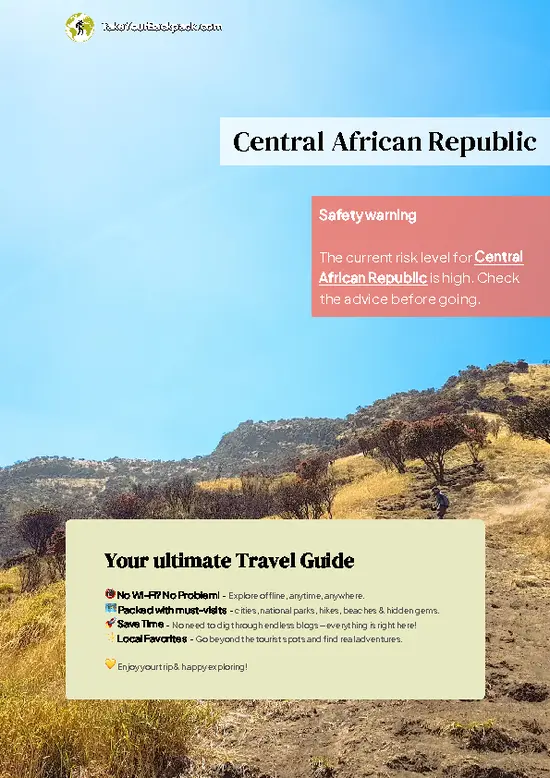
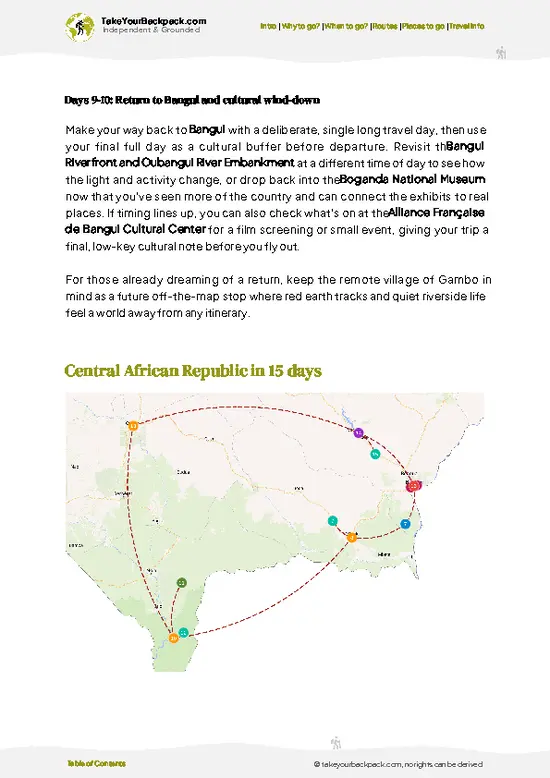
1. Watching the River Traffic—Real Life in Motion
Forget the travel-brochure fantasy of a tranquil, untouched riverbank. The Bangui riverfront is a living artery. Barges, dugout canoes, and battered ferries drift by, loaded with everything from sacks of cassava to entire families. You’re not just watching boats—you’re watching the city’s lifeblood. The river is commerce, commute, and community rolled into one. There’s no curated show here; it’s raw, unscripted, and sometimes chaotic. That’s the point. If you want to understand Bangui, start by watching how people move on the Oubangui.
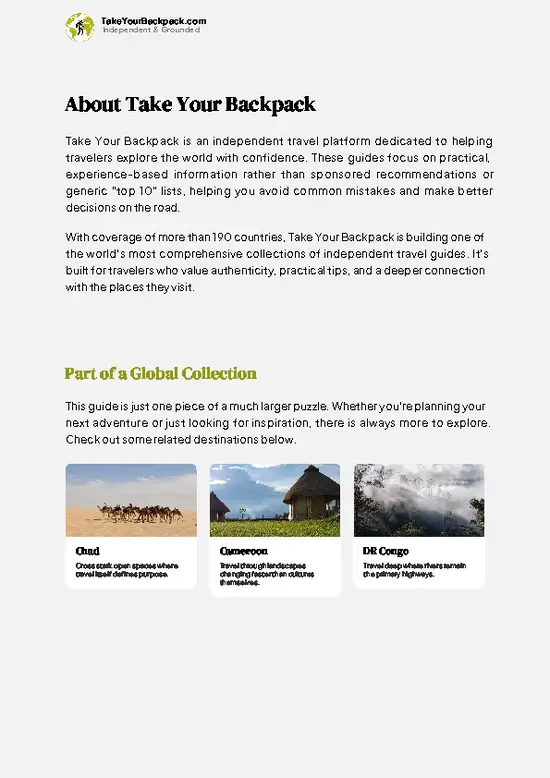
2. The Evening Social Scene—Bangui’s Living Room
As the sun drops, the embankment transforms. Locals spill out onto the concrete steps and dusty paths, sharing grilled fish, cold beers, and stories. There’s … read more 👉
Forget the travel-brochure fantasy of a tranquil, untouched riverbank. The Bangui riverfront is a living artery. Barges, dugout canoes, and battered ferries drift by, loaded with everything from sacks of cassava to entire families. You’re not just watching boats—you’re watching the city’s lifeblood. The river is commerce, commute, and community rolled into one. There’s no curated show here; it’s raw, unscripted, and sometimes chaotic. That’s the point. If you want to understand Bangui, start by watching how people move on the Oubangui.
2. The Evening Social Scene—Bangui’s Living Room
As the sun drops, the embankment transforms. Locals spill out onto the concrete steps and dusty paths, sharing grilled fish, cold beers, and stories. There’s … read more 👉
1. Watching the River Traffic—Real Life in Motion
Forget the travel-brochure fantasy of a tranquil, untouched riverbank. The Bangui riverfront is a living artery. Barges, dugout canoes, and battered ferries drift by, loaded with everything from sacks of cassava to entire families. You’re not just watching boats—you’re watching the city’s lifeblood. The river is commerce, commute, and community rolled into one. There’s no curated show here; it’s raw, unscripted, and sometimes chaotic. That’s the point. If you want to understand Bangui, start by watching how people move on the Oubangui.
2. The Evening Social Scene—Bangui’s Living Room
As the sun drops, the embankment transforms. Locals spill out onto the concrete steps and dusty paths, sharing grilled fish, cold beers, and stories. There’s music—sometimes a battered radio, sometimes a live guitar. You’ll see teenagers flirting, elders playing cards, and kids darting between vendors. This isn’t a staged “cultural experience.” It’s the city unwinding. If you want to feel the pulse of Bangui, skip the hotel bar and join the crowd here. You’ll get more out of an hour on the riverfront than a week of guided tours.
3. The Congo View—A Border Without Barriers
Stand on the embankment and look across the Oubangui: that’s the Republic of Congo, close enough to feel like you could swim there (don’t). There’s a strange thrill in seeing another country so near, with its own lights flickering at dusk. The river isn’t just a divider—it’s a connector, a reminder that Bangui is a crossroads, not an outpost. The sense of proximity to another world is electric, especially at sunset when the sky turns copper and the water glows.
4. The Fish Grills—Street Food With Bite
If you’re hungry, the embankment is the place to be. Vendors set up makeshift grills, charring river fish over open flames. The air smells like smoke and spice. Don’t expect a menu or a smiley waiter—just point, pay, and eat with your hands. The fish is fresh, the seasoning unapologetically bold, and the experience is as local as it gets. This is the opposite of sanitized street food. It’s messy, delicious, and absolutely worth the risk of a little charcoal on your fingers.
5. The Morning Market—Commerce at First Light
Arrive early and you’ll catch the riverside market in full swing. Fishermen haul in their catch, women haggle over vegetables, and porters weave through the crowd with impossible loads. It’s loud, a little overwhelming, and completely authentic. There’s no pretense here—just the business of survival and community. If you want to see Bangui unfiltered, this is your window.
Forget the travel-brochure fantasy of a tranquil, untouched riverbank. The Bangui riverfront is a living artery. Barges, dugout canoes, and battered ferries drift by, loaded with everything from sacks of cassava to entire families. You’re not just watching boats—you’re watching the city’s lifeblood. The river is commerce, commute, and community rolled into one. There’s no curated show here; it’s raw, unscripted, and sometimes chaotic. That’s the point. If you want to understand Bangui, start by watching how people move on the Oubangui.
2. The Evening Social Scene—Bangui’s Living Room
As the sun drops, the embankment transforms. Locals spill out onto the concrete steps and dusty paths, sharing grilled fish, cold beers, and stories. There’s music—sometimes a battered radio, sometimes a live guitar. You’ll see teenagers flirting, elders playing cards, and kids darting between vendors. This isn’t a staged “cultural experience.” It’s the city unwinding. If you want to feel the pulse of Bangui, skip the hotel bar and join the crowd here. You’ll get more out of an hour on the riverfront than a week of guided tours.
3. The Congo View—A Border Without Barriers
Stand on the embankment and look across the Oubangui: that’s the Republic of Congo, close enough to feel like you could swim there (don’t). There’s a strange thrill in seeing another country so near, with its own lights flickering at dusk. The river isn’t just a divider—it’s a connector, a reminder that Bangui is a crossroads, not an outpost. The sense of proximity to another world is electric, especially at sunset when the sky turns copper and the water glows.
4. The Fish Grills—Street Food With Bite
If you’re hungry, the embankment is the place to be. Vendors set up makeshift grills, charring river fish over open flames. The air smells like smoke and spice. Don’t expect a menu or a smiley waiter—just point, pay, and eat with your hands. The fish is fresh, the seasoning unapologetically bold, and the experience is as local as it gets. This is the opposite of sanitized street food. It’s messy, delicious, and absolutely worth the risk of a little charcoal on your fingers.
5. The Morning Market—Commerce at First Light
Arrive early and you’ll catch the riverside market in full swing. Fishermen haul in their catch, women haggle over vegetables, and porters weave through the crowd with impossible loads. It’s loud, a little overwhelming, and completely authentic. There’s no pretense here—just the business of survival and community. If you want to see Bangui unfiltered, this is your window.
Spotted a mistake or missing something? Contact us.

 Best Backpacking
.jpg) Hi, I’m Johan (Netherlands 🇳🇱), the creator of TakeYourBackpack. Over the past decade, I’ve backpacked through 80+ countries across six continents, gaining extensive experience with independent travel, long-term trips, and overland routes.
Hi, I’m Johan (Netherlands 🇳🇱), the creator of TakeYourBackpack. Over the past decade, I’ve backpacked through 80+ countries across six continents, gaining extensive experience with independent travel, long-term trips, and overland routes.