×

Chad🇹🇩 | townsZouarTibesti foothills, Toubou culture, mountain trails | things to do and best time to go

Explore FadaExplore Oum Hadjer

Backpacking in Zouar
🏆 Top picktown ranked #3
By Johan Kruseman 🇳🇱 | Updated October 16, 2026

Everyone talks about Zouar as the “gateway to the Tibesti”—but if you’re just chasing the legend of the mountains, you’ll miss the real pulse of this place. Zouar sits deep in northern Chad, a sun-bleached outpost where the air tastes of dust and diesel, and the silence is broken only by the chatter of the market or the distant rumble of a truck. For backpackers, it’s less a destination than a lifeline: a practical base to regroup, resupply, and catch your breath before plunging into the wilds. The town itself is simple—mud-brick houses, a handful of shops, and a market that’s more about necessity than spectacle. Don’t expect hostels or a buzzing café scene; evenings are slow, and you’ll likely share tea with locals rather than swap stories with other travelers. Getting here is a mission—no trains, only rough roads and battered bush taxis, and you’ll feel every kilometer. Compared to Faya or Bardai, Zouar is quieter, more utilitarian, and far less touristed. Costs are high for what you get, and safety depends on the political winds, but if you want to feel the edge of the Sahara—raw, unfiltered, and utterly real—this is where you earn it.

Discover everything you want to know in the 📖 Chad Travel Guide.
Safety warning

The current risk level for Chad is high. Check the advice before going.


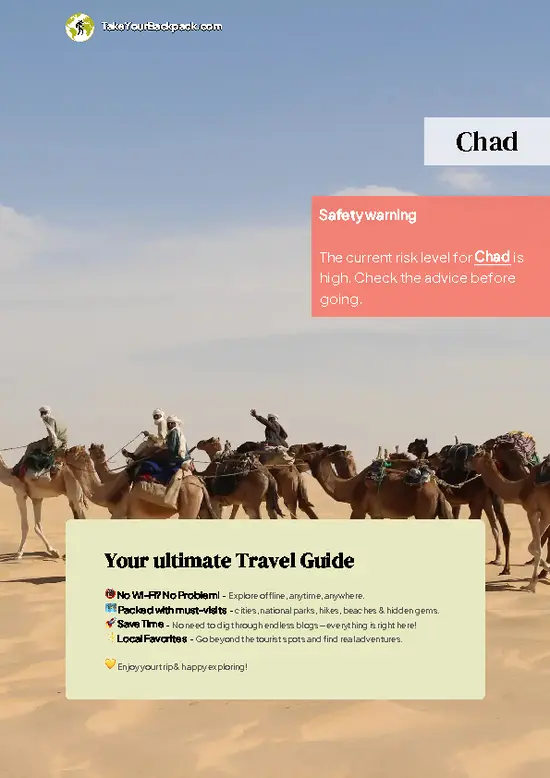
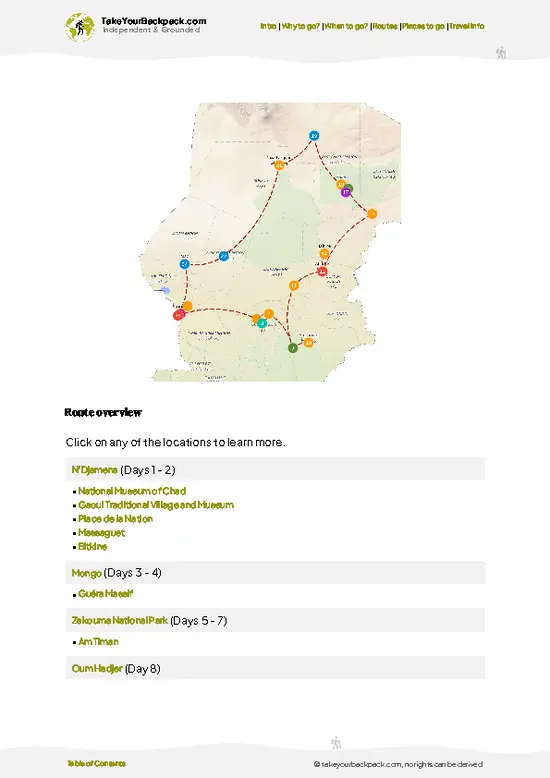
example page 0 from our offline Travel Guide for Chad
example page 1 from our offline Travel Guide for Chad
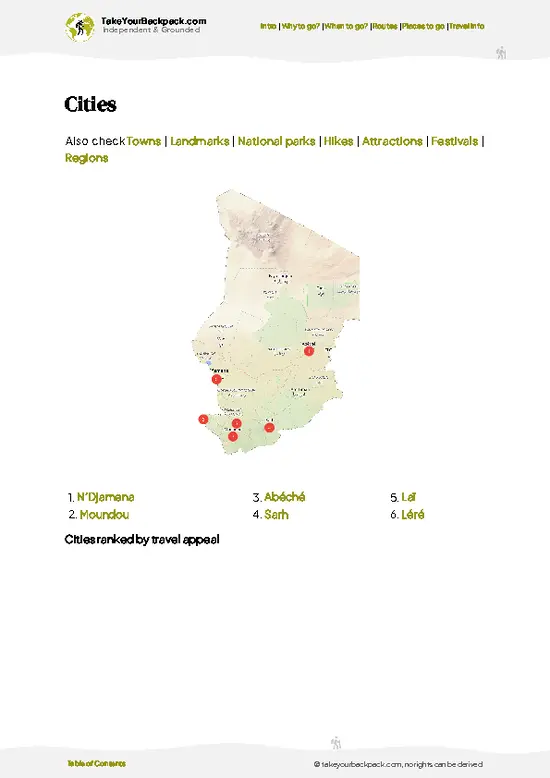
example page 2 from our offline Travel Guide for Chad
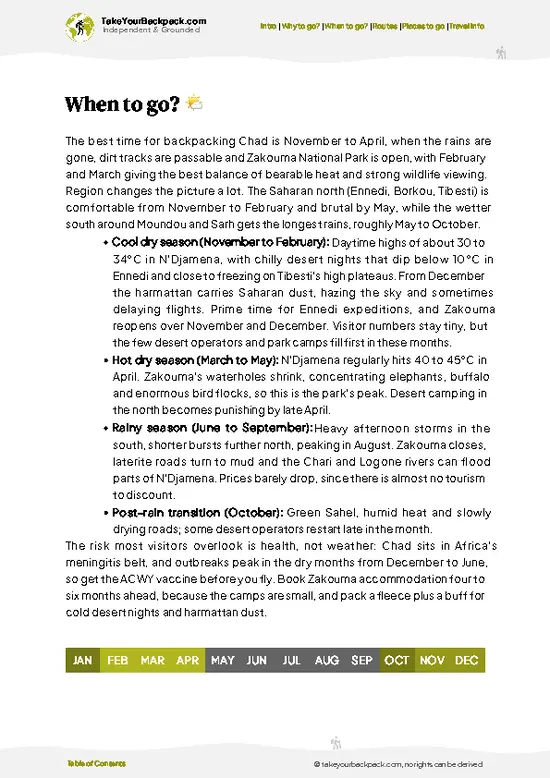
example page 3 from our offline Travel Guide for Chad
example page 4 from our offline Travel Guide for Chad
example page 5 from our offline Travel Guide for Chad
example page 6 from our offline Travel Guide for Chad
example page 7 from our offline Travel Guide for Chad
Loading the map 🌍
CLICK TO FILTER
cities
towns
landmarks
national parks
hikes
attractions
festivals
regions
SHOW COUNTRY’S BESTSHOW ALL

✨ Why go?
Ranked #3 town in Chad
Why visitors keep coming back

Backpackers flock to Zouar for its strategic location near stunning hikes and the vast expanse of the Sahara. The town serves as a gateway to the Tibesti Mountains, where trails lead to breathtaking views and unique landscapes. Small-scale guesthouses offer a cozy atmosphere, perfect for solo travelers or small groups seeking connection. The local food scene is a treat, with street vendors serving up hearty meals that reflect the region’s culture. While many pass through, those who linger find a friendly vibe and walkable streets, making it easy to soak in the local life. It’s an ideal stop for slow travelers who appreciate the journey as much as the destination.

💡 HighlightsMust-see experiences and standout moments

  • Zouar Grand Market (Souk) — The real heartbeat of the village: a compact, chaotic market where Toubou traders sell dates, salt, tea, basic hardware and locally made goods. Best place to watch daily life and barter with friendly vendors.
  • Main Mosque — A modest but important communal landmark. Visiting outside prayer times lets you appreciate local religious life, simple Saharan mosque architecture, and the rhythm of the town without being intrusive.
  • Palm Grove Oasis — A small cluster of date palms and vegetable plots fed by local wells. It’s a quiet, shady pocket of green in the sand where villagers fetch water and tend crops — a tangible example of survival in the Saharan edge.
  • Toubou Council House (Diwan) / Elders’ Gathering Spot — The social hub where elders meet, disputes are discussed
… read more 👉
  • Zouar Grand Market (Souk) — The real heartbeat of the village: a compact, chaotic market where Toubou traders sell dates, salt, tea, basic hardware and locally made goods. Best place to watch daily life and barter with friendly vendors.
  • Main Mosque — A modest but important communal landmark. Visiting outside prayer times lets you appreciate local religious life, simple Saharan mosque architecture, and the rhythm of the town without being intrusive.
  • Palm Grove Oasis — A small cluster of date palms and vegetable plots fed by local wells. It’s a quiet, shady pocket of green in the sand where villagers fetch water and tend crops — a tangible example of survival in the Saharan edge.
  • Toubou Council House (Diwan) / Elders’ Gathering Spot — The social hub where elders meet, disputes are discussed and hospitality is arranged. Observing or joining (with permission) gives direct insight into Toubou customs and daily governance.
  • Traditional Mud-Brick Quarter — Narrow alleys and low, earthen houses that show how local building techniques cope with heat and sand. Easy to walk through and excellent for photos of everyday life and vernacular architecture.
  • Village Well and Water-Storage Installations — The practical core of town life: wells, cisterns and traditional water-management features that keep Zouar running. They tell the story of how communities survive in an arid environment.
  • Local Cemetery — Simple, distinct gravemarkers and memorial practices reflecting Toubou beliefs and family ties. Visiting respectfully offers perspective on history, lineage and local rituals that you won’t find in guidebooks.
  • Artisan Workshops and Home Crafts — Small-scale leatherworkers, metalworkers and women weaving or making jewelry. Nothing fancy commercially, but great for seeing craftsmanship, buying a small locally made souvenir, and talking to makers.
  • Remains of Colonial/Post-Conflict Outposts — Scattered ruins and older government buildings around the town testify to Zouar’s role in 20th- and 21st-century regional history. They’re modest but meaningful places to reflect on the area’s turbulent past.
  • Zouar Airstrip and Arrival Area — A raw, practical place to visit even if you’re not flying: the airstrip underlines the village’s remoteness, occasional arrivals and the logistical reality of travel in northern Chad. Locals often gather here when planes or convoys arrive.
A few real, visitable highlights outside Zouar but reachable as day trips include parts of the Tibesti volcanic massif (notably the approaches to Emi Koussi), nearby mountain gueltas and small rock-art panels and shelters in the foothills — all great for short excursions if you have a local guide and a reliable vehicle.
Spotted a mistake or missing something? Contact us.

🏘️ NeighborhoodsKey areas and districts to know

Zouar, Chad, is a crossroads of culture and adventure, where the desert whispers stories of resilience and community. Here’s how to navigate its neighborhoods:

Central Zouar: This is the heartbeat of the town. Bustling markets fill the air with spices and chatter. It’s walkable, with affordable guesthouses and local eateries. Perfect for short stays, you’ll soak up the vibrant atmosphere and meet fellow travelers.

Outskirts: Quieter and more spacious, the outskirts offer a laid-back vibe. Ideal for longer stays, you’ll find cozy accommodations and a chance to connect with locals. Transport options are limited, but the peace is worth it.

Nightlife Zone: If you’re after a lively evening, head here. Small bars and music spots come alive after dark. It’s a bit pricier, but the energy is contagious, making it great for socializing.

⌛️ 1 dayA smart one-day plan

Zouar, Chad, is a vibrant tapestry of life, where the rhythm of daily activities pulses through the streets. The air is thick with the scent of spices and the sounds of laughter, creating an atmosphere that’s both lively and inviting.

Start your morning at the bustling market in the heart of the town. Here, the colors of fresh produce and handmade crafts pop against the earthy backdrop. Engage with local vendors; their stories add depth to your experience. Grab a breakfast of fresh bread and sweet tea from a nearby stall, savoring the warmth of the sun as it rises.

In the afternoon, wander through the historic neighborhoods, where mud-brick houses stand as testaments to resilience. Visit the lesser-known Mosque of Zouar, a stunning example of local architecture, often overlooked by tourists. … read more 👉
Zouar, Chad, is a vibrant tapestry of life, where the rhythm of daily activities pulses through the streets. The air is thick with the scent of spices and the sounds of laughter, creating an atmosphere that’s both lively and inviting.

Start your morning at the bustling market in the heart of the town. Here, the colors of fresh produce and handmade crafts pop against the earthy backdrop. Engage with local vendors; their stories add depth to your experience. Grab a breakfast of fresh bread and sweet tea from a nearby stall, savoring the warmth of the sun as it rises.

In the afternoon, wander through the historic neighborhoods, where mud-brick houses stand as testaments to resilience. Visit the lesser-known Mosque of Zouar, a stunning example of local architecture, often overlooked by tourists. The intricate designs and peaceful ambiance offer a moment of reflection.

As evening approaches, head to a local eatery. The aroma of grilled meats fills the air. Enjoy a traditional Chadian dish, perhaps a spicy sauce over rice, while the sun sets, painting the sky in hues of orange and pink. This day in Zouar isn’t just about sights; it’s about immersing yourself in the soul of the town.

🌤️ When to go?Weather, crowds, and seasonal trade-offs

  • Topic: Weather — The dry season from November to February offers clear skies and minimal dust, making trekking and exploring far easier. Avoid the rainy months (June to September) when roads turn to mud and the air thickens with humidity.
  • Topic: Temperature — Daytime highs hover around 30-35°C (86-95°F) in the dry season, cooling to a comfortable 15-20°C (59-68°F) at night. The wet season spikes heat and humidity, making physical exertion tougher.
  • Topic: Daylight Hours — Roughly 11 to 12 hours of daylight year-round, but the dry season’s crisp mornings and longer evenings give you more usable light for hikes and village visits.
  • Topic: Crowds — Zouar is off the beaten path, so crowds are minimal year-round. However, the dry season attracts a few more adventurous travelers, adding a subtle
… read more 👉
  • Topic: Weather — The dry season from November to February offers clear skies and minimal dust, making trekking and exploring far easier. Avoid the rainy months (June to September) when roads turn to mud and the air thickens with humidity.
  • Topic: Temperature — Daytime highs hover around 30-35°C (86-95°F) in the dry season, cooling to a comfortable 15-20°C (59-68°F) at night. The wet season spikes heat and humidity, making physical exertion tougher.
  • Topic: Daylight Hours — Roughly 11 to 12 hours of daylight year-round, but the dry season’s crisp mornings and longer evenings give you more usable light for hikes and village visits.
  • Topic: Crowds — Zouar is off the beaten path, so crowds are minimal year-round. However, the dry season attracts a few more adventurous travelers, adding a subtle buzz without overwhelming the quiet.
  • Topic: Seasonal Activities — The dry season is prime for desert trekking and cultural exchanges with local communities, while the wet season limits outdoor options but brings lush greenery and birdwatching opportunities.
  • Topic: Price Fluctuations — Expect slightly higher prices during the dry season due to demand and easier access. The wet season offers bargains but at the cost of comfort and mobility.
Pro-tip: Aim for early dry season visits—November to early December—when the air is fresh, the landscape is still recovering from rains, and you get the best balance of comfort and color.


source: climatestotravel.comJANJanuary: excellent for travelingFEBFebruary: excellent for travelingMARMarch: highly recommended for travelingAPRApril: good for travelingMAYMay: good for travelingJUNJune: fair for travelingJULJuly: below average for travelingAUGAugust: below average for travelingSEPSeptember: fair for travelingOCTOctober: good for travelingNOVNovember: excellent for travelingDECDecember: highly recommended for traveling
when-to-go

✈️ The backpacker research shortcutChad Travel Guide

An offline-friendly backpacking guide with optimized travel routes, ranked highlights, transport advice, and the best areas to stay.
example page 0 from our offline Travel Guide for Chad
example page 1 from our offline Travel Guide for Chad
example page 2 from our offline Travel Guide for Chad
example page 3 from our offline Travel Guide for Chad
example page 4 from our offline Travel Guide for Chad
example page 5 from our offline Travel Guide for Chad
example page 6 from our offline Travel Guide for Chad
example page 7 from our offline Travel Guide for Chad
The digital guide (262 pages) contains:
✅ 57 highlights, ranked by travel appeal
✅ Optimized 7, 14 & 21-day travel routes
✅ Cities, national parks, landmarks, beaches
✅ How to get around
✅ Offline-friendly for travel without Wi-Fi
👉 Click to see all 30+ guide features

📅 Plan smarter in minutes, not weeks
✅ Month by month travel advice
✅ Festivals & national holidays
✅ Budget expectations

🗺️ Go to the right places, skip the overrated ones
✅ Honest pros & cons of destinations
✅ Top hikes, parks & viewpoints
✅ Lesser-known places most travelers miss
✅ Clear “worth it vs skip it” guidance

🛏️ Travel smoothly without rookie mistakes
✅ Best areas to stay
✅ Transport systems explained simply
✅ Common scams & safety advice
✅ SIM cards, money & practical tips

🌍 Understand the country, not just visit it
✅ Culture & traditions
✅ 52 Essential phrases & customs
✅ Festivals worth planning around
✅ Traveler-friendly historical context
✅ Insights that make places more meaningful

📱 Built for real travel conditions
✅ Fully downloadable PDF
✅ Works completely offline
✅ Optimized for phone use
✅ Useful in remote areas & buses
✅ Everything in one place
Stop searching, start planning
Get instant access to your full guide. 30‑day money-back guarantee.
+ Add another guide for just

By proceeding you agree to our terms.
Sent to your inbox immediately after payment • 100% Secure Checkout
Best Backpacking Travel Advisor 2025 tourism awardBest Backpacking
Travel Advisor
2025
What others say about Take Your Backpack Guides:
⭐⭐⭐⭐⭐
Fantastic, amazing amount of information!
⭐⭐⭐⭐⭐
My goodness this is amazing, it's what I've been looking for hats off too you!
⭐⭐⭐⭐⭐
I think this is absolutely BRILLIANT
⭐⭐⭐⭐
Very complete and informative. It's still missing places, but I gotta to commend you
⭐⭐⭐⭐⭐
This is truly amazing, thank you, can't wait to explore it with my kids!
⭐⭐⭐⭐⭐
Awesome resource, thank you!
⭐⭐⭐⭐⭐
This is amazing! Can't wait to explore the ones I haven't seen
⭐⭐⭐⭐
I love this! Well done, great idea.
⭐⭐⭐⭐⭐
Thanks for taking the time to make this gem!
⭐⭐⭐⭐⭐
This might be the best website I've ever seen.
⭐⭐⭐⭐⭐
Congratulations, and thank you so much for your work; it's incredibly valuable.
⭐⭐⭐⭐
In all seriousness I think you did a great job pointing out the important spots
⭐⭐⭐⭐⭐
10/10 very good
⭐⭐⭐⭐⭐
As someone who's only just starting to visit regularly this is awesome, thank you.
⭐⭐⭐⭐
Thank you very much! I'm going to visit my dad, it's going to be very useful!
⭐⭐⭐⭐⭐
This is really cool! We'll be travelling for the first time and this definitely come in handy.
⭐⭐⭐⭐⭐
You are now our minister of culture, congratulations 👨‍💼
⭐⭐⭐⭐⭐
Just wanted to tell you that this is a pearl! Going to follow your recommendations.
⭐⭐⭐⭐⭐
This is so cool. I'll definitely be using the resource for my travels soon.
⭐⭐⭐⭐⭐
This is very impressive! Good work.
⭐⭐⭐⭐⭐
This is an amazing and informative site. Very well done!

🛏️ Where to stay?How to pick the right area

In Zouar, the best spot for backpackers is the central district near the market square. This area hums with life from dawn, the scent of spices and fresh bread weaving through the air. It’s where locals gather, making it safer and more social than the quieter outskirts. Budget travelers find a handful of simple guesthouses here, perfect for striking up conversations over shared meals or swapping route tips. Compared to the residential zones, which feel isolated and less welcoming, the market district offers a pulse that keeps you connected without the touristy gloss. Staying here means you’re … read more 👉
In Zouar, the best spot for backpackers is the central district near the market square. This area hums with life from dawn, the scent of spices and fresh bread weaving through the air. It’s where locals gather, making it safer and more social than the quieter outskirts. Budget travelers find a handful of simple guesthouses here, perfect for striking up conversations over shared meals or swapping route tips. Compared to the residential zones, which feel isolated and less welcoming, the market district offers a pulse that keeps you connected without the touristy gloss. Staying here means you’re plugged into the town’s rhythm, making every step outside your door an invitation rather than a gamble.

🚌 Getting aroundHow to get around Zouar

Zouar moves at its own pace—neither frantic nor strictly regimented. The sun casts long shadows on dusty streets where time feels elastic, bending to the rhythm of local chatter and the occasional honk of a battered minibus. Here, schedules are more a suggestion than a rule, and the scent of spices from roadside stalls mixes with the dry desert air. You’ll find that patience isn’t just a virtue; it’s your best tool for unlocking the town’s pulse. The flow is a dance between waiting and moving, where knowing when to step in and when to hang back turns a simple trip into a smooth, almost effortless journey.
  • Walking: The most reliable and immersive way to get around. Streets are compact and mostly flat, making it easy to explore on foot. No cost, and you catch the town’s textures—the cracked
… read more 👉
Zouar moves at its own pace—neither frantic nor strictly regimented. The sun casts long shadows on dusty streets where time feels elastic, bending to the rhythm of local chatter and the occasional honk of a battered minibus. Here, schedules are more a suggestion than a rule, and the scent of spices from roadside stalls mixes with the dry desert air. You’ll find that patience isn’t just a virtue; it’s your best tool for unlocking the town’s pulse. The flow is a dance between waiting and moving, where knowing when to step in and when to hang back turns a simple trip into a smooth, almost effortless journey.
  • Walking: The most reliable and immersive way to get around. Streets are compact and mostly flat, making it easy to explore on foot. No cost, and you catch the town’s textures—the cracked walls, the chatter, the smells—up close.
  • Shared Minibuses: These run irregularly from dawn until dusk, usually filling up before departure. Expect a bumpy ride for about 200 CFA francs. They’re cheap and fast but can be cramped and noisy.
  • Motorcycle Taxis (Boda-bodas): Available all day, these dart through traffic with surprising agility. Fares start around 300 CFA francs for short hops. Great for tight schedules but hold on tight and negotiate prices upfront.
  • Local Bicycle Rentals: A quiet, flexible option for covering more ground without losing the town’s vibe. Rentals cost about 500 CFA francs per day. Perfect for early mornings or late afternoons when the light softens.

👛 Costs (as of 16 October 2026)Travel costs and budget guide for Zouar

Backpacking in Zouar, Chad, is a raw, off-the-beaten-path experience where every dollar counts and the environment shapes your spending.
  • Dorm Accommodation: Options are extremely limited and basic, often in guesthouses or local inns rather than formal hostels. Expect to pay around $5 to $10 per night. The rooms are simple, sometimes with shared bathrooms and minimal amenities, but they offer a chance to rest in the heart of the Sahara’s edge.
  • Meals: Food costs are modest but tied to local availability. Street food and small local eateries serve up hearty, filling meals for about $2 to $5 each. Expect staples like millet, rice, and occasional meat, flavored with regional spices. Water and soft drinks add a small extra cost, around $0.50 to $1.
  • Local Transport: Transport is sparse and informal.
… read more 👉
Backpacking in Zouar, Chad, is a raw, off-the-beaten-path experience where every dollar counts and the environment shapes your spending.
  • Dorm Accommodation: Options are extremely limited and basic, often in guesthouses or local inns rather than formal hostels. Expect to pay around $5 to $10 per night. The rooms are simple, sometimes with shared bathrooms and minimal amenities, but they offer a chance to rest in the heart of the Sahara’s edge.
  • Meals: Food costs are modest but tied to local availability. Street food and small local eateries serve up hearty, filling meals for about $2 to $5 each. Expect staples like millet, rice, and occasional meat, flavored with regional spices. Water and soft drinks add a small extra cost, around $0.50 to $1.
  • Local Transport: Transport is sparse and informal. Shared taxis or minibuses between nearby towns cost roughly $1 to $3 per trip. For local movement within Zouar, walking is common, but if you catch a ride, it’s usually a few dollars at most. Prepare for irregular schedules and rough roads.
  • Basic Activities/Entry Fees: There are few formal tourist sites with fees, but visiting local markets or cultural spots might involve small contributions or tips, generally under $2. Guided tours or desert excursions, if available, can be pricier, starting around $20, but these are not everyday expenses.
  • Miscellaneous Expenses: This covers essentials like bottled water, snacks, phone credit, and occasional supplies. Budget about $1 to $3 daily, as these small costs add up quickly in a place where convenience is scarce.

The total daily budget for backpacking in Zouar typically falls between $10 and $20. This range reflects the town’s sparse infrastructure and the need to balance comfort with the realities of remote travel. Every dollar spent here is a step deeper into a landscape that demands patience but rewards with a stark, authentic encounter.
⚠️ Prices can change and everyone travels differently, so take this as a rough guide. Hope it helps you plan your adventure!

🚌 Day tripsShort trips worth adding

Zouar, Chad, is a fantastic launchpad for unforgettable day trips that blend adventure with cultural immersion. Here’s how to make the most of your time.

Trip to the Ennedi Plateau
The Ennedi Plateau is a surreal landscape of sandstone formations and ancient rock art. It’s about a three-hour drive from Zouar, but the journey is half the fun, with the desert sun casting golden hues on the rocks. Expect to spend around $30 for transport and entry fees. The best time to visit is during the cooler months, from November to February. A common mistake is underestimating the need for plenty of water and snacks; the remote areas can be unforgiving.

👉 Explore Ennedi Plateau

Trip to the Ounianga Lakes
The Ounianga Lakes, a UNESCO World Heritage site, are a stunning contrast to the arid landscape. … read more 👉
Zouar, Chad, is a fantastic launchpad for unforgettable day trips that blend adventure with cultural immersion. Here’s how to make the most of your time.

Trip to the Ennedi Plateau
The Ennedi Plateau is a surreal landscape of sandstone formations and ancient rock art. It’s about a three-hour drive from Zouar, but the journey is half the fun, with the desert sun casting golden hues on the rocks. Expect to spend around $30 for transport and entry fees. The best time to visit is during the cooler months, from November to February. A common mistake is underestimating the need for plenty of water and snacks; the remote areas can be unforgiving.

👉 Explore Ennedi Plateau

Trip to the Ounianga Lakes
The Ounianga Lakes, a UNESCO World Heritage site, are a stunning contrast to the arid landscape. It takes roughly four hours to reach these turquoise waters, but the sight is worth every minute. Budget around $40 for transport and entry. The ideal time is early morning to catch the sunrise reflecting off the lakes. Many first-timers forget to bring a swimsuit; you’ll want to take a dip in those inviting waters.

👉 Explore Ounianga Lakes

Trip to the Tibesti Mountains
For those craving a challenge, the Tibesti Mountains offer rugged beauty and a sense of isolation. It’s about a five-hour trek to the base, so start early. Expect to spend around $50 on transport and guide fees. The best months are from December to March when temperatures are milder. A common pitfall is not hiring a local guide; the terrain can be tricky, and a knowledgeable companion enhances the experience.

👉 Explore Tibesti Mountains

🛡️ SafetyScams, Hazards, and Annoyances

Zouar is generally safe, but staying aware enhances your experience. Stick to well-lit areas at night; the streets can feel quiet, and a little caution goes a long way. Solo travelers should blend in—dress modestly and engage with locals to build rapport.

Watch for common scams like inflated taxi fares; agree on prices beforehand. Street vendors can be persistent, but a polite “no, thank you” usually suffices. Embrace the local pace, and you’ll find the charm in the everyday hustle.

FAQCommon questions from travelers

Zouar is primarily a stopover rather than a destination for extended visits due to its remote location and limited tourist infrastructure. It serves as a gateway to the Ennedi Plateau, which is the main attraction in the region. Most travelers pass through Zouar on their way to explore the nearby natural and cultural sites.
One to two days are sufficient in Zouar, mainly to rest and prepare for excursions to the Ennedi Plateau. The town itself offers minimal sightseeing options, so most time is spent organizing transport and supplies. Longer stays are generally not necessary unless waiting for travel connections.
No, Zouar cannot be effectively visited as a day trip from a nearby city because it is very remote and transport options are limited. The closest larger town is Fada, which is about 200 kilometers away on rough roads, making day trips impractical. Travelers usually stay overnight in Zouar before continuing their journey.
⚠️ Things can change over time, so always validate details locally before you go.

Other Chadian towns near Zouar

Explore more nearby:

  • Faya-Largeau—Oasis town, Tibesti gateway, desert airstrip| 390 km away
  • Fada—Ennedi cliffs, rock art, remote desert| 644 km away
  • Mao—Kanem heartland, date palms, mud-brick compounds| 715 km away

💡 Not sure where to go next?
Create a personalized itinerary for Chad including Zouar and the places that fit your trip.

Generate my itinerary

👉 Discover all towns

Or checkout all Chad has to offer (think cities, towns, villages, national parks, hikes, beaches, festivals)
Country photo of Chad

We 💚 feedbackIs it worth it?

Zouar has a raw, untamed vibe that grabs you. The best surprise? The warmth of the locals—every smile feels genuine. Just a heads-up: the heat can be relentless. Embrace it, and you’ll find beauty in the struggle. It’s worth every drop of sweat.

✍️ Help improve this page!
The information on this page is based on in-depth research, insights shared by experienced travelers, and feedback from the local travel community in Chad. While every effort is made to keep the information accurate and current, conditions can change — so if you spot anything incorrect or outdated, please get in touch.


🙋‍♂️ Give feedback

👋 Meet the founderWho’s Behind Take Your Backpack?

Johan, backpacker and founder of TakeYourBackpackHi, I’m Johan (Netherlands 🇳🇱), the creator of TakeYourBackpack. Over the past 3 decades, I’ve backpacked through 90+ countries across six continents, gaining extensive experience with independent travel, long-term trips, and overland routes.

This site is built on a combination of firsthand travel experience and carefully curated insights from other backpackers. Many guides are based on places I’ve personally visited, while others bring together tips, observations, and practical advice shared by trusted travelers I’ve met along the way.

The goal is to provide realistic, experience-driven guidance — not generic itineraries — so you can explore destinations with better context, clearer expectations, and more confidence.