×

Chile🇨🇱 | townsAncudPuñihuil penguin boats, Spanish fort, harbor market, Chacao Channel views | things to do and best time to go

Explore QuellónExplore Frutillar

Backpacking in Ancud
👍 Recommendedtown ranked #9
By Johan Kruseman 🇳🇱 | Updated October 19, 2026

Ancud suits slow travelers who like working harbors, seafood and a base for wildlife, and it is less rewarding if you want nightlife or a long list of sights. It sits on the northern coast of Chiloé Island in southern Chile, a ferry hop from the mainland. Buses run here because the Pan-American Highway funnels traffic to the Chacao Channel crossing, so the smarter move is to arrive by day and keep your onward ticket flexible. Hostels are small and family-run, which is why evenings are quiet and conversation happens over shared breakfasts. I still connect the place with the clank of fishing boats and the squawk of gulls at the waterfront market. Most people use Ancud for penguin colonies and coastal day trips. Hikers, birders and seafood lovers will like it most; party seekers and anyone short on time will not.

Discover everything you want to know in the 📖 Chile Travel Guide.


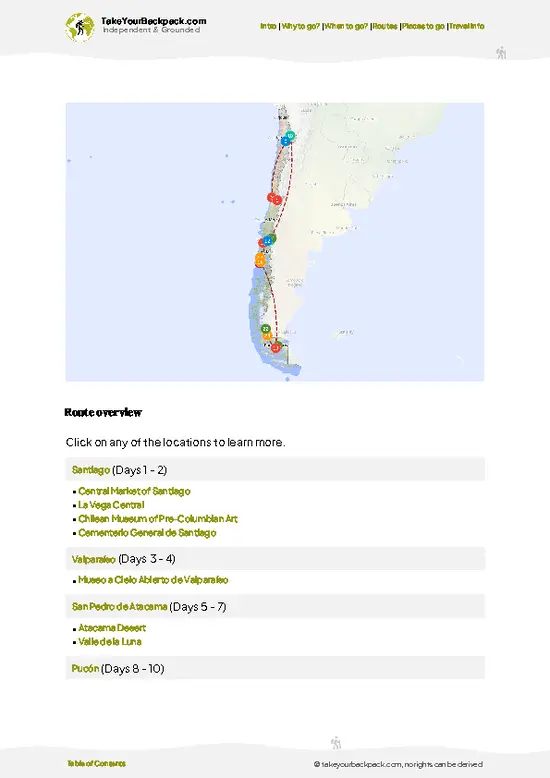
example page 0 from our offline Travel Guide for Chile
example page 1 from our offline Travel Guide for Chile
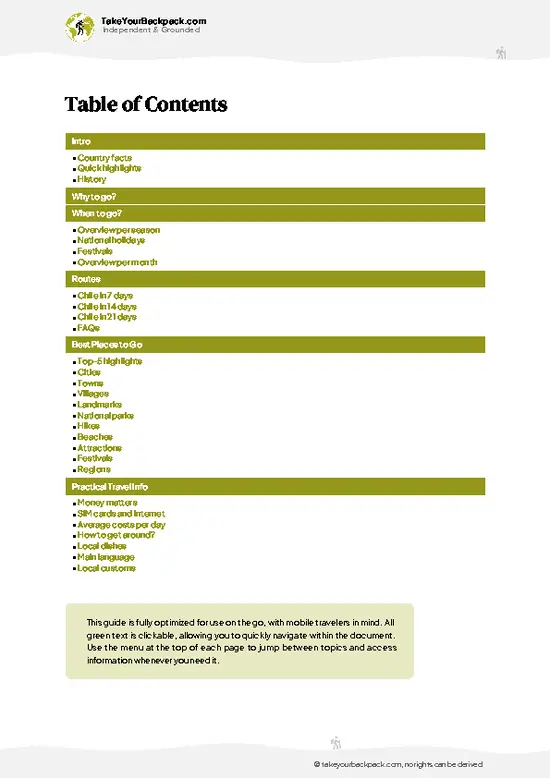
example page 2 from our offline Travel Guide for Chile
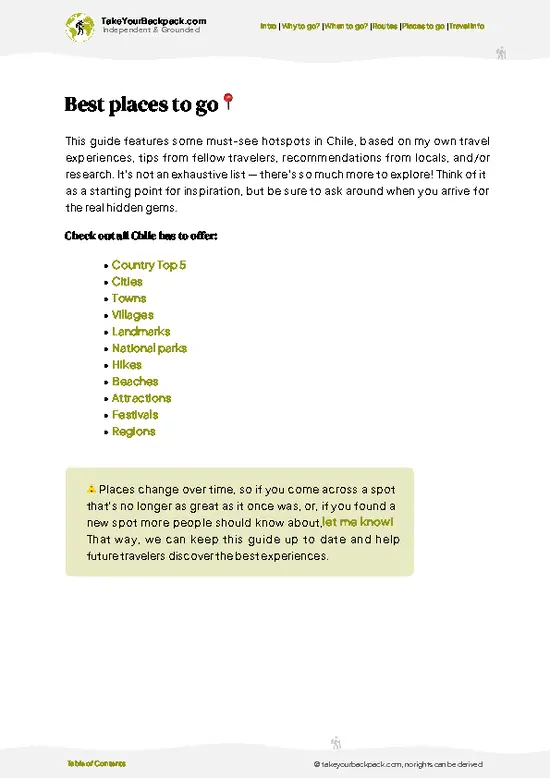
example page 3 from our offline Travel Guide for Chile
example page 4 from our offline Travel Guide for Chile
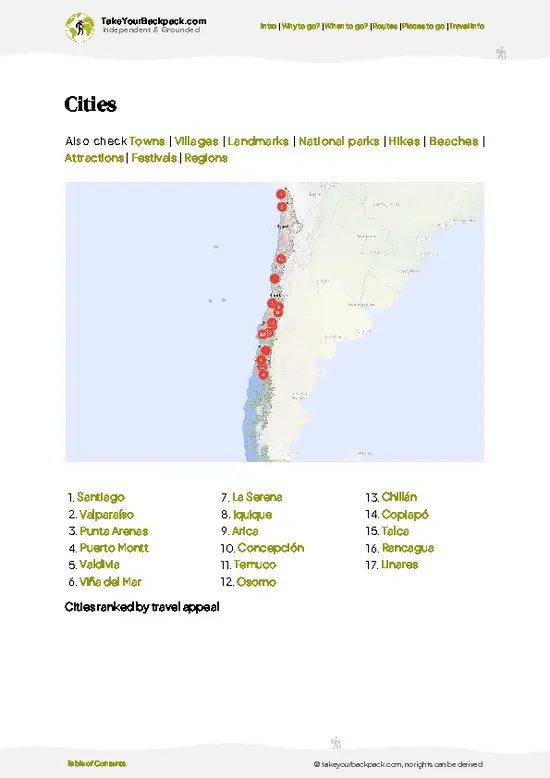
example page 5 from our offline Travel Guide for Chile
example page 6 from our offline Travel Guide for Chile
example page 7 from our offline Travel Guide for Chile
Loading the map 🌍
CLICK TO FILTER
cities
towns
villages
landmarks
national parks
hikes
beaches
attractions
festivals
regions
SHOW COUNTRY’S BESTSHOW ALL

✨ Why go?
Ranked #9 town in Chile
Why Ancud should be on your travel list

Ancud earns its place on a southern Chile route because it is the practical gateway to Chiloé and the closest town to the Puñihuil penguin colonies, where Magellanic and Humboldt penguins nest on offshore islets. Travelers usually stay two or three nights, enough to see the coast, eat well and not rush the ferry-and-bus shuffle. The center is compact and walkable, climbing from the harbor to a plaza and a small cluster of museums, and the waterfront Feria Gastronómica is where you try curanto, the island’s stone-pit shellfish and meat feast, without a restaurant markup. Guesthouses and hostels are small, so you meet people at breakfast rather than in a party scene. It suits solo travelers, hikers and wildlife watchers who want a calm base. If you need nightlife or big-city energy, treat it as a short stop and move on to Castro.

💡 HighlightsPlaces and moments you shouldn't skip

  1. Puñihuil Penguin Colonies: The town’s best-known draw lies on the Pacific coast west of town, where small boats circle islets with Magellanic and Humboldt penguins. Go between October and March, when they are nesting; tours run about 30 minutes and cost roughly US$15 to 20. Allow half a day with the road trip.
  2. Fuerte San Antonio: A restored Spanish fort above the harbor, with cannons aimed at the bay. It marks where Spain’s rule in Chile ended in 1826. Entry is free, and 30 minutes is plenty. Late afternoon gives the best views.
  3. Museo Regional de Ancud: Housed in a former Spanish-style building near the plaza, it holds a replica of the schooner Ancud, mythology figures of Chiloé and indigenous Huilliche artifacts. Entry runs around US$2 to 4, and 1 hour works.
  4. Mercado Municipal and Feria Gastronómica:
… read more 👉
  1. Puñihuil Penguin Colonies: The town’s best-known draw lies on the Pacific coast west of town, where small boats circle islets with Magellanic and Humboldt penguins. Go between October and March, when they are nesting; tours run about 30 minutes and cost roughly US$15 to 20. Allow half a day with the road trip.
  2. Fuerte San Antonio: A restored Spanish fort above the harbor, with cannons aimed at the bay. It marks where Spain’s rule in Chile ended in 1826. Entry is free, and 30 minutes is plenty. Late afternoon gives the best views.
  3. Museo Regional de Ancud: Housed in a former Spanish-style building near the plaza, it holds a replica of the schooner Ancud, mythology figures of Chiloé and indigenous Huilliche artifacts. Entry runs around US$2 to 4, and 1 hour works.
  4. Mercado Municipal and Feria Gastronómica: A covered market with seafood stalls, woolens and handicrafts. Visit at lunch for hot empanadas and curanto, about US$8 to 14 a plate. Spend 1 hour.
  5. Mirador Cerro Huaihuén: A short climb above town for views over the Chacao Channel and rooftops. It is free, takes about 45 minutes round trip, and is best at golden hour.
For day trips, consider Faro Corona, Monumento Natural Islotes de Puñihuil’s beaches, Chepu’s drowned forest and the Caulín oyster beds.
Spotted a mistake or missing something? Contact us.

Things to do near Ancud

Ratings based on Tripadvisor reviews. When you book through this link, you support our work at no extra cost to you.

🏘️ NeighborhoodsNeighborhood guide to Ancud

Ancud sits on a hilly north coast of Chiloé Island, and its layout follows the bay, so the smart move is to think in strips running along the water rather than in districts.
  • Plaza de Armas and Centro: The grid of streets around the square holds the cathedral, the Museo Regional and most cafés. It is flat enough to walk in minutes, and experienced travelers eat curanto and fried sea bass here at lunch, when set menus cost far less than dinner.
  • Puerto and the Mercado Municipal: Downhill from the square, the fish market and craft stalls sit on the waterfront. Go in the morning, when boats unload and stalls are fully stocked, then browse wool goods before the afternoon lull.
  • Fuerte San Antonio and the Costanera: The old Spanish fort and the shoreline path to the west are a 10 to 15 minute walk from
… read more 👉
Ancud sits on a hilly north coast of Chiloé Island, and its layout follows the bay, so the smart move is to think in strips running along the water rather than in districts.
  • Plaza de Armas and Centro: The grid of streets around the square holds the cathedral, the Museo Regional and most cafés. It is flat enough to walk in minutes, and experienced travelers eat curanto and fried sea bass here at lunch, when set menus cost far less than dinner.
  • Puerto and the Mercado Municipal: Downhill from the square, the fish market and craft stalls sit on the waterfront. Go in the morning, when boats unload and stalls are fully stocked, then browse wool goods before the afternoon lull.
  • Fuerte San Antonio and the Costanera: The old Spanish fort and the shoreline path to the west are a 10 to 15 minute walk from the plaza. Rain arrives fast here, so carry a shell jacket and walk it at the first dry window.
  • Av. Pedro Montt and Salvador Allende: The sloping outer avenues hold supermarkets, the bus terminal area and pubs. Nightlife is quiet and ends early, because most locals head home by midnight. Taxis make the uphill return easy.

⌛️ 1 dayA smart one-day plan

8:30 AM, Puñihuil Penguin Tour: Start with the colonies while the boats run calm. Take a morning bus or colectivo west and book the 30-minute ride, which gets you close to nesting penguins and sea lions.
12:30 PM, Feria Gastronómica: Back in town, eat curanto or fried fish at the market stalls. Wander the craft section afterward for wool socks and carved wood.
2:30 PM, Museo Regional de Ancud: A short walk uphill leads to the museum. Spend an hour with the schooner replica and the mythology room, which explains the legends behind local life.
4:00 PM, Fuerte San Antonio: Stroll to the fort ramparts for harbor views and the history of 1826. It is a short walk along the waterfront.
5:30 PM, Cerro Huaihuén Mirador: Climb the hill, off the usual circuit, for the best sweep of the channel and rooftops … read more 👉
8:30 AM, Puñihuil Penguin Tour: Start with the colonies while the boats run calm. Take a morning bus or colectivo west and book the 30-minute ride, which gets you close to nesting penguins and sea lions.
12:30 PM, Feria Gastronómica: Back in town, eat curanto or fried fish at the market stalls. Wander the craft section afterward for wool socks and carved wood.
2:30 PM, Museo Regional de Ancud: A short walk uphill leads to the museum. Spend an hour with the schooner replica and the mythology room, which explains the legends behind local life.
4:00 PM, Fuerte San Antonio: Stroll to the fort ramparts for harbor views and the history of 1826. It is a short walk along the waterfront.
5:30 PM, Cerro Huaihuén Mirador: Climb the hill, off the usual circuit, for the best sweep of the channel and rooftops as boats return.
7:30 PM, Harbor Dinner: Finish with fresh shellfish at a small family place on the costanera.

🌤️ When to go?Weather, crowds, and seasonal trade-offs

January and February are the warmest and busiest months in Ancud, though even then you should pack rain gear.
  • Summer (December to February): Highs reach 17 to 20°C (63 to 68°F), days run long, and ferries, buses and rooms fill up. Prices peak and booking ahead matters.
  • Autumn (March to May): Highs of 11 to 16°C (52 to 61°F), fewer crowds and lower prices, with rain increasing.
  • Winter (June to August): Highs of 8 to 11°C (46 to 52°F), constant rain and short days. Many tours and some restaurants shut, though rooms are cheapest.
  • Spring (September to November): Cool, 10 to 14°C (50 to 57°F), with unsettled weather and waking wildlife.
Penguin colonies near Ancud are active from roughly October to March, so plan around that.

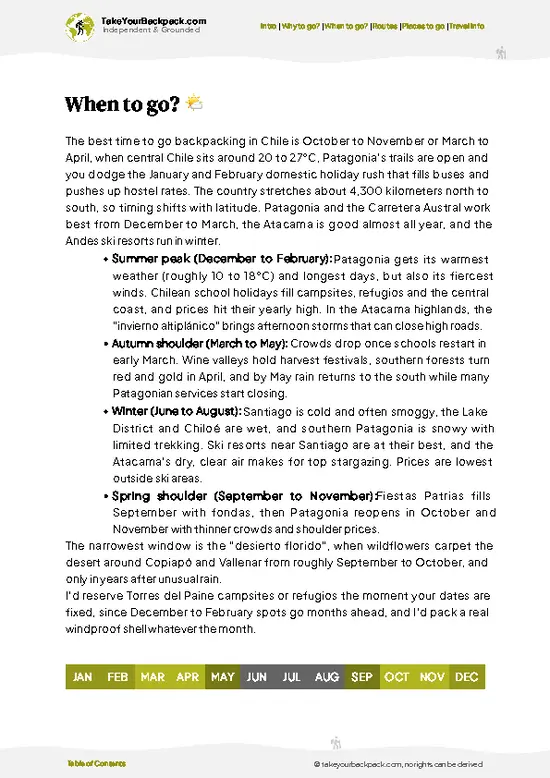
source: climatestotravel.comJANJanuary: highly recommended for travelingFEBFebruary: highly recommended for travelingMARMarch: highly recommended for travelingAPRApril: excellent for travelingMAYMay: excellent for travelingJUNJune: fair for travelingJULJuly: fair for travelingAUGAugust: fair for travelingSEPSeptember: excellent for travelingOCTOctober: excellent for travelingNOVNovember: highly recommended for travelingDECDecember: highly recommended for traveling
when-to-go

✈️ The backpacker research shortcutChile Travel Guide

An offline-friendly backpacking guide with optimized travel routes, ranked highlights, transport advice, and the best areas to stay.
example page 0 from our offline Travel Guide for Chile
example page 1 from our offline Travel Guide for Chile
example page 2 from our offline Travel Guide for Chile
example page 3 from our offline Travel Guide for Chile
example page 4 from our offline Travel Guide for Chile
example page 5 from our offline Travel Guide for Chile
example page 6 from our offline Travel Guide for Chile
example page 7 from our offline Travel Guide for Chile
The digital guide (333 pages) contains:
✅ 107 highlights, ranked by travel appeal
✅ Optimized 7, 14 & 21-day travel routes
✅ Cities, national parks, landmarks, beaches
✅ How to get around
✅ Offline-friendly for travel without Wi-Fi
👉 Click to see all 30+ guide features

📅 Plan smarter in minutes, not weeks
✅ Month by month travel advice
✅ Festivals & national holidays
✅ Budget expectations

🗺️ Go to the right places, skip the overrated ones
✅ Honest pros & cons of destinations
✅ Top hikes, parks & viewpoints
✅ Lesser-known places most travelers miss
✅ Clear “worth it vs skip it” guidance

🛏️ Travel smoothly without rookie mistakes
✅ Best areas to stay
✅ Transport systems explained simply
✅ Common scams & safety advice
✅ SIM cards, money & practical tips

🌍 Understand the country, not just visit it
✅ Culture & traditions
✅ 52 Essential phrases & customs
✅ Festivals worth planning around
✅ Traveler-friendly historical context
✅ Insights that make places more meaningful

📱 Built for real travel conditions
✅ Fully downloadable PDF
✅ Works completely offline
✅ Optimized for phone use
✅ Useful in remote areas & buses
✅ Everything in one place
Stop searching, start planning
Get instant access to your full guide. 30‑day money-back guarantee.
+ Add another guide for just

By proceeding you agree to our terms.
Sent to your inbox immediately after payment • 100% Secure Checkout
Best Backpacking Travel Advisor 2025 tourism awardBest Backpacking
Travel Advisor
2025
What others say about Take Your Backpack Guides:
⭐⭐⭐⭐⭐
Fantastic, amazing amount of information!
⭐⭐⭐⭐⭐
My goodness this is amazing, it's what I've been looking for hats off too you!
⭐⭐⭐⭐⭐
I think this is absolutely BRILLIANT
⭐⭐⭐⭐
Very complete and informative. It's still missing places, but I gotta to commend you
⭐⭐⭐⭐⭐
This is truly amazing, thank you, can't wait to explore it with my kids!
⭐⭐⭐⭐⭐
Awesome resource, thank you!
⭐⭐⭐⭐⭐
This is amazing! Can't wait to explore the ones I haven't seen
⭐⭐⭐⭐
I love this! Well done, great idea.
⭐⭐⭐⭐⭐
Thanks for taking the time to make this gem!
⭐⭐⭐⭐⭐
This might be the best website I've ever seen.
⭐⭐⭐⭐⭐
Congratulations, and thank you so much for your work; it's incredibly valuable.
⭐⭐⭐⭐
In all seriousness I think you did a great job pointing out the important spots
⭐⭐⭐⭐⭐
10/10 very good
⭐⭐⭐⭐⭐
As someone who's only just starting to visit regularly this is awesome, thank you.
⭐⭐⭐⭐
Thank you very much! I'm going to visit my dad, it's going to be very useful!
⭐⭐⭐⭐⭐
This is really cool! We'll be travelling for the first time and this definitely come in handy.
⭐⭐⭐⭐⭐
You are now our minister of culture, congratulations 👨‍💼
⭐⭐⭐⭐⭐
Just wanted to tell you that this is a pearl! Going to follow your recommendations.
⭐⭐⭐⭐⭐
This is so cool. I'll definitely be using the resource for my travels soon.
⭐⭐⭐⭐⭐
This is very impressive! Good work.
⭐⭐⭐⭐⭐
This is an amazing and informative site. Very well done!

🛏️ Where to stay?Best areas and accommodation options

The best area for a budget bed in Ancud is the central strip around the Plaza de Armas and the streets sloping down to the waterfront. Hostels and guesthouses cluster here, and a dorm bed is rarely hard to find outside January and February. You can walk to restaurants, the market and colectivo stops, which saves money on taxis, and the streets stay lit and busy into the evening.
A second option is the area near the bus terminal and along the main avenues, such as Pedro Montt. It suits early departures because you can reach your bus on foot, and prices are sometimes lower. Expect more traffic noise … read more 👉
The best area for a budget bed in Ancud is the central strip around the Plaza de Armas and the streets sloping down to the waterfront. Hostels and guesthouses cluster here, and a dorm bed is rarely hard to find outside January and February. You can walk to restaurants, the market and colectivo stops, which saves money on taxis, and the streets stay lit and busy into the evening.
A second option is the area near the bus terminal and along the main avenues, such as Pedro Montt. It suits early departures because you can reach your bus on foot, and prices are sometimes lower. Expect more traffic noise during the day, and some streets are steep and dim at night.
In peak summer, book at least a week ahead, as the best-value rooms go first. Many budget places include breakfast, and kitchen access is common in guesthouses, which cuts food costs.

🚌 Getting aroundTransportation options and practical tips

A local shared taxi (colectivo) ride in Ancud costs about US$1 to 1.50, paid in cash in Chilean pesos directly to the driver. The center is compact, but the hills and frequent rain are why most travelers mix walking with a short ride. Card payment is rare on small vehicles, so carry small bills.
  • Walking: The plaza, market, and waterfront are all within about 15 minutes of each other. Streets slope steeply, so wear shoes with grip, since wet pavement is slick.
  • Colectivos: Fixed-route shared taxis run on set routes and cost about US$1 to 1.50. They are quicker than buses on uphill streets and mostly run from early morning to about 9 or 10 pm.
  • Local and regional buses: Intercity buses to Castro, about 1.5 to 2 hours away, cost around US$4 to 7. Services to Puerto Montt take about 2 to 2.5 hours
… read more 👉
A local shared taxi (colectivo) ride in Ancud costs about US$1 to 1.50, paid in cash in Chilean pesos directly to the driver. The center is compact, but the hills and frequent rain are why most travelers mix walking with a short ride. Card payment is rare on small vehicles, so carry small bills.
  • Walking: The plaza, market, and waterfront are all within about 15 minutes of each other. Streets slope steeply, so wear shoes with grip, since wet pavement is slick.
  • Colectivos: Fixed-route shared taxis run on set routes and cost about US$1 to 1.50. They are quicker than buses on uphill streets and mostly run from early morning to about 9 or 10 pm.
  • Local and regional buses: Intercity buses to Castro, about 1.5 to 2 hours away, cost around US$4 to 7. Services to Puerto Montt take about 2 to 2.5 hours (including the ferry crossing) for around US$10 to 15. Buy tickets at the terminal, since frequency drops in the evening.
  • Taxis: A short city ride costs about US$2 to 4, with higher rates at night. Agree the fare before getting in if there is no meter, which is the habit of experienced visitors.
  • Rental car: From US$40 to 70 a day. Public buses to coastal spots like Puñihuil are infrequent, which is why many travelers share a car or join a tour.

👛 Costs (as of 19 October 2026)How expensive it really is

Backpacking in Ancud costs about US$39 to 65 a day, based on a dorm bed, simple meals and a few local rides.
CategoryBudget RangeLocal Reality
Dorm accommodationUS$15 to 22Peak summer sits at the top of the range; off-season beds can be cheaper.
MealsUS$14 to 20Set lunch menus around US$7 to 10, plus market snacks and self-catering.
Local transportUS$2 to 5Colectivos are about US$1 to 1.50 per ride, with a taxi for steep late returns.
Basic activities/entry feesUS$5 to 12Museums and the fort cost a few dollars; the penguin boat is about US$20 to 25 extra.
Miscellaneous expensesUS$3 to 6Laundry, snacks, SIM data and toiletries.
Total Daily BudgetUS$39 to 65About US$52 using a high season dorm bed and midrange picks.
To save money, eat the set lunch (menú del día) and cook dinner in a hostel kitchen using produce from the market.

source: chile.travel
⚠️ Prices can change and everyone travels differently, so take this as a rough guide. Hope it helps you plan your adventure!

🚌 Day tripsShort trips worth adding

Ancud is an easy base for day trips, since most worthwhile spots lie within about 1.5 hours by bus, car or tour.
Puñihuil Penguin Colonies:
Boats leave from the coast about 30 km southwest and visit islets with Magellanic and Humboldt penguins. Tours cost about US$20 to 25, and the colonies are best seen from October to March. Arrange transport the day before, because public buses are scarce and first-timers often arrive without a ride.

Fuerte Ahui:
This 19th-century Spanish fort sits a short ride from town on the Lacuy peninsula road and gives a quiet view over the Chacao channel. Go in the morning for calm light. It costs under US$10 with a colectivo or taxi.

Chepu and the Drowned Forest:
About 40 km south, the 1960 earthquake left ghostly dead trees along the Río Chepu. Kayak or boat outings … read more 👉
Ancud is an easy base for day trips, since most worthwhile spots lie within about 1.5 hours by bus, car or tour.
Puñihuil Penguin Colonies:
Boats leave from the coast about 30 km southwest and visit islets with Magellanic and Humboldt penguins. Tours cost about US$20 to 25, and the colonies are best seen from October to March. Arrange transport the day before, because public buses are scarce and first-timers often arrive without a ride.

Fuerte Ahui:
This 19th-century Spanish fort sits a short ride from town on the Lacuy peninsula road and gives a quiet view over the Chacao channel. Go in the morning for calm light. It costs under US$10 with a colectivo or taxi.

Chepu and the Drowned Forest:
About 40 km south, the 1960 earthquake left ghostly dead trees along the Río Chepu. Kayak or boat outings cost US$25 to 40. Pick a dry day in summer, as winter tracks turn muddy.

Castro:
About 1.5 to 2 hours by bus (US$4 to 7 each way), Castro has the palafito stilt houses and the colorful San Francisco church. Leave early so you can catch a return bus before the evening thins out.
👉 Explore Castro

🛡️ SafetySafety Tips and Common Scams in Ancud

Ancud is calm and low in crime, so ordinary habits are enough. Petty theft, such as phones left on cafe tables or bags in parked cars at beaches and trailheads, is the main issue, so keep valuables on you and out of sight. Solo travelers, including women, generally walk the center after dark without trouble, though the steep, quiet side streets near the port are better avoided late at night, and taxis are cheap. There are no notable tourist scams. The real annoyances are weather and ferry or road delays, which is why a flexible schedule and a waterproof layer matter. Swimming in the sea is dangerous because the water is cold and currents are strong.

FAQTraveler FAQ

Ancud is worth two or three nights rather than a quick stopover, especially if you like wild coastline and seafood. The 18th-century Fuerte San Antonio overlooks the bay, the Museo Regional runs about US$1 to 2 for entry, and the penguin colonies at Puñihuil sit roughly 27 kilometers west, with boat tours from about US$20 to 30 per person. Between October and March the weather is at its most cooperative, though rain can arrive any month.
Plan on two full days, three if you want to reach the Puñihuil penguin colonies and the Pacific coast without rushing. Day one covers the old fort, the Museo Regional, the waterfront and the Mercado Municipal, where a plate of curanto or a seafood empanada costs around US$5 to 10. Day two suits the penguin boat trip, which runs roughly October to March, and a third day lets you add Chepu, the flooded forests of the Río Chepu about 50 kilometers south, or the bus onward to Castro.
Ancud works well as a day trip from Puerto Montt, but you will be tight on time. Buses and the ferry crossing at Pargua make the journey about 2 to 2.5 hours each way, with bus fares around US$6 to 10 one way, so you leave early and return on a late bus. That leaves enough hours for the fort, the market and a quick run to Puñihuil, but not for the penguin colony boats on a relaxed schedule, so an overnight stay is the better plan.
⚠️ Things can change over time, so always validate details locally before you go.

Other Chilean towns near Ancud

Explore more nearby:

  • Castro—Stilt houses, painted cypress church, wool crafts market, fjord-side art museum| 68 km away
  • Puerto Varas—Osorno cone views, German wooden houses, Llanquihue kayaks, Philippi lookout| 93 km away
  • Frutillar—Lakeside concert hall, German settler park, kuchen teahouses, volcano views| 106 km away

💡 Not sure where to go next?
Create a personalized itinerary for Chile including Ancud and the places that fit your trip.

Generate my itinerary

👉 Discover all towns

Or checkout all Chile has to offer (think cities, towns, villages, national parks, hikes, beaches, festivals)
Country photo of Chile

We 💚 feedbackSumming up the experience

Most people overlook how much Ancud’s fog and rain are part of the place; the harbor looks best when mist hangs over the channel. I would pack a real rain jacket, book the penguin tour for morning, and give Ancud a second night so one gray day does not cost you the coast.

✈️ When did I visit Chile?
I have visited Chile, together with Argentina, in September 2012.

✍️ Help improve this page!
The information on this page is based on my own backpacking experience in Chile, supplemented with up-to-date research and feedback from other travelers. Travel details can change, so if you notice anything outdated or incomplete, feel free to let me know.


🙋‍♂️ Give feedback

👋 Meet the founderWho’s Behind Take Your Backpack?

Johan, backpacker and founder of TakeYourBackpackHi, I’m Johan (Netherlands 🇳🇱), the creator of TakeYourBackpack. Over the past 3 decades, I’ve backpacked through 90+ countries across six continents, gaining extensive experience with independent travel, long-term trips, and overland routes.

This site is built on a combination of firsthand travel experience and carefully curated insights from other backpackers. Many guides are based on places I’ve personally visited, while others bring together tips, observations, and practical advice shared by trusted travelers I’ve met along the way.

The goal is to provide realistic, experience-driven guidance — not generic itineraries — so you can explore destinations with better context, clearer expectations, and more confidence.