×

Chile🇨🇱 | townsFrutillarLake theater, gardens, pastry shops | things to do and best time to go

Explore AncudExplore Puerto Natales

Backpacking in Frutillar
🌟 Highlighttown ranked #6
By Johan Kruseman 🇳🇱 | Updated September 4, 2026

Most people hear “Frutillar” and picture a big resort town buzzing with nightlife; in reality it’s a small lakeside place where the loudest sound is often the wind on Lago Llanquihue. Frutillar sits in Chile’s Los Lagos Region, on the western shore of the lake between Puerto Varas and Osorno. For backpackers, it’s more of a slow, scenic pause than a base camp powerhouse: great for a couple of days of walking the wooden lakeside promenade, staring at Volcán Osorno across the water, and eating kuchen in German-style cafés. Buses from Puerto Varas and Puerto Montt make it easy to reach, and the town itself is fully walkable, but there are fewer hostels and less social buzz than in Puerto Varas. It’s safe, a bit pricier than you’d expect for its size, and better for recharging than raging.

Discover everything you want to know in the 📖 Chile Travel Guide.


Get your Chile guide
114 ranked highlights, routes & tips, works offline (449 pages)
Loading the map 🌍
CLICK TO FILTER
cities
towns
villages
landmarks
national parks
hikes
beaches
attractions
festivals
regions
SHOW COUNTRY’S BESTSHOW ALL

✨ Why go?
Ranked #6 town in Chile
Why visitors keep coming back

Frutillar is a backpacker’s haven that strikes a balance between convenience and charm. Nestled along the shores of Lake Llanquihue, it serves as a perfect base for nearby hikes in Vicente Pérez Rosales National Park or leisurely days at its beaches. The town’s walkable streets are lined with small-scale hostels and cozy guesthouses, where you can swap stories with fellow travelers over a cup of local coffee.

You’ll find a friendly, social atmosphere that invites both solo adventurers and small groups to linger a few days. The cultural experiences—like the German-influenced cuisine—add a unique flavor to your stay. While some backpackers may only stop for a night, those who take their time will uncover the town’s laid-back vibe and stunning sunsets over the lake. If you’re into slow travelread more 👉
Frutillar is a backpacker’s haven that strikes a balance between convenience and charm. Nestled along the shores of Lake Llanquihue, it serves as a perfect base for nearby hikes in Vicente Pérez Rosales National Park or leisurely days at its beaches. The town’s walkable streets are lined with small-scale hostels and cozy guesthouses, where you can swap stories with fellow travelers over a cup of local coffee.

You’ll find a friendly, social atmosphere that invites both solo adventurers and small groups to linger a few days. The cultural experiences—like the German-influenced cuisine—add a unique flavor to your stay. While some backpackers may only stop for a night, those who take their time will uncover the town’s laid-back vibe and stunning sunsets over the lake. If you’re into slow travel and appreciate a blend of nature and community, Frutillar is more than just a pit stop; it’s a rewarding chapter in your journey.
Want to include Frutillar in your Chile route?
Create a personalized Chile itinerary that includes Frutillar and the places that fit your trip — based on your travel style, budget, and available time. Get your route in seconds.

Generate my trip

💡 HighlightsKey sights and experiences for travelers

  1. Teatro del Lago — Big, modern concert hall right on the lake; even if you don’t catch a performance the architecture, café and that sweeping view of Volcán Osorno make it worth a slow visit.
  2. Museo Colonial Alemán de Frutillar — A cluster of preserved German settler houses and exhibits that actually show how early colonists lived and built the town’s character; great for a relaxed, photo-friendly stroll through local history.
  3. Costanera / Paseo Lago Llanquihue — The lakeside promenade where locals walk, eat cake, and watch the light change on the volcano; it’s the town’s living room and perfect for sunset people-watching or a riverside coffee.
  4. Muelle de Frutillar (the pier) — Small, photogenic wooden pier that juts into Llanquihue; excellent for sunrise shots, short boat trips or just standing
read more 👉
  1. Teatro del Lago — Big, modern concert hall right on the lake; even if you don’t catch a performance the architecture, café and that sweeping view of Volcán Osorno make it worth a slow visit.
  2. Museo Colonial Alemán de Frutillar — A cluster of preserved German settler houses and exhibits that actually show how early colonists lived and built the town’s character; great for a relaxed, photo-friendly stroll through local history.
  3. Costanera / Paseo Lago Llanquihue — The lakeside promenade where locals walk, eat cake, and watch the light change on the volcano; it’s the town’s living room and perfect for sunset people-watching or a riverside coffee.
  4. Muelle de Frutillar (the pier) — Small, photogenic wooden pier that juts into Llanquihue; excellent for sunrise shots, short boat trips or just standing and listening to the water.
  5. Playa de Frutillar — The lake beaches are grassy/pebbly rather than tropical, but on a clear day they give unbeatable views of Osorno and are where Frutillar’s summer vibe happens: picnics, swimming and locals grilling.
  6. Plaza de Armas / Centro Histórico — The compact town center with traditional wooden buildings, cafés and bakeries; good spot to feel how daily life here blends Chilean and German-influence traditions.
  7. Frutillar Alto (historic neighborhood) — The older, hillier part of town with well-preserved wooden homes and small family-run museums; walking these streets gives context to the colonial museum and great vantage points over the lake.
  8. Miradores y pequeños puntos panorámicos — Scattered viewpoints around town (easy to reach on foot) that offer framed views of the volcano, the lake and the theater; short climbs reward you with the best photo angles.
  9. Ferias y galerías artesanales en la costanera — Small artisan stalls and gallery spaces along the lakeshore where you can buy local wool goods, crafts and taste kuchen (German-style cakes) made by town bakers; low-key but culturally revealing.
  10. Centro Cultural Municipal — The town’s cultural hub for small exhibits, local music, and rotating events; it’s where you catch the grassroots arts life of Frutillar away from the big concerts.
Nearby day-trip highlights include Puerto Varas, Petrohué Falls and the Vicente Pérez Rosales National Park, and the approach to Volcán Osorno — my favorite for a day trip is Petrohué Falls (the water and the mountain backdrop make it unforgettable).
Spotted a mistake or missing something? Contact us.

Things to do near Frutillar

Ratings based on Tripadvisor reviews. When you book through this link, you support our work at no extra cost to you.

🏘️ NeighborhoodsHow different areas shape the experience

Frutillar is a charming lakeside town that offers a unique blend of German heritage and stunning natural beauty. Here’s how to navigate its neighborhoods like a pro.

Centro Frutillar: This is the heart of the town. You’ll find the iconic Teatro del Lago and a vibrant waterfront promenade. The vibe here is lively, especially during summer festivals. It’s walkable, with plenty of cafes and shops. Prices are moderate, making it suitable for both short and longer stays. Nightlife is mellow, perfect for winding down after a day of exploration.

Frutillar Bajo: This area is quieter and more residential. It’s ideal if you’re looking for a peaceful retreat. The walkability is decent, but you might want a bike to explore further. Accommodations here tend to be more affordable, making it great for … read more 👉
Frutillar is a charming lakeside town that offers a unique blend of German heritage and stunning natural beauty. Here’s how to navigate its neighborhoods like a pro.

Centro Frutillar: This is the heart of the town. You’ll find the iconic Teatro del Lago and a vibrant waterfront promenade. The vibe here is lively, especially during summer festivals. It’s walkable, with plenty of cafes and shops. Prices are moderate, making it suitable for both short and longer stays. Nightlife is mellow, perfect for winding down after a day of exploration.

Frutillar Bajo: This area is quieter and more residential. It’s ideal if you’re looking for a peaceful retreat. The walkability is decent, but you might want a bike to explore further. Accommodations here tend to be more affordable, making it great for budget travelers. The atmosphere is serene, with fewer tourists, allowing you to soak in the local culture.

Frutillar Alto: Perched on a hill, this neighborhood offers stunning views of Lake Llanquihue. It’s less accessible on foot, so a car or bike is recommended. The vibe is tranquil, perfect for those wanting to escape the hustle. Prices can vary, but you’ll find some unique stays here. It’s better suited for longer visits, where you can truly unwind and enjoy the scenery.

Each area has its own character, so choose based on your travel style and what you want to experience.

⌛️ 1 dayWhat you can realistically do in a day

Frutillar, Chile, is a charming lakeside town that feels like a slice of Europe dropped into the Andes. With its wooden architecture, lush gardens, and the stunning backdrop of Lake Llanquihue, it’s a place where every corner invites exploration. The air is often crisp, carrying the scent of fresh pastries from local bakeries, making it a perfect spot for a day of discovery.

Start your morning at the iconic Teatro del Lago. This cultural hub not only hosts concerts but also offers a breathtaking view of the lake framed by the snow-capped Osorno Volcano. Grab a coffee at a nearby café, like Café de la Plaza, where the aroma of freshly brewed beans mingles with the sweet scent of kuchen, a traditional cake. Take a leisurely stroll along the waterfront promenade, soaking in the morning light … read more 👉
Frutillar, Chile, is a charming lakeside town that feels like a slice of Europe dropped into the Andes. With its wooden architecture, lush gardens, and the stunning backdrop of Lake Llanquihue, it’s a place where every corner invites exploration. The air is often crisp, carrying the scent of fresh pastries from local bakeries, making it a perfect spot for a day of discovery.

Start your morning at the iconic Teatro del Lago. This cultural hub not only hosts concerts but also offers a breathtaking view of the lake framed by the snow-capped Osorno Volcano. Grab a coffee at a nearby café, like Café de la Plaza, where the aroma of freshly brewed beans mingles with the sweet scent of kuchen, a traditional cake. Take a leisurely stroll along the waterfront promenade, soaking in the morning light as it dances on the water.

In the afternoon, head to the less-traveled neighborhood of El Tepual. Here, you’ll find the Museo Colonial Alemán, a small museum that showcases the German heritage of the area. It’s often overlooked but offers a fascinating glimpse into the town’s history. Afterward, wander through the local artisan market, where you can pick up handmade crafts and enjoy the vibrant atmosphere.

As evening approaches, return to the lakeside for a sunset that paints the sky in shades of orange and pink. Dine at a local restaurant like La Casa de la Cultura, where you can savor fresh seafood while listening to the gentle lapping of the waves. The day wraps up with a sense of fulfillment, having experienced the heart of Frutillar beyond the usual tourist path.
Turn your Frutillar visit into an Chile adventure
Build a complete Chile route with Frutillar, hidden gems, must-see destinations, and realistic travel times included.

Generate my trip

🌤️ When to go?Best time to visit Frutillar


  • Weather: Frutillar’s climate leans toward mild summers and chilly winters. From December to February, expect highs around 22-25°C (72-77°F), perfect for lakeside hikes and outdoor concerts. Winters (June-August) dip to 5-8°C (41-46°F), often damp and foggy, which can dampen outdoor plans.

  • Temperature: Spring and fall offer a sweet spot with daytime temps between 15-20°C (59-68°F). Cool mornings and evenings mean layering is key, but the crisp air sharpens the scent of pine and fresh lake water, making every breath feel alive.

  • Daylight Hours: Summer days stretch long—up to 15 hours—giving you more time to explore the lake and trails. Winter shrinks daylight to about 9 hours, so plan hikes early to avoid dusk’s chill and fading light.

  • Crowds: Peak summer draws local tourists and music
read more 👉

  • Weather: Frutillar’s climate leans toward mild summers and chilly winters. From December to February, expect highs around 22-25°C (72-77°F), perfect for lakeside hikes and outdoor concerts. Winters (June-August) dip to 5-8°C (41-46°F), often damp and foggy, which can dampen outdoor plans.

  • Temperature: Spring and fall offer a sweet spot with daytime temps between 15-20°C (59-68°F). Cool mornings and evenings mean layering is key, but the crisp air sharpens the scent of pine and fresh lake water, making every breath feel alive.

  • Daylight Hours: Summer days stretch long—up to 15 hours—giving you more time to explore the lake and trails. Winter shrinks daylight to about 9 hours, so plan hikes early to avoid dusk’s chill and fading light.

  • Crowds: Peak summer draws local tourists and music lovers, especially during the Frutillar Musical Weeks festival. Visiting shoulder seasons like late spring or early fall means fewer people, quieter streets, and a more intimate vibe.

  • Seasonal Activities: Summer is alive with open-air concerts, kayaking, and lakeside picnics. Autumn brings fiery foliage and harvest festivals, while winter’s quiet invites cozy cafés and museum visits without the rush.

  • Price Fluctuations: Accommodation and tours spike in summer, especially around festival dates. Booking in shoulder seasons can save you 20-30%, plus snag better room choices and more flexible schedules.


Pro-tip: Aim for late November or March—when the air is fresh, the crowds thin, and the lake’s glassy surface reflects a sky that feels just right for lingering.


source: climatestotravel.comJANJanuary: excellent for travelingFEBFebruary: excellent for travelingMARMarch: highly recommended for travelingAPRApril: highly recommended for travelingMAYMay: good for travelingJUNJune: fair for travelingJULJuly: fair for travelingAUGAugust: fair for travelingSEPSeptember: good for travelingOCTOctober: highly recommended for travelingNOVNovember: highly recommended for travelingDECDecember: excellent for traveling
when-to-go

✈️ The backpacker research shortcutChile Travel Guide

An offline-friendly backpacking guide with optimized travel routes, ranked highlights, transport advice, and the best areas to stay.
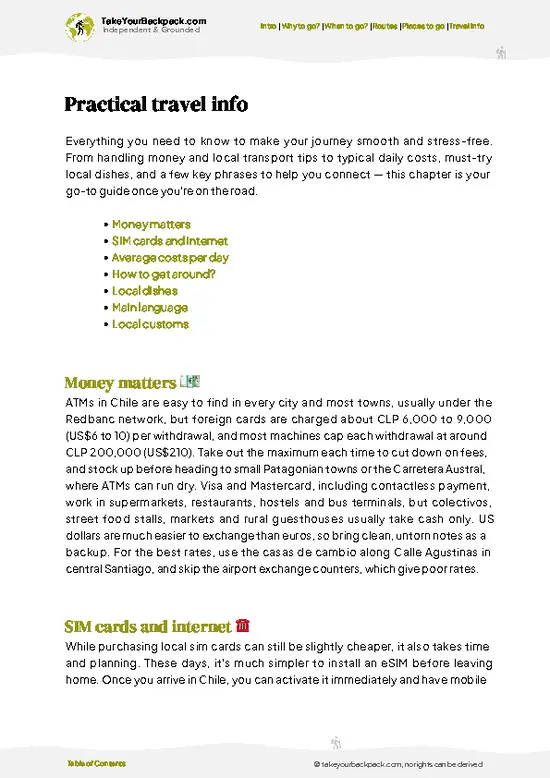
example page 0 from our offline Travel Guide for Chile
example page 1 from our offline Travel Guide for Chile
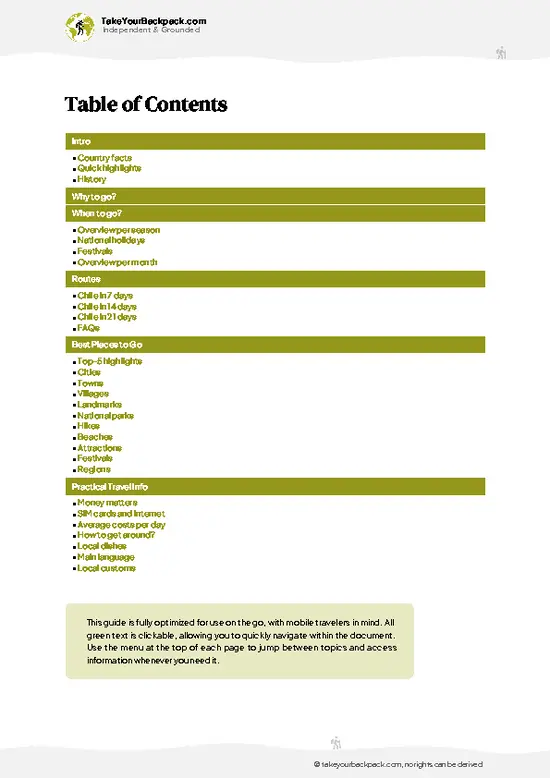
example page 2 from our offline Travel Guide for Chile
example page 3 from our offline Travel Guide for Chile
example page 4 from our offline Travel Guide for Chile
example page 5 from our offline Travel Guide for Chile
example page 6 from our offline Travel Guide for Chile
example page 7 from our offline Travel Guide for Chile
The digital guide (449 pages) contains:
114 highlights, ranked by travel appeal
Optimized 7, 14 & 21-day travel routes
Cities, national parks, landmarks, beaches
How to get around
Offline-friendly for travel without Wi-Fi
👉 Click to see all 30+ guide features

📅 Plan smarter in minutes, not weeks
Month by month travel advice
Festivals & national holidays
Budget expectations

🗺️ Go to the right places, skip the overrated ones
Honest pros & cons of destinations
Top hikes, parks & viewpoints
Lesser-known places most travelers miss
Clear “worth it vs skip it” guidance

🛏️ Travel smoothly without rookie mistakes
Best areas to stay
Transport systems explained simply
Common scams & safety advice
SIM cards, money & practical tips

🌍 Understand the country, not just visit it
Culture & traditions
52 Essential phrases & customs
Festivals worth planning around
Traveler-friendly historical context
Insights that make places more meaningful

📱 Built for real travel conditions
Fully downloadable PDF
Works completely offline
Optimized for phone use
Useful in remote areas & buses
Everything in one place
Save weeks of stressful planning
Get instant access to your full guide. 30‑day money-back guarantee.
+ Add another guide for just R$44.25

By proceeding you agree to our terms.
Sent to your inbox immediately after payment • 100% Secure Checkout
Best Backpacking Travel Advisor 2025 tourism awardBest Backpacking
Travel Advisor
2025
What others say about Take Your Backpack Guides:
⭐⭐⭐⭐⭐
Fantastic, amazing amount of information!
⭐⭐⭐⭐⭐
My goodness this is amazing, it's what I've been looking for hats off too you!
⭐⭐⭐⭐⭐
I think this is absolutely BRILLIANT
⭐⭐⭐⭐
Very complete and informative. It's still missing places, but I gotta to commend you
⭐⭐⭐⭐⭐
This is truly amazing, thank you, can't wait to explore it with my kids!
⭐⭐⭐⭐⭐
Awesome resource, thank you!
⭐⭐⭐⭐⭐
This is amazing! Can't wait to explore the ones I haven't seen
⭐⭐⭐⭐
I love this! Well done, great idea.
⭐⭐⭐⭐⭐
Thanks for taking the time to make this gem!
⭐⭐⭐⭐⭐
This might be the best website I've ever seen.
⭐⭐⭐⭐⭐
Congratulations, and thank you so much for your work; it's incredibly valuable.
⭐⭐⭐⭐
In all seriousness I think you did a great job pointing out the important spots
⭐⭐⭐⭐⭐
10/10 very good
⭐⭐⭐⭐⭐
As someone who's only just starting to visit regularly this is awesome, thank you.
⭐⭐⭐⭐
Thank you very much! I'm going to visit my dad, it's going to be very useful!
⭐⭐⭐⭐⭐
This is really cool! We'll be travelling for the first time and this definitely come in handy.
⭐⭐⭐⭐⭐
You are now our minister of culture, congratulations 👨‍💼
⭐⭐⭐⭐⭐
Just wanted to tell you that this is a pearl! Going to follow your recommendations.
⭐⭐⭐⭐⭐
This is so cool. I'll definitely be using the resource for my travels soon.
⭐⭐⭐⭐⭐
This is very impressive! Good work.
⭐⭐⭐⭐⭐
This is an amazing and informative site. Very well done!

🛏️ Where to stay?Best areas to stay in Chile

Frutillar’s Centro district is the heartbeat for backpackers craving a blend of safety, social buzz, and budget-friendly stays. This area hugs the lakeshore, where the scent of pine mingles with fresh lake air, and the light plays off the water in a way that makes early mornings feel like a quiet invitation to explore. Staying here means you’re steps from the town’s main strip, where small cafés and artisan shops pulse with local life. Hostels cluster around here, offering communal spaces that naturally draw solo travelers into easy conversations over shared meals or guitar sessions.

Compared … read more 👉
Frutillar’s Centro district is the heartbeat for backpackers craving a blend of safety, social buzz, and budget-friendly stays. This area hugs the lakeshore, where the scent of pine mingles with fresh lake air, and the light plays off the water in a way that makes early mornings feel like a quiet invitation to explore. Staying here means you’re steps from the town’s main strip, where small cafés and artisan shops pulse with local life. Hostels cluster around here, offering communal spaces that naturally draw solo travelers into easy conversations over shared meals or guitar sessions.

Compared to the quieter, more residential neighborhoods like Las Quemas, Centro’s vibe is alive without feeling overwhelming. It’s safe enough to wander after dark, with street lighting and a steady flow of locals and tourists alike. The trade-off is a bit more noise, but that’s the soundtrack of connection, not chaos. For backpackers, Centro isn’t just a place to crash—it’s where the town’s soul unfolds, making every step outside your door a chance to plug into Frutillar’s rhythm.

🚌 Getting aroundGetting around like a local

Frutillar moves at the pace of the lake’s gentle waves—unhurried, deliberate, and shaped by the rhythm of nature more than any clock. The town’s charm isn’t in rigid timetables but in the ebb and flow of locals and visitors weaving through cobblestone streets, the scent of fresh bread from panaderías mixing with the crisp air off Lago Llanquihue. Here, transit isn’t about speed; it’s about syncing with the town’s pulse. You won’t find a frantic rush, but you will find practical ways to get around that respect the laid-back vibe while keeping your budget intact.


  • Walking: The heart of Frutillar is compact and flat, making walking the most authentic and cost-free way to explore. Stroll along the lakeshore at dawn when the light hits the water like molten silver, or wander through the German-style
read more 👉
Frutillar moves at the pace of the lake’s gentle waves—unhurried, deliberate, and shaped by the rhythm of nature more than any clock. The town’s charm isn’t in rigid timetables but in the ebb and flow of locals and visitors weaving through cobblestone streets, the scent of fresh bread from panaderías mixing with the crisp air off Lago Llanquihue. Here, transit isn’t about speed; it’s about syncing with the town’s pulse. You won’t find a frantic rush, but you will find practical ways to get around that respect the laid-back vibe while keeping your budget intact.


  • Walking: The heart of Frutillar is compact and flat, making walking the most authentic and cost-free way to explore. Stroll along the lakeshore at dawn when the light hits the water like molten silver, or wander through the German-style houses and gardens. Walking lets you soak in the scent of pine and freshly brewed coffee from local cafés, all at your own pace.


  • Local Bus (Colectivo): These shared minibuses run roughly from 7:00 AM to 9:00 PM, connecting Frutillar with nearby towns like Puerto Varas and Llanquihue. They’re cheap—around 500-700 CLP per ride—and offer a chance to ride alongside locals, catching snippets of conversation in Spanish. The buses don’t always stick to a strict schedule, so be ready for a bit of waiting and a flexible attitude.


  • Taxi: For short hops within town or to reach less accessible spots like Playa Las Rosas, taxis are affordable and negotiable, usually costing around 3,000-5,000 CLP. They’re faster and more comfortable than buses but still budget-friendly if you share the ride or use them sparingly. Taxis don’t run on meters here, so agree on the fare upfront to avoid surprises.


  • Bicycle Rental: Renting a bike is a smart move if you want to cover more ground without losing the intimate feel of the town. Daily rentals hover around 8,000-12,000 CLP. The terrain is mostly flat with occasional gentle hills, perfect for casual riders. Early morning rides offer cool air and quiet streets before the day’s tourists arrive.

👛 Costs (as of 4 September 2026)Travel costs and budget guide for Frutillar

Backpacking in Frutillar, Chile, offers a charming mix of lakeside calm and cultural flair, but knowing the daily costs upfront helps you savor it without surprises.
  • Dorm Accommodation: Expect to pay around $15 to $25 USD per night for a bed in a hostel dorm. Options are limited but comfortable, often with woodsy, cozy vibes that match the town’s German heritage. Booking ahead in peak season is smart to avoid last-minute price hikes.
  • Meals: Eating out can be surprisingly affordable if you stick to local spots. A simple lunch or dinner at a small café or market stall runs about $5 to $10 USD. If you want to splurge on a sit-down meal with lake views, budget closer to $15 to $20 USD. Groceries for self-catering can bring daily food costs down to around $7 to $12 USD.
  • Local Transport: Frutillar
read more 👉
Backpacking in Frutillar, Chile, offers a charming mix of lakeside calm and cultural flair, but knowing the daily costs upfront helps you savor it without surprises.
  • Dorm Accommodation: Expect to pay around $15 to $25 USD per night for a bed in a hostel dorm. Options are limited but comfortable, often with woodsy, cozy vibes that match the town’s German heritage. Booking ahead in peak season is smart to avoid last-minute price hikes.
  • Meals: Eating out can be surprisingly affordable if you stick to local spots. A simple lunch or dinner at a small café or market stall runs about $5 to $10 USD. If you want to splurge on a sit-down meal with lake views, budget closer to $15 to $20 USD. Groceries for self-catering can bring daily food costs down to around $7 to $12 USD.
  • Local Transport: Frutillar is small enough to explore mostly on foot, but if you need a bus or taxi, fares hover around $1 to $3 USD per ride. Renting a bike for the day is another popular option, typically costing about $10 USD, letting you cover more ground at your own pace.
  • Basic Activities/Entry Fees: Many cultural sites, like the Teatro del Lago or local museums, charge modest entry fees between $3 and $7 USD. Outdoor activities like hiking around the lake are free, but guided tours or boat rentals can push daily activity costs up to $20 or more if you choose to indulge.
  • Miscellaneous Expenses: Factor in small extras like bottled water, snacks, or occasional coffee runs, which usually add up to $3 to $7 USD daily. Wi-Fi is often included in hostels, but if you need mobile data, local SIM cards are affordable and reliable.

Altogether, a realistic daily budget for backpackers in Frutillar ranges from about $30 on a shoestring to $60 if you lean into a few comforts and activities. This balance lets you soak in the crisp lake air and the town’s quiet charm without feeling pinched or rushed.


source: chile.travel
⚠️ Prices can change and everyone travels differently, so take this as a rough guide. Hope it helps you plan your adventure!

🚌 Day tripsExploring the surroundings

Frutillar is a backpacker’s dream base, offering easy access to stunning landscapes and rich culture. Here are some day trips that pack a punch without draining your wallet.

Lago Todos los Santos
Just an hour’s bus ride from Frutillar, Lago Todos los Santos is a shimmering blue expanse framed by towering volcanoes. The journey is scenic, with the bus winding through lush forests and past quaint farms. Once there, you can hike along the shores or take a boat ride to soak in the views. Bring a picnic; the scent of pine and fresh water will enhance your lunch. Expect to spend around $10 for transport and snacks. Late spring to early fall is ideal, as the weather is milder. A common mistake? Underestimating the chill near the water; pack a light jacket.


Puerto Varas
A quick 30-minute … read more 👉
Frutillar is a backpacker’s dream base, offering easy access to stunning landscapes and rich culture. Here are some day trips that pack a punch without draining your wallet.

Lago Todos los Santos
Just an hour’s bus ride from Frutillar, Lago Todos los Santos is a shimmering blue expanse framed by towering volcanoes. The journey is scenic, with the bus winding through lush forests and past quaint farms. Once there, you can hike along the shores or take a boat ride to soak in the views. Bring a picnic; the scent of pine and fresh water will enhance your lunch. Expect to spend around $10 for transport and snacks. Late spring to early fall is ideal, as the weather is milder. A common mistake? Underestimating the chill near the water; pack a light jacket.


Puerto Varas
A quick 30-minute bus ride will land you in Puerto Varas, known for its German heritage and stunning lake views. Stroll along the waterfront, where the air is filled with the aroma of fresh-baked kuchen. Don’t miss the local market for artisan crafts and delicious street food—budget about $15 for a hearty meal and some souvenirs. The best time to visit is during the summer months when the town buzzes with life. Many first-timers overlook the charming side streets; take a detour to discover hidden cafés and local art.
👉 Explore Puerto Varas

Osorno Volcano
For the adventurous, a day trip to Osorno Volcano is a must. It’s about a two-hour bus ride to the base, where you can hike or take a chairlift for breathtaking views. The trail is well-marked, but be prepared for changing weather; the wind can whip through unexpectedly. Total costs, including transport and lift tickets, can run around $30. Late spring to early summer offers the best conditions for hiking. A common rookie mistake? Not checking the weather beforehand; it can turn from sunny to stormy in a heartbeat.


Chiloé Island
Catch a ferry from Pargua (about an hour from Frutillar) to Chiloé Island for a day steeped in unique culture and stunning landscapes. The island is famous for its colorful wooden churches and traditional markets. Plan to spend around $25 for transport and a meal. Late summer is perfect for exploring the island’s vibrant festivals. Many travelers rush through; take your time to savor the local seafood and chat with the friendly locals.
👉 Explore Chiloé Island

Saltos del Petrohué
A 90-minute bus ride takes you to Saltos del Petrohué, where turquoise waters cascade over volcanic rocks. The sound of rushing water is invigorating, and the surrounding forests are alive with the scent of damp earth. Entry is about $5, and you can easily spend a few hours hiking the trails. Spring and summer are best for clear views. A common mistake is not allowing enough time to explore; the trails offer stunning perspectives that are worth the extra steps.
Want to know what more Chile offers?
The Chile Travel Guide describes 114 highlights, from cities to national parks, from beaches to hikes

Get the Travel Guide -

🛡️ SafetyScams, Hazards, and Annoyances

Frutillar is generally safe, but a few practical tips can enhance your experience. The waterfront area, while picturesque, can attract pickpockets, especially during busy events. Keep your belongings close and be mindful of your surroundings.

If you’re solo, the evenings can feel quiet, so consider sticking to well-lit areas and popular spots like the Teatro del Lago. It’s a vibrant hub, and you’ll find fellow travelers and locals alike, making it a good place to unwind.

Scams are rare, but be cautious with street vendors who may overcharge tourists. Always ask for prices upfront. Annoyances like the occasional stray dog can be charming but also a distraction; just give them space. Carry yourself confidently, engage with locals, and you’ll unlock the true spirit of Frutillar.

FAQFrequently asked questions about Frutillar

Yes, Frutillar is worth visiting for its unique blend of German heritage, beautiful lake views, and cultural attractions like the Teatro del Lago. It offers a peaceful atmosphere and excellent opportunities for hiking and exploring local museums. Many travelers find it more than just a stopover, especially during the summer months from December to February.
2 to 3 days are ideal to fully experience Frutillar. This allows time to visit the Teatro del Lago, explore the German colonial architecture, enjoy the lakeside beaches, and take short hikes in the surrounding hills. Staying overnight also lets you experience local dining and the town’s relaxed vibe.
Yes, Frutillar can be visited as a day trip from Puerto Varas, which is about 30 kilometers away. The drive takes around 30 to 40 minutes, making it feasible to explore the main attractions and return the same day. However, a day trip limits time for hiking and deeper cultural experiences.
⚠️ Things can change over time, so always validate details locally before you go.

Other Chilean towns near Frutillar

Explore more nearby:

  • Puerto Varas—Lakeside setting, German architecture, Osorno volcano| 23 km away
  • Ancud—Coastal fort, penguin colonies, tidal flats| 106 km away
  • Chiloé (Castro)—Stilt houses, wooden churches, island markets| 163 km away

💡 Not sure where to go next?
Create a personalized itinerary for Chile including Frutillar and the places that fit your trip.

Generate my itinerary

👉 Discover all towns

Or checkout all Chile has to offer (think cities, towns, villages, national parks, hikes, beaches, festivals)
Country photo of Chile

We 💚 feedbackSumming up the experience

Frutillar’s lakeside charm is magnetic. The air is crisp, filled with the scent of fresh pastries from local bakeries. Strolling along the waterfront, you’ll soak in the stunning views of the Andes. But here’s the kicker: it can get touristy, especially in summer. Expect crowds, which can dilute the tranquility. Embrace the buzz, but plan your visit for early mornings or late afternoons to savor the magic without the masses.

✈️ When did I visit Chile?
I have visited Chile, together with Argentina, in September 2012.

✍️ Help improve this page!
The information on this page is based on my own backpacking experience in Chile, supplemented with up-to-date research and feedback from other travelers. Travel details can change, so if you notice anything outdated or incomplete, feel free to let me know.


🙋‍♂️ Give feedback

👋 Meet the founderWho’s Behind Take Your Backpack?

Johan, backpacker and founder of TakeYourBackpackHi, I’m Johan (Netherlands 🇳🇱), the creator of TakeYourBackpack. Over the past decade, I’ve backpacked through 80+ countries across six continents, gaining extensive experience with independent travel, long-term trips, and overland routes.

This site is built on a combination of firsthand travel experience and carefully curated insights from other backpackers. Many guides are based on places I’ve personally visited, while others bring together tips, observations, and practical advice shared by trusted travelers I’ve met along the way.

The goal is to provide realistic, experience-driven guidance — not generic itineraries — so you can explore destinations with better context, clearer expectations, and more confidence.

Get full Chile guide •
Instant download • 114 highlights • Full Offline guide