×

Chile🇨🇱 | citiesConcepciónCamarena mural, campus life, fried-fish market, rain jacket | things to do and best time to go

Explore ChillánExplore Temuco

Backpacking in Concepción
👍 Recommendedcity ranked #11
By Johan Kruseman 🇳🇱 | Updated October 19, 2026

The Mural “Presencia de América Latina” fills a stairwell wall inside the Universidad de Concepción’s Casa del Arte, and you can walk in free. Concepción is the university-and-industry city of Chile’s Biobío region, about 500 km south of Santiago, close to the Pacific. A host at my hostel once told me, “Here we argue about football in the morning and poetry at night,” and that fits the student-driven, unpolished feel. It suits travelers who like street art, cheap eats and a base for coast trips. It does not suit anyone wanting colonial charm; the 2010 earthquake and heavy industry left a practical downtown. Spend your time on the murals and campus. Skip the main commercial streets. Bring a rain jacket, since showers are frequent.

Discover everything you want to know in the 📖 Chile Travel Guide.


example page 0 from our offline Travel Guide for Chile
example page 1 from our offline Travel Guide for Chile
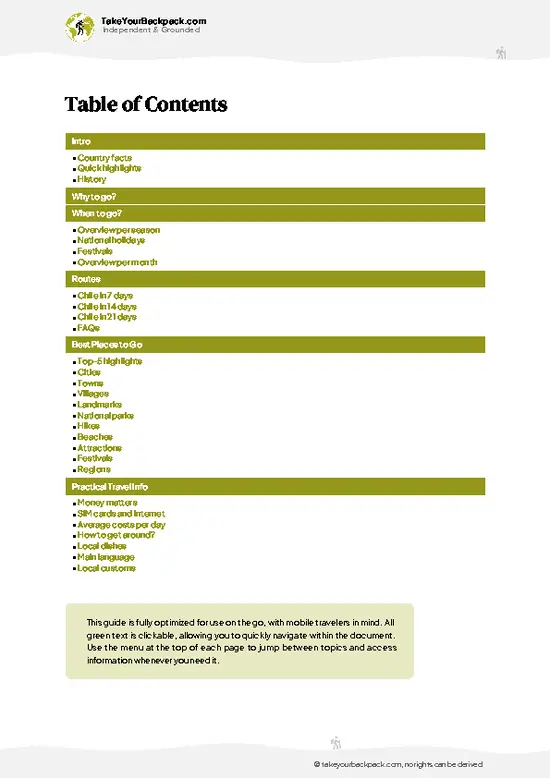
example page 2 from our offline Travel Guide for Chile
example page 3 from our offline Travel Guide for Chile
example page 4 from our offline Travel Guide for Chile
example page 5 from our offline Travel Guide for Chile
example page 6 from our offline Travel Guide for Chile
example page 7 from our offline Travel Guide for Chile
Loading the map 🌍
CLICK TO FILTER
cities
towns
villages
landmarks
national parks
hikes
beaches
attractions
festivals
regions
SHOW COUNTRY’S BESTSHOW ALL

✨ Why go?
Ranked #11 city in Chile
What sets this place apart

Concepción earns its place on a route as the biggest working city between Santiago and the lakes, so you get real Chilean life without a tourist script. The university keeps things lively, which means cheap student cafés, live music and a bar scene that runs well past midnight on weekends, especially around Barrio Universitario. Hostels are few but friendly, and the grid center is easy to cover on foot. The real draw is position. Coal-town beaches, fishing ports and the Biobío River sit within easy reach, and long-distance buses connect you north and south around the clock. Come for two nights if you want street art, a few good meals and a launch pad for the coast. Stay longer only if you like a city that is more lived-in than pretty.

💡 HighlightsEssential experiences to have while visiting Concepción

  1. Casa del Arte and the Presencia de América Latina mural: Jorge González Camarena’s huge 1964 mural is the city’s signature sight, packed with Indigenous and colonial imagery. Entry is usually free to the mural; the gallery is a few dollars at most. Allow 45 minutes to 1 hour. Go on a weekday morning.
  2. Universidad de Concepción campus: Tree-lined grounds with the Plaza Perú, the Campanil tower and student life all around. Free. Allow 1 to 2 hours, best on a weekday when classes are on.
  3. Parque Ecuador: A hillside park above downtown with city and river views and shaded paths. Free, 45 minutes to 1 hour, best on a clear afternoon.
  4. Galería de la Historia de Concepción: A compact museum with dioramas of the city’s many moves and rebuilds after earthquakes. Entry is free. Allow about 1 hour.
  5. Plaza de
… read more 👉
  1. Casa del Arte and the Presencia de América Latina mural: Jorge González Camarena’s huge 1964 mural is the city’s signature sight, packed with Indigenous and colonial imagery. Entry is usually free to the mural; the gallery is a few dollars at most. Allow 45 minutes to 1 hour. Go on a weekday morning.
  2. Universidad de Concepción campus: Tree-lined grounds with the Plaza Perú, the Campanil tower and student life all around. Free. Allow 1 to 2 hours, best on a weekday when classes are on.
  3. Parque Ecuador: A hillside park above downtown with city and river views and shaded paths. Free, 45 minutes to 1 hour, best on a clear afternoon.
  4. Galería de la Historia de Concepción: A compact museum with dioramas of the city’s many moves and rebuilds after earthquakes. Entry is free. Allow about 1 hour.
  5. Plaza de la Independencia: The central square, the place to watch local life, with the cathedral beside it. Free, 20 to 30 minutes, pleasant at lunchtime.
  6. Mercado Central: Seafood stalls and small restaurants serving fried fish and hearty stews. Meals run about US$6 to 12. Allow 1 hour, go around lunch.
  7. Puente Ferroviario Biobío: The long 1889 railway bridge over the river, retired in July 2025 when a new viaduct opened beside it, is a good spot for photos. Free, 30 minutes, best at golden hour.
Day trips from Concepción include Lota, Penco, Tomé and the beaches of the Arauco coast. Casa del Arte and Parque Ecuador pair well in one morning, since both are a short walk apart.
Spotted a mistake or missing something? Contact us.

Things to do in Concepción

Ratings based on Tripadvisor reviews. When you book through this link, you support our work at no extra cost to you.

🏘️ NeighborhoodsHow different areas shape the experience

Concepción spreads along the Biobío River and is compact enough that three areas cover almost everything a backpacker needs.
  • Centro is the grid around Plaza Independencia and the pedestrian Barrio Cívico. It has the cathedral and cheap lunch counters. Spend a morning here, not a day. It empties and feels bleak after dark.
  • Barrio Universitario sits around the Universidad de Concepción, with its Parque Ecuador-side hillside and the Pinacoteca art collection. Students keep it lively, so cafés, cheap set menus and bars cluster here, and it is the best area for an evening on foot.
  • Pedro de Valdivia Bajo is a quieter residential pocket with mall-style shopping you can skip. Worth a short wander only.
  • Costanera and Lomas de San Sebastián are the riverside and hill areas. The Costanera path is flat and
… read more 👉
Concepción spreads along the Biobío River and is compact enough that three areas cover almost everything a backpacker needs.
  • Centro is the grid around Plaza Independencia and the pedestrian Barrio Cívico. It has the cathedral and cheap lunch counters. Spend a morning here, not a day. It empties and feels bleak after dark.
  • Barrio Universitario sits around the Universidad de Concepción, with its Parque Ecuador-side hillside and the Pinacoteca art collection. Students keep it lively, so cafés, cheap set menus and bars cluster here, and it is the best area for an evening on foot.
  • Pedro de Valdivia Bajo is a quieter residential pocket with mall-style shopping you can skip. Worth a short wander only.
  • Costanera and Lomas de San Sebastián are the riverside and hill areas. The Costanera path is flat and good for a sunset walk, while the hill viewpoints are worth it on a clear day.

⌛️ 1 daySeeing the highlights in 24 hours

8:30 AM, Plaza de la Independencia: Start at the central square because everything else is a short walk or bus away, and a coffee at a corner café sets the pace. Walk past the cathedral and get your bearings.
10:00 AM, Parque Ecuador: Climb the hillside paths for views over the river and rooftops. It is quiet in the morning and gives context for the city’s layout.
11:30 AM, Galería de la Historia: A short walk down brings you to this small museum, which explains why the city moved and kept rebuilding.
1:00 PM, Mercado Central: Eat fried fish or a seafood stew among the stalls. Locals fill the tables, so expect to share.
3:00 PM, Universidad de Concepción and Casa del Arte: Take a bus or taxi to the campus, stroll the grounds, then see the big mural inside Casa del Arte.
5:30 PM, Puente Ferroviario … read more 👉
8:30 AM, Plaza de la Independencia: Start at the central square because everything else is a short walk or bus away, and a coffee at a corner café sets the pace. Walk past the cathedral and get your bearings.
10:00 AM, Parque Ecuador: Climb the hillside paths for views over the river and rooftops. It is quiet in the morning and gives context for the city’s layout.
11:30 AM, Galería de la Historia: A short walk down brings you to this small museum, which explains why the city moved and kept rebuilding.
1:00 PM, Mercado Central: Eat fried fish or a seafood stew among the stalls. Locals fill the tables, so expect to share.
3:00 PM, Universidad de Concepción and Casa del Arte: Take a bus or taxi to the campus, stroll the grounds, then see the big mural inside Casa del Arte.
5:30 PM, Puente Ferroviario Biobío: Less visited, this railway bridge over the river is a good place for late light and a look at the working side of the city. Finish with a beer in the student district nearby.

🌤️ When to go?When to go for the best experience

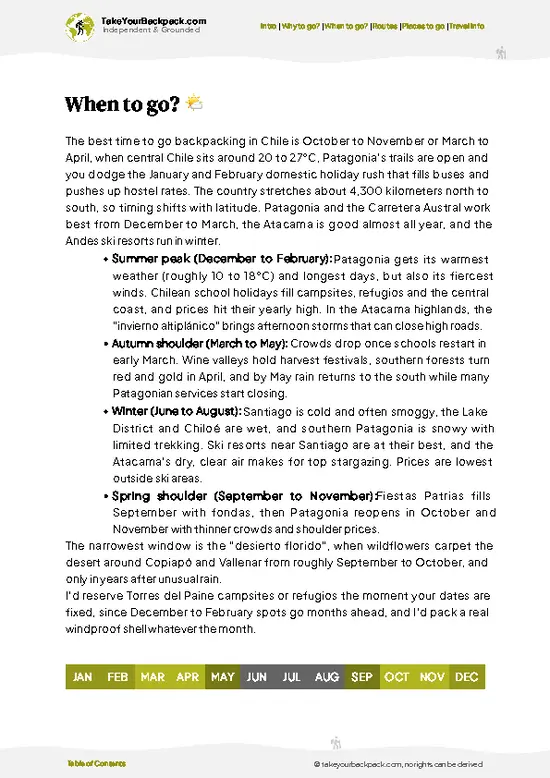
Summer, December to February, is the driest and sunniest stretch, with highs of 22 to 26°C (72 to 79°F) and daylight past 9 pm.
  • Summer (Dec to Feb): Dry and warm, ideal for beaches and coast trips. Prices for coastal lodging rise and domestic tourists crowd the nearby shore.
  • Autumn (Mar to May): Highs of 15 to 21°C (59 to 70°F), turning wetter by May. Quieter and cheaper, with good light.
  • Winter (Jun to Aug): Rain is frequent, with highs of 11 to 14°C (52 to 57°F), lows near 5°C (41°F), and only about 9 to 10 hours of daylight. Cheapest, but gray.
  • Spring (Sep to Nov): Showers fade and temperatures climb from 14 to 20°C (57 to 68°F). Student term keeps the city lively.
Book a day trip to the coast on a weekday in January to dodge Chilean holiday crowds.

source: climatestotravel.comJANJanuary: excellent for travelingFEBFebruary: excellent for travelingMARMarch: excellent for travelingAPRApril: highly recommended for travelingMAYMay: good for travelingJUNJune: fair for travelingJULJuly: fair for travelingAUGAugust: fair for travelingSEPSeptember: good for travelingOCTOctober: highly recommended for travelingNOVNovember: excellent for travelingDECDecember: excellent for traveling
chile-city-concepcion
© Google |

✈️ The backpacker research shortcutChile Travel Guide

An offline-friendly backpacking guide with optimized travel routes, ranked highlights, transport advice, and the best areas to stay.
example page 0 from our offline Travel Guide for Chile
example page 1 from our offline Travel Guide for Chile
example page 2 from our offline Travel Guide for Chile
example page 3 from our offline Travel Guide for Chile
example page 4 from our offline Travel Guide for Chile
example page 5 from our offline Travel Guide for Chile
example page 6 from our offline Travel Guide for Chile
example page 7 from our offline Travel Guide for Chile
The digital guide (333 pages) contains:
✅ 107 highlights, ranked by travel appeal
✅ Optimized 7, 14 & 21-day travel routes
✅ Cities, national parks, landmarks, beaches
✅ How to get around
✅ Offline-friendly for travel without Wi-Fi
👉 Click to see all 30+ guide features

📅 Plan smarter in minutes, not weeks
✅ Month by month travel advice
✅ Festivals & national holidays
✅ Budget expectations

🗺️ Go to the right places, skip the overrated ones
✅ Honest pros & cons of destinations
✅ Top hikes, parks & viewpoints
✅ Lesser-known places most travelers miss
✅ Clear “worth it vs skip it” guidance

🛏️ Travel smoothly without rookie mistakes
✅ Best areas to stay
✅ Transport systems explained simply
✅ Common scams & safety advice
✅ SIM cards, money & practical tips

🌍 Understand the country, not just visit it
✅ Culture & traditions
✅ 52 Essential phrases & customs
✅ Festivals worth planning around
✅ Traveler-friendly historical context
✅ Insights that make places more meaningful

📱 Built for real travel conditions
✅ Fully downloadable PDF
✅ Works completely offline
✅ Optimized for phone use
✅ Useful in remote areas & buses
✅ Everything in one place
Stop searching, start planning
Get instant access to your full guide. 30‑day money-back guarantee.
+ Add another guide for just

By proceeding you agree to our terms.
Sent to your inbox immediately after payment • 100% Secure Checkout
Best Backpacking Travel Advisor 2025 tourism awardBest Backpacking
Travel Advisor
2025
What others say about Take Your Backpack Guides:
⭐⭐⭐⭐⭐
Fantastic, amazing amount of information!
⭐⭐⭐⭐⭐
My goodness this is amazing, it's what I've been looking for hats off too you!
⭐⭐⭐⭐⭐
I think this is absolutely BRILLIANT
⭐⭐⭐⭐
Very complete and informative. It's still missing places, but I gotta to commend you
⭐⭐⭐⭐⭐
This is truly amazing, thank you, can't wait to explore it with my kids!
⭐⭐⭐⭐⭐
Awesome resource, thank you!
⭐⭐⭐⭐⭐
This is amazing! Can't wait to explore the ones I haven't seen
⭐⭐⭐⭐
I love this! Well done, great idea.
⭐⭐⭐⭐⭐
Thanks for taking the time to make this gem!
⭐⭐⭐⭐⭐
This might be the best website I've ever seen.
⭐⭐⭐⭐⭐
Congratulations, and thank you so much for your work; it's incredibly valuable.
⭐⭐⭐⭐
In all seriousness I think you did a great job pointing out the important spots
⭐⭐⭐⭐⭐
10/10 very good
⭐⭐⭐⭐⭐
As someone who's only just starting to visit regularly this is awesome, thank you.
⭐⭐⭐⭐
Thank you very much! I'm going to visit my dad, it's going to be very useful!
⭐⭐⭐⭐⭐
This is really cool! We'll be travelling for the first time and this definitely come in handy.
⭐⭐⭐⭐⭐
You are now our minister of culture, congratulations 👨‍💼
⭐⭐⭐⭐⭐
Just wanted to tell you that this is a pearl! Going to follow your recommendations.
⭐⭐⭐⭐⭐
This is so cool. I'll definitely be using the resource for my travels soon.
⭐⭐⭐⭐⭐
This is very impressive! Good work.
⭐⭐⭐⭐⭐
This is an amazing and informative site. Very well done!

🛏️ Where to stay?Best areas and accommodation options

Stay in Centro or the Barrio Universitario, where nearly all of Concepción’s budget beds are concentrated. Dorm and cheap private rooms are limited in number compared with Santiago or Valparaíso, so book ahead in January and February.
Centro gives you the best transport links. Buses, colectivos and the main train connections are within walking distance, and the bus terminal is a short ride away. The trade-off is that the streets go quiet at night, so choose a place close to the plaza rather than a few blocks out. Barrio Universitario is livelier and feels safer after dark because students keep … read more 👉
Stay in Centro or the Barrio Universitario, where nearly all of Concepción’s budget beds are concentrated. Dorm and cheap private rooms are limited in number compared with Santiago or Valparaíso, so book ahead in January and February.
Centro gives you the best transport links. Buses, colectivos and the main train connections are within walking distance, and the bus terminal is a short ride away. The trade-off is that the streets go quiet at night, so choose a place close to the plaza rather than a few blocks out. Barrio Universitario is livelier and feels safer after dark because students keep the streets busy until late. Expect some noise on weekend nights, especially near the bars. Both areas have supermarkets and cheap set-lunch spots, which helps keep costs down. Avoid sleeping far out in Pedro de Valdivia or beyond the river unless you have a car.

🚌 Getting aroundHow to get from A to B

Walking plus the Biotren commuter train and local buses covers nearly all of Concepción. The center is flat and compact, but the metro area is spread over several municipalities, so you will need wheels to reach beaches and neighboring towns. Traffic jams on the bridges over the Biobío at rush hour, so plan around them.
  • Walking: The best choice in Centro and the university area. Everything between the plaza and the campus is under 30 minutes on foot. Free, and you notice more.
  • Biotren: The commuter rail links Concepción with Hualqui, San Pedro de la Paz and Coronel. A ride costs roughly US$0.60 to 1.10 and runs from early morning to late evening. It is reliable and avoids bridge traffic, and worth using for Coronel and San Pedro.
  • Micros (buses): The cheapest way to cover long distances, roughly
… read more 👉
Walking plus the Biotren commuter train and local buses covers nearly all of Concepción. The center is flat and compact, but the metro area is spread over several municipalities, so you will need wheels to reach beaches and neighboring towns. Traffic jams on the bridges over the Biobío at rush hour, so plan around them.
  • Walking: The best choice in Centro and the university area. Everything between the plaza and the campus is under 30 minutes on foot. Free, and you notice more.
  • Biotren: The commuter rail links Concepción with Hualqui, San Pedro de la Paz and Coronel. A ride costs roughly US$0.60 to 1.10 and runs from early morning to late evening. It is reliable and avoids bridge traffic, and worth using for Coronel and San Pedro.
  • Micros (buses): The cheapest way to cover long distances, roughly US$0.80 to 1.10 per ride. Routes are confusing at first, and services thin out late at night, so check the last run. A Bip! style card or cash is accepted on most lines.
  • Colectivos: Shared taxis on fixed routes for about US$1.20 to 2, faster than buses and handy between Centro and Talcahuano or Chiguayante. Look for the route number on the roof sign.
  • Taxis and ride apps: A short ride costs about US$3 to 6. Use them at night or with luggage. Apps like Uber and Cabify operate in the city and are often cheaper than street taxis.

👛 Costs (as of 19 October 2026)Money, prices, and spending tips

Expect to spend about US$38 to 55 a day in Concepción, with a total of US$46 in high season.
CategoryBudget RangeLocal Reality
Dorm (high season)US$14 to 20Beds are limited, so book early in January and February.
Dorm (off-season)US$10 to 15Easier to find and sometimes negotiable.
MealsUS$12 to 18Set lunch US$5 to 8, cheap dinner or supermarket food.
Local transportUS$2 to 4Micros and colectivos at US$0.80 to 2 per ride.
City transport passUS$1 to 3A rechargeable card for Biotren and buses saves small change.
Basic activities/entry feesUS$0 to 8Many parks and murals are free, while mine tours cost more.
MiscellaneousUS$3 to 5Laundry, snacks, a beer or two.
Total Daily BudgetUS$46High season, mid-range of the figures above.
Cook breakfast in your hostel kitchen and eat the set lunch as your main meal to save the most.

source: chile.travel
⚠️ Prices can change and everyone travels differently, so take this as a rough guide. Hope it helps you plan your adventure!

🚌 Day tripsEasy escapes and nearby places

Concepción sits close to the coast, old coal towns and forest, so day trips are easy by bus or train.
Lota:
The former coal town sits about 40 minutes south by bus for US$1.50 to 3. You can tour the mine and its Chiflón del Diablo tunnel for roughly US$10 to 15, then walk Lota Park’s gardens. Go on a dry day, and skip it on Mondays when some sites close.
👉 Explore Lota
Tomé and Dichato:
The beach towns north of the city are 45 to 60 minutes by bus for about US$1.50 to 3. Tomé has a fish market and a seafront, while Dichato has a long, calm beach. January is busy, and the water is cold even in summer, so most visitors only paddle.

Cocholgüe and Penco:
Penco’s old railway station and Lirquén’s port lie just north on the Biotren-adjacent road, around 30 minutes for US$1 to 2. A simple seafood lunch … read more 👉
Concepción sits close to the coast, old coal towns and forest, so day trips are easy by bus or train.
Lota:
The former coal town sits about 40 minutes south by bus for US$1.50 to 3. You can tour the mine and its Chiflón del Diablo tunnel for roughly US$10 to 15, then walk Lota Park’s gardens. Go on a dry day, and skip it on Mondays when some sites close.
👉 Explore Lota
Tomé and Dichato:
The beach towns north of the city are 45 to 60 minutes by bus for about US$1.50 to 3. Tomé has a fish market and a seafront, while Dichato has a long, calm beach. January is busy, and the water is cold even in summer, so most visitors only paddle.

Cocholgüe and Penco:
Penco’s old railway station and Lirquén’s port lie just north on the Biotren-adjacent road, around 30 minutes for US$1 to 2. A simple seafood lunch costs US$8 to 12.

Nahuelbuta National Park:
This is a long day, about 3 hours each way by bus then a taxi, and public transport is limited, so a tour or rental is best. Entry is around US$5 to 8, and you can see araucaria forests. A common mistake is arriving without checking return times.
👉 Explore Nahuelbuta National Park

🍲 FoodWhat to Eat & Drink

Concepción’s food leans on the sea and the Biobío coast. Try curanto-style seafood stews and fresh machas a la parmesana (razor clams baked with cheese), plus pastel de jaiba, a rich crab pie. In the south of the city region, empanadas de mariscos and the sweet kuchen from German-influenced bakeries are common.
The Mercado Central area and the market stalls in Talcahuano are where you taste the freshest fish. Set lunches, called menús del día, run about US$5 to 8 near the university and include soup and a main. Student cafés and bars around the Barrio Universitario serve cheap beer and completos (loaded hot dogs). Local craft brewers and Chilean wine from the nearby Itata valley are easy to find. Eat your biggest meal at lunch, when prices are lowest.

🛡️ SafetyStaying Safe: What Travelers Should Know

Concepción is a university city and feels relaxed, with petty theft the main issue. Phone snatching and bag theft happen in Centro and on crowded micros, so keep valuables zipped and out of sight. Centro empties after dark, so take a taxi or ride app rather than walking long stretches at night. The Barrio Universitario is livelier and fine for evening walks, but stay on lit streets. Solo travelers, including women, find it manageable with normal city sense. Avoid leaving anything visible in parked cars, and ignore the occasional car window break-in risk by using paid parking. There are no tourist-targeted scams of note. Student protests occasionally close streets and use tear gas near the center, so detour around crowds. Tap water is safe.

FAQTraveler FAQ

Two to three days is enough for Concepción itself, with a day for Centro and the university area and another for the coast. Add a third day for Lota, about 40 minutes by bus, or for Dichato, about an hour away. Budget US$40 to 55 a day.
Yes, Concepción is manageable for solo backpackers, with petty theft on crowded buses and in Centro being the main issue. Take taxis or ride apps at night through the quiet center, which costs about US$3 to 6. The university district stays lively and feels comfortable into the evening.
Concepción is known for its large university life, the Biobío River and its murals, plus a strong rock music scene. It is the gateway to coal towns like Lota, and to beaches like Dichato, within an hour. It is also a major port and industrial hub in southern Chile, with Talcahuano nearby.
⚠️ Things can change over time, so always validate details locally before you go.

Other Chilean cities near Concepción

Explore more nearby:

  • Chillán—Sprawling Feria, Siqueiros murals, merkén, farm-town routine| 87 km away
  • Linares—Maule market lunches, Panamericana stopover, shaded plaza, local prices| 169 km away
  • Talca—Palm-shaded plaza, chess players, Maule wine base, university life| 200 km away

💡 Not sure where to go next?
Create a personalized itinerary for Chile including Concepción and the places that fit your trip.

Generate my itinerary

👉 Discover all cities

Or checkout all Chile has to offer (think cities, towns, villages, national parks, hikes, beaches, festivals)
Country photo of Chile

We 💚 feedbackKey takeaways before you go

Concepción works best as a two-night break between Santiago and the lakes, or paired with a coastal day in Lota and Tomé. I would arrive on a weekday so the campus is busy, then spend the weekend on the coast. Skip it if you only want pretty old streets.

✈️ When did I visit Chile?
I have visited Chile, together with Argentina, in September 2012.

✍️ Help improve this page!
The information on this page is based on my own backpacking experience in Chile, supplemented with up-to-date research and feedback from other travelers. Travel details can change, so if you notice anything outdated or incomplete, feel free to let me know.


🙋‍♂️ Give feedback

👋 Meet the founderWho’s Behind Take Your Backpack?

Johan, backpacker and founder of TakeYourBackpackHi, I’m Johan (Netherlands 🇳🇱), the creator of TakeYourBackpack. Over the past 3 decades, I’ve backpacked through 90+ countries across six continents, gaining extensive experience with independent travel, long-term trips, and overland routes.

This site is built on a combination of firsthand travel experience and carefully curated insights from other backpackers. Many guides are based on places I’ve personally visited, while others bring together tips, observations, and practical advice shared by trusted travelers I’ve met along the way.

The goal is to provide realistic, experience-driven guidance — not generic itineraries — so you can explore destinations with better context, clearer expectations, and more confidence.