×

Chile🇨🇱 | citiesTalcaPalm-shaded plaza, chess players, Maule wine base, university life | things to do and best time to go

Explore TemucoExplore Viña del Mar

Backpacking in Talca
👀 For curious travelerscity ranked #16
By Johan Kruseman 🇳🇱 | Updated October 19, 2026

The bus doors hissed open and the first thing I got was the smell of fresh bread and diesel from the terminal, then a vendor shouting out sopaipillas. Talca sits in Chile’s Maule region, in the central valley south of Santiago. It is a working university and wine city, so it suits travelers who want real Chilean routine and a base for vineyards. It does not suit anyone chasing dramatic sights, because the center is plain and earthquake-rebuilt. Spend your time in the markets and nearby valleys. Skip long city sightseeing. Plaza de Armas has tall palms and chess players.

Discover everything you want to know in the 📖 Chile Travel Guide.


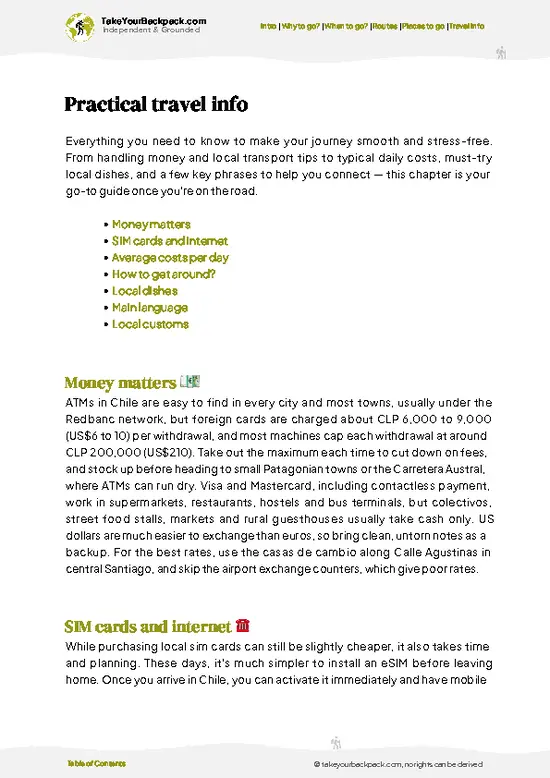
example page 0 from our offline Travel Guide for Chile
example page 1 from our offline Travel Guide for Chile
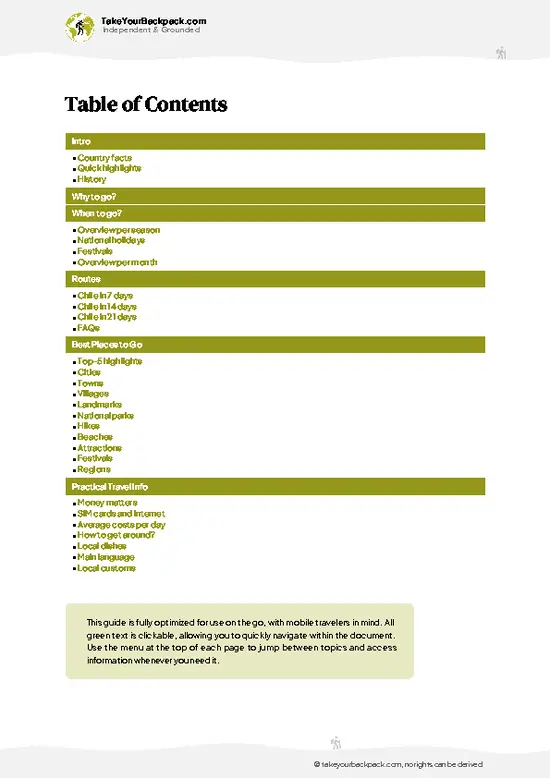
example page 2 from our offline Travel Guide for Chile
example page 3 from our offline Travel Guide for Chile
example page 4 from our offline Travel Guide for Chile
example page 5 from our offline Travel Guide for Chile
example page 6 from our offline Travel Guide for Chile
example page 7 from our offline Travel Guide for Chile
Loading the map 🌍
CLICK TO FILTER
cities
towns
villages
landmarks
national parks
hikes
beaches
attractions
festivals
regions
SHOW COUNTRY’S BESTSHOW ALL

✨ Why go?
Ranked #16 city in Chile
What makes it a must-see city

Talca works as a practical stop between Santiago and the south, and that is its real value. You get a student-driven city with cheap, filling lunches, a university crowd, and none of the tourist pricing found on the coast. The main draw is the Maule Valley wine country, where old-vine País and Carignan grow on dry-farmed slopes within easy reach of town. Add the Río Claro for a swim, and you have a relaxed two-night base. Hostels are few, so book ahead. Skip it if you need nightlife or a long list of monuments.

💡 HighlightsKey sights and experiences for travelers

  1. Plaza de Armas de Talca: Shaded by tall palms and old trees, the square is where locals eat ice cream and play chess. Late afternoon is liveliest. Free, 30 to 45 minutes.
  2. Museo O’Higginiano y de Bellas Artes: A colonial-style house where Bernardo O’Higgins signed the declaration of Chile’s independence in Talca in 1818, plus regional art. Mornings are quietest. Around US$1 to 2, 1 hour.
  3. Villa Cultural Huilquilemu: A restored hacienda house on the edge of the city, with rural collections, a chapel and a wine and crafts shop. Open daytime, closed some days. Around US$2 to 4, 1 to 1.5 hours.
  4. Parque Monumental Bicentenario: A broad riverside park with walking paths and a cultural program, good for an easy stroll on a sunny morning or early evening. Free, 1 hour.
  5. Paseo Río Claro: A riverside walk and
… read more 👉
  1. Plaza de Armas de Talca: Shaded by tall palms and old trees, the square is where locals eat ice cream and play chess. Late afternoon is liveliest. Free, 30 to 45 minutes.
  2. Museo O’Higginiano y de Bellas Artes: A colonial-style house where Bernardo O’Higgins signed the declaration of Chile’s independence in Talca in 1818, plus regional art. Mornings are quietest. Around US$1 to 2, 1 hour.
  3. Villa Cultural Huilquilemu: A restored hacienda house on the edge of the city, with rural collections, a chapel and a wine and crafts shop. Open daytime, closed some days. Around US$2 to 4, 1 to 1.5 hours.
  4. Parque Monumental Bicentenario: A broad riverside park with walking paths and a cultural program, good for an easy stroll on a sunny morning or early evening. Free, 1 hour.
  5. Paseo Río Claro: A riverside walk and green corridor where residents jog and cycle. Go in the morning or at dusk. Free, 45 minutes.
  6. Museo Nacional de Bomberos: A small, quirky museum on firefighting history, with old pumps and uniforms. Visit in the morning. Around US$1 to 2, 30 to 45 minutes.
  7. Universidad de Talca campus: The Talca campus has modern architecture and a quiet garden feel, and it gives a glimpse of student life. Weekday afternoons are best. Free, 45 minutes.
For a first visit, start with the Museo O’Higginiano, since it ties the city directly to Chile’s independence story.
Outside the city, the Vilches reserve, Radal Siete Tazas National Park and Maule valley vineyards make good day trips from Talca.
Spotted a mistake or missing something? Contact us.

Things to do near Talca

Ratings based on Tripadvisor reviews. When you book through this link, you support our work at no extra cost to you.

🏘️ NeighborhoodsKey areas and districts to know

Talca is a flat grid city, so you can cover its core on foot in a day, and the areas below are ranked by how much time they deserve.
  • Plaza de Armas and Centro: Spend your first hours here. The plaza, the cathedral and the pedestrian stretch of 1 Oriente hold the cafés, cheap lunch counters and bus-friendly services. It is dead quiet after 9 p.m., so do not expect nightlife.
  • Avenida San Miguel and the Alameda corridor: Skip it for sightseeing. This is where malls and car traffic concentrate. Useful only for pharmacies and supermarkets.
  • Barrio Norte and the Río Claro edge: Worth a slow afternoon. The riverside Parque Río Claro and the nearby Alameda avenue give you green space and the best sunsets, and the area is easy on foot from the plaza.
  • Huilquilemu: A short ride east, and the one trip I would
… read more 👉
Talca is a flat grid city, so you can cover its core on foot in a day, and the areas below are ranked by how much time they deserve.
  • Plaza de Armas and Centro: Spend your first hours here. The plaza, the cathedral and the pedestrian stretch of 1 Oriente hold the cafés, cheap lunch counters and bus-friendly services. It is dead quiet after 9 p.m., so do not expect nightlife.
  • Avenida San Miguel and the Alameda corridor: Skip it for sightseeing. This is where malls and car traffic concentrate. Useful only for pharmacies and supermarkets.
  • Barrio Norte and the Río Claro edge: Worth a slow afternoon. The riverside Parque Río Claro and the nearby Alameda avenue give you green space and the best sunsets, and the area is easy on foot from the plaza.
  • Huilquilemu: A short ride east, and the one trip I would make beyond the center. Villa Cultural Huilquilemu, the old hacienda museum, shows how wine country life worked, and a taxi or colectivo gets you there.
  • Universidad de Talca area: Student bars and cheap set lunches cluster here, which is why it feels livelier at night than the center.

⌛️ 1 dayHow to make the most of one day

Start at the Plaza de Armas, 8:30 AM, where the city wakes up slowly and you can grab coffee under the palms before the heat builds. Walk two blocks to the next stop.
10:00 AM: Museo O’Higginiano. Step into the house where independence was signed and browse the regional art rooms. It takes about an hour.
12:00 PM: Parque Monumental Bicentenario. Stroll the riverside paths to stretch your legs, then head back toward the center for lunch at a local picada serving hearty Chilean plates.
2:30 PM: Museo Nacional de Bomberos. Few visitors bother with it, yet the antique fire engines and uniforms are fun and quick to see.
4:00 PM: Villa Cultural Huilquilemu. Take a taxi or colectivo out to this old hacienda for the chapel, crafts and quiet grounds. Allow about 90 minutes.
6:30 PM: Paseo Río Claro. Finish … read more 👉
Start at the Plaza de Armas, 8:30 AM, where the city wakes up slowly and you can grab coffee under the palms before the heat builds. Walk two blocks to the next stop.
10:00 AM: Museo O’Higginiano. Step into the house where independence was signed and browse the regional art rooms. It takes about an hour.
12:00 PM: Parque Monumental Bicentenario. Stroll the riverside paths to stretch your legs, then head back toward the center for lunch at a local picada serving hearty Chilean plates.
2:30 PM: Museo Nacional de Bomberos. Few visitors bother with it, yet the antique fire engines and uniforms are fun and quick to see.
4:00 PM: Villa Cultural Huilquilemu. Take a taxi or colectivo out to this old hacienda for the chapel, crafts and quiet grounds. Allow about 90 minutes.
6:30 PM: Paseo Río Claro. Finish with a sunset walk beside the river, where joggers and families fill the paths, then return to the center for a casual dinner.

🌤️ When to go?Weather, crowds, and seasonal trade-offs

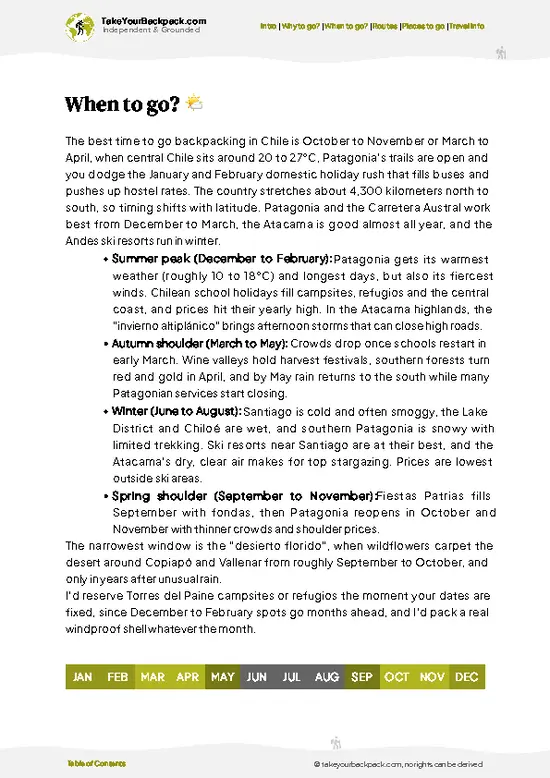
  • Summer (Dec to Feb): Hot and dry, 28 to 33°C (82 to 91°F) by day, long daylight into the evening, and the best time for the surrounding vineyards and Lake Colbún.
  • Autumn (Mar to May): Harvest season, 15 to 24°C (59 to 75°F), golden vines and easy hiking weather.
  • Winter (Jun to Aug): Rainy and cool, 3 to 14°C (37 to 57°F), with short days and few tourists.
  • Spring (Sep to Nov): Blossoms and mild 12 to 24°C (54 to 75°F) days, with prices staying low.
Book winery visits a few days ahead in March, when harvest festivals fill tours.

source: climatestotravel.comJANJanuary: excellent for travelingFEBFebruary: excellent for travelingMARMarch: excellent for travelingAPRApril: highly recommended for travelingMAYMay: good for travelingJUNJune: fair for travelingJULJuly: below average for travelingAUGAugust: below average for travelingSEPSeptember: good for travelingOCTOctober: highly recommended for travelingNOVNovember: excellent for travelingDECDecember: excellent for traveling
when-to-go

✈️ The backpacker research shortcutChile Travel Guide

An offline-friendly backpacking guide with optimized travel routes, ranked highlights, transport advice, and the best areas to stay.
example page 0 from our offline Travel Guide for Chile
example page 1 from our offline Travel Guide for Chile
example page 2 from our offline Travel Guide for Chile
example page 3 from our offline Travel Guide for Chile
example page 4 from our offline Travel Guide for Chile
example page 5 from our offline Travel Guide for Chile
example page 6 from our offline Travel Guide for Chile
example page 7 from our offline Travel Guide for Chile
The digital guide (333 pages) contains:
✅ 107 highlights, ranked by travel appeal
✅ Optimized 7, 14 & 21-day travel routes
✅ Cities, national parks, landmarks, beaches
✅ How to get around
✅ Offline-friendly for travel without Wi-Fi
👉 Click to see all 30+ guide features

📅 Plan smarter in minutes, not weeks
✅ Month by month travel advice
✅ Festivals & national holidays
✅ Budget expectations

🗺️ Go to the right places, skip the overrated ones
✅ Honest pros & cons of destinations
✅ Top hikes, parks & viewpoints
✅ Lesser-known places most travelers miss
✅ Clear “worth it vs skip it” guidance

🛏️ Travel smoothly without rookie mistakes
✅ Best areas to stay
✅ Transport systems explained simply
✅ Common scams & safety advice
✅ SIM cards, money & practical tips

🌍 Understand the country, not just visit it
✅ Culture & traditions
✅ 52 Essential phrases & customs
✅ Festivals worth planning around
✅ Traveler-friendly historical context
✅ Insights that make places more meaningful

📱 Built for real travel conditions
✅ Fully downloadable PDF
✅ Works completely offline
✅ Optimized for phone use
✅ Useful in remote areas & buses
✅ Everything in one place
Stop searching, start planning
Get instant access to your full guide. 30‑day money-back guarantee.
+ Add another guide for just

By proceeding you agree to our terms.
Sent to your inbox immediately after payment • 100% Secure Checkout
Best Backpacking Travel Advisor 2025 tourism awardBest Backpacking
Travel Advisor
2025
What others say about Take Your Backpack Guides:
⭐⭐⭐⭐⭐
Fantastic, amazing amount of information!
⭐⭐⭐⭐⭐
My goodness this is amazing, it's what I've been looking for hats off too you!
⭐⭐⭐⭐⭐
I think this is absolutely BRILLIANT
⭐⭐⭐⭐
Very complete and informative. It's still missing places, but I gotta to commend you
⭐⭐⭐⭐⭐
This is truly amazing, thank you, can't wait to explore it with my kids!
⭐⭐⭐⭐⭐
Awesome resource, thank you!
⭐⭐⭐⭐⭐
This is amazing! Can't wait to explore the ones I haven't seen
⭐⭐⭐⭐
I love this! Well done, great idea.
⭐⭐⭐⭐⭐
Thanks for taking the time to make this gem!
⭐⭐⭐⭐⭐
This might be the best website I've ever seen.
⭐⭐⭐⭐⭐
Congratulations, and thank you so much for your work; it's incredibly valuable.
⭐⭐⭐⭐
In all seriousness I think you did a great job pointing out the important spots
⭐⭐⭐⭐⭐
10/10 very good
⭐⭐⭐⭐⭐
As someone who's only just starting to visit regularly this is awesome, thank you.
⭐⭐⭐⭐
Thank you very much! I'm going to visit my dad, it's going to be very useful!
⭐⭐⭐⭐⭐
This is really cool! We'll be travelling for the first time and this definitely come in handy.
⭐⭐⭐⭐⭐
You are now our minister of culture, congratulations 👨‍💼
⭐⭐⭐⭐⭐
Just wanted to tell you that this is a pearl! Going to follow your recommendations.
⭐⭐⭐⭐⭐
This is so cool. I'll definitely be using the resource for my travels soon.
⭐⭐⭐⭐⭐
This is very impressive! Good work.
⭐⭐⭐⭐⭐
This is an amazing and informative site. Very well done!

🛏️ Where to stay?Where staying makes the most sense

The city center around Plaza de Armas is the best base, with the most budget beds, walkable access to the bus terminal and well-lit streets at night. Hostels and guesthouses here run roughly US$15 to 28 for a dorm bed or simple private room, and most are within a 10-minute walk of food and the market. Noise is the main downside on Friday and Saturday nights along the pedestrian strip, so ask for a rear room. A second option is Barrio Oriente, quieter and safer-feeling after dark, with fewer cheap beds and a short taxi or micro ride to the center. Arrive before dark on weekends, since reception desks at smaller places often close early.

🚌 Getting aroundHow to get from A to B

Walking is the easiest way to get around Talca, because the flat grid keeps the center, market and bus terminal within a short stroll of each other. Traffic is light by Chilean standards, and the micros (local buses) reach every district without fuss, though they stop running around 10 pm.
  • Walking: Free and the best choice for the center. Distances between the plaza, market and riverside are 10 to 20 minutes, so a bus here saves you almost nothing.
  • Micros and colectivos: Local buses cost about US$0.80 to 1.10 a ride, and shared colectivo taxis on fixed routes cost slightly more. Worth using for Barrio Oriente and the university area, running roughly 6 am to 10 pm.
  • Taxis and ride apps: US$3 to 6 for most trips within the city. The sensible option at night, and Uber and Cabify both operate.
  • Intercity
… read more 👉
Walking is the easiest way to get around Talca, because the flat grid keeps the center, market and bus terminal within a short stroll of each other. Traffic is light by Chilean standards, and the micros (local buses) reach every district without fuss, though they stop running around 10 pm.
  • Walking: Free and the best choice for the center. Distances between the plaza, market and riverside are 10 to 20 minutes, so a bus here saves you almost nothing.
  • Micros and colectivos: Local buses cost about US$0.80 to 1.10 a ride, and shared colectivo taxis on fixed routes cost slightly more. Worth using for Barrio Oriente and the university area, running roughly 6 am to 10 pm.
  • Taxis and ride apps: US$3 to 6 for most trips within the city. The sensible option at night, and Uber and Cabify both operate.
  • Intercity buses: The main terminal on 2 Sur serves Santiago (about 3 to 3.5 hours, US$8 to 14) and towns across the Maule. Rural terminals handle local services to places like Pelarco and Colbún, usually US$1.50 to 4.
  • Rental car: From about US$35 a day, and the one option that makes wine country and the Altos de Lircay area easy in a single day. Skip it if you only stay in the city.

👛 Costs (as of 19 October 2026)Typical daily expenses

Expect to spend about US$52 a day backpacking in Talca, with beds and meals the main costs.
CategoryBudget RangeLocal Reality
Dorm (high season)US$15 to 22Few hostels, so simple guesthouses fill up in summer
Dorm (off-season)US$12 to 18Quieter, with room to bargain
MealsUS$12 to 18Market empanadas and set lunches
Local transportUS$2 to 4Micros at about US$1 a ride
City transport passUS$0No tourist pass, pay per ride
Activities and entry feesUS$5 to 12Museums and reserve entry fees
MiscellaneousUS$3 to 6Snacks, laundry, a glass of wine
Total Daily BudgetUS$52Using the high-season bed
Save money by making the set-lunch almuerzo your main meal and eating lightly in the evening.

source: chile.travel
⚠️ Prices can change and everyone travels differently, so take this as a rough guide. Hope it helps you plan your adventure!

🚌 Day tripsEasy escapes and nearby places

Talca sits in the middle of the Maule Valley, so wine, lakes and mountains are all a short bus or colectivo ride away.
Vilches and Altos de Lircay: The reserve's trails lead to the Enladrillado basalt plateau and views of volcanoes. It takes about 1.5 hours each way by bus, a day costs US$15 to 25 with the park fee, and December to April is the window. First-timers often leave too late and miss the last bus back.
👉 Explore Altos de Lircay National Reserve
Lake Colbún: A reservoir ringed by hills, good for a swim, kayak or lunch of grilled fish. Buses take about 1.5 hours, around US$5 to 8 return, and it is best from December to March.

Pelarco and Maule Valley wineries: Family-run bodegas pour carmenère and país for US$8 to 20 a tasting. Reach them by colectivo or a booked taxi, and do not try … read more 👉
Talca sits in the middle of the Maule Valley, so wine, lakes and mountains are all a short bus or colectivo ride away.
Vilches and Altos de Lircay: The reserve's trails lead to the Enladrillado basalt plateau and views of volcanoes. It takes about 1.5 hours each way by bus, a day costs US$15 to 25 with the park fee, and December to April is the window. First-timers often leave too late and miss the last bus back.
👉 Explore Altos de Lircay National Reserve
Lake Colbún: A reservoir ringed by hills, good for a swim, kayak or lunch of grilled fish. Buses take about 1.5 hours, around US$5 to 8 return, and it is best from December to March.

Pelarco and Maule Valley wineries: Family-run bodegas pour carmenère and país for US$8 to 20 a tasting. Reach them by colectivo or a booked taxi, and do not try to hop between wineries on foot, as distances are long.

Constitución and the coast: A river-and-sea town with rock formations on the beach, about 2 hours each way for US$10 to 15 return. Best January to March.

🍲 FoodEating & Drinking in Talca

In Talca, look for empanadas de horno and cazuela served in big bowls at small lunch counters for US$5 to 8. The Maule region is famous for carmenère and país wines, so a glass in a local bar costs only US$2 to 4. Try pantrucas, a hearty stew with torn dough, and chancho en piedra, a rough tomato salsa. Cheap lunches (almuerzos) around the plaza come with a salad and a main for about US$5 to 7. For evenings, the Avenida San Miguel cafés and bars are more relaxed and social. Locals also love fresh mote con huesillo from street sellers in summer.

🛡️ SafetyScams, Hazards, and Annoyances

Talca is calm and mostly safe for backpackers, with petty theft the main thing to watch. Phones and daypacks get lifted around the market and bus terminal, so keep them in front of you there. The riverside paths and the blocks near the Alameda empty out after dark, so take a taxi rather than walking home late. Solo travelers, women included, generally report few issues in the center. Taxi drivers sometimes skip the meter, so use an app or agree on the fare first. Stray dogs are common but rarely a problem.

FAQFrequently asked questions about Talca

Two days is enough for Talca itself, covering the Plaza de Armas, the Museo O’Higginiano and a winery visit near Pelarco. Add a third day for Altos de Lircay, about 1.5 hours by bus, or Lake Colbún. Most travelers use Talca as a stopover between Santiago, about 3 hours north, and the south.
Talca is a calm city for solo backpackers, with petty theft the main risk. Keep your phone secure around the bus terminal, and take a taxi (US$3 to 6) rather than walking the riverside at night. The central streets around the Plaza de Armas are busy and well lit into the evening.
Talca is known for the Maule Valley wine country, especially carmenère and país. It was also the site of Chile’s declaration of independence in 1818, remembered at the Museo O’Higginiano. Altos de Lircay reserve and Lake Colbún are the main outdoor draws, 1.5 hours away.
⚠️ Things can change over time, so always validate details locally before you go.

Other Chilean cities near Talca

Explore more nearby:

  • Linares—Maule market lunches, Panamericana stopover, shaded plaza, local prices| 47 km away
  • Chillán—Sprawling Feria, Siqueiros murals, merkén, farm-town routine| 138 km away
  • Rancagua—Rodeo ring, 1814 battle sites, copper region, Andes base| 162 km away

💡 Not sure where to go next?
Create a personalized itinerary for Chile including Talca and the places that fit your trip.

Generate my itinerary

👉 Discover all cities

Or checkout all Chile has to offer (think cities, towns, villages, national parks, hikes, beaches, festivals)
Country photo of Chile

We 💚 feedbackParting advice and final tips

Talca suits travelers who like markets, wine and unhurried provincial towns more than famous sights. I would stay two nights, spend one day in the Maule Valley vineyards, and skip any plan to see the city center in a hurry.

✈️ When did I visit Chile?
I have visited Chile, together with Argentina, in September 2012.

✍️ Help improve this page!
The information on this page is based on my own backpacking experience in Chile, supplemented with up-to-date research and feedback from other travelers. Travel details can change, so if you notice anything outdated or incomplete, feel free to let me know.


🙋‍♂️ Give feedback

👋 Meet the founderWho’s Behind Take Your Backpack?

Johan, backpacker and founder of TakeYourBackpackHi, I’m Johan (Netherlands 🇳🇱), the creator of TakeYourBackpack. Over the past 3 decades, I’ve backpacked through 90+ countries across six continents, gaining extensive experience with independent travel, long-term trips, and overland routes.

This site is built on a combination of firsthand travel experience and carefully curated insights from other backpackers. Many guides are based on places I’ve personally visited, while others bring together tips, observations, and practical advice shared by trusted travelers I’ve met along the way.

The goal is to provide realistic, experience-driven guidance — not generic itineraries — so you can explore destinations with better context, clearer expectations, and more confidence.