×

Chile🇨🇱 | festivalsFestival de la Lluviarain-themed events, street performances, Valdivia winter | things to do and best time to go

Explore Festival de Cine de ValdiviaExplore Festival de la Cerveza de Valdivia

Backpacking in de la Lluvia
👀 For curious travelersfestival ranked #16
By Johan Kruseman 🇳🇱 | Updated May 31, 2026

Most people picture Festival de la Lluvia as some massive EDM mud-rave; it’s not. This small, rain-loving festival usually pops up in southern Chile, around the temperate, forested lake region near Valdivia, where drizzle is basically a headliner. It leans into folk, indie, and rootsy rock, drawing locals, students, and backpackers who prefer guitars over lasers. Expect a few days of music, wet grass, cheap food stalls, and a mellow, communal vibe. Worth it if you like ponchos, campfires, and feeling inside Chile’s weather-obsessed sense of humor. Not worth it if you need big-name acts.

Discover everything you want to know in the 📖 Chile Travel Guide.


Get your Chile guide
119 ranked highlights, routes & tips, works offline (471 pages)
Loading the map 🌍
CLICK TO FILTER
cities
towns
villages
landmarks
national parks
hikes
beaches
attractions
festivals
regions
SHOW COUNTRY’S BESTSHOW ALL

✨ Why go?
Ranked #16 festival in Chile
Why visitors keep coming back

Backpackers flock to the Festival de la Lluvia in Chile for a reason. This isn’t just a party; it’s a temporary community bursting with social energy. You’ll find yourself dancing with locals, sharing stories, and immersing in vibrant culture. It’s a chance to experience Chilean traditions that you won’t find in guidebooks. Plus, it’s affordable compared to similar events worldwide, allowing you to stretch your budget for more adventures.

Planning your route around this festival means weaving it into your larger travel narrative. It’s a perfect pit stop that fuels your journey, giving you the momentum to explore more of Chile’s stunning landscapes. Don’t miss out; this festival is where the heart of the journey beats strongest.
Want to include Festival de la Lluvia in your Chile route?
Create a personalized Chile itinerary that includes Festival de la Lluvia and the places that fit your trip — based on your travel style, budget, and available time. Get your route in seconds.

Generate my trip

💡 HighlightsKey sights and experiences for travelers

  • Rain Blessing Ceremony — A communal ritual where people gather to welcome the rain with drums, chants and symbolic offerings. It’s less about spectacle and more about feeling connected to the weather and each other; the hush when the first drops fall is a real spine-tingler. (Personal favorite — nothing else captures the festival’s spirit like this moment.)
  • Fusion Music Stages — Multiple stages serve up a wild mix of Andean folk, cumbia, electronic and experimental soundscapes. What makes it special is the way traditional instruments get remixed into danceable sets, so you’ll hear a charango riff sitting happily next to a DJ drop.
  • Interactive Water Art & Light Installations — Artists build installations that react to rain: projection-mapped surfaces, kinetic sculptures, and fountains you
read more 👉
  • Rain Blessing Ceremony — A communal ritual where people gather to welcome the rain with drums, chants and symbolic offerings. It’s less about spectacle and more about feeling connected to the weather and each other; the hush when the first drops fall is a real spine-tingler. (Personal favorite — nothing else captures the festival’s spirit like this moment.)
  • Fusion Music Stages — Multiple stages serve up a wild mix of Andean folk, cumbia, electronic and experimental soundscapes. What makes it special is the way traditional instruments get remixed into danceable sets, so you’ll hear a charango riff sitting happily next to a DJ drop.
  • Interactive Water Art & Light Installations — Artists build installations that react to rain: projection-mapped surfaces, kinetic sculptures, and fountains you can walk through. It turns ordinary streets into playful, wet canvases where light and water rewrite the scene every hour.
  • Street Food & Comfort Flavors — Expect hearty, warming stalls: stews, grilled empanadas, hot drinks and seasonal sweets that make standing in a drizzle kind of cozy. Local vendors mix traditional recipes with street-smart twists, so it’s a low-cost way to sample Chilean flavors between performances.
  • Umbrella Parades & Community Dances — Colorful umbrella processions, group dances and percussion circles spill into the streets. It’s participatory and joyful: people of all ages join in, costumes are DIY, and the vibe is more communal block-party than polished parade.
Spotted a mistake or missing something? Contact us.
🌤️ When to go?When is the celebration of Festival de la Lluvia?


  • Weather: Festival de la Lluvia thrives in Chile’s spring (September to November). Expect mild rain showers—nothing that ruins your vibe but enough to keep the festival’s spirit alive.

  • Temperature: Daytime temps hover between 15-20°C (59-68°F), perfect for layering. Nights dip to 7-10°C (45-50°F), so pack a warm jacket to stay comfortable after dark.

  • Daylight Hours: Spring offers 11-13 hours of daylight, giving you plenty of time to explore beyond the festival without rushing.

  • Crowds: Early spring sees fewer tourists, meaning less competition for accommodations and a more authentic festival experience. Late spring draws bigger crowds, so expect a livelier but pricier scene.

  • Seasonal Activities: Spring’s bloom enhances outdoor adventures—hiking trails and local markets buzz with fresh
read more 👉

  • Weather: Festival de la Lluvia thrives in Chile’s spring (September to November). Expect mild rain showers—nothing that ruins your vibe but enough to keep the festival’s spirit alive.

  • Temperature: Daytime temps hover between 15-20°C (59-68°F), perfect for layering. Nights dip to 7-10°C (45-50°F), so pack a warm jacket to stay comfortable after dark.

  • Daylight Hours: Spring offers 11-13 hours of daylight, giving you plenty of time to explore beyond the festival without rushing.

  • Crowds: Early spring sees fewer tourists, meaning less competition for accommodations and a more authentic festival experience. Late spring draws bigger crowds, so expect a livelier but pricier scene.

  • Seasonal Activities: Spring’s bloom enhances outdoor adventures—hiking trails and local markets buzz with fresh energy, complementing the festival’s vibe.

  • Price Fluctuations: Accommodation and transport costs spike closer to the festival peak in late spring. Booking early or aiming for early spring saves cash and stress.


Pro-tip: Arrive just before the festival kicks off to soak in the calm build-up—your energy and budget will thank you when the crowds hit full throttle.


source: climatestotravel.comJANJanuary: not recommended for travelingFEBFebruary: not recommended for travelingMARMarch: not recommended for travelingAPRApril: not recommended for travelingMAYMay: not recommended for travelingJUNJune: not recommended for travelingJULJuly: not recommended for travelingAUGAugust: not recommended for travelingSEPSeptember: excellent for travelingOCTOctober: not recommended for travelingNOVNovember: not recommended for travelingDECDecember: not recommended for traveling

✈️ The backpacker research shortcutChile Travel Guide

An offline-friendly backpacking guide with optimized travel routes, ranked highlights, transport advice, and the best areas to stay.
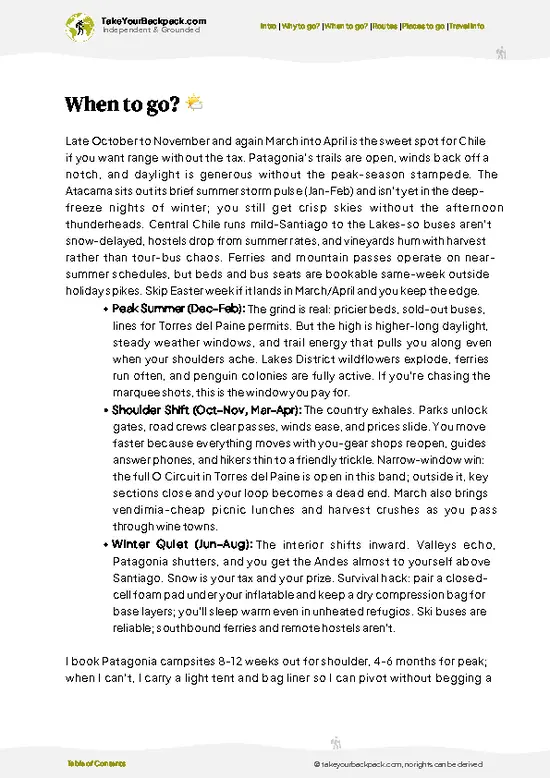
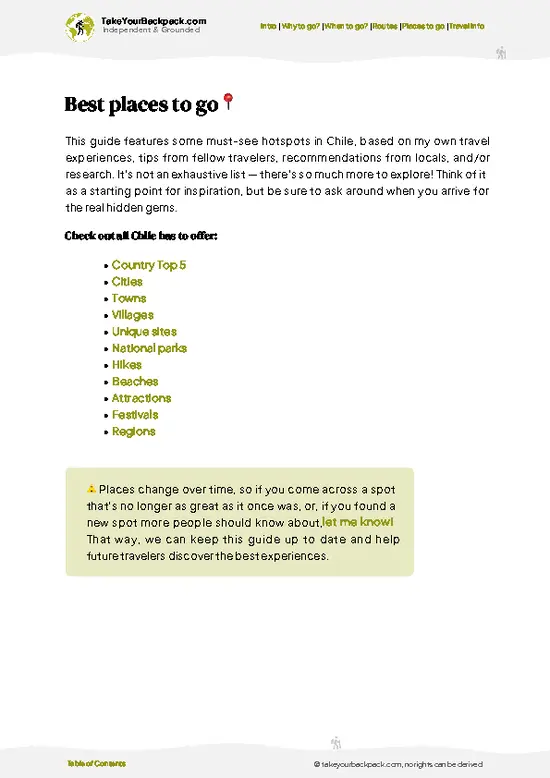
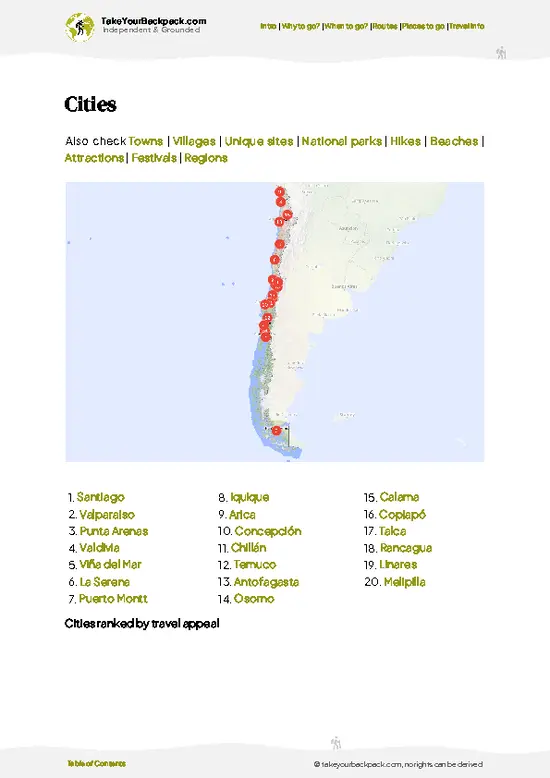
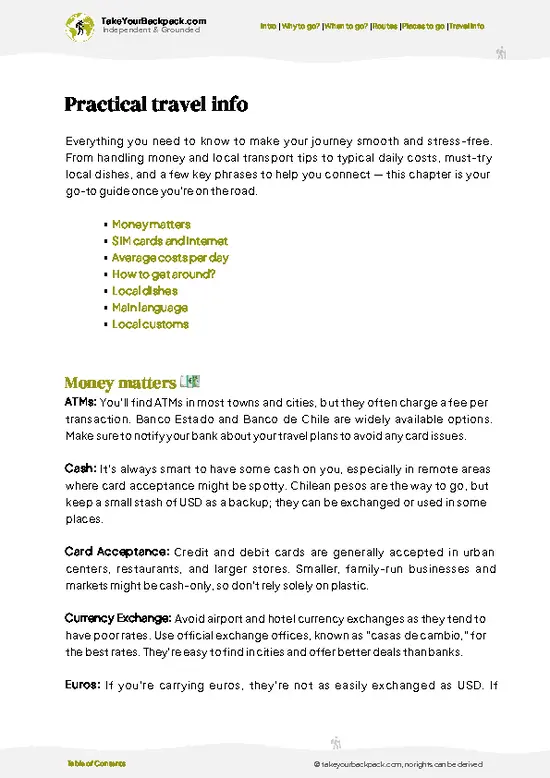
example page 0 from our offline Travel Guide for Chile
example page 1 from our offline Travel Guide for Chile
example page 2 from our offline Travel Guide for Chile
example page 3 from our offline Travel Guide for Chile
example page 4 from our offline Travel Guide for Chile
example page 5 from our offline Travel Guide for Chile
example page 6 from our offline Travel Guide for Chile
example page 7 from our offline Travel Guide for Chile
The digital guide (471 pages) contains:
119 highlights, ranked by travel appeal
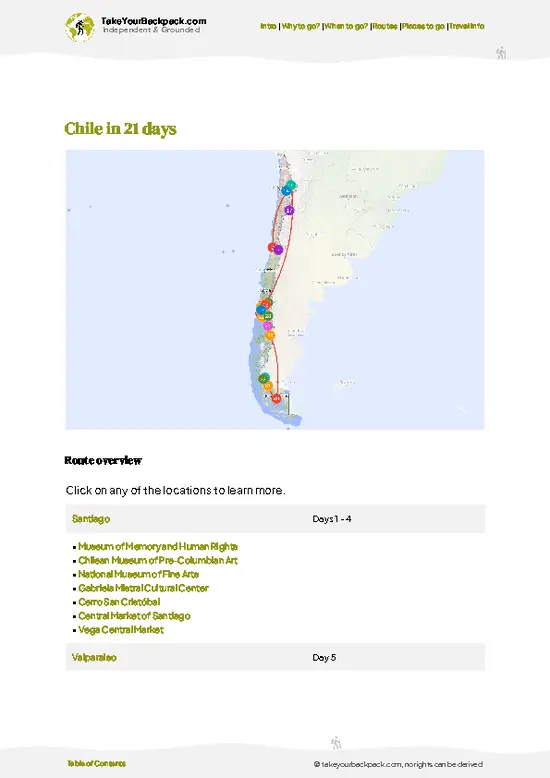
Optimized 7, 14 & 21-day travel routes
Cities, national parks, landmarks, beaches
How to get around
Offline-friendly for travel without Wi-Fi
👉 Click to see all 30+ guide features

📅 Plan smarter in minutes, not weeks
Month by month travel advice
Festivals & national holidays
Budget expectations

🗺️ Go to the right places, skip the overrated ones
Honest pros & cons of destinations
Top hikes, parks & viewpoints
Lesser-known places most travelers miss
Clear “worth it vs skip it” guidance

🛏️ Travel smoothly without rookie mistakes
Best areas to stay
Transport systems explained simply
Common scams & safety advice
SIM cards, money & practical tips

🌍 Understand the country, not just visit it
Culture & traditions
52 Essential phrases & customs
Festivals worth planning around
Traveler-friendly historical context
Insights that make places more meaningful

📱 Built for real travel conditions
Fully downloadable PDF
Works completely offline
Optimized for phone use
Useful in remote areas & buses
Everything in one place
Save weeks of stressful planning
Get instant access to your full guide. 30‑day money-back guarantee.


By proceeding you agree to our terms.
Sent to your inbox immediately after payment • 100% Secure Checkout
Best Backpacking Travel Advisor 2025 tourism awardBest Backpacking
Travel Advisor
2025
What others say about Take Your Backpack Guides:
⭐⭐⭐⭐⭐
Fantastic, amazing amount of information!
⭐⭐⭐⭐⭐
My goodness this is amazing, it's what I've been looking for hats off too you!
⭐⭐⭐⭐⭐
I think this is absolutely BRILLIANT
⭐⭐⭐⭐
Very complete and informative. It's still missing places, but I gotta to commend you
⭐⭐⭐⭐⭐
This is truly amazing, thank you, can't wait to explore it with my kids!
⭐⭐⭐⭐⭐
Awesome resource, thank you!
⭐⭐⭐⭐⭐
This is amazing! Can't wait to explore the ones I haven't seen
⭐⭐⭐⭐
I love this! Well done, great idea.
⭐⭐⭐⭐⭐
Thanks for taking the time to make this gem!
⭐⭐⭐⭐⭐
This might be the best website I've ever seen.
⭐⭐⭐⭐⭐
Congratulations, and thank you so much for your work; it's incredibly valuable.
⭐⭐⭐⭐
In all seriousness I think you did a great job pointing out the important spots
⭐⭐⭐⭐⭐
10/10 very good
⭐⭐⭐⭐⭐
As someone who's only just starting to visit regularly this is awesome, thank you.
⭐⭐⭐⭐
Thank you very much! I'm going to visit my dad, it's going to be very useful!
⭐⭐⭐⭐⭐
This is really cool! We'll be travelling for the first time and this definitely come in handy.
⭐⭐⭐⭐⭐
You are now our minister of culture, congratulations 👨‍💼
⭐⭐⭐⭐⭐
Just wanted to tell you that this is a pearl! Going to follow your recommendations.
⭐⭐⭐⭐⭐
This is so cool. I'll definitely be using the resource for my travels soon.
⭐⭐⭐⭐⭐
This is very impressive! Good work.
⭐⭐⭐⭐⭐
This is an amazing and informative site. Very well done!

🛏️ Where to stay?Best areas to stay in Chile

For the Festival de la Lluvia in Chile, dive into the vibrant heart of Pucón. This town buzzes with backpackers, offering a mix of cozy hostels and communal spaces where stories flow as freely as the local craft beer.

Stay near the main square for easy access to festival events and late-night festivities. The energy here is infectious, with fellow travelers eager to share tips and experiences.

If you prefer a quieter vibe, check out the areas along the lake. You’ll find stunning views and a more relaxed atmosphere, perfect for recharging after a day of exploration.

Avoid the tourist traps … read more 👉
For the Festival de la Lluvia in Chile, dive into the vibrant heart of Pucón. This town buzzes with backpackers, offering a mix of cozy hostels and communal spaces where stories flow as freely as the local craft beer.

Stay near the main square for easy access to festival events and late-night festivities. The energy here is infectious, with fellow travelers eager to share tips and experiences.

If you prefer a quieter vibe, check out the areas along the lake. You’ll find stunning views and a more relaxed atmosphere, perfect for recharging after a day of exploration.

Avoid the tourist traps by sticking to local eateries and markets. This way, you’ll keep your budget intact while savoring authentic flavors. Embrace the adventure, and let the festival’s spirit guide you!

👛 Costs (as of 10 January 2026)Typical daily expenses

The Festival de la Lluvia in Chile is an exhilarating experience, but knowing the costs upfront can save you from budget surprises. Here’s the breakdown:
  • Festival Tickets: Expect to pay around $30 to $50 for a general admission ticket. VIP options can climb to $100, but they often include perks like better views and exclusive areas. Grab your tickets early to avoid last-minute price hikes.
  • Accommodation: Options range from budget hostels at $15 to $30 per night to mid-range hotels costing $70 to $120. If you want a unique experience, consider camping, which can be as low as $10 per night. Book ahead, especially during peak festival times.
  • Local Transport: Public transport is your friend. Buses and shared taxis can cost between $1 and $5 for short trips. If you’re venturing further, budget around
read more 👉
The Festival de la Lluvia in Chile is an exhilarating experience, but knowing the costs upfront can save you from budget surprises. Here’s the breakdown:
  • Festival Tickets: Expect to pay around $30 to $50 for a general admission ticket. VIP options can climb to $100, but they often include perks like better views and exclusive areas. Grab your tickets early to avoid last-minute price hikes.
  • Accommodation: Options range from budget hostels at $15 to $30 per night to mid-range hotels costing $70 to $120. If you want a unique experience, consider camping, which can be as low as $10 per night. Book ahead, especially during peak festival times.
  • Local Transport: Public transport is your friend. Buses and shared taxis can cost between $1 and $5 for short trips. If you’re venturing further, budget around $10 to $20 for longer rides. Renting a bike is also a great way to explore the area, typically around $10 per day.
  • Food & Drinks: Street food is a must-try and usually costs between $5 and $10 for a filling meal. Restaurants can range from $10 to $25 per meal, depending on the vibe. Don’t forget to budget for drinks; local beers and wines can add another $5 to $15 to your daily expenses.
  • Miscellaneous Expenses: Set aside $20 to $50 for souvenirs, festival merchandise, or unexpected costs. It’s always smart to have a little extra for spontaneous adventures or late-night snacks.

Planning ahead means you can dive into the festival without worrying about your wallet. Keep these figures in mind, and you’ll be ready to soak in every moment.


source: chile.travel
⚠️ Prices can change and everyone travels differently, so take this as a rough guide. Hope it helps you plan your adventure!

🍲 FoodLocal Flavors for Backpackers

At the Festival de la Lluvia in Chile, food is a vibrant celebration of local culture. Dive into humitas, a corn-based delight wrapped in leaves, or savor empanadas bursting with flavors. Don’t miss the curanto, a traditional dish cooked in a pit, offering a smoky taste of the region.

For drinks, try the terremoto, a potent mix of pipeño and pineapple ice cream that packs a punch. It’s a rite of passage here.

Expect lines, but that’s part of the fun. Engage with vendors; they love sharing stories behind their dishes. Cash is king, so come prepared. Serving sizes can be generous, so share with friends to sample more. This festival isn’t just about eating; it’s about connecting with the heart of Chilean culture.

Other Chilean festivals near de la Lluvia

Explore more nearby:


💡 Not sure where to go next?
Create a personalized itinerary for Chile including de la Lluvia and the places that fit your trip.

Generate my itinerary

👉 Discover all festivals

Or checkout all Chile has to offer (think cities, towns, villages, national parks, hikes, beaches, festivals)
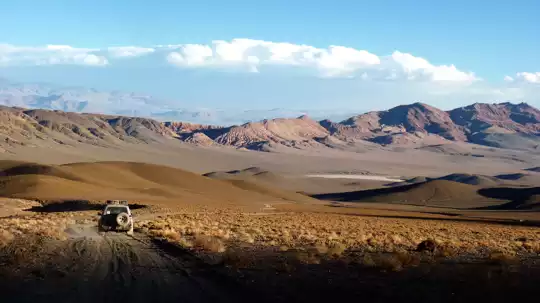
Country photo of Chile

We 💚 feedbackKey takeaways before you go

The Festival de la Lluvia is a wild celebration of culture and connection, where the rain becomes part of the magic. But brace yourself: the weather can be unpredictable. Pack for downpours, and don’t let a little mud dampen your spirit. Embrace the chaos; it’s all part of the adventure.

✈️ When did I visit Chile?
I have visited Chile, together with Argentina, in September 2012.

✍️ Help improve this page!
The information on this page is based on my own backpacking experience in Chile, supplemented with up-to-date research and feedback from other travelers. Travel details can change, so if you notice anything outdated or incomplete, feel free to let me know.


🙋‍♂️ Give feedback

👋 Meet the founderWho’s Behind Take Your Backpack?

Johan, backpacker and founder of TakeYourBackpackHi, I’m Johan (Netherlands 🇳🇱), the creator of TakeYourBackpack. Over the past decade, I’ve backpacked through 80+ countries across six continents, gaining extensive experience with independent travel, long-term trips, and overland routes.

This site is built on a combination of firsthand travel experience and carefully curated insights from other backpackers. Many guides are based on places I’ve personally visited, while others bring together tips, observations, and practical advice shared by trusted travelers I’ve met along the way.

The goal is to provide realistic, experience-driven guidance — not generic itineraries — so you can explore destinations with better context, clearer expectations, and more confidence.

Get full Chile guide •
Instant download • 119 highlights • Full Offline guide