×

Chile🇨🇱 | regionsFjords of southern Chileglacial channels, remote fishing villages, steep cliffs | things to do and best time to go

Explore Chiloé IslandExplore Isla Navarino

Backpacking in Fjords of southern Chile
👍 Recommendedregion ranked #5
By Johan Kruseman 🇳🇱 | Updated May 29, 2026

Everyone shows up to the fjords of southern Chile chasing that one perfect postcard of jagged peaks over glassy water. That’s fine, but what actually matters more is how much time, money, and comfort you’re willing to burn to move through this maze of water and rock. The fjord region stretches down from around Puerto Montt through Chiloé, Aysén, and into northern Patagonia, basically the long, broken spine of Chile dissolving into the Pacific. For backpackers, it’s wild and addictive: ferries through misty channels, tiny ports like Puerto Aysén and Quellón that still feel like working towns, plus access to big-ticket areas like Pumalín and Laguna San Rafael. It’s also slow, weather-beaten, and not cheap; buses and boats are irregular, and you pay Patagonia prices without always getting Patagonia crowds. Compared with the Atacama or Lake District, this feels rougher, wetter, and more logistically demanding—but also more real.

Discover everything you want to know in the 📖 Chile Travel Guide.


Get your Chile guide
120 ranked highlights, routes & tips, works offline (471 pages)
Loading the map 🌍
CLICK TO FILTER
cities
towns
villages
landmarks
national parks
hikes
beaches
attractions
festivals
regions
SHOW COUNTRY’S BESTSHOW ALL

✨ Why go?
Ranked #5 region in Chile
Why Fjords of southern Chile should be on your travel list

In the Fjords of southern Chile, backpackers find a playground that’s hard to resist. The variety of landscapes is staggering. One moment, you’re gazing at towering glaciers; the next, you’re wandering through lush forests. This region offers multiple experiences without the hassle of constant relocation. You can set up camp in one spot and explore different trails, each revealing a new facet of this wild beauty.

Transport is surprisingly flexible here. Buses and ferries connect remote areas, allowing you to hop from one breathtaking vista to another without breaking the bank. Plus, the slower pace of travel lets you soak in the culture. You can chat with locals in small fishing villages, savoring fresh seafood while learning about their way of life.

This blend of nature and culture makes … read more 👉
In the Fjords of southern Chile, backpackers find a playground that’s hard to resist. The variety of landscapes is staggering. One moment, you’re gazing at towering glaciers; the next, you’re wandering through lush forests. This region offers multiple experiences without the hassle of constant relocation. You can set up camp in one spot and explore different trails, each revealing a new facet of this wild beauty.

Transport is surprisingly flexible here. Buses and ferries connect remote areas, allowing you to hop from one breathtaking vista to another without breaking the bank. Plus, the slower pace of travel lets you soak in the culture. You can chat with locals in small fishing villages, savoring fresh seafood while learning about their way of life.

This blend of nature and culture makes for a richer experience. You’re not just ticking boxes; you’re creating memories. So, if you’re after high-value adventures, the Fjords are calling. Embrace the trade-offs, and you’ll leave with stories that last a lifetime.
Want to include Fjords of southern Chile in your Chile route?
Create a personalized Chile itinerary that includes Fjords of southern Chile and the places that fit your trip — based on your travel style, budget, and available time. Get your route in seconds.

Generate my trip

💡 HighlightsMust-see experiences and standout moments

  1. Capillas de Mármol (Marble Caves) — Lago General Carrera: Blue-grey marble caverns carved by the lake’s turquoise water; you can kayak into sweeping sculpted rooms and arches that look like someone painted the rock from the inside. It’s one of those landscapes you won’t confuse with anywhere else — bring a waterproof camera and a calm day for the best reflections.
  2. Laguna San Rafael & San Rafael Glacier: A wild fjord bay where a tidewater glacier calves into the water under the canopy of the Northern Patagonian Ice Field. Trips are usually multi-hour boat journeys from Puerto Chacabuco; the scale and constant rumble of ice make it unforgettable — the classic Patagonian fjord experience, up close with the ice.
  3. Ventisquero Colgante (Hanging Glacier) — Queulat National Park: A mossy temperate
read more 👉
  1. Capillas de Mármol (Marble Caves) — Lago General Carrera: Blue-grey marble caverns carved by the lake’s turquoise water; you can kayak into sweeping sculpted rooms and arches that look like someone painted the rock from the inside. It’s one of those landscapes you won’t confuse with anywhere else — bring a waterproof camera and a calm day for the best reflections.
  2. Laguna San Rafael & San Rafael Glacier: A wild fjord bay where a tidewater glacier calves into the water under the canopy of the Northern Patagonian Ice Field. Trips are usually multi-hour boat journeys from Puerto Chacabuco; the scale and constant rumble of ice make it unforgettable — the classic Patagonian fjord experience, up close with the ice.
  3. Ventisquero Colgante (Hanging Glacier) — Queulat National Park: A mossy temperate rainforest drops straight into a fiord and a hanging glacier snakes above — you hike through dripping trees and emerge at viewpoints where glacier, waterfall and sea meet. Short trail, massive payoff; feels like walking into a nature documentary.
  4. Caleta Tortel: A village built on stilts with wooden boardwalks instead of streets, perched across channels where the Baker River meets the sea. Local carpentry and fishing culture still shape daily life — walk the planks, stay in a simple hostería, and watch the tide change the whole town. Personal favorite: it’s small, weird, and genuinely unlike any little town I’ve slept in.
  5. Puyuhuapi village & hot springs: A tiny fjord-side settlement with German-Chilote roots, seafood shacks and thermal pools that look over the channel. Easy to pair with boat trips into the fjords or a lazy soak after a damp day on the trails. Low-key, salty, and very local.
  6. Río Baker and its turquoise delta: The most glacial-blue river in Chile — braided channels, dramatic rapids and excellent fishing/raft options near Cochrane and surrounding estuaries. Even from viewpoints the color of the water is surreal; boat or drift-boat trips let you feel how that glacial sediment lights up the landscape.
  7. Guaitecas Archipelago (hidden gem): Remote islands of Pilgerodendron forests, wooden boat villages and pitch-dark sea channels. Fewer tour boats go here, so you get real island life: small-scale fishing, old wooden boats, and forest walks in some of the southernmost conifer stands. Great for travelers who like quiet, rough-and-ready places.
  8. Chonos Archipelago (hidden gem): A labyrinth of islands and channels where the old Chono canoe routes still make sense. Kayaking and small-boat expeditions here feel exploratory — tide-sculpted shorelines, sea-lion rookeries, and tiny settlements that don’t see many foreigners. If you want raw fjord-country without the cruise-ship crowds, this is it.
  9. Puerto Bertrand (hidden gem): Tiny outpost right where the General Carrera system meets the headwaters of the Río Baker — a proper local fishing/ferry crossroads and a great spot to slow down. Sleep in a familia-run casa, chat with fishers, walk quiet shores; it’s the low-key side of fjord life most guidebooks skip.
  10. Glacier Jorge Montt — Bernardo O’Higgins National Park: One of the steepest ice-front glaciers of the Southern Ice Field, visible from expedition cruises that thread the fjords deep into the far south. The vertical ice face and the creaking, calving drama are intense — harder to get to than San Rafael, but the rawness rewards the effort.
Spotted a mistake or missing something? Contact us.

⌛️ 5 daysHow to make the most of Fjords of southern Chile

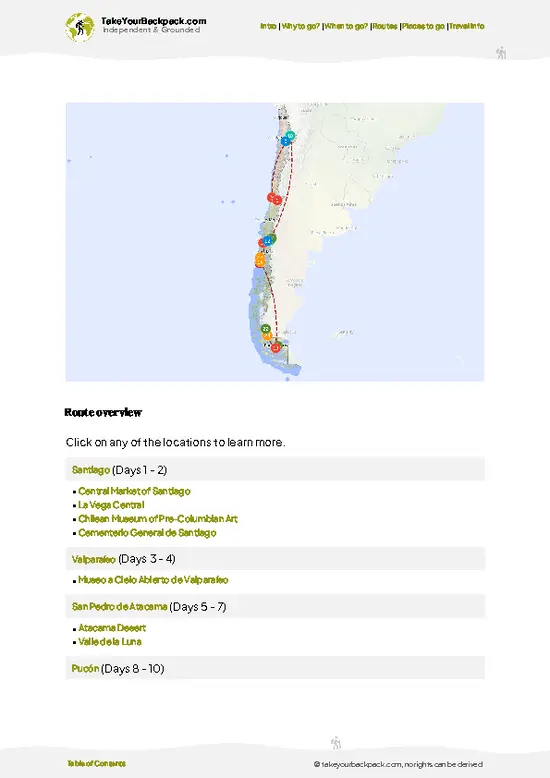
Day 1: Puerto Varas
The journey kicks off in Puerto Varas, a charming lakeside town. This is your launchpad into the fjords. The bus system here is reliable, and you’ll want to grab an early morning ride to get the most out of your day. Spend the afternoon exploring the local markets and savoring a slice of kuchen. The vibe is relaxed, and you’ll feel the pulse of Chilean culture.

Day 2: En Route to Chiloé
Hop on a ferry to Chiloé Island. This is where the magic begins. The ferry ride is a scenic delight, and once you land, the island’s unique wooden churches and colorful palafitos (stilt houses) await. Spend the night in Castro, where the local seafood is a must-try. The slower pace here lets you soak in the island’s charm without feeling rushed.

Day 3: Chiloé to Pumalín Park
Take … read more 👉
Day 1: Puerto Varas
The journey kicks off in Puerto Varas, a charming lakeside town. This is your launchpad into the fjords. The bus system here is reliable, and you’ll want to grab an early morning ride to get the most out of your day. Spend the afternoon exploring the local markets and savoring a slice of kuchen. The vibe is relaxed, and you’ll feel the pulse of Chilean culture.

Day 2: En Route to Chiloé
Hop on a ferry to Chiloé Island. This is where the magic begins. The ferry ride is a scenic delight, and once you land, the island’s unique wooden churches and colorful palafitos (stilt houses) await. Spend the night in Castro, where the local seafood is a must-try. The slower pace here lets you soak in the island’s charm without feeling rushed.

Day 3: Chiloé to Pumalín Park
Take a bus back to the mainland and head to Pumalín Park. This is where you’ll experience the wild side of Chile. The park is a haven for hikers, and the trails are well-marked. Spend the day trekking through ancient forests and along stunning coastlines. The tranquility here is a refreshing contrast to the previous days.

Day 4: Puerto Río Tranquilo
Travel to Puerto Río Tranquilo, a small village that serves as a gateway to the Marble Caves. The journey is long but worth it. Once you arrive, take a boat tour to see the caves’ mesmerizing formations. This is an off-path reward that feels exclusive and intimate.

Day 5: The Must-Do Day in Torres del Paine
Finish strong with a trip to Torres del Paine National Park. This is the crown jewel of the region. The bus ride is a bit lengthy, but the views are breathtaking. Spend the day hiking to the iconic towers. This experience encapsulates the essence of the fjords and justifies every moment of your trip.

The transport system here dictates your pace, so embrace the journey. Each day builds on the last, leading you deeper into the heart of southern Chile.
Turn your Fjords of southern Chile visit into an Chile adventure
Build a complete Chile route with Fjords of southern Chile, hidden gems, must-see destinations, and realistic travel times included.

Generate my trip

🌤️ When to go?Choosing the right time of year


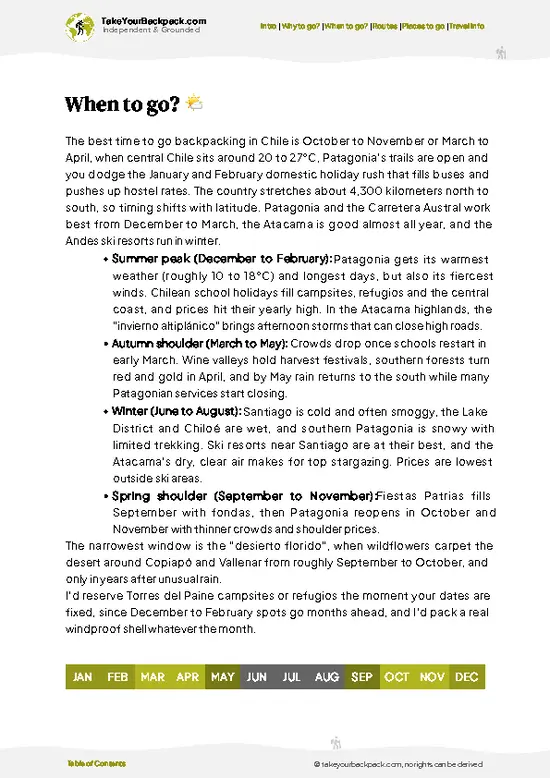
  • Weather: The sweet spot is between November and March. That’s the Southern Hemisphere’s summer, when rain eases up and trails dry out. Outside this window, expect relentless rain and wind that can turn your hike into a soggy slog.

  • Temperature: Summer highs hover around 15-20°C (59-68°F), which feels crisp but manageable. Winters dive to near freezing, making outdoor adventures tougher and less fun unless you’re geared up for cold.

  • Daylight Hours: Summer days stretch long—up to 17 hours of light—giving you plenty of time to explore without rushing. In winter, daylight shrinks to about 7 hours, squeezing your window for hikes and boat tours.

  • Crowds: Peak season means more tourists, especially in January and February. But the crowds are nothing like Europe’s hotspots. If you want solitude,
read more 👉

  • Weather: The sweet spot is between November and March. That’s the Southern Hemisphere’s summer, when rain eases up and trails dry out. Outside this window, expect relentless rain and wind that can turn your hike into a soggy slog.

  • Temperature: Summer highs hover around 15-20°C (59-68°F), which feels crisp but manageable. Winters dive to near freezing, making outdoor adventures tougher and less fun unless you’re geared up for cold.

  • Daylight Hours: Summer days stretch long—up to 17 hours of light—giving you plenty of time to explore without rushing. In winter, daylight shrinks to about 7 hours, squeezing your window for hikes and boat tours.

  • Crowds: Peak season means more tourists, especially in January and February. But the crowds are nothing like Europe’s hotspots. If you want solitude, aim for late spring (November) or early autumn (March) when the vibe is quieter but weather still plays nice.

  • Seasonal Activities: Summer unlocks kayaking, glacier trekking, and boat tours through the fjords. Winter limits options but offers a raw, dramatic landscape if you’re into serious solitude and don’t mind the chill.

  • Price Fluctuations: Expect prices to spike in peak summer months, especially around holidays. Booking early can save you a bundle. Shoulder seasons offer better deals without sacrificing too much on weather or daylight.


Pro-tip: Arrive just before peak season kicks in—late November is your golden ticket. You’ll dodge the crowds, catch decent weather, and snag better prices, all while feeling like you’ve got the fjords mostly to yourself.


source: climatestotravel.comJANJanuary: excellent for travelingFEBFebruary: excellent for travelingMARMarch: highly recommended for travelingAPRApril: fair for travelingMAYMay: below average for travelingJUNJune: below average for travelingJULJuly: below average for travelingAUGAugust: below average for travelingSEPSeptember: fair for travelingOCTOctober: good for travelingNOVNovember: highly recommended for travelingDECDecember: excellent for traveling
chile-region-fjords-of-southern-chile
© Google | Marta López

✈️ The backpacker research shortcutChile Travel Guide

An offline-friendly backpacking guide with optimized travel routes, ranked highlights, transport advice, and the best areas to stay.
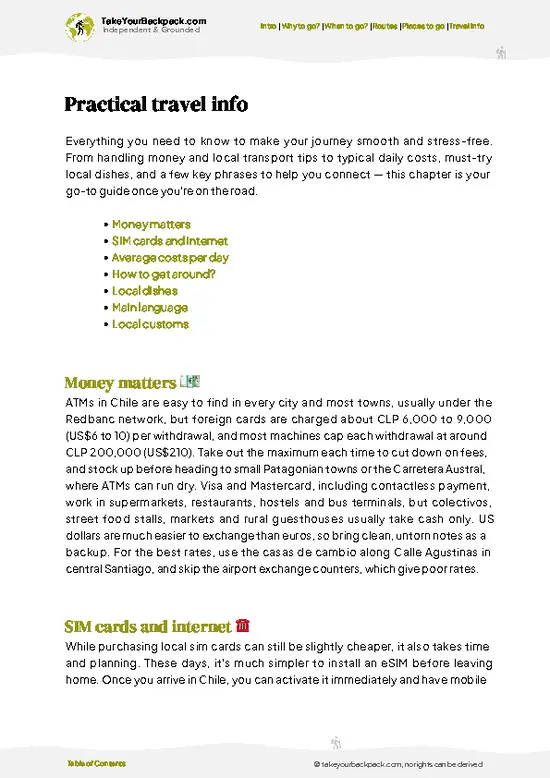
example page 0 from our offline Travel Guide for Chile
example page 1 from our offline Travel Guide for Chile
example page 2 from our offline Travel Guide for Chile
example page 3 from our offline Travel Guide for Chile
example page 4 from our offline Travel Guide for Chile
example page 5 from our offline Travel Guide for Chile
example page 6 from our offline Travel Guide for Chile
example page 7 from our offline Travel Guide for Chile
The digital guide (471 pages) contains:
120 highlights, ranked by travel appeal
Optimized 7, 14 & 21-day travel routes
Cities, national parks, landmarks, beaches
How to get around
Offline-friendly for travel without Wi-Fi
👉 Click to see all 30+ guide features

📅 Plan smarter in minutes, not weeks
Month by month travel advice
Festivals & national holidays
Budget expectations

🗺️ Go to the right places, skip the overrated ones
Honest pros & cons of destinations
Top hikes, parks & viewpoints
Lesser-known places most travelers miss
Clear “worth it vs skip it” guidance

🛏️ Travel smoothly without rookie mistakes
Best areas to stay
Transport systems explained simply
Common scams & safety advice
SIM cards, money & practical tips

🌍 Understand the country, not just visit it
Culture & traditions
52 Essential phrases & customs
Festivals worth planning around
Traveler-friendly historical context
Insights that make places more meaningful

📱 Built for real travel conditions
Fully downloadable PDF
Works completely offline
Optimized for phone use
Useful in remote areas & buses
Everything in one place
Save weeks of stressful planning
Get instant access to your full guide. 30‑day money-back guarantee.


By proceeding you agree to our terms.
Sent to your inbox immediately after payment • 100% Secure Checkout
Best Backpacking Travel Advisor 2025 tourism awardBest Backpacking
Travel Advisor
2025
What others say about Take Your Backpack Guides:
⭐⭐⭐⭐⭐
Fantastic, amazing amount of information!
⭐⭐⭐⭐⭐
My goodness this is amazing, it's what I've been looking for hats off too you!
⭐⭐⭐⭐⭐
I think this is absolutely BRILLIANT
⭐⭐⭐⭐
Very complete and informative. It's still missing places, but I gotta to commend you
⭐⭐⭐⭐⭐
This is truly amazing, thank you, can't wait to explore it with my kids!
⭐⭐⭐⭐⭐
Awesome resource, thank you!
⭐⭐⭐⭐⭐
This is amazing! Can't wait to explore the ones I haven't seen
⭐⭐⭐⭐
I love this! Well done, great idea.
⭐⭐⭐⭐⭐
Thanks for taking the time to make this gem!
⭐⭐⭐⭐⭐
This might be the best website I've ever seen.
⭐⭐⭐⭐⭐
Congratulations, and thank you so much for your work; it's incredibly valuable.
⭐⭐⭐⭐
In all seriousness I think you did a great job pointing out the important spots
⭐⭐⭐⭐⭐
10/10 very good
⭐⭐⭐⭐⭐
As someone who's only just starting to visit regularly this is awesome, thank you.
⭐⭐⭐⭐
Thank you very much! I'm going to visit my dad, it's going to be very useful!
⭐⭐⭐⭐⭐
This is really cool! We'll be travelling for the first time and this definitely come in handy.
⭐⭐⭐⭐⭐
You are now our minister of culture, congratulations 👨‍💼
⭐⭐⭐⭐⭐
Just wanted to tell you that this is a pearl! Going to follow your recommendations.
⭐⭐⭐⭐⭐
This is so cool. I'll definitely be using the resource for my travels soon.
⭐⭐⭐⭐⭐
This is very impressive! Good work.
⭐⭐⭐⭐⭐
This is an amazing and informative site. Very well done!

🛏️ Where to stay?How to pick the right area

When you’re diving into the Fjords of southern Chile, your choice of where to stay can make or break your experience. Let’s break down the best spots for backpackers, where safety, social vibes, and budget-friendliness reign supreme.

Start with Puerto Natales. This town is your gateway to Torres del Paine National Park. It’s buzzing with fellow travelers, making it easy to swap stories over a beer. The waterfront views are a bonus, and you can find affordable eateries that serve hearty meals after a long day of hiking.

Next up is Punta Arenas. It’s a bit more urban but offers a rich history … read more 👉
When you’re diving into the Fjords of southern Chile, your choice of where to stay can make or break your experience. Let’s break down the best spots for backpackers, where safety, social vibes, and budget-friendliness reign supreme.

Start with Puerto Natales. This town is your gateway to Torres del Paine National Park. It’s buzzing with fellow travelers, making it easy to swap stories over a beer. The waterfront views are a bonus, and you can find affordable eateries that serve hearty meals after a long day of hiking.

Next up is Punta Arenas. It’s a bit more urban but offers a rich history and a lively backpacker scene. The central plaza is a great meeting point, and you’ll find plenty of budget-friendly options. Plus, it’s a launching pad for excursions to the surrounding fjords.

Don’t overlook Cochrane. This small village is less touristy, giving you a more authentic feel of Chilean culture. It’s safe, and the locals are friendly. You’ll find cozy spots to rest your head and can easily connect with nature through nearby trails.

Each of these locations offers a unique flavor of the fjords, balancing time, money, and comfort. Choose wisely, and you’ll unlock the true essence of this stunning region.

🚌 Getting aroundGetting around like a local

The Fjords of southern Chile are a wild dance of nature, where schedules feel more like suggestions than rules. Picture this: jagged peaks jutting out of the water, mist swirling around like a secret. Here, the rhythm is dictated by the tides and the weather, not by rigid timetables. You’ll find yourself embracing spontaneity, hopping on a boat when the sun breaks through the clouds or waiting for a bus that might just show up—eventually. This is a place where intuition reigns, and the journey is as much about the experience as the destination.


  • Ferry Services: The backbone of travel here, ferries connect key points like Puerto Varas to Chiloé Island. Expect to pay around $10-$15, with departures typically every hour during peak season. The ride is scenic, taking about 30-60 minutes, and
read more 👉
The Fjords of southern Chile are a wild dance of nature, where schedules feel more like suggestions than rules. Picture this: jagged peaks jutting out of the water, mist swirling around like a secret. Here, the rhythm is dictated by the tides and the weather, not by rigid timetables. You’ll find yourself embracing spontaneity, hopping on a boat when the sun breaks through the clouds or waiting for a bus that might just show up—eventually. This is a place where intuition reigns, and the journey is as much about the experience as the destination.


  • Ferry Services: The backbone of travel here, ferries connect key points like Puerto Varas to Chiloé Island. Expect to pay around $10-$15, with departures typically every hour during peak season. The ride is scenic, taking about 30-60 minutes, and you can enjoy the fresh air on deck.


  • Local Buses: These are your lifeline for overland travel. Buses run from Puerto Montt to various fjord towns, costing about $5-$20 depending on distance. They’re generally comfortable, with the first buses leaving around 7 AM and the last ones around 7 PM. Just be ready for a few stops along the way—this is part of the charm.


  • Private Transfers: If you’re looking for comfort and speed, consider a private transfer. Prices can range from $100-$200, but you’ll save time and enjoy the flexibility of choosing your own schedule. This option is perfect for groups or those with a bit more cash to spare.


  • Kayaking Tours: For the adventurous, kayaking is a fantastic way to explore the fjords up close. Tours typically cost around $50-$100 and last about 3-5 hours. You’ll paddle through serene waters, surrounded by towering cliffs and wildlife—definitely a bucket-list experience.


  • Hitchhiking: This is a common practice in the region. While it’s not for everyone, it’s a great way to meet locals and save money. Just be patient and keep your spirits high; you never know when a friendly driver will pull over.


For a tactical tip: download offline maps and keep an eye on local weather forecasts. This way, you can make quick decisions about when to hop on a ferry or catch a bus, maximizing your time in this breathtaking landscape. Embrace the chaos, and let the fjords guide you.

🍲 FoodLocal Cuisine & Drinks

In the Fjords of southern Chile, food is as much about the landscape as it is about the plate. Dive into curanto, a traditional dish that layers seafood, meat, and potatoes, all steamed together in a pit. The smoky aroma wafts through the air, a reminder of the region’s rich maritime culture. Pair it with chicha, a fermented drink made from apples or grapes, and you’ll feel like a local in no time.

For a true backpacker experience, hit the local markets. Stalls overflow with fresh fish, vibrant fruits, and artisanal cheeses. Grab a completo, a Chilean hot dog topped with avocado and mayonnaise, from a street vendor. It’s messy, but that’s part of the charm.

Dining here is relaxed. You’ll often see people sharing tables, so don’t hesitate to join in. It’s common to greet your neighbors with … read more 👉
In the Fjords of southern Chile, food is as much about the landscape as it is about the plate. Dive into curanto, a traditional dish that layers seafood, meat, and potatoes, all steamed together in a pit. The smoky aroma wafts through the air, a reminder of the region’s rich maritime culture. Pair it with chicha, a fermented drink made from apples or grapes, and you’ll feel like a local in no time.

For a true backpacker experience, hit the local markets. Stalls overflow with fresh fish, vibrant fruits, and artisanal cheeses. Grab a completo, a Chilean hot dog topped with avocado and mayonnaise, from a street vendor. It’s messy, but that’s part of the charm.

Dining here is relaxed. You’ll often see people sharing tables, so don’t hesitate to join in. It’s common to greet your neighbors with a friendly nod or a smile. Tipping isn’t mandatory, but rounding up the bill is appreciated.

Embrace the slow pace of mealtime. Savor each bite, and let the flavors of the fjords linger. This isn’t just food; it’s a connection to the land and its people.

Other Chilean regions near Fjords of southern Chile

Explore more nearby:

  • Chiloé Island—wooden churches, tidal stilt houses, misty forests| 264 km away
  • Lake District—volcanic peaks, alpine lakes, temperate rainforest| 558 km away
  • Isla Navarino—subantarctic forests, jagged peaks, wind-battered coast| 1272 km away

💡 Not sure where to go next?
Create a personalized itinerary for Chile including Fjords of southern Chile and the places that fit your trip.

Generate my itinerary

👉 Discover all regions

Or checkout all Chile has to offer (think cities, towns, villages, national parks, hikes, beaches, festivals)
Country photo of Chile

We 💚 feedbackIs it worth it?

The Fjords of southern Chile are a wild symphony of jagged peaks and deep blue waters. You’ll feel like you’ve stepped into a postcard, especially when you catch a glimpse of a glacier calving. But here’s the catch: getting around can be a slog. Ferries and long drives eat up time, so plan your itinerary wisely. Embrace the journey, though; it’s all part of the adventure. Trust me, the views are worth every minute.

✈️ When did I visit Chile?
I have visited Chile, together with Argentina, in September 2012.

✍️ Help improve this page!
The information on this page is based on my own backpacking experience in Chile, supplemented with up-to-date research and feedback from other travelers. Travel details can change, so if you notice anything outdated or incomplete, feel free to let me know.


🙋‍♂️ Give feedback

👋 Meet the founderWho’s Behind Take Your Backpack?

Johan, backpacker and founder of TakeYourBackpackHi, I’m Johan (Netherlands 🇳🇱), the creator of TakeYourBackpack. Over the past decade, I’ve backpacked through 80+ countries across six continents, gaining extensive experience with independent travel, long-term trips, and overland routes.

This site is built on a combination of firsthand travel experience and carefully curated insights from other backpackers. Many guides are based on places I’ve personally visited, while others bring together tips, observations, and practical advice shared by trusted travelers I’ve met along the way.

The goal is to provide realistic, experience-driven guidance — not generic itineraries — so you can explore destinations with better context, clearer expectations, and more confidence.

Get full Chile guide •
Instant download • 120 highlights • Full Offline guide