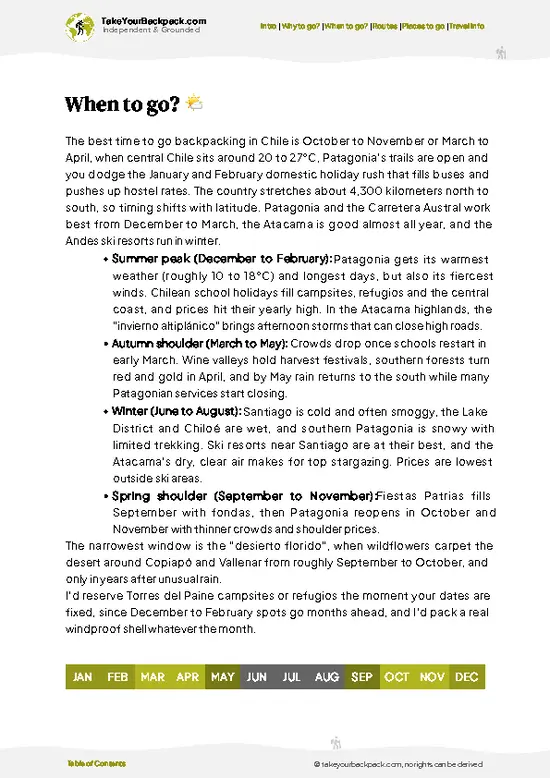
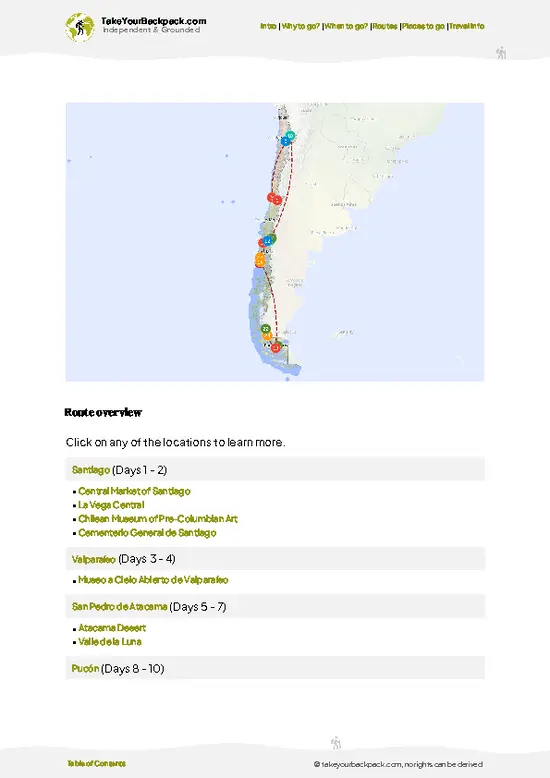
How many regions to visit: Two or three regions is the right number for a trip of up to three weeks. Chile’s distances mean each extra region costs one to two days of transit, and those days come out of your time, not your budget. Travelers who tick off five areas usually see bus stations more than landscapes. Staying longer in fewer places also lets you do the activities that need weather windows, such as high-altitude excursions or multi-day treks, where one bad day can cancel a plan.
Prioritizing by travel style: If you want
low cost and easy logistics, favor the center and lakes, where buses are frequent and hostels and markets keep spending low. If you want
dramatic wilderness and are comfortable with planning, the far south delivers the largest landscapes but charges for it, and everything …
read more 👉 How many regions to visit: Two or three regions is the right number for a trip of up to three weeks. Chile’s distances mean each extra region costs one to two days of transit, and those days come out of your time, not your budget. Travelers who tick off five areas usually see bus stations more than landscapes. Staying longer in fewer places also lets you do the activities that need weather windows, such as high-altitude excursions or multi-day treks, where one bad day can cancel a plan.
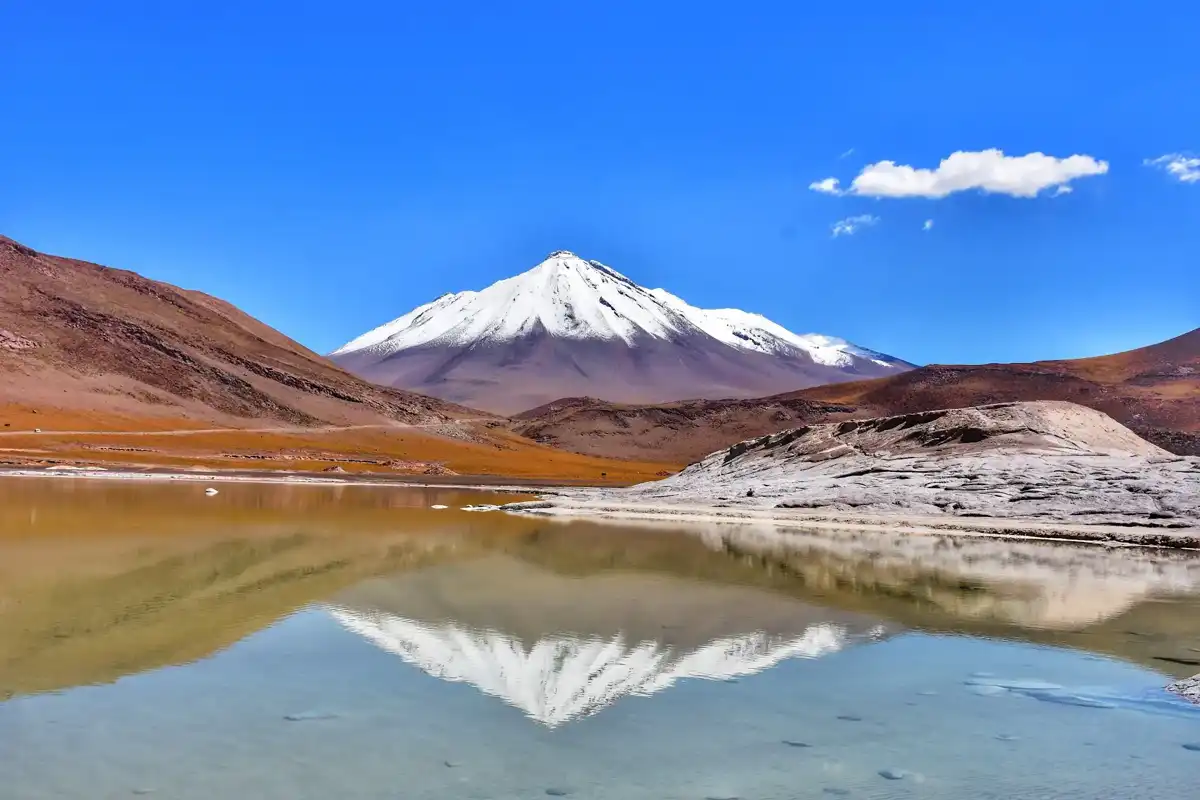
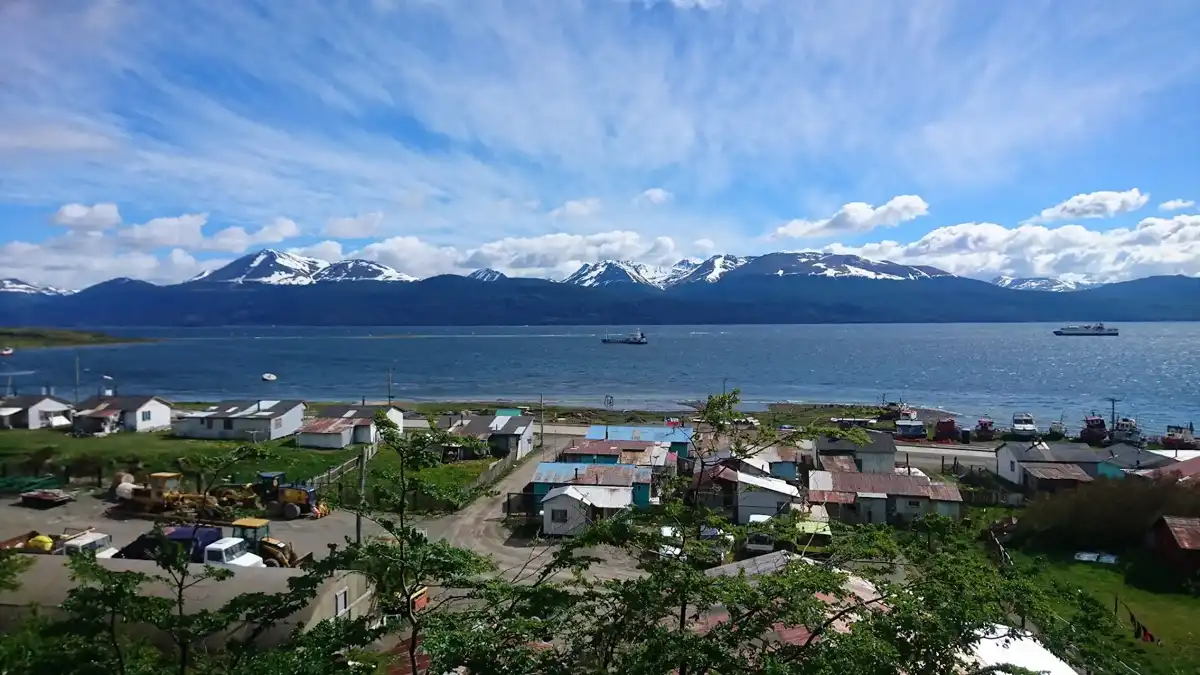
Prioritizing by travel style: If you want low cost and easy logistics, favor the center and lakes, where buses are frequent and hostels and markets keep spending low. If you want dramatic wilderness and are comfortable with planning, the far south delivers the largest landscapes but charges for it, and everything depends on weather and bookings. If you want otherworldly terrain with short tours, the desert north works well because most highlights are visited on organized day trips, though altitude means a day of acclimatization helps. Island travel suits those who have extra budget, since flights are the main cost. A good rule is to pick one expensive, remote region and balance it with one cheap, accessible one.
What it costs: Budget travelers spend roughly US$40 to 70 a day in central and lake areas, including a dorm bed (about US$12 to 25), simple meals, local buses and some activities. In the far north and south, expect US$70 to 120 a day, because tours are priced per person and accommodation is scarcer. Typical figures: Atacama day tours cost about US$30 to 70 each, and a package of several can reach US$200 or more. National park entry fees run about US$10 to 40 for foreigners, with the most popular parks at the high end, and Patagonian refugio beds cost roughly US$50 to 100 with meals. Long-distance buses cost about US$15 to 30 for 8 to 12 hours, while domestic flights vary from US$50 to over US$200 depending on how early you book. Chile’s prices are listed in pesos, and cash is often needed in small towns, though cards work in most tourist businesses. Easter Island adds a park fee of roughly US$80, paid on arrival and often required in cash.
Safety and local considerations: Chile is among the safer South American countries, yet petty theft in Santiago, Valparaíso and bus terminals is common, so keep bags in sight and phones out of back pockets. The main danger in remote zones is the environment: altitude sickness in the north, sudden wind and cold in the south and sun exposure everywhere, since ozone thinning raises UV levels in the far south. Hire certified guides for glacier or volcano outings and register at park entrances. Seasonal wildfires affect central and southern areas in summer, so check conditions before you travel. Protests occur periodically in cities and can disrupt transport, so keep a flexible day around planned flights.
On culture, Chileans are formal in greetings, with a single cheek kiss common, and punctuality is expected for tours. Tipping around 10 percent is customary in restaurants and is often suggested on the bill. In Mapuche areas, treat sites and communities as living places and ask before photographing people. Water is safe to drink in most cities, but filter it in the backcountry. Travel insurance that covers trekking and medical evacuation is a practical necessity, because remote rescues are expensive.
v2.webp)


 Best Backpacking
.jpg) Hi, I’m Johan (Netherlands 🇳🇱), the creator of TakeYourBackpack. Over the past 3 decades, I’ve backpacked through 90+ countries across six continents, gaining extensive experience with independent travel, long-term trips, and overland routes.
Hi, I’m Johan (Netherlands 🇳🇱), the creator of TakeYourBackpack. Over the past 3 decades, I’ve backpacked through 90+ countries across six continents, gaining extensive experience with independent travel, long-term trips, and overland routes.