×

Chile🇨🇱 | regionsIsla Navarinosubantarctic forests, jagged peaks, wind-battered coast | things to do and best time to go

Explore Fjords of southern ChileExplore Lake District

Backpacking in Isla Navarino
👀 For curious travelersregion ranked #7
By Johan Kruseman 🇳🇱 | Updated June 10, 2026

Ten years ago Isla Navarino felt like a rumor with a runway: a couple of hospedajes, one bar that sometimes opened, and trails that were more suggestion than signage. Now you still get that end-of-the-world quiet, but with enough infrastructure that you’re not gambling your safety every time the weather turns. It sits just south of Tierra del Fuego, across the Beagle Channel from Ushuaia, technically Chile but emotionally its own planet. For backpackers, it’s wild, expensive, and logistically annoying in the best “you earned this” way. Puerto Williams is the tiny hub; Dientes de Navarino is the headline trek. Compared with Torres del Paine or Puerto Natales, there’s less choice, less comfort, and way fewer people, but more raw contact with locals and landscape. You trade money and time for solitude and bragging rights.

Discover everything you want to know in the 📖 Chile Travel Guide.


Get your Chile guide
120 ranked highlights, routes & tips, works offline (471 pages)
Loading the map 🌍
CLICK TO FILTER
cities
towns
villages
landmarks
national parks
hikes
beaches
attractions
festivals
regions
SHOW COUNTRY’S BESTSHOW ALL

✨ Why go?
Ranked #7 region in Chile
What makes this region worth visiting

Isla Navarino is a backpacker’s playground, and here’s why you should dive in. First off, the variety of landscapes is mind-blowing. You’ve got rugged mountains, lush forests, and stunning coastlines all within a stone’s throw. This means you can experience multiple adventures without the hassle of constant relocation.

Transport is flexible, too. You can hop on a local boat or take a bus, making it easy to explore at your own pace. This is where slow travel shines. You can immerse yourself in the culture, chat with locals, and savor the unique flavors of the region.

Plus, the blend of nature and culture is seamless. Whether you’re hiking the Dientes de Navarino or visiting the small town of Puerto Williams, each moment feels rich and rewarding. You’re not just ticking boxes; you’re creating … read more 👉
Isla Navarino is a backpacker’s playground, and here’s why you should dive in. First off, the variety of landscapes is mind-blowing. You’ve got rugged mountains, lush forests, and stunning coastlines all within a stone’s throw. This means you can experience multiple adventures without the hassle of constant relocation.

Transport is flexible, too. You can hop on a local boat or take a bus, making it easy to explore at your own pace. This is where slow travel shines. You can immerse yourself in the culture, chat with locals, and savor the unique flavors of the region.

Plus, the blend of nature and culture is seamless. Whether you’re hiking the Dientes de Navarino or visiting the small town of Puerto Williams, each moment feels rich and rewarding. You’re not just ticking boxes; you’re creating memories that stick. So, pack your bag and get ready for an experience that’s anything but ordinary.
Want to include Isla Navarino in your Chile route?
Create a personalized Chile itinerary that includes Isla Navarino and the places that fit your trip — based on your travel style, budget, and available time. Get your route in seconds.

Generate my trip

💡 HighlightsThe experiences that define the visit

  1. Dientes de Navarino trek — The jagged “teeth” ridge on the island’s southern spine; multi-day routes and day-hikes carve through alpine tarns, wind-swept ridges and glacial bowls you won’t find anywhere north. It’s brutally beautiful, remote, and quiet — the southernmost serious mountain trek in the world, with scenery that feels exactly like Tierra del Fuego but amplified. (Personal favorite.)
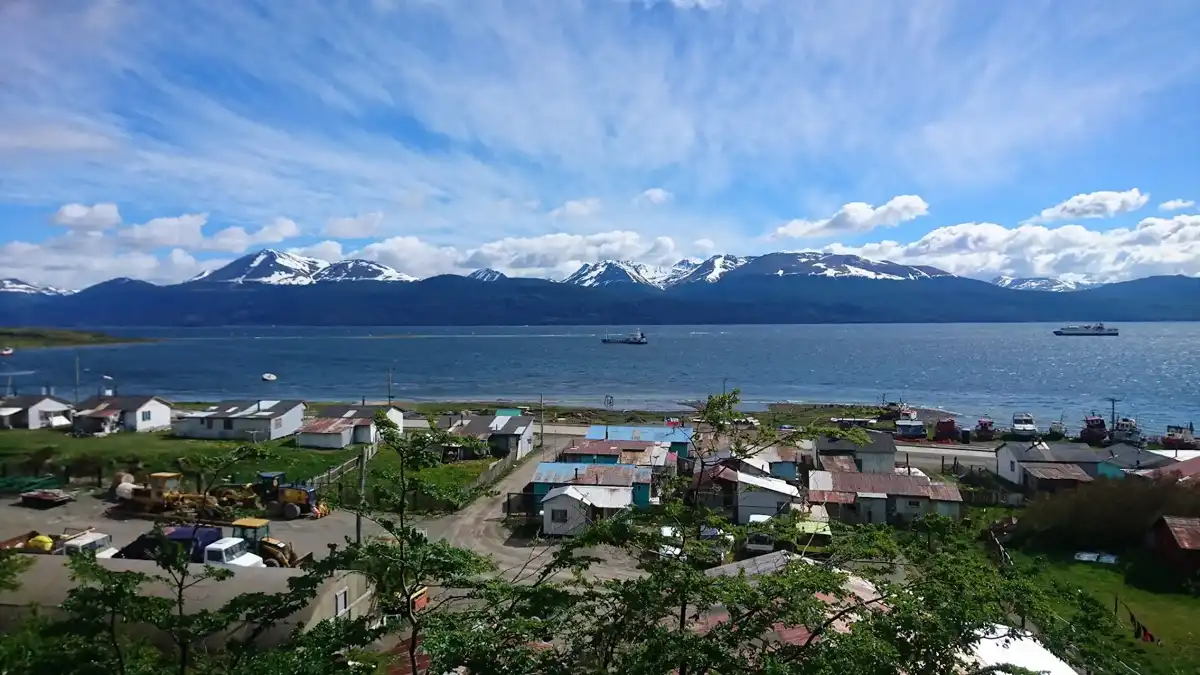
  2. Puerto Williams — The town itself is part experience: the southernmost administrative town in the world, a working harbor and community where you can actually see how people live at the edge of the continent. Walk the waterfront, eat fresh seafood, visit small shops and watch ferries and fishing boats come and go — it’s not a theme-park “end of the world,” it’s real life.
  3. Omora Ethnobotanical Park
read more 👉
  1. Dientes de Navarino trek — The jagged “teeth” ridge on the island’s southern spine; multi-day routes and day-hikes carve through alpine tarns, wind-swept ridges and glacial bowls you won’t find anywhere north. It’s brutally beautiful, remote, and quiet — the southernmost serious mountain trek in the world, with scenery that feels exactly like Tierra del Fuego but amplified. (Personal favorite.)
  2. Puerto Williams — The town itself is part experience: the southernmost administrative town in the world, a working harbor and community where you can actually see how people live at the edge of the continent. Walk the waterfront, eat fresh seafood, visit small shops and watch ferries and fishing boats come and go — it’s not a theme-park “end of the world,” it’s real life.
  3. Omora Ethnobotanical Park (Estación Omora) — A tiny but world-class research and interpretive reserve just outside Puerto Williams that focuses on subantarctic ecosystems. Guided short trails, birding and night walks explain plants, mosses and peat bogs in plain language; you’ll learn why this living forest is globally special without days of slogging.
  4. Museo Antropológico Martín Gusinde — The best place on the island to see authentic Yaghan artifacts, traditional canoes, clothing and contextual displays about indigenous life in the Beagle Channel. It’s small, well-curated and gives context to the archaeological sites you’ll visit around the island.
  5. Wulaia Bay archaeological site — A sheltered cove on Navarino with important Yaghan middens and a dramatic history (European contact and missionary episodes). The bay’s shell layers, old habitation spots and surrounding forest make it one of the clearest places to connect the human past with the island’s wild landscape — reachable by boat or longer coastal hikes.
  6. Puerto Toro — Hidden gem: a tiny fishing cove on the island’s northeast shore, often called the world’s southernmost permanently inhabited settlement. Visiting (usually by small-boat trip) gives a window into hardcore, small-scale fishing life — people, boats, dog teams and a pace of life that most tourists never see.
  7. Cerro Bandera viewpoint — Hidden gem: a short, steep local hike above Puerto Williams with excellent views of the Beagle Channel, Hornos Channel and the town laid out below. Locals hike it for exercise and sunsets; it’s quick, free and rewards you with classic southern panorama without committing to the Dientes.
  8. Coastal skiff trips around Navarino — Take a day with a local skipper to hop coves, watch cormorant colonies, inspect kelp forests and land on quiet beaches; you’ll see geology and marine wildlife that don’t translate the same way on larger, commercial boats. These are practical, small-group outings where local knowledge matters — ask for a skipper who will stop for landings and short walks.
  9. Glacial lakes and tarns of the Dientes area — The pools tucked between the jagged ridges are photogenic and often mirror-clear after wind drops; short side hikes from the main trail take you to isolated lagoons ringed by lenga and cushion plants. They’re quieter than the main Dientes viewpoints and feel like secret alpine rooms.
  10. Local seafood & craft experiences (Puerto Williams markets and kitchens) — Hidden gem: the small markets, fish auctions and family kitchens where you can taste centolla, local mussels and tiny, perfectly fresh fish, or buy handcrafted items made from bone, leather and wool. It’s the most honest way to connect with local culture — talk to fishers and artisans, and you’ll leave with stories and bites that guidebooks miss.
Spotted a mistake or missing something? Contact us.
⌛️ 5 daysA smart one-week plan

Day 1: Puerto Williams
Start your adventure in Puerto Williams, the southernmost town in the world. This is your gateway to Isla Navarino. The ferry ride from Punta Arenas takes about 30 hours, so plan ahead. Arriving here, you’ll feel the pulse of the island. The local vibe is laid-back, and the seafood is fresh. Grab a bite at a local eatery and soak in the atmosphere. This is where your journey begins, and it sets the tone for the days ahead.

Day 2: Dientes de Navarino
Today, you’ll tackle the Dientes de Navarino trek. This is where the magic happens. The trail is rugged but rewarding, with stunning views of jagged peaks and pristine lakes. It’s a full-day hike, so pack snacks and plenty of water. The transport options are limited, but the trailhead is accessible from Puerto Williams. … read more 👉
Day 1: Puerto Williams
Start your adventure in Puerto Williams, the southernmost town in the world. This is your gateway to Isla Navarino. The ferry ride from Punta Arenas takes about 30 hours, so plan ahead. Arriving here, you’ll feel the pulse of the island. The local vibe is laid-back, and the seafood is fresh. Grab a bite at a local eatery and soak in the atmosphere. This is where your journey begins, and it sets the tone for the days ahead.

Day 2: Dientes de Navarino
Today, you’ll tackle the Dientes de Navarino trek. This is where the magic happens. The trail is rugged but rewarding, with stunning views of jagged peaks and pristine lakes. It’s a full-day hike, so pack snacks and plenty of water. The transport options are limited, but the trailhead is accessible from Puerto Williams. The effort is worth it; you’ll feel like you’ve stepped into another world.

Day 3: Off-Path Reward - Laguna del Salto
Take a detour to Laguna del Salto. It’s a short hike from the main trail and offers a serene spot for reflection. The turquoise waters are mesmerizing, and you might even spot some local wildlife. This little gem is a perfect break from the main trek and adds depth to your experience.

Day 4: Return to Puerto Williams
After a challenging trek, head back to Puerto Williams. Use this day to rest and recharge. Explore the town’s small museums or chat with locals about their way of life. This is your chance to soak in the culture and history of the region.

Day 5: Cape Horn
Cap off your trip with a boat tour to Cape Horn. This is the ultimate highlight. The journey takes you through the Beagle Channel, and you’ll witness breathtaking landscapes. The boat ride is a fitting finale, connecting you back to the sea that shaped this land.

If you can only choose one day, make it Day 5. The experience of Cape Horn is a fitting tribute to the wild beauty of Isla Navarino, and it’s a memory you’ll carry with you long after the trip ends.
Turn your Isla Navarino visit into an Chile adventure
Build a complete Chile route with Isla Navarino, hidden gems, must-see destinations, and realistic travel times included.

Generate my trip

🌤️ When to go?Choosing the right time of year


  • Weather: The prime window is from December to March when Isla Navarino sheds its notorious chill. Expect crisp but bearable conditions, with temperatures hovering between 8°C and 15°C (46°F to 59°F). Outside this, rain and wind crank up, turning trails into mudslides.

  • Daylight Hours: Summer months gift you long days—up to 17 hours of light—perfect for squeezing in those epic hikes without rushing. Winter, by contrast, offers barely 7 hours, cutting your adventure time drastically.

  • Crowds: Peak season means more hikers, but nothing like the overcrowding you find in popular spots. Still, arriving early in the season or late March lets you enjoy quieter trails and a more intimate wilderness vibe.

  • Seasonal Activities: Summer unlocks kayaking, fishing, and birdwatching—activities that
read more 👉

  • Weather: The prime window is from December to March when Isla Navarino sheds its notorious chill. Expect crisp but bearable conditions, with temperatures hovering between 8°C and 15°C (46°F to 59°F). Outside this, rain and wind crank up, turning trails into mudslides.

  • Daylight Hours: Summer months gift you long days—up to 17 hours of light—perfect for squeezing in those epic hikes without rushing. Winter, by contrast, offers barely 7 hours, cutting your adventure time drastically.

  • Crowds: Peak season means more hikers, but nothing like the overcrowding you find in popular spots. Still, arriving early in the season or late March lets you enjoy quieter trails and a more intimate wilderness vibe.

  • Seasonal Activities: Summer unlocks kayaking, fishing, and birdwatching—activities that freeze out in colder months. Winter’s for the hardiest, with snowshoeing and storm-watching if you’re into that sort of raw, wild challenge.

  • Price Fluctuations: Accommodation and transport costs spike during the summer months. Booking just before or after peak season can save you a solid chunk of cash without sacrificing too much on weather or daylight.


Pro-tip: Aim for early December or late March—weather’s still decent, crowds thin, and prices dip. You’ll feel like you’ve hacked the system, getting the best of Isla Navarino without the usual hassle.


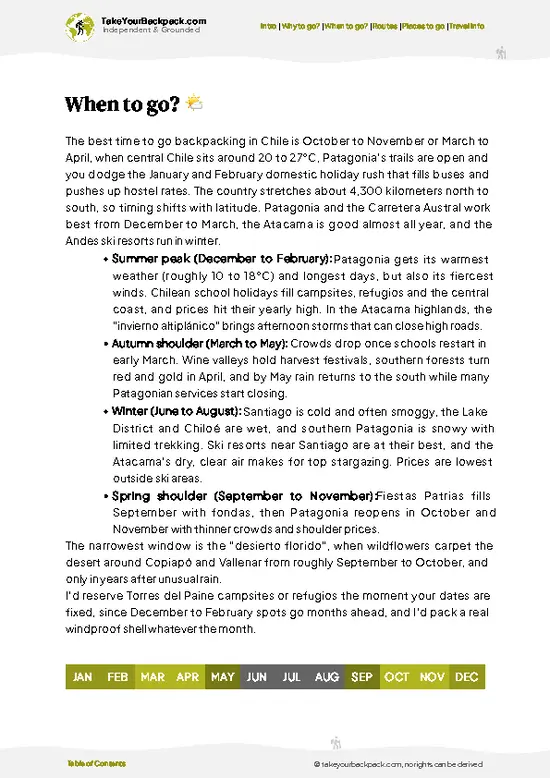
source: climatestotravel.comJANJanuary: excellent for travelingFEBFebruary: excellent for travelingMARMarch: highly recommended for travelingAPRApril: fair for travelingMAYMay: below average for travelingJUNJune: below average for travelingJULJuly: below average for travelingAUGAugust: below average for travelingSEPSeptember: fair for travelingOCTOctober: fair for travelingNOVNovember: good for travelingDECDecember: highly recommended for traveling
chile-region-isla-navarino
© Google | Ger Ver

✈️ The backpacker research shortcutChile Travel Guide

An offline-friendly backpacking guide with optimized travel routes, ranked highlights, transport advice, and the best areas to stay.
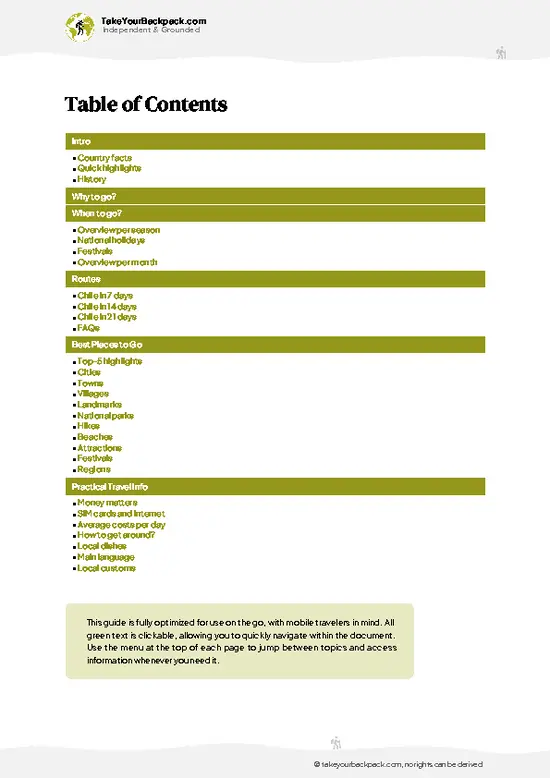
example page 0 from our offline Travel Guide for Chile
example page 1 from our offline Travel Guide for Chile
example page 2 from our offline Travel Guide for Chile
example page 3 from our offline Travel Guide for Chile
example page 4 from our offline Travel Guide for Chile
example page 5 from our offline Travel Guide for Chile
example page 6 from our offline Travel Guide for Chile
example page 7 from our offline Travel Guide for Chile
The digital guide (471 pages) contains:
120 highlights, ranked by travel appeal
Optimized 7, 14 & 21-day travel routes
Cities, national parks, landmarks, beaches
How to get around
Offline-friendly for travel without Wi-Fi
👉 Click to see all 30+ guide features

📅 Plan smarter in minutes, not weeks
Month by month travel advice
Festivals & national holidays
Budget expectations

🗺️ Go to the right places, skip the overrated ones
Honest pros & cons of destinations
Top hikes, parks & viewpoints
Lesser-known places most travelers miss
Clear “worth it vs skip it” guidance

🛏️ Travel smoothly without rookie mistakes
Best areas to stay
Transport systems explained simply
Common scams & safety advice
SIM cards, money & practical tips

🌍 Understand the country, not just visit it
Culture & traditions
52 Essential phrases & customs
Festivals worth planning around
Traveler-friendly historical context
Insights that make places more meaningful

📱 Built for real travel conditions
Fully downloadable PDF
Works completely offline
Optimized for phone use
Useful in remote areas & buses
Everything in one place
Save weeks of stressful planning
Get instant access to your full guide. 30‑day money-back guarantee.


By proceeding you agree to our terms.
Sent to your inbox immediately after payment • 100% Secure Checkout
Best Backpacking Travel Advisor 2025 tourism awardBest Backpacking
Travel Advisor
2025
What others say about Take Your Backpack Guides:
⭐⭐⭐⭐⭐
Fantastic, amazing amount of information!
⭐⭐⭐⭐⭐
My goodness this is amazing, it's what I've been looking for hats off too you!
⭐⭐⭐⭐⭐
I think this is absolutely BRILLIANT
⭐⭐⭐⭐
Very complete and informative. It's still missing places, but I gotta to commend you
⭐⭐⭐⭐⭐
This is truly amazing, thank you, can't wait to explore it with my kids!
⭐⭐⭐⭐⭐
Awesome resource, thank you!
⭐⭐⭐⭐⭐
This is amazing! Can't wait to explore the ones I haven't seen
⭐⭐⭐⭐
I love this! Well done, great idea.
⭐⭐⭐⭐⭐
Thanks for taking the time to make this gem!
⭐⭐⭐⭐⭐
This might be the best website I've ever seen.
⭐⭐⭐⭐⭐
Congratulations, and thank you so much for your work; it's incredibly valuable.
⭐⭐⭐⭐
In all seriousness I think you did a great job pointing out the important spots
⭐⭐⭐⭐⭐
10/10 very good
⭐⭐⭐⭐⭐
As someone who's only just starting to visit regularly this is awesome, thank you.
⭐⭐⭐⭐
Thank you very much! I'm going to visit my dad, it's going to be very useful!
⭐⭐⭐⭐⭐
This is really cool! We'll be travelling for the first time and this definitely come in handy.
⭐⭐⭐⭐⭐
You are now our minister of culture, congratulations 👨‍💼
⭐⭐⭐⭐⭐
Just wanted to tell you that this is a pearl! Going to follow your recommendations.
⭐⭐⭐⭐⭐
This is so cool. I'll definitely be using the resource for my travels soon.
⭐⭐⭐⭐⭐
This is very impressive! Good work.
⭐⭐⭐⭐⭐
This is an amazing and informative site. Very well done!

🛏️ Where to stay?Choosing the right base

Isla Navarino is a treasure trove for backpackers, and knowing where to stay can elevate your experience.

Start in Puerto Williams, the southernmost town in the world. It’s small but vibrant, with a tight-knit community that welcomes travelers. The waterfront is buzzing with local fishermen and adventurers swapping stories. You’ll find budget-friendly options here, and the atmosphere is perfect for meeting fellow explorers.

Next, consider Laguna de los Cisnes. This area offers a more rustic vibe, with stunning views of the surrounding mountains. It’s quieter, ideal for those who want to soak … read more 👉
Isla Navarino is a treasure trove for backpackers, and knowing where to stay can elevate your experience.

Start in Puerto Williams, the southernmost town in the world. It’s small but vibrant, with a tight-knit community that welcomes travelers. The waterfront is buzzing with local fishermen and adventurers swapping stories. You’ll find budget-friendly options here, and the atmosphere is perfect for meeting fellow explorers.

Next, consider Laguna de los Cisnes. This area offers a more rustic vibe, with stunning views of the surrounding mountains. It’s quieter, ideal for those who want to soak in nature without the distractions of a bustling town. You’ll be close to hiking trails, making it a great base for day trips.

Don’t overlook Yendegaia National Park. While not a town, camping here is a unique experience. You’ll be surrounded by breathtaking landscapes and wildlife. It’s a chance to disconnect and truly immerse yourself in the wild.

Each spot has its charm, so choose based on your vibe—social or serene. Just remember, the connections you make and the stories you gather are what truly enrich your journey.

🚌 Getting aroundMoving around without the hassle

Isla Navarino is a wild, untamed corner of Chile where the rhythm of life dances between the clock and the chaos of nature. Here, you won’t find the rigid schedules of a bustling city; instead, it’s a place where time bends to the whims of the wind and the tides. The locals know that flexibility is key. Whether you’re hiking through the rugged terrain or sipping mate with a fisherman, the flow of the island is about embracing spontaneity. So, let’s break down how to navigate this enchanting wilderness without losing your mind—or your wallet.


  • Ferry from Puerto Williams: This is your lifeline to the mainland. Ferries run daily, typically departing at 9 AM and returning at 5 PM. Expect to pay around CLP 10,000 (about $12) for a one-way ticket. The ride takes about 30 minutes, and while it’s
read more 👉
Isla Navarino is a wild, untamed corner of Chile where the rhythm of life dances between the clock and the chaos of nature. Here, you won’t find the rigid schedules of a bustling city; instead, it’s a place where time bends to the whims of the wind and the tides. The locals know that flexibility is key. Whether you’re hiking through the rugged terrain or sipping mate with a fisherman, the flow of the island is about embracing spontaneity. So, let’s break down how to navigate this enchanting wilderness without losing your mind—or your wallet.


  • Ferry from Puerto Williams: This is your lifeline to the mainland. Ferries run daily, typically departing at 9 AM and returning at 5 PM. Expect to pay around CLP 10,000 (about $12) for a one-way ticket. The ride takes about 30 minutes, and while it’s not luxury, the views of the Beagle Channel are worth every peso.


  • Local Buses: The island’s buses are a budget traveler’s best friend. They connect Puerto Williams to various trailheads and scenic spots. Buses leave roughly every hour from 7 AM to 6 PM, costing around CLP 2,500 ($3). They’re basic but functional, and you’ll get a taste of local life as you bounce along the dirt roads.


  • Shared Taxis (Colectivos): For a bit more comfort, consider a colectivo. These shared taxis can whisk you to popular destinations like Laguna de los Dientes. Prices vary, but expect to pay around CLP 5,000 ($6) per person. They leave when full, so it’s a bit of a waiting game, but you’ll meet fellow adventurers along the way.


  • Hiking: If you’re up for it, hiking is the ultimate way to explore. Trails like the Dientes de Navarino Circuit are accessible right from Puerto Williams. It’s free, and the only cost is your time and energy. Just be prepared for the unpredictable weather!


For a smooth experience, aim to catch the first ferry of the day. This gives you the whole day to explore, and you’ll avoid the afternoon rush. Plus, the morning light on the water? Absolutely magical. Embrace the island’s rhythm, and you’ll find that the journey is just as rewarding as the destination.

🍲 FoodLocal Cuisine & Drinks

In Isla Navarino, the culinary scene is a feast for the senses. Dive into centolla, the local king crab, served fresh with a squeeze of lemon. The smoky flavors of cooked lamb over an open fire are a must-try, often paired with a hearty patagonian stew that warms you from the inside out. Don’t skip the locally brewed beer; it’s crisp and refreshing, perfect after a day of hiking.

For a true taste of the island, hit up the local markets. Vendors dish out empanadas stuffed with everything from cheese to seafood, each bite bursting with flavor. Street food stalls are your best bet for choripán, a chorizo sandwich that’s a crowd-pleaser.

Dining here is casual and communal. Expect to share tables and stories with fellow travelers and locals alike. When you’re invited to try something, say yes; … read more 👉
In Isla Navarino, the culinary scene is a feast for the senses. Dive into centolla, the local king crab, served fresh with a squeeze of lemon. The smoky flavors of cooked lamb over an open fire are a must-try, often paired with a hearty patagonian stew that warms you from the inside out. Don’t skip the locally brewed beer; it’s crisp and refreshing, perfect after a day of hiking.

For a true taste of the island, hit up the local markets. Vendors dish out empanadas stuffed with everything from cheese to seafood, each bite bursting with flavor. Street food stalls are your best bet for choripán, a chorizo sandwich that’s a crowd-pleaser.

Dining here is casual and communal. Expect to share tables and stories with fellow travelers and locals alike. When you’re invited to try something, say yes; it’s a sign of friendship. Just remember, meals can be leisurely, so settle in and enjoy the rhythm of island life.

Other Chilean regions near Isla Navarino

Explore more nearby:

  • Fjords of southern Chile—glacial channels, remote fishing villages, steep cliffs| 1272 km away
  • Chiloé Island—wooden churches, tidal stilt houses, misty forests| 1536 km away
  • Lake District—volcanic peaks, alpine lakes, temperate rainforest| 1806 km away

💡 Not sure where to go next?
Create a personalized itinerary for Chile including Isla Navarino and the places that fit your trip.

Generate my itinerary

👉 Discover all regions

Or checkout all Chile has to offer (think cities, towns, villages, national parks, hikes, beaches, festivals)
Country photo of Chile

We 💚 feedbackParting advice and final tips

Isla Navarino is a wild slice of Patagonia that feels like stepping into a living postcard. The untouched landscapes and the raw beauty of the Dientes de Navarino trek are worth every ounce of effort. But here’s the kicker: getting there isn’t a walk in the park. Flights can be pricey and schedules are tight. Just know that the challenge adds to the adventure, making the reward even sweeter.

✈️ When did I visit Chile?
I have visited Chile, together with Argentina, in September 2012.

✍️ Help improve this page!
The information on this page is based on my own backpacking experience in Chile, supplemented with up-to-date research and feedback from other travelers. Travel details can change, so if you notice anything outdated or incomplete, feel free to let me know.


🙋‍♂️ Give feedback

👋 Meet the founderWho’s Behind Take Your Backpack?

Johan, backpacker and founder of TakeYourBackpackHi, I’m Johan (Netherlands 🇳🇱), the creator of TakeYourBackpack. Over the past decade, I’ve backpacked through 80+ countries across six continents, gaining extensive experience with independent travel, long-term trips, and overland routes.

This site is built on a combination of firsthand travel experience and carefully curated insights from other backpackers. Many guides are based on places I’ve personally visited, while others bring together tips, observations, and practical advice shared by trusted travelers I’ve met along the way.

The goal is to provide realistic, experience-driven guidance — not generic itineraries — so you can explore destinations with better context, clearer expectations, and more confidence.

Get full Chile guide •
Instant download • 120 highlights • Full Offline guide