×

Chile🇨🇱 | national parksPan de Azúcar National Parkcacti slopes, marine wildlife, island views | things to do and best time to go

Explore Llanos de Challe National ParkExplore Fray Jorge National Park

Backpacking in Pan de Azúcar
👌 Worth visitingnational park ranked #14
By Johan Kruseman 🇳🇱 | Updated May 23, 2026

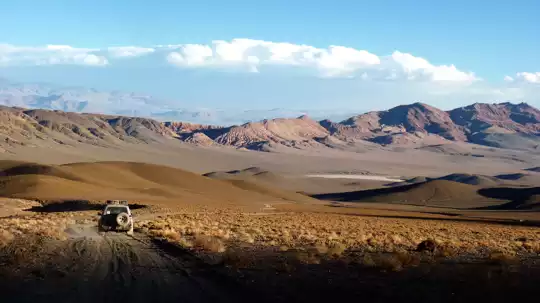
Most guides sell Pan de Azúcar as “pure desert,” but the real shock is how cold and foggy it can be at night, even in high summer, thanks to the coastal camanchaca. The park sits on Chile’s north coast between Antofagasta and Copiapó, where the Atacama hits the Pacific. For backpackers, it’s a low-drama, medium-reward stop: easy coastal hikes, island-view lookouts, foxes and Humboldt penguins if you time the boat trips right, basic camping, and a sleepy fishing-village vibe. It’s cheaper, quieter, and far more relaxed than San Pedro–area parks, but also less spectacular; think slow-burn desert coast, not headline-grabber.

Discover everything you want to know in the 📖 Chile Travel Guide.


Get your Chile guide
119 ranked highlights, routes & tips, works offline (471 pages)
Loading the map 🌍
CLICK TO FILTER
cities
towns
villages
landmarks
national parks
hikes
beaches
attractions
festivals
regions
SHOW COUNTRY’S BESTSHOW ALL

✨ Why go?
Ranked #14 national park in Chile
Why Pan de Azúcar should be on your travel list

Backpackers flock to Pan de Azúcar National Park for its blend of independent exploration and budget-friendly options. You can camp right by the coast or find affordable hostels nearby, making it easy to stretch your funds. The park offers a variety of trails, from coastal paths to rugged hills, catering to different skill levels. This isn’t a place where you need to rely on guided tours; the well-marked trails are perfect for self-guided travelers. You’ll appreciate the freedom to set your own pace and discover hidden spots without the crowd. Just remember, the weather can change quickly, so pack accordingly to keep your adventure smooth and enjoyable.
Want to include Pan de Azúcar National Park in your Chile route?
Create a personalized Chile itinerary that includes Pan de Azúcar National Park and the places that fit your trip — based on your travel style, budget, and available time. Get your route in seconds.

Generate my trip

💡 HighlightsMust-see experiences and standout moments

  • Isla Pan de Azúcar — a small rocky islet off the coast that hosts a colony of Humboldt penguins and a bunch of seabirds; seeing penguins waddling on black volcanic rock with the desert behind them is strangely addictive.
  • Sea lion rookeries and coastal marine life — big, noisy groups of South American sea lions hauled out on the rocks and nearby kelp beds that attract pelicans, cormorants and sometimes dolphins; great for wildlife watching from the shore or a short boat trip.
  • Lomas and desert vegetation — fog-fed green patches (camanchaca) that pop up on slopes, full of hardy shrubs and the iconic Copiapoa cacti; the contrast of green against ochre desert is one of the park’s signature visuals.
  • Dunes, coves and sculpted rock formations — windswept sand dunes and carved cliffs form dramatic
read more 👉
  • Isla Pan de Azúcar — a small rocky islet off the coast that hosts a colony of Humboldt penguins and a bunch of seabirds; seeing penguins waddling on black volcanic rock with the desert behind them is strangely addictive.
  • Sea lion rookeries and coastal marine life — big, noisy groups of South American sea lions hauled out on the rocks and nearby kelp beds that attract pelicans, cormorants and sometimes dolphins; great for wildlife watching from the shore or a short boat trip.
  • Lomas and desert vegetation — fog-fed green patches (camanchaca) that pop up on slopes, full of hardy shrubs and the iconic Copiapoa cacti; the contrast of green against ochre desert is one of the park’s signature visuals.
  • Dunes, coves and sculpted rock formations — windswept sand dunes and carved cliffs form dramatic shapes and quiet beaches — excellent for wandering, photos, and catching the light late in the day.
  • Guanacos and other desert fauna — small herds of guanacos roam the arid hills and you’ll often spot fox tracks, desert birds and shy mammals if you move quietly at dawn or dusk.
  • High coastal viewpoints and hiking trails — short but rewarding hikes that climb to ridgelines where you can look down on the Pacific, the island, and endless desert; my personal favorite for the best “desert-meets-ocean” panoramas and sunset views.
  • Stargazing and solitude — being in the Atacama coastal desert means very dark skies and very few people: bring a blanket and a headlamp, the Milky Way here feels impressively close.
Spotted a mistake or missing something? Contact us.

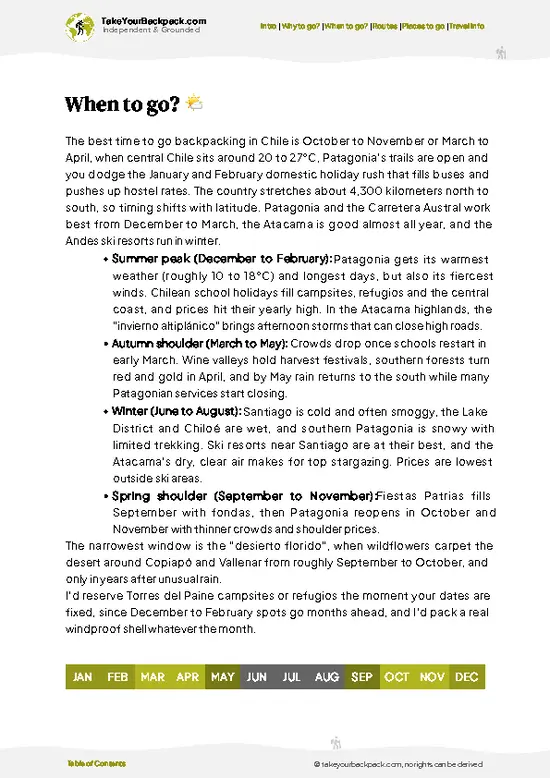
🌤️ When to go?Best time to explore Pan de Azúcar


  • Weather: The best time to visit is during Chile’s spring and fall (September-November and March-May). Summers can scorch with temperatures hitting 30°C (86°F), while winters drop to a chilly 10°C (50°F) or lower, making some trails slippery and less accessible.

  • Temperature: Daytime temps in spring and fall hover between 18-24°C (64-75°F), ideal for hiking without overheating or freezing. Nights can still be cool, so pack layers.

  • Daylight Hours: Spring and fall offer balanced daylight—about 11-13 hours—enough time to cover ground without rushing or risking nightfall on the trail.

  • Crowds: Summer draws local tourists, hiking groups, and weekenders, which can mean crowded campsites and trails. Off-season visits provide more solitude but fewer services.

  • Seasonal Activities: Spring brings
read more 👉

  • Weather: The best time to visit is during Chile’s spring and fall (September-November and March-May). Summers can scorch with temperatures hitting 30°C (86°F), while winters drop to a chilly 10°C (50°F) or lower, making some trails slippery and less accessible.

  • Temperature: Daytime temps in spring and fall hover between 18-24°C (64-75°F), ideal for hiking without overheating or freezing. Nights can still be cool, so pack layers.

  • Daylight Hours: Spring and fall offer balanced daylight—about 11-13 hours—enough time to cover ground without rushing or risking nightfall on the trail.

  • Crowds: Summer draws local tourists, hiking groups, and weekenders, which can mean crowded campsites and trails. Off-season visits provide more solitude but fewer services.

  • Seasonal Activities: Spring brings wildflowers and bird migrations, enhancing the experience. Fall offers clearer skies for stargazing, a highlight here.

  • Price Fluctuations: Expect higher accommodation and transport costs in summer. Visiting shoulder seasons can save you money and hassle.


Pro-tip: Aim for early spring or late fall to dodge the heat, crowds, and inflated prices—your legs and wallet will thank you.


source: climatestotravel.comJANJanuary: fair for travelingFEBFebruary: fair for travelingMARMarch: highly recommended for travelingAPRApril: excellent for travelingMAYMay: highly recommended for travelingJUNJune: fair for travelingJULJuly: below average for travelingAUGAugust: fair for travelingSEPSeptember: highly recommended for travelingOCTOctober: excellent for travelingNOVNovember: highly recommended for travelingDECDecember: fair for traveling
when-to-go

✈️ The backpacker research shortcutChile Travel Guide

An offline-friendly backpacking guide with optimized travel routes, ranked highlights, transport advice, and the best areas to stay.
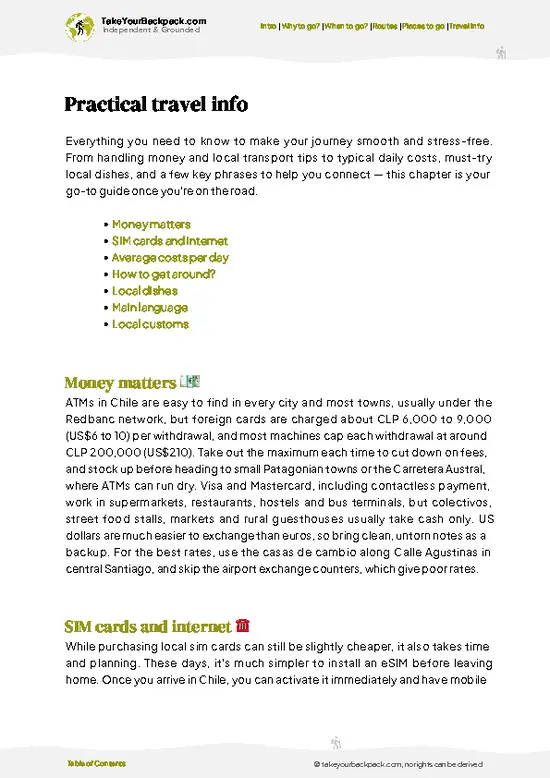
example page 0 from our offline Travel Guide for Chile
example page 1 from our offline Travel Guide for Chile
example page 2 from our offline Travel Guide for Chile
example page 3 from our offline Travel Guide for Chile
example page 4 from our offline Travel Guide for Chile
example page 5 from our offline Travel Guide for Chile
example page 6 from our offline Travel Guide for Chile
example page 7 from our offline Travel Guide for Chile
The digital guide (471 pages) contains:
119 highlights, ranked by travel appeal
Optimized 7, 14 & 21-day travel routes
Cities, national parks, landmarks, beaches
How to get around
Offline-friendly for travel without Wi-Fi
👉 Click to see all 30+ guide features

📅 Plan smarter in minutes, not weeks
Month by month travel advice
Festivals & national holidays
Budget expectations

🗺️ Go to the right places, skip the overrated ones
Honest pros & cons of destinations
Top hikes, parks & viewpoints
Lesser-known places most travelers miss
Clear “worth it vs skip it” guidance

🛏️ Travel smoothly without rookie mistakes
Best areas to stay
Transport systems explained simply
Common scams & safety advice
SIM cards, money & practical tips

🌍 Understand the country, not just visit it
Culture & traditions
52 Essential phrases & customs
Festivals worth planning around
Traveler-friendly historical context
Insights that make places more meaningful

📱 Built for real travel conditions
Fully downloadable PDF
Works completely offline
Optimized for phone use
Useful in remote areas & buses
Everything in one place
Save weeks of stressful planning
Get instant access to your full guide. 30‑day money-back guarantee.


By proceeding you agree to our terms.
Sent to your inbox immediately after payment • 100% Secure Checkout
Best Backpacking Travel Advisor 2025 tourism awardBest Backpacking
Travel Advisor
2025
What others say about Take Your Backpack Guides:
⭐⭐⭐⭐⭐
Fantastic, amazing amount of information!
⭐⭐⭐⭐⭐
My goodness this is amazing, it's what I've been looking for hats off too you!
⭐⭐⭐⭐⭐
I think this is absolutely BRILLIANT
⭐⭐⭐⭐
Very complete and informative. It's still missing places, but I gotta to commend you
⭐⭐⭐⭐⭐
This is truly amazing, thank you, can't wait to explore it with my kids!
⭐⭐⭐⭐⭐
Awesome resource, thank you!
⭐⭐⭐⭐⭐
This is amazing! Can't wait to explore the ones I haven't seen
⭐⭐⭐⭐
I love this! Well done, great idea.
⭐⭐⭐⭐⭐
Thanks for taking the time to make this gem!
⭐⭐⭐⭐⭐
This might be the best website I've ever seen.
⭐⭐⭐⭐⭐
Congratulations, and thank you so much for your work; it's incredibly valuable.
⭐⭐⭐⭐
In all seriousness I think you did a great job pointing out the important spots
⭐⭐⭐⭐⭐
10/10 very good
⭐⭐⭐⭐⭐
As someone who's only just starting to visit regularly this is awesome, thank you.
⭐⭐⭐⭐
Thank you very much! I'm going to visit my dad, it's going to be very useful!
⭐⭐⭐⭐⭐
This is really cool! We'll be travelling for the first time and this definitely come in handy.
⭐⭐⭐⭐⭐
You are now our minister of culture, congratulations 👨‍💼
⭐⭐⭐⭐⭐
Just wanted to tell you that this is a pearl! Going to follow your recommendations.
⭐⭐⭐⭐⭐
This is so cool. I'll definitely be using the resource for my travels soon.
⭐⭐⭐⭐⭐
This is very impressive! Good work.
⭐⭐⭐⭐⭐
This is an amazing and informative site. Very well done!

🛏️ Where to stay?How to pick the right area

Pan de Azúcar National Park offers limited accommodation options within its boundaries. The park itself has a few basic campsites, like Playa La Virgen, where you can pitch a tent and soak in the coastal views. However, facilities are minimal, so come prepared with your own gear and supplies.

For more comfort, consider staying in nearby towns like Chañaral or Bahía Inglesa. Chañaral has budget-friendly hostels and guesthouses, while Bahía Inglesa offers a mix of mid-range hotels and beachside cabanas. Both towns provide easy access to the park and local amenities.

Keep in mind that prices can … read more 👉
Pan de Azúcar National Park offers limited accommodation options within its boundaries. The park itself has a few basic campsites, like Playa La Virgen, where you can pitch a tent and soak in the coastal views. However, facilities are minimal, so come prepared with your own gear and supplies.

For more comfort, consider staying in nearby towns like Chañaral or Bahía Inglesa. Chañaral has budget-friendly hostels and guesthouses, while Bahía Inglesa offers a mix of mid-range hotels and beachside cabanas. Both towns provide easy access to the park and local amenities.

Keep in mind that prices can spike during peak season, so booking ahead is wise. Avoid the temptation to skimp on essentials; a good night’s sleep is crucial for tackling those trails.

👛 Costs (as of 4 January 2026)Money, prices, and spending tips

Visiting Pan de Azúcar National Park in Chile can be a rewarding experience, but it’s essential to be aware of the costs involved to avoid surprises.

Entry fees to the park typically range from $5 to $10 USD per person. This fee grants you access to the park’s trails and stunning coastal views. If you’re planning to camp, expect to pay around $10 to $15 USD per night for a campsite. Facilities are basic, so come prepared.

Transportation can add up quickly. If you’re driving, factor in gas prices, which can be around $4 to $5 USD per gallon. Public transport options are limited, but a bus from nearby towns like Chañaral to the park can cost about $5 USD each way.

Food is another consideration. If you plan to eat in the park, bring your own supplies. There are few options nearby, and prices … read more 👉
Visiting Pan de Azúcar National Park in Chile can be a rewarding experience, but it’s essential to be aware of the costs involved to avoid surprises.

Entry fees to the park typically range from $5 to $10 USD per person. This fee grants you access to the park’s trails and stunning coastal views. If you’re planning to camp, expect to pay around $10 to $15 USD per night for a campsite. Facilities are basic, so come prepared.

Transportation can add up quickly. If you’re driving, factor in gas prices, which can be around $4 to $5 USD per gallon. Public transport options are limited, but a bus from nearby towns like Chañaral to the park can cost about $5 USD each way.

Food is another consideration. If you plan to eat in the park, bring your own supplies. There are few options nearby, and prices can be inflated. A simple meal at a local eatery might set you back $10 to $15 USD.

Lastly, consider any guided tours. These can range from $50 to $100 USD, depending on the length and inclusions. While they can enhance your experience, weigh the cost against your budget and interests.

By keeping these costs in mind, you can preserve your energy and budget for the moments that truly matter in this beautiful national park.


source: conaf.cl
⚠️ Prices can change and everyone travels differently, so take this as a rough guide. Hope it helps you plan your adventure!

🥾 TrailsExploring Pan de Azúcar: trails, terrain, and views

Pan de Azúcar National Park is a hidden gem along the Chilean coast, perfect for those looking to soak in stunning views without breaking the bank. The park features a mix of coastal landscapes and rugged mountains, making it a great spot for hikers of all levels. You’ll encounter diverse wildlife, including guanacos and various bird species, which adds a nice touch to your trek.

One of the standout trails is Sendero a la Playa. Here’s the scoop:
  • Length: 3 km
  • Estimated Duration: 1-2 hours
  • Difficulty Level: Easy
  • Key Features: Gorgeous coastal views, unique rock formations
  • Terrain: Mostly flat with
read more 👉
Pan de Azúcar National Park is a hidden gem along the Chilean coast, perfect for those looking to soak in stunning views without breaking the bank. The park features a mix of coastal landscapes and rugged mountains, making it a great spot for hikers of all levels. You’ll encounter diverse wildlife, including guanacos and various bird species, which adds a nice touch to your trek.

One of the standout trails is Sendero a la Playa. Here’s the scoop:
  • Length: 3 km
  • Estimated Duration: 1-2 hours
  • Difficulty Level: Easy
  • Key Features: Gorgeous coastal views, unique rock formations
  • Terrain: Mostly flat with some sandy sections

Another option is Sendero al Mirador, which offers a bit more challenge:
  • Length: 5 km
  • Estimated Duration: 2-3 hours
  • Difficulty Level: Moderate
  • Key Features: Panoramic views of the coastline and the Andes
  • Terrain: Hilly with rocky paths

Getting to the park is pretty straightforward. You can hop on a bus from La Serena, which takes about an hour and is quite affordable. It’s not usually packed, so you can enjoy the tranquility of nature without feeling like you’re in a crowd. There’s a small entrance fee, but it’s worth it for the stunning scenery and the chance to escape the hustle and bustle of everyday life.
⚠️ Hiking info can sometimes be outdated or inaccurate. Before you hit the trail, check the latest conditions with locals. If you do spot anything that's off, I'd love to hear from you, so I can update it for fellow travelers.

🛡️ SafetySafety Tips and Common Scams in Pan de Azúcar

Pan de Azúcar National Park offers a manageable hiking experience, but a few practical considerations can enhance your adventure. Weather can shift quickly, so pack layers and a reliable rain jacket. The trails are generally well-marked, yet some sections can be steep and rocky; sturdy footwear is essential.

Wildlife encounters are rare but possible. If you spot a guanaco or a fox, keep your distance and don’t feed them. Stay hydrated, especially at higher altitudes, and be mindful of your pace. Most importantly, respect the trails and fellow hikers—leave no trace to preserve the park’s beauty for everyone.

Other Chilean national parks near Pan de Azúcar

Explore more nearby:


💡 Not sure where to go next?
Create a personalized itinerary for Chile including Pan de Azúcar and the places that fit your trip.

Generate my itinerary

👉 Discover all national parks

Or checkout all Chile has to offer (think cities, towns, villages, national parks, hikes, beaches, festivals)
Country photo of Chile

We 💚 feedbackSumming up the experience

Pan de Azúcar National Park is a paradise for those who crave solitude and stunning coastal views. The wildlife is a treat, especially the sea lions. But be prepared: the weather can shift quickly, so pack layers and be ready for anything. Embrace the unpredictability; it’s part of the adventure.

✈️ When did I visit Chile?
I have visited Chile, together with Argentina, in September 2012.

✍️ Help improve this page!
The information on this page is based on my own backpacking experience in Chile, supplemented with up-to-date research and feedback from other travelers. Travel details can change, so if you notice anything outdated or incomplete, feel free to let me know.


🙋‍♂️ Give feedback

👋 Meet the founderWho’s Behind Take Your Backpack?

Johan, backpacker and founder of TakeYourBackpackHi, I’m Johan (Netherlands 🇳🇱), the creator of TakeYourBackpack. Over the past decade, I’ve backpacked through 80+ countries across six continents, gaining extensive experience with independent travel, long-term trips, and overland routes.

This site is built on a combination of firsthand travel experience and carefully curated insights from other backpackers. Many guides are based on places I’ve personally visited, while others bring together tips, observations, and practical advice shared by trusted travelers I’ve met along the way.

The goal is to provide realistic, experience-driven guidance — not generic itineraries — so you can explore destinations with better context, clearer expectations, and more confidence.

Get full Chile guide •
Instant download • 119 highlights • Full Offline guide