×

Chile🇨🇱 | national parksRadal Siete Tazas National ParkBasalt pools, green cascades, Claro River gorge, Molina foothills | things to do and best time to go

Explore Huerquehue National ParkExplore Llanos de Challe National Park

Backpacking in Radal Siete Tazas
👌 Worth visitingnational park ranked #14
By Johan Kruseman 🇳🇱 | Updated October 18, 2026

The park's famous Siete Tazas pools sit along a river that is dammed upstream, and a small hydroelectric plant sometimes alters the flow you see. Radal Siete Tazas National Park lies in Chile's Maule Region, east of the town of Molina, in the Andean foothills. Trails are short and well marked, so first-timers cope easily, though the gravel access road is slow and crowds swell in January and February. On my visit I photographed the trail map at the entrance, which saved me when signal vanished and let me find the Velo de la Novia without wandering. Carry cash for the entrance, because card readers fail here.

Discover everything you want to know in the 📖 Chile Travel Guide.


example page 0 from our offline Travel Guide for Chile
example page 1 from our offline Travel Guide for Chile
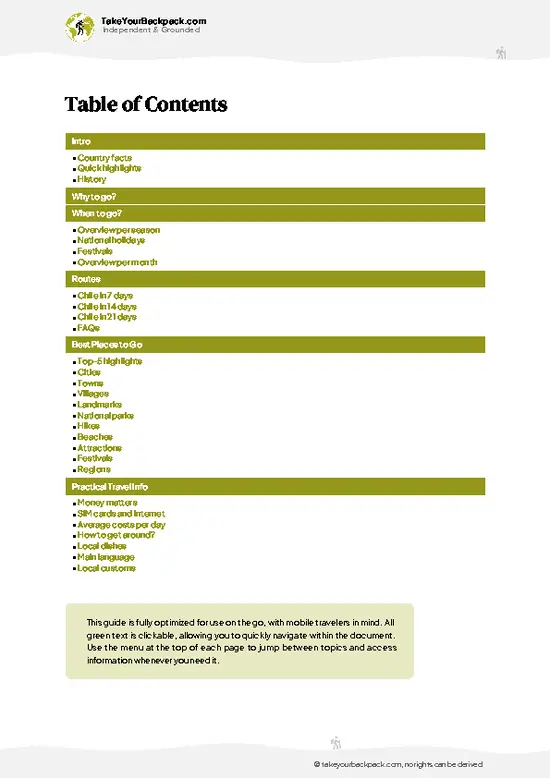
example page 2 from our offline Travel Guide for Chile
example page 3 from our offline Travel Guide for Chile
example page 4 from our offline Travel Guide for Chile
example page 5 from our offline Travel Guide for Chile
example page 6 from our offline Travel Guide for Chile
example page 7 from our offline Travel Guide for Chile
Loading the map 🌍
CLICK TO FILTER
cities
towns
villages
landmarks
national parks
hikes
beaches
attractions
festivals
regions
SHOW COUNTRY’S BESTSHOW ALL

✨ Why go?
Ranked #14 national park in Chile
What makes this national park worth exploring

Radal Siete Tazas National Park suits independent travelers because everything worth seeing sits within a few kilometers of one road, so you can link the sights on foot without paying for a tour. The big draw is the Siete Tazas, a chain of basalt-carved pools linked by waterfalls, which you reach with a short walk from the main parking area. Camping near the river keeps nights cheap, and you cook your own food and keep your own schedule. The park also opens onto the longer Cerro El Fraile and Valle del Indio routes for those who want a full day of solitude, and these quieter paths reward anyone carrying a pack and a map rather than waiting for a guided group.

💡 HighlightsPlaces and moments you shouldn't skip

  1. Siete Tazas: Seven round basalt pools stepping down the Claro River, each fed by a waterfall. The water is a startling green, and the viewing platforms sit right beside the pools.
  2. Salto de la Leona: A tall, thin waterfall that drops into a deep, round basin of the Claro River. A short walk from the road makes it an easy stop.
  3. Velo de la Novia: A narrow waterfall falling about 50 meters over a rock face, reached by a short trail from the Parque Inglés area.
  4. Mirador Cañón del Río Claro: A viewpoint over the narrow basalt gorge the river has cut, showing the formation from above.
  5. Valle del Indio: A longer walk through forest and open slopes toward high-Andean views, quieter than the main sights.
  6. Cerro El Fraile: A demanding climb on the park's high ground that rewards you with wide views over the
… read more 👉
  1. Siete Tazas: Seven round basalt pools stepping down the Claro River, each fed by a waterfall. The water is a startling green, and the viewing platforms sit right beside the pools.
  2. Salto de la Leona: A tall, thin waterfall that drops into a deep, round basin of the Claro River. A short walk from the road makes it an easy stop.
  3. Velo de la Novia: A narrow waterfall falling about 50 meters over a rock face, reached by a short trail from the Parque Inglés area.
  4. Mirador Cañón del Río Claro: A viewpoint over the narrow basalt gorge the river has cut, showing the formation from above.
  5. Valle del Indio: A longer walk through forest and open slopes toward high-Andean views, quieter than the main sights.
  6. Cerro El Fraile: A demanding climb on the park's high ground that rewards you with wide views over the Andean ridgelines.
  7. Parque Inglés: A forested area with picnic spots and a gentle riverside setting, where trails to other waterfalls start.
If time is short, skip Parque Inglés and spend those hours at Siete Tazas and Salto de la Leona.
Spotted a mistake or missing something? Contact us.

Things to do near Radal Siete Tazas National Park

Ratings based on Tripadvisor reviews. When you book through this link, you support our work at no extra cost to you.

🌤️ When to go?Weather, crowds, and seasonal trade-offs

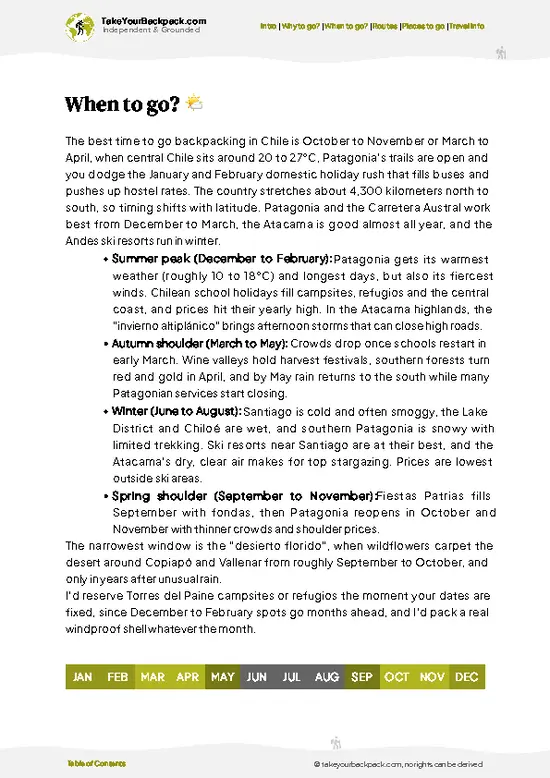
  • Summer (December to February): Warm, dry days of 25 to 32°C (77 to 90°F) and daylight past 9 pm make the Siete Tazas pools ideal for swimming, but weekends and January are packed and lodging prices peak.
  • Autumn (March to May): Highs of 15 to 24°C (59 to 75°F), changing foliage on the lenga and roble forests, thin crowds and lower rates.
  • Winter (June to August): Cold, wet days of 2 to 11°C (36 to 52°F), only about 10 hours of light, and snow or mud can close the road and Cerro El Fraile area trails.
  • Spring (September to November): Meltwater makes waterfalls thunder, with 8 to 20°C (46 to 68°F) and quiet trails.
Book cabins weeks ahead for January, or go midweek in March for easy space and warm-enough pools.

source: climatestotravel.comJANJanuary: excellent for travelingFEBFebruary: excellent for travelingMARMarch: highly recommended for travelingAPRApril: fair for travelingMAYMay: below average for travelingJUNJune: below average for travelingJULJuly: below average for travelingAUGAugust: below average for travelingSEPSeptember: fair for travelingOCTOctober: good for travelingNOVNovember: highly recommended for travelingDECDecember: excellent for traveling
when-to-go

✈️ The backpacker research shortcutChile Travel Guide

An offline-friendly backpacking guide with optimized travel routes, ranked highlights, transport advice, and the best areas to stay.
example page 0 from our offline Travel Guide for Chile
example page 1 from our offline Travel Guide for Chile
example page 2 from our offline Travel Guide for Chile
example page 3 from our offline Travel Guide for Chile
example page 4 from our offline Travel Guide for Chile
example page 5 from our offline Travel Guide for Chile
example page 6 from our offline Travel Guide for Chile
example page 7 from our offline Travel Guide for Chile
The digital guide (333 pages) contains:
✅ 107 highlights, ranked by travel appeal
✅ Optimized 7, 14 & 21-day travel routes
✅ Cities, national parks, landmarks, beaches
✅ How to get around
✅ Offline-friendly for travel without Wi-Fi
👉 Click to see all 30+ guide features

📅 Plan smarter in minutes, not weeks
✅ Month by month travel advice
✅ Festivals & national holidays
✅ Budget expectations

🗺️ Go to the right places, skip the overrated ones
✅ Honest pros & cons of destinations
✅ Top hikes, parks & viewpoints
✅ Lesser-known places most travelers miss
✅ Clear “worth it vs skip it” guidance

🛏️ Travel smoothly without rookie mistakes
✅ Best areas to stay
✅ Transport systems explained simply
✅ Common scams & safety advice
✅ SIM cards, money & practical tips

🌍 Understand the country, not just visit it
✅ Culture & traditions
✅ 52 Essential phrases & customs
✅ Festivals worth planning around
✅ Traveler-friendly historical context
✅ Insights that make places more meaningful

📱 Built for real travel conditions
✅ Fully downloadable PDF
✅ Works completely offline
✅ Optimized for phone use
✅ Useful in remote areas & buses
✅ Everything in one place
Stop searching, start planning
Get instant access to your full guide. 30‑day money-back guarantee.
+ Add another guide for just

By proceeding you agree to our terms.
Sent to your inbox immediately after payment • 100% Secure Checkout
Best Backpacking Travel Advisor 2025 tourism awardBest Backpacking
Travel Advisor
2025
What others say about Take Your Backpack Guides:
⭐⭐⭐⭐⭐
Fantastic, amazing amount of information!
⭐⭐⭐⭐⭐
My goodness this is amazing, it's what I've been looking for hats off too you!
⭐⭐⭐⭐⭐
I think this is absolutely BRILLIANT
⭐⭐⭐⭐
Very complete and informative. It's still missing places, but I gotta to commend you
⭐⭐⭐⭐⭐
This is truly amazing, thank you, can't wait to explore it with my kids!
⭐⭐⭐⭐⭐
Awesome resource, thank you!
⭐⭐⭐⭐⭐
This is amazing! Can't wait to explore the ones I haven't seen
⭐⭐⭐⭐
I love this! Well done, great idea.
⭐⭐⭐⭐⭐
Thanks for taking the time to make this gem!
⭐⭐⭐⭐⭐
This might be the best website I've ever seen.
⭐⭐⭐⭐⭐
Congratulations, and thank you so much for your work; it's incredibly valuable.
⭐⭐⭐⭐
In all seriousness I think you did a great job pointing out the important spots
⭐⭐⭐⭐⭐
10/10 very good
⭐⭐⭐⭐⭐
As someone who's only just starting to visit regularly this is awesome, thank you.
⭐⭐⭐⭐
Thank you very much! I'm going to visit my dad, it's going to be very useful!
⭐⭐⭐⭐⭐
This is really cool! We'll be travelling for the first time and this definitely come in handy.
⭐⭐⭐⭐⭐
You are now our minister of culture, congratulations 👨‍💼
⭐⭐⭐⭐⭐
Just wanted to tell you that this is a pearl! Going to follow your recommendations.
⭐⭐⭐⭐⭐
This is so cool. I'll definitely be using the resource for my travels soon.
⭐⭐⭐⭐⭐
This is very impressive! Good work.
⭐⭐⭐⭐⭐
This is an amazing and informative site. Very well done!

🛏️ Where to stay?Best areas to stay in Chile

Most backpackers sleep in Radal, the small hamlet at the park’s entrance, or in Molina, the nearest town, about 70 km (45 miles) west. Inside the park, the Parque Inglés sector has basic camping, and the Valle del Venado area has a campground with showers and fire pits run by the park concession. Several family-run campsites and rustic cabins line the road near Radal, with dorm-style rooms rare. Camping runs about US$8 to 15 per person, and cabins about US$40 to 90 for a group. Molina has hostels, hospedajes and small hotels, plus supermarkets for stocking up before you head up the valley. Buses … read more 👉
Most backpackers sleep in Radal, the small hamlet at the park’s entrance, or in Molina, the nearest town, about 70 km (45 miles) west. Inside the park, the Parque Inglés sector has basic camping, and the Valle del Venado area has a campground with showers and fire pits run by the park concession. Several family-run campsites and rustic cabins line the road near Radal, with dorm-style rooms rare. Camping runs about US$8 to 15 per person, and cabins about US$40 to 90 for a group. Molina has hostels, hospedajes and small hotels, plus supermarkets for stocking up before you head up the valley. Buses from Molina reach Radal mostly in summer, so check the schedule before choosing between a town base and a camp near the falls.

👛 Costs (as of 18 October 2026)How expensive it really is

Expect to spend roughly US$35 to 65 per day for Radal Siete Tazas National Park, with a high-season total near US$55 using camping or a shared cabin.
CategoryBudget RangeLocal Reality
Entrance feeUS$5 to 9Charged per person at the entrance, with reduced rates for Chilean residents and children.
Accommodation (high season)US$10 to 20Camping is cheapest, with cabins split between several people costing more in January.
Local transportUS$6 to 12Buses or shared rides from Molina to Radal in summer, with fewer options off-season.
Food and suppliesUS$12 to 20Buy groceries in Molina, as the few eateries near the park cost more, and pay in cash.
Activities and extrasUS$2 to 4Most trails are included with entry, and small extras like parking or firewood add up.
Total Daily BudgetUS$35 to 65About US$55 for a typical summer day.


source: chile.travel
⚠️ Prices can change and everyone travels differently, so take this as a rough guide. Hope it helps you plan your adventure!

🥾 TrailsDiscover Radal Siete Tazas's top trails and natural wonders

Radal Siete Tazas National Park offers short, well-marked walks around its waterfalls plus a few longer climbs into the Andes, and most of the terrain is forest path, basalt rock and river gravel.
  • Sendero Siete Tazas: A short walk of under an hour from the parking area to the pools. Easy, with steps and platforms, and the best chance to see the green water up close.
  • Sendero Salto de la Leona: A brief, easy stroll to a waterfall and its round pool. Roughly 30 minutes round trip.
  • Sendero Velo de la Novia: A short forest path of about an hour round trip, easy to moderate, ending at a tall waterfall.
… read more 👉
Radal Siete Tazas National Park offers short, well-marked walks around its waterfalls plus a few longer climbs into the Andes, and most of the terrain is forest path, basalt rock and river gravel.
  • Sendero Siete Tazas: A short walk of under an hour from the parking area to the pools. Easy, with steps and platforms, and the best chance to see the green water up close.
  • Sendero Salto de la Leona: A brief, easy stroll to a waterfall and its round pool. Roughly 30 minutes round trip.
  • Sendero Velo de la Novia: A short forest path of about an hour round trip, easy to moderate, ending at a tall waterfall.
  • Sendero Valle del Indio: A long, moderate to hard route lasting most of a day, crossing forest and open slopes with fewer people.
  • Sendero Cerro El Fraile: A steep, difficult day climb on rough ground, for fit walkers with proper footwear.
Wildlife is modest. Expect birds such as Andean condors overhead and, with luck, foxes or small mammals at dawn. Trails are slippery after rain.
Getting there by public transport means a bus to Molina, then a connecting local service toward Radal that runs mostly in summer, so check schedules. Crowds peak in January and February, while shoulder months are calm. An entrance fee applies, payable in local currency, and it is cheap, around US$5 to 8 for foreigners.
⚠️ Hiking info can sometimes be outdated or inaccurate. Before you hit the trail, check the latest conditions with locals. If you do spot anything that's off, I'd love to hear from you, so I can update it for fellow travelers.

🛡️ SafetyScams, Hazards, and Annoyances

Radal Siete Tazas is straightforward and well managed, with marked trails and park rangers at the main sectors. The main hazards are slippery rock at the waterfalls and pools, so skip jumping into water you haven’t checked for depth and current. Weather shifts fast in the Andean foothills, so bring a rain layer even in summer, and expect snow or ice on the road in winter. Cell signal is patchy, so download maps before you leave Molina. Carry water and sun protection, since the higher trails are exposed. Horseflies appear in midsummer, and repellent helps. Pack out all trash, and keep to the trails to protect the forest.

FAQTraveler FAQ

Two days is enough for Radal Siete Tazas National Park, which lets you see the seven falls at Siete Tazas and walk the Velo de la Novia trail. A third day adds the Parque Inglés and Valle del Venado sectors, or a hike toward Cerro El Fraile. Day visitors from Molina can see the main falls in about 5 to 6 hours, but they will spend roughly 2 hours each way on the road.
Yes, Radal Siete Tazas National Park can be reached without a car, though with limits. In summer, buses run from Molina to Radal (about 2 hours, roughly US$4 to 8), and in the off-season you may need shared taxis or a tour. Once there, the main falls and many trails are walkable from the Radal area, but some sectors lie several kilometers apart.
Yes, Radal Siete Tazas National Park charges an entrance fee of roughly US$5 to 9 per adult, paid at the ranger post, with lower rates for children and Chilean residents. No permit is needed for day hikes on the marked trails. Camping in the park costs extra, usually about US$8 to 15 per person, and payment is in cash or card depending on the sector.
⚠️ Things can change over time, so always validate details locally before you go.

Other Chilean national parks near Radal Siete Tazas

Explore more nearby:


💡 Not sure where to go next?
Create a personalized itinerary for Chile including Radal Siete Tazas and the places that fit your trip.

Generate my itinerary

👉 Discover all national parks

Or checkout all Chile has to offer (think cities, towns, villages, national parks, hikes, beaches, festivals)
Country photo of Chile

We 💚 feedbackParting advice and final tips

Radal Siete Tazas National Park works best as a stop between Talca and the Andean lakes to the south. I would pair it with a night in Molina on the way in, then keep going toward Curicó's wine country. Bring cash and a rain layer.


✈️ When did I visit Chile?
I have visited Chile, together with Argentina, in September 2012.

✍️ Help improve this page!
The information on this page is based on my own backpacking experience in Chile, supplemented with up-to-date research and feedback from other travelers. Travel details can change, so if you notice anything outdated or incomplete, feel free to let me know.


🙋‍♂️ Give feedback

👋 Meet the founderWho’s Behind Take Your Backpack?

Johan, backpacker and founder of TakeYourBackpackHi, I’m Johan (Netherlands 🇳🇱), the creator of TakeYourBackpack. Over the past 3 decades, I’ve backpacked through 90+ countries across six continents, gaining extensive experience with independent travel, long-term trips, and overland routes.

This site is built on a combination of firsthand travel experience and carefully curated insights from other backpackers. Many guides are based on places I’ve personally visited, while others bring together tips, observations, and practical advice shared by trusted travelers I’ve met along the way.

The goal is to provide realistic, experience-driven guidance — not generic itineraries — so you can explore destinations with better context, clearer expectations, and more confidence.