×

Chile🇨🇱 | townsPuerto AysénRiver port, fjord gateway, salmon stalls, Aysén bridge | things to do and best time to go

Explore Licán RayExplore Cascada de las Ánimas

Backpacking in Puerto Aysén
👌 Worth visitingtown ranked #13
By Johan Kruseman 🇳🇱 | Updated October 19, 2026

Puerto Aysén was once the region’s main port, and the old river wharf still carries that memory. Today it is a working town of low houses and fishing and salmon-farm crews, and most travelers pass through on the way elsewhere. It sits in the Aysén Region of Chile, on the Río Aysén near the fjord coast. I’d reach it by bus from Coyhaique, and the road follows the Río Simpson valley, so you get waterfalls and green walls of forest before you arrive. Skip a long stay: sights are few and nights are quiet. It earns an overnight as a cheap base for the fjords and Queulat. Few backpackers stay here, so meeting them is hit or miss. The river bridge at dusk is the best free thing in town.

Discover everything you want to know in the 📖 Chile Travel Guide.


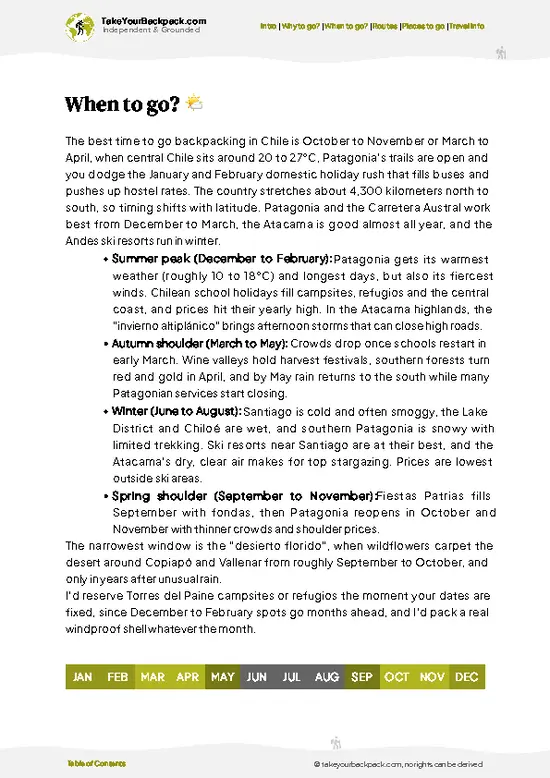
example page 0 from our offline Travel Guide for Chile
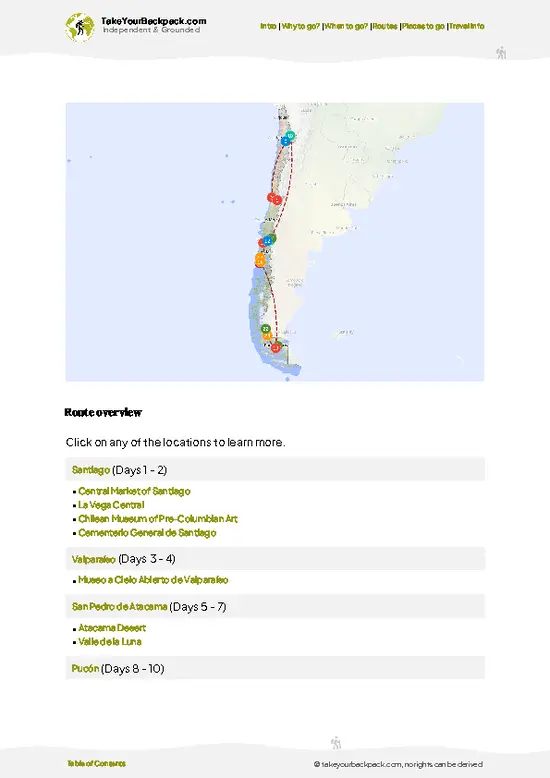
example page 1 from our offline Travel Guide for Chile
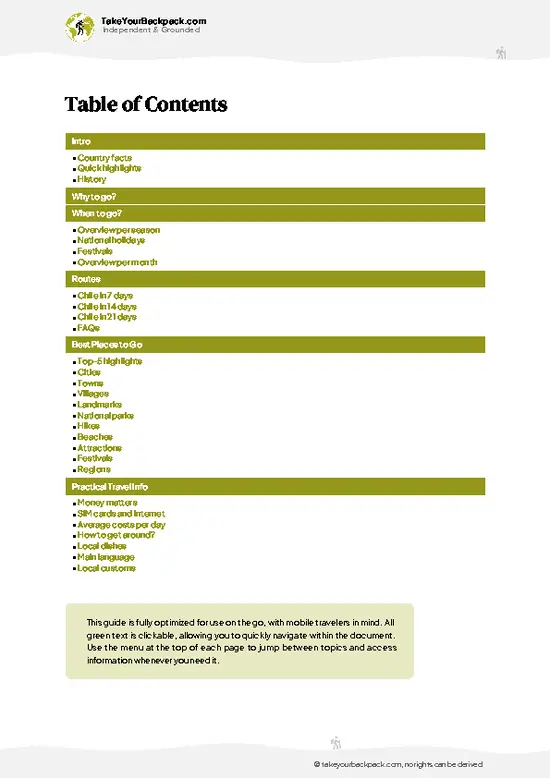
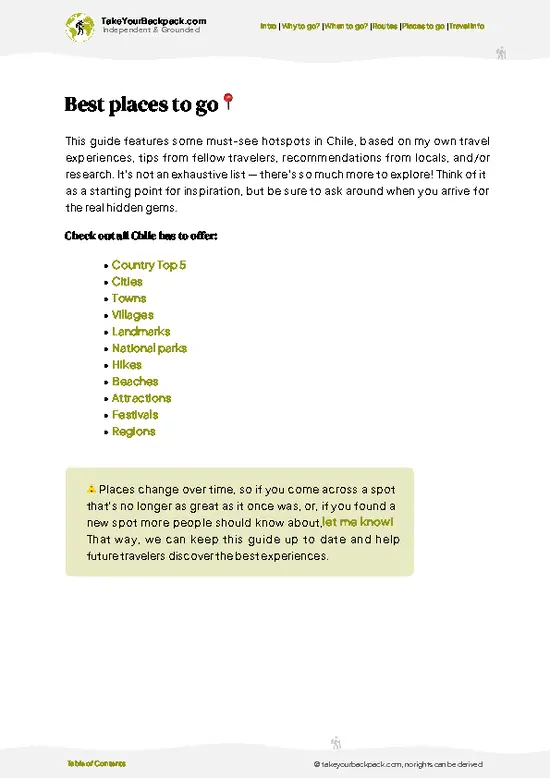
example page 2 from our offline Travel Guide for Chile
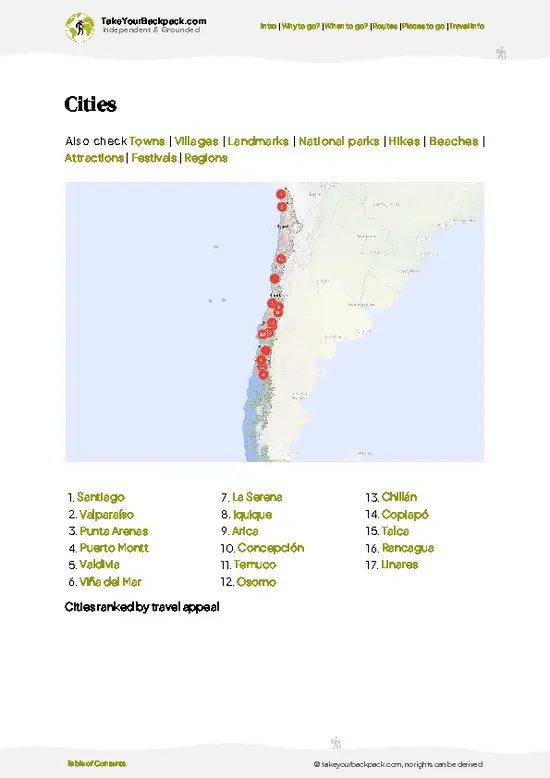
example page 3 from our offline Travel Guide for Chile
example page 4 from our offline Travel Guide for Chile
example page 5 from our offline Travel Guide for Chile
example page 6 from our offline Travel Guide for Chile
example page 7 from our offline Travel Guide for Chile
Loading the map 🌍
CLICK TO FILTER
cities
towns
villages
landmarks
national parks
hikes
beaches
attractions
festivals
regions
SHOW COUNTRY’S BESTSHOW ALL

✨ Why go?
Ranked #13 town in Chile
Why visitors keep coming back

Puerto Aysén makes sense if you want the Carretera Austral without the Coyhaique crowd. It is a low-key working port where hostels are small, family-run residenciales, and the evening scene is a bakery, a plaza bench and a seafood plate. The Río Aysén waterfront is walkable end to end in under an hour, and the Puerto Chacabuco ferry terminal sits close by, which is the real reason many people stop: boats and fjord trips leave from there. Most travelers give it one night, and slow travelers or solo travelers who like talking with locals can stretch it to two. Hikers will find little to climb in town itself but can use it as a rest stop between the Río Simpson reserve and Queulat. If you want nightlife and a hostel crowd, stay in Coyhaique instead.

💡 HighlightsKey sights and experiences for travelers

  1. Plaza de Armas and the Iglesia Parroquial: The small main square is the natural start, with the simple town church, benches and a few cafés around it. It is not a monument that will keep you busy, but it shows how a working river town spends its afternoons. Free, 30 minutes. Late morning or late afternoon is calmer.
  2. Costanera and the Río Aysén waterfront: A flat walk along the river where the Aysén meets the fjord system, with fishing boats, cormorants and mountains closing the horizon. It is the easiest place to read the town’s geography. Free, 45 to 60 minutes. Go at the end of the day when the wind drops.
  3. Muelle Puerto Chacabuco viewpoint area: The port at Puerto Chacabuco, a short drive west, is where ferries and cruise ships dock, but the walk along the water there gives wide fjord views.
… read more 👉
  1. Plaza de Armas and the Iglesia Parroquial: The small main square is the natural start, with the simple town church, benches and a few cafés around it. It is not a monument that will keep you busy, but it shows how a working river town spends its afternoons. Free, 30 minutes. Late morning or late afternoon is calmer.
  2. Costanera and the Río Aysén waterfront: A flat walk along the river where the Aysén meets the fjord system, with fishing boats, cormorants and mountains closing the horizon. It is the easiest place to read the town’s geography. Free, 45 to 60 minutes. Go at the end of the day when the wind drops.
  3. Muelle Puerto Chacabuco viewpoint area: The port at Puerto Chacabuco, a short drive west, is where ferries and cruise ships dock, but the walk along the water there gives wide fjord views. Free, about 1 hour. Morning gives the clearest views.
  4. Feria and local fish counters: Small stalls and shops sell fresh salmon, hake and shellfish, plus local preserves and honey. Buying a cheap empanada or a piece of smoked fish makes a picnic for the road. Expect US$3 to 8 for a snack or lunch, 30 to 45 minutes. Mornings have the best choice.
  5. Puente Presidente Ibáñez area and river views: The bridge and riverbanks give a fine look at the broad, silty river, with forested ridges behind. Free, 30 minutes. Late afternoon light is soft and the traffic is light.
Puerto Aysén also serves as a launch point for day trips to Puerto Chacabuco, the Aysén fjord, Parque Nacional Laguna San Rafael access via boat from Chacabuco, and Reserva Nacional Río Simpson.
Spotted a mistake or missing something? Contact us.

Things to do near Puerto Aysén

Ratings based on Tripadvisor reviews. When you book through this link, you support our work at no extra cost to you.

🏘️ NeighborhoodsNeighborhood guide to Puerto Aysén

Puerto Aysén is small enough to cover on foot in an afternoon, and the useful split is between the old river port and the town center. The town sits on the Río Aysén floodplain, so everything is flat and close together.
  • Centro and Plaza de Armas: The place to spend most of your time. Bakeries, small restaurants serving fried fish and lamb, supermarkets, ATMs and the bus offices cluster within a few blocks. Quiet after 10 pm, which suits the town’s fishing-and-salmon-industry rhythm.
  • Costanera and the river: Worth an hour at the waterfront, where the Río Aysén widens and fishing boats work the channel. Good for a slow evening walk, with little else to do there.
  • Puerto Chacabuco side: Not a neighborhood but a port 15 km west, where ferries and cruise ships dock. Skip it unless you are catching
… read more 👉
Puerto Aysén is small enough to cover on foot in an afternoon, and the useful split is between the old river port and the town center. The town sits on the Río Aysén floodplain, so everything is flat and close together.
  • Centro and Plaza de Armas: The place to spend most of your time. Bakeries, small restaurants serving fried fish and lamb, supermarkets, ATMs and the bus offices cluster within a few blocks. Quiet after 10 pm, which suits the town’s fishing-and-salmon-industry rhythm.
  • Costanera and the river: Worth an hour at the waterfront, where the Río Aysén widens and fishing boats work the channel. Good for a slow evening walk, with little else to do there.
  • Puerto Chacabuco side: Not a neighborhood but a port 15 km west, where ferries and cruise ships dock. Skip it unless you are catching a boat; there is almost nothing to see.
  • Outskirts and Río Blanco side: Residential and spread out. Not worth exploring, since the draw here is the surrounding fjords and forest rather than the suburbs.

⌛️ 1 dayHow to make the most of one day

8:30 AM, Bakery near the Plaza de Armas: Start with fresh bread, coffee and an empanada from a local bakery, then walk a few blocks to the square to watch the town wake up.
10:00 AM, Costanera and old waterfront: Follow the riverside path past fishing boats and the old port area. This is the best place to understand why the town was founded here. Take your time.
12:00 PM, Puente Presidente Ibáñez: Walk to the bridge and cross on foot for broad river and mountain views. It takes less than an hour, including photos, and then you can walk back along the opposite bank.
1:30 PM, Seafood lunch: Choose a small family restaurant for salmon, hake or a bowl of seafood stew. Lunch is the main meal here, and portions are generous.
3:30 PM, Quiet riverbank edge of town: Head away from the main streets to a … read more 👉
8:30 AM, Bakery near the Plaza de Armas: Start with fresh bread, coffee and an empanada from a local bakery, then walk a few blocks to the square to watch the town wake up.
10:00 AM, Costanera and old waterfront: Follow the riverside path past fishing boats and the old port area. This is the best place to understand why the town was founded here. Take your time.
12:00 PM, Puente Presidente Ibáñez: Walk to the bridge and cross on foot for broad river and mountain views. It takes less than an hour, including photos, and then you can walk back along the opposite bank.
1:30 PM, Seafood lunch: Choose a small family restaurant for salmon, hake or a bowl of seafood stew. Lunch is the main meal here, and portions are generous.
3:30 PM, Quiet riverbank edge of town: Head away from the main streets to a quieter stretch of riverbank, where locals fish and the town noise fades. Few visitors ever come here, and it is a good place to rest.
6:00 PM, Plaza de Armas: Return to the square as the day cools, sit on a bench and watch families pass. Finish with an early dinner and a slow walk to your guesthouse.

🌤️ When to go?Best time to visit Puerto Aysén

December to February is the easiest window, with daytime highs around 15 to 20°C (59 to 68°F) and daylight stretching past 15 hours.
  • Summer (Dec to Feb): Driest and warmest, but Aysén is a wet region and rain still comes. Tour operators run full schedules, and Carretera Austral buses and rooms fill up, with prices at their peak.
  • Autumn (Mar to May): Cooler at 6 to 14°C (43 to 57°F), cheaper, and quieter, with rainier days.
  • Winter (Jun to Aug): Cold and wet at 0 to 7°C (32 to 45°F), with about 8 hours of daylight. Many tours and some services close.
  • Spring (Sep to Nov): Changeable, with budget rates and services reopening.
Book Carretera Austral transport a few days ahead in January.

source: climatestotravel.comJANJanuary: excellent for travelingFEBFebruary: excellent for travelingMARMarch: highly recommended for travelingAPRApril: highly recommended for travelingMAYMay: good for travelingJUNJune: fair for travelingJULJuly: fair for travelingAUGAugust: fair for travelingSEPSeptember: good for travelingOCTOctober: highly recommended for travelingNOVNovember: highly recommended for travelingDECDecember: excellent for traveling
when-to-go

✈️ The backpacker research shortcutChile Travel Guide

An offline-friendly backpacking guide with optimized travel routes, ranked highlights, transport advice, and the best areas to stay.
example page 0 from our offline Travel Guide for Chile
example page 1 from our offline Travel Guide for Chile
example page 2 from our offline Travel Guide for Chile
example page 3 from our offline Travel Guide for Chile
example page 4 from our offline Travel Guide for Chile
example page 5 from our offline Travel Guide for Chile
example page 6 from our offline Travel Guide for Chile
example page 7 from our offline Travel Guide for Chile
The digital guide (333 pages) contains:
✅ 107 highlights, ranked by travel appeal
✅ Optimized 7, 14 & 21-day travel routes
✅ Cities, national parks, landmarks, beaches
✅ How to get around
✅ Offline-friendly for travel without Wi-Fi
👉 Click to see all 30+ guide features

📅 Plan smarter in minutes, not weeks
✅ Month by month travel advice
✅ Festivals & national holidays
✅ Budget expectations

🗺️ Go to the right places, skip the overrated ones
✅ Honest pros & cons of destinations
✅ Top hikes, parks & viewpoints
✅ Lesser-known places most travelers miss
✅ Clear “worth it vs skip it” guidance

🛏️ Travel smoothly without rookie mistakes
✅ Best areas to stay
✅ Transport systems explained simply
✅ Common scams & safety advice
✅ SIM cards, money & practical tips

🌍 Understand the country, not just visit it
✅ Culture & traditions
✅ 52 Essential phrases & customs
✅ Festivals worth planning around
✅ Traveler-friendly historical context
✅ Insights that make places more meaningful

📱 Built for real travel conditions
✅ Fully downloadable PDF
✅ Works completely offline
✅ Optimized for phone use
✅ Useful in remote areas & buses
✅ Everything in one place
Stop searching, start planning
Get instant access to your full guide. 30‑day money-back guarantee.
+ Add another guide for just

By proceeding you agree to our terms.
Sent to your inbox immediately after payment • 100% Secure Checkout
Best Backpacking Travel Advisor 2025 tourism awardBest Backpacking
Travel Advisor
2025
What others say about Take Your Backpack Guides:
⭐⭐⭐⭐⭐
Fantastic, amazing amount of information!
⭐⭐⭐⭐⭐
My goodness this is amazing, it's what I've been looking for hats off too you!
⭐⭐⭐⭐⭐
I think this is absolutely BRILLIANT
⭐⭐⭐⭐
Very complete and informative. It's still missing places, but I gotta to commend you
⭐⭐⭐⭐⭐
This is truly amazing, thank you, can't wait to explore it with my kids!
⭐⭐⭐⭐⭐
Awesome resource, thank you!
⭐⭐⭐⭐⭐
This is amazing! Can't wait to explore the ones I haven't seen
⭐⭐⭐⭐
I love this! Well done, great idea.
⭐⭐⭐⭐⭐
Thanks for taking the time to make this gem!
⭐⭐⭐⭐⭐
This might be the best website I've ever seen.
⭐⭐⭐⭐⭐
Congratulations, and thank you so much for your work; it's incredibly valuable.
⭐⭐⭐⭐
In all seriousness I think you did a great job pointing out the important spots
⭐⭐⭐⭐⭐
10/10 very good
⭐⭐⭐⭐⭐
As someone who's only just starting to visit regularly this is awesome, thank you.
⭐⭐⭐⭐
Thank you very much! I'm going to visit my dad, it's going to be very useful!
⭐⭐⭐⭐⭐
This is really cool! We'll be travelling for the first time and this definitely come in handy.
⭐⭐⭐⭐⭐
You are now our minister of culture, congratulations 👨‍💼
⭐⭐⭐⭐⭐
Just wanted to tell you that this is a pearl! Going to follow your recommendations.
⭐⭐⭐⭐⭐
This is so cool. I'll definitely be using the resource for my travels soon.
⭐⭐⭐⭐⭐
This is very impressive! Good work.
⭐⭐⭐⭐⭐
This is an amazing and informative site. Very well done!

🛏️ Where to stay?How to pick the right area

The center around the Plaza de Armas is the best place to sleep, because it keeps you within a ten-minute walk of the bus offices, supermarkets and restaurants. Budget beds in Puerto Aysén are limited to a handful of hospedajes, residenciales and a few guesthouses, with shared bathrooms and private rooms generally costing US$20 to 40 a night. Real hostel dorms are scarce, so book ahead in January and February.

The center is quiet and safe at night, with only occasional noise from a late bar. Staying near the waterfront is also fine and calmer still, though restaurants are a bit farther away. … read more 👉
The center around the Plaza de Armas is the best place to sleep, because it keeps you within a ten-minute walk of the bus offices, supermarkets and restaurants. Budget beds in Puerto Aysén are limited to a handful of hospedajes, residenciales and a few guesthouses, with shared bathrooms and private rooms generally costing US$20 to 40 a night. Real hostel dorms are scarce, so book ahead in January and February.

The center is quiet and safe at night, with only occasional noise from a late bar. Staying near the waterfront is also fine and calmer still, though restaurants are a bit farther away. Many backpackers sleep in Coyhaique instead, since it has more dorms and much better transport links, and visit Puerto Aysén as a day trip.

🚌 Getting aroundTransportation options and practical tips

Plan on staying in Puerto Aysén only briefly, because the mistake that costs the most is assuming the town has the long-distance links of a regional hub. It does not; most onward buses run from nearby Coyhaique, about 65 km east, so check departure times before arriving late in the day. Within town everything is flat and compact, and traffic is light, so you rarely need a vehicle.
  • Walking: Free and the best choice. You can cross the center in 15 to 20 minutes, and rain gear matters more than shoes.
  • Colectivos and local taxis: Shared cars for short hops cost roughly US$1 to 2 per seat, and private taxis within town US$3 to 5. Worth using at night or in heavy rain, and to reach Puerto Chacabuco for about US$6 to 10 by taxi.
  • Buses to Coyhaique: Frequent minibuses and buses run during the day for
… read more 👉
Plan on staying in Puerto Aysén only briefly, because the mistake that costs the most is assuming the town has the long-distance links of a regional hub. It does not; most onward buses run from nearby Coyhaique, about 65 km east, so check departure times before arriving late in the day. Within town everything is flat and compact, and traffic is light, so you rarely need a vehicle.
  • Walking: Free and the best choice. You can cross the center in 15 to 20 minutes, and rain gear matters more than shoes.
  • Colectivos and local taxis: Shared cars for short hops cost roughly US$1 to 2 per seat, and private taxis within town US$3 to 5. Worth using at night or in heavy rain, and to reach Puerto Chacabuco for about US$6 to 10 by taxi.
  • Buses to Coyhaique: Frequent minibuses and buses run during the day for about US$3 to 5 and take 1 to 1.5 hours. This is the connection that matters most, and the last departures leave in the early evening, so do not leave it late.
  • Ferries from Puerto Chacabuco: Long-distance ferries toward Puerto Montt and the Laguna San Rafael area are costly (from about US$40 up to hundreds, depending on route and cabin) and need advance booking. Worth it only if you want the fjord route and have the budget.

👛 Costs (as of 19 October 2026)What things cost and how to budget

A backpacker in Puerto Aysén spends about US$47 to 80 a day in high season, and the region is pricier than northern Chile because of its remoteness.
CategoryBudget RangeLocal Reality
Dorm accommodationUS$20 to 30Few true dorms; expect a basic hospedaje room with shared bath
MealsUS$15 to 25Set lunch menu around US$8 to 12, bakery breakfast, self-catering dinner
Local transportUS$3 to 8Colectivos and buses; Coyhaique return about US$6 to 10
Basic activities/entry feesUS$5 to 10Reserva Río Simpson and waterfront walks are cheap or free
Miscellaneous expensesUS$4 to 7Snacks, laundry, SIM top-up
Total Daily BudgetUS$47 to 80About US$70 to 75 in high season
Buy lunch as the set menu and cook dinner from supermarket groceries to keep food costs low.

source: chile.travel
⚠️ Prices can change and everyone travels differently, so take this as a rough guide. Hope it helps you plan your adventure!

🚌 Day tripsWhere to go beyond the main area

Puerto Aysén works as a modest base, since buses to Coyhaique and Puerto Chacabuco make most outings possible in a day, though connections thin out in winter.
Coyhaique: The regional capital is 1 to 1.5 hours away by bus for US$3 to 5. It has the best shops, ATMs, hostels and onward transport, so first-timers should go early to avoid missing evening return buses.
👉 Explore Coyhaique
Puerto Chacabuco: A short 15 km hop along the fjord, by taxi for about US$6 to 10 or by colectivo for less. The point is the ferry terminal and waterside views, and a half day is plenty. Go when ferries or cruise ships are in for some life on the pier.

Parque Nacional Laguna San Rafael: Reaching the glacier lagoon normally means a boat or flight and costs several hundred dollars, so it is a splurge rather than a … read more 👉
Puerto Aysén works as a modest base, since buses to Coyhaique and Puerto Chacabuco make most outings possible in a day, though connections thin out in winter.
Coyhaique: The regional capital is 1 to 1.5 hours away by bus for US$3 to 5. It has the best shops, ATMs, hostels and onward transport, so first-timers should go early to avoid missing evening return buses.
👉 Explore Coyhaique
Puerto Chacabuco: A short 15 km hop along the fjord, by taxi for about US$6 to 10 or by colectivo for less. The point is the ferry terminal and waterside views, and a half day is plenty. Go when ferries or cruise ships are in for some life on the pier.

Parque Nacional Laguna San Rafael: Reaching the glacier lagoon normally means a boat or flight and costs several hundred dollars, so it is a splurge rather than a casual day trip. Boat trips are best from December to March, and you should book well ahead.

Reserva Nacional Río Simpson: Waterfalls and forest trails lie along the road toward Coyhaique, about 30 to 45 minutes from town. Ask the bus driver to drop you at the entrance, budget US$2 to 8 including entry, and bring rain gear in any season.

🛡️ SafetyTraveler Safety Guide

Puerto Aysén is a calm, low-crime town where the main trouble is weather rather than people. Petty theft is uncommon, but keep your bag zipped and out of sight on the waterfront and at bus stops. Solo travelers, including women, can walk the center at night comfortably, though streets empty early and are poorly lit toward the edges, so take a taxi after dark in rain. No established scams target visitors. The real annoyances are unpredictable rain, wind and occasional stray dogs, so carry a proper waterproof layer and give dogs space rather than running.

FAQFrequently asked questions about Puerto Aysén

Puerto Aysén is mostly a stopover, useful for the river, the fjord ferry at nearby Puerto Chacabuco and the Río Simpson reserve, but short on sights of its own. Most backpackers pass through on the way along the Carretera Austral or toward Laguna San Rafael. Coyhaique, 65 km east, offers more to do and cheaper dorm beds.
Puerto Aysén needs half a day to one day on its own, enough to walk the center and riverfront. Add a second day if you want the Río Simpson reserve (30 to 45 minutes away) or are timing a ferry from Puerto Chacabuco. Anything beyond that is better spent in the wider Aysén region.
Yes, Puerto Aysén is an easy day trip from Coyhaique, about 65 km away. Buses and minibuses take 1 to 1.5 hours and cost US$3 to 5 each way, and the last return departures leave in the early evening. Start early so you have a few hours in town and do not miss the ride back.
⚠️ Things can change over time, so always validate details locally before you go.

Other Chilean towns near Puerto Aysén

Explore more nearby:

  • Coyhaique—Pentagon plaza, lenga reserve, Simpson River rock, regional supplies| 52 km away
  • Cochrane—Carretera Austral base, turquoise lake, pioneer museum, riverside path| 206 km away
  • Quellón—Road’s end sign, fishing port, sea lions, curanto stalls| 265 km away

💡 Not sure where to go next?
Create a personalized itinerary for Chile including Puerto Aysén and the places that fit your trip.

Generate my itinerary

👉 Discover all towns

Or checkout all Chile has to offer (think cities, towns, villages, national parks, hikes, beaches, festivals)
Country photo of Chile

We 💚 feedbackFinal thoughts on visiting Puerto Aysén

Puerto Aysén suits slow travelers, solo wanderers and anyone who likes working ports more than polished postcards. It is not a place to stay for a week. I would give it one night, eat the local seafood, and use it to reach the fjords.

✈️ When did I visit Chile?
I have visited Chile, together with Argentina, in September 2012.

✍️ Help improve this page!
The information on this page is based on my own backpacking experience in Chile, supplemented with up-to-date research and feedback from other travelers. Travel details can change, so if you notice anything outdated or incomplete, feel free to let me know.


🙋‍♂️ Give feedback

👋 Meet the founderWho’s Behind Take Your Backpack?

Johan, backpacker and founder of TakeYourBackpackHi, I’m Johan (Netherlands 🇳🇱), the creator of TakeYourBackpack. Over the past 3 decades, I’ve backpacked through 90+ countries across six continents, gaining extensive experience with independent travel, long-term trips, and overland routes.

This site is built on a combination of firsthand travel experience and carefully curated insights from other backpackers. Many guides are based on places I’ve personally visited, while others bring together tips, observations, and practical advice shared by trusted travelers I’ve met along the way.

The goal is to provide realistic, experience-driven guidance — not generic itineraries — so you can explore destinations with better context, clearer expectations, and more confidence.