

×

China🇨🇳 | hikesYellow Mountainsgranite spires, pine forests, sea of clouds | things to do and best time to go

Explore Tiger Leaping GorgeExplore Yubeng Village Trek

Backpacking in Yellow Mountains
🏆 Top pickhike ranked #2
By Johan Kruseman 🇳🇱 | Updated September 4, 2026

Your calves burn on the last stone stair, damp shirt sticking to your back, when the mist finally tears open and a jagged granite peak punches through the clouds like a ship’s prow. Pine needles smell sharp in the cool air, your hands are gritty from the railings, and somewhere below a porter’s bamboo pole clacks against the steps in a steady, brutal rhythm. This is Huangshan, the Yellow Mountains, in southern Anhui province in eastern China. The classic routes are steep but short-ish—half-day to full-day pushes on carved stairs—so the effort hits hard and fast. Scenery is outrageous: sea-of-clouds, twisted pines, sheer cliffs, but crowds and concrete steps kill any illusion of wilderness. It’s easy to reach by train or bus from Shanghai or Hangzhou, much simpler than many Yunnan or Sichuan treks, but also more built-up and less wild. You trade solitude for drama and access, and honestly, it’s usually worth that trade.

Discover everything you want to know in the 📖 China Travel Guide.
Best time to go: March - June, September - November
Duration: 2 to 3 days
Distance: 15 to 20 kilometers
Total ascent: 1,300 meters


Get your China guide
130 ranked highlights, routes & tips, works offline (463 pages)
Loading the map 🌍
CLICK TO FILTER
cities
towns
landmarks
national parks
hikes
beaches
attractions
festivals
regions
SHOW COUNTRY’S BESTSHOW ALL

✨ Why go?
Ranked #2 hike in China
What makes it a must-see hike

The Yellow Mountains in China are a backpacker’s dream, blending breathtaking scenery with a manageable challenge. The effort-to-reward ratio is off the charts; every steep ascent leads to jagged peaks that pierce the sky, and the views? They’ll make your heart race.

Getting there is a breeze. Public transport whisks you from nearby towns to the park entrance, making it easy to slot this hike into your itinerary. Once you’re on the trail, you can choose your own adventure. Whether you tackle the full circuit or opt for shorter routes, the flexibility allows you to pace yourself.

And let’s talk cost—this hike won’t break the bank. Entrance fees are reasonable, and the local food is both delicious and cheap. After a day of climbing, nothing beats that first cold beer at a mountain lodge, … read more 👉
The Yellow Mountains in China are a backpacker’s dream, blending breathtaking scenery with a manageable challenge. The effort-to-reward ratio is off the charts; every steep ascent leads to jagged peaks that pierce the sky, and the views? They’ll make your heart race.

Getting there is a breeze. Public transport whisks you from nearby towns to the park entrance, making it easy to slot this hike into your itinerary. Once you’re on the trail, you can choose your own adventure. Whether you tackle the full circuit or opt for shorter routes, the flexibility allows you to pace yourself.

And let’s talk cost—this hike won’t break the bank. Entrance fees are reasonable, and the local food is both delicious and cheap. After a day of climbing, nothing beats that first cold beer at a mountain lodge, the taste of victory mingling with the crisp air.

The Yellow Mountains fit seamlessly into a longer backpacking route through China, offering a perfect blend of challenge and reward. You’ll leave with stories etched in your memory and a sense of accomplishment that’s hard to beat.
Want to include Yellow Mountains in your China route?
Create a personalized China itinerary that includes Yellow Mountains and the places that fit your trip — based on your travel style, budget, and available time. Get your route in seconds.

Generate my trip

💡 HighlightsKey sights and experiences for travelers

  • Sunrise from Bright Summit (Guangming Ding) — There’s a reason everyone drags themselves up before dawn: the light slices across granite spires and the peaks burn orange while the valleys sit dark. It’s a short, sometimes crowded scramble for an absolutely classic Huangshan moment; go early and pick a quieter ledge if you can.
  • Sea of Clouds — The mountain vanishes into a rolling ocean of mist, with jagged granite islands poking out like shipwrecks. It’s weather-dependent, wonderfully photogenic, and what makes Huangshan feel less like a hike and more like walking through a painting. Check forecasts and aim for post-front mornings for the best chances.
  • Welcoming-Guest Pine (Ying Ke Song) — That gnarled, windswept pine clinging to a cliff is Huangshan’s mascot. Small but insanely photogenic,
read more 👉
  • Sunrise from Bright Summit (Guangming Ding) — There’s a reason everyone drags themselves up before dawn: the light slices across granite spires and the peaks burn orange while the valleys sit dark. It’s a short, sometimes crowded scramble for an absolutely classic Huangshan moment; go early and pick a quieter ledge if you can.
  • Sea of Clouds — The mountain vanishes into a rolling ocean of mist, with jagged granite islands poking out like shipwrecks. It’s weather-dependent, wonderfully photogenic, and what makes Huangshan feel less like a hike and more like walking through a painting. Check forecasts and aim for post-front mornings for the best chances.
  • Welcoming-Guest Pine (Ying Ke Song) — That gnarled, windswept pine clinging to a cliff is Huangshan’s mascot. Small but insanely photogenic, it’s a cultural icon — postcards, ink paintings, the whole deal — and an easy stop that screws up fewer plans than it breaks hearts.
  • West Sea Grand Canyon (Xihai Dagu Canyon) — Steep steps, narrow ridges, dramatic drop-offs and way fewer selfie sticks. This is the most “real hike” on Huangshan: wild rock formations, deep ravines and long viewpoints. (Personal favorite — more space to breathe and better lines of sight than the main peaks.)
  • Lotus Peak (Lianhua Feng) — The highest summit on Huangshan, and also the most demanding if you go on foot. Expect lung-burning staircases, close-up granite sculptures (hello, Flying-over Rock), and a 360° reward at the top. If you want perspective on the whole massif, this is the one.
Spotted a mistake or missing something? Contact us.

Things to do around Yellow Mountains

Ratings based on Tripadvisor reviews. When you book through this link, you support our work at no extra cost to you.

🌤️ When to go?Seasonal considerations and timing


  • Weather: Spring (April to June) and autumn (September to November) bring the most stable weather. Expect crisp air and clear skies, perfect for tackling the rugged granite peaks without the soggy slog of summer rains or the icy grip of winter.

  • Temperature: Spring highs hover around 15-22°C (59-72°F), dipping to chilly lows at night. Autumn cools down to 10-18°C (50-64°F), with mornings that bite but afternoons that warm your bones. Summer can scorch above 30°C (86°F), while winter plunges below freezing, often with snow and ice.

  • Daylight Hours: Spring and autumn offer balanced daylight—roughly 10 to 12 hours—enough to push hard on trails without rushing, but not so long that you lose track of time and risk nightfall on the rocks.

  • Crowds: Peak summer and Chinese national holidays pack
read more 👉

  • Weather: Spring (April to June) and autumn (September to November) bring the most stable weather. Expect crisp air and clear skies, perfect for tackling the rugged granite peaks without the soggy slog of summer rains or the icy grip of winter.

  • Temperature: Spring highs hover around 15-22°C (59-72°F), dipping to chilly lows at night. Autumn cools down to 10-18°C (50-64°F), with mornings that bite but afternoons that warm your bones. Summer can scorch above 30°C (86°F), while winter plunges below freezing, often with snow and ice.

  • Daylight Hours: Spring and autumn offer balanced daylight—roughly 10 to 12 hours—enough to push hard on trails without rushing, but not so long that you lose track of time and risk nightfall on the rocks.

  • Crowds: Peak summer and Chinese national holidays pack the trails with tourists and selfie sticks. Spring and autumn weekdays are your best bet for solitude and a more authentic grind.

  • Seasonal Activities: Autumn paints the mountains in fiery reds and golds, a visual payoff that makes the climb worth every bead of sweat. Spring bursts with wildflowers and fresh greenery, adding a sensory layer to the trek.

  • Price Fluctuations: Expect higher accommodation and transport costs during summer and major holidays. Shoulder seasons like late spring and early autumn offer better deals without sacrificing the experience.


Pro-tip: Hit the Yellow Mountains in early October—cool temps, fewer crowds, and the fall colors explode, turning every summit into a reward that punches way above the effort.


source: climatestotravel.comJANJanuary: below average for travelingFEBFebruary: below average for travelingMARMarch: good for travelingAPRApril: highly recommended for travelingMAYMay: excellent for travelingJUNJune: highly recommended for travelingJULJuly: fair for travelingAUGAugust: fair for travelingSEPSeptember: highly recommended for travelingOCTOctober: excellent for travelingNOVNovember: highly recommended for travelingDECDecember: fair for traveling
when-to-go

✈️ The backpacker research shortcutChina Travel Guide

An offline-friendly backpacking guide with optimized travel routes, ranked highlights, transport advice, and the best areas to stay.
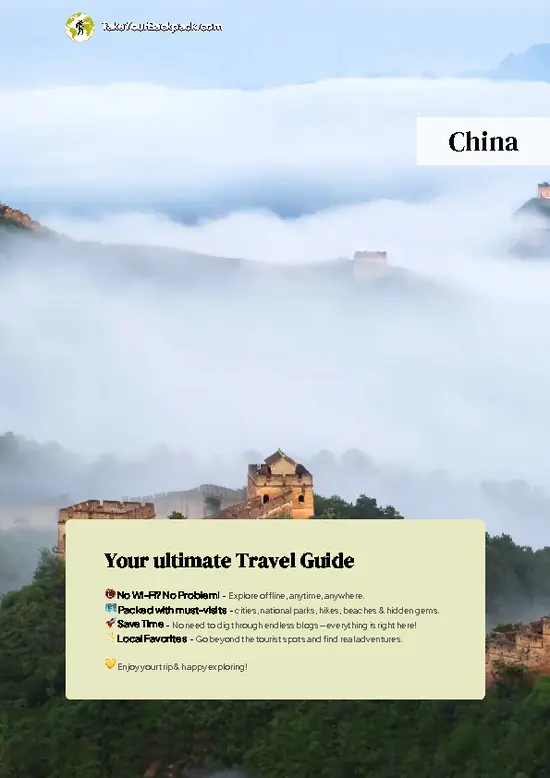
example page 0 from our offline Travel Guide for China
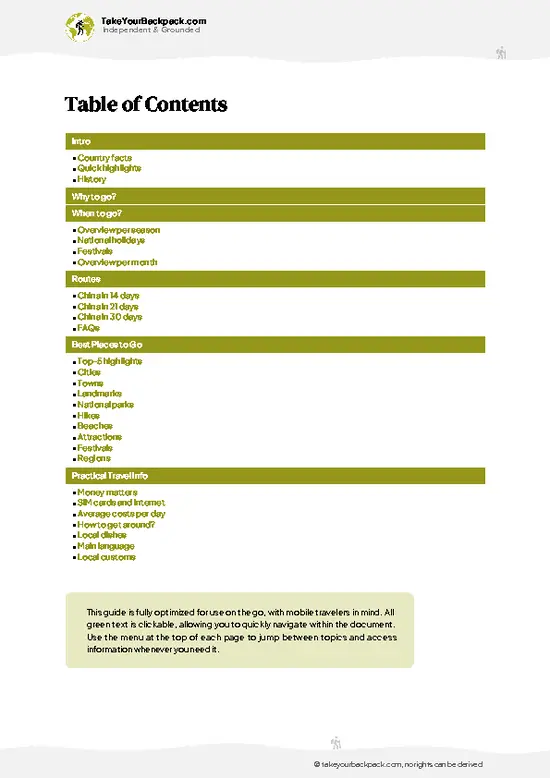
example page 1 from our offline Travel Guide for China
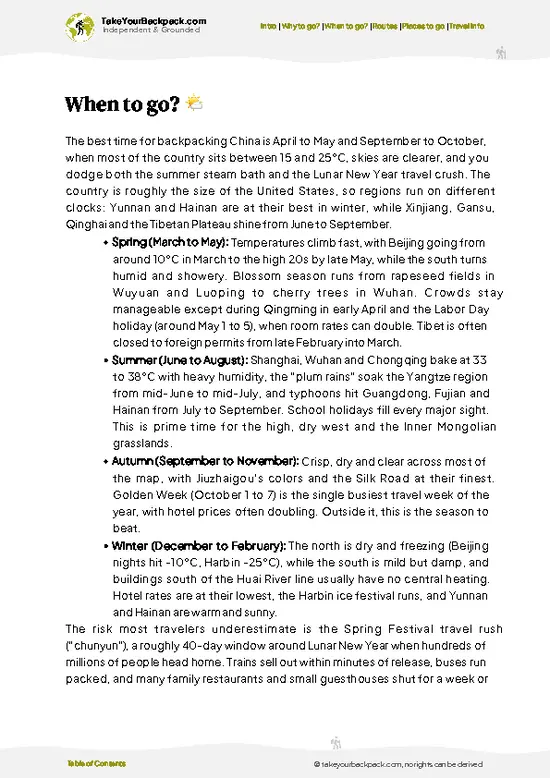
example page 2 from our offline Travel Guide for China
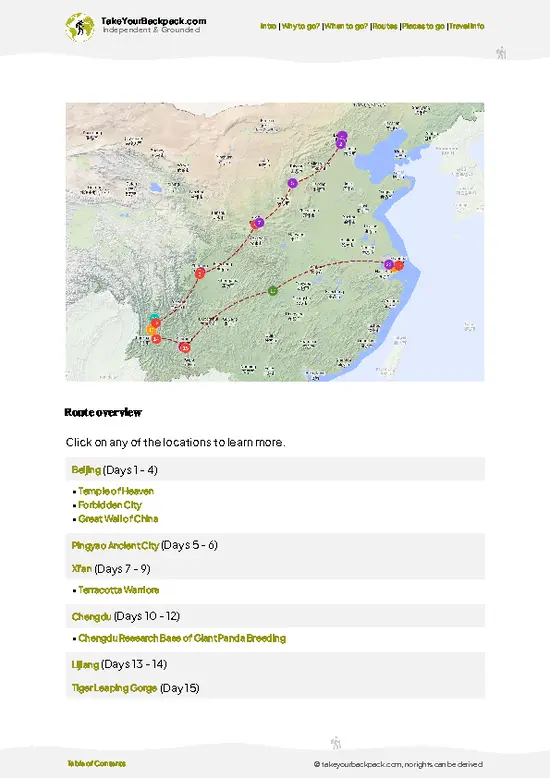
example page 3 from our offline Travel Guide for China
example page 4 from our offline Travel Guide for China
example page 5 from our offline Travel Guide for China
example page 6 from our offline Travel Guide for China
example page 7 from our offline Travel Guide for China
The digital guide (463 pages) contains:
130 highlights, ranked by travel appeal
Optimized 14, 21 & 30-day travel routes
Cities, national parks, landmarks, beaches
How to get around
Offline-friendly for travel without Wi-Fi
👉 Click to see all 30+ guide features

📅 Plan smarter in minutes, not weeks
Month by month travel advice
Festivals & national holidays
Budget expectations

🗺️ Go to the right places, skip the overrated ones
Honest pros & cons of destinations
Top hikes, parks & viewpoints
Lesser-known places most travelers miss
Clear “worth it vs skip it” guidance

🛏️ Travel smoothly without rookie mistakes
Best areas to stay
Transport systems explained simply
Common scams & safety advice
SIM cards, money & practical tips

🌍 Understand the country, not just visit it
Culture & traditions
52 Essential phrases & customs
Festivals worth planning around
Traveler-friendly historical context
Insights that make places more meaningful

📱 Built for real travel conditions
Fully downloadable PDF
Works completely offline
Optimized for phone use
Useful in remote areas & buses
Everything in one place
Save weeks of stressful planning
Get instant access to your full guide. 30‑day money-back guarantee.
+ Add another guide for just US$7.80

By proceeding you agree to our terms.
Sent to your inbox immediately after payment • 100% Secure Checkout
Best Backpacking Travel Advisor 2025 tourism awardBest Backpacking
Travel Advisor
2025
What others say about Take Your Backpack Guides:
⭐⭐⭐⭐⭐
Fantastic, amazing amount of information!
⭐⭐⭐⭐⭐
My goodness this is amazing, it's what I've been looking for hats off too you!
⭐⭐⭐⭐⭐
I think this is absolutely BRILLIANT
⭐⭐⭐⭐
Very complete and informative. It's still missing places, but I gotta to commend you
⭐⭐⭐⭐⭐
This is truly amazing, thank you, can't wait to explore it with my kids!
⭐⭐⭐⭐⭐
Awesome resource, thank you!
⭐⭐⭐⭐⭐
This is amazing! Can't wait to explore the ones I haven't seen
⭐⭐⭐⭐
I love this! Well done, great idea.
⭐⭐⭐⭐⭐
Thanks for taking the time to make this gem!
⭐⭐⭐⭐⭐
This might be the best website I've ever seen.
⭐⭐⭐⭐⭐
Congratulations, and thank you so much for your work; it's incredibly valuable.
⭐⭐⭐⭐
In all seriousness I think you did a great job pointing out the important spots
⭐⭐⭐⭐⭐
10/10 very good
⭐⭐⭐⭐⭐
As someone who's only just starting to visit regularly this is awesome, thank you.
⭐⭐⭐⭐
Thank you very much! I'm going to visit my dad, it's going to be very useful!
⭐⭐⭐⭐⭐
This is really cool! We'll be travelling for the first time and this definitely come in handy.
⭐⭐⭐⭐⭐
You are now our minister of culture, congratulations 👨‍💼
⭐⭐⭐⭐⭐
Just wanted to tell you that this is a pearl! Going to follow your recommendations.
⭐⭐⭐⭐⭐
This is so cool. I'll definitely be using the resource for my travels soon.
⭐⭐⭐⭐⭐
This is very impressive! Good work.
⭐⭐⭐⭐⭐
This is an amazing and informative site. Very well done!

🛏️ Where to stay?Best areas and accommodation options

If you enjoy meeting fellow travelers, consider choosing hostels with high ratings for atmosphere. On the other hand, if you prefer having your own space, a hotel might be a better option.

🥾 Hike detailsEverything you need to know before hiking Yellow Mountains

Total Distance: Approximately 15 kilometers (9.3 miles) for the main loop, but you can easily extend it with side trails.

Estimated Duration: Plan for about 6 to 8 hours, depending on your pace and how many stops you take to soak in the views.

Difficulty Level: Moderate to challenging. There are steep sections and some rocky paths, so good shoes are a must.

Starting Point: The trailhead is at the Huangshan Scenic Area entrance.
  • Getting There: You can take a bus from major cities like Hangzhou or Shanghai. Look for a bus to Huangshan City, then switch to a local bus heading to the scenic area.
read more 👉
Total Distance: Approximately 15 kilometers (9.3 miles) for the main loop, but you can easily extend it with side trails.

Estimated Duration: Plan for about 6 to 8 hours, depending on your pace and how many stops you take to soak in the views.

Difficulty Level: Moderate to challenging. There are steep sections and some rocky paths, so good shoes are a must.

Starting Point: The trailhead is at the Huangshan Scenic Area entrance.
  • Getting There: You can take a bus from major cities like Hangzhou or Shanghai. Look for a bus to Huangshan City, then switch to a local bus heading to the scenic area. It’s pretty straightforward, just keep an eye on the signs.

Major Landmarks Along the Route:
  • Yellow Mountain Peaks: Don’t miss the iconic peaks like Lotus Peak and Bright Summit Peak; they offer breathtaking panoramas.
  • Cloud Valley Temple: A nice spot to rest and take in the serene vibes.
  • Hot Springs: If you’re feeling adventurous, there’s a hot spring area nearby for a relaxing soak after your hike.

Type of Terrain and Scenery: The terrain varies from stone steps to narrow paths. Expect steep ascents and descents, with some sections involving handrails.
  • Scenery: Think jagged granite peaks, lush pine forests, and cloud sea views that can be downright magical at sunrise or sunset.

Typical Vegetation and Wildlife:
  • Vegetation: You’ll find ancient pine trees, rhododendrons, and various alpine flowers that bloom in spring.
  • Wildlife: Keep an eye out for monkeys and various bird species, but don’t expect to see much in the way of large mammals.
⚠️ Hiking info can sometimes be outdated or inaccurate. Before you hit the trail, check the latest conditions with locals. If you do spot anything that's off, I'd love to hear from you, so I can update it for fellow travelers.

🛡️ SafetyScams, Hazards, and Annoyances

The Yellow Mountains offer a thrilling mix of rugged beauty and manageable challenges. Weather can shift quickly, so pack layers. Mornings might greet you with a chill, while afternoons can blaze. Stay alert to the altitude; it can sneak up on you, especially if you’re not acclimatized.

The trails are well-marked but steep. Footing can be tricky on rocky sections, so sturdy hiking boots are a must. Take your time on the ascents; there’s no rush. Enjoy the views as you climb—each bend reveals something new.

Wildlife encounters are rare but possible. If you spot a monkey, keep your distance. They’re curious but can be aggressive if provoked.

Preparation is key. Bring enough water and snacks; there are limited spots to refill. A lightweight pack will make the journey smoother. Respect the … read more 👉
The Yellow Mountains offer a thrilling mix of rugged beauty and manageable challenges. Weather can shift quickly, so pack layers. Mornings might greet you with a chill, while afternoons can blaze. Stay alert to the altitude; it can sneak up on you, especially if you’re not acclimatized.

The trails are well-marked but steep. Footing can be tricky on rocky sections, so sturdy hiking boots are a must. Take your time on the ascents; there’s no rush. Enjoy the views as you climb—each bend reveals something new.

Wildlife encounters are rare but possible. If you spot a monkey, keep your distance. They’re curious but can be aggressive if provoked.

Preparation is key. Bring enough water and snacks; there are limited spots to refill. A lightweight pack will make the journey smoother. Respect the trail and fellow hikers—everyone’s here for the same breathtaking experience. Embrace the grind; the summit views and that first cold beer afterward will make it all worthwhile.

FAQCommon questions from travelers

The Yellow Mountains hike typically takes 2 to 3 days to complete, depending on the chosen trails and pace. Popular routes cover around 20 to 30 kilometers. Most hikers spend at least one night in mountain lodges to fully experience the area.
The difficulty of the Yellow Mountains hike is moderate to challenging due to steep ascents, stone steps, and variable weather conditions. Hikers should be prepared for physical exertion and uneven terrain. Proper footwear and a reasonable fitness level are essential.
No permit is required for hiking the Yellow Mountains, but an entrance ticket to the park costs around 230 RMB. Hiring a guide is optional but recommended for first-timers to navigate trails and learn about the area. Guides can be arranged at the park entrance or through local agencies.
⚠️ Things can change over time, so always validate details locally before you go.

Other Chinese hikes near Yellow Mountains

Explore more nearby:

  • Mount Sanqing—granite pillars, Taoist temples, misty forests| 137 km away
  • Longji Rice Terraces—layered paddies, Zhuang villages, seasonal color shifts| 926 km away
  • Mount Siguniang—alpine valleys, jagged peaks, wildflower meadows| 1463 km away

💡 Not sure where to go next?
Create a personalized itinerary for China including Yellow Mountains and the places that fit your trip.

Generate my itinerary

👉 Discover all hikes

Or checkout all China has to offer (think cities, towns, villages, national parks, hikes, beaches, festivals)
Country photo of China

We 💚 feedbackWhat to keep in mind

The Yellow Mountains will knock your socks off with their jagged peaks and swirling mists. You’ll feel like you’re walking through a painting, and that first glimpse of the sunrise? Pure magic. But brace yourself—the crowds can be relentless, especially during peak season. It’s a trade-off: stunning views come with a side of hustle. Still, the effort pays off when you find a quiet spot to breathe it all in.

✈️ When did I visit China?
As part of my 1.5 year travel around the world trip, I visited China in August 2015, coming from Mongolia by the TransMongolia Express.

✍️ Help improve this page!
The information on this page is based on my own backpacking experience in China, supplemented with up-to-date research and feedback from other travelers. Travel details can change, so if you notice anything outdated or incomplete, feel free to let me know.


🙋‍♂️ Give feedback

👋 Meet the founderWho’s Behind Take Your Backpack?

Johan, backpacker and founder of TakeYourBackpackHi, I’m Johan (Netherlands 🇳🇱), the creator of TakeYourBackpack. Over the past decade, I’ve backpacked through 80+ countries across six continents, gaining extensive experience with independent travel, long-term trips, and overland routes.

This site is built on a combination of firsthand travel experience and carefully curated insights from other backpackers. Many guides are based on places I’ve personally visited, while others bring together tips, observations, and practical advice shared by trusted travelers I’ve met along the way.

The goal is to provide realistic, experience-driven guidance — not generic itineraries — so you can explore destinations with better context, clearer expectations, and more confidence.

Get full China guide •
Instant download • 130 highlights • Full Offline guide