×

China🇨🇳 | best hikesTop-Rated 8 hikes in China

In China, the best hikes offer a spectrum of experiences shaped by the country’s vast geography and rich cultural tapestry. From the rugged peaks of the Himalayas in the west to the lush karst landscapes of the south, each region presents unique challenges and rewards. Understanding these regional differences is crucial for backpacking or independent travel.

For instance, hikes in Yunnan often feature moderate altitudes and stunning views, ideal for those seeking a balance of adventure and accessibility. In contrast, the Tian Shan mountains demand a higher fitness level and acclimatization due to their extreme altitudes. Seasonal nuances also play a significant role; spring and autumn typically provide the best weather, while summer can bring intense heat and monsoons, affecting trail conditions and safety.

Choosing the right hike impacts not just the vibe of your trip but also your budget and cultural immersion. Trails near major cities like Beijing or Xi’an can be crowded and touristy, while remote paths offer solitude and deeper connections with local communities. Ultimately, a well-chosen hike enhances your overall experience, ensuring you engage with China’s diverse landscapes and cultures in a meaningful way.

By Johan Kruseman 🇳🇱 | Updated June 12, 2026
Explore the best beaches in China

Why go?Understanding Their Importance

Hiking in China offers a unique blend of terrain variety, altitude, and cultural depth that sets it apart from other countries. The vast landscapes range from the rugged Himalayan foothills to the serene karst mountains of Guangxi, providing hikers with an array of experiences. This diversity means that whether you seek challenging ascents or leisurely strolls, there’s a trail that fits your desire. However, the trade-off often lies in the difficulty versus scenic reward. Steeper trails may yield breathtaking views, but they also demand a higher level of fitness and preparation.

The trail infrastructure in China varies significantly. In popular areas, well-maintained paths and signage make navigation straightforward. Yet, in more remote regions, trails can be less developed, requiring a keen … read more 👉
Hiking in China offers a unique blend of terrain variety, altitude, and cultural depth that sets it apart from other countries. The vast landscapes range from the rugged Himalayan foothills to the serene karst mountains of Guangxi, providing hikers with an array of experiences. This diversity means that whether you seek challenging ascents or leisurely strolls, there’s a trail that fits your desire. However, the trade-off often lies in the difficulty versus scenic reward. Steeper trails may yield breathtaking views, but they also demand a higher level of fitness and preparation.

The trail infrastructure in China varies significantly. In popular areas, well-maintained paths and signage make navigation straightforward. Yet, in more remote regions, trails can be less developed, requiring a keen sense of direction and adaptability. This disparity means that while some hikes can be tackled with minimal gear and planning, others may necessitate advanced preparation and local knowledge. Understanding this infrastructure is crucial; it can transform a potentially frustrating experience into a smooth adventure.

Altitude is another critical factor. Many of China’s most famous hikes, such as those in Tibet or the western provinces, reach significant elevations. This can lead to altitude sickness if not approached with caution. Hikers must acclimatize properly, which may require additional time and planning. The trade-off here is clear: higher altitudes often result in stunning vistas, but they come with risks that must be managed.

Seasonality plays a vital role in hiking conditions. The best times to hike vary by region, with spring and autumn generally offering the most favorable weather. However, winter can present challenges, such as snow and ice, while summer may bring intense heat or monsoon rains. Understanding these climatic patterns is essential for safety and enjoyment. Planning a hike during the right season can mean the difference between a pleasant trek and a hazardous journey.

Lastly, consider the logistics of travel time versus depth of exploration. China’s vastness means that reaching certain trails can require significant travel, often involving multiple modes of transportation. While this can lead to immersive experiences in local culture, it can also eat into valuable hiking time. Balancing the desire for exploration with practical travel considerations is key to maximizing the hiking experience.

In summary, hiking in China is not just about the trails; it’s about understanding the intricate system of terrain, infrastructure, altitude, and seasonality. Each element influences the overall experience, making it essential for hikers to approach their journey with both excitement and a strategic mindset.
Behind the Scenes of Selection
The list of best hikes in China is created based on scenery, challenge, trail quality, landmarks, and overall enjoyment. If you feel a hike is missing in this list, please let us know.

When to go?When to Plan Your Trip

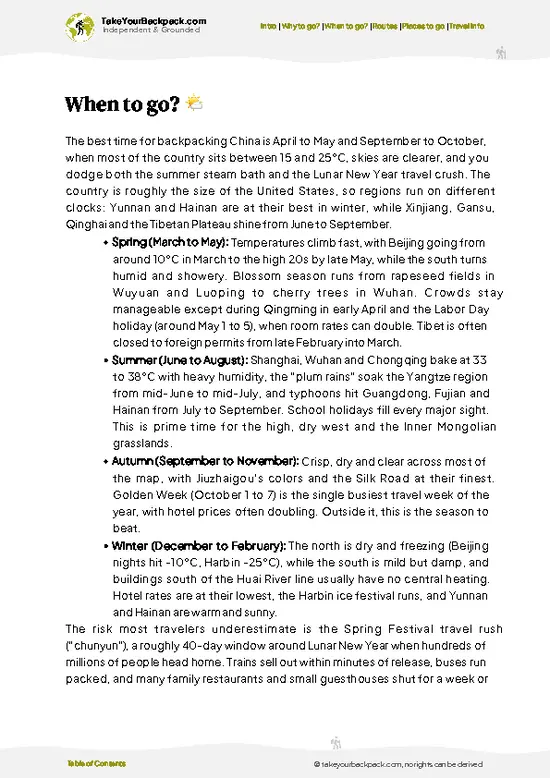
Seasonality and Hiking in China


Understanding the seasonal patterns in China is crucial for optimizing hiking experiences. The country’s vast geography means that weather conditions can vary dramatically from one region to another. This variability affects trail access, safety, and the overall enjoyment of hikes.

Spring, typically from March to May, offers mild temperatures and blooming flora. However, early spring can still be chilly, especially at higher altitudes. Snow may linger on trails in mountainous areas, making some routes inaccessible. As temperatures rise, trails become more accessible, but rainfall can increase, particularly in southern regions. This season is ideal for those looking to avoid crowds while enjoying vibrant landscapes.

Summer, spanning June to August, is the … read more 👉

Seasonality and Hiking in China


Understanding the seasonal patterns in China is crucial for optimizing hiking experiences. The country’s vast geography means that weather conditions can vary dramatically from one region to another. This variability affects trail access, safety, and the overall enjoyment of hikes.

Spring, typically from March to May, offers mild temperatures and blooming flora. However, early spring can still be chilly, especially at higher altitudes. Snow may linger on trails in mountainous areas, making some routes inaccessible. As temperatures rise, trails become more accessible, but rainfall can increase, particularly in southern regions. This season is ideal for those looking to avoid crowds while enjoying vibrant landscapes.

Summer, spanning June to August, is the peak hiking season. Longer daylight hours allow for extended hikes, but this period also brings higher temperatures and increased humidity. In many areas, especially in the south, heavy rainfall can lead to muddy trails and potential landslides. Altitude plays a significant role; higher elevations may offer cooler temperatures but can also present challenges like altitude sickness. Planning hikes during early mornings can help mitigate heat and ensure safety.

Autumn, from September to November, is often considered the best time for hiking. The weather is generally stable, with cooler temperatures and reduced rainfall. Fall foliage adds a stunning visual element, enhancing the hiking experience. However, this season can attract larger crowds, particularly in popular areas. Early autumn is particularly favorable, as trails are still accessible and the weather remains pleasant.

Winter, from December to February, presents unique challenges. Cold temperatures and snow can limit access to many trails, especially at higher elevations. However, for those willing to brave the cold, winter hikes can offer solitude and breathtaking views. Proper gear is essential, and recovery needs increase due to the physical demands of hiking in colder conditions.

Shoulder seasons—spring and autumn—offer a balance between favorable weather and manageable crowd levels. Costs may also be lower during these times, making them appealing for budget-conscious travelers. However, one must weigh the trade-offs: spring may bring rain, while autumn could see increased foot traffic.

In summary, understanding the seasonal dynamics in China allows for smarter planning. By aligning hiking goals with the right time of year, hikers can enhance their experiences while minimizing risks associated with weather and trail conditions.

hike hoppingPlanning Your Route Efficiently

General Routing Logic

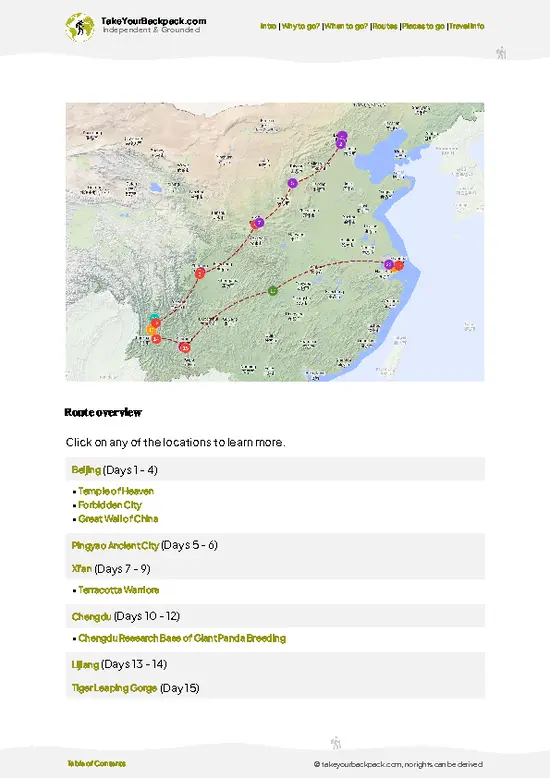
To efficiently combine hikes across China, start by clustering regions. The country’s vastness means that proximity matters. Focus on areas like Yunnan, Sichuan, and Xinjiang, where multiple trails can be accessed without excessive travel time. For instance, after exploring the stunning landscapes of Yunnan, head northwest to Sichuan, where the iconic trails of Mount Emei and the less-traveled paths in the Tibetan regions await. This approach minimizes transit time and maximizes hiking opportunities.

Typical Time Needed

Each major hike typically requires a minimum of two to three days to fully appreciate the scenery and recover from altitude changes. For instance, the trek in Zhangjiajie National Forest can be done in two days, while the more demanding trails in the … read more 👉

General Routing Logic

To efficiently combine hikes across China, start by clustering regions. The country’s vastness means that proximity matters. Focus on areas like Yunnan, Sichuan, and Xinjiang, where multiple trails can be accessed without excessive travel time. For instance, after exploring the stunning landscapes of Yunnan, head northwest to Sichuan, where the iconic trails of Mount Emei and the less-traveled paths in the Tibetan regions await. This approach minimizes transit time and maximizes hiking opportunities.

Typical Time Needed

Each major hike typically requires a minimum of two to three days to fully appreciate the scenery and recover from altitude changes. For instance, the trek in Zhangjiajie National Forest can be done in two days, while the more demanding trails in the Tibetan Plateau may require up to five days. Factor in recovery time, especially when transitioning between hikes at varying altitudes. A general rule of thumb is to allow one day of rest for every 1,000 meters gained in elevation. This pacing ensures that the body adapts and can handle the next challenge.

Common Planning Mistakes

One common pitfall is underestimating travel times between hikes. China’s infrastructure is extensive, but road conditions can vary significantly. Always account for potential delays, especially in rural areas. Another mistake is overloading the itinerary with too many hikes in a short span. Quality trumps quantity; immersing in fewer hikes allows for deeper connections with the landscapes and cultures.

Trade-offs and Constraints

Balancing speed with depth of experience is crucial. Rushing through hikes may lead to fatigue and missed opportunities for exploration. Conversely, a slower pace can enhance enjoyment but may strain budgets and time constraints. Consider the trade-off between comfort and budget; opting for local guesthouses can provide a richer experience but may require flexibility in amenities.

Pacing Strategies

Adopt a flexible approach to pacing. Start with easier hikes to build stamina before tackling more challenging routes. This strategy not only helps acclimatize to altitude but also allows for a gradual increase in difficulty. Incorporate rest days strategically, especially after strenuous hikes, to recharge and reflect on the journey.

Optimizing Scenic Reward

Prioritize hikes that offer diverse landscapes and cultural experiences. Mixing high-altitude treks with lower, more accessible trails can create a well-rounded adventure. This approach ensures that each hike feels unique and rewarding, keeping motivation high throughout the journey.

The ListHighly Recommended hikes of China

1 Tiger Leaping Gorge

deep canyon, roaring river, cliffside paths

Navigate steep switchbacks above the Jinsha River, where sheer drops and distant peaks create a sense of scale that never fades.

China - Tiger Leaping Gorge

2 Yellow Mountains

granite spires, pine forests, sea of clouds

Ascend stone steps into a landscape of twisted trees and mist, where weather and light transform the view at every turn.

3 Longji Rice Terraces

layered paddies, Zhuang villages, seasonal color shifts

Trace narrow trails through terraced hillsides, passing wooden stilt homes and fields that change dramatically with each planting and harvest.

china-hike-longji-rice-terraces
© Google |

4 Yubeng Village Trek

remote hamlets, sacred waterfalls, Tibetan culture

Walk between isolated villages, crossing suspension bridges and forested slopes, while prayer flags and shrines mark the way.

china-hike-yubeng-village-trek
© Google |

5 Mount Siguniang

alpine valleys, jagged peaks, wildflower meadows

Climb through open grasslands and larch forests, with snow-dusted summits rising above yak herders’ camps and scattered boulders.

6 Mount Gongga

glacial valleys, remote monasteries, rugged ascents

Trek beneath the highest summit east of the Himalayas, where shifting weather and isolation define each stage of the journey.

7 Meili Snow Mountain Kora

pilgrimage circuit, glacier views, high-altitude passes

Circle a revered massif on foot, traversing alpine meadows and rocky ridges as you follow a route shaped by centuries of devotion.

8 Mount Sanqing

granite pillars, Taoist temples, misty forests

Follow stone walkways through a park of sculpted rocks and ancient shrines, where fog and silence create an otherworldly atmosphere.

Loading the map 🌍

Expert viewExpert Commentary on hikes

Trail Logistics

China’s vastness means that hiking here can be a logistical puzzle. Aim for at least three to five hikes to get a real sense of the country’s diverse landscapes. Each region has its own character, and understanding this will help you prioritize your choices. For instance, the terrain in the north is often rugged and steep, while southern trails can be more forgiving but humid.

Consider travel time between hikes. High-speed trains are efficient, but they can still eat up a day if you’re hopping between regions. Factor in local transportation; buses may be less reliable, and taxis can be a gamble in rural areas. Always check the latest schedules and book in advance when possible. This will save you from scrambling last minute, which can lead to missed opportunities.

Altitude

read more 👉

Trail Logistics

China’s vastness means that hiking here can be a logistical puzzle. Aim for at least three to five hikes to get a real sense of the country’s diverse landscapes. Each region has its own character, and understanding this will help you prioritize your choices. For instance, the terrain in the north is often rugged and steep, while southern trails can be more forgiving but humid.

Consider travel time between hikes. High-speed trains are efficient, but they can still eat up a day if you’re hopping between regions. Factor in local transportation; buses may be less reliable, and taxis can be a gamble in rural areas. Always check the latest schedules and book in advance when possible. This will save you from scrambling last minute, which can lead to missed opportunities.

Altitude Awareness

Altitude is a significant factor in many of China’s best hikes, especially those in the Tibetan Plateau or the Himalayas. Be prepared for elevation sickness if you’re venturing above 3,000 meters. Acclimatization is key; spend a day or two at a lower altitude before tackling higher trails. This isn’t just a suggestion; it’s a necessity for enjoying your hike rather than battling headaches and nausea.

If you’re planning to hike in regions like Yunnan or Sichuan, expect rapid changes in altitude. One moment you might be strolling through a valley, and the next, you’re climbing steep switchbacks. Pacing yourself is crucial. Take breaks, hydrate, and listen to your body. If you feel off, don’t push it.

Recovery and Rest

Recovery is often overlooked but vital for a successful hiking experience. After a long day on the trail, give yourself time to recuperate. This means not just resting your legs but also refueling properly. Local cuisine can be a treat, but be cautious with street food if your stomach isn’t accustomed to it.

Consider planning shorter hikes or rest days between more strenuous ones. This will allow your body to recover and help you enjoy the scenery without feeling rushed. If you’re hiking in a group, communicate your needs. Everyone has different paces and recovery times, and respecting that will enhance the experience for all.

Difficulty and Pacing

Hiking difficulty in China varies widely. Some trails are well-marked and accessible, while others are challenging and require navigation skills. Research the trail ratings and read recent hiker reviews to gauge what you’re getting into.

When it comes to pacing, think about your fitness level and hiking experience. A common mistake is underestimating how long a hike will take. Terrain can change quickly, and weather can be unpredictable. Allow for extra time, especially if you’re hiking in remote areas where help may not be readily available.

If you’re a beginner, start with easier trails to build confidence. For seasoned hikers, don’t shy away from the more challenging routes, but be realistic about your limits.

Planning and Prioritizing

Planning is half the battle. Create a list of must-see hikes, but also be flexible. Weather can change plans in an instant, especially in mountainous regions. Have backup options ready.

Consider the cultural aspects of each region. Some areas may require permits or have specific regulations regarding camping or fires. Research these ahead of time to avoid fines or being turned away at the trailhead.

Budget is another factor. While some hikes are free, others may have entrance fees or require guided tours. Factor in transportation costs, food, and accommodations. If you’re on a tight budget, consider staying in local guesthouses or hostels, which often provide valuable insights into the area and can help you connect with fellow hikers.

Safety and Cultural Considerations

Safety should always be a priority. Carry a first-aid kit, and familiarize yourself with basic emergency procedures. Cell service can be spotty in remote areas, so download maps and important information beforehand.

Cultural sensitivity is equally important. Respect local customs, especially in rural areas where traditions run deep. Learning a few phrases in Mandarin can go a long way in building rapport with locals.

Be mindful of your impact on the environment. Follow Leave No Trace principles to preserve the beauty of the trails for future hikers. This not only helps the ecosystem but also fosters goodwill with local communities.

Conclusion

Understanding the systems at play in China’s hiking landscape will empower you to make informed decisions. By considering logistics, altitude, recovery, difficulty, and cultural nuances, you can turn what might seem like a daunting task into a rewarding adventure. Embrace the challenge, and let the trails of China reveal their secrets to you.

✈️ The backpacker research shortcutChina Travel Guide

An offline-friendly backpacking guide with optimized travel routes, ranked highlights, transport advice, and the best areas to stay.
example page 0 from our offline Travel Guide for China
example page 1 from our offline Travel Guide for China
example page 2 from our offline Travel Guide for China
example page 3 from our offline Travel Guide for China
example page 4 from our offline Travel Guide for China
example page 5 from our offline Travel Guide for China
example page 6 from our offline Travel Guide for China
example page 7 from our offline Travel Guide for China
The digital guide (496 pages) contains:
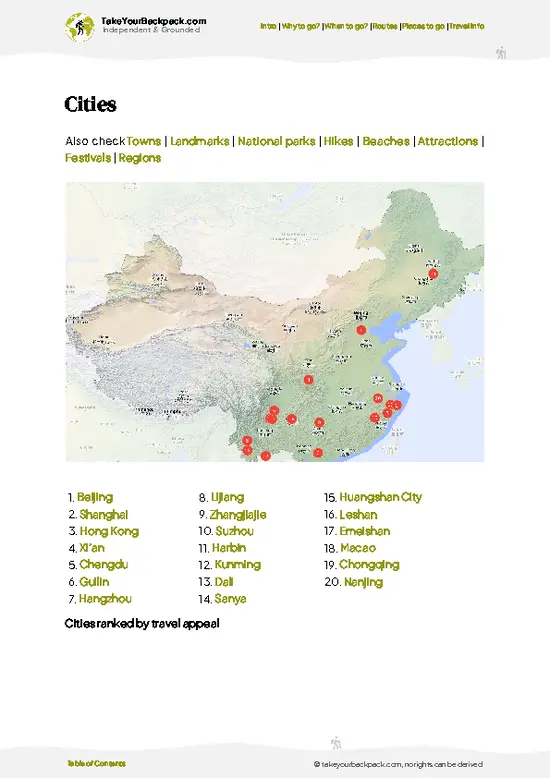
139 highlights, ranked by travel appeal
Optimized 14, 21 & 30-day travel routes
Cities, national parks, landmarks, beaches
How to get around
Offline-friendly for travel without Wi-Fi
👉 Click to see all 30+ guide features

📅 Plan smarter in minutes, not weeks
Month by month travel advice
Festivals & national holidays
Budget expectations

🗺️ Go to the right places, skip the overrated ones
Honest pros & cons of destinations
Top hikes, parks & viewpoints
Lesser-known places most travelers miss
Clear “worth it vs skip it” guidance

🛏️ Travel smoothly without rookie mistakes
Best areas to stay
Transport systems explained simply
Common scams & safety advice
SIM cards, money & practical tips

🌍 Understand the country, not just visit it
Culture & traditions
52 Essential phrases & customs
Festivals worth planning around
Traveler-friendly historical context
Insights that make places more meaningful

📱 Built for real travel conditions
Fully downloadable PDF
Works completely offline
Optimized for phone use
Useful in remote areas & buses
Everything in one place
Save weeks of stressful planning
Get instant access to your full guide. 30‑day money-back guarantee.


By proceeding you agree to our terms.
Sent to your inbox immediately after payment • 100% Secure Checkout
Best Backpacking Travel Advisor 2025 tourism awardBest Backpacking
Travel Advisor
2025
What others say about Take Your Backpack Guides:
⭐⭐⭐⭐⭐
Fantastic, amazing amount of information!
⭐⭐⭐⭐⭐
My goodness this is amazing, it's what I've been looking for hats off too you!
⭐⭐⭐⭐⭐
I think this is absolutely BRILLIANT
⭐⭐⭐⭐
Very complete and informative. It's still missing places, but I gotta to commend you
⭐⭐⭐⭐⭐
This is truly amazing, thank you, can't wait to explore it with my kids!
⭐⭐⭐⭐⭐
Awesome resource, thank you!
⭐⭐⭐⭐⭐
This is amazing! Can't wait to explore the ones I haven't seen
⭐⭐⭐⭐
I love this! Well done, great idea.
⭐⭐⭐⭐⭐
Thanks for taking the time to make this gem!
⭐⭐⭐⭐⭐
This might be the best website I've ever seen.
⭐⭐⭐⭐⭐
Congratulations, and thank you so much for your work; it's incredibly valuable.
⭐⭐⭐⭐
In all seriousness I think you did a great job pointing out the important spots
⭐⭐⭐⭐⭐
10/10 very good
⭐⭐⭐⭐⭐
As someone who's only just starting to visit regularly this is awesome, thank you.
⭐⭐⭐⭐
Thank you very much! I'm going to visit my dad, it's going to be very useful!
⭐⭐⭐⭐⭐
This is really cool! We'll be travelling for the first time and this definitely come in handy.
⭐⭐⭐⭐⭐
You are now our minister of culture, congratulations 👨‍💼
⭐⭐⭐⭐⭐
Just wanted to tell you that this is a pearl! Going to follow your recommendations.
⭐⭐⭐⭐⭐
This is so cool. I'll definitely be using the resource for my travels soon.
⭐⭐⭐⭐⭐
This is very impressive! Good work.
⭐⭐⭐⭐⭐
This is an amazing and informative site. Very well done!

🛏️ Where to stay?Accommodation Highlights

Yes — hostels and budget accommodation are common across China, with backpacker-friendly clusters of cheap dorms, guesthouses and family-run hostels in major cities and tourist towns, so book ahead in peak season.
Top neighborhoods with the most/best budget options: Beijing — Dongcheng/Chaoyang (central sights and nightlife; can be noisy and pricier) and Xicheng (quieter, close to historic sites); Shanghai — Huangpu/Jing’an (walkable highlights, excellent transit; busy and costlier) and Pudong (modern but fewer backpacker options); Chengdu — Jinjiang/Wuhou (food streets and transport; lively evenings); Xi’an — Beilin/Muslim Quarter (by the city wall, touristy); Lijiang/Dali/Guilin/Yangshuo … read more 👉
Yes — hostels and budget accommodation are common across China, with backpacker-friendly clusters of cheap dorms, guesthouses and family-run hostels in major cities and tourist towns, so book ahead in peak season.
Top neighborhoods with the most/best budget options: Beijing — Dongcheng/Chaoyang (central sights and nightlife; can be noisy and pricier) and Xicheng (quieter, close to historic sites); Shanghai — Huangpu/Jing’an (walkable highlights, excellent transit; busy and costlier) and Pudong (modern but fewer backpacker options); Chengdu — Jinjiang/Wuhou (food streets and transport; lively evenings); Xi’an — Beilin/Muslim Quarter (by the city wall, touristy); Lijiang/Dali/Guilin/Yangshuo old towns (clustered guesthouses and social scene; crowded in high season).
Tradeoffs to plan for: central areas cut transit time and connect to nightlife but bring noise, higher rates and crowded weekends; outlying districts are cheaper and quieter but add transit time and may limit late-night options, and all places require passport registration at check-in with common small deposits.

If you enjoy meeting fellow travelers, consider choosing hostels with high ratings for atmosphere. On the other hand, if you prefer having your own space, a hotel might be a better option.

ChinaSee More of China

👋 Meet the founderWho’s Behind Take Your Backpack?

Johan, backpacker and founder of TakeYourBackpackHi, I’m Johan (Netherlands 🇳🇱), the creator of TakeYourBackpack. Over the past decade, I’ve backpacked through 80+ countries across six continents, gaining extensive experience with independent travel, long-term trips, and overland routes.

This site is built on a combination of firsthand travel experience and carefully curated insights from other backpackers. Many guides are based on places I’ve personally visited, while others bring together tips, observations, and practical advice shared by trusted travelers I’ve met along the way.

The goal is to provide realistic, experience-driven guidance — not generic itineraries — so you can explore destinations with better context, clearer expectations, and more confidence.

Get full China guide •
Instant download • 139 highlights • Full Offline guide