×

China🇨🇳 | regionsAvatar MountainsSandstone pillars, misty forest, vertical cliffs | things to do and best time to go

Explore Mount Jiuhua National ParkExplore China Danxia

Backpacking in Avatar Mountains
🏆 Top pickregion ranked #3
By Johan Kruseman 🇳🇱 | Updated June 2, 2026

Ten years ago Zhangjiajie’s “Avatar Mountains” felt like a half-whispered rumor: misty quartz-sandstone pillars, rickety buses, a few homestays, and more farmers than tour groups. Now it’s turnstiles, glass bridges, and selfie sticks… but the scenery still punches way above the hype. You’re in northwestern Hunan province, central China, with Zhangjiajie city as the main hub and Wulingyuan town as your park gateway. For backpackers, it’s a trade: you swap some authenticity and quiet for world-class landscapes and still-reasonable prices. Park tickets are steep by China standards, but food, hostels, and buses between Zhangjiajie, Wulingyuan, and nearby villages stay friendly on the wallet. Expect crowds on main viewpoints and cable cars, yet step one trail beyond the tour groups and it suddenly feels wild again. Compared with nearby Fenghuang’s old-town romance or Changsha’s urban chaos, Zhangjiajie is pure nature-first, spectacle-second, culture-third.

Discover everything you want to know in the 📖 China Travel Guide.


Get your China guide
139 ranked highlights, routes & tips, works offline (496 pages)
Loading the map 🌍
CLICK TO FILTER
cities
towns
landmarks
national parks
hikes
beaches
attractions
festivals
regions
SHOW COUNTRY’S BESTSHOW ALL

✨ Why go?
Ranked #3 region in China
What sets this place apart

Backpackers flock to the Avatar Mountains for a reason. First off, the variety of landscapes is mind-blowing. You’ve got soaring sandstone pillars, lush forests, and winding rivers all in one spot. This means you can dive into multiple experiences without the hassle of constant relocation.

Transport here is surprisingly flexible. You can hop on a local bus or rent a bike to explore at your own pace. This freedom lets you soak in the scenery and culture without feeling rushed.

And let’s talk about slow travel. You can hike through the stunning terrain by day and then unwind in a local village at night. It’s the perfect blend of nature and culture. You’re not just ticking boxes; you’re living the experience.

So, if you want to savor every moment and feel like a savvy local, the Avatar … read more 👉
Backpackers flock to the Avatar Mountains for a reason. First off, the variety of landscapes is mind-blowing. You’ve got soaring sandstone pillars, lush forests, and winding rivers all in one spot. This means you can dive into multiple experiences without the hassle of constant relocation.

Transport here is surprisingly flexible. You can hop on a local bus or rent a bike to explore at your own pace. This freedom lets you soak in the scenery and culture without feeling rushed.

And let’s talk about slow travel. You can hike through the stunning terrain by day and then unwind in a local village at night. It’s the perfect blend of nature and culture. You’re not just ticking boxes; you’re living the experience.

So, if you want to savor every moment and feel like a savvy local, the Avatar Mountains are your playground. Embrace the trade-offs, and you’ll find the high-value experiences that make this trip truly special.
Want to include Avatar Mountains in your China route?
Create a personalized China itinerary that includes Avatar Mountains and the places that fit your trip — based on your travel style, budget, and available time. Get your route in seconds.

Generate my trip

💡 HighlightsKey sights and experiences for travelers

  1. Yuanjiajie — The pillar forest that kicked off the “Avatar” nickname: towering quartz-sandstone spires, tight viewpoints and that one famous column that inspired the movie’s Hallelujah Mountain. Best for sunrise light and those cinematic, otherworldly photo angles.
  2. Tianzi Mountain (Tianzi Shan) — A ridge of jagged peaks with sweeping sea-of-clouds panoramas and a real local legend (a Tujia chieftain gave the place its name). The views feel more expansive than yuanjiajie’s close-in pillars — great for long golden-hour sessions and spotting local mountain farming plots clinging to ledges.
  3. Golden Whip Stream (Jinbianxi) — A long, easy valley walk under cathedral-like pillars beside a clear stream; huge contrast to the cliff viewpoints. It’s where you actually feel the scale of the rock forests,
read more 👉
  1. Yuanjiajie — The pillar forest that kicked off the “Avatar” nickname: towering quartz-sandstone spires, tight viewpoints and that one famous column that inspired the movie’s Hallelujah Mountain. Best for sunrise light and those cinematic, otherworldly photo angles.
  2. Tianzi Mountain (Tianzi Shan) — A ridge of jagged peaks with sweeping sea-of-clouds panoramas and a real local legend (a Tujia chieftain gave the place its name). The views feel more expansive than yuanjiajie’s close-in pillars — great for long golden-hour sessions and spotting local mountain farming plots clinging to ledges.
  3. Golden Whip Stream (Jinbianxi) — A long, easy valley walk under cathedral-like pillars beside a clear stream; huge contrast to the cliff viewpoints. It’s where you actually feel the scale of the rock forests, hear water and birds, and often find peaceful stretches with almost no people if you go early.
  4. Huangshi Village (Huangshizhai) — A compact summit village/plateau with stupendous 360° views and old stone stair approaches. Hike up for sunrise or the sunset crowd tends to thin quickly; you get that layered-pillar panorama without the larger throngs of the most famous lookout points.
  5. Yangjiajie — Hidden gem. Far wilder and less manicured than the main park routes: narrow trails, raw pillar clusters and fewer visitors. If you like scrambling, off-the-beaten-boardwalk photo ops and a sense of real discovery, this is my personal favorite — bring good shoes and patience for unmarked junctions.
  6. Suoxi Valley (Suoxiyu) — Hidden gem. A quieter gorge with waterfalls, bamboo groves and local footpaths; fewer buses go here so it retains a lived-in, village feel. Walkable trails and little teahouses pop up that give a peek at rural Tujia life most day-tourists miss.
  7. Baofeng Lake — A mountain reservoir hemmed by karst cliffs where you can take a boat to waterfalls, temples and small lakeside villages. The boat trip feels intimate and relaxed — local boatmen still sing sometimes — and it’s a good half-day escape from the main cable-car circuits.
  8. Huanglong/Huanglongdong (Huanglong Cave) — A massive karst cave system near the base of the scenic area with cavern rivers, chambers and dramatic stalactites. It gives a completely different geological perspective on the region; visiting by foot through the cave is a nice contrast to the sky-high pillars.
  9. Ten-Mile Gallery (Shili Hualang) — A scenic corridor of rock formations best taken slowly on foot or by local shuttle/bike. It’s like a slice of the pillars at eye level; artists and local painters still use it as a living reference, which keeps the place feeling authentic even with moderate tourist traffic.
  10. Zhangjiajie Grand Canyon (hiking trails away from the glass bridge) — The canyon itself is rugged, with deep gorges, hidden waterfalls and quiet rim trails if you avoid the bridge area. Skip the spectacle and hike the lesser trails into side gullies for solitude, river pools and a sense of real wilderness in the Avatar landscape.
Spotted a mistake or missing something? Contact us.

Things to do around Avatar Mountains

Ratings based on Tripadvisor reviews. When you book through this link, you support our work at no extra cost to you.

⌛️ 5 daysWhat you can realistically do in a week

Day 1: Zhangjiajie National Forest Park
Start your adventure in Zhangjiajie, the gateway to the Avatar Mountains. The park’s transport system is a game-changer. Use the park’s shuttle buses to hop between scenic spots. This saves time and energy, allowing you to soak in the otherworldly rock formations without the fatigue of long hikes. The first day is all about getting your bearings. Explore the Golden Whip Stream trail; it’s an easy walk that sets the stage for what’s to come.

Day 2: Tianmen Mountain
On day two, head to Tianmen Mountain. The cable car ride is a highlight, offering panoramic views that make you feel like you’re floating above the world. The transport here is efficient, but timing is key. Go early to beat the crowds. The walk along the glass skywalk is a thrill, but … read more 👉
Day 1: Zhangjiajie National Forest Park
Start your adventure in Zhangjiajie, the gateway to the Avatar Mountains. The park’s transport system is a game-changer. Use the park’s shuttle buses to hop between scenic spots. This saves time and energy, allowing you to soak in the otherworldly rock formations without the fatigue of long hikes. The first day is all about getting your bearings. Explore the Golden Whip Stream trail; it’s an easy walk that sets the stage for what’s to come.

Day 2: Tianmen Mountain
On day two, head to Tianmen Mountain. The cable car ride is a highlight, offering panoramic views that make you feel like you’re floating above the world. The transport here is efficient, but timing is key. Go early to beat the crowds. The walk along the glass skywalk is a thrill, but don’t rush it—take your time to appreciate the drop below.

Day 3: Off-Path Reward: Fenghuang Ancient Town
Take a detour to Fenghuang Ancient Town. This charming riverside town is a stark contrast to the mountains. The bus ride is about two hours, but it’s worth it. Wander through narrow streets, sample local snacks, and soak in the culture. This day adds depth to your trip, giving you a taste of local life.

Day 4: Zhangjiajie Grand Canyon
Return to Zhangjiajie for the Grand Canyon. The glass bridge here is a must-do. The transport is straightforward, but again, go early. The views are stunning, and the thrill of walking on glass is unforgettable.

Day 5: Departure
Wrap up your trip by revisiting your favorite spots or picking up souvenirs in Zhangjiajie. The transport back to the airport is seamless, allowing for a smooth exit.

The must-do day? Day 2 at Tianmen Mountain. The combination of breathtaking views and adrenaline-pumping experiences makes it the highlight of your journey.
Turn your Avatar Mountains visit into an China adventure
Build a complete China route with Avatar Mountains, hidden gems, must-see destinations, and realistic travel times included.

Generate my trip

🌤️ When to go?Best time to visit Avatar Mountains


  • Topic: Weather – Spring (April to June) and autumn (September to November) are your sweet spots. Expect mild temperatures, around 15-25°C (59-77°F), with less rain than summer’s monsoon chaos. Winter’s cold and fog can kill visibility, while summer’s humidity is a sweat-fest.

  • Topic: Temperature – Daytime highs hover comfortably between 20-25°C (68-77°F) in spring and fall, perfect for hiking without overheating. Nights dip to 10-15°C (50-59°F), so pack a light jacket. Summer can spike above 30°C (86°F), making climbs sticky and exhausting.

  • Topic: Daylight Hours – Longer days in spring and early summer give you 12-14 hours of light, ideal for squeezing in those epic hikes. Autumn days shorten but still offer a solid 10-12 hours. Winter’s short days limit your trekking window.

  • Topic: Crowds
read more 👉

  • Topic: Weather – Spring (April to June) and autumn (September to November) are your sweet spots. Expect mild temperatures, around 15-25°C (59-77°F), with less rain than summer’s monsoon chaos. Winter’s cold and fog can kill visibility, while summer’s humidity is a sweat-fest.

  • Topic: Temperature – Daytime highs hover comfortably between 20-25°C (68-77°F) in spring and fall, perfect for hiking without overheating. Nights dip to 10-15°C (50-59°F), so pack a light jacket. Summer can spike above 30°C (86°F), making climbs sticky and exhausting.

  • Topic: Daylight Hours – Longer days in spring and early summer give you 12-14 hours of light, ideal for squeezing in those epic hikes. Autumn days shorten but still offer a solid 10-12 hours. Winter’s short days limit your trekking window.

  • Topic: Crowds – Avoid Chinese public holidays like Golden Week (early October) and May Day (early May). These times flood the trails with domestic tourists, turning serene paths into congested corridors. Early spring and late autumn are your quiet zones.

  • Topic: Seasonal Activities – Spring blooms bring wildflowers and fresh greenery, while autumn paints the mountains in fiery reds and golds. Both seasons offer photo ops that summer’s haze and winter’s fog obscure.

  • Topic: Price Fluctuations – Peak tourist seasons (summer and national holidays) jack up accommodation and transport costs. Off-peak spring and autumn offer better deals and more room to negotiate with local guesthouses.


Pro-tip: Book your stay just before or after the main tourist waves—early April or late October—to snag the best weather, fewer crowds, and wallet-friendly prices.


source: climatestotravel.comJANJanuary: below average for travelingFEBFebruary: below average for travelingMARMarch: good for travelingAPRApril: excellent for travelingMAYMay: good for travelingJUNJune: highly recommended for travelingJULJuly: fair for travelingAUGAugust: fair for travelingSEPSeptember: excellent for travelingOCTOctober: highly recommended for travelingNOVNovember: excellent for travelingDECDecember: below average for traveling
when-to-go

✈️ The backpacker research shortcutChina Travel Guide

An offline-friendly backpacking guide with optimized travel routes, ranked highlights, transport advice, and the best areas to stay.
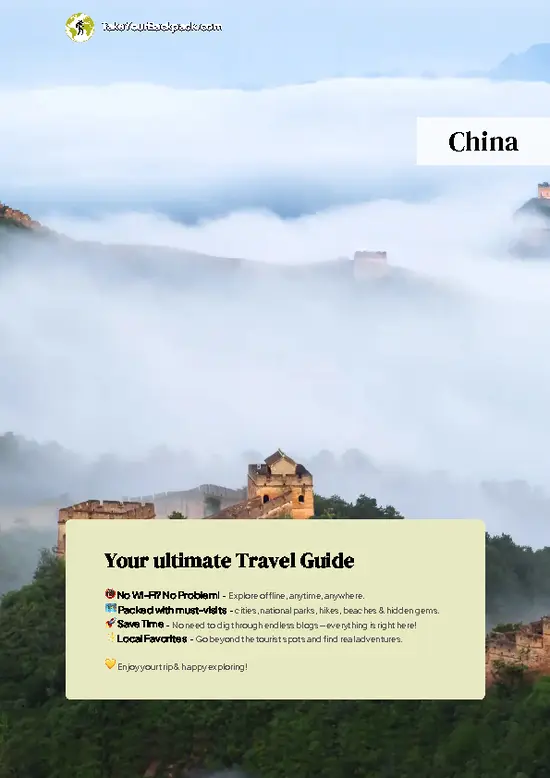
example page 0 from our offline Travel Guide for China
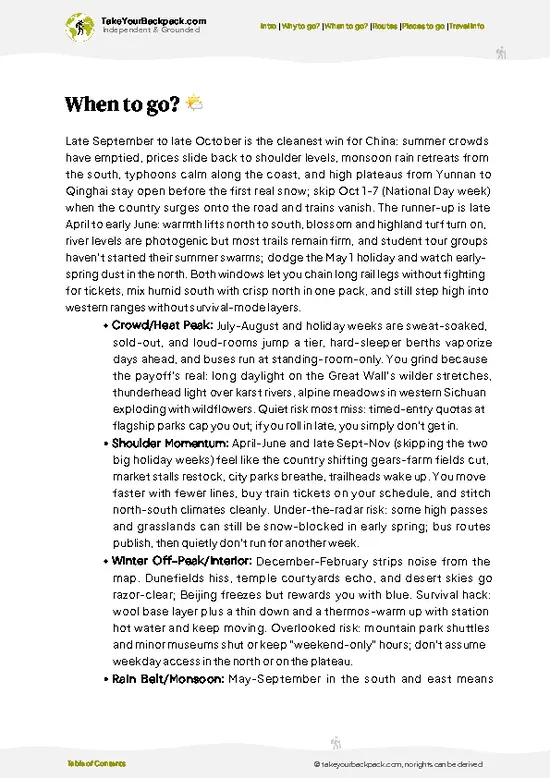
example page 1 from our offline Travel Guide for China
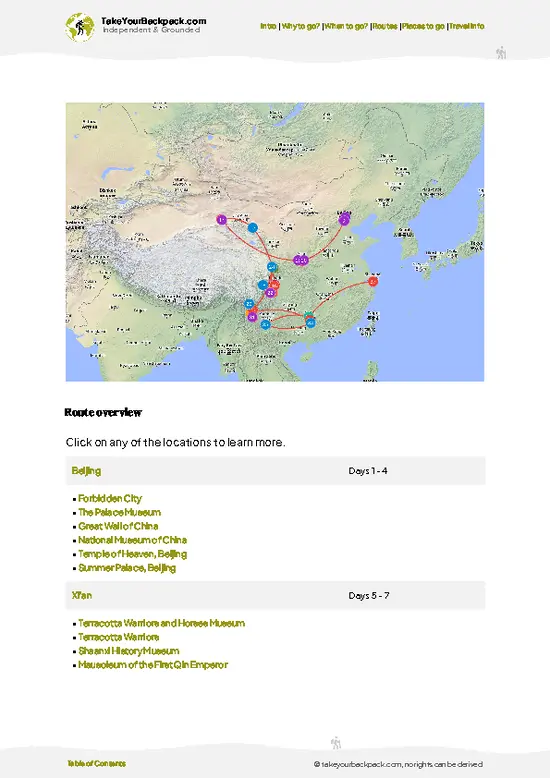
example page 2 from our offline Travel Guide for China
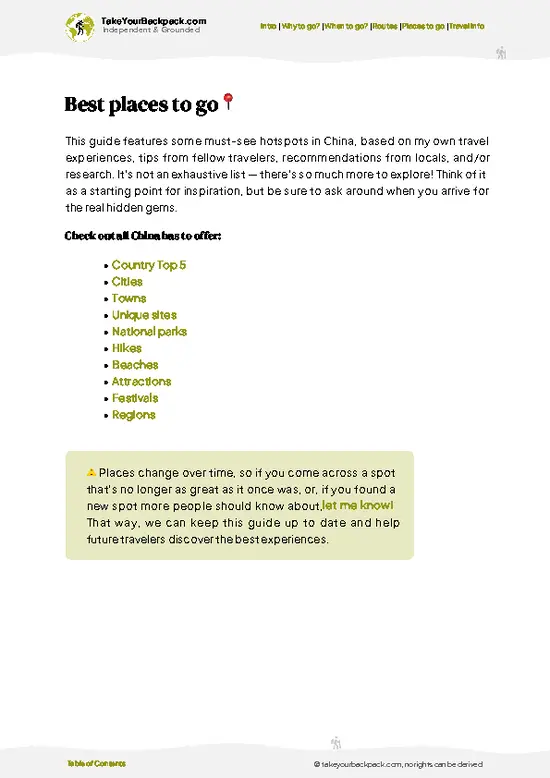
example page 3 from our offline Travel Guide for China
example page 4 from our offline Travel Guide for China
example page 5 from our offline Travel Guide for China
example page 6 from our offline Travel Guide for China
example page 7 from our offline Travel Guide for China
The digital guide (496 pages) contains:
139 highlights, ranked by travel appeal
Optimized 14, 21 & 30-day travel routes
Cities, national parks, landmarks, beaches
How to get around
Offline-friendly for travel without Wi-Fi
👉 Click to see all 30+ guide features

📅 Plan smarter in minutes, not weeks
Month by month travel advice
Festivals & national holidays
Budget expectations

🗺️ Go to the right places, skip the overrated ones
Honest pros & cons of destinations
Top hikes, parks & viewpoints
Lesser-known places most travelers miss
Clear “worth it vs skip it” guidance

🛏️ Travel smoothly without rookie mistakes
Best areas to stay
Transport systems explained simply
Common scams & safety advice
SIM cards, money & practical tips

🌍 Understand the country, not just visit it
Culture & traditions
52 Essential phrases & customs
Festivals worth planning around
Traveler-friendly historical context
Insights that make places more meaningful

📱 Built for real travel conditions
Fully downloadable PDF
Works completely offline
Optimized for phone use
Useful in remote areas & buses
Everything in one place
Save weeks of stressful planning
Get instant access to your full guide. 30‑day money-back guarantee.


By proceeding you agree to our terms.
Sent to your inbox immediately after payment • 100% Secure Checkout
Best Backpacking Travel Advisor 2025 tourism awardBest Backpacking
Travel Advisor
2025
What others say about Take Your Backpack Guides:
⭐⭐⭐⭐⭐
Fantastic, amazing amount of information!
⭐⭐⭐⭐⭐
My goodness this is amazing, it's what I've been looking for hats off too you!
⭐⭐⭐⭐⭐
I think this is absolutely BRILLIANT
⭐⭐⭐⭐
Very complete and informative. It's still missing places, but I gotta to commend you
⭐⭐⭐⭐⭐
This is truly amazing, thank you, can't wait to explore it with my kids!
⭐⭐⭐⭐⭐
Awesome resource, thank you!
⭐⭐⭐⭐⭐
This is amazing! Can't wait to explore the ones I haven't seen
⭐⭐⭐⭐
I love this! Well done, great idea.
⭐⭐⭐⭐⭐
Thanks for taking the time to make this gem!
⭐⭐⭐⭐⭐
This might be the best website I've ever seen.
⭐⭐⭐⭐⭐
Congratulations, and thank you so much for your work; it's incredibly valuable.
⭐⭐⭐⭐
In all seriousness I think you did a great job pointing out the important spots
⭐⭐⭐⭐⭐
10/10 very good
⭐⭐⭐⭐⭐
As someone who's only just starting to visit regularly this is awesome, thank you.
⭐⭐⭐⭐
Thank you very much! I'm going to visit my dad, it's going to be very useful!
⭐⭐⭐⭐⭐
This is really cool! We'll be travelling for the first time and this definitely come in handy.
⭐⭐⭐⭐⭐
You are now our minister of culture, congratulations 👨‍💼
⭐⭐⭐⭐⭐
Just wanted to tell you that this is a pearl! Going to follow your recommendations.
⭐⭐⭐⭐⭐
This is so cool. I'll definitely be using the resource for my travels soon.
⭐⭐⭐⭐⭐
This is very impressive! Good work.
⭐⭐⭐⭐⭐
This is an amazing and informative site. Very well done!

🛏️ Where to stay?Choosing the right base

The Avatar Mountains region, with its jaw-dropping scenery, is a playground for backpackers. Start in Zhangjiajie, the gateway town. It’s buzzing with fellow travelers, making it easy to swap stories and tips. The vibe here is friendly, and you’ll find plenty of budget eateries serving local dishes.

Next, consider Wulingyuan, a bit quieter but perfect for those who want to be close to the park entrance. It’s a small village with a laid-back atmosphere, ideal for unwinding after a day of hiking. The locals are welcoming, and you can often find impromptu gatherings where you can join in on the … read more 👉
The Avatar Mountains region, with its jaw-dropping scenery, is a playground for backpackers. Start in Zhangjiajie, the gateway town. It’s buzzing with fellow travelers, making it easy to swap stories and tips. The vibe here is friendly, and you’ll find plenty of budget eateries serving local dishes.

Next, consider Wulingyuan, a bit quieter but perfect for those who want to be close to the park entrance. It’s a small village with a laid-back atmosphere, ideal for unwinding after a day of hiking. The locals are welcoming, and you can often find impromptu gatherings where you can join in on the fun.

Don’t overlook Fenghuang, a picturesque ancient town that feels like stepping back in time. It’s a bit further from the mountains but offers a unique cultural experience. The riverside views are stunning, and the night market is a must-visit for street food lovers.

Each of these spots balances comfort, social interaction, and affordability. Choose wisely, and you’ll unlock the region’s true essence while keeping your budget intact.

🚌 Getting aroundHow to get from A to B

The Avatar Mountains pulse with an energy that’s part chaos, part magic. Here, the rhythm of travel dances between rigid schedules and spontaneous adventures. You’ll find locals zipping by on electric scooters, while others meander through the misty trails, seemingly unbothered by time. This isn’t a place for the clock-watchers; it’s for those who embrace the unexpected. You’ll want to be flexible, ready to pivot from one transport option to another, depending on the day’s whims and the weather’s moods.


  • Public Buses: These are your lifeline. They run frequently between major towns like Zhangjiajie and Wulingyuan, with fares around 10-30 RMB. Expect a ride of about 30-60 minutes, depending on traffic. Just be ready for a bit of a squeeze during peak hours.


  • Shared Taxis: A great middle ground.
read more 👉
The Avatar Mountains pulse with an energy that’s part chaos, part magic. Here, the rhythm of travel dances between rigid schedules and spontaneous adventures. You’ll find locals zipping by on electric scooters, while others meander through the misty trails, seemingly unbothered by time. This isn’t a place for the clock-watchers; it’s for those who embrace the unexpected. You’ll want to be flexible, ready to pivot from one transport option to another, depending on the day’s whims and the weather’s moods.


  • Public Buses: These are your lifeline. They run frequently between major towns like Zhangjiajie and Wulingyuan, with fares around 10-30 RMB. Expect a ride of about 30-60 minutes, depending on traffic. Just be ready for a bit of a squeeze during peak hours.


  • Shared Taxis: A great middle ground. They’re faster than buses and cost about 50-100 RMB per trip. You can catch them at designated stands or flag them down. They usually run from dawn until around 10 PM, so plan accordingly.


  • Electric Scooters: Rent one for about 50 RMB a day. This is the way to explore the nooks and crannies of the region. You’ll feel the wind in your hair as you zip past towering karsts and lush forests. Just be cautious; the roads can be a bit wild.


  • Walking Trails: Not a transport option per se, but essential. The best way to soak in the scenery is to hike. Trails vary in length, but you can easily spend a few hours wandering through the stunning landscapes. It’s free, and the views are priceless.


  • Private Tours: If you’re looking for comfort and convenience, this is the splurge. Prices start around 500 RMB for a full day. You’ll get a guide who knows the ins and outs, but it’s best to book in advance.


For a smooth experience, download a local map app before you arrive. It’ll help you navigate the bus schedules and find the best trails without losing your way. Trust me, it’s a game changer.

🍲 FoodEating & Drinking in Avatar Mountains

In the Avatar Mountains, food is a vibrant tapestry of flavors that tells the story of the land. Dive into spicy fish hotpot, where fresh catch swims in a bubbling broth, infused with local herbs and fiery chilies. Don’t miss stir-fried wild mushrooms—a local specialty that bursts with earthy notes, often served with fragrant rice. Pair your meal with a glass of local rice wine, sweet yet potent, perfect for warming up after a day of hiking.

For a true taste of the region, hit the street food stalls in nearby villages. The aroma of grilled skewers wafts through the air, tempting you to try everything from marinated meats to crispy tofu. Markets are alive with chatter; grab a seat at a communal table and share dishes with fellow travelers and locals alike.

Dining here is casual and communal. … read more 👉
In the Avatar Mountains, food is a vibrant tapestry of flavors that tells the story of the land. Dive into spicy fish hotpot, where fresh catch swims in a bubbling broth, infused with local herbs and fiery chilies. Don’t miss stir-fried wild mushrooms—a local specialty that bursts with earthy notes, often served with fragrant rice. Pair your meal with a glass of local rice wine, sweet yet potent, perfect for warming up after a day of hiking.

For a true taste of the region, hit the street food stalls in nearby villages. The aroma of grilled skewers wafts through the air, tempting you to try everything from marinated meats to crispy tofu. Markets are alive with chatter; grab a seat at a communal table and share dishes with fellow travelers and locals alike.

Dining here is casual and communal. Expect to see people sharing plates, so don’t hesitate to dig in. Just remember to use chopsticks—it’s a sign of respect. Embrace the chaotic charm of dining in the Avatar Mountains; it’s all part of the adventure.

Other Chinese regions near Avatar Mountains

Explore more nearby:

  • Wulingyuan—Quartzite spires, deep ravines, hanging bridges| 6 km away
  • Fanjingshan—Sacred summit, cloud forest, rare wildlife| 224 km away
  • Yangshuo—Karst hills, Li River bends, rural farmland| 503 km away

💡 Not sure where to go next?
Create a personalized itinerary for China including Avatar Mountains and the places that fit your trip.

Generate my itinerary

👉 Discover all regions

Or checkout all China has to offer (think cities, towns, villages, national parks, hikes, beaches, festivals)
Country photo of China

We 💚 feedbackFinal thoughts on visiting Avatar Mountains

The Avatar Mountains are a must-see for their otherworldly beauty—those towering pillars of rock are straight out of a fantasy film. You’ll feel like you’ve stepped into another realm. But here’s the kicker: the crowds can be overwhelming, especially during peak seasons. If you can time your visit for early mornings or weekdays, you’ll snag those breathtaking views without the selfie-stick brigade. Trust me, it’s worth the effort.

✈️ When did I visit China?
As part of my 1.5 year travel around the world trip, I visited China in August 2015, coming from Mongolia by the TransMongolia Express.

✍️ Help improve this page!
The information on this page is based on my own backpacking experience in China, supplemented with up-to-date research and feedback from other travelers. Travel details can change, so if you notice anything outdated or incomplete, feel free to let me know.


🙋‍♂️ Give feedback

👋 Meet the founderWho’s Behind Take Your Backpack?

Johan, backpacker and founder of TakeYourBackpackHi, I’m Johan (Netherlands 🇳🇱), the creator of TakeYourBackpack. Over the past decade, I’ve backpacked through 80+ countries across six continents, gaining extensive experience with independent travel, long-term trips, and overland routes.

This site is built on a combination of firsthand travel experience and carefully curated insights from other backpackers. Many guides are based on places I’ve personally visited, while others bring together tips, observations, and practical advice shared by trusted travelers I’ve met along the way.

The goal is to provide realistic, experience-driven guidance — not generic itineraries — so you can explore destinations with better context, clearer expectations, and more confidence.

Get full China guide •
Instant download • 139 highlights • Full Offline guide