×

China🇨🇳 | best regionsTop-Rated 10 regions in China

China is a vast tapestry of regions, each offering a unique blend of climate, landscapes, and cultural character that can dramatically shape your backpacking experience. Understanding these regional distinctions is crucial for independent travelers seeking to maximize their adventure.

From the arid deserts of Xinjiang to the lush rice terraces of Yunnan, each area presents distinct attractions and challenges. For instance, the northern regions experience harsh winters, while the south enjoys a milder climate, impacting when and where you should travel. This seasonal nuance can dictate not just comfort but also the availability of activities, such as hiking or local festivals.

Choosing the right region also influences your budget. Urban centers like Beijing and Shanghai may offer more amenities but come with higher costs. In contrast, rural areas often provide a more authentic experience at a fraction of the price.

Safety and ease of travel vary widely; some regions are well-connected by public transport, while others may require more planning. Ultimately, your choice of region will define the vibe of your journey, shaping your opportunities for cultural immersion and the overall richness of your experience in China.

By Johan Kruseman 🇳🇱 | Updated September 4, 2026
Explore the best cities in China

Why go?Understanding Their Importance

China’s regions are a tapestry of climatic diversity, cultural character, and landscapes that set them apart from other countries. Each area offers unique experiences shaped by its geography and history, making it essential to understand these nuances for a rewarding journey.

The climatic diversity in China is staggering. From the frigid winters of the northeast to the tropical warmth of the south, the climate influences not just what you see but how you experience it. This variation allows for a breadth of activities year-round, but it also means that travelers must plan carefully. For instance, visiting the Himalayan foothills in winter offers breathtaking views but requires preparation for extreme conditions. Conversely, summer in the Yangtze River Delta is humid and bustling, ideal for … read more 👉
China’s regions are a tapestry of climatic diversity, cultural character, and landscapes that set them apart from other countries. Each area offers unique experiences shaped by its geography and history, making it essential to understand these nuances for a rewarding journey.

The climatic diversity in China is staggering. From the frigid winters of the northeast to the tropical warmth of the south, the climate influences not just what you see but how you experience it. This variation allows for a breadth of activities year-round, but it also means that travelers must plan carefully. For instance, visiting the Himalayan foothills in winter offers breathtaking views but requires preparation for extreme conditions. Conversely, summer in the Yangtze River Delta is humid and bustling, ideal for those who thrive in vibrant urban settings. Understanding these climatic patterns can help you choose the right time to visit each region, maximizing your experience.

Culturally, China is a mosaic of traditions and practices. Each region boasts its own cultural character, shaped by historical influences and local customs. The Han Chinese majority dominates in many areas, but ethnic minorities in regions like Xinjiang and Tibet offer rich, distinct cultural experiences. However, this diversity comes with trade-offs. While you can immerse yourself in unique customs, accessing these areas often requires more travel time and logistical planning. The deeper you go into these culturally rich regions, the more rewarding the experience, but also the more complex the journey.

Geographically, China’s vastness presents both opportunities and challenges. The landscapes range from the Gobi Desert to lush river valleys, each offering different adventures. However, the sheer size of the country means that travel distances can be significant. A quick trip might allow you to see a few highlights, but to truly appreciate the depth of what China offers, longer stays in fewer regions are advisable. This approach not only reduces travel fatigue but also allows for a more profound connection with the local culture and environment.

Infrastructure in China is generally well-developed, with high-speed trains and extensive road networks facilitating travel. However, accessibility varies widely. Major cities are easy to navigate, but remote areas may lack the same level of connectivity. This disparity means that while you can cover large distances quickly, reaching more isolated regions may require careful planning and flexibility.

In summary, understanding the interplay of climate, culture, geography, and infrastructure in China is crucial for crafting a fulfilling travel experience. The trade-offs between travel time and depth of exploration, as well as accessibility versus immersion, are key considerations that can transform your journey from a simple visit into a rich, layered adventure.
How the List Was Created
The list of best regions in China is created based on landscapes, local culture, attractions, vibes, and overall appeal. If you feel a region is missing in this list, please let us know.

When to go?When to Plan Your Trip

Climate Variation
China’s vast geography creates a mosaic of climates. From the frigid north to the subtropical south, understanding these variations is crucial for timing your visit. The northern regions experience harsh winters, while southern areas enjoy milder temperatures year-round. This disparity means that while one region may be blanketed in snow, another could be basking in spring warmth.

Optimal Months
Spring (March to May) and autumn (September to November) are generally the best times to visit. During these months, temperatures are moderate, making outdoor exploration comfortable. Spring brings blooming flowers and vibrant landscapes, while autumn showcases stunning foliage. Both seasons allow for a more enjoyable experience, as the weather is conducive to travel and outdoor … read more 👉
Climate Variation
China’s vast geography creates a mosaic of climates. From the frigid north to the subtropical south, understanding these variations is crucial for timing your visit. The northern regions experience harsh winters, while southern areas enjoy milder temperatures year-round. This disparity means that while one region may be blanketed in snow, another could be basking in spring warmth.

Optimal Months
Spring (March to May) and autumn (September to November) are generally the best times to visit. During these months, temperatures are moderate, making outdoor exploration comfortable. Spring brings blooming flowers and vibrant landscapes, while autumn showcases stunning foliage. Both seasons allow for a more enjoyable experience, as the weather is conducive to travel and outdoor activities.

Shoulder Seasons
Traveling during shoulder seasons can offer significant advantages. Late autumn and early spring often see fewer crowds and lower prices. However, travelers should be prepared for unpredictable weather. Conditions can vary widely, with occasional rain in spring and lingering chill in late autumn. These trade-offs can lead to a more intimate experience, as popular attractions are less congested.

Peak Periods
Certain times of the year, particularly around major holidays, can dramatically influence travel dynamics. National holidays often lead to surges in domestic tourism, resulting in crowded attractions and inflated prices. Understanding these peak periods is essential for planning. Avoiding travel during these times can enhance the overall experience, allowing for a more relaxed pace.

Seasonal Constraints
Each season presents unique challenges. Summer, while warm, can be stifling in many regions, leading to discomfort during outdoor activities. Additionally, the monsoon season in the south can disrupt travel plans with heavy rainfall. Winter, while offering a different charm, may limit access to certain areas due to snow and cold. Recognizing these constraints allows for better preparation and adaptability.

Trade-offs in Timing
Ultimately, the choice of when to visit hinges on balancing comfort, experience, and timing. Prioritizing pleasant weather may mean contending with larger crowds, while opting for quieter times could lead to less favorable conditions. Understanding these dynamics empowers travelers to make informed decisions, ensuring a smoother journey through China’s diverse regions.

region hoppingPlanning Your Route Efficiently

General Routing Logic

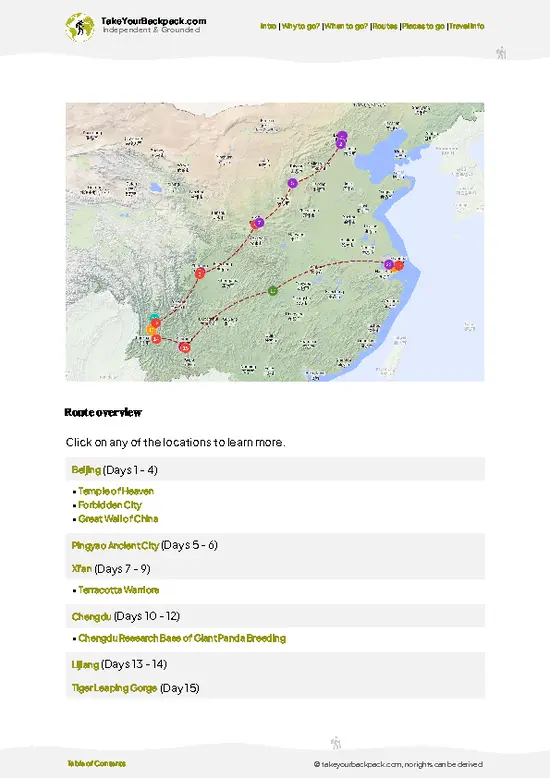
Traveling across China requires a strategic approach to maximize experiences while minimizing travel fatigue. Start by clustering regions based on geographic proximity and cultural themes. For instance, consider a route that begins in the north with Beijing and the Great Wall, then moves south to Xi’an for the Terracotta Army, and continues to Chengdu for its famous pandas. This sequence not only makes logistical sense but also allows for a gradual transition from historical sites to natural wonders.

Typical Time Needed

Allocate at least two to three days per major stop. This pacing allows for immersion without feeling rushed. For example, spend a couple of days in Beijing to explore the Forbidden City and local markets, then dedicate another two days in Xi’an to fully … read more 👉

General Routing Logic

Traveling across China requires a strategic approach to maximize experiences while minimizing travel fatigue. Start by clustering regions based on geographic proximity and cultural themes. For instance, consider a route that begins in the north with Beijing and the Great Wall, then moves south to Xi’an for the Terracotta Army, and continues to Chengdu for its famous pandas. This sequence not only makes logistical sense but also allows for a gradual transition from historical sites to natural wonders.

Typical Time Needed

Allocate at least two to three days per major stop. This pacing allows for immersion without feeling rushed. For example, spend a couple of days in Beijing to explore the Forbidden City and local markets, then dedicate another two days in Xi’an to fully appreciate the ancient city walls and the Terracotta Army. Chengdu deserves a similar commitment, especially if you want to visit the panda sanctuary and enjoy the local cuisine.

Common Planning Mistakes

One frequent pitfall is trying to cover too much ground too quickly. China is vast, and travel times can be deceptive. High-speed trains are efficient, but they still require time for transfers and waiting. Avoid the temptation to cram in too many destinations; instead, focus on quality over quantity. Another mistake is underestimating the cultural differences and language barriers. Having a basic understanding of local customs and a few key phrases can enhance the experience significantly.

Trade-offs and Constraints

Balancing speed with depth is crucial. While it might be tempting to hop from city to city, this often leads to superficial experiences. Prioritize a few key regions and dive deep into their offerings. Budget constraints also play a role; high-speed trains and domestic flights can add up. However, opting for overnight trains can save on accommodation costs while providing a unique travel experience.

Flexibility and Strategic Planning

Flexibility is your ally. Weather can vary dramatically across regions, so be prepared to adjust your itinerary. For instance, if rain is forecasted in one area, consider shifting your focus to another region with better conditions. Strategic planning involves not just mapping out stops but also understanding local festivals or events that could enrich your visit.

By approaching your trip with a clear understanding of these systems, you can navigate China’s vast landscape with confidence, ensuring a rewarding and enriching journey.

The ListHighly Recommended regions of China

1 Tibet and the Himalayas

High passes, Buddhist monasteries, glaciated peaks

Cross windswept plateaus and mountain passes, encountering prayer wheels, yak caravans, and stark landscapes dominated by the world’s highest mountains.

2 Yangshuo

Karst hills, Li River bends, rural farmland

Cycle quiet backroads past rice paddies and dramatic limestone outcrops, or drift along the river as mist settles over the countryside.

3 Sichuan Giant Panda Sanctuaries

Bamboo forest, panda habitat, misty mountains

Trek through damp forests where wild pandas feed, and watch clouds drift over steep slopes covered in dense vegetation and rare plant species.

4 Shangri-La region

Tibetan villages, alpine lakes, prayer flags

Experience a blend of Tibetan culture and mountain scenery, with yak herders, monasteries, and clear lakes set against a backdrop of snow peaks.

china-region-shangri-la-region
© Google |

5 Xinjiang Tianshan

Snowy summits, alpine lakes, grassland steppe

Journey between icy peaks and broad pastures, where Kazakh herders graze livestock and turquoise lakes reflect the changing sky.

6 Wulingyuan

Quartzite spires, deep ravines, hanging bridges

Traverse narrow canyons and climb stone steps to viewpoints overlooking a maze of slender rock towers and lush, forested gorges.

7 South China Karst

Limestone towers, underground rivers, cave systems

Venture among jagged peaks and hidden caves, where rivers vanish underground and villages nestle in valleys shaped by ancient geological forces.

8 Zhangye Danxia Landform Geological Park

Rainbow strata, eroded cliffs, arid basin

Survey multicolored hills and striped rock faces, where wind and rain have sculpted a stark landscape of ridges and gullies.

china-region-zhangye-danxia-landform-geological-park
© Google |

9 Fanjingshan

Sacred summit, cloud forest, rare wildlife

Ascend steep stone steps into cool, mist-laden forests, passing Buddhist temples and glimpsing endangered monkeys in a remote mountain sanctuary.

10 Huanglong

Travertine pools, alpine meadows, high-altitude valley

Follow wooden walkways past turquoise mineral pools and wildflower meadows, with snow-capped peaks rising above a valley shaped by glacial meltwater.

11 Wuyuan

Terraced rapeseed fields, ancient villages, covered bridges

Walk quiet lanes through white-walled villages, cross wooden bridges, and watch seasonal blooms transform the landscape into a patchwork of color.

12 Moganshan

Bamboo groves, colonial villas, rolling hills

Wander shaded trails through dense bamboo, stumble upon old stone houses, and find cool air in a landscape once favored by Shanghai’s elite.

china-region-moganshan
© Google |

13 Qinghai Hoh Xil

High plateau, wild herds, remote wetlands

Travel across vast, wind-swept grasslands where Tibetan antelope roam, and rivers cut through one of the world’s most isolated wilderness areas.

14 Zuojiang Huashan Rock Art Cultural Landscape

Cliff paintings, river gorges, ancient settlements

Paddle or hike along riverbanks to view prehistoric rock art, with limestone cliffs rising above villages that trace their roots to early cultures.

Think you know China?

Prove you’re a true local — uncover 4 lesser-known regions in China that locals tend to keep to themselves.
Loading the map 🌍

Expert viewExpert Commentary on regions

Geographic Diversity

China is a vast tapestry of landscapes, from the towering Himalayas in the west to the lush rice terraces in the south. Understanding this geographic diversity is crucial for effective travel planning. Each region offers distinct experiences shaped by its environment. For instance, the arid deserts of Xinjiang contrast sharply with the humid subtropical climate of Guangdong.

When planning your itinerary, consider visiting three to five regions to truly grasp the country’s breadth. Fewer regions allow for deeper exploration, while more regions can lead to a rushed experience. The key is to balance your desire for variety with the need for immersion.

Transport Between Regions

Navigating China’s extensive transport network can feel like a game of chess. High-speed trains … read more 👉

Geographic Diversity

China is a vast tapestry of landscapes, from the towering Himalayas in the west to the lush rice terraces in the south. Understanding this geographic diversity is crucial for effective travel planning. Each region offers distinct experiences shaped by its environment. For instance, the arid deserts of Xinjiang contrast sharply with the humid subtropical climate of Guangdong.

When planning your itinerary, consider visiting three to five regions to truly grasp the country’s breadth. Fewer regions allow for deeper exploration, while more regions can lead to a rushed experience. The key is to balance your desire for variety with the need for immersion.

Transport Between Regions

Navigating China’s extensive transport network can feel like a game of chess. High-speed trains connect major cities, making travel efficient, but they can also lead to a false sense of speed. While a train ride might seem quick, don’t underestimate the time spent getting to and from stations, especially in larger cities.

Air travel is another option, but it often comes with hidden costs, such as airport transfers and potential delays. If you’re short on time, flying might seem appealing, but consider the trade-off: the cultural experience lost in transit. For a more immersive journey, opt for trains or buses when possible. They offer a chance to see the countryside and interact with locals, enriching your understanding of regional differences.

Cultural Variation

Cultural nuances are as varied as the landscapes. Each region boasts its own dialects, cuisines, and customs. For example, the spicy dishes of Sichuan differ dramatically from the delicate flavors of Cantonese cuisine. This cultural richness is a double-edged sword; while it offers a feast for the senses, it can also lead to misunderstandings if you’re not aware of local customs.

Take the time to learn a few key phrases in the local dialect. This small effort can open doors and create connections. However, be prepared for the reality that not everyone speaks Mandarin fluently, especially in rural areas. Understanding this can help you navigate potential communication barriers and enhance your travel experience.

Pacing Trade-Offs

Pacing is crucial when traversing China’s diverse regions. The temptation to cover as much ground as possible can lead to fatigue and missed opportunities for deeper engagement. If you’re planning to visit multiple regions, allocate at least a week for each. This allows for travel time and the chance to soak in the local culture.

However, if you’re on a tighter schedule, prioritize regions that resonate with your interests. For instance, if you’re drawn to history, focus on areas rich in cultural heritage. This targeted approach can make your trip feel more cohesive and fulfilling, rather than a whirlwind tour of highlights.

Planning and Prioritizing Regions

When mapping out your journey, start by identifying your interests. Are you drawn to natural wonders, historical sites, or urban experiences? This will guide your regional choices. For a well-rounded experience, consider a mix of urban and rural areas.

For instance, pairing a bustling metropolis with a serene countryside can provide a balanced perspective on Chinese life. However, be mindful of travel times between regions. Some areas are more accessible than others, and this can impact your overall experience.

Contextual Explanations

Each region has its own infrastructure, which can significantly affect your travel experience. Major cities tend to have robust public transport systems, while rural areas may require more planning. Understanding these differences can help you avoid frustration.

For example, in regions with less developed infrastructure, consider hiring a local guide. This not only eases navigation but also enriches your understanding of the area. However, this comes with a cost, so weigh the benefits against your budget.

Safety & Cultural Considerations

Safety is generally not a major concern in China, but cultural sensitivity is paramount. Each region has its own social norms. In some areas, direct communication is appreciated, while in others, a more indirect approach is preferred.

Being aware of these nuances can prevent misunderstandings. For instance, discussing sensitive topics like politics or religion may be frowned upon in certain regions. Always observe local customs and be respectful. This will enhance your interactions and ensure a smoother experience.

Final Thoughts

Traveling through China is an intricate dance of logistics, culture, and geography. By understanding the system at play, you can navigate it like a pro. Prioritize regions based on your interests, balance your itinerary with pacing, and remain adaptable to the unique challenges each area presents.

This approach transforms travel from a checklist of sights into a rich tapestry of experiences, allowing you to unlock the true essence of China. Embrace the journey, and let each region reveal its story in its own time.

✈️ The backpacker research shortcutChina Travel Guide

An offline-friendly backpacking guide with optimized travel routes, ranked highlights, transport advice, and the best areas to stay.
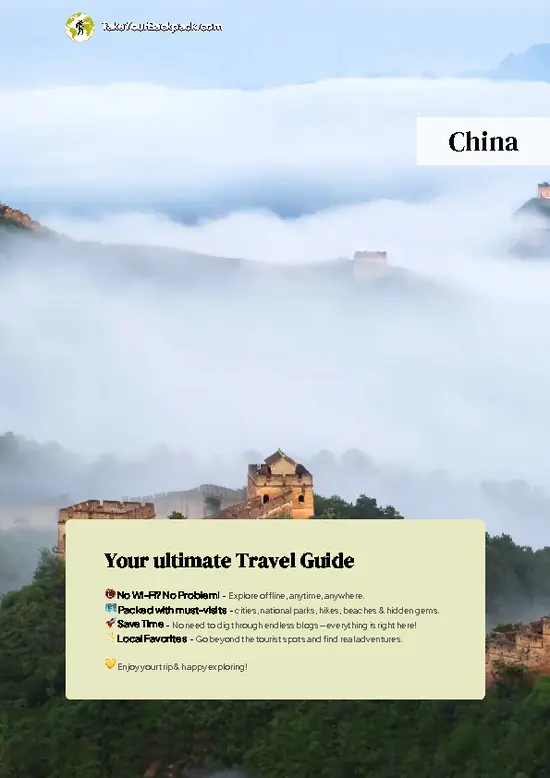
example page 0 from our offline Travel Guide for China
example page 1 from our offline Travel Guide for China
example page 2 from our offline Travel Guide for China
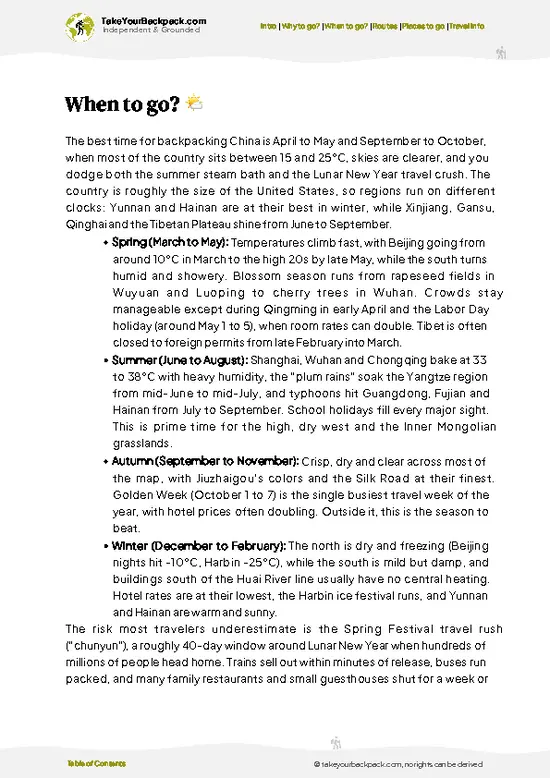
example page 3 from our offline Travel Guide for China
example page 4 from our offline Travel Guide for China
example page 5 from our offline Travel Guide for China
example page 6 from our offline Travel Guide for China
example page 7 from our offline Travel Guide for China
The digital guide (463 pages) contains:
130 highlights, ranked by travel appeal
Optimized 14, 21 & 30-day travel routes
Cities, national parks, landmarks, beaches
How to get around
Offline-friendly for travel without Wi-Fi
👉 Click to see all 30+ guide features

📅 Plan smarter in minutes, not weeks
Month by month travel advice
Festivals & national holidays
Budget expectations

🗺️ Go to the right places, skip the overrated ones
Honest pros & cons of destinations
Top hikes, parks & viewpoints
Lesser-known places most travelers miss
Clear “worth it vs skip it” guidance

🛏️ Travel smoothly without rookie mistakes
Best areas to stay
Transport systems explained simply
Common scams & safety advice
SIM cards, money & practical tips

🌍 Understand the country, not just visit it
Culture & traditions
52 Essential phrases & customs
Festivals worth planning around
Traveler-friendly historical context
Insights that make places more meaningful

📱 Built for real travel conditions
Fully downloadable PDF
Works completely offline
Optimized for phone use
Useful in remote areas & buses
Everything in one place
Save weeks of stressful planning
Get instant access to your full guide. 30‑day money-back guarantee.
+ Add another guide for just US$7.80

By proceeding you agree to our terms.
Sent to your inbox immediately after payment • 100% Secure Checkout
Best Backpacking Travel Advisor 2025 tourism awardBest Backpacking
Travel Advisor
2025
What others say about Take Your Backpack Guides:
⭐⭐⭐⭐⭐
Fantastic, amazing amount of information!
⭐⭐⭐⭐⭐
My goodness this is amazing, it's what I've been looking for hats off too you!
⭐⭐⭐⭐⭐
I think this is absolutely BRILLIANT
⭐⭐⭐⭐
Very complete and informative. It's still missing places, but I gotta to commend you
⭐⭐⭐⭐⭐
This is truly amazing, thank you, can't wait to explore it with my kids!
⭐⭐⭐⭐⭐
Awesome resource, thank you!
⭐⭐⭐⭐⭐
This is amazing! Can't wait to explore the ones I haven't seen
⭐⭐⭐⭐
I love this! Well done, great idea.
⭐⭐⭐⭐⭐
Thanks for taking the time to make this gem!
⭐⭐⭐⭐⭐
This might be the best website I've ever seen.
⭐⭐⭐⭐⭐
Congratulations, and thank you so much for your work; it's incredibly valuable.
⭐⭐⭐⭐
In all seriousness I think you did a great job pointing out the important spots
⭐⭐⭐⭐⭐
10/10 very good
⭐⭐⭐⭐⭐
As someone who's only just starting to visit regularly this is awesome, thank you.
⭐⭐⭐⭐
Thank you very much! I'm going to visit my dad, it's going to be very useful!
⭐⭐⭐⭐⭐
This is really cool! We'll be travelling for the first time and this definitely come in handy.
⭐⭐⭐⭐⭐
You are now our minister of culture, congratulations 👨‍💼
⭐⭐⭐⭐⭐
Just wanted to tell you that this is a pearl! Going to follow your recommendations.
⭐⭐⭐⭐⭐
This is so cool. I'll definitely be using the resource for my travels soon.
⭐⭐⭐⭐⭐
This is very impressive! Good work.
⭐⭐⭐⭐⭐
This is an amazing and informative site. Very well done!

🛏️ Where to stay?Best Stay Options in China

Yes — hostels and budget accommodation are common across China, with backpacker-friendly clusters of cheap dorms, guesthouses and family-run hostels in major cities and tourist towns, so book ahead in peak season.
Top neighborhoods with the most/best budget options: Beijing — Dongcheng/Chaoyang (central sights and nightlife; can be noisy and pricier) and Xicheng (quieter, close to historic sites); Shanghai — Huangpu/Jing’an (walkable highlights, excellent transit; busy and costlier) and Pudong (modern but fewer backpacker options); Chengdu — Jinjiang/Wuhou (food streets and transport; lively evenings); Xi’an — Beilin/Muslim Quarter (by the city wall, touristy); Lijiang/Dali/Guilin/Yangshuo … read more 👉
Yes — hostels and budget accommodation are common across China, with backpacker-friendly clusters of cheap dorms, guesthouses and family-run hostels in major cities and tourist towns, so book ahead in peak season.
Top neighborhoods with the most/best budget options: Beijing — Dongcheng/Chaoyang (central sights and nightlife; can be noisy and pricier) and Xicheng (quieter, close to historic sites); Shanghai — Huangpu/Jing’an (walkable highlights, excellent transit; busy and costlier) and Pudong (modern but fewer backpacker options); Chengdu — Jinjiang/Wuhou (food streets and transport; lively evenings); Xi’an — Beilin/Muslim Quarter (by the city wall, touristy); Lijiang/Dali/Guilin/Yangshuo old towns (clustered guesthouses and social scene; crowded in high season).
Tradeoffs to plan for: central areas cut transit time and connect to nightlife but bring noise, higher rates and crowded weekends; outlying districts are cheaper and quieter but add transit time and may limit late-night options, and all places require passport registration at check-in with common small deposits.

If you enjoy meeting fellow travelers, consider choosing hostels with high ratings for atmosphere. On the other hand, if you prefer having your own space, a hotel might be a better option.

ChinaWhere to Go Next

👋 Meet the founderWho’s Behind Take Your Backpack?

Johan, backpacker and founder of TakeYourBackpackHi, I’m Johan (Netherlands 🇳🇱), the creator of TakeYourBackpack. Over the past decade, I’ve backpacked through 80+ countries across six continents, gaining extensive experience with independent travel, long-term trips, and overland routes.

This site is built on a combination of firsthand travel experience and carefully curated insights from other backpackers. Many guides are based on places I’ve personally visited, while others bring together tips, observations, and practical advice shared by trusted travelers I’ve met along the way.

The goal is to provide realistic, experience-driven guidance — not generic itineraries — so you can explore destinations with better context, clearer expectations, and more confidence.

Get full China guide •
Instant download • 130 highlights • Full Offline guide